# TheChinaPath — Insights (full text)
> Full-text dump of every published insight on https://www.thechinapath.com/insights, for AI crawlers that consume the llms-full.txt format. Articles authored by Cyril Drouin (founder, former CEO of Publicis Commerce and Performance Marketing for China and North Asia), Echo Peng (Senior Director, eCommerce China), Liyan Ye (Senior Director, brand & campaigns), and the TheChinaPath team. Last regenerated: 2026-10-13.
---
# Maximizing Brand Impact: How the 11.11 Shopping Festival Transforms E-Commerce in China
URL: https://www.thechinapath.com/insights/11-11-shopping-festival-in-china-brand-strategies-for-success-in-the-worlds-largest-e-commerce-event
Published: 2024-10-11
Author: TheChinaPath
Category: E-Commerce
How brands can win the 11.11 Shopping Festival in China, the world's biggest online sale, with social media, influencer partnerships and localization.
## The Phenomenon of 11.11 in China's E-Commerce
The 11.11 Shopping Festival, often referred to as Singles' Day, has evolved into the largest online shopping event worldwide. Originally designed to celebrate singlehood in China, it has now become a major retail event, offering unparalleled opportunities for both domestic and international brands. Each year, millions of consumers participate in this digital shopping extravaganza, seeking discounts and exclusive products. For businesses looking to break into eCommerce China or enhance their presence, the 11.11 Festival provides a critical platform to boost sales and improve China branding.
In this article, we will explore how brands can capitalize on the 11.11 Shopping Festival through China brand localization, social media engagement, and partnerships with China influencers. Understanding these strategies and adapting to local consumer trends is essential for achieving success in the world's most dynamic retail market.
## The Origins and Evolution of the 11.11 Shopping Festival
The 11.11 Shopping Festival originated from China's Singles' Day, an informal holiday celebrated on November 11, symbolizing singlehood with the repeated number '1'. The real turning point came in 2009 when Alibaba transformed this day into a massive commercial event through its Tmall platform, focusing on large-scale discounts and promotions. Since then, the festival has grown exponentially, with over $139 billion in sales generated in 2021, making it the largest online shopping event in history.
This retail event now stretches into multi-week campaigns, involving millions of brands and using advanced digital marketing techniques. For international businesses, especially those looking to establish a China brand website or enter the market through Tmall cross-border, the 11.11 Festival represents a golden opportunity.
## The Role of E-Commerce Platforms in the 11.11 Festival
The success of the 11.11 Shopping Festival is largely driven by China's dominant eCommerce platforms like Tmall and JD.com. These platforms provide the infrastructure for the event while also leading [marketing campaigns](/grow-in-china/campaigns) that define the festival's impact.
* **Tmall:** As a premium marketplace under Alibaba, Tmall hosts pre-sales, live-streaming events, and interactive shopping experiences that attract both local and international brands. Brands utilizing Tmall cross-border services can access millions of Chinese consumers without requiring a physical presence in China.
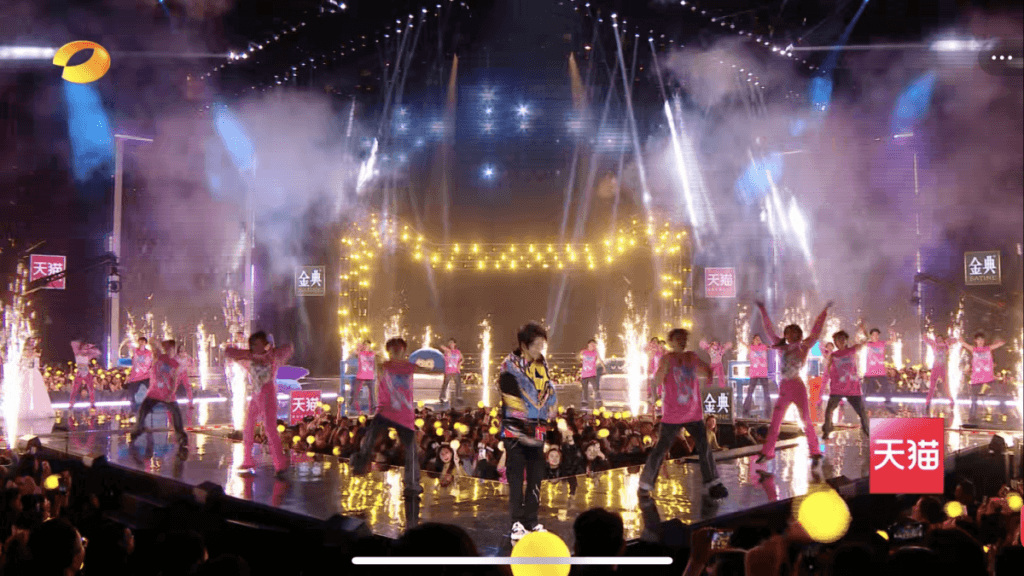
Tmall's 11.11 Countdown Gala Source: Alibaba Group
* **JD.com:** JD.com is another key player, known for its focus on logistics and fast delivery. It is particularly attractive for electronics and consumer goods during the 11.11 Festival, ensuring that buyers receive their orders quickly, further boosting brand loyalty.
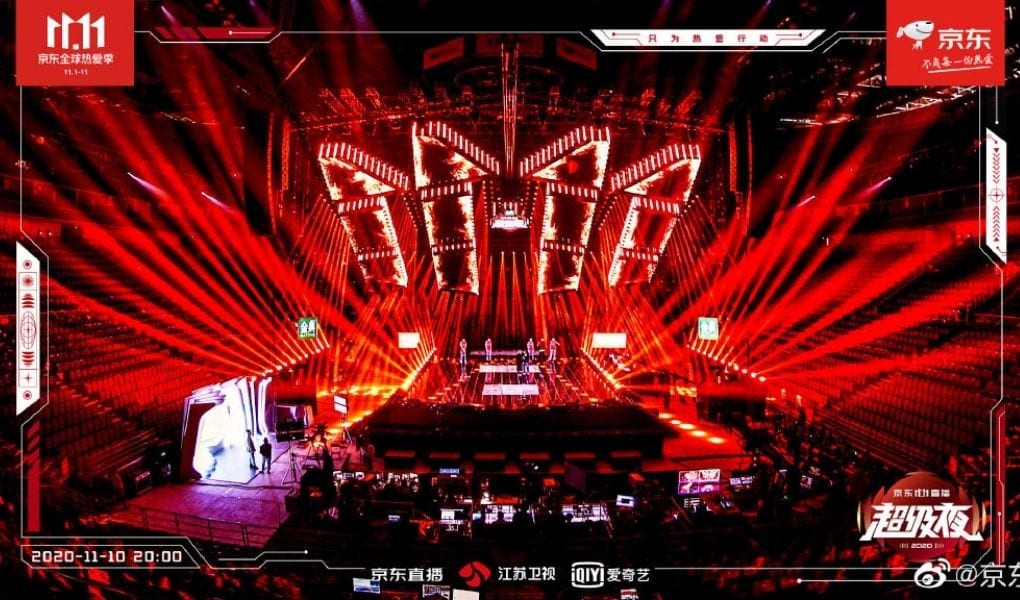
Launch of JD's 2020 11.11 Campaign Source: JD.com
The role of these platforms is crucial, as they bridge the gap between international brands and Chinese consumers, facilitating smooth e-commerce transactions during the shopping festival.
## Effective Marketing Strategies for 11.11 in China
To succeed during the 11.11 Shopping Festival, brands need to implement targeted marketing strategies that resonate with local consumers. Simply offering discounts is not enough, brands must create engaging experiences that capture attention. Some of the most effective strategies include:
### a) Using Chinese Social Media for Brand Awareness
With over 80% of Chinese consumers actively using social media, platforms like WeChat, Weibo, Douyin (China's TikTok), and Little Red Book (Xiaohongshu) play central roles in shaping purchasing decisions. China social media platforms allow brands to create engaging, interactive content that builds anticipation ahead of the festival.
* **WeChat:** This super-app offers integrated shopping features like WeChat stores and mini-programs that not only promote products but also allow consumers to purchase directly through the app. Wechat marketing helps brands connect with over a billion users and enhances their chances of success during the 11.11 Festival.
* **Douyin:** Known for its viral short-form videos, China Douyin allows brands to engage consumers through creative, visually appealing content, often with the help of influencer partnerships. Using Douyin cross-border services can help foreign brands reach the massive Chinese audience on this popular platform.
By integrating social media strategies with a focus on China performance marketing, brands can drive traffic to their e-commerce stores on platforms like Tmall or JD.com and ensure their offerings are top-of-mind for Chinese consumers.
### b) Partnering with Key Opinion Leaders (KOLs) for Greater Impact
Influencer marketing, or [KOL marketing](/social-in-china), is one of the most powerful tools for brands looking to expand their reach during the 11.11 Festival. Collaborating with China KOLs, Key Opinion Leaders, who have strong followings can significantly amplify a brand's visibility and credibility.
China influencers have the trust of their followers, making their endorsements highly effective. For instance, fashion brands can partner with lifestyle influencers on Little Red Book, while tech companies may collaborate with gadget reviewers on platforms like Weibo.
Working with KOLs allows brands to tap into targeted audiences, driving sales and enhancing brand loyalty. Choosing the right KOLs who align with the brand's values and target demographics is essential to maximize the impact of these partnerships.
### c) Exclusive Product Launches and Event-Specific Discounts
During the 11.11 Festival, brands that offer limited-time or exclusive product launches see higher consumer interest. Chinese shoppers look for unique, event-specific products that create a sense of urgency. Luxury brands such as Valentino and Burberry, for example, have successfully launched exclusive collections during 11.11, driving both sales and brand prestige.
Offering China brand localization, such as festival-themed packaging or collaborations with local designers, can make products even more appealing to Chinese consumers. This strategy builds a sense of exclusivity, which in turn fuels engagement and encourages purchases.
### d) Live-Streaming: The Future of E-Commerce in China
China livestreaming has become an integral part of the 11.11 Shopping Festival, offering brands a unique way to interact with consumers in real time. Platforms like Taobao Live have revolutionized e-commerce by enabling brands to showcase products, answer questions, and offer exclusive deals during live broadcasts.
Popular livestreamers like Li Jiaqi, known as the "Lipstick King," have demonstrated the immense power of live-streaming by generating billions in sales during a single event. Brands that invest in live-streaming not only increase their engagement but also drive immediate sales, benefiting from the excitement of the shopping festival.
Live-streaming has proven to be one of the most effective ways to connect with consumers in China's fast-paced e-commerce environment, and brands that embrace this trend stand to gain significantly.
## Understanding Consumer Trends in the 11.11 Festival
To capitalize on the opportunities presented by the 11.11 Shopping Festival, brands must understand the evolving consumer trends driving purchases. These include:
### a) The Growth of Gamification
Gamification has become a key trend during 11.11, with many platforms incorporating game-like mechanics to engage users. From virtual treasure hunts to interactive games that open up special discounts, these features keep consumers engaged and boost participation during the shopping festival.
### b) The Rise of Sustainable Shopping
Younger Chinese consumers are increasingly prioritizing sustainability. Many brands have responded by offering eco-friendly products and green initiatives during the 11.11 Festival. Embracing sustainable practices not only aligns with consumer preferences but also builds long-term brand loyalty in the Chinese market.
## Opportunities for International Brands in 11.11
The 11.11 Shopping Festival presents enormous opportunities for international brands, particularly those looking to establish a foothold in eCommerce China. In 2020, over 31,000 overseas brands from 84 countries participated in the festival. For businesses looking to take advantage of this market, two critical considerations are:
* Localization of content: Brands need to tailor their messages to the Chinese market, ensuring that marketing materials reflect local cultural preferences and nuances.
* Utilizing [cross-border e-commerce](/grow-in-china/cross-border-ecommerce) platforms: Platforms like Tmall Global and JD Worldwide facilitate China cross-border transactions, allowing international brands to reach Chinese consumers without requiring a physical presence in the country.
## Tapping the Potential of the 11.11 Shopping Festival
The 11.11 Shopping Festival represents more than just a day of discounts, it's a strategic opportunity for brands to engage millions of consumers, boost brand visibility, and drive substantial sales in eCommerce China. By using China social media, collaborating with China KOLs, offering exclusive product launches, and investing in China livestreaming, brands can position themselves for success in this highly competitive market.
Understanding and adapting to Chinese consumer trends, such as the rise of sustainable shopping and gamification, are key to maximizing the potential rewards of this global shopping event.
---
# Tmall vs Amazon: what a brand actually pays
URL: https://www.thechinapath.com/insights/a-comparison-between-tmall-and-amazon
Published: 2023-02-02
Updated: 2026-10-13
Author: TheChinaPath
Category: Platforms
Amazon has had no China marketplace since 2019. Here is what Tmall Global charges instead, next to Amazon's own fee sheet, with the tax math.
Amazon has not run a marketplace for third-party sellers in China since July
2019. So the choice is not Tmall or Amazon. It is Tmall Global against JD
Worldwide and Douyin. Tmall Global's commission runs 2% to 5%, well under
Amazon's 8% to 15%. The fixed money is where China costs more.
Updated September 17, 2026. The February 2023 version of this page compared
the two platforms as though a brand could pick either door. It could not,
and still cannot. What follows is the fee sheet, the tax arithmetic and the
dates.
Here is the money side by side. The Amazon column is the US marketplace,
because that is the one most brands reading this already run.
| Cost line, year one | Amazon, US marketplace | Tmall Global (RMB) |
|---|---|---|
| Security deposit | none | 50,000, refundable |
| Annual platform fee | none | 30,000 or 60,000 by category |
| Account fee | US$39.99 a month | none |
| Commission on each sale | 8% to 15% in most categories | 2% to 5%, 3.5% average |
| Operating partner | optional | a Tmall Partner, in practice |
| Cash in before the first order | US$39.99, the first month | 80,000 to 110,000 |
> Opening a store on Amazon requires no security deposit. Professional
> sellers pay US$39.99 a month and referral fees of 8% to 15% of the sale in
> most categories.
> Source: Amazon Global Selling (亚马逊全球开店), July 2024.
> https://globalselling.amazon.com/zhishi/article-240523
> Deposit, annual fee and commission by category on Tmall Global, as loaded
> in the calculator.
> Source: TheChinaPath calculator data, October 2026.
Health supplements sit outside that range on Tmall Global, at a 300,000 RMB
deposit. Everything else lands on one of two rungs.
## Amazon left the China marketplace in 2019
In April 2019, Amazon told Chinese media it would stop providing seller
services to third-party sellers on its China site three months later. The
date it gave was July 18. It kept four things: the import retail store, the
export seller program, Kindle and cloud.
> Amazon will stop providing seller services to third-party sellers on the
> Amazon China website on July 18, 2019, and will keep Amazon Global Store,
> Amazon Global Selling, Kindle and Amazon cloud computing.
> Source: China Daily (中国日报网), April 2019.
> https://qiye.chinadaily.com.cn/a/201904/19/WS5cb92e4ca310e7f8b1577840.html
Seven years later, plenty of brands still ask which of the two to open first.
The honest answer is that one of them is not open.
## What Amazon still runs in China
Two businesses, pointing in opposite directions.
Amazon Global Store (亚马逊海外购) sells imported goods to Chinese shoppers.
It is Amazon's own retail, not a marketplace a brand joins. It also got
smaller. On January 27, 2024, Amazon shut desktop shopping on amazon.cn and
ended Prime in China, moving the whole thing into an app and a WeChat mini
program.
> Starting January 27, 2024, we will no longer provide Prime membership
> services, and the desktop will no longer provide shopping services.
> Customers can upgrade the app or shop through the Amazon Global Store
> WeChat mini program.
> Source: Amazon China (亚马逊中国), notice on amazon.cn, effective January
> 2024. https://www.amazon.cn/
The second business is Amazon Global Selling (亚马逊全球开店), and it moves
goods the other way. It signs up Chinese sellers to sell on Amazon's sites
outside China. In December 2025 it published its four priorities for 2026.
Every one of them is about export.
> Amazon's 20-plus major international sites across the Americas, Europe,
> Asia and Oceania are fully open to Chinese sellers.
> Source: Amazon Global Selling (亚马逊全球开店), December 2025.
> https://globalselling.amazon.com/en/news/news-brand-251204
So when a China agency, a forum thread or a competitor's blog compares Tmall
to Amazon, check which Amazon they mean. Usually it is the one that helps a
Shenzhen factory reach Ohio.
## The commission gap runs the other way
Most people assume China takes a bigger cut. On the platform line, it does
not.
We keep the category fee data for Tmall Global, JD Worldwide and Douyin
cross-border loaded in our own calculators, because we quote from it every
week. Across the nineteen Tmall Global categories in the picker, commission
runs from 2% to 5% and averages 3.5%. Eight categories sit at 2%. Nothing
goes above 5%. Amazon's band, in most categories, starts at 8%.
Tea, packaged food, Swiss watches, kitchen appliances and phones all pay Tmall Global 2% of the sale. On Amazon
the same goods would pay 8% or more.
Then the fixed cost arrives. Deposit plus annual fee comes to 80,000 RMB in
eleven of the nineteen categories and 110,000 RMB in the other seven, before
a single order ships. Amazon asks for US$39.99 and a credit card. A brand
that wants to test a market cheaply is not choosing between two similar
things.
## The line that reverses the comparison
Nobody runs a Tmall Global store alone from Milan or Portland. The store
needs a Tmall Partner, a Chinese operating agency that holds the back end,
writes the Chinese copy, runs customer service in the local time zone and
sets up the campaigns. The default in our own Tmall Global calculator is a
35,000 RMB monthly retainer plus 10% of GMV, and those defaults exist
because they are the numbers we see quoted.
Add that 10% to the platform's 3.5% and the China take rate clears 13%,
which lands inside Amazon's 8% to 15% band instead of under it. The retainer
sits on top and does not care whether you sell anything.
Few comparisons get that far. Amazon's fee looks worse on paper
because Amazon's fee is nearly the whole bill. China's is one line of six.
Warehousing, the customs broker, the Chinese label, paid traffic and returns
are all separate, and traffic is the biggest of them. Getting seen on
Xiaohongshu (RedNote) or Douyin is its own budget, and the seeding side of
that work sits with TheRedScroll, the group's China social media agency
(https://www.theredscroll.com).
Run your own category through the
[Tmall Global setup and run calculator](/tools/tmall-global-setup-and-run)
before you take anyone's word for a monthly number, including ours. The
[JD Worldwide setup and run calculator](/tools/jd-worldwide-setup-and-run)
does the same for the other big cross-border marketplace, and JD's entry
rung is cheaper.
## The tax your shopper pays
A seller on Amazon's US site rarely thinks about import duty. Selling
cross-border into China, you have to, because the tax shows up at checkout
and moves the price the shopper sees.
Goods sold under China's cross-border retail import scheme carry a 0% tariff.
Import VAT and consumption tax are then levied at 70% of the amount normally
payable.
> The tariff rate is provisionally set at 0%, and import VAT and consumption
> tax are levied at 70% of the statutory payable amount.
> Source: Ministry of Finance (财政部), 财关税〔2016〕18号, March 2016.
> http://www.mof.gov.cn/gp/xxgkml/gss/201603/t20160324_2510682.htm
> The standard VAT rate was cut from 16% to 13% with effect from April 1,
> 2019.
> Source: State Council Gazette (国务院公报), announcement 2019 No. 39, March
> 2019. https://www.gov.cn/gongbao/content/2019/content_5416183.htm
Do the arithmetic and general goods land at 9.1%. Thirteen percent, times
seventy percent, with no duty on top. Cosmetics, fragrance and alcohol carry
consumption tax as well and run considerably higher.
The scheme has a ceiling, and it is per shopper, not per brand.
> The single-transaction limit for cross-border e-commerce retail imports is
> 5,000 RMB and the annual per-person limit is 26,000 RMB, effective January
> 1, 2019.
> Source: Ministry of Commerce (商务部) policy database, 财关税〔2018〕49号,
> January 2019. https://policy.mofcom.gov.cn/claw/clawContent.shtml?id=65769
A 9,000 RMB handbag only just fits. It can come in alone in its order, but
then it pays full duty, VAT and consumption tax, and it eats more than a third
of the shopper's annual quota. A range priced above the limit usually ends up
in general trade, which means a Chinese importer of record, full duty and VAT,
and product registration where the category demands it.
That is a different business, and it is the one our
[cross-border setup team](/enter-china/cross-border-setup) spends most of its
time mapping before a brand commits.
## Who is actually doing this
The route is crowded, which is usually a good sign about whether it works.
> 2,415 overseas brands opened a first China store on Tmall Global in 2025,
> from 52 countries and regions. More than 40,000 brands from over 110
> countries and regions now sell on the platform.
> Source: Sina Finance (新浪财经), citing Tmall Global, January 2026.
> https://finance.sina.com.cn/tob/2026-01-27/doc-inhithne5772830.shtml
Six new foreign brands a day, roughly. Not all of them last, and a store
that opens without a media budget behind it goes quiet inside two quarters.
But the number does say something plain: the cross-border marketplace is
where foreign brands go, and it is where they have been going since Amazon
stopped offering the alternative.
If you are weighing whether to run the store yourself or hand it to a
partner, that decision usually costs more than the platform fee. Our
[cross-border ecommerce team](/grow-in-china/cross-border-ecommerce) runs
stores on both sides of that choice and the tradeoff is rarely about money
alone.
## Common questions
**Can a foreign brand still sell on Amazon in China?**
Not as a seller. Amazon stopped serving third-party sellers on its China
site on July 18, 2019. Amazon Global Store still sells imported goods to
Chinese shoppers through an app and a WeChat mini program, but that is
Amazon's own retail. There is no China storefront a brand opens and runs.
**Is Tmall Global's commission really lower than Amazon's?**
On the platform line, yes. Commission across the nineteen Tmall Global
categories in our calculator runs 2% to 5%, averaging 3.5%, against 8% to
15% on Amazon in most categories. Add a Tmall Partner's commission on GMV
and the combined China take rate passes Amazon's.
**What does a Tmall Global store cost before the first order?**
The deposit plus the annual fee, which is 80,000 RMB in eleven of the
nineteen categories and 110,000 RMB in the other seven. Health supplements
runs to 330,000 RMB on the deposit alone. The deposit comes back when the
store closes in good standing. The annual fee does not.
**Does Amazon Global Selling help my brand reach China?**
No. It points the other way. Amazon Global Selling recruits Chinese sellers
onto Amazon's 20-plus sites outside China, and its published 2026 priorities
are all about export. It is useful to a Chinese manufacturer, not to a
European or American brand looking for Chinese buyers.
If you want a vetted shortlist of the operators who could actually run your
category in China, [request a Compass shortlist](/contact#shortlist).
---
# AI Made Brand Drama Cheap. Then Rules Landed.
URL: https://www.thechinapath.com/insights/ai-brand-micro-drama-china
Published: 2026-07-16
Author: Cyril Drouin
Category: AI & Innovation
AI cut China micro-drama production costs by up to 90%. What that means for foreign brands, and the labeling rules that came with it.
Two things happened to Chinese micro-drama inside eighteen months, and
most foreign brands have only heard about one of them.
The first is the money. Micro-drama (微短剧) is the vertical, sixty-second
serial format that runs on Douyin (抖音), Kuaishou (快手) and a handful of
free apps. It stopped being a curiosity a while ago.
> China's micro-drama and animated-drama sector produced roughly RMB 100
> billion in value in 2025, against total national box office receipts of
> RMB 51.8 billion. The two are not measured the same way, but the gap is
> wide enough that the direction is not in dispute.
> Source: DataEye Research (DataEye研究院), January 2026
The second thing is the cost curve. In December 2025, SenseTime (商汤科技)
launched Seko 2.0, an agent that writes and produces multi-episode drama
end to end. Kuaishou has Kling (可灵). ByteDance has Jimeng (即梦). The
vendor names matter less than what they collectively did to a line item.
> A professional team traditionally needed more than three months to
> finish a fifty-episode animated drama. SenseTime claims production
> cycles compress by 80 to 90 percent using Seko 2.0, with one creator
> running script, assets and compositing alone.
> Source: SenseTime, reported by Sina Finance (新浪财经), December 2025
For a brand, the interesting number isn't the render speed. It's what
happens to a production quote when the floor drops out.
Rules in this area are moving quickly. Everything below reflects what was
in force as of July 2026.
## The four ways brands use it
| Route | What you get | Rough control | Where it fits |
| ----- | ------------ | ------------- | ------------- |
| Single-episode placement | Product appears in someone else's drama | Low | Cheap test, fast |
| KOL custom drama | Creator builds a short series around you | Medium | Category launch |
| Brand custom drama | You own the script, cast, IP | High | Flagship story |
| AI animated drama | Fully generated, no shoot | High | Young, male, gaming skew |
Custom is the mainstream now, not the exception.
> Roughly 90 percent of brand micro-dramas on the market are brand-custom
> productions rather than one-off placements.
> Source: The Paper (澎湃新闻), 2025
## Is the audience there
Yes. Although it is not the audience the format started with, and that gap
is where most brand teams are still working from old information.
> China's micro-drama user base reached 718 million by February 2026,
> with first and second-tier city users rising as a share and average
> daily viewing above two hours.
> Source: Sina Finance (新浪财经), May 2026
That last clause deserves a second read. The early caricature of
micro-drama was a lower-tier, low-income, low-attention audience, which
made it easy for a European marketing director to file the whole format
under "not our consumer." Two hours a day of anything is a habit, and the
demographic has drifted upmarket while nobody in Paris or Milan was
looking. Beauty and personal care, health, and mother-and-baby are the
categories buying in hardest, which is to say the categories most foreign
consumer brands are already in.
The cases are real, not decks.
> Jiumu (九牧) ran a six-episode branded drama built around a time-travel
> premise for its smart toilet range. First week: over 100 million views,
> topic views above 120 million, first place on Douyin's brand drama
> chart.
> Source: The Paper (澎湃新闻), 2025
A time-travel comedy about a toilet. That is the register this format
rewards, and it is usually the first thing a European brand team balks at.
The AI route is pulling a different crowd, younger and more male, which
suits categories that struggled with live-action drama.
> OPPO chose a deeply customized AI animated drama for its K15 Pro
> launch. Day-one playback passed 10 million.
> Source: Sina Finance (新浪财经), May 2026
SK-II went another way, working with a Douyin creator on a custom series
where the product claim and the show's title echoed each other. Liangpin
Puzi (良品铺子) did something cheaper still, attaching a spin-off episode
to an existing hit around a gifting moment, which cleared 143 million
impressions. The budgets are nowhere near each other. The bet underneath
them is the same one.
## What the tool demos leave out
Now the part the launch coverage skipped.
While the cost of making AI drama collapsed, the cost of publishing it
went up.
> Since September 1, 2025, all AI-generated or AI-assisted audio and
> video must carry a visible on-screen label that cannot be shrunk or
> blurred, plus hidden traceability data in the file's metadata recording
> the generating party and the AI participation ratio.
> Source: Xinhua (新华网), September 2025
Then the filing regime arrived on top of it.
> From April 1, 2026, AI-generated animated drama must be filed before
> release, with review tiered by budget: above RMB 3 million or sensitive
> subject matter goes to the national regulator, RMB 1 to 3 million to
> the provincial level, and below RMB 1 million to platform self-review
> with provincial filing.
> Source: Liumeiti (流媒体网), 2026
This is being enforced, not announced.
> In a one-week campaign starting April 7, 2026, Hongguo (红果) removed
> 3,522 AI animated dramas that were unfiled or unlabeled. Kuaishou's
> drama section screened over 8,000 AI titles and pulled more than 900.
> Source: Liumeiti (流媒体网), 2026
So production got roughly 90 percent cheaper while distribution got
conditional. The saving is real but it moved rather than disappeared:
money you no longer spend on a crew goes to filing and labeling, to
clearing rights, and to a lawyer who reads the script before it ships. Brands that budget for the first half only
end up with a good series that never reaches a feed. Or worse, one that
reaches it and gets pulled at eight million views.
One more wrinkle, and it's a softer one. The label says "AI generated" on
every episode. Nobody in the market yet knows what that does to a luxury
or premium positioning, or whether the algorithm quietly discounts
labeled content in distribution. If your brand equity rests on
craftsmanship, that stamp is a brand decision before it's a production
decision.
## Where the budget actually goes
None of that makes the format a bad bet. It changes where the money sits.
Budgets are moving in two directions at once, which is what catches
people out.
| | Live-action brand custom | AI brand custom |
| --- | --- | --- |
| Cost direction | Rising | Falling |
| Typical shoot | 7 to 15 days | No shoot |
| Filing | Required | Required |
| AI labeling | No | Yes, every episode |
| What you own | Script and footage | Script, assets, model outputs |
| Main risk | Budget overrun | Takedown, or the label itself |
The live-action market moved while AI was moving too, and in the opposite
direction.
> Shooting budgets that used to sit at RMB 300,000 to 500,000 with a
> three to five day wrap have stretched to seven to fifteen day shoots,
> with premium productions approaching the million-RMB range.
> Source: Sina Finance (新浪财经), May 2026
So the two routes are pulling apart. Live-action is professionalizing and
getting more expensive. AI is getting cheaper and more regulated. A brand
picking between them in 2026 is really picking which risk it would rather
carry, a budget that runs over or a series that gets pulled.
## How to sequence it
Almost nobody should start with a custom series, whatever the agency
pitching it says.
Start with a single-episode placement inside a drama that already has an
audience. It costs little and tells you within two weeks whether your
category lands in this format at all. Every brand we have taken through
this wanted to open with the flagship series, and the ones who tested
first are the ones who did not waste the flagship budget learning what
their hook was. Watch what happens to
brand search volume, not to views. Views are the vanity number here;
search is the one that tells you a viewer went looking for you afterwards.
If the search moves, go to KOL custom. You get a creator's existing
audience, a shorter approval chain, and a producer who already knows where
the review lines sit. Only after that does a brand custom series make
sense. By then you'll know your own hook and how much product visibility
your category will actually tolerate before viewers swipe.
And the piece most brands forget: a drama that works sends people
searching, and search has to land somewhere that can sell. If your Tmall
Global (天猫国际) or Douyin store isn't live and stocked when the series
drops, you paid for someone else's traffic. The content and the store go
live together, or the content goes out alone. We work through that sequencing in [social commerce](/grow-in-china/social-commerce)
and [campaigns](/grow-in-china/campaigns), and if the format itself is new to your team, it is one of
the things we cover in the [masterclass](/learn-china/masterclass).
The format outgrew the fad label a while ago, and it was never really the
discount channel people filed it as.
It's where roughly seven hundred million people now spend a serious slice
of their evening.
The tooling removed the old excuse that this was too expensive to try, so
the question facing most brands now is a narrower one: whether they want
to learn this format on a small placement in 2026, or on a flagship series
in 2028 when the category is crowded and the cost of a miss is higher.
---
# How AI Can Supercharge eCommerce in China?
URL: https://www.thechinapath.com/insights/ai-revolutionizing-ecommerce-in-china
Published: 2024-05-16
Author: TheChinaPath
Category: AI & Innovation
AI is reshaping eCommerce in China. The country's core AI industry is forecast to grow from 150 billion yuan in 2020 to 1 trillion yuan by 2030.
## How AI Can Supercharge eCommerce in China?
China's eCommerce industry is undergoing a revolutionary transformation driven by AI. According to iiMedia Research, "China's AI core industry is expected to grow from 150 billion yuan in 2020 to 1 trillion yuan by 2030." This growth is creating new opportunities and enhancing the efficiency of the eCommerce sector.
## AI Enhances Consumer Experience
AI is significantly improving the consumer experience in China's eCommerce market. For instance, AI-driven personalization enables platforms like Tmall and JD.com to offer customized product recommendations based on users' browsing history and preferences. Virtual try-on features, such as those used by cosmetics brands like Perfect Diary, allow customers to virtually test products, reducing return rates and enhancing satisfaction.
## Reducing Operational Costs
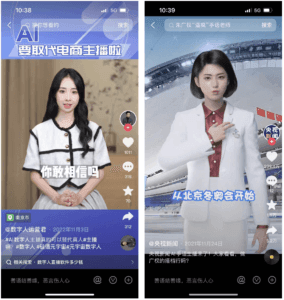
AI helps eCommerce businesses in China reduce operational costs. Alibaba, for example, utilizes AI to optimize its supply chain, predicting inventory needs and managing logistics efficiently. This automation reduces waste and ensures products are delivered quickly, improving overall customer service and reducing costs.
## Digital Human Integration
Digital humans are becoming integral in AI-driven eCommerce strategies. For example, Li Jiaqi, a well-known virtual [influencer](/social-in-china), collaborates with brands to promote products through live-streaming. These AI-powered influencers interact with consumers in real-time, offering personalized recommendations and creating a more engaging shopping experience.
## Comprehensive AI Integration
AI is integrated across the entire eCommerce value chain in China. Platforms like Taobao and Pinduoduo use AI for everything from intelligent customer service chatbots to sophisticated data analytics that drive [marketing](/grow-in-china/campaigns) strategies. This integration ensures that operations are smooth, decisions are data-driven, and customer interactions are highly personalized.
## Future Trends
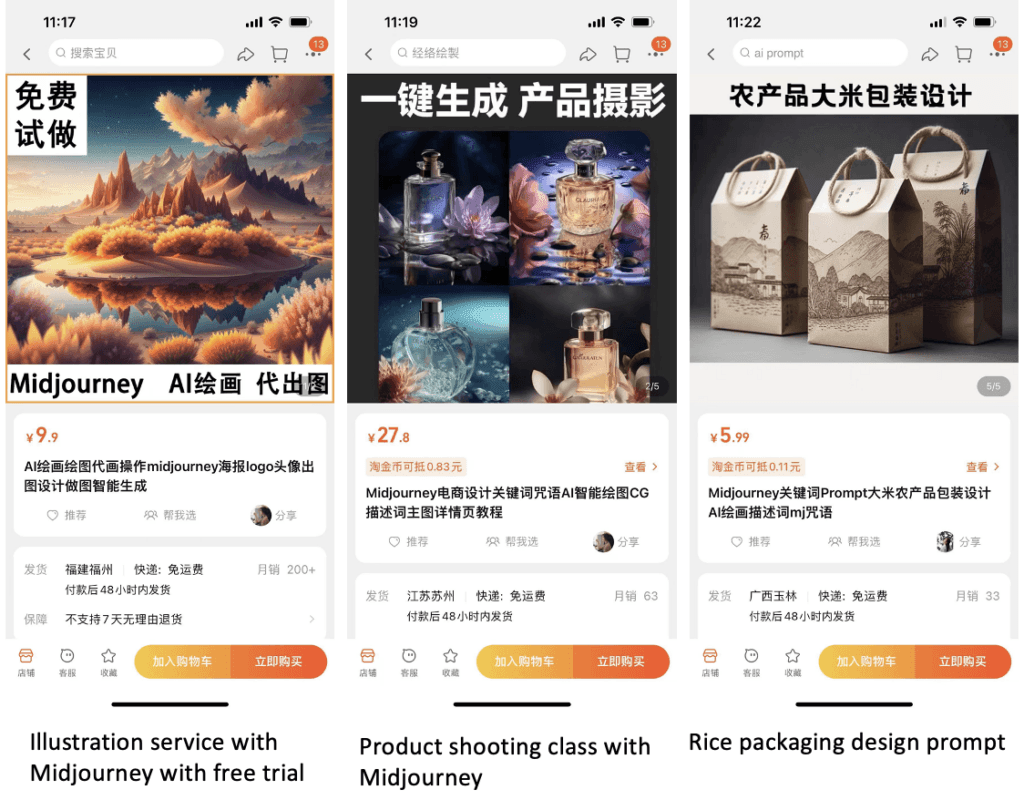
The future of AI in [eCommerce in China](/grow-in-china/cross-border-ecommerce) looks promising. The adoption of AI-generated content (AIGC) is set to rise, with platforms like Baidu using AI to create engaging content that drives user engagement. As AI technologies advance, their applications will expand, making the industry more efficient and consumer-focused.
AI is transforming China's eCommerce industry by enhancing consumer experiences, reducing operational costs, and integrating digital humans. As AI technology evolves, it will continue to drive innovation and efficiency, cementing its role as a critical component of China's eCommerce landscape. The integration of AI represents a new era of intelligent, efficient, and customer-focused online retail, poised to revolutionize the market.
---
# Alibaba's Strategic Expansion: 1688's Launch on Taobao and Its Market Implications
URL: https://www.thechinapath.com/insights/alibabas-strategic-expansion-1688s-launch-on-taobao-and-its-market-implications
Published: 2024-03-27
Author: TheChinaPath
Category: Platforms
Alibaba's 1688 wholesale marketplace opened three official stores on Taobao, bringing factory-level prices to shoppers who buy in bulk or for business.
## Alibaba's 1688 Bolsters Market Position with Taobao Online Stores Launch
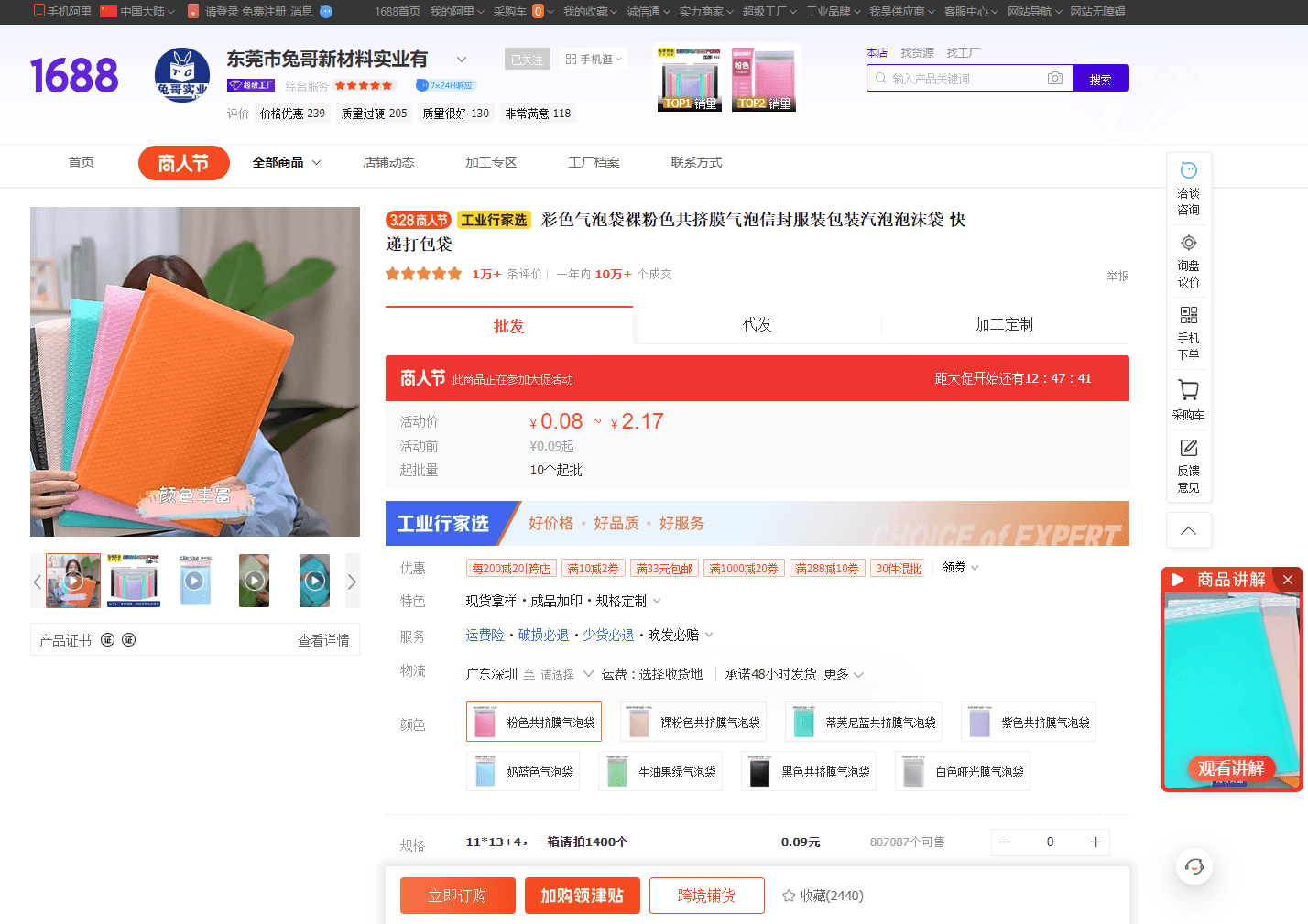
Alibaba's 1688, renowned as China's preeminent integrated domestic wholesale marketplace, has recently enhanced its strategy for competitive pricing by inaugurating three official online stores on [Taobao](/grow-in-china/cross-border-ecommerce). This move is anticipated to escalate the influx of affordably priced goods. According to insights from KrASIA, "1688's vast network spans 174 out of China's 192 A-level and above industrial belts, with its annual business volume potentially reaching RMB 2 trillion (about USD 278.4 billion)," making it a cornerstone for merchants across various platforms like Taobao and others in search of reliable suppliers.
## Diversifying E-commerce Offerings: 1688's New Online Shops on Taobao
These newly launched stand-alone stores on [Taobao](/grow-in-china/cross-border-ecommerce) diversify their offerings into three categories: well-known brand-name factory-produced furniture and general merchandise, office supplies and business consumables, and unbranded white-label products. This expansion aligns with Taobao's plans to create a dedicated channel akin to Tmall Supermarket for 1688-based businesses. Such an initiative will simplify the shopping process for users, allowing them to access a wide array of goods directly on Taobao without the necessity of downloading the 1688 app, thereby broadening their shopping experience.
## 1688: A Cornerstone in Alibaba's E-commerce Ecosystem
1688's journey since its inception in 1999 illustrates its central role within Alibaba Group's ecosystem, serving as a key player in connecting manufacturers and wholesale sellers to a vast network of wholesale buyers across China. The platform's extensive catalog includes a variety of goods ranging from apparel and accessories to office supplies and electronics.
## Understanding the Synergies and Distinctions Between 1688 and Taobao
Furthermore, the distinctions between 1688 and Taobao extend beyond their recent collaboration. While both platforms are integral parts of the Alibaba Group, they cater to different market segments. Taobao, dominating China's online shopping landscape in recent years, is celebrated for its expansive product range and consumer-centric deals, offering an engaging retail experience for individual customers. In contrast, 1688 operates on a B2B model, providing a wholesale marketplace that focuses on facilitating transactions between businesses, making it an ideal platform for bulk purchases and commercial buyers.
This strategic move by Alibaba's 1688 to open online shops on Taobao not only reinforces the company's commitment to offering value through competitive pricing but also signifies a tight integration within Alibaba's ecosystem, aiming to enrich the consumer experience while fostering a more accessible and efficient supply chain for businesses globally.
---
# Best Practices for Finding a Chinese Name for a Brand in China
URL: https://www.thechinapath.com/insights/best-practices-for-finding-a-chinese-name-for-a-brand-in-china
Published: 2025-01-14
Author: TheChinaPath
Category: Brand & Localization
A Chinese brand name has to sound close to the original, carry the right meaning and fit your values. How foreign brands get that balance right.
## Understand the Cultural and Linguistic Background
China's linguistic diversity and cultural complexity make [naming](/enter-china/branding-localisation) a brand more than just a simple translation exercise. Mandarin is the official language and is spoken by the majority of the population, but other dialects like Cantonese also play a significant role, particularly in regions like Hong Kong and Guangdong.
### Key Cultural Considerations
* **Symbolism in Characters:** In Chinese, every character carries its own meaning and emotional weight. When combined, characters can convey powerful messages or unintended meanings. For instance, a seemingly neutral name in Mandarin might carry negative connotations in Cantonese.
* **Cultural Preferences:** Chinese consumers value names that reflect prosperity, happiness, or elegance. Names associated with success, fortune, and beauty are particularly appealing.
### Language Challenges
* **Pinyin Pitfalls:** Chinese pinyin (Romanized spelling) may represent several characters with entirely different meanings. For example, the sound "yōu" could mean "excellent" (优), "tradition" (悠), or "bless" (佑).
* **Dialect Variations:** A name that works in Mandarin may have a drastically different meaning in Cantonese or other dialects. Thorough testing is necessary to ensure the name works across key markets.
For businesses entering the Chinese ecommerce market, aligning your name with linguistic and cultural expectations can enhance consumer trust and loyalty. A practical starting point is to focus on Mandarin while ensuring that linguistic and cultural checks are conducted for other major dialects to avoid unintended interpretations.
## Balance Phonetics and Meaning
Choosing a Chinese brand name often involves striking the right balance between phonetic similarity to the original name and an evocative meaning that aligns with the brand's values. Brands can adopt one of three primary approaches, depending on their goals and existing equity.
### Strong Phonetic Link
This approach closely mimics the sound of the original name using Chinese characters. It's ideal for brands with strong global recognition that want to maintain consistency.
* Example: Adidas (阿迪达斯, Ādídásī) retains the sound of the original name while using neutral characters to avoid unintended connotations.
### Strong Evocative Meaning
Here, the focus shifts to creating a name that conveys the brand's essence or values, even if it doesn't sound like the original.
* Example: Marriott (万豪, Wànháo) translates to "million grand," evoking a sense of luxury and sophistication.
### Phonetic and Meaningful Blend
This approach combines both phonetic similarity and meaningful character selection, often seen as the gold standard for Chinese brand names.
* Example: Coca-Cola (可口可乐, Kěkǒu Kělè) sounds similar to the original name and translates to "tasty happiness," aligning perfectly with the brand's image.
For brands involved in douyin ecommerce or social media China, selecting a name with emotional appeal and phonetic familiarity enhances brand recall and consumer connection.
## Align with Brand Values and Market Positioning
A Chinese name is an opportunity to reinforce your brand's identity while appealing to local consumer aspirations. In many cases, this may involve adapting your messaging to resonate more strongly with the [Chinese market](/enter-china/market-entry-consulting).
### The Power of Cultural Resonance
In China, brand names often evoke aspirations, such as success, happiness, or prestige. Consumers connect deeply with names that align with their values and desires.
* LinkedIn (领英, Lǐng Yīng): The name means "leading elite," which reflects professional success and status, appealing to the career-focused Chinese audience.
* Head & Shoulders (海飞丝, Hǎi Fēi Sī): Translates to "flying silk of the sea," creating an image of beauty and elegance that resonates with local consumers.
### Adaptation for Relevance
Sometimes, brands must adapt their global positioning to better align with local values. For instance, LinkedIn's original positioning of "connecting everyone" was less compelling to Chinese professionals than the aspirational "leading elite." This highlights the importance of aligning the brand message with consumer priorities.
Engaging with a [marketing](/grow-in-china/campaigns) agency China ensures your brand adapts its positioning to better align with these local values.
## Simplify for Memorability and Market Entry
Simplicity is key to ensuring your Chinese brand name is memorable, easily recognizable, and suited for digital platforms like Wechat or Douyin ecommerce.
### Keep It Short and Simple
* Avoid overly complex names with multiple characters that are difficult to pronounce.
* Ensure that the name is easy to write and recognize, particularly in digital and mobile contexts where consumers encounter brands frequently.
### Digital Readiness
As Chinese ecommerce and social media China increasingly dominate consumer interactions, your brand name must perform well in these spaces. Names should:
* Be compatible with search algorithms on platforms like Baidu or WeChat.
* Stand out in China livestream or douyin livestreaming events, where immediacy and recall are vital.
### Trademark Protection
Legal issues can arise if your name is not unique or already registered. A media agency China or a digital agency China can help with trademark checks to secure exclusive rights for your name. This ensures you avoid legal disputes and build a strong foundation for your brand.
## Conduct Thorough Market Testing
No matter how carefully a name is crafted, testing it with real consumers is essential. Focus groups, surveys, and linguistic analyses can help identify potential issues and refine the name before launch.
### Key Testing Steps
#### Linguistic Analysis
Ensure the name is clear, positive, and meaningful across major dialects.
#### Cultural Feedback
Test the name with focus groups to gauge emotional reactions and cultural resonance.
#### Competitor Benchmarking
Compare your name against competitors to ensure it stands out.
Market testing not only minimizes risks but also provides valuable insights into consumer preferences and expectations.
## Conclusion
Choosing a Chinese brand name is a critical step in successfully entering and thriving in the Chinese market. A name that balances phonetic resemblance, cultural relevance, and brand values can elevate your brand's presence and strengthen its connection with local consumers.
Whether you're targeting douyin ecommerce, crossborder ecommerce China, or social media China, a thoughtfully chosen name not only enhances recognition but also builds lasting trust with your audience. With the right strategies and rigorous testing, your brand can achieve meaningful connections and lasting success in this market.
---
# Best Practices for KOC / Key Opinion Consumers Marketing in China
URL: https://www.thechinapath.com/insights/best-practices-for-koc-marketing-in-china
Published: 2024-12-07
Updated: 2026-05-15
Author: TheChinaPath
Category: KOLs & Livestream
Key Opinion Consumers (KOCs) are the micro-influencers Chinese shoppers trust. They cost less than celebrity KOLs and reach engaged niche audiences.
## Best Practices for KOC / Key Opinion Consumers Marketing in China
China's eCommerce market is booming, and earning customer trust has never been more important. While big influencers, or Key Opinion Leaders (KOLs), used to dominate the scene, Key Opinion Consumers (KOCs) are now taking the lead. These everyday shoppers share genuine reviews and experiences, making them a powerful way for brands to connect with people on a more personal level.
For businesses looking to capitalize on this trend, partnering with a digital agency in China or a branding agency in China can help ensure [campaigns](/grow-in-china/campaigns) are strategic, impactful, and well-targeted.
This guide explores the best practices for using KOCs in China to grow your business, foster trust, and maximize sales in the competitive Chinese eCommerce market.
## What is KOC Marketing in China?
KOCs are micro-influencers who prioritize authenticity and relatability. Unlike KOLs, who often have a large but less engaged audience, KOCs establish credibility by sharing personal experiences and honest product reviews. They typically operate within niche markets, targeting specific communities with shared interests or needs.
With the help of a marketing agency in China, brands can identify the right KOCs to align with their goals, ensuring campaigns are both authentic and effective. As Chinese consumers increasingly seek genuine recommendations over celebrity endorsements, [KOC marketing](/social-in-china) has become an essential strategy.
## Benefits of KOC Marketing for eCommerce in China
### Builds Authentic Connections
KOCs offer real-life reviews, making their content relatable and trustworthy. Their audience sees them as peers rather than promoters.
### Cost-Effective Strategy
Partnering with KOCs is more affordable than working with high-profile influencers. Brands can stretch their budgets by collaborating with multiple KOCs for greater reach.
### Engages Niche Audiences
KOCs often specialize in specific categories, such as beauty, fitness, or tech, allowing brands to connect with highly targeted communities.
### Reduces Reputation Risks
With smaller and more engaged followings, KOCs face less public scrutiny, minimizing the risk of controversies that could harm a brand's image.
A media agency in China can guide brands in planning campaigns that maximize these benefits while avoiding potential pitfalls.
## Best Practices for Using KOCs in China's eCommerce Market
Selecting the right Key Opinion Consumer (KOC) is a critical step in ensuring the success of your eCommerce strategy in China. Here's a detailed, step-by-step guide to making the right choice.
### Define Your Marketing Goals
Begin by identifying your specific marketing objectives. For example, if your aim is to increase brand awareness, you might prioritize KOCs with a moderate following but broad appeal. Conversely, if your focus is on niche engagement and driving sales, you should target KOCs with smaller, highly engaged communities that align closely with your product category.
Understanding your end goal is key to narrowing down suitable candidates.
### Analyze the KOC's Audience
The audience demographics of a KOC are just as important as the influencer themselves. Look for KOCs whose followers match your target customer profile in terms of age, interests, location, and purchasing habits. Also, evaluate the KOC's engagement rate. A smaller but more interactive audience often delivers better results than a large, passive one.
### Research Relevant Social Media Platforms
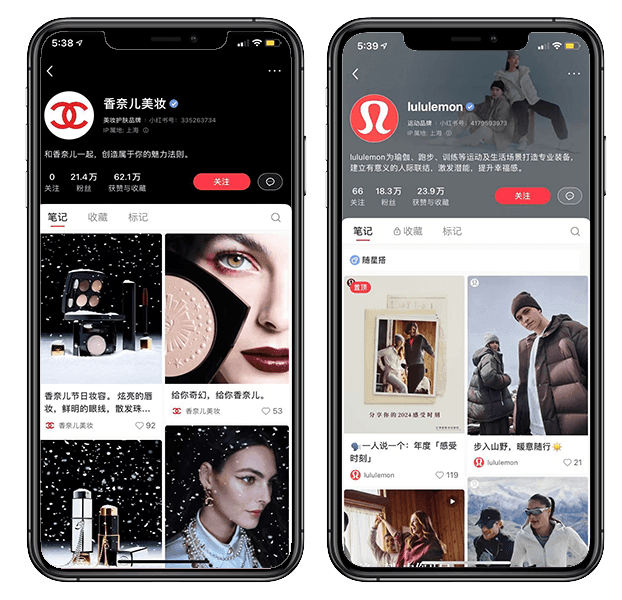
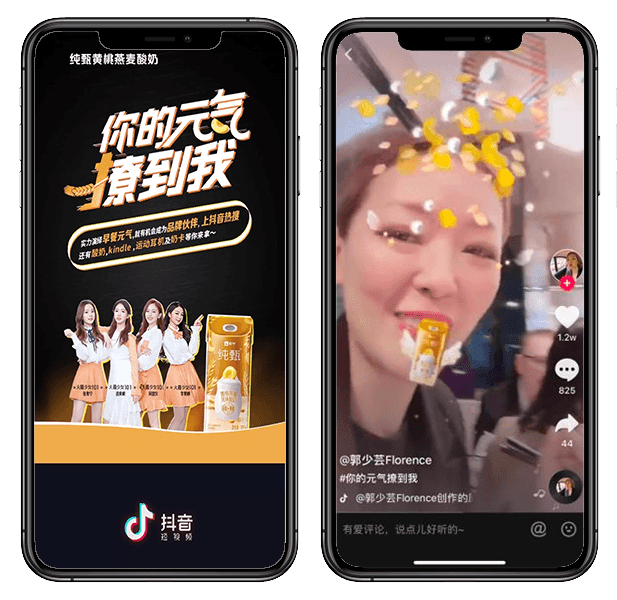
Choosing the right platform is equally essential when selecting a KOC. Platforms like Little Red Book (Xiaohongshu) are perfect for beauty and lifestyle brands, while Douyin (Chinese TikTok) works well for creating engaging, viral content. For more professional and information-driven campaigns, platforms such as Zhihu or Weibo may be more effective. Your decision should be based on where your target demographic is most active. Collaborating with a media buying agency in China can help you identify the most effective channels for your audience.
### Review Content Style and Format
The content produced by a KOC should resonate with your brand's voice and aesthetic. Some KOCs excel at creating short-form videos, ideal for quick product demonstrations, while others specialize in long-form storytelling, which works well for building deeper connections. Assess the KOC's existing content to ensure it aligns with your brand's vision.
### Evaluate Authenticity and Credibility
Authenticity is a defining characteristic of successful KOCs. Avoid KOCs who have overly commercialized content or questionable follower bases, as these factors can undermine trust. Review their past endorsements to confirm they provide genuine, thoughtful reviews rather than generic promotions. Consumers are more likely to trust KOCs who share personal, relatable experiences with products.
### Consider Cultural Relevance and Localization
Cultural alignment is crucial in the Chinese market. Look for KOCs who understand and engage with local customs, trends, and preferences. A KOC's ability to localize your brand message will significantly impact how well your product resonates with their audience.
### Verify Campaign Compatibility
Finally, assess whether the KOC is open to the type of collaboration you envision, such as live-streaming events, short video promotions, or product tutorials. Some influencers may excel in one format but struggle with others, so compatibility with your campaign format is essential. Additionally, ensure the KOC has the skills and personality to effectively communicate your brand's value proposition.
By following these steps, you can identify the ideal KOCs to represent your brand and maximize the effectiveness of your marketing efforts in China.
## How to Maximize the Impact of KOC Campaigns
### Encourage User-Generated Content (UGC)
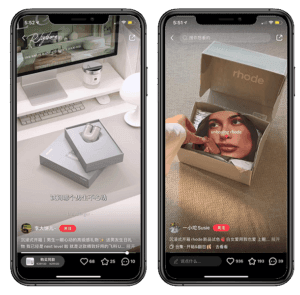
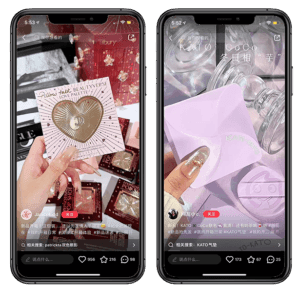
KOCs excel at creating relatable UGC. Encourage them to share reviews, tutorials, or "unboxing" videos that showcase your product authentically. UGC can be repurposed across your digital channels to amplify reach.
### Offer Exclusive Experiences
Providing KOCs with exclusive products or early access to launches can enhance their enthusiasm and content quality. These perks make their reviews feel more special and compelling.
### Use Data and Analytics
Collaborate with a digital agency in China to analyze key metrics like engagement, reach, and conversions. Data insights can refine your strategy for future campaigns.
### Integrate KOC Marketing into Broader Campaigns
Combine KOC efforts with other digital marketing strategies like SEO, paid ads, and email marketing for a cohesive approach. This integration can magnify the overall effectiveness of your campaigns.
### Monitor Trends and Feedback
Chinese consumer preferences evolve quickly. Regularly review campaign performance and adapt to emerging trends with the help of a branding agency in China.
## Challenges in KOC Marketing and How to Overcome Them
### Spotting Authentic Influencers
The rise of fake followers can make it hard to identify genuine KOCs. Use influencer analysis tools and partner with a media agency in China to verify authenticity.
### Navigating Platform Complexities
Each platform in China has unique features and algorithms. A digital marketing agency in China can help you optimize campaigns for each platform's specific audience.
### Balancing Creativity with Control
Micromanaging KOCs can stifle their authenticity. Instead, provide clear guidelines while giving them freedom to express their genuine opinions.
## Conclusion
KOC marketing is changing how brands succeed in China's competitive eCommerce world. By keeping it authentic, targeting niche audiences, and teaming up with experts like a digital or branding agency in China, you can build trust, boost sales, and make your brand a go-to choice for consumers.
As the digital market evolves, staying ahead means being flexible, working with the right partners, and focusing on genuine connections. Embracing KOC marketing can help your brand thrive in this fast-paced and exciting market.
---
# Best Practices for Successful E-Commerce Livestreaming in China
URL: https://www.thechinapath.com/insights/best-practices-for-successful-e-commerce-livestreaming-in-china
Published: 2024-12-06
Author: TheChinaPath
Category: KOLs & Livestream
How brands sell through e-commerce livestreaming in China on Taobao Live and Douyin, from real-time engagement to building lasting customer relationships.
## Understanding the Rise of Livestream E-Commerce in China
[Livestream](/social-in-china) [e-commerce](/grow-in-china/cross-border-ecommerce) in China is more than a trend, it's a dominant force in the retail ecosystem. Platforms like Taobao Live, Douyin (TikTok's Chinese counterpart), and Kuaishou have transformed traditional shopping into an interactive and entertaining experience. Shoppers can see products demonstrated in real-time, ask questions, and make purchases smoothly, creating a more informed and engaging buying journey.
The growth is fueled by several factors:
* A digital-first audience, particularly Gen Z and Millennials.
* The influence of Key Opinion Leaders (KOLs) who shape purchasing decisions.
* The expertise provided by digital marketing agencies to create innovative campaigns.
## Choosing the Right Platform for Livestreaming Success
China's livestreaming ecosystem is diverse, with platforms catering to specific audiences and industries. Choosing the right platform is critical for maximizing reach and engagement.
### Taobao Live
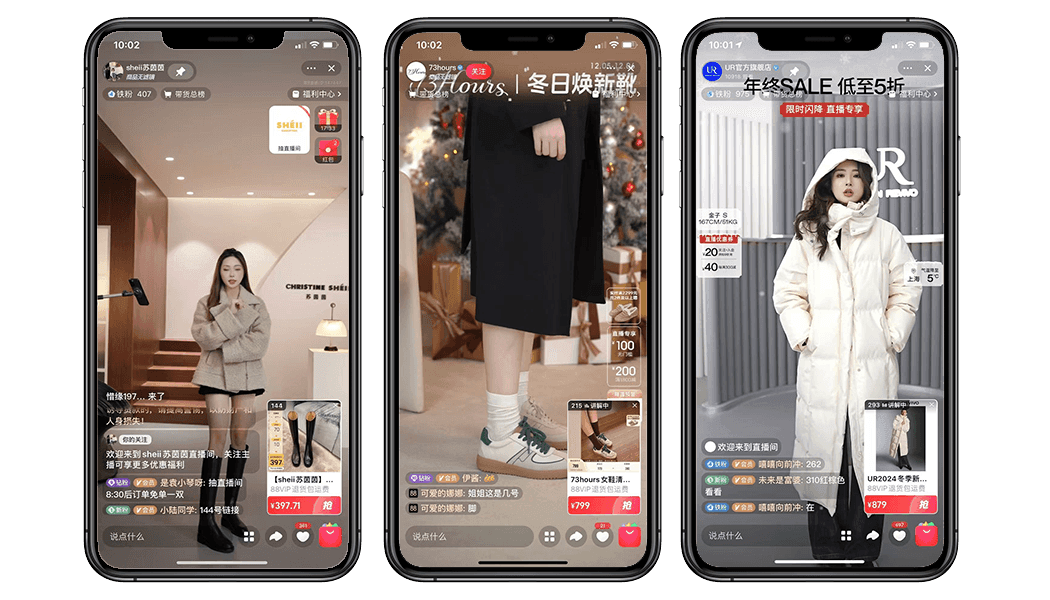
Taobao Live leads the market, accounting for over 70% of livestream transactions. It's ideal for large-scale campaigns and offers tools to maximize sales during shopping festivals like Singles' Day.
### Douyin
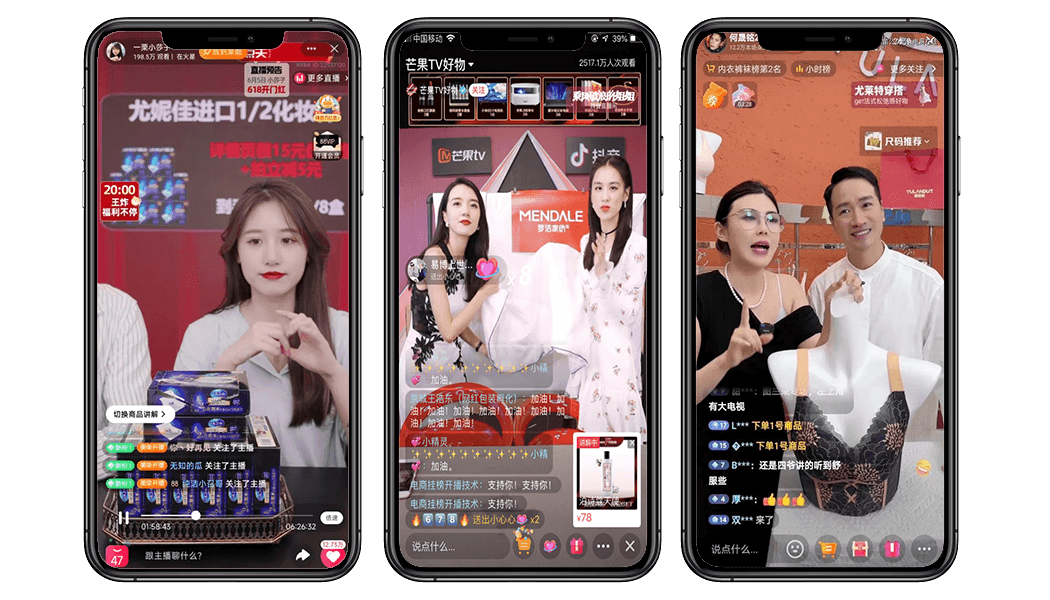
Douyin excels in blending entertainment and commerce. With its younger demographic and visually rich content, Douyin is perfect for brands looking to showcase innovative products.
### Kuaishou
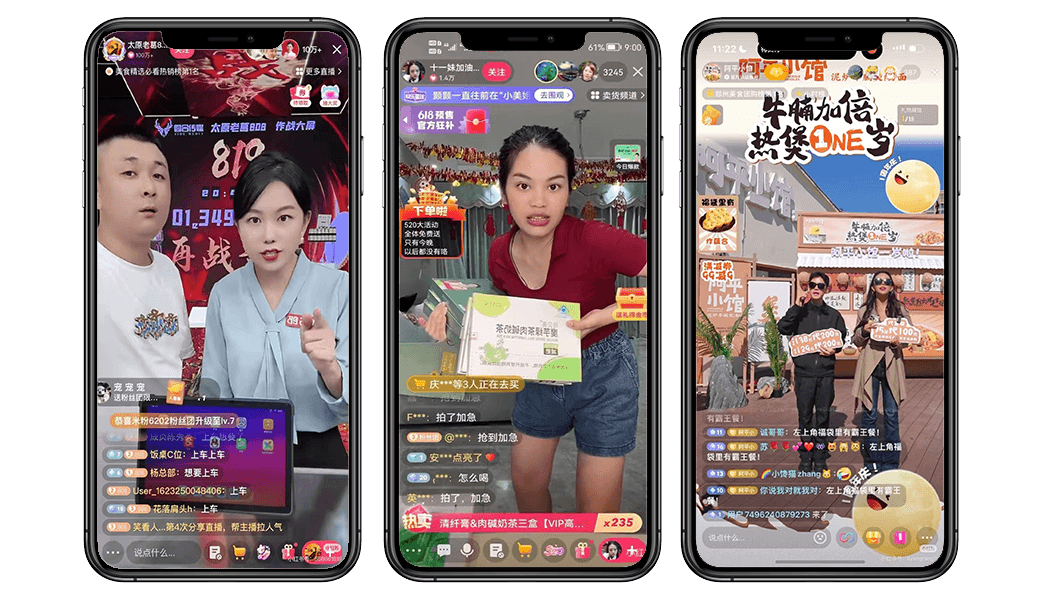
Kuaishou emphasizes authenticity and relatability, making it ideal for regional campaigns. It's a great choice for brands focusing on building trust within niche communities.
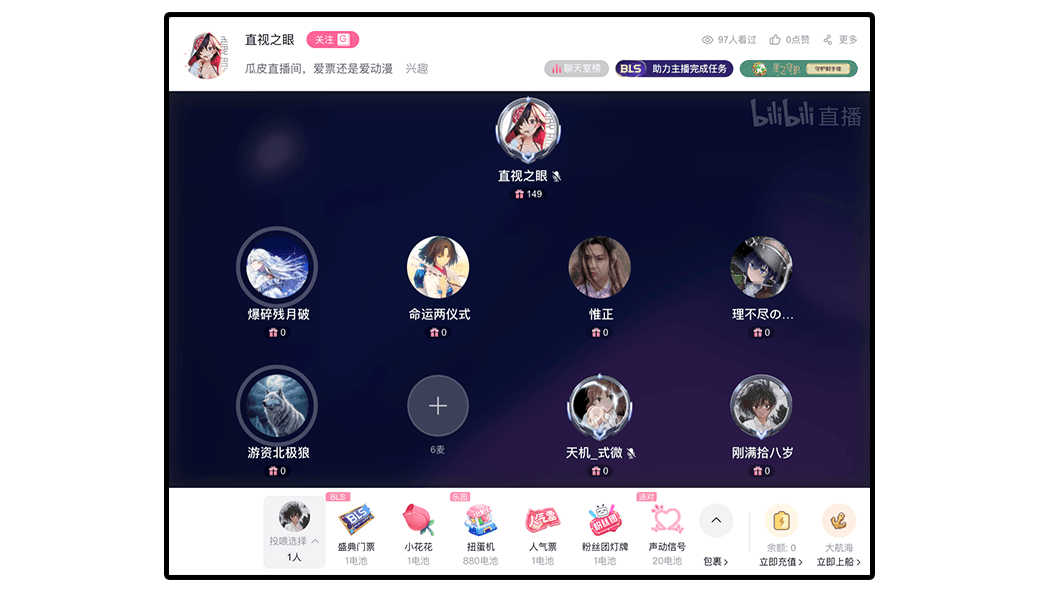
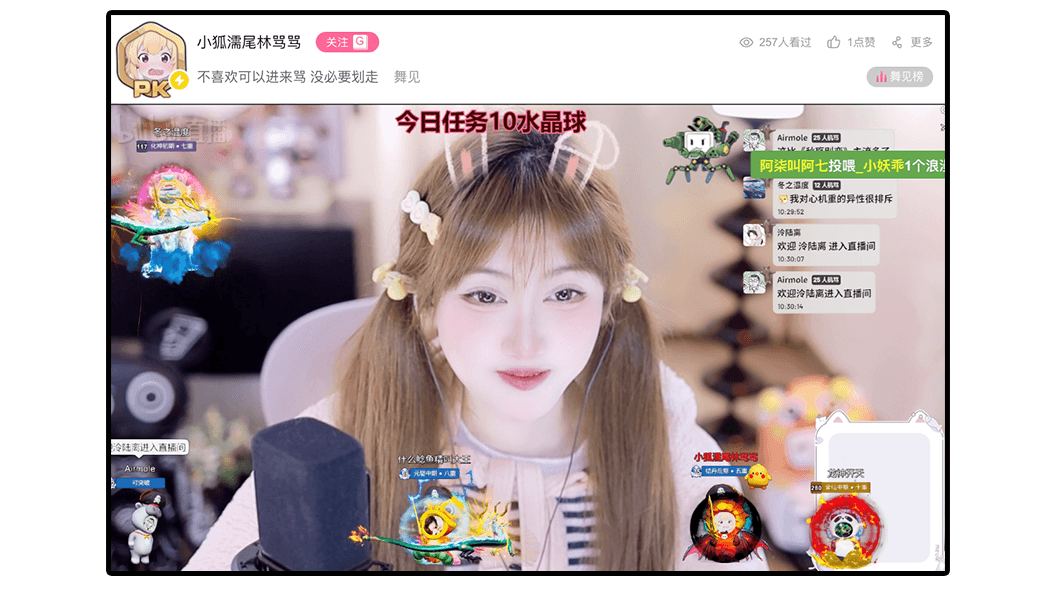
### Bilibili
Bilibili caters to younger audiences who value in-depth content. Its emphasis on education and entertainment makes it a strong option for detailed product demonstrations.
## Developing a Winning Livestream Strategy
Success in livestreaming requires detailed planning and creative execution. Working with a marketing agency can streamline this process, from setting goals to delivering engaging content.
### Define Your Goals
Clarify your objectives. Are you launching a product, increasing brand awareness, or driving immediate sales? Each goal requires a tailored approach, from selecting the right host to designing the call-to-action.
### Partner with Influencers and KOLs
Influencers are the backbone of Chinese livestreaming. Their established trust and rapport with their followers can significantly boost sales. Collaborate with KOLs who align with your brand values to maximize authenticity and impact.
### Invest in Quality Production
High-quality visuals and sound can make or break a livestream. Invest in professional lighting, cameras, and staging to ensure your presentation reflects the quality of your brand.
### Create Engaging and Interactive Content
Successful livestreams are not static, they're dynamic and interactive. Include live Q&A sessions, demonstrations, and polls to keep the audience engaged. Special deals and limited-time offers during the stream also create urgency and boost sales.
## The Role of Shopping Festivals in Livestreaming
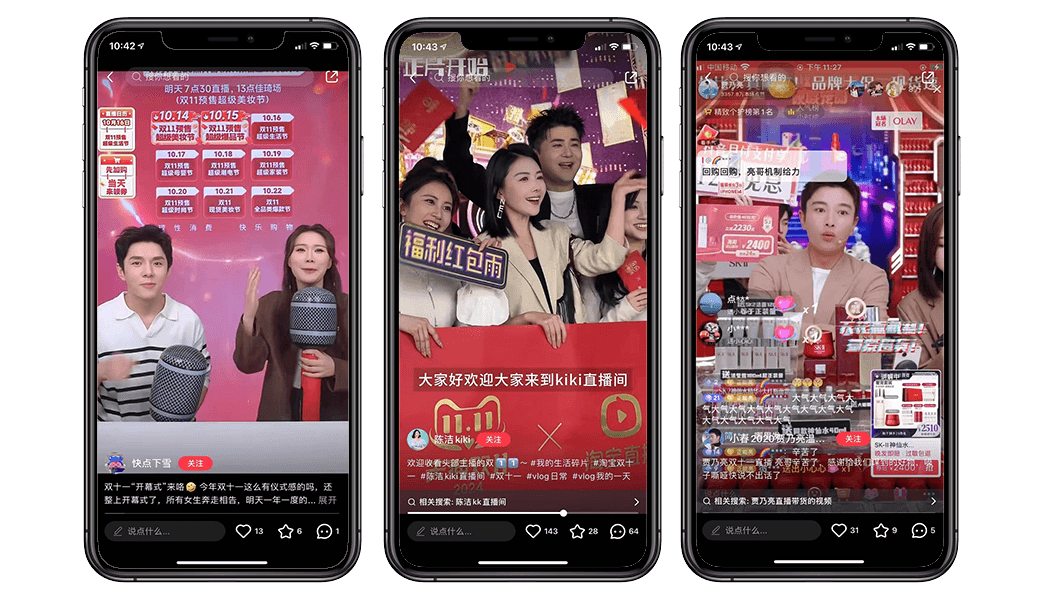
Shopping festivals, such as Singles' Day and the 618 Festival, are central in the success of livestream e-commerce. During these events, brands can capitalize on heightened consumer enthusiasm and purchasing intent.
To make the most of these opportunities:
* Plan your campaigns months in advance.
* Collaborate with platforms and influencers for pre-event promotions.
* Offer exclusive discounts and bundles to stand out amidst competition.
## Tailoring Your Content for Chinese Consumers
Understanding the preferences of Chinese consumers is critical to success.
### Highlight Product Benefits Through Demonstrations
Showcase products in real-time to build trust and familiarity. Demonstrations are particularly effective in categories like beauty, fashion, and technology.
### Incorporate Storytelling
Aligning your content with local trends and values fosters loyalty.
### Stay Culturally Relevant
Integrate local trends, festivals, and values into your content. This shows that your brand understands and respects the culture, fostering loyalty and engagement.
## Maximizing ROI with Strategic Offers
Promotions and discounts are key drivers of livestream sales. To maximize ROI:
* Offer limited-time deals to create urgency.
* Use bundles and cross-selling to increase the average order value.
* Provide exclusive incentives for livestream viewers, such as early access to new products.
## Conclusion
E-commerce livestreaming in China is transforming the way brands connect with their audience. It's an exciting way to boost sales, engage viewers, and build strong customer relationships. By picking the right platform, working with trusted influencers, creating engaging content, and using data to guide decisions, businesses can make the most of this powerful tool. Collaborating with experts such as branding agencies, media agencies, and marketing agencies can create impactful campaigns that resonate with Chinese consumers.
---
# Best Practices to Launch a CRM Program in China
URL: https://www.thechinapath.com/insights/best-practices-to-launch-a-crm-program-in-china
Published: 2025-01-28
Author: TheChinaPath
Category: Market Strategy
How to launch a CRM program in China: picking the platform, connecting it to WeChat, Tmall and JD, and personalizing contact for Chinese consumers.
## Understand the Importance of CRM in China
CRM platforms centralize customer data, enabling businesses to enhance customer satisfaction, track behavior, and optimize marketing efforts. In China, where consumers value personalized experiences, CRM systems are indispensable for meeting expectations and improving retention rates.
China is also home to one of the world's most advanced ecommerce ecosystems, dominated by platforms like [WeChat](/grow-in-china/social-commerce), Tmall, and JD.com. Integrating CRM tools with these platforms allows businesses to collect data, analyze consumer behavior, and personalize communication effectively. Companies exploring cross-border ecommerce China or Douyin ecommerce can also benefit significantly from CRM systems that support data-driven marketing.
## Choose the Right CRM Platform for the Chinese Market
Selecting the right CRM software is critical for your success. Many platforms in China are specifically designed to integrate with the local digital ecosystem, including social media, payment systems, and ecommerce platforms. Here are some of the most reliable CRM platforms tailored for the [Chinese market](/enter-china/market-entry-consulting):
### Yonyou CRM
A pioneer in China's CRM landscape, Yonyou CRM integrates smoothly with popular platforms like WeChat and QQ. Its offerings go beyond customer management, extending to financial and employee management solutions. It is ideal for small and medium-sized enterprises (SMEs) looking for an all-in-one system.
### NeoCRM (Xiaoshouyi)
Backed by investments from Alibaba and Tencent, NeoCRM is a versatile tool with extensive industry experience. From marketing automation to sales tracking, it supports end-to-end business processes. It is ideal for enterprises in banking, technology, and other industries seeking strong mobile capabilities.
### Fxiaoke
Designed for affordability, Fxiaoke is popular among small businesses. It covers both internal and external workflows, including sales and marketing. It is ideal for startups and micro-businesses with budget constraints.
### Tencent Qidian
Developed by Tencent, this CRM excels in using data from Tencent's ecosystem, including WeChat and QQ. It features centralized data collection and social media integration. It is ideal for companies focused on maximizing social media-driven customer interactions.
## Use WeChat CRM Mini Programs
WeChat, with over a billion monthly active users, is the foundation of digital marketing in China. Its CRM mini programs allow businesses to integrate customer relationship management directly into their WeChat marketing strategies.
### Youzan
With its built-in WeChat shop management features, Youzan is ideal for businesses seeking a complete e-commerce solution. Its ability to generate reports and track purchase behaviors ensures that businesses can adjust strategies in real time. It is best for retailers and small businesses looking for a streamlined sales and marketing platform within WeChat.
### Drip
Drip's flexibility and customizable backend functions make it popular among businesses seeking advanced CRM capabilities. Its HTML5 catalogs and personalized [campaigns](/grow-in-china/campaigns) are particularly useful for brands looking to create highly engaging experiences. It is best for companies focusing on tailored customer journeys and dynamic marketing campaigns.
### Weimob
As the largest WeChat CRM provider, Weimob excels in helping offline businesses transition to online engagement. Features like VIP member management and O2O tracking make it a preferred choice for sectors like hospitality and retail. It is best for businesses combining physical and digital touchpoints to drive sales.
### JingSocial
JingSocial is perfect for businesses that want to automate customer interactions. Its advanced chatbot system and user analysis tools allow companies to provide timely responses and personalized content. It is best for brands focused on customer retention through AI-driven engagement.
## Incorporate International CRM Systems with Local Customizations
While Chinese CRM tools dominate the local market, global CRM systems like Salesforce and Zoho also offer valuable solutions. To succeed, these systems must adapt to the specific needs of Chinese businesses.
### Salesforce Customer 360
Backed by Alibaba, Salesforce provides an extensive database and advanced analytics. It integrates with local payment gateways like WeChat Pay and AliPay. Best suited for multinational companies seeking scalability and compliance with Chinese regulations.
### Zoho CRM
Known for its user-friendly interface, Zoho CRM supports marketing, sales, and customer service workflows. It features tailor-made reports and comprehensive data analysis tools. It is ideal for SMEs needing cost-effective CRM solutions.
## Localize Your CRM Program
Localization is the cornerstone of a successful CRM implementation in China. Adapting your CRM strategy to align with local consumer behavior and expectations is essential.
### Integrate with Chinese Social Media Platforms
Focus on platforms like WeChat, QQ, and Weibo to engage with customers. Use features like personalized messaging, group chats, and QR code campaigns.
### Prioritize Mobile-First Strategies
Design mobile-friendly interfaces, as Chinese consumers rely heavily on smartphones for online interactions. Utilize WeChat mini-programs and mobile-friendly landing pages.
### Align with Local Payment Systems
Ensure integration with payment platforms such as AliPay and WeChat Pay for a smooth checkout experience.
### Emphasize Data Privacy and Compliance
Adhere to Chinese data protection regulations, including local server hosting requirements.
## Measure and Optimize Performance
Continuous monitoring and optimization are crucial for CRM success. Use analytics to refine your strategies and improve customer engagement.
### Track Key Metrics
Monitor customer acquisition rates, retention rates, and satisfaction scores.
### Use Predictive Analytics
Use CRM tools to anticipate customer needs and trends.
### Solicit Customer Feedback
Regularly gather feedback to identify areas for improvement and enhance satisfaction.
## Overcome Common Challenges in CRM Implementation
Launching a CRM program in China isn't without hurdles. Being prepared can help mitigate these challenges:
* Tailor messaging to align with local traditions and values.
* Ensure compatibility with the Great Firewall and Chinese server requirements.
* Stand out by offering personalized experiences and unique value propositions.
## Conclusion
Launching a CRM program in China is a strategic investment in your business's future. By understanding local consumer behavior, using WeChat CRM tools, and focusing on personalization, you can create meaningful connections with your audience. Additionally, partnering with experienced agencies, such as a marketing agency in China or a WeChat agency in China, can help you navigate the complexities of the market while ensuring your CRM system delivers results.
By adopting these best practices and using the right tools, you can build strong relationships with Chinese consumers and position your brand for success in one of the world's most dynamic markets.
---
# Best Short Video Platforms in China
URL: https://www.thechinapath.com/insights/best-short-video-platforms-in-china
Published: 2025-02-13
Author: TheChinaPath
Category: Platforms
Douyin, Kuaishou and Bilibili lead China's short video market, which reaches more than 941 million monthly users. How brands use each one to sell.
## Why Short Video Platforms Are Important for Marketing
Digital marketing in China now relies heavily on short videos because they quickly capture consumer attention and boost engagement. Brands that master short video [platforms](/learn-china/platforms) experience benefits from:
- High engagement rates – Short videos are highly interactive and easy to consume.
- Massive reach – Platforms like Douyin and Kuaishou have hundreds of millions of active users.
- Mobile-first consumption – Chinese consumers prefer short-form content that can be accessed on the go.
- Algorithmic targeting – Advanced AI technology helps businesses reach the right audience.
- E-commerce integration – Many platforms allow users to buy products directly within the app.
Short videos provide entertainment while simultaneously influencing consumer purchasing choices. A multitude of successful brands partner with Chinese branding agencies to develop interactive content that uses storytelling to drive consumer purchasing decisions.
## The Most Popular Short Video Platforms in China
### Douyin (TikTok's Chinese Version)
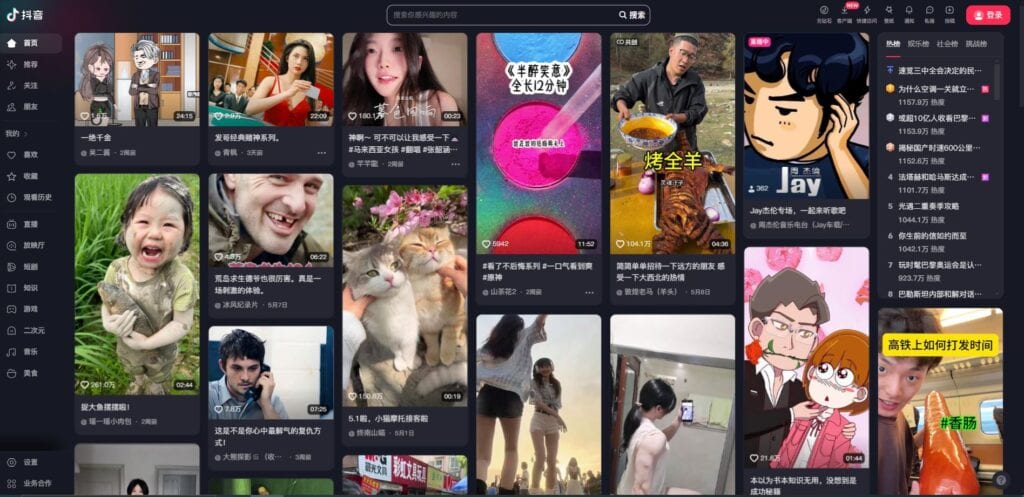
The Chinese TikTok version, Douyin stands as one of China's leading short video platforms. The Bytedance-developed Douyin platform attracts 731 million active users through its dynamic and imaginative video content. The platform's sophisticated AI algorithm ensures that users are continuously served content that matches their interests, making it an ideal platform for advertising agency China campaigns.
#### Key Features for Marketing & E-Commerce
- AI-Powered Content Recommendation – Douyin's algorithm delivers highly personalized video recommendations, making content more relevant to users.
- In-App Shopping – Brands can set up direct sales channels, allowing users to purchase products without leaving the app.
- Business Accounts – Special accounts for brands with access to advertising and analytics tools.
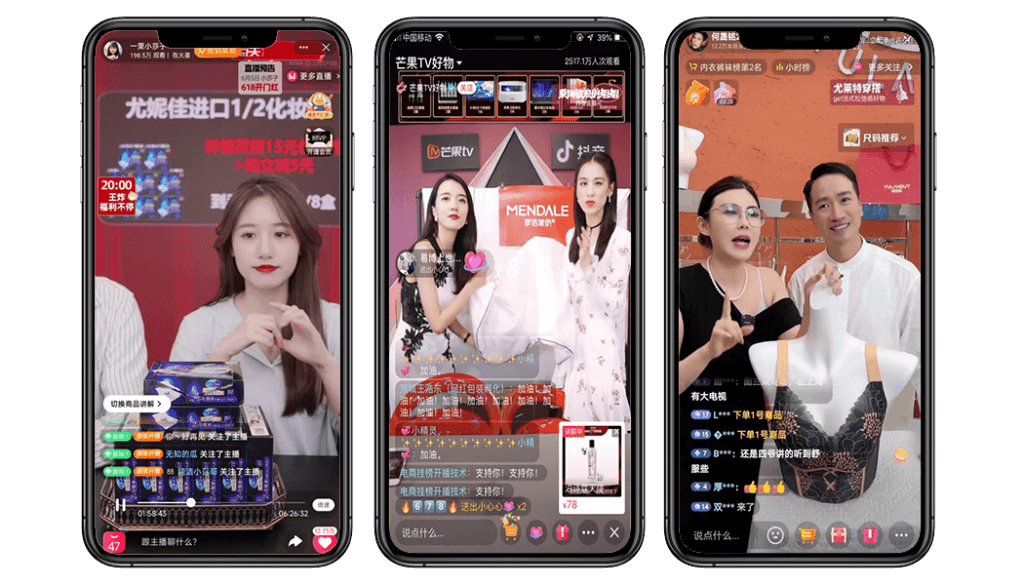
- Live Streaming Commerce – Influencers and businesses can sell products through live-streamed promotions.
#### Why Brands Use Douyin
Douyin excels as a marketing platform for brands aiming to reach young urbanites who are drawn to stylish and visually stimulating content. Many businesses collaborate with a marketing agency China to create compelling content and execute [influencer](/social-in-china) partnerships. The platform allows users to effortlessly move from viewing entertaining content to completing a purchase through its smooth e-commerce experience.
### Kuaishou
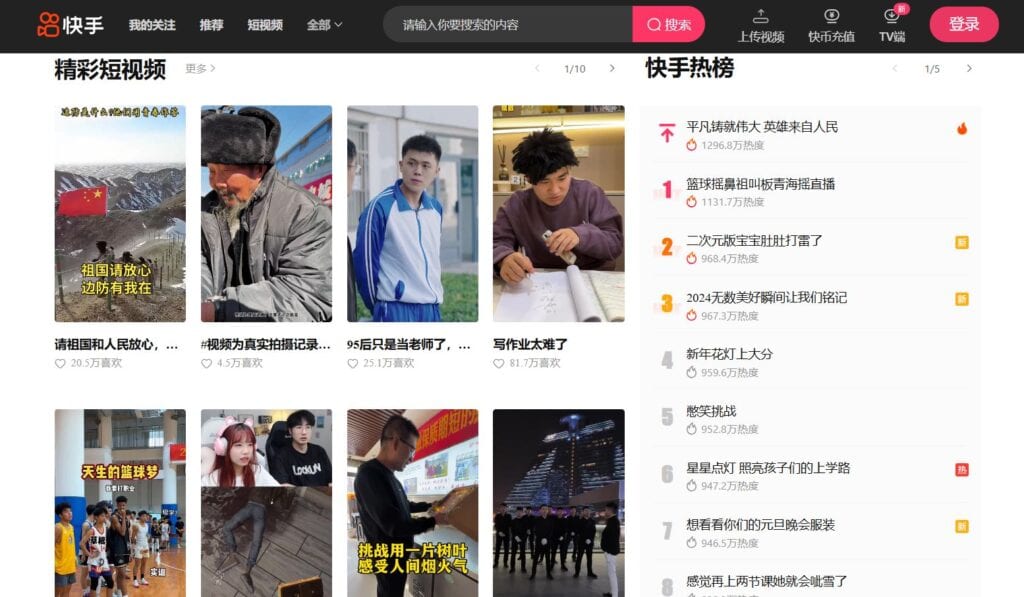
Kuaishou operates as a top short video platform serving 529 million active users. Kuaishou adopts a genuine community-focused strategy that pulls in audiences from both urban spaces and rural regions while Douyin specializes in trendy content for city dwellers.
#### Key Features for Marketing & E-Commerce
- Live Streaming Sales – One of the most effective sales strategies, enabling real-time product demonstrations.
- Social Connection Focus – Kuaishou's algorithm emphasizes user relationships over viral trends, creating a more loyal audience.
#### Why Brands Use Kuaishou
Kuaishou is perfect for brands aiming to build long-term consumer trust. The platform's focus on authentic engagement makes it a preferred choice for companies working with a branding agency China to strengthen their presence in China's lower-tier cities. Additionally, live streaming commerce on Kuaishou sees higher conversion rates, as consumers tend to trust recommendations from their favorite content creators.
## Key Marketing Strategies on China's Short Video Platforms
### Influencer Marketing
Influencer collaborations are one of the most effective ways to build brand credibility and trust. Many brands partner with Key Opinion Leaders (KOLs) and Key Opinion Consumers (KOCs) to promote their products through engaging short videos. These influencers have dedicated followers who trust their recommendations, making influencer marketing a powerful tool for driving sales and brand awareness.
### Live Streaming Commerce
Live streaming has become a dominant e-commerce trend in China, with platforms like Douyin and Kuaishou leading the way. Live shopping events allow brands to:
- Demonstrate products in real time
- Interact with customers through Q&A sessions
- Offer exclusive promotions to boost sales
Since consumers are highly engaged during live shopping sessions, working with a digital marketing agency China can help brands craft compelling live-stream content that maximizes sales potential.
### User-Generated Content (UGC)
Encouraging users to create videos featuring a brand's products helps generate organic engagement and brand loyalty. Popular strategies include:
- Hashtag Challenges – Encouraging users to participate in branded challenges.
- Review and Unboxing Videos – Allowing customers to share their experiences with products.
### Paid Advertising
Short video platforms offer a variety of advertising solutions, including:
- Targeted Ads on Douyin – AI-driven ads that reach the right audience based on interests and behaviors.
- Community-Based Ads on Kuaishou – Ads that feel more organic and integrated into social interactions.
- Sponsored Content on Bilibili – Long-form product placements and brand collaborations.
### E-Commerce Store Integration
Many short video platforms now offer direct shopping experiences, allowing users to smoothly move from entertainment to purchase. This trend has made crossborder ecommerce China easier than ever, as businesses can sell to Chinese consumers without needing a physical store presence.
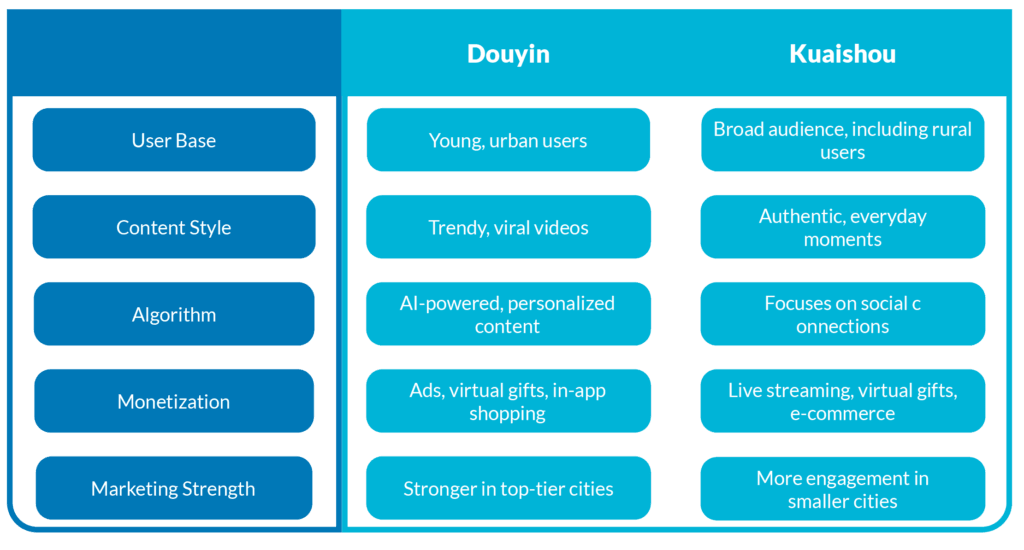
## Douyin vs. Kuaishou: Which One is Better for Marketing?
Both Douyin and Kuaishou are dominant players in China's short video market, but they cater to different audiences and marketing approaches. Brands must carefully choose the platform that aligns with their target demographic and business goals.
### Which Platform Should Your Brand Use?
Both Douyin and Kuaishou offer powerful marketing opportunities, but the best choice depends on your brand's goals.
- Use Douyin if you want:
- Fast, viral marketing that spreads quickly.
- AI-powered targeting for paid advertising.
- High-energy, creative content that aligns with trends.
- To reach urban, trend-sensitive consumers.
- Use Kuaishou if you want:
- Long-term brand trust and customer loyalty.
- Higher engagement with rural and lower-tier city consumers.
- Strong live-streaming sales and influencer-driven commerce.
- To build a community of repeat customers.
- Use both platforms together if:
- You want a well-rounded strategy targeting both urban and rural consumers.
- You plan to combine viral marketing with strong community-building.
- Your brand can benefit from multiple engagement styles (short videos + live commerce).
Many successful brands combine Douyin and Kuaishou to maximize their reach. They use Douyin for mass visibility and trend-based engagement, while Kuaishou helps them build stronger long-term customer relationships. This dual-platform strategy ensures a comprehensive market presence in China.
## The Future of Short Video Marketing in China
Chinese short video platforms will develop further by incorporating sophisticated AI technology along with augmented and virtual reality elements to enhance marketing immersion. Live commerce will continue its dominant trend as more brands utilize influencers along with interactive shopping features.
Companies aiming for digital market success in China must recognize that short video marketing has become a fundamental requirement. Companies need to remain flexible and adjust to current trends while utilizing short-form content to build meaningful connections with their audiences.
## Conclusion
The growth of short video platforms has transformed digital marketing and e-commerce landscapes in China. Brands can find unique benefits through Douyin, Kuaishou, and Bilibili which help them connect with their consumer base. In the rapidly expanding industry businesses can achieve maximum success through influencer partnerships and AI-powered advertising alongside live commerce features.
Companies aiming for success in China should consider working with a branding agency China or a digital marketing agency China to develop content strategies that will promote long-term achievements in this tough market.
---
# Top 5 Best Social Commerce Platforms in China to Drive Your Brand's Success
URL: https://www.thechinapath.com/insights/best-social-commerce-platforms-in-china-for-ecommerce-growth
Published: 2024-10-23
Author: TheChinaPath
Category: Platforms
Xiaohongshu, WeChat, Taobao, Pinduoduo and Weibo lead social commerce in China, a 2.5 trillion yuan market. What each platform can do for your brand.
## Social Commerce in China: The Market Landscape
[Social commerce](/grow-in-china/social-commerce) has transformed the way consumers shop, combining social media engagement with direct purchasing experiences. Nowhere is this shift more significant than in eCommerce China, which boasts the largest online shopping market globally. The rise of social commerce China has been powered by cutting-edge trends like China livestreaming, mobile payments, and [KOL](/social-in-china) marketing, offering unique opportunities for brands to interact with consumers. By 2021, China's social commerce market had reached over 2.5 trillion yuan (approximately $374 billion), with nearly 800 million participants, solidifying the country's role as a leader in digital retail.
For brands seeking success in China's highly competitive eCommerce space, understanding the leading eCommerce [platforms](/learn-china/platforms) in China is essential. Below, we'll explore the top social commerce platforms that can enhance your China marketing strategy and accelerate your brand's growth.
## 1. Xiaohongshu (Little Red Book)
### Overview
Xiaohongshu, also known as Little Red Book, is one of the most popular social commerce platforms in China, particularly favored by younger, urban consumers. Initially recognized for its product reviews, mainly in beauty and fashion, it has since expanded into other categories, such as lifestyle, travel, and home goods. With over 260 million active users, Xiaohongshu has become a dominant force in social commerce China, especially for brands targeting younger demographics.
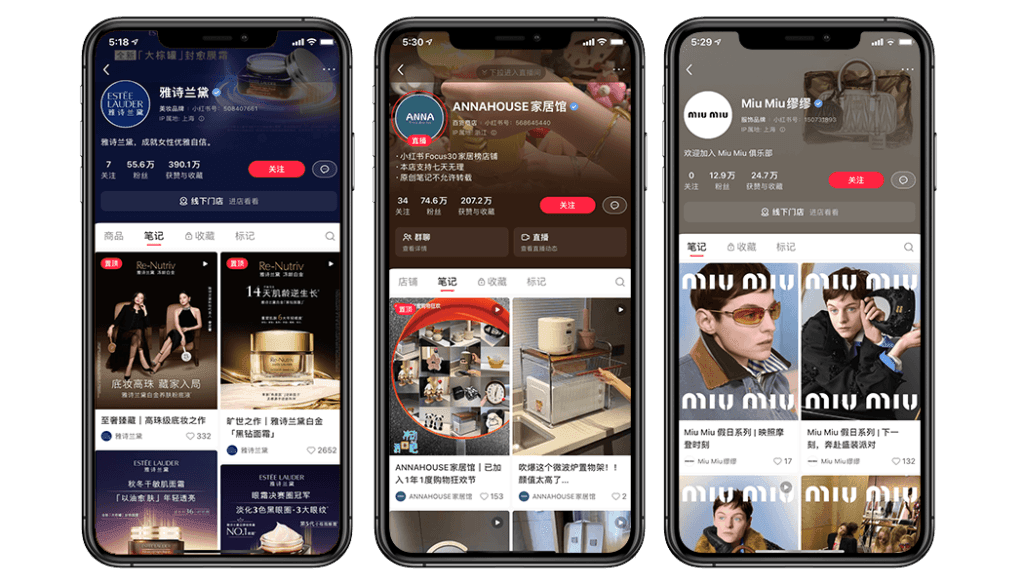
### Key Features
* **User-Generated Content (UGC)**: Xiaohongshu thrives on authentic, user-generated posts like product reviews and lifestyle tutorials, which helps build trust with its audience. This makes it an excellent platform for China brand localization.
* **China Livestreaming**: The platform's live-streaming feature allows real-time interaction with consumers, providing brands with a direct avenue to showcase products and drive sales.
* **KOL Marketing**: Xiaohongshu has an extensive focus on China KOLs (Key Opinion Leaders), allowing brands to partner with influencers who have substantial credibility and reach, which is crucial for enhancing product visibility in China.
* **Smooth Integration**: Xiaohongshu supports easy payment options through WeChat Pay and Alipay, simplifying the checkout process and boosting conversion rates.
### Marketing Opportunities
For brands seeking success in eCommerce China, Xiaohongshu offers multiple opportunities for China performance marketing. By using live-streaming and China influencers for product promotions, brands can effectively engage with younger, highly active users and establish long-term relationships.
## 2. WeChat
### Overview
WeChat is much more than a messaging platform; it is an all-in-one super app that smoothly integrates Chinese social media, mobile payments, and eCommerce platform China. With over 1.2 billion active users, WeChat offers brands unprecedented reach and engagement opportunities, making it a key player in China digital marketing.
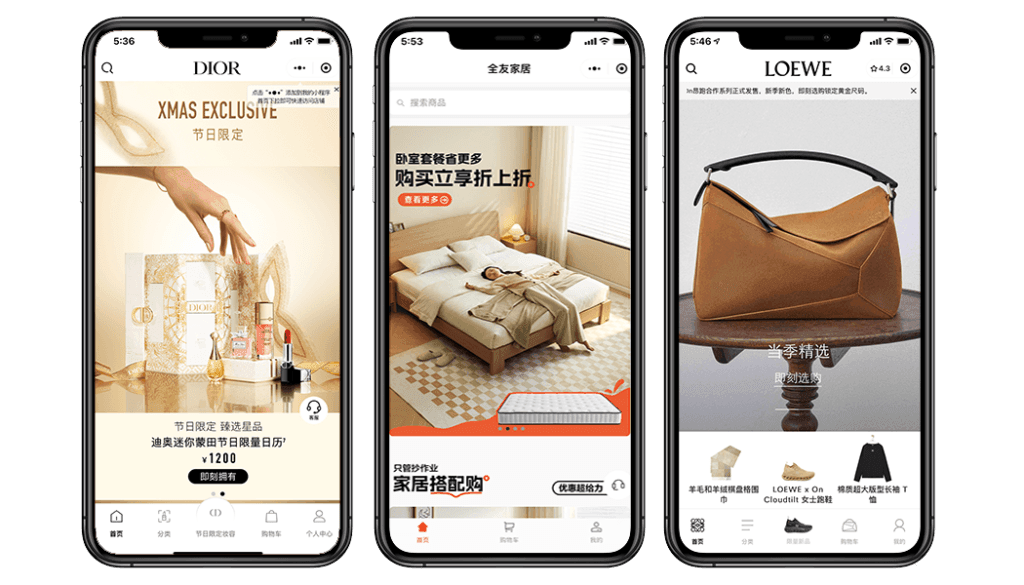
### Key Features
* **WeChat Mini Programs**: These are sub-applications within the WeChat ecosystem that allow brands to create personalized shopping experiences, from product discovery to checkout, all within the app. Mini Programs are vital for China brand localization.
* **WeChat Pay**: The platform's integrated payment system simplifies transactions, making it easier for users to purchase directly within the app.
* **WeChat Channels**: This video platform enables brands to utilize China livestreaming to engage consumers in real-time, increasing sales through live product demonstrations.
* **Private Traffic**: By building official accounts and user groups, brands can create direct communication channels, helping to lower customer acquisition costs in a saturated marketplace.
### Marketing Opportunities
WeChat offers significant advantages for brands aiming to enhance their China social media strategy. By utilizing Mini Programs and China livestreaming, brands can engage with consumers more effectively and facilitate smooth, integrated shopping experiences.
## 3. Taobao/Tmall (GuangGuang)
### Overview
As a major player in eCommerce China, Taobao and Tmall, owned by Alibaba, have dominated the market through their social commerce China features, particularly through their GuangGuang platform. These platforms provide brands access to millions of consumers, making them a top choice for companies looking to scale quickly.
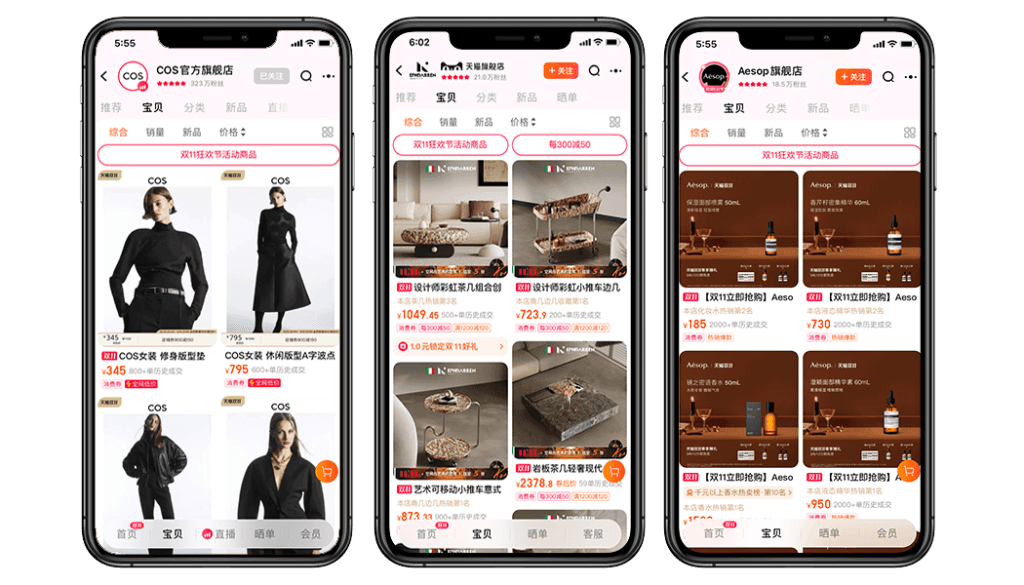
### Key Features
* **Live Streaming KOLs**: With the rise of live-streaming influencers like Li Jiaqi, Taobao's live-streaming feature has become a cornerstone for product promotion, driving millions in sales. Brands benefit from partnering with China KOLs to boost engagement during peak events.
* **Special Sales Events**: Major sales events, such as the Double 11 Festival, offer exclusive deals, providing brands with key opportunities to capture consumer attention.
* **Huge Consumer Base**: Taobao and Tmall hold one of the largest user bases in eCommerce platform China, making them essential for any brand looking to reach a broad audience.
### Marketing Opportunities
For brands, using China KOLs during live-streaming events and taking part in seasonal sales on platforms like Tmall and Taobao can significantly boost visibility and sales. Their entertainment-driven shopping model makes Taobao and Tmall powerful tools for driving customer engagement and conversions.
## 4. Pinduoduo
### Overview
Pinduoduo is a rising star in social commerce China, standing out with its unique group-buying model. By encouraging users to make purchases with friends and family, Pinduoduo has quickly gained a strong foothold, particularly in lower-tier cities, attracting over 500 million buyers.
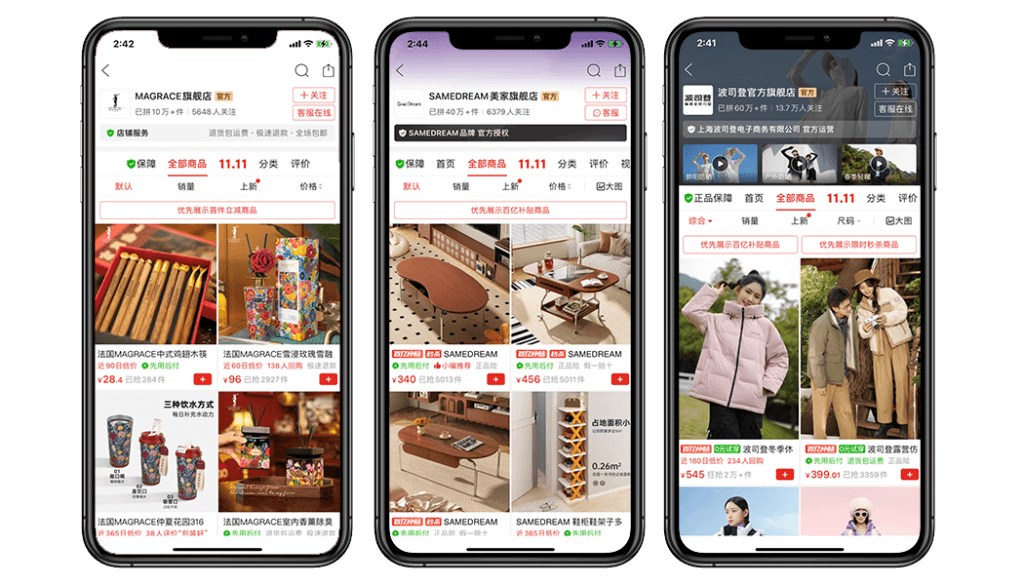
### Key Features
* **Group Buying**: Users receive discounts when purchasing items as part of a group, making it a highly social experience that leans into the power of community buying and China ebusiness.
* **Gamification**: Pinduoduo employs gamified features, where users can earn discounts or rewards by playing games, thus increasing user engagement and repeat visits.
* **Focus on Value**: Pinduoduo's emphasis on low-cost products and exclusive discounts makes it popular among price-conscious consumers, particularly in less affluent areas.
### Marketing Opportunities
Pinduoduo is ideal for brands that want to capitalize on China social media shopping behaviors through group buying and community-driven promotions. The platform is especially effective for product launches and promotions that rely on social proof and word-of-mouth marketing.
## 5. Weibo
### Overview
Weibo, often referred to as China's version of Twitter, has maintained a strong presence in the country's digital landscape, evolving into a significant social commerce China platform. With the launch of Weibo Xiaodian, brands can now sell products directly on the platform, transforming Weibo into a powerful eCommerce tool.
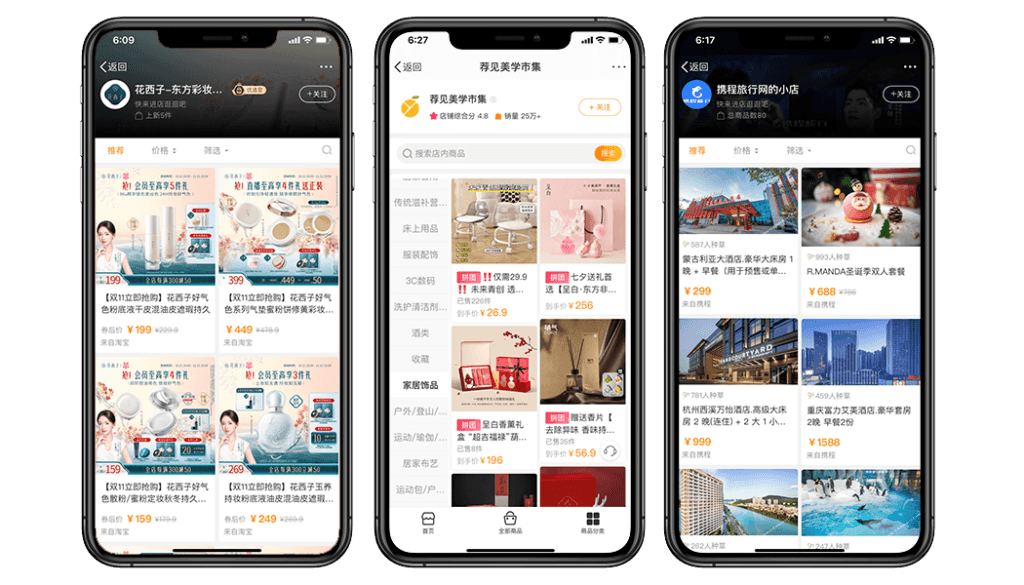
### Key Features
* **Weibo Xiaodian**: This eCommerce feature allows brands to create online stores within Weibo, facilitating direct sales without redirecting users to external websites.
* **KOL Partnerships**: As a hub for China influencers and celebrities, Weibo is a key platform for KOL marketing, providing brands with a direct connection to influential figures who can help promote their products.
* **Diverse User Base**: Weibo's extensive reach, covering various demographics, ensures that brands can target a wide array of consumers across different market segments.
### Marketing Opportunities
Weibo's combination of social media interaction and eCommerce functionality makes it an ideal platform for China brand localization and influencer-driven marketing. By working with China KOLs, brands can drive higher engagement and sales through personalized, trusted recommendations.
## Conclusion
Social commerce China has become a vital component of the country's eCommerce landscape, offering brands various opportunities to engage with consumers and drive sales through interactive, content-rich shopping experiences. Platforms like Xiaohongshu, WeChat, Taobao/Tmall, Pinduoduo, and Weibo each offer unique advantages for marketers looking to enter the Chinese market.
By utilizing China influencers, China livestreaming, and platforms that support KOL marketing, brands can not only capture attention but also convert that engagement into meaningful sales. Tailoring your strategy to fit the strengths of each platform is essential to succeed in eCommerce China and stand out in this rapidly evolving digital marketplace.
---
# Kuaishou Short-Video Marketing: A Complete Guide for Brands in China
URL: https://www.thechinapath.com/insights/boost-your-brand-in-china-the-ultimate-kuaishou-short-video-marketing-guide
Published: 2024-10-28
Author: TheChinaPath
Category: Platforms
Kuaishou, Douyin's main short-video rival, is strongest in lower-tier cities and rural China. A brand guide to its livestreams, influencers and eCommerce.
## Understanding Kuaishou's Unique Audience
### Demographic Profile
Kuaishou's users are predominantly from China's lower-tier cities and rural areas, featuring a higher concentration of younger users. Unlike Douyin, which caters to urban youth, Kuaishou's audience values community-centric content and relatable, everyday experiences.
### Engagement Preferences
This demographic prefers raw, authentic content, making Kuaishou a great choice for brands aiming to connect with audiences on a personal level rather than through highly polished ads.
### Spending Patterns
Users in lower-tier cities are active participants in China's eCommerce scene, making Kuaishou an ideal platform for brands seeking loyal, cost-conscious consumers who are highly engaged in online shopping.
## Harnessing Kuaishou's Live Commerce Potential
### Direct Sales with China Livestreaming
Kuaishou is a leader in live-stream eCommerce, where creators can sell products in real time during broadcasts. This live sales model is particularly effective on Kuaishou, with conversion rates up to three to five times higher than Douyin's.
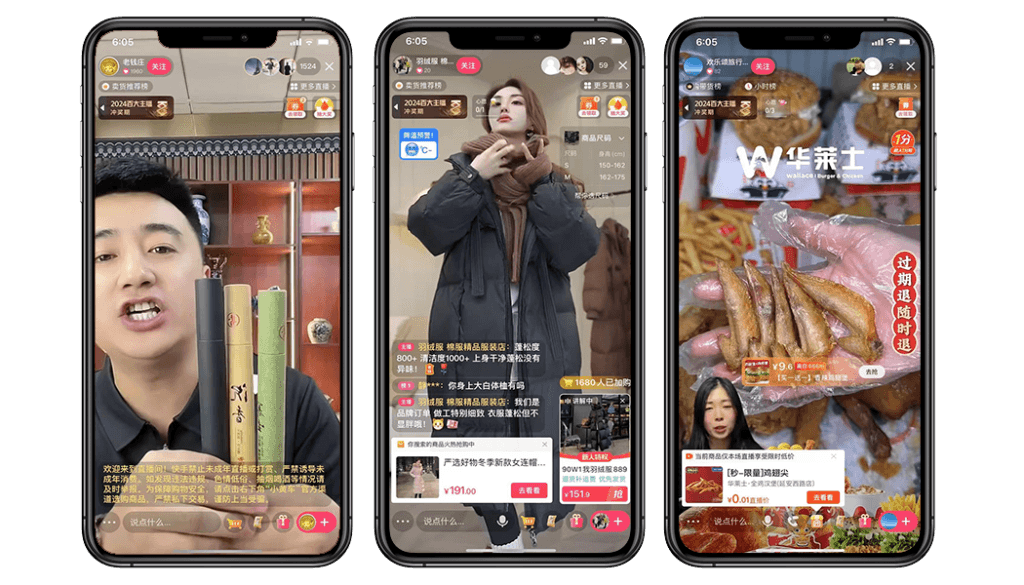
### Building Community Trust
Interactive live streams allow brands to answer questions, showcase products, and address customer concerns directly, building trust with viewers and enhancing conversions.
### Optimizing Stream Timing
Brands should aim to stream during Kuaishou's peak hours, around 10 p.m., to maximize reach and engagement. Scheduling streams in advance helps build anticipation and ensures better visibility.
## Using eCommerce China with Kuaishou's Platform Integrations
### Integration with Major eCommerce Platforms
Kuaishou connects cleanly with top Chinese eCommerce platforms like JD.com, Pinduoduo, and Taobao. This integration makes it easy for brands to guide viewers from video content directly to purchase, supporting a streamlined customer journey.
### Product Links in Video Content
Kuaishou's business accounts allow brands to embed product links directly within videos, making it easy for viewers to purchase without leaving the app.
### Creating Relatable eCommerce Content
Brands focusing on storytelling and relatable content see the best engagement on Kuaishou. Showcasing practical product applications rather than purely promotional content helps foster genuine interest and trust.
## Building China Brand Localization with Certified Business Accounts
### Account Verification Benefits
A certified business account on Kuaishou boosts brand credibility and visibility. Verified accounts come with a "V" badge and access to advanced advertising tools, further establishing brand legitimacy.
### Category-specific Profiles
Business profiles can be categorized for better user targeting, allowing consumers to quickly find relevant brands.
### Additional Features for Enhanced Conversion
Certified accounts gain access to additional features, such as advertising discounts, eCommerce tools, and the option to add links in video descriptions, helping brands drive better results in the competitive Chinese eCommerce space.
## Effective Use of Hashtags and Trend Tracking
### Strategic Hashtag Use
Kuaishou's hashtag system is essential for helping content reach a larger audience. By using trending and relevant hashtags, brands can significantly increase impressions.
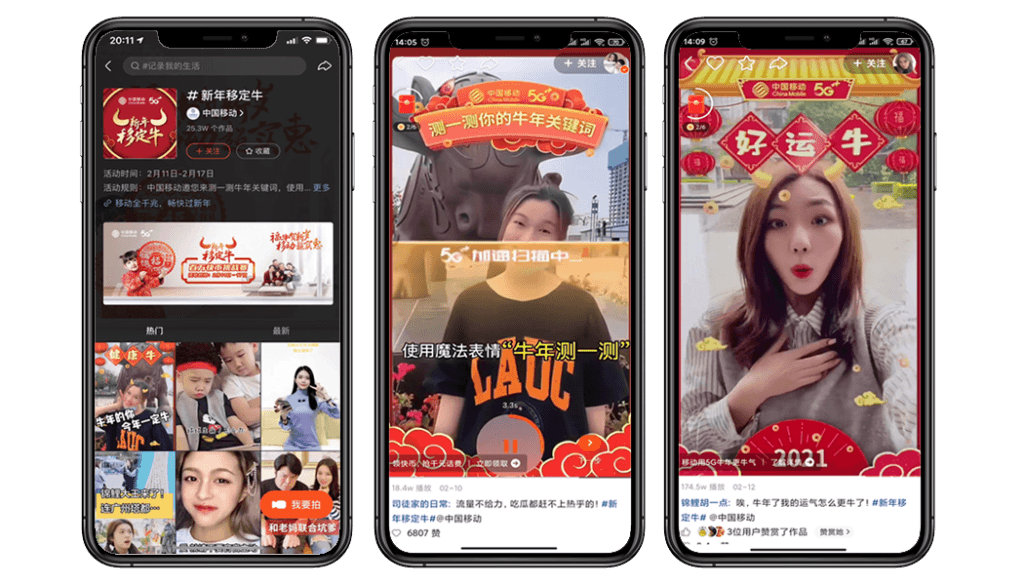
### Participating in Challenges
Kuaishou's "challenge" feature allows brands to run [campaigns](/grow-in-china/campaigns) with specific themes, encouraging user-generated content and helping organically expand brand awareness.
## Working with China Influencers
### Building Authentic Engagement with China KOLs
Kuaishou's influencers, known as Key Opinion Leaders (KOLs), are trusted figures who offer brands an authentic way to reach their audience. Partnering with KOLs can lead to high sales during special events, such as shopping festivals.
### Choosing the Right Influencer
Brands should carefully select KOLs who resonate with their target demographic and demonstrate a track record of engagement.
### Tracking Campaign Success
Monitoring sales metrics, engagement rates, and viewer feedback ensures that KOL partnerships align with business objectives and deliver effective results.
## Implementing a Localized Content Strategy
### Geo-targeted Advertising
Kuaishou's localized advertising options allow brands to reach specific geographic markets within China, making ads highly relevant to each audience.
### Tailoring Messaging for Rural Audiences
Kuaishou's strong presence in rural areas makes it essential for brands to adapt their messaging to reflect the preferences and lifestyle of lower-tier city consumers, highlighting practical benefits and affordable pricing.
## Enhancing Brand Engagement with Augmented Reality (AR) Tools
### Interactive Filters and AR Environments
Kuaishou's AR capabilities provide brands with the tools to create visually stimulating, interactive content. Filters and virtual environments can make brand experiences more memorable and appealing.
### Immersive Brand Storytelling
Through AR, brands can invite users to explore products in virtual settings, offering experiences like virtual try-ons that boost engagement and appeal to digital-savvy consumers.
## Paid Advertising Solutions on Kuaishou
### Open Screen Ads
These ads, displayed whenever the app opens, offer brands immediate exposure to a broad audience.
### Newsfeed Ads
Embedded within the Discovery page, newsfeed ads present as native content, increasing the likelihood of engagement.
### Hashtag Campaigns and Challenges
Creating branded challenges encourages user interaction, allowing brands to generate organic content while boosting visibility and reach.
## Crafting Engaging, Authentic Content for Kuaishou
### Focus on Relatability
Kuaishou's users appreciate unfiltered, authentic content that reflects real-life experiences. Brands that emphasize everyday use and practicality connect better with the audience.
### Experimenting with Content Formats
From live streams to short-form clips, varying content formats can help brands reach different audience segments and discover what resonates best.
### Demonstrations and Storytelling
Content that demonstrates a product's practical use or shows it in relatable scenarios tends to perform well, resonating with Kuaishou's community-focused audience.
## Monitoring Performance with Kuaishou Analytics
### Key Metrics to Track
Kuaishou provides insights on engagement rates, viewer demographics, and purchasing behaviors, helping brands refine their strategy.
### Adapting Based on Analytics
Regularly reviewing top-performing content and emerging trends ensures that brands can optimize their approach and remain relevant in the dynamic Chinese social commerce landscape.
## Embracing Green Content for Sustainable Branding
### Promoting Sustainability
Kuaishou supports eco-friendly practices, and brands with green initiatives can connect with an audience that values sustainability. Environmentally-conscious content gives brands a competitive edge.
### Appealing to Conscious Consumers
Emphasizing green practices helps brands resonate with Kuaishou's environmentally aware user base, fostering loyalty and engagement.
## Common Pitfalls for Brands to Avoid
- Overly Polished Content: Kuaishou's users prefer authenticity; content that appears overly staged may not perform well.
- Neglecting Engagement: Interaction is key on Kuaishou. Brands should actively engage with users, respond to comments, and foster dialogue to build a loyal audience.
- Ignoring Platform Trends: Staying attuned to trending topics and hashtags on Kuaishou is essential for maintaining visibility and engagement.
## Key Takeaways for Kuaishou Marketing Success
- **Use Livestreaming**: Utilize Kuaishou's strong live-streaming ecosystem to showcase products in real-time, answering questions and building immediate connections with viewers.
- **Focus on China Brand Localization**: Adapting content to the cultural nuances and preferences of Kuaishou's user base is essential for success.
- **Engage with KOLs and Influencers**: Partnering with trusted KOLs helps brands reach audiences with authenticity, a core value of Kuaishou's platform.
## Conclusion
Kuaishou provides a distinct platform for brands in China to engage with audiences through localized content, live streaming, and [influencer marketing](/social-in-china). As part of a holistic China branding strategy, Kuaishou offers a powerful means to connect authentically with consumers, especially those in rural and lower-tier cities, where demand for relatable content and eCommerce engagement is rapidly rising. Brands that use Kuaishou's strengths effectively can position themselves for lasting success in China's dynamic digital marketplace.
---
# Boost Your Marketing with the Best Chinese Search Engines in 2024
URL: https://www.thechinapath.com/insights/boost-your-marketing-with-the-best-chinese-search-engines-in-2024
Published: 2024-09-02
Author: TheChinaPath
Category: Platforms
Google is blocked in China, so search runs through Baidu, Sogou, Shenma and a few others. How each Chinese search engine works and how to market on it.
## Understanding the Chinese Search Engine Market
The Chinese internet landscape is unique due to government regulations, including the Great Firewall, which blocks access to many international websites and search engines. This has given rise to several domestic search engines that cater specifically to Chinese users. As of 2024, the primary search engines in China include Baidu, Sogou, Shenma, and Haosou, each with its own strengths and user demographics.
## Importance of Chinese Search Engines in Marketing
Search engines in China play a central role in digital marketing. They not only influence search engine optimization (SEO) strategies but also affect advertising [campaigns](/grow-in-china/campaigns) and consumer behavior. Knowing which search engines to prioritize can significantly impact a marketer's success in reaching Chinese consumers.
## Top Chinese Search Engines for 2024
### 1. Baidu: The Dominant Player
Baidu is often referred to as China's Google. With over 50% of the search engine market share in China, it is the go-to platform for most Chinese internet users. Founded in 2000, Baidu has grown beyond search, offering a wide array of services including AI and various internet-related products.
#### Marketing on Baidu
For marketers, Baidu presents a significant opportunity. However, succeeding on Baidu requires understanding its unique SEO practices. Unlike Google, Baidu still relies heavily on meta keywords and places significant emphasis on simplified Chinese content. Websites hosted on Chinese servers with an Internet Content Provider (ICP) license are preferred in rankings. Additionally, Baidu's search algorithms favor HTTPS, fast loading speeds, and high-quality content.
### 2. Sogou: The Search Dog
Sogou, launched in 2004, is the second-largest search engine in China. In 2021, it became a subsidiary of Tencent, a major player in the Chinese tech industry. Sogou is deeply integrated with Tencent's popular apps like WeChat and QQ, making it a valuable tool for reaching a broad audience.
#### Marketing on Sogou
Sogou's SEO practices emphasize original content and site authority. Backlinks are crucial, with quantity often trumping quality. While meta descriptions are less important, title tags play a vital role in search rankings. Sogou's integration with Tencent platforms also allows for smooth marketing opportunities within social media and messaging apps.
### 3. Shenma: Mobile-First Approach
Shenma is a joint venture between Alibaba and UC Web, focusing exclusively on mobile search. Given that nearly all Chinese internet users access the web via mobile devices, Shenma's mobile-first approach makes it a critical player in the market.
#### Marketing on Shenma
Shenma's close ties with Alibaba mean that products listed on Alibaba platforms like Taobao and Tmall get priority in search results. This makes Shenma an excellent choice for marketers targeting mobile users and promoting ecommerce products. Optimizing for Shenma involves ensuring that product pages on Taobao or Tmall are well-maintained and SEO-friendly.
### 4. Haosou: The Secure Search Engine
Also known as Qihoo 360 Search, Haosou is known for its emphasis on security. It holds a significant share of the Chinese search market and is often used by businesses for its strong security features.
#### Marketing on Haosou
Haosou's SEO rankings prioritize websites with high authority and trustworthiness. This makes it an excellent platform for B2B marketing. The competition on Haosou is less intense than on Baidu, often resulting in lower cost-per-click rates for paid ads.
### 5. Youdao: The Translation Giant
Youdao, part of the NetEase family, operates more like an educational platform than a traditional search engine. It is primarily used by younger, high-income individuals and offers strong translation services.
#### Marketing on Youdao
Youdao's unique user base and focus on education make it a niche but valuable platform for marketers. Products and services related to education, learning tools, and international products benefit from Youdao's translation capabilities and user engagement.
## The Importance of Localized SEO in China
Localized SEO is critical for success in China. Each search engine has unique algorithms and preferences that differ significantly from Western search engines. Understanding these nuances and optimizing your [website](/grow-in-china/website) accordingly can greatly enhance your visibility and reach in the [Chinese market](/enter-china/market-entry-consulting).
### Key Elements of Localized SEO
* Language and Content: Use simplified Chinese and create content that resonates with local audiences.
* Hosting and Speed: Host your website on Chinese servers and ensure fast loading times.
* Keywords and Metadata: Utilize meta keywords and alt texts, particularly for Baidu.
## Conclusion
Choosing the best Chinese search engine for your marketing efforts in 2024 depends on your specific goals and target audience. Baidu remains the dominant force, but platforms like Sogou, Shenma, and Haosou offer unique advantages that can be used for specialized marketing strategies. By understanding the strengths of each search engine and tailoring your approach accordingly, you can effectively reach and engage with the vast Chinese market.
---
# Brand Localization for China: Adapt & Keep Your DNA
URL: https://www.thechinapath.com/insights/brand-localization-for-china-without-losing-your-dna
Published: 2025-11-19
Updated: 2026-05-15
Author: Liyan Ye
Category: Brand & Localization
How foreign brands can localize deeply for China and still protect their identity, with cultural relevance and platform fluency doing the heavy lifting.
## How The Game Has Changed
For a long time, foreign brands stood for rarity and modern life. If it came from overseas, it felt a step ahead.
As the middle class grew, [global brands](/enter-china/market-entry-consulting) became shorthand for status and quality. Domestic brands were still catching up on product, design, and storytelling.
Today, Chinese brands have largely closed the quality gap and often move faster on culture and digital. Guochao has given local players a strong story, and Western brands have become one choice among many. Quality is assumed. Relevance comes from cultural fit and platform fluency.
## Why Localization Is A Must
Two forces make deep [localization](/enter-china/branding-localisation) essential in China.
**1. Quality is a starting line**
Chinese consumers still trust many Western brands for safety and engineering, but domestic brands have raised the bar.
If your main story in China is that you are high quality and international, you are competing with yesterday's expectations.
To stand out now, you need to signal:
- You understand local needs and use cases
- You respect local taste and aesthetics
- You can communicate naturally inside the Chinese digital culture
**2. Content is the store**
Discovery, consideration, and purchase often happen in one continuous digital environment.
For many categories, the journey looks more like:
- Discover on **Douyin** or **Xiaohongshu**
- Validate through notes, comments, and social proof
- Convert through live stream, mini program, or e-commerce flagship
If your brand looks and sounds out of place in those feeds, it does not matter how strong your heritage is. It gets ignored.
Localization is no longer about translating a website. It is about rebuilding how your brand lives inside this content commerce loop.
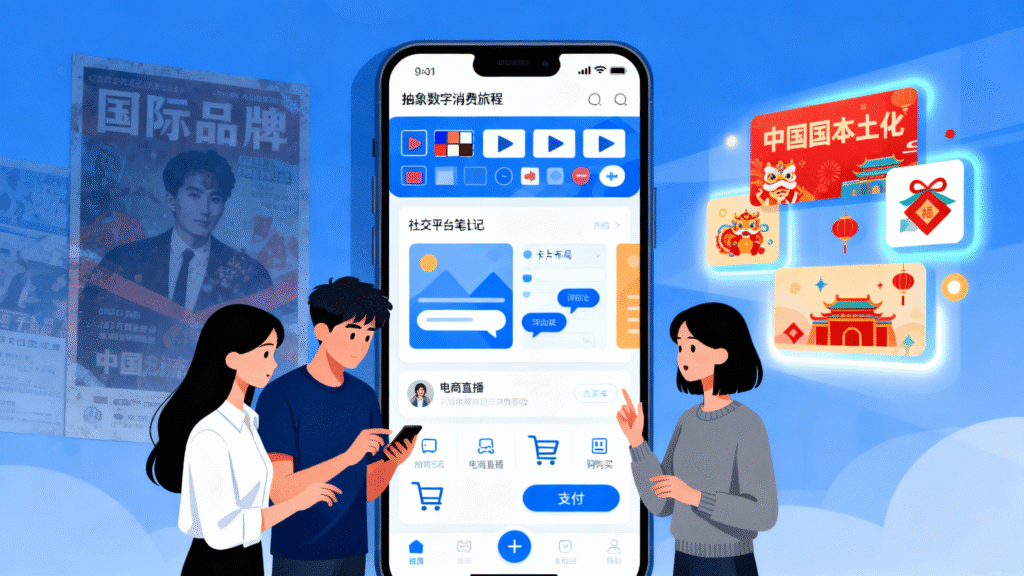
## What It Looks Like When Brands Get It Right [Apple & Coca-Cola]
The brands that succeed in China do not abandon who they are. They protect their core and flex everything around it.
**Apple keeps:**
- A minimalist, premium visual language
- Creativity-focused storytelling
- A clear and familiar product ecosystem
**Apple adapts in China by:**
- Building campaigns around Chinese festivals and e-commerce peaks
- Running tailored live sessions on platforms like Tmall
- Shaping offers for the Chinese middle class's spending habits
The Apple feeling is unchanged. The route from attention to purchase is very Chinese.
**Coca-Cola keeps:**
- The global promise of happiness and togetherness
- Iconic red, the logo, and the bottle silhouette
**Coca-Cola adapts in China by:**
- Using the Chinese name Kěkǒukělè, which translates as tasty fun
- Creating Chinese New Year editions that fit family rituals and gifting
- Collaborating with local artists and letting those designs travel on Chinese social platforms
The result still feels like Coca-Cola, simply expressed through Chinese moments and symbols.

## A Simple Way To Frame Localization For China
A practical lens for global teams is to separate what must stay from what should move.
**Layer 1: the non-negotiable core**
What should be stable across markets:
- Brand purpose and big idea
- Fundamental values such as safety, joy, creativity, and freedom
- Distinctive visual codes, including logo, main colors, and key shapes
- Product truths, the things you reliably do better than others
If you compromise here, you start to look like every other international brand.
**Layer 2: the China design space**
The intentional flex:
- A Chinese name and key phrases with real meaning and memory value
- Cultural references drawn from festivals, cities, and youth scenes
- China only products, flavors, packs, and bundles for local occasions
- Promotion rhythms aligned with moments like six eighteen, eleven eleven, Qixi, and Double twelve
The core question for every adjustment is simple.
Does this express our big idea in a way that makes sense in China, or are we just decorating with cultural symbols?
**Layer 3: platform native execution**
Strategy turns into content and journeys:
- Douyin for short video storytelling and live commerce
- Xiaohongshu for reviews, lifestyle narratives, and community recommendations
- WeChat for membership, service flows, and mini program commerce
- Tmall, JD, and others for flagship ecommerce and peak events
The brand remains the same, but:
- Hooks and first seconds change
- Pacing and editing change
- Information density and on-screen layout change
You are not changing who you are. You are changing how you enter the scroll.
## From Principle To Practice
Seeing China through this three-layer lens is the easy part. The challenge is turning it into daily choices on names, packs, formats, partners, and media. Under pressure, brands tend to either recycle global work or approve local ideas that slowly dilute who they are.
The ones who stay balanced usually have three things:
- A shared view of what is truly non-negotiable in the brand
- Clear, creative, and experienced territories for China
- A map of real platform journeys, so content follows how people actually move from seeing to buying
This is where TheChinaPath works with teams, connecting a protected core to a Chinese expression that can stretch without losing itself.
---
# Changing your cosmetics responsible person in China
URL: https://www.thechinapath.com/insights/change-domestic-responsible-person-china-cosmetics
Published: 2026-09-24
Updated: 2026-10-02
Author: TheChinaPath
Category: Compliance & Setup
Since July 29, 2026, a foreign cosmetics brand can replace its China responsible person without the old distributor's consent. What to file and sign.
Since July 29, 2026, a foreign cosmetics brand can change its domestic
responsible person in China without the old partner's consent. NMPA
Announcement No. 70 of 2026 dropped the sealed consent letter, and the court
judgment that stood in for it, from the file. The brand now signs its own
notarized authorization for the new partner, and the old one signs nothing.
It matters because the responsible person is usually your distributor. For
five years, a distributor on its way out could freeze your filings by
refusing to stamp one letter. It can't anymore.
> A product changing its domestic responsible person no longer submits the
> old responsible person's sealed consent letter or a judgment proving the
> change. It submits the notarized authorization letter, the product list
> and the new responsible person's commitment to take on all the old one's
> responsibilities, including for products already on the market.
> Source: National Medical Products Administration (国家药监局), Announcement
> No. 70 of 2026, item 8, July 2026.
> https://www.nmpa.gov.cn/xxgk/ggtg/hzhpggtg/jmhzhptg/20260729115807198.html
Signed July 28, it took effect on publication the next day and overrides
any older NMPA document that disagrees.
## What the responsible person does, and why your distributor has the job
Any foreign brand that registers or files cosmetics in China has to name a
Chinese company to act for it. The rules call it the 境内责任人, the
domestic responsible person.
> An overseas registrant or filer must appoint a Chinese enterprise legal
> person as domestic responsible person, to file in its name and assist with
> adverse reaction monitoring and recalls.
> Source: State Administration for Market Regulation (市场监管总局), Cosmetics
> Registration and Filing Measures, Order No. 35, article 8, January 2021.
> https://www.gov.cn/gongbao/content/2021/content_5595926.htm
A brand with no company in China borrows someone else's. The importer
already has an entity and already clears your goods. So the distributor
ends up with the role, usually as one line in the distribution deal.
Its name then goes on every pack you import.
> Where the registrant or filer is an overseas company, the Chinese label
> must also show the domestic responsible person's name and address.
> Source: NMPA (国家药监局), Cosmetics Labeling Measures, Announcement No. 77
> of 2021, article 7, May 2021.
> https://www.gov.cn/gongbao/content/2021/content_5631831.htm
The job also carries legal exposure.
> A domestic responsible person that fails to assist with adverse reaction
> monitoring or recalls faces a fine of 20,000 to 100,000 RMB, or 100,000 to
> 500,000 RMB in serious cases.
> Source: State Council (国务院), Cosmetics Supervision and Administration
> Regulation, Decree No. 727, article 70, June 2020.
> https://www.gov.cn/gongbao/content/2020/content_5525087.htm
## The old rule gave your distributor a veto
From May 2021, a change of responsible person ran through article 48 of the
NMPA's rules on filing documents. It asked for three things. Two were easy.
The third was the old partner's signature.
> Changing the domestic responsible person required the product list, the
> original responsible person's sealed consent letter or an effective
> judgment proving the change, and the new responsible person's commitment.
> Source: NMPA (国家药监局), Provisions on Cosmetics Registration and Filing
> Documents, Announcement No. 32 of 2021, article 48, via the Fujian
> Provincial Medical Products Administration, June 2021.
> https://yjj.scjgj.fujian.gov.cn/hzp/flfg/202106/t20210608_5616054.htm
A distributor being replaced has stock in its
warehouse and no reason to hurry. Without its company seal, your new
partner couldn't take over the filings. The only other road was a lawsuit,
on the court's calendar. The same rules hold new imports until a change is
complete, so general-trade shipments waited too.
## What Announcement 70 changes
We read this against the NMPA's own text on September 24, 2026. Item 8
strikes the consent letter and the judgment. In their place goes the
authorization letter, original plus notarization, which the brand signs. The
old partner isn't asked.
> The change removes a procedural obstacle for companies adjusting
> commercial cooperation and lets registrants and filers decide for
> themselves as the market moves.
> Source: NMPA (国家药监局), policy interpretation of Announcement No. 70,
> July 2026.
> https://www.nmpa.gov.cn/xxgk/zhcjd/zhcjdhzhp/20260729120327100.html
Look at the third document. The new responsible person takes on the old
one's responsibilities for products already on the market before the
switch. Your incoming partner inherits liability for stock it never
imported, so expect questions before it signs.
## Changing a domestic responsible person, before and after
| Step | Article 48 rule (May 1, 2021 to July 28, 2026) | Announcement 70 (from July 29, 2026) |
|---|---|---|
| What the brand files | 3 documents: product list, old partner's consent letter or a judgment, new partner's commitment | 3 documents: notarized authorization letter, product list, new partner's commitment |
| Whose consent | The old partner's, under its company seal, or a court's | The brand's own, through the authorization letter |
| Typical timing | Open-ended: as long as the old partner held back its seal, or a lawsuit ran to judgment | No wait on the old partner; notarizing the letter sets the pace |
| What the old partner can block | The change itself | The filing change: nothing. Its stock and disputed invoices: whatever the contract lets it |
| Stock imported before the change | Sells until the end of its shelf life | Unchanged |
| New imports | Wait until the change is complete, then carry the new partner's name and address | Unchanged |
The last two rows come from article 38 of the 2021 document rules and the
labeling rule quoted above. Announcement 70 leaves both alone, and neither
text sets a processing time for the change.
## What to put in the next distribution contract anyway
Your old partner has lost its grip on the filing. Plenty else is still
open, and four clauses are worth the argument.
- **An authorization term that matches the contract.** The 2021 rules make
the letter state its scope and term, and a responsible person whose letter
has expired can't file new products for you. Line up the end dates.
- **Record handover on exit.** Every adverse reaction report and batch record
for goods the partner imported, within a set number of days. Your next
partner signs for that history.
- **Recall cooperation that survives termination**, for goods the old
partner put on the market.
- **A sell-off plan.** Who sells the old-label stock, or whether you buy it
back and at what price.
Keep copies of every filing record yourself. Announcement 70 changed the
filing, while termination still runs on your contract and whatever notice it
requires.
## Where this fits in a partner switch
Sign the new partner before you tell the old one. Issue the notarized
authorization, then let the new partner file the change with the product
list and its commitment. Old stock sells through, and whatever ships after
the change lands with the new name on the label.
The gap in between is where brands lose shelf time. A cross-border store
can bridge it, because goods sold on Tmall Global, JD Worldwide or Douyin under cross-border retail
import rules need no NMPA filing, so they need no responsible person either.
> Cross-border retail imports are supervised as goods for personal use, so
> first-import permit, registration and filing requirements do not apply.
> Source: MOFCOM and five other bodies (商务部等六部门), Notice 486 of 2018,
> article 3, November 2018.
> https://www.gov.cn/zhengce/zhengceku/2018-12/31/content_5437823.htm
Opening that route for skincare isn't free.
> A cross-border skincare store needs 80,000 RMB in cash before the first
> sale on Tmall Global, 35,500 RMB on JD Worldwide and 5,000 RMB on Douyin
> cross-border, deposits and annual fees included.
> Source: TheChinaPath calculator data, October 2026.
> Douyin Global's base deposit follows last month's sales, up to 5,000 RMB.
> Source: Douyin E-commerce (抖音电商), Douyin Global deposit rules, June 2025.
> https://school.jinritemai.com/doudian/web/articlev0/107821
Whether to keep a distributor at all, or run
[cross-border setup](/enter-china/cross-border-setup) yourself, is priced out
in [China distributor vs own store](/insights/china-distributor-vs-own-store).
If you're keeping one, the guide to
[finding a distributor in China](/compass/find-a-distributor-in-china) covers
the vetting, and [Compass](/compass) holds the partners we've checked.
## Quick answers on the switch
**Does my old distributor have to agree to the change?**
Not for the NMPA filing. Since July 29, 2026, the old partner's seal is off
the list of documents. If your contract requires notice before termination,
give it.
**Does this cover special cosmetics as well as general ones?**
Yes. Item 8 applies to any product changing its responsible person, and the
old article 48 sat in a chapter covering registered special cosmetics and
filed general ones. A sunscreen or a hair dye needs the same three
documents as a cleanser.
**Can two partners hold the role while we switch?**
No. The 2021 document rules bar a product from authorizing more than one
domestic responsible person. The handover is a clean cut, so set the date
around your shipping calendar.
If your filings sit with a partner you're thinking of replacing,
[request a Compass shortlist](/contact#shortlist) of distributors for your
category.
---
# China 2026: 8 eCommerce & Marketing Predictions
URL: https://www.thechinapath.com/insights/china-2026-8-ecommerce-marketing-predictions
Published: 2026-01-02
Updated: 2026-05-15
Author: Cyril Drouin
Category: Market Strategy
Eight predictions for China's eCommerce and marketing in 2026, from instant commerce and GenAI personalization to experiences taking over from discounts.
**From instant commerce to GenAI overload, here's what's coming in China's digital marketplace**
After two decades navigating China's digital ecosystem, I've learned that predicting the future here isn't about crystal balls. It's about connecting the dots between what's already happening in Shanghai's startup districts and what multinational boardrooms will be discussing twelve months from now.
Here's what I see coming in 2026.
## Instant Commerce Will Eat Traditional eCommerce's Lunch
The 30-minute delivery war is just getting started. What I'm calling "instant commerce" (即时零售, jishi lingshou) will aggressively steal market share from traditional [eCommerce](/grow-in-china/cross-border-ecommerce) platforms in 2026.
Meituan (美团) already processes over 2 billion instant delivery orders annually. Ele.me (饿了么) has expanded beyond food to beauty, pharma, and consumer electronics.
> The convenience addiction is real, and there's no going back once you've experienced it.
Tmall (天猫) and JD.com (京东) are racing to build competing infrastructure, but they're retrofitting systems built for next-day delivery, not 30-minute fulfillment. High-frequency purchases like skincare, supplements, and household essentials will migrate to platforms built for speed from day one.
## The Real Human Premium: KOLs and KOCs Become Gold
Here's the paradox GenAI creates: as synthetic content floods Xiaohongshu/RED (小红书), Weibo (微博), and Douyin (抖音), authentic human voices become exponentially more valuable.
I'm watching brands scramble to lock in long-term relationships with proven KOLs and KOCs before their rates skyrocket. The economics are straightforward: when every brand can generate thousands of AI [influencer](/social-in-china) posts for pennies, the humans who can move purchase intent become strategic assets.
> Expect KOL fees to increase 30-50% in 2026 for creators who can demonstrate genuine community trust and conversion metrics.
But here's the catch: identifying genuinely human content will become increasingly difficult. Platforms will need verification systems, and consumers will develop their own authenticity filters.
## Performance Marketing Gets Hyper-Personalized at Scale
GenAI's real power in China won't be creating generic content. It will be creating hundreds of personalized ad variants targeting dozens of distinct consumer personas, all within the same media budget.
I've already seen pilot campaigns running 50+ creative variants simultaneously across Tmall, JD, Douyin, WeChat (微信), and Xiaohongshu, each optimized for micro-segments defined by behavioral data.
> In 2026, this becomes standard practice. The technical barrier to entry is low, but the strategic execution complexity is high.
The winning brands will be the ones that master prompt engineering and creative systematisation. Budget size is no longer the deciding factor.
## Experiential Marketing Fills the Discount Fatigue Gap
Chinese consumers are exhausted by the endless discount cycle. Price wars, flash sales, shopping festival promotions. It's all become white noise.
This creates massive opportunity for experiential marketing: pop-up stores with immersive brand storytelling, interactive installations that create shareable moments, community events that build genuine emotional connection, and limited-edition collaborations with local artists.
> The brands that invest in memorable experiences instead of leaning on margin-crushing discounts will build the loyalty that holds up in 2026.
But here's the reality check: experiential marketing requires upfront investment with harder-to-measure ROI. In a market obsessed with immediate performance metrics, convincing stakeholders will be the bigger challenge than executing the experiences themselves.
## Media Costs Hit a Ceiling (Because They Have To)
Media costs on eCommerce platforms will increase only marginally in 2026, despite growing demand. Why? Simple economics.
Sellers are already operating on razor-thin margins. Average net margins for Tmall merchants hover around 3-8%. They literally cannot afford steeper advertising costs without destroying their business models entirely.
> The constraint isn't platform greed. It's merchant economics hitting fundamental limits.
Platforms like Tmall and JD understand this calculation. Push media costs too high, and merchants flee to alternative channels or fold entirely. Expect modest single-digit increases rather than the double-digit jumps we saw in 2019-2021.
## China Becomes Attractive Again for European Niche Brands
I'm seeing a significant shift in cross-border sentiment. The US market, once the promised land for European brands, has become prohibitively complicated: tariffs have killed deal economics for many categories, salary inflation makes building US teams unaffordable for mid-sized brands, logistics costs have increased 40-60% since 2020, and market saturation dominates many premium categories.
> China and Southeast Asia are emerging as the viable alternative, especially for niche and premium European brands.
Does this mean China is easy? Absolutely not. Regulatory uncertainty remains real. The "cheapest wins" procurement mentality still dominates many categories. Local competition is fierce and well-funded.
But the relative economics have shifted. China's cross-border infrastructure, logistics sophistication, and existing frameworks suddenly look attractive when compared to US [market entry](/enter-china/market-entry-consulting) costs in 2026.
## Xiaohongshu and Douyin Dominate Brand-Building
In 2026, Xiaohongshu and Douyin will be the primary channels for marketing and branding campaigns. The integration between Xiaohongshu and Tmall will become critical for conversion.
I see this connection strengthening throughout the year as both platforms recognize the symbiotic value. Xiaohongshu drives discovery and consideration. Tmall captures transaction.
> The brands that master this handoff will massively outperform those treating social and commerce as separate silos.
The playbook: authentic content on Xiaohongshu builds desire, smooth links enable one-tap purchase on Tmall, post-purchase content creation feeds back into the discovery loop.
## Shopping Festivals Lose Their Magic (Except for Launches)
Singles' Day, 6.18, and other shopping festivals will continue their slow decline in strategic importance. Shoppers now expect discounts but don't get particularly excited about them. The magic is gone, and the GMV growth numbers prove it.
However, these festivals remain valuable for one thing: launching new brands. The concentrated traffic across all platforms creates a legitimate window to introduce products to massive audiences.
> Smart brands treat festivals as launch platforms, not as quarterly growth drivers. Adjust expectations accordingly.
---
**Here's the uncomfortable truth: most Western brands are still operating with a 2023 playbook in a market that's already living in 2026. These aren't speculative trends, they're patterns already playing out in tier-one cities right now.**
The brands winning in China aren't the ones with the biggest budgets or the most famous names. They're the ones willing to move at China's speed, embrace technologies their legal departments are still reviewing, and understand that yesterday's best practices are today's commodities.
If your China strategy still looks the same as it did two years ago, you're not standing still. You're falling behind.
---
# 140 Million Shoppers. Imports Are Only 3%.
URL: https://www.thechinapath.com/insights/china-cross-border-ecommerce-140-million-shoppers
Published: 2026-07-23
Updated: 2026-10-09
Author: Cyril Drouin
Category: Market Strategy
China now has 140 million cross-border shoppers, but imported goods are barely 3 percent of what the country buys. That gap is the opening.
At a Beijing press conference on July 22, Sun Meijun, who heads China's
General Administration of Customs (海关总署), mentioned almost in passing
that 140 million people in China now shop the world through cross-border
e-commerce.
That is roughly the population of Japan, buying foreign products, on Chinese
platforms. Not one of those transactions required a foreign brand to
register a Chinese company first.
Which door to use, and what each one costs a brand to run, is in
[our guide to every cross-border channel into China](/guides/china-cross-border-ecommerce-channels).
> China now has 140 million people shopping globally through cross-border
> e-commerce. In the first half of 2026, cross-border e-commerce exports
> through overseas warehouses grew 3.3 times, and 115,000 more Chinese
> companies took up import or export business.
> Source: Xinhua (新华社), citing the General Administration of Customs
It made a headline in a dozen languages. The number that should actually
change how you think about China was in none of them.
## What customs actually said, at a glance
The briefing was about customs modernization under the 15th Five-Year Plan,
so the cross-border e-commerce lines were nearly throwaway.
| Figure | Number | Period |
| ----------------------------------------- | -------------- | ------------- |
| People in China shopping cross-border | 140 million | Running total |
| Overseas warehouse exports | Grew 3.3 times | H1 2026 |
| New Chinese firms trading internationally | 115,000 | H1 2026 |
| Total goods trade growth | Up 16.9% | H1 2026 |
| Import growth | Up 22.1% | H1 2026 |
| Export growth | Up 13.4% | H1 2026 |
Read those last two rows again. Imports grew faster than exports by nearly
nine points, in a year when most forecasters expected the reverse. If you
are outside China wondering whether the door is opening or closing, that one
line tells you more than the 140 million does.
## The number nobody quoted
Full-year 2025 is where it gets useful. Cross-border e-commerce as a whole
is a large, healthy business and everybody reports the total. Very few
people split it.
> In 2025, China's cross-border e-commerce trade reached 2.84 trillion yuan,
> up 4.8 percent, equal to 6.2 percent of total goods trade. Exports were
> 2.27 trillion yuan, up 5.4 percent. Imports were 570.2 billion yuan, up
> 2.7 percent, which is 3.1 percent of China's total goods imports.
> Source: China customs statistics (中国海关统计)
Four fifths of that headline figure is Chinese factories selling outward.
The part that concerns you, foreign goods coming in, is 570.2 billion yuan.
Call it 80 billion dollars, growing at 2.7 percent a year.
Customs gave a preliminary 2.75 trillion figure back in January, before the
final statistics landed at 2.84 trillion, and both are still circulating in
the trade press. The import split reconciles against the official national
totals either way, so the 3.1 percent holds whichever headline number you
start from.
A slow-growing sliver sounds discouraging until you turn it over. 140
million people already buy this way, and everything they have bought adds up
to 3.1 percent of national imports. Demand is proven. Supply is thin. This
is not a mature channel you arrived too late for.
Put it in terms of your own market. If somebody described a sales channel
with a customer base the size of Japan and 3 percent penetration, crowded is
not the word you would reach for.
## The 3.3 times figure is not about you
This one catches people reading the English wires, so it is worth being
blunt.
Overseas warehouses (海外仓) are Chinese-owned facilities sitting in the US,
Germany, Brazil, wherever the buyers are. A Chinese seller ships stock there
in bulk ahead of demand, then fulfills local orders in two days rather than
twenty. Growth of 3.3 times means Chinese exporters got dramatically better
at serving foreign consumers on their home turf.
It tells you nothing about selling into China. What it does tell you is that
your domestic competitors are getting faster and cheaper, which is an
argument for looking at your home market as carefully as this one.
The infrastructure that matters on your side of the trade sits inside China:
the bonded warehouse network in Hangzhou, Zhengzhou, Ningbo and a dozen
other cities. Different system, different regulator, different numbers
entirely, and nobody announced a 3.3 times anything about it.
## The two rules that decide your unit economics
English coverage almost always skips this part, and it determines whether
any of the above works for your particular product.
Cross-border retail import runs on quotas. Each consumer gets a cap per
order and a cap per year. Stay inside them and the tax treatment is
generous. Cross either one and your goods fall under general trade rules,
which means registration, testing and a Chinese entity.
> Cross-border retail imports are capped at 5,000 yuan per transaction and
> 26,000 yuan per person per year. Within those limits, tariffs are set at
> zero and import VAT and consumption tax are levied at 70 percent of the
> statutory amount.
> Source: Ministry of Finance, GAC and State Taxation Administration notice
> Cai Guan Shui (财关税) 2018 No. 49
For most beauty, supplement, food and apparel brands, a 5,000 yuan ceiling
never comes up. For furniture, large appliances, high-end watches or
anything carrying a four-figure euro price, it is the entire conversation.
Industry has lobbied to raise both caps for years, and there are reports
circulating that the thresholds moved in 2026. No Ministry of Finance notice
confirms it, so treat the figures above as current and have your customs
broker verify before you build a pricing model on them.
The second rule is the positive list (正面清单). Your product category has
to appear on it. If it does not, no amount of platform relationship gets
your goods through a bonded warehouse.
> The list was last optimized by eight ministries with effect from March
> 2022, expanding to 1,476 tax lines. It added 29 categories, revised notes
> on 206 items, and grew from 1,413 lines in the 2019 version.
> Source: Ministry of Commerce (商务部), 2022 announcement No. 7
Note the date on that. The list moved in 2016, 2018, 2019 and 2022, then
stopped. Four years is the longest gap since the system started. Plenty of
brands assume their category is about to be added, and plenty of consultants
are happy to let them assume it. Check the list before you plan around it.
One more thing brands get wrong. Goods brought in this way are classed as
final products for personal use, so they cannot legally be resold into
domestic wholesale. Cross-border is not a soft route into general
distribution. It is a retail channel, and it stays one.
## Why the timing is unusually kind
Several things are true at once, which does not happen often.
Consumer demand is running hot on the import side. Growth of 22.1 percent in
a half year is not a rounding error, it is policy working. The Five-Year
Plan language from that same press conference talked about making it easier
for global goods to enter China and giving Chinese consumers more choice.
Customs has said it will keep refining the rules governing cross-border
e-commerce, market procurement and overseas warehouses as trade formats.
Platform economics are softer than they were. Tmall Global (天猫国际) has
been cutting deposits and rebating commissions to attract new overseas
merchants, and JD Worldwide (京东国际) has been chasing the same brands.
When two platforms compete for supply, supply gets better terms.
And the entry mechanics stay light. Cross-border means selling to mainland
consumers from a bonded or overseas warehouse without a Chinese entity,
without a local business licence, and without putting your product through
general trade import registration. In cosmetics that alone saves you the
better part of a year.
## What it actually costs to open the door
Brands ask us this early and rarely get a straight answer, so here is the
shape of it for Tmall Global. Three charges: a refundable deposit, an annual
technical service fee, and a commission taken on each sale.
| Charge | Typical range |
| --------------------------- | ------------------------------------------ |
| Deposit (registered mark) | From 50,000 RMB |
| Deposit (pending mark) | From 100,000 RMB |
| Deposit (some categories) | 100,000 to 300,000 RMB |
| Annual service fee | 30,000 or 60,000 RMB by top-level category |
| Commission, food and health | 2 to 3 percent |
| Commission, cosmetics | 4 to 5 percent |
Roughly 100,000 to 200,000 RMB, or 14,000 to 28,000 dollars, gets a
mainstream category open and running for year one before you spend anything
on media, content or stock. That is the platform bill, not the cost of
succeeding. Media and content are where the real budget goes, and where
brands underestimate by the widest margin.
Schedules change, sometimes twice a year, and certain supplement categories
now sit at the top of that deposit range after a run of fake-foreign-brand
scandals. Get a current quote rather than working from any published figure,
including this one.
## Three doors, and what each one asks of you
Most brands assume there is one way in. There are three live routes, and
they suit different situations. Tmall Global rewards a category story,
patience and a premium price, and it asks for the deposit and the daily
operating attention that go with a flagship. JD Worldwide (京东国际) runs a
similar setup with stronger fulfilment, which favors electronics, appliances
and anything logistics-led. Douyin cross-border (抖音跨境) is the cheapest
way to find out whether demand exists at all, and what it asks for is
content and livestream capacity rather than shelf space.
Sequence matters more than the choice itself. A contained Douyin (抖音) test
first tells you whether Chinese consumers want the product at your price,
which is the question a Tmall Global storefront answers slowly and
expensively. We have watched brands spend a year and a six-figure budget
learning what a focused content test would have surfaced in weeks.
For the longer argument on sequencing, our piece on [why most foreign market
tests fail](/insights/foreign-brands-in-china-why-most-market-tests-fail)
walks through where the money usually leaks.
## What to do with a market this young
A thin channel rewards specificity. When only 3 percent of imports arrive
this way, the people using it are not casual shoppers. They are hunting for
something no domestic brand gives them, and they will wait a few extra days
to get it.
So the play is not being the cheapest imported version of something China
already makes well. It is being the only credible answer to a narrow
problem. Scalp sensitivity rather than shampoo. Sleep support rather than
supplements. Formula for kids with allergies rather than baby food. Each of
those is a real lane where imported product still wins on trust.
Before you commit budget, get straight answers to a few things. Does your
product solve something a Chinese domestic brand has not already solved
better and cheaper? Is your category actually on the positive list, today,
not in somebody's forecast? Can you hold a premium price after the bonded
warehouse, the platform and the tax take their cut? And can you keep stock
moving through 618 and Double 11, when a large share of annual volume lands
inside two short windows?
Brands that can answer those are walking into a channel with proven demand
and very little competition for the specific thing they sell. Brands that
cannot are usually better off waiting a year and spending the time on
category work instead.
Figures current as of July 2026, drawn from General Administration of
Customs releases and Chinese trade press. Tax thresholds and platform fee
schedules change without much notice, so verify anything you plan to budget
against.
---
# China distributor exclusivity: what to give, and what to keep
URL: https://www.thechinapath.com/insights/china-distributor-exclusivity
Published: 2026-10-13
Updated: 2026-10-13
Author: TheChinaPath
Category: Market Strategy
How to grant China distributor exclusivity: by region and channel, each tied to a yearly target and a review date, with your online flagship kept apart.
Give a China distributor exclusivity one region and one channel at a time.
Tie each grant to a yearly purchase target and a review date. Keep your
online stores out of it, along with the right to take the grant back.
Chinese courts hold both sides to an exclusive deal, so write it narrowly
and end it in writing.
*Court filings and the rules quoted here checked October 12, 2026.*
In our experience, the first contract a Chinese distributor sends over asks
for the lot: the whole country, every channel, every product, for five years or
more. That's an opening position. Treat it as one.
Exclusivity is a fair thing to give. A distributor that buys your stock and
spends a year getting it onto shelves wants to know you won't hand the same
market to a rival once the work is done. The work is deciding how much of it
to give, and what you want back for it.
This is an operator's guide. The rules quoted here were checked against the
official texts in October 2026, and the contract itself should be drafted
and read by a lawyer qualified in China before you sign.
## Why distributors ask for everything
They carry the money. A distributor buys your goods and holds the stock
until it sells. When the market softens, the distributor feels it first.
> One distributor put a year in numbers: four to five million RMB spent on
> stock, for less than 300,000 RMB of actual profit.
> Source: Jiemian (界面新闻), carrying Kuaidao Caijing (快刀财经), July 2025.
> https://www.jiemian.com/article/13003026.html
Margins that thin leave no room for a second distributor in the same city
cutting price. So the ask for national, all-channel exclusivity is partly
defense. Part of it is a land grab, too. A distributor that holds the whole
country can appoint its own sub-distributors in the provinces it doesn't
reach, and sell to them at a markup.
What the brand gives up is harder to see on signing day. Every region and
channel inside the grant is one you can't sell into yourself, or hand to
anyone else, until the contract ends or you end it properly. A Beijing case
shows what "properly" means.
## Courts enforce exclusivity both ways
In March 2008 Dirui, a urinalysis equipment maker from Changchun, made
Beijing Cheng'antang its exclusive distributor for the city. Targets were to
be agreed every January.
> The grant covered all Dirui urinalysis products in Beijing for five years.
> The 2008 target was 32,000 tubes of test strips and 8 H800 analyzers; the
> 2009 target was 34,000 tubes and 10 analyzers. After two straight years of
> missed targets, Dirui canceled the exclusivity from 2010, treated
> Cheng'antang as an ordinary distributor and began supplying other Beijing
> distributors and hospitals.
> Source: Dirui Medical (迪瑞医疗), IPO prospectus, August 2014.
> http://static.cninfo.com.cn/finalpage/2014-08-28/1200180236.PDF
The missed targets were real. What Dirui's filings don't show is a written
termination. Dirui only went to court to end the contract in July 2012,
after two years of supplying other distributors in Beijing.
> Cheng'antang claimed 7,508,040 RMB in damages through the end of 2012. On
> appeal, the Beijing No. 1 Intermediate People's Court ordered Dirui to pay
> it 5,864,950 RMB in liquidated damages and dismissed Dirui's counterclaim.
> The judgment was final.
> Source: Dirui Medical (迪瑞医疗), announcement on litigation progress,
> April 2016. http://static.cninfo.com.cn/finalpage/2016-04-16/1202187573.PDF
Dirui paid about 78% of what Cheng'antang asked for, to a distributor that
had missed its targets two years running.
The judgment's full reasoning isn't public outside China's court database,
so read the lesson from the facts. A missed target gave Dirui a reason to
act, and the grant stood until Dirui ended it properly, which the filings
never show it doing. Our guide to
[replacing a China distributor](/insights/replace-distributor-china) walks
through the switch Dirui should have run.
The same logic protects brands. A Shanghai court held a distributor to the
channel limits in its own exclusive grant.
> In February 2024 a Chinese cosmetics brand gave a company exclusive
> regional sales rights, limited it and its retailers to named offline
> stores, and set a 200,000 RMB penalty for selling across channels. The
> goods turned up in online shops with their traceability codes scratched
> off. In June 2025 the Fengxian court ruled that buying from other channels
> and selling online was diversion under the contract. Fourteen similar
> cases then closed through mediation, with more than 6 million RMB at
> stake.
> Source: People's Court Daily (人民法院报), via the Supreme People's Court
> (最高人民法院), August 2026.
> https://www.court.gov.cn/zixun/xiangqing/507751.html
The judge in the Shanghai case named loose wording on what counts as
diversion as one cause of the dispute. Both cases point the same way. An
exclusive grant is enforced as written, against whichever side breaks it.
## Five ways to grant China distributor exclusivity
Split the grant into pieces and price each piece on its own. Here is what
each one costs you, and what to ask for it.
| Grant type | What the brand gives up | Target to attach | Exit trigger |
|---|---|---|---|
| National | Every other distributor in mainland China, plus any direct sales the contract doesn't carve out | A yearly purchase volume, plus named provinces covered by a set date | A missed year or an uncovered province turns the grant non-exclusive on written notice |
| Regional (a province or city) | Other distributors in that region. Dirui's Beijing grant covered all its urinalysis products for five years | A volume agreed before each year starts (Dirui, 2008: 32,000 tubes and 8 analyzers) | The same, region by region. With no deadline written, act within one year of the miss (Civil Code Art. 564) |
| Channel (supermarkets, pharmacies, foodservice) | Other distributors in that channel | A volume per channel, plus a store listing count you can check | Selling outside the channel triggers the agreed penalty (Fengxian: 200,000 RMB, offline-only grant) |
| Online | Your flagship store, if the grant includes it. Tmall and Douyin let a partner open it only under your exclusive authorization | Yearly sales per platform, read in a store backend you can log into | A missed target ends the online grant, and the authorization letter is dated to lapse with it |
| Category (product lines) | Other partners for the lines in the grant | A volume per line. New launches stay outside unless added in writing | A line below target leaves the grant on notice; the other lines stay |
*Sources: Dirui IPO prospectus (August 2014), Civil Code Art. 564, People's
Court Daily (August 2026), Tmall entry standard (revised June 2025), Douyin
shop help center (observed October 2026). Full citations in the sections
around the table.*
## Targets and take-or-pay
A target is what turns exclusivity into a trade. Write it in units or in
purchase value, for a calendar year, and agree the next year's number before
the year starts. Build the first one from the sales plan the distributor
pitched to win the deal; it's hard for them to call their own forecast
unrealistic. Dirui's contract left each year's target to a January
meeting. When Dirui stopped signing yearly targets in 2010, the exclusive
contract kept running anyway.
Then decide what a miss does. The most useful clause converts the grant
instead of ending the contract: below target, exclusivity falls away on
written notice and the distributor stays on as an ordinary one. That's
roughly what Dirui did in practice. Written into the contract as a right,
and sent on paper, the same move stands on firmer ground.
Take-or-pay goes a step further. The distributor commits to a floor volume
and pays a shortfall fee if it buys less. Price that fee from your lost
margin, because a Chinese court can trim it.
> A party can ask a court to cut a contract penalty that is excessively
> above the loss. A penalty more than 30% above the actual loss is
> generally treated as excessive, and a clause saying the penalty can't be
> adjusted doesn't stop the court. A party in bad-faith breach generally
> can't get its penalty reduced.
> Source: Supreme People's Court (最高人民法院), interpretation on the Civil
> Code's general contract rules, Arts. 64 and 65, December 2023.
> https://www.court.gov.cn/fabu/xiangqing/419382.html
The Civil Code also lets the parties agree a formula in place of a lump
sum. A formula tied to the shortfall (the margin you'd have earned on the
cartons it didn't buy) is easier to defend than a round number picked at
the signing table.
> Parties can agree a fixed penalty or a method for calculating damages,
> and a court can raise a penalty below the loss or reduce one excessively
> above it (Art. 585). A deposit (定金) can't exceed 20% of the contract's
> value; anything above that doesn't count as a deposit (Art. 586).
> Source: National People's Congress, Civil Code (中华人民共和国民法典), via
> the Ministry of Commerce (商务部) policy database, in force January 2021.
> https://policy.mofcom.gov.cn/claw/clawContent.shtml?id=70524
Some brands also take a deposit against the first year's orders. Keep it
under that 20% line.
One thing stays out of the target clause entirely: the distributor's
selling price.
> A supplier may not agree with a distributor to fix the price it resells
> at, or to set a minimum resale price, unless the supplier can prove the
> deal doesn't restrict competition or that its market share sits below the
> regulator's threshold.
> Source: Anti-Monopoly Law (中华人民共和国反垄断法), Art. 18, in force
> August 2022, via the Ministry of Commerce (商务部) policy database.
> https://policy.mofcom.gov.cn/claw/clawContent.shtml?id=97047
Set the target in volume and leave the resale price alone.
## Online carve-outs: keep the flagship
Online is where a regional grant leaks. A shopper in Chengdu can buy from a
store run out of Shanghai, and the platforms' own rules don't split stores
by region.
> A Tmall flagship store sells the brand owner's own brand, or a brand held
> under the trademark owner's exclusive authorization. A specialty store
> sells under an ordinary authorization, which may not carry a regional
> limit (some categories excepted) and must run at least six months.
> Source: Tmall (天猫), entry standard (天猫入驻标准), revised June 2025.
> https://rulechannel.tmall.com/?type=detail&ruleId=9257&cId=378#/rule/detail?ruleId=9257&cId=378
> On Douyin, a flagship that sells a brand the store's owner doesn't own
> also needs an exclusive authorization.
> Source: Douyin shop help center (抖店官网), store types, observed October
> 2026. https://fxg.jinritemai.com/question/type
Two things follow. An exclusive authorization can only go to one party, so
a distributor with online rights may ask for the letter that opens your
flagship. And a regional distributor with a Tmall specialty store sells to
the whole country, because its authorization can't be drawn around a
province.
So keep online as its own grant. The cleanest version leaves the flagship
with you, run by your own team or a Tmall Partner, while the distributor
supplies offline. If a distributor really is your best online partner, give
online rights separately, with their own target and an authorization letter
that ends with the grant.
Running both side by side takes price discipline. When we took over
DaVinci Gourmet's China e-commerce, its Tmall and JD flagships sat
alongside a distributor network. Once pricing was aligned between Tmall
and the distributors, cross-channel pricing disputes were resolved
within three months, as the [DaVinci Gourmet case](/work/kerry-davinci)
records.
Splitting the grant by channel in the first year is how we set up
[distribution in China](/enter-china/distribution), with national
exclusivity held back until a distributor has hit hard volume numbers.
## How to take a grant back: notice and a review date
Put a review date in the contract, once a year, a month or two after the
year's sales are counted. At the review the brand can narrow the grant if
the target was missed: take a region or a channel out of it, or turn it
non-exclusive.
Then do it on paper.
> A party ending a contract must notify the other side, and the contract
> ends when the notice arrives. Where no deadline is set, the right to
> terminate lapses if it isn't used within one year of the day the holder
> knew, or should have known, the grounds. An open-ended contract for
> continuing supply can be ended at any time, on reasonable prior notice.
> Source: National People's Congress, Civil Code (中华人民共和国民法典),
> Arts. 563 to 565, via the Ministry of Commerce (商务部) policy database.
> https://policy.mofcom.gov.cn/claw/clawContent.shtml?id=70524
The one-year clock is the trap. A brand that lets a missed target ride for
eighteen months may find its right to act on that miss has gone. Write a
deadline you can live with into the contract, and act inside it.
Send the notice to the address the contract names and keep proof that it
arrived. Cite the clause you rely on, and the target that was missed.
Appoint the next distributor only after the notice has landed. Dirui did it
the other way around.
The strongest position at the table is a real alternative. A brand with
two or three credible candidates can price exclusivity properly. Our guide to
[finding a distributor in China](/compass/find-a-distributor-in-china)
shows how [Compass](/compass) builds that list.
## Questions on China distributor exclusivity
**Is exclusive distribution legal in China?**
Yes, as a contract term, and courts enforce it, as the Beijing and Shanghai
cases show. The Anti-Monopoly Law's rule on supplier and distributor deals
names resale prices (fixing them or setting a floor) and lets the regulator
add others. Keep price out of the exclusivity clause, and have a
China-qualified lawyer check the rest against your market position.
**Can I end exclusivity if the distributor misses its target?**
Only the way the contract allows, and in writing. A missed target gives you
grounds to act, and the grant stands until you do. Dirui stopped treating
its Beijing distributor as exclusive after two missed years, with no written
termination on the record, and paid 5,864,950 RMB on appeal.
**Should my distributor run my Tmall flagship?**
Only under a separate grant. Tmall and Douyin let a partner open a flagship
for a brand it doesn't own only with an exclusive authorization, so whoever
holds that letter holds your official store. Give it with its own target
and an end date, or keep the flagship with your own team or a Tmall Partner.
**How long should an exclusive grant run?**
As long as the targets are met. A shorter first term, or a yearly review
with the right to narrow the grant, protects a distributor that performs
just as well as a long one. It also gives you a way out if it doesn't.
Renewal can be automatic in any year the targets are hit.
[Get a Compass shortlist of China distributors before you sign an exclusive grant](/contact#shortlist)
---
# China distributor margin and imported product price
URL: https://www.thechinapath.com/insights/china-distributor-margin-imported-product-price
Published: 2026-09-24
Updated: 2026-09-24
Author: TheChinaPath
Category: Market Strategy
How China distributor margins, duty and VAT turn an ex-works price into a shelf price, with a worked ladder and the cross-border comparison.
An imported product's shelf price in China is your ex-works price with
freight, duty, VAT and three margins stacked on top: the importer's, the
distributor's and the retailer's. In the worked example below, a cheese
wedge that leaves a French dairy at 24 RMB sells for 78.60 RMB. Build that
ladder backward from the shelf before you quote anyone.
Most brands work the other way around. They send an export price list to a
Chinese importer and find out the shelf price months later, usually from a
phone photo of a shelf tag sent over WeChat. By then it's set, and there's
little room left to move it.
The ladder below is an illustration. One 200 g wedge of aged French hard
cheese, tariff line 04069000 ("other cheese"), imported under general trade
and sold in a supermarket. Every tax rate comes from the regulator and is
cited further down; all are 2026 rates, checked on September 24, 2026.
Freight, port costs and the margins are our planning inputs, marked as
illustration.
| Step | Rate | Source | Adds (RMB) | Running price (RMB) |
|---|---|---|---|---|
| Ex-works price | | Illustration | 24.00 | 24.00 |
| Chilled sea freight and insurance to Shanghai | | Illustration | 3.00 | 27.00 |
| Import duty on 27.00 | 8% (2026 provisional; MFN 12%) | 2026 tariff plan, annex 1 | 2.16 | 29.16 |
| Import VAT on 29.16 | 13% | VAT Law, articles 10 and 14 | 3.79, paid at the border and credited later | 29.16 |
| Port handling, inspection, clearance, cold storage | | Illustration | 2.00 | 31.16 |
| Importer margin | 20% of its selling price | Illustration | 7.79 | 38.95 |
| Regional distributor margin | 20% of its selling price | Illustration | 9.74 | 48.69 |
| Supermarket margin | 30% of its selling price | Illustration | 20.87 | 69.56 |
| VAT on the shelf price | 13% | VAT Law, article 10 | 9.04 | 78.60 |
The factory price is 30.5% of what the shopper pays. Duty is 2.7%. The three
margins come to 38.40 RMB, or 49%.
## Why the ladder starts at the shelf
Shoppers never see your ex-works price. They see a tag on a chilled shelf or
a price on a product page, next to a Chinese brand and two other imports.
That number decides whether the wedge moves. Everything under it is a
negotiation between you and the companies that carry the goods there.
So pick the shelf price first, from what comparable imports sell for in the
stores and on the platforms you're aiming at. After that, strip the layers
off it.
Say the category sits at 69.90 RMB for 200 g. Take out 13% VAT and the
retailer's pre-tax price is 61.86. At a 30% margin it buys at 43.30. The
distributor, at 20%, buys at 34.64. The importer, also at 20%, needs goods
landed at 27.71. Take off 2.00 of port costs, divide out the 8% duty and
subtract 3.00 of freight. Your ex-works price has to be 20.81 RMB, 13% under
the 24 RMB on your list.
None of this is new.
> In 2013 a tariff official at Changsha Customs told a local paper that duty
> was a small share of an imported food's cost and that resale through layer
> after layer of distributors drove the price up. A trader in the same report
> said imported wine passed through at least three distributor layers, each
> adding 50% or more to its purchase price.
> Source: Sanxiang Metropolis Daily (三湘都市报), carried by People's Daily
> Online (人民网), April 2013.
> http://finance.people.com.cn/n/2013/0412/c1004-21110790.html
## Duty and VAT: what the border takes
Duty is charged on the customs value, which is your price plus freight and
insurance to the Chinese port.
> China's Tariff Law, in force since December 1, 2024, bases the dutiable
> value of imported goods on the transaction price plus transport, related
> costs and insurance up to the point of unloading in China.
> Source: Tariff Law of the People's Republic of China (中华人民共和国关税法),
> Xinhua on the Chinese government portal (中国政府网), April 2024.
> https://www.gov.cn/yaowen/liebiao/202404/content_6947843.htm
The rate depends on the tariff line and on where the goods come from. The
same law says a provisional rate replaces the most-favored-nation (MFN) rate
whenever one exists, and cheese has one this year.
> For 2026, "other cheese" (tariff line 04069000) carries a 12% MFN rate and
> an 8% provisional rate. The 2026 plan sets provisional rates on 935 tariff
> lines from January 1, 2026.
> Source: Customs Tariff Commission of the State Council (国务院关税税则委员会),
> 2026 tariff adjustment plan, annex 1, December 2025.
> https://gss.mof.gov.cn/gzdt/zhengcefabu/202512/P020251229510521217364.pdf
The four-point cut saves 1.08 RMB at the border on our wedge. After three
margins and VAT have multiplied it, it's worth 2.72 RMB on the shelf.
Origin can lower the rate further.
> China applies agreement tariff rates to eligible goods from 34 trading
> partners under 24 free trade agreements and preferential arrangements,
> among them Switzerland, New Zealand and Australia. The rates are listed in
> annex 6 of the 2026 plan.
> Source: Customs Tariff Commission of the State Council (国务院关税税则委员会),
> 2026 tariff adjustment plan, December 2025.
> https://gss.mof.gov.cn/gzdt/zhengcefabu/202512/P020251229510520940591.pdf
The EU has no such agreement with China, so a French or Italian cheese pays
the provisional rate. A Swiss one should check annex 6 first.
Then VAT.
> China's VAT Law, in force since January 1, 2026, sets 13% on imported goods
> and 9% on farm products, edible vegetable oil and edible salt. Import VAT is
> charged on the dutiable value plus duty and any consumption tax.
> Source: VAT Law of the People's Republic of China (中华人民共和国增值税法),
> State Taxation Administration (国家税务总局) policy database, December
> 2024. https://fgk.chinatax.gov.cn/zcfgk/c100009/c5237365/content.html
Which band you land in is set by the tax authorities' scope notes. For a
food brand the line runs through the middle of the catalog.
> The 2026 scope notes for the 9% rate exclude dairy products made from fresh
> milk, naming yogurt, cheese and cream, and list olive oil among the edible
> vegetable oils taxed at 9%.
> Source: Ministry of Finance and State Taxation Administration (财政部
> 税务总局), Announcement 2026 No. 9, annex 1, January 2026.
> https://fgk.chinatax.gov.cn/zcfgk/c102416/c5247431/content.html
So a French brand shipping cheese and olive oil in the same container pays
13% on one and 9% on the other.
This is where homemade ladders tend to go wrong. Import VAT passes down the
chain. The importer pays 3.79 RMB at the border
and deducts it from the VAT it charges the distributor, who does the same with
the retailer. The state ends up with 13% of the pre-tax shelf price, 9.04 RMB,
collected once. A ladder that adds import VAT as a cost and then adds VAT
again at the shelf is counting it twice. It's still cash, though. The
importer fronts that 3.79 RMB a wedge until it sells, and the cost of that
money sits inside its margin.
## Where distributor margins sit, and why they multiply
Three companies stand between your loading dock and the shopper. Each quotes
a margin on its own selling price, and each applies it to a price that
already carries the margins above it.
The stack ends up bigger than it looks. Margins of 20%, 20% and 30% multiply:
the landed cost is divided by 0.8, then 0.8, then 0.7, which is 2.23 times,
before VAT. And a 20% margin is a 25% markup on cost. Thirty percent is a
42.9% markup. When a distributor says "25," ask which one. Chinese price
sheets use both: 毛利率 is margin on the selling price, 加价率 is markup on cost.
Listed companies give floor readings for each layer.
> Pinlive Foods (品渥食品), a listed Shanghai importer of German dairy and
> beer, reported a 2025 gross margin of 16.24%. Its dairy line ran at 12.20%.
> Source: Eastmoney (东方财富网), April 2026.
> https://finance.eastmoney.com/a/202604223714189425.html
> Yonghui Superstores (永辉超市) reported a 17.00% gross margin on retail in
> 2025 and 18.72% on food and daily goods. It said it was moving suppliers to
> net pricing with fewer back-end fees.
> Source: Yonghui Superstores 2025 annual report, April 2026.
> https://www.yonghui.com.cn/upload/financial/12102322.PDF
> Milkground (妙可蓝多), a listed Shanghai cheese maker, earned a 4.06% gross
> margin on 623 million RMB of dairy trading in 2025. It sold through 6,047
> distributors at year end.
> Source: Milkground 2025 annual report, via CNINFO (巨潮资讯网), March 2026.
> https://static.cninfo.com.cn/finalpage/2026-03-25/1225029557.PDF
Read those as floors. Milkground's trading line, goods in and goods out with
nobody building a brand, made about 4%. An importer that holds stock and
carries its customers' credit made 12% on dairy and 16% across its whole
range. The supermarket sits a little higher, 17% to 19% averaged over a food
aisle, and a specialty import usually has to beat the aisle average to keep
its facing. Hence the 30% we give the retailer in the illustration (our
planning assumption, not a reported figure).
The same arithmetic runs in reverse. A yuan off the ex-works price or the
freight comes off the shelf 2.72 times, because duty, three margins and VAT
all sit on top of it. A yuan off port costs comes off 2.52 times. A yuan the
retailer adds only picks up VAT.
## The same wedge through a cross-border store
Cross-border retail import skips all three middle layers. Goods wait in a
bonded warehouse in China and clear one parcel at a time when a shopper orders
on Tmall Global or JD Worldwide.
> China's customs service created two codes for this in 2014: 9610 for
> cross-border e-commerce and 1210 for bonded cross-border e-commerce.
> Source: Jiaxiang County Commerce Bureau (嘉祥县商务局), January 2024.
> http://jiaxiang.gov.cn/art/2024/1/17/art_72008_2758261.html
Cheese only gets one of them.
> "Other cheese" (04069000) is on the cross-border retail import positive
> list, restricted since the 2022 adjustment to bonded online purchases
> (网购保税) only.
> Source: Ministry of Finance and seven other departments (财政部等八部门),
> Announcement 2022 No. 7, adjustment table, February 2022.
> http://gss.mof.gov.cn/gzdt/zhengcefabu/202202/P020220221322524635155.pdf
The tax changes shape as well.
> In cross-border retail imports the shopper is the taxpayer. The dutiable
> value is the actual transaction price, including retail price, freight and
> insurance. Duty is set at 0% within the limits, and import VAT and
> consumption tax are levied at 70% of the statutory amount.
> Source: Ministry of Finance (财政部), 财关税〔2016〕18号, March 2016.
> http://www.mof.gov.cn/gp/xxgkml/gss/201603/t20160324_2510682.htm
Thirteen percent times 70% is 9.1%. That's the default in our
[Tmall Global calculator](/tools/tmall-global-setup-and-run), which also
assumes the shopper pays it on top of the listed price. The table runs the
same wedge through a Tmall Global store at the calculator's food-category
defaults, with the shopper paying the same 78.60 RMB all in.
| Line, per wedge | Source | RMB |
|---|---|---|
| Shopper pays, all in | Same as the supermarket shelf | 78.60 |
| Cross-border tax, 9.1%, paid by the shopper | 财关税〔2016〕18号, VAT Law | 6.56 |
| Listed price, the brand's revenue | | 72.04 |
| Platform commission, food, 2% | TheChinaPath calculator data | -1.44 |
| Payment fee, 1% | TheChinaPath calculator data | -0.72 |
| Tmall Partner commission, 10% | TheChinaPath calculator data | -7.20 |
| Pick, pack and last mile, 15 RMB a parcel, three wedges an order | Calculator data; order size is illustration | -5.00 |
| Bonded storage, 0.8 RMB an order a month for two months, over three wedges | TheChinaPath calculator data | -0.53 |
| Returns, 5% of parcels at 15 RMB | TheChinaPath calculator data | -0.25 |
| Sea freight to the bonded warehouse | Illustration | -3.00 |
| Ex-works value of the wedge | Illustration | -24.00 |
| Left above ex-works, before media and fixed fees | | 29.90 |
| Paid media, 60% of sales at a return on ad spend of 2 | TheChinaPath calculator data | -21.61 |
| Creator commission, 20% of sales at 20% | TheChinaPath calculator data | -2.88 |
| Partner retainer and annual fee, spread over 3.5 million RMB of sales | TheChinaPath calculator data | -9.26 |
| Result per wedge, year one | | -3.85 |
TheChinaPath calculator data, September 2026, Tmall Global calculator
defaults for the food category. The 15 RMB parcel is the calculator's
ambient default. A chilled parcel costs more, so get a quote.
In general trade you invoice 24 RMB and the chain pays for everything after
your dock. Cross-border, the whole 72.04 RMB is yours, and so is every bill
in the table. At the calculator's year-one defaults the spread goes on traffic
and the partner, and the wedge ends 3.85 RMB short of its ex-works value. Put
another way, the brand recovers 20.15 RMB for a wedge it sells for 24 RMB to
an importer. A better return on ad spend, a bigger basket or a second year
with repeat buyers moves that line, and the calculator lets you test each
one. Its year-two column tends to look kinder, because organic sales climb once
the store has reviews and repeat buyers. Our comparison of
[a China distributor against your own store](/insights/china-distributor-vs-own-store)
covers what else changes hands, from customer data to control of the price.
## What to cut, and what never to cut
Cut layers first. A distributor with its own import license folds importer
and distributor into one company. At a single 25% wholesale margin, same
retailer, same taxes, the illustration shelf price falls from 78.60 to 67.07
RMB. That's 11.53 RMB, far more than a freight renegotiation is likely to
find.
Then cut cost before the first margin, where it counts 2.72 times over.
Consolidate the chilled containers. Clear at the port nearest your
distributor's cold store, so the goods don't cross half the country before
anyone has marked them up. And confirm the tariff line with the importer's
customs broker before you price. On our wedge, 8% against 12% is 2.72 RMB at
the shelf.
Don't squeeze the distributor to a trader's margin. A company earning 4% can
move boxes. It can't pay for a sales team or a Double 11 promotion, and your
wedge sits in its cold store until the date runs out. And don't build
a ladder that leaves the retailer below what it earns on the rest of the
aisle. A buyer who makes less on your wedge than on its neighbors has little
reason to reorder it. Ask for the retailer's terms as a net price, too.
Yonghui says it's moving its suppliers that way, and a net price is easier to
put on a ladder than a list of listing and promotion fees.
Quote every candidate on the same basis. If one importer gets an ex-works
price and another a delivered price to Shanghai, their shelf prices can't be
compared.
Take the ladder to every distributor meeting. Ask each candidate to fill in
its own margin and the retailer's, then compare offers on the shelf price,
the way our [guide to finding a distributor in China](/compass/find-a-distributor-in-china)
recommends. Our [distributor sourcing and management](/enter-china/distribution)
work starts from the same sheet, and [Compass](/compass) holds the
distributors we have already vetted by category.
## Frequently asked questions
**How much margin does a Chinese distributor take on imported products?**
It depends on the channel and on who pays for listing fees and promotions.
Listed benchmarks give floors: a Shanghai dairy importer reported 12.20% gross
margin on dairy in 2025, and a national supermarket chain 18.72% on food
and daily goods. Our illustration uses 20% for the importer, 20% for the
regional distributor and 30% for the retailer.
**Does import VAT get added to the shelf price twice?**
No. The importer pays VAT at the border, then deducts it from the VAT it
charges its own buyer, and each layer does the same. The state collects 13%
of the pre-tax shelf price once. The border payment is still a cash cost for
the importer until the goods sell, and it's priced into the margin.
**What duty does imported cheese pay in China in 2026?**
"Other cheese," tariff line 04069000, has a 12% MFN rate and an 8%
provisional rate for 2026, and the provisional rate applies. Goods from a
country with a trade agreement may pay less. Cheese then pays 13% import VAT,
because the tax rules keep dairy products made from fresh milk out of the 9%
band.
**Is cross-border cheaper than general trade for an imported product?**
For the shopper it can be: no duty, and 9.1% tax where general trade charges
13% VAT. For the brand it swaps three margins for platform fees, a partner and
paid media. At our calculator's year-one defaults, the cheese wedge in this
piece brings the brand 20.15 RMB cross-border against 24 RMB ex-works in
general trade.
[Get a Compass shortlist of distributors who will price from the shelf](/contact#shortlist)
---
# China distributor price control: a clause that held
URL: https://www.thechinapath.com/insights/china-distributor-price-control-parallel
Published: 2026-09-24
Updated: 2026-09-24
Author: TheChinaPath
Category: Compliance & Setup
A Shanghai court held a cosmetics distributor to a 200,000 RMB diversion clause. What works against parallel sales, and what China bans.
Put a traceable code on every unit and a fixed penalty for channel breaches
in your China distribution contract. In June 2025 a Shanghai court held a
cosmetics distributor to that kind of clause after its stock turned up
online with the codes scratched off. Fourteen similar disputes, over 6
million RMB at stake, then closed through mediation. Leave the resale price
itself out of the contract.
*Court releases and regulator rules checked September 24, 2026. This is not
legal advice.*
Chinese brand managers have a word for gray-market or parallel sales inside
China: 窜货, stock that leaks out of the channel or region it was sold into.
It usually lands online, below the price your other partners charge. The
result is 乱价, price chaos. A shop that paid full price watches a stranger
undercut it on a marketplace and stops reordering.
Here's what worked for one brand that sued, and the line a price policy must
not cross.
## The Fengxian case: a scratched code and a 200,000 RMB clause
Fengxian, in the south of Shanghai, calls itself China's cosmetics industry
capital. Its district court got the test case.
> In February 2024 a well-known domestic cosmetics company gave an internet
> company exclusive regional sales rights, limited it and its retailers to
> specified offline stores and set a 200,000 RMB penalty for cross-channel
> diversion. The products soon turned up in online shops, the brand's
> traceability code scratched off every bottle.
> Source: People's Court Daily (人民法院报), carried by the Supreme People's
> Court website, August 2026. https://www.court.gov.cn/zixun/xiangqing/507751.html
Brands rarely sue their own signed distributor over scratched codes, the
judge noted. This one did. In June 2025 the court read the contract's purpose
and wording together and held that buying the brand from other channels and
selling it online was diversion, as the contract defined it.
That ruling became the model case for 15 suits against the brand's own
dealers. The other 14 went to commercial mediation and were settled or
withdrawn on the strength of it, with over 6 million RMB at stake in total.
(That's the sum in dispute. The release doesn't say what was paid.)
The judge, Ren Dan, found that vague wording on what counts as diversion
was one reason the series happened at all. The brand
rewrote its standard contract on the court's suggestion.
## What 窜货 and 乱价 cost a brand
The first cost is the price ladder. Every partner below you prices off the
cheapest listing a shopper can find, so one leaking account can reset the
whole channel.
We've seen it from inside. When we took over DaVinci Gourmet's China
e-commerce, the brand's Tmall store and its distributors were working against
each other on price. Once the channels were aligned, pricing disputes across
them were resolved within three months, as the
[DaVinci Gourmet case](/work/kerry-davinci) records.
The second cost is who you can sue. The shop selling scratched stock often
bought it legally, a few steps down your own chain. Courts give you little
against it.
> A Jinan court found a Taobao shop selling genuine shampoo with its codes
> scratched off did not infringe the trademark, because the goods were
> genuine and the packaging showed the brand. It ruled the scratching unfair
> competition and awarded the brand 6,000 RMB.
> Source: People's Court Daily (人民法院报), carried by People's Daily Online
> (人民网), April 2025. http://society.people.com.cn/n1/2025/0422/c1008-40465310.html
So 6,000 RMB from the reseller, next to a 200,000 RMB clause with the
distributor. Most of your power sits in the contract.
## Five controls against diversion, checked against the case
| Control | What it does | In the Fengxian case |
|---|---|---|
| Traceability code on each unit | Ties a bottle back to the distributor it was sold to | Scratched off every bottle found online |
| Channel clause | Names where the distributor and its retailers may sell | Specified offline stores only; online sales from outside stock held a breach |
| Fixed penalty | Prices a breach in advance, before anyone argues about the loss | 200,000 RMB for cross-channel diversion, the basis of the claim |
| Audit right | Lets you check the distributor's stock and sales records | Not mentioned in the court's release |
| Action against the reseller | Unfair competition claim against the shop removing codes | Not used. The brand sued its own distributor |
## What price control is still legal in China
You can control where your stock goes.
The price it resells at is another matter: agreeing that price with a
distributor, or setting a floor under it, can itself breach China's
Anti-Monopoly Law.
> Article 18 bars an operator from agreeing with a trading partner to fix
> the resale price or set a minimum resale price. An implemented monopoly
> agreement draws a fine of 1% to 10% of the prior year's sales.
> Source: Anti-Monopoly Law (反垄断法, 2022 amendment), Ministry of Commerce
> (商务部) policy database, June 2022.
> https://policy.mofcom.gov.cn/claw/clawContent.shtml?id=97047
The market regulator's rules go further.
> The ban extends to fixed margins, discounts and fees, a floor set "by other
> means" and resale prices unified or set automatically through data,
> algorithms or platform rules.
> Source: State Administration for Market Regulation (市场监管总局), Provisions
> on Prohibiting Monopoly Agreements, articles 14 and 15, March 2023.
> https://www.gov.cn/gongbao/content/2023/content_5754538.htm
Software that sets your dealers' prices for them counts.
> SAMR fined Yangtze River Pharmaceutical 764 million RMB, 3% of its 2018
> sales, for fixing and setting minimum resale prices, enforced by punishing
> distributors that sold low and paying an intermediary to watch online
> prices.
> Source: State Administration for Market Regulation (市场监管总局), carried by
> the Shanghai Medical Products Administration, April 2021.
> https://yjj.sh.gov.cn/scjgyw/20210419/a2af0d4d5fae4bbc94e9105b8edc60c1.html
There's now a safe harbor, and it's small.
> From February 1, 2026, a vertical agreement fixing or setting a minimum
> resale price is not prohibited where each party's market share is under 5%
> and the goods covered turn over less than 100 million RMB a year. Other
> vertical agreements get a 15% share threshold with no turnover test.
> Source: State Administration for Market Regulation (市场监管总局), December
> 2025. https://www.samr.gov.cn/xw/zj/art/2025/art_5e1b65f4ee074f348ab246a1ca35ead4.html
The burden of proof is yours, for every year of the agreement. A brand big
enough to be worth diverting will often fail the turnover test.
Channel and territory clauses sit outside the banned price list, and the
Fengxian court enforced one as plain contract law. SAMR can still act against
any agreement that evidence shows restricts competition. A recommended retail
price isn't on the list either. Enforce it with penalties and you've turned it
into a floor.
## The clauses to copy
- A definition of diversion that names the channels and the territory, and
says stock may come only from you. The Fengxian judge blamed loose wording.
- A code on every unit. Make removing or covering one a breach on its own.
- A fixed penalty per incident, sized to a loss you can explain.
- An audit right over stock and sales records, on notice.
- The forum. After the case, the Fengxian brand wrote commercial mediation,
confirmed by the district court, into its standard contract.
Leave out any minimum price, and any penalty for selling low.
Courts can also trim a penalty they think is out of line.
> A penalty more than 30% above the actual loss may generally be treated as
> excessive. A party in malicious breach asking for a reduction is generally
> not supported.
> Source: Supreme People's Court (最高人民法院), interpretation of the Civil
> Code contract provisions (法释〔2023〕13号), December 2023.
> https://www.court.gov.cn/zixun/xiangqing/419382.html
The other terms to settle before signature are in our
[guide to finding a distributor in China](/compass/find-a-distributor-in-china).
Not sure you want a distributor at all? Our
[distributor or own store comparison](/insights/china-distributor-vs-own-store)
prices both roads. Every distributor in [Compass](/compass) has been met in
person, and our [distribution team](/enter-china/distribution) manages the
relationship after signature.
## FAQ
**Is gray-market diversion illegal in China?**
Not in itself. Courts differ on scratched codes, and in Jinan a shop reselling
genuine goods it bought legally broke no trademark law. An unfair competition
claim against it paid 6,000 RMB. Your real remedy is the contract with the
distributor that leaked the stock.
**Can I set a minimum online price for my distributor?**
Not by agreement, unless you can prove you sit inside SAMR's safe harbor:
under 5% market share each and under 100 million RMB a year of turnover on
the goods. Control the channel instead.
**How big should the penalty be?**
Big enough to hurt, small enough to defend. Chinese courts can cut a penalty
that runs more than 30% above your provable loss, so keep records of what a
leak costs you, lost reorders above all.
[Ask Compass for a shortlist of vetted distributors in your category](/contact#shortlist)
---
# China distributor vs own store: honest comparison
URL: https://www.thechinapath.com/insights/china-distributor-vs-own-store
Published: 2026-09-04
Updated: 2026-09-04
Author: TheChinaPath
Category: Market Strategy
A distributor gets you into China with no cash and no team. Your own store costs money up front. Here is what each one really costs, row by row.
A distributor gets you into China with no working capital and no team, and
you pay for it in margin, in data you never see, and in a brand position you
cannot control. Your own store costs cash up front and buys back all three.
That is the whole trade. The rest of this piece prices it.
Most foreign brands hear one side of this. A sourcing firm sells the
distributor. A Tmall Partner sells the store. Each one is right about the
other's weak spot and quiet about its own.
We do both. TheChinaPath sources distributors through Compass and runs
cross-border stores for brands that chose the other road, so we get to
watch the same category go both ways. What follows is the comparison we
give a client on the first call, with the figures we can publish.
| Line | Distributor | Your own store |
|---|---|---|
| Working capital you put in | Close to zero. The distributor buys stock and funds the channel | 2.8 million RMB of cash in year one at 3.5 million RMB of sales, 450,000 RMB of it refundable |
| Gross margin you keep | Your ex-works price. The distributor and the retailer take the rest | Retail price less platform, partner, media and logistics, about 67% of sales in year one |
| Who owns the customer data | The distributor, and behind them the retailer or the platform | You. Order history, repeat rate, reviews, CRM |
| Who sets the price | The distributor, inside whatever floor the contract gives you | You, every day, including during Double 11 |
| Who picks the range | The distributor, usually the six SKUs they can shift fastest | You. Full catalog, test SKUs, China exclusives |
| Time to first sale | Three to five months to a signed contract, then the first purchase order | Eight to twelve weeks to a live cross-border store |
| If it fails | You lose the launch window and the shelf. The brand carries their pricing history | You lose the sunk part of the setup and a year of running cost |
| What you own after three years | A contract, a relationship, and whatever data they chose to share | A store with reviews, a customer file and a sales history you can sell against |
Sources for the store column: TheChinaPath calculator data, September 2026,
default food scenario. Sources for the timing rows: TheChinaPath distributor
sourcing engagements and Compass shortlist work, as published on this site.
## Why you rarely see both columns on one page
Sourcing firms bill on the distributor search. Tmall Partners bill a
monthly retainer plus a cut of sales. Neither has a reason to describe the
road they don't sell, so the brand ends up reading two brochures and
averaging them.
There's a second reason. The store side is easy to price because the
platform publishes its fees and the partner quotes a retainer. The
distributor side hides its cost inside a supply price you agreed to before
you knew what the retail price would be. No one sends you an invoice for
the margin you never saw.
So the cost of a distributor is real, and it's harder to see. That's the
gap this page tries to close.
## What a distributor does, and four things they don't
A good Chinese distributor imports the goods under their own license, holds
the stock, sells it into retail or into a platform, collects the money and
carries the receivable. For a brand with no entity in China and no Chinese
staff, that list is the whole reason to sign.
The receivable is worth a line on its own. Chinese retail pays slowly.
The rule that took effect last year sets a ceiling, and the ceiling tells
you how long the wait had been.
> The revised regulation on payment to small and medium enterprises took
> effect on June 1, 2025. Large enterprises must now pay within 60 days of
> delivery of goods, works or services.
> Source: State Council of the People's Republic of China (中国政府网),
> March 2025. https://www.gov.cn/zhengce/202503/content_7015644.htm
Sixty days is the new legal maximum for a large buyer. Your distributor
sits between you and that buyer and eats the gap. You get paid on your own
terms, often against a letter of credit before the goods ship.
Here is what the distributor does not do.
They do not build your brand. They build sell-through on the SKUs they
picked. If a hero product needs two years of seeding before it moves, it
will not be in the order.
They do not share the data. You'll see a quarterly sell-in figure and, if
the contract is good, a sell-out estimate. You won't see repeat rates,
basket data or which city bought what.
They do not hold the price. A distributor with stock to clear before the
next purchase order will discount, and that discount lives forever on the
platform's price history.
They do not protect the position. Langnese found this out the hard way.
Distribution was stable, shelf space was stable, and sales fell month after
month because the brand had no reason to cost twice as much as the local
honey next to it. The [Langnese case](/work/langnese) shows how the decline
was reversed, and it took the brand's own money on positioning and content,
with the distributor as a partner rather than a proxy.
The margin the distributor keeps is not always fat, either. One listed
Shanghai importer of German dairy and beer shows what the layer earns once
retail has taken its cut.
> Pinlive Foods (品渥食品) reported 2025 revenue of 791 million RMB and a
> gross margin of 16.24%, down 1.42 points on the year. Its dairy line ran
> a 12.20% gross margin.
> Source: Eastmoney (东方财富网), April 2026.
> https://finance.eastmoney.com/a/202604223714189425.html
That 16% is gross, before the sales team, the warehouse, the delivery vans
and the slotting fees. They're thin, and your price list is where it shows.
## What your own store costs, in cash and headcount
The cross-border route lets a foreign brand sell to Chinese shoppers
without a Chinese entity, through a bonded warehouse and a store on Tmall
Global, JD Worldwide or Douyin. Goods clear per parcel, inside a personal
quota.
> Since January 1, 2019, the single-transaction limit for cross-border
> retail imports has been 5,000 RMB and the annual limit per shopper
> 26,000 RMB.
> Source: Ministry of Commerce (商务部) policy database, document 财关税〔2018〕49号,
> November 2018. https://policy.mofcom.gov.cn/claw/clawContent.shtml?id=65769
The channel is large and still opening its doors to new names.
> China's cross-border e-commerce trade reached 2.75 trillion RMB in 2025,
> up 69.7% on 2020, according to the General Administration of Customs.
> Source: Xinhua (新华网), January 2026.
> http://www.news.cn/fortune/20260114/a8df40565edf479dba3229613e3b065a/c.html
> In 2025, 2,415 overseas brands opened their first China store on Tmall
> Global, from 52 countries and regions. More than 40,000 brands from over
> 110 countries and regions now sell on the platform.
> Source: Sina Finance (新浪财经), citing Tmall Global, January 2026.
> https://finance.sina.com.cn/tob/2026-01-27/doc-inhithne5772830.shtml
Now the bill. Our [Tmall Global calculator](/tools/tmall-global-setup-and-run)
prices a flagship in the cross-border bonded model. The default scenario is
a packaged-food store targeting 3.5 million RMB of first-year sales
(around 493,000 USD) at a 250 RMB average order.
| Year-one line, default food scenario | RMB |
|---|---|
| Platform deposit, refundable | 50,000 |
| Bonded warehouse deposit, refundable | 100,000 |
| Bonded warehouse tax prepayment, refundable | 300,000 |
| Store build and launch content | 25,000 |
| Tmall Partner retainer, 12 months | 420,000 |
| Tmall Partner commission, 10% of sales | 350,000 |
| Paid media at a 2.0 return on ad spend | 1,050,000 |
| KOL and livestream commission | 140,000 |
| Platform commission, payment fee, annual fee | 135,000 |
| Fulfillment, shipping, storage, returns | 242,900 |
| Cash out in year one | 2,812,900 |
TheChinaPath calculator data, September 2026. That is 2.81 million RMB, or
about 396,000 USD, leaving the building in the first twelve months. Of it,
450,000 RMB comes back when you exit in good standing. The running cost
alone is 67% of sales.
Two things jump out of that table. Paid media is the biggest line, and it
is the one the brand funds directly into the ad account. And the Tmall
Partner, retainer plus commission, costs 770,000 RMB, which is roughly what
a two-person China team would cost you in Shanghai once you add an office
and a payroll provider. Most brands under 10 million RMB of sales use the
partner. Above that, the math starts to favor your own people.
At a 75% gross margin per order, the default scenario ends year one about
279,000 RMB in the black on an operating basis. At a 60% margin it loses
money. Run your own numbers in the calculator before you believe either
column of the big table.
Headcount on your side is one person. Someone who owns the China P&L,
reads the weekly report, signs off the campaign calendar, and picks up the
phone when the partner goes quiet. Brands that skip that person get a
store that runs itself, badly.
## The three conditions that decide it: category, cash and how long you can wait
**Category first.** If your product needs a fridge, a shelf, a
demonstration or a professional buyer, you need a distributor. Chilled
dairy, foodservice ingredients, building products, anything sold through a
salesperson. The cross-border quota also caps you: a 5,000 RMB
single-order limit rules out most furniture and most appliances.
Food and supplements carry an extra gate on the general-trade side. Since
2022 every overseas food plant has needed a customs registration number
printed on the pack, and the rule was rewritten again this year.
> Overseas food producers exporting to China have needed a registration
> with the General Administration of Customs since January 1, 2022, valid
> for five years, with the registration number marked on the inner and
> outer packaging.
> Source: State Council Gazette (国务院公报), Customs Decree No. 248,
> April 2021. https://www.gov.cn/gongbao/content/2021/content_5616161.htm
> The replacement rule, Customs Decree No. 280, took effect on June 1,
> 2026, with a list of categories excluded from automatic renewal.
> Source: General Administration of Customs Announcement 2026 No. 27
> (海关总署公告2026年第27号), March 2026.
> https://www.gov.cn/zhengce/zhengceku/202603/content_7063537.htm
A distributor will handle that filing as part of the import. In the
cross-border bonded model it does not apply in the same way, which is one
of the quiet reasons small food brands start online.
If a shopper will buy your product from a phone, and a parcel can carry it,
you can run your own store. Skincare, supplements, coffee, pet food, small
electronics, footwear. Those categories are where the 2,415 new Tmall
Global brands came from.
**Cash second.** The store needs the 2.8 million RMB above, or a smaller
version of it, in the bank before the first order. A distributor needs
your product at an ex-works price and a marketing contribution, which most
contracts set as a percentage of purchases. If you cannot fund a year of
paid media without the sales to show for it, you are a distributor brand
this year, whatever the category says.
**Patience third.** A distributor takes longer to sign and shorter to
sell. From our own engagements, a first meeting to a signed contract runs
three to five months: scoping in week one, a longlist of 8 to 12 names by
week four, three to five finalists through week eight, diligence and
negotiation to week sixteen. The number we can put against the industry's
habit is the shortlist itself. Brands budget a quarter for it. Working from
Compass, we return a shortlist in two to three weeks. (Both figures are
from TheChinaPath distributor sourcing engagements, as published on this
site.)
A store is the reverse. Eight to twelve weeks to live, then a year before
the reviews and the repeat buyers make the second year cheaper than the
first. Brands that want revenue in the current fiscal year sign the
distributor. Brands that want an asset in three years build the store.
## The hybrid: a distributor offline, your own store online
By year three, most mid-sized consumer brands we work with run both. A
distributor carries the goods into supermarkets, specialty retail,
foodservice and wholesale under general trade. The brand runs its own cross-border
flagship for the online shopper, keeps the data, and sets the price the
distributor has to respect.
It works when the contract draws the line. Exclusivity by channel, with
no national grant. The distributor gets offline and, if they earn it,
the domestic Tmall or JD store under their license. The brand keeps
cross-border. Both sides agree on a price floor and a promotion calendar,
because a Double 11 discount on the flagship lands on the distributor's
shelf the same week.
It fails when the brand signs national exclusivity in year one to get the
deal done, then wants the online channel back in year two. The distributor
says no, correctly, and the brand spends the next eighteen months
negotiating for something it gave away for free.
If you're reading this before signing anything, the order matters. Draft
the channel split first. Then source the distributor against it. The
[distribution service page](/enter-china/distribution) lists the clauses
we negotiate, and the [cross-border ecommerce](/grow-in-china/cross-border-ecommerce)
page covers the store side.
## What to do next
Write down three numbers before you talk to anyone: your ex-works margin,
the cash you can put into China this year without a return, and the month
your board expects the first invoice. Those three answer the question for
most brands before the first call.
Then price the store with the calculator, in your category, at your average
order. If the operating result is negative at your real gross margin, you
have your answer for this year.
If the store works on paper, or the category says distributor anyway, the
next step is the same: a shortlist of partners who actually run your
category, met in person, with terms you can compare. That is what
[Compass](/compass) is for.
## Frequently asked questions
**Can a foreign brand sell in China without a distributor?**
Yes. The cross-border bonded model lets a foreign company sell to Chinese
shoppers through Tmall Global, JD Worldwide or a Douyin cross-border store
with no Chinese entity. Goods clear per parcel inside a 5,000 RMB
single-order limit. Products that need a shelf, a fridge or a professional
buyer still need a distributor under general trade.
**How much margin does a Chinese distributor take?**
It depends on the category and on who sits between the distributor and the
shopper. A listed Shanghai importer of German dairy and beer reported a
16.24% gross margin for 2025, before its sales team, warehouse, delivery
vans and slotting fees. The bigger cost to the brand is usually the gap between the ex-works
price and the retail price, which the brand never sees.
**How long does it take to find a distributor in China?**
Three to five months from first meeting to a signed contract, in our
engagements. Scoping takes a week, a longlist of 8 to 12 names about four
weeks, shortlist interviews through week eight, then diligence and
negotiation. The shortlist itself takes two to three weeks from Compass,
against the quarter most brands budget for it.
**Is a Tmall Global store cheaper than a distributor?**
In cash, no. A Tmall Global flagship at 3.5 million RMB of first-year sales
needs about 2.8 million RMB in year one, of which 450,000 RMB is refundable
deposits. A distributor needs stock at your ex-works price. In margin,
data and control, the store gives back what the distributor keeps. Which
is cheaper depends on what you count.
**Can you run a distributor and your own store at the same time?**
Yes, and most mid-sized brands end up there by year three. The distributor
takes offline retail and foodservice under general trade. The brand keeps
the cross-border store online. The contract has to split the channels and
set a shared price floor, otherwise a flagship promotion undercuts the
distributor's shelf the same week.
[Brief us on your category and get a distributor shortlist in two to three weeks](/contact#shortlist)
---
# China Is No Longer One Market: Why Local Bets Beat National Plans
URL: https://www.thechinapath.com/insights/china-is-no-longer-one-market-why-local-bets-beat-national-plans
Published: 2026-01-06
Updated: 2026-05-15
Author: Cyril Drouin
Category: Market Strategy
Global brands now win in China with city-level plans. Slower growth and stronger domestic rivals have broken the single national strategy.
If you work with China day to day, you can feel it. The old growth [playbook](/work) is fading.
For years, many [global brands](/enter-china/market-entry-consulting) treated China as one big growth machine. Pick a hero SKU, choose a celebrity, roll out nationally, and let scale do the work. In a fast-growing market, that could still deliver. In 2025, it is more likely to expose your weaknesses. Slower growth, more cautious consumers, and stronger domestic competition mean the old playbook no longer fits. Brands that still chase a single national answer can spend heavily and still struggle to matter.
## From national messages to local relevance
Post Covid, Chinese consumers are more deliberate. They compare, they wait, and they are less willing to pay for logo alone. At the same time, pride in domestic brands has grown, especially in EVs, beauty, and sportswear.
A one-size-fits-all message now feels blunt.
Winning brands no longer ask "How do we win China?". They ask "Where do we deserve to matter, and why?"
That means moving away from symbolic [localisation](/enter-china/branding-localisation) and toward structural choices about where and how to show up:
- Choosing specific cities and clusters instead of a single national launch.
- Building activation plans around real local routines, instead of landmarks and clichés.
- Designing creatives that speak to lived experiences, instead of generic cultural references.
When a luxury house invests in a Chengdu experience built around the city's cultural confidence, or a sports brand refurbishes local courts instead of staging a one off show, it is making exactly this shift. It is not trying to talk to all of China; it is choosing one place and getting it right.
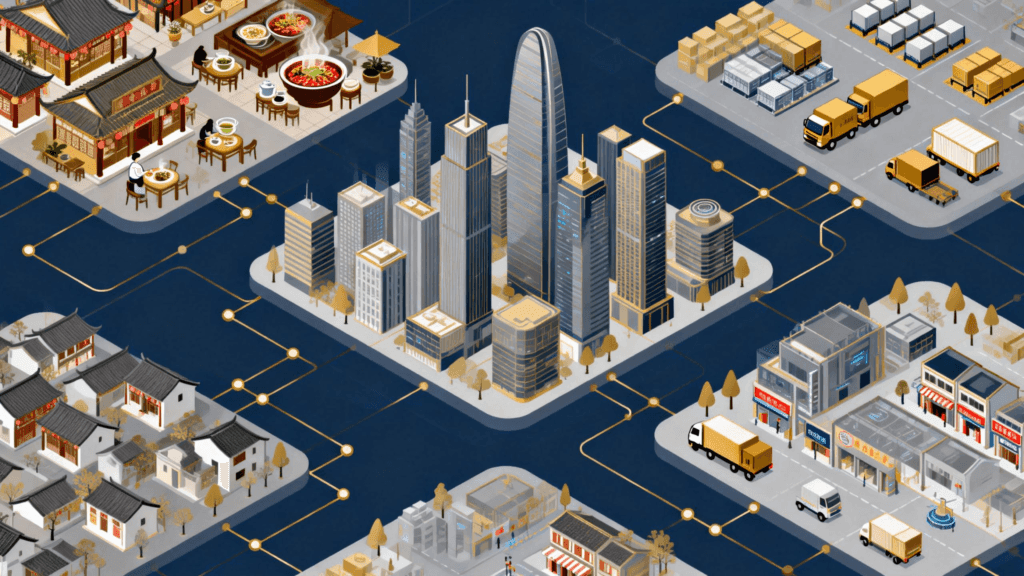
---
## China has many markets, not one
Domestic brands understand this.
Many grow through tightly targeted tests: one city, one platform, one festival, one micro segment. Some initiatives are never meant to scale nationally. They exist to build depth or to learn what truly resonates.
For global brands, this can feel uncomfortable. It cuts against habits from other markets, where efficiency and national reach are primary goals.
In today's China, that mindset is risky.
Treating China as a single market often leads to:
- Over-reliance on tier one cities like Shanghai, where competition and media costs are highest.
- Platform plans that follow headline user numbers, not local usage and content cultures.
- Creative that leans on safe symbols like pandas and the Great Wall, instead of real-life insight.
Meanwhile, Gen Z in lower-tier cities may have comparable spending power in certain categories, fewer competing messages, and more time to engage with content. The opportunity is there, but only for brands willing to design for it.
---
## A portfolio of local bets, not one big gamble
There is no longer such a thing as "winning China" with a single strategy.
What works instead is a portfolio of local bets, some big, some small, some that quietly end. This is how many successful domestic brands already operate, and it is increasingly how foreign brands will need to think.
A practical portfolio might include:
- 2 to 3 priority city clusters, each with its own role, audience focus, and media mix.
- Platform strategies that follow behaviour, for example, Douyin and Xiaohongshu in coastal tier ones, and other platforms in specific inland regions.
- A mix of national tentpole moments and city-level experiments around local life, from sports courts and food streets to campus and community events.
- Product and offer tests are designed to learn fast, not to become instant national rollouts.
This approach is more complex, but more honest about how China behaves as a market.
---
## What global teams need to change
For leadership teams outside China, the hardest shift is often organisational, not creative.
Three changes matter:
- **Measure depth as well as reach.** A Chengdu activation that moves local preference can be more valuable than a national burst that leaves shallow impressions.
- **Give local teams more room.** Deep localisation needs people close to platforms, culture, and retail. Central teams should set guardrails, not dictate every move.
- **Fund learning as well as launches.** Some ideas will not scale, and that is fine. The point is whether each test sharpens your sense of where the brand has the right to win.
The brands that adapt fastest will be those that treat China less like a single line on a spreadsheet and more like a set of evolving opportunities.

---
## Turning Insight Into Action With TheChinaPath
At TheChinaPath, we work with global brands that feel this shift in China and need a concrete way to respond.
We help teams move from single national plans to structured portfolios of China bets. That can include city and cluster strategy, platform roadmaps across Douyin, Xiaohongshu, WeChat, Tmall, JD and others, and localisation of brand and commerce experiences that still respect global DNA.
The goal is simple. Less chasing abstract "China scale", more building specific relevance where your brand can genuinely stand out.
---
# China livestream cost for brands: the room budget
URL: https://www.thechinapath.com/insights/china-livestream-cost-for-brands
Published: 2026-09-16
Updated: 2026-09-24
Author: TheChinaPath
Category: KOLs & Livestream
Price a China livestream room by hour and month, with a worked budget for daily broadcasts, part-time rooms and external-host events.
A branded livestream room creates a fixed monthly bill. In the worked budget
below, a daily room costs RMB 80,000 before traffic and sales-linked expenses,
about US$11,300 at RMB 7.10 per dollar. China livestream cost for brands depends
on the sales target as well as the broadcast schedule. These are budget
scenarios, not market averages or agency quotes.
The table compares three livestream budgets. Each cell shows the monthly
allocation followed by its cost per broadcast hour in parentheses. The event
column covers one event that month.
All amounts are selected planning inputs or calculations. Reviewed September 15,
2026, with the platform fee updated September 24. Historical rent and host-pay sources appear below; they do not establish
current prices. The daily schedule means 26 broadcast days, allowing rest days.
The three-day schedule is modeled as 13 sessions in a month. Every session lasts
4 hours except the 3-hour event.
| Budget line, RMB/month (RMB/broadcast hour) | Daily room, 104 hours | Three days/week, 52 hours | External-host event, 3 hours |
|---|---|---|---|
| Assumed sales, RMB/month | 167,000 | 83,000 | 300,000 |
| Studio and existing set | 30,000 (288) | 15,600 (300) | Included in host fee |
| Host and co-host | 26,000 (250) | 28,600 (550) | 100,000 (33,333) |
| Operator and moderator allocation | 24,000 (231) | 12,000 (231) | Included in host fee |
| Paid traffic | 26,720 (257) | 13,280 (255) | 18,000 (6,000) |
| Platform fee allowance | 4,175 (40) | 2,075 (40) | 7,500 (2,500) |
| Creator or MCN commission | 0 (0) | 0 (0) | 75,000 (25,000) |
| Samples and giveaways | 3,340 (32) | 1,660 (32) | 6,000 (2,000) |
| Total | 114,235 (1,098) | 73,215 (1,408) | 206,500 (68,833) |
Hours are on-air hours. Allow for additional paid preparation time. Hourly
figures are rounded independently, so their sum can differ from the rounded
total. At the calculator’s planning rate of RMB 7.10 per dollar, monthly totals
are about US$16,100 for the daily room and US$10,300 for the part-time room. The
event is about US$29,100. No live exchange rate is implied.
## Why a project quote hides the hourly cost
A quote can cover a room, or the whole store operation. Before comparing prices,
ask the supplier to separate broadcast production from the work that continues
after the camera stops. Customer service may sit in either contract. Check the
warehouse contract for stock handling.
Get the media budget separately. A production fee tells you what it takes to
keep the room on air. It says little about how many buyers will enter. A foreign
brand needs both figures before it can approve a monthly commitment.
Our [social commerce](/grow-in-china/social-commerce) page describes the
operating scope. Use that scope to check a proposal for overlapping work,
especially if a store partner already supplies the livestream team.
## A store-led room and a hosted event buy different things
On Douyin, China’s short-video and shopping platform, a store-led room
broadcasts from the brand’s account. It gives the brand control over the selling
schedule and product presentation. The team can revise a demonstration after
reading buyer comments.
An external-host event buys access to another account’s audience. The contract
may combine a fixed placement fee with a sales commission. A multi-channel
network, or MCN, can arrange the host and manage that contract. Ask for an
itemized invoice and check for duplicate commission.
Large dedicated events can sit far outside a small brand’s test budget.
> In a 2024 interview, a Yalu representative put dedicated top-host events
> at RMB 1 million to RMB 3 million, plus roughly 10% to 20% commission.
> These were that company’s reported experience, not a market tariff.
> Source: Xinhua (新华网), August 4, 2024.
> https://www.news.cn/fortune/20240804/ec11b5b85b514e8b9332998d0b23b020/c.html
The table’s RMB 100,000 event fee is a chosen test input. It does not price the
celebrity events in that interview. Replace it with the actual contract,
including what happens if the broadcast is canceled or orders are refunded.
## China livestream cost for brands, line by line
The daily room assumes an existing set in a leased space. The part-time room
assumes rental at RMB 300 an hour. Neither includes a new studio build.
> A venue supplier estimated rent for a 100-to-300-square-meter room at
> RMB 20,000 to RMB 50,000 a month in noncore first-tier-city locations,
> or RMB 150 to RMB 500 an hour. The page labels its prices estimates.
> Source: Liubai Space (留白空间), September 25, 2024.
> https://www.liubaikongjian.com/news/198.html
Those historical estimates help frame a quote request; they are not a September
2026 rate card. Get a dated local quote before choosing a lease. List the
equipment included and ask whether rehearsal time uses the same rental clock. A
low on-air rate can leave several hours of preparation outside the advertised
package.
**Host and co-host.** The daily scenario selects RMB 18,000 a month for the host
and RMB 8,000 for the co-host. The part-time scenario selects hourly rates of
RMB 400 and RMB 150 respectively.
> Reporting from Hangzhou in April 2025, Cailian Press cited a recruiter
> who put monthly pay for womenswear hosts with 1 to 2 years' experience at
> RMB 15,000 to RMB 20,000. A separate experienced host reported offers of
> about RMB 400 an hour.
> Source: Cailian Press (财联社), April 3, 2025.
> https://www.cls.cn/detail/1992813
This is dated interview evidence from a specific market. The co-host allowance
is our scenario input. Employer charges and any sales bonus need their own
quote; the table does not treat base pay as total employment cost.
The operator and moderator allocation is also a planning choice. Confirm the
shift coverage before assuming that a smaller broadcast calendar cuts the bill
in half. Confirm whether the host fee covers the event crew.
The platform allowance uses 2.5% from the packaged-food category in
TheChinaPath calculator data, September 2026. That's the midpoint of Douyin's
cross-border schedule for the category, which charges 2% on grain and cooking
oil and 3% on most other packaged food. It is a model input, not a verified
current tariff for your product. Check the applicable cross-border category and
settlement basis before committing funds.
> Source: Douyin E-commerce (抖音电商), 《【全球购】技术服务费费率标准》
> (Douyin Global technical service fee schedule), July 15, 2026.
> https://school.jinritemai.com/doudian/web/articlev0/aHMYyFoqESKn
Orders from the Douyin Mall app and Doubao can carry a supplementary fee on top
of the base rate. The allowance leaves it out.
The event assumes 25% creator commission. Store-led columns assume no external
creator commission. Neither assumption rules out employee bonuses or a partner’s
sales fee. This model applies sales-linked rates to the same sales base; actual
settlement bases may differ. Samples and giveaways use a selected 2% of sales,
valued at cost. Set a product-level allowance if that fits your operation
better.
## How paid traffic changes the monthly bill
Paid media equals the sales attributed to ads divided by return on ad spend, or
ROAS. In our store-led scenario, ads account for 40% of sales at 2.5 ROAS. That
makes media spending 16% of total sales. The event assumes a 15% paid share at
the same ROAS, giving a 6% media bill.
These inputs need testing against your own sales history. Organic sales and
creator-driven sales must also occur for the total sales target to hold. An
attractive ROAS on a small paid segment can’t prove that the whole room will
sell enough.
For the daily room, total cost equals RMB 80,000 plus 20.5% of sales. Traffic
alone matches that amount at RMB 500,000 in monthly sales under the 16%
assumption. That is a cost crossover, not a break-even sales target.
If ROAS falls to 1.5 while the paid share stays at 40%, the same RMB 500,000
sales target needs about RMB 133,333 of media. At 2.5 ROAS it needs RMB 80,000.
Keep this spending sensitivity beside the production quote.
## What each room must sell
The hourly bill helps compare suppliers. Orders decide whether you can afford
it.
Use an assumed RMB 250 basket to turn the opening budgets into orders. At the
stated sales targets, the daily room generates 668 orders and the part-time room
generates 332. The event generates 1,200. Those volumes are arithmetic
consequences of the inputs, not forecasts.
| Livestream budget, RMB | Daily room | Three days/week | External-host event |
|---|---|---|---|
| Monthly cost | 114,235 | 73,215 | 206,500 |
| Cost per placed order | 171.01 | 220.53 | 172.08 |
| Cost as share of assumed sales | 68.4% | 88.2% | 68.8% |
Product cost and fulfillment still have to be paid. Import tax sits outside this
room budget, as does any separate store-management contract. Add launch capital
and employer charges. Inventory funding also sits outside this budget.
Returns change the denominator. If 20% of the daily room’s orders fail to become
kept orders and its budget stays fixed, cost per kept order rises to about RMB
213.76. This is a stress test: actual refunds can also change commission and
platform charges. Reconcile those against settlement data.
At RMB 500,000 in sales, the daily room’s formula produces RMB 182,500 in cost,
or RMB 91.25 per order. At RMB 1 million it produces RMB 285,000, or RMB 71.25
per order. Total cost per broadcast hour rises because the traffic bill rises while
the schedule stays fixed.
Both formats can spread a fixed fee over more orders. An event’s placement fee
also becomes cheaper per order when sales rise; its commission remains variable.
Compare the formats at the sales each can credibly reach. Review settled orders
after refunds before expanding the schedule.
## The comparison our calculator can support
A measured comparison would need cost per order from matched managed rooms and
celebrity events. We have no publishable sample for that claim. The calculation
below uses our own model to isolate media and creator fees.
TheChinaPath calculator data, September 2026: select RMB 2 million in annual
sales and a RMB 250 basket, producing 8,000 placed orders. Hold ROAS at 2.5.
Choose the channel mixes below; these are editorial scenarios. This annual
comparison is separate from the monthly room budgets. Do not add the tables
together.
| Marketing model, RMB/year unless stated | Store-led mix | Creator-heavy mix |
|---|---|---|
| Paid / creator / organic sales shares | 40% / 10% / 50% | 15% / 80% / 5% |
| Creator commission assumption | 20% | 30% |
| Paid media | 320,000 | 120,000 |
| Creator commission | 40,000 | 480,000 |
| Combined marketing cost | 360,000 | 600,000 |
| Marketing cost per placed order, RMB | 45 | 75 |
The RMB 30 difference per order comes from both the sales mix and the
commission-rate assumptions. It excludes placement fees and room production, as
well as store overhead. It does not measure a celebrity event or prove that a
store-led room will win. In particular, the store-led scenario requires half its
sales to arrive without paid-media or creator attribution. To reproduce the
calculation, divide media spending plus creator commission by 8,000 orders.
Bring the columns to the operator. What supports the organic sales assumption?
How is an order counted when a creator and an ad both helped sell it? The
calculator treats the shares as separate buckets that sum to 100%. A sales
report that double-counts them will claim more sales than the store made.
## When to delay a permanent room
Delay the lease until the margin left from sales can cover the room. There is no
universal monthly sales threshold. Work back from the margin left after
fulfillment and selling fees, then test how many orders would cover the fixed
bill. Confirm that stock will be available when the host sells it.
A brand also needs someone who can approve an offer while the China team is
working. Name that person before the first session. A host needs an answer while
the buyer is still watching.
If you are still choosing a channel, the [social selling hub](/social-in-china)
explains the platform options. Resolve store eligibility before hiring a
permanent team. A room won’t fix a product that cannot be listed through the
intended route.
## Frequently asked questions
### Is a part-time room cheaper?
It can require less monthly cash. Our selected part-time budget is RMB 73,215,
against RMB 114,235 for the daily schedule. Its hourly cost is higher because
the host and space are rented by the hour. Compare total commitment and expected
kept orders before deciding which schedule to buy.
### Does a host’s fee include the whole event?
Read the scope before treating it that way. The worked event assumes the fixed
host fee includes the room and crew. It adds commission and paid traffic
separately. Your contract needs to state who funds discounts and how refunded
orders affect each fee. Have those terms written into the quote.
### Can the calculator price the room itself?
The Douyin calculator models the broader channel, including a partner’s
operating fee. It does not provide a separate studio staffing quote. Use the
room budget to inspect that contract, and add only costs outside its scope. Keep
the marketing comparison separate from the production budget until you have
removed overlapping charges.
[Model your channel costs in the Douyin calculator](/tools/douyin-cost-calculator)
---
# WeChat Went Free. Xiaohongshu Got Expensive.
URL: https://www.thechinapath.com/insights/china-platform-trends-2026-foreign-brands
Published: 2026-07-22
Updated: 2026-07-22
Author: Cyril Drouin
Category: Market Strategy
Five China platform shifts in 2026, what each one costs a foreign brand, and why the cheapest doors to enter are the priciest to run.
Getting into China has never been cheaper. Staying in got harder at the
same time, which is the part the press releases leave out.
Honest read on the first half of 2026, anyway. Four of the five
biggest Chinese platforms are cutting entry costs right now, dropping
deposits, waiving fees, opening categories. At the same time the work
required to sell anything once you are inside has grown in
almost every direction. More channels to run. More formats to produce.
More people to staff.
Brands get burned when they read the first half of that sentence and
skip the second.
Here is what changed in the first half of 2026, and what each shift costs
in practice.
All figures below were verified against Chinese-language sources in July
2026. Platform policy in China moves fast enough that anything older than
a quarter deserves a second look before you budget against it.
## The five shifts, at a glance
| Shift | What it opens | What it costs you |
| ------------------------------ | ---------------------------------- | ---------------------------------------- |
| WeChat Mini Shop fee cuts | Near-zero setup on WeChat | A 90-day clock you have to be ready for |
| Xiaohongshu commerce model | Direct sales, not just seeding | Group chats and self-run livestreams |
| Redshop launch | Better organic reach for outsiders | No direct action this year |
| Tmall Global entry volume | The widest door into the market | More competition inside your category |
| Luxury and premium recovery | Real demand at full price | Physical presence, not discount tactics |
## WeChat just made itself a free trial
Tencent has effectively removed the cost of opening a WeChat Mini Shop
(微信小店), its in-app storefront format. New merchants pay no security
deposit across more than 2,600 categories, and the technical service fee
drops to one percent.
> New WeChat Mini Shop merchants pay a 1% technical service fee on their
> first 1.5 million RMB of self-operated transaction value in priority
> recruitment categories, or the first 1 million RMB in other categories.
> The rate applies for 90 days from the first paid order, capped at 180
> days from store opening.
> Source: 亿邦动力, via 新浪财经
At 7.15 RMB to the dollar that works out to roughly 210,000 USD of sales
at a one percent take rate. Standard WeChat Mini Shop rates run to five
percent in most categories, so the saving on a full window is real money,
somewhere near 8,000 USD. If you already run content on WeChat, this is
about as close to a free test as China gives you: does the audience you
have built buy inside the app, or do they only ever click out to
a marketplace?
There is a catch buried in the wording. That 90-day window starts on
your first order, not on your first good month. If you open the store in
March and your first real campaign is in June, the discount is gone
before the campaign runs. We have watched brands burn the whole window on
setup and testing, then hit their actual launch at full rate.
Open it when the content, the inventory and the customer service are
ready. Not before.
## Xiaohongshu is not a seeding platform anymore
This is the trend with the biggest gap between what foreign brands
believe and what is actually happening.
Most Western marketing plans still treat Xiaohongshu (小红书), the
lifestyle platform Western media calls RED or RedNote, as a discovery
layer. Pay KOCs to post reviews, consumers search notes, then they go buy
somewhere else. That was accurate two years ago. It now describes maybe a
third of what happens on the platform.
> Xiaohongshu reported 39 million users a day showing clear purchase
> intent, generating 140 million active purchase requests daily. The
> platform introduced its NPL framework at its April merchant conference:
> Notes to carry product value, People through group chats, and Livestream
> to convert high-intent users.
> Source: 小红书 GROW 商家大会, via 搜狐
Worth reading that twice. It is 140 million requests a day, not a year,
and the annual figure that has been circulating in English coverage is
off by a couple of orders of magnitude.
Two channels now carry a large share of that demand, and neither one is
a note. We reset the Xiaohongshu section of every client plan we picked
up this year for exactly this reason.
> 47.15 million users entered merchant livestreams on Xiaohongshu, and
> active merchant group chats passed 170,000. Users who join a store's
> fan group watch livestreams twice as often as regular users and convert
> at three times the rate.
> Source: 虎嗅, via 新浪财经
| Channel | What it is | Who runs it |
| ------------------- | ----------------------------------- | --------------------- |
| Note search | Consumer discovery through posts | KOCs and paid seeding |
| Merchant group chat | Private messaging with your buyers | Your team, daily |
| Merchant livestream | Store-run broadcasts, not celebrity | Your team, on schedule|
Group chats are where this gets real for most teams. A group chat is not
a broadcast list, it is a room, and somebody has to be in it answering
questions and running the occasional giveaway and reminding people the
livestream starts at eight. In Chinese, every day, including the days when nothing is launching.
Here is the uncomfortable version. If your Xiaohongshu budget is 100% KOC
seeding, you are paying to create demand and then handing it to whoever
does show up in those two channels.
Usually a domestic competitor.
## Redshop matters, just not for the obvious reason
Xiaohongshu launched Redshop, a cross-border platform pointed outward, in
June 2026. Foreign brand teams keep asking us whether this is a new way
in. It is not. This is Chinese sellers reaching consumers abroad. It is not a route into
China for you, and no amount of squinting makes it one.
> Redshop launches across nine core markets including Hong Kong, Macao,
> the United States, the United Kingdom, Australia, Canada, Singapore and
> Malaysia. The first phase is invitation only, with 50 seed merchants
> focused on intangible cultural heritage crafts, traditional-style design
> goods and niche designer brands.
> Source: 36氪
So why does it belong in a report about entering China? Because of what
it forces Xiaohongshu to build. A platform selling Chinese goods to
American and Australian consumers has to get much better at recommending
products across a cultural gap, in both directions. The company also
stood up a dedicated international unit in February and moved senior
domestic e-commerce staff into it, and that tells you it is not a side experiment.
The practical read for a foreign brand is modest but real. Content that
explains an unfamiliar product to a Chinese audience fits that machinery
better than it did a year ago, and organic reach for outsider brands
should improve over the next few quarters without you changing anything.
So keep an eye on it, but there is nothing here to build a plan around
this year.
## The Tmall Global door is wide, and crowded
The cross-border entry point most foreign brands use first keeps getting
easier to walk through, which is exactly why it is getting harder to
stand out inside.
> Tmall Global added 2,415 new overseas brands over the past year, more
> than six a day. The platform now hosts over 40,000 brands from more than
> 110 countries and holds roughly 40% of China's cross-border e-commerce
> market. First-time countries of origin included Cuba, Chile, Lithuania
> and Slovenia.
> Source: 中国经济网, citing Tmall Global
Tmall Global (天猫国际) still does what it says. No Chinese entity, no
local warehousing, no direct RMB clearing. Ship from a bonded warehouse
and find out whether anyone wants your product.
So your category is filling up while you deliberate. Our earlier piece on [why most foreign market tests fail](/insights/foreign-brands-in-china-why-most-market-tests-fail) walks
through what that homework looks like before a store ever opens. The brands winning on the platform are not the ones with the biggest
budgets. They are the ones who picked a narrow segment they could own
instead of aiming at the middle of a category where domestic players
already dominate. WHC, the Australian supplement brand, went from 2.6
million RMB in Double 11 sales in 2019 to more than 120 million RMB in
2025. That took seven years on the platform, and the brands that quit in year
two obviously do not appear anywhere in that number.
## Premium demand is back, in the places you have to show up for
Everything above is about digital channels getting cheaper to enter. This
last one runs the other way.
For luxury and premium lifestyle brands, the recovery is real and quite
specific about where it lives.
> Bain expects the Chinese personal luxury market to return to moderate
> growth in 2026 after contracting 3% to 5% in 2025, driven by a growing
> middle class and improving consumer confidence. Domestic spending
> accounted for 65% of Chinese luxury consumption in 2025.
> Source: 贝恩公司
Sit with that 65% for a second, because it changes where we tell premium
clients to put their money. Purchasing that used to happen in
Paris and Tokyo has largely come home. Which means presence
inside China, physical presence, is doing work that a good European
flagship used to do for you.
Bain also found first-quarter online luxury sales up 25% to 35% year on
year, with ready-to-wear growing at twice the rate of leather goods.
Chinese consumers are shifting from products that signal status toward
products that express something more personal.
None of this is being driven by discounting. It is happening in flagship
stores and at tier-one city events, in rooms where somebody can see the
product. That is the expensive kind of demand to serve. A single
tier-one pop-up runs well into six figures USD before you have sold
anything, and that is the budget line premium brands keep trying to
avoid.
## Five calls we would make first
Five things, in the order we would do them.
**Pick the channel before the platform.** The question is not "should we
be on Xiaohongshu." What you should be asking is whether you can staff a group chat in
Chinese five days a week. Budget a full-time bilingual community person, or a retained agency seat
at roughly 3,000 to 5,000 USD a month, before committing to the channel. If you can't fund that, the money belongs
somewhere else.
Timing the WeChat window matters more than choosing it. Open the Mini
Shop when your first campaign is about 30 days out, not when someone
suggests it in a planning meeting. The 90-day discount is generous and it
is also unforgiving, and we have seen more of it wasted on setup than
spent on selling.
**Narrow before you widen.** Six new brands a day are landing on Tmall
Global. Own a specific consumer problem, or the category average will swallow
you.
Then budget honestly for the part nobody quotes. Store setup is cheap
now, sometimes free. The expensive part is the twelve months that follow: content production,
scheduled broadcasts, somebody answering messages on a Tuesday night,
and that is where most China budgets come up short by about half.
Last one, and it is the one that separates the brands in these numbers from the ones who are not. Give it more than four quarters. Every
brand that worked did the category and pricing homework first, then
stayed long enough for it to compound. The ones who planted a flag and
walked away washed out quietly, and they do not show up in anybody's
year-end deck.
The doors are open wider than they have been in years. Genuinely good
news, as long as somebody on your side has the calendar cleared to walk
through them properly.
---
# China Social Media and KOL Strategies for eCommerce Brands
URL: https://www.thechinapath.com/insights/china-social-media-and-kol-strategies-for-ecommerce-brands
Published: 2024-11-28
Author: TheChinaPath
Category: KOLs & Livestream
How eCommerce brands find and work with the right KOLs in China, and how those partnerships build reach and credibility on Chinese social media.
## Understanding KOLs and Their Impact on Chinese Consumers
### What is a KOL in China?
A Key Opinion Leader ([KOL](/social-in-china)) in China is an influencer with a substantial following who holds significant sway over their audience's opinions and purchasing decisions. Unlike Western influencers, KOLs in China are seen as trusted experts who offer advice and product recommendations across various categories, from beauty and fashion to tech and lifestyle.
### Why KOLs are Essential for Brands in China
The influence of KOLs goes beyond mere visibility. In China, consumers are generally more receptive to product recommendations from familiar online personalities than from traditional advertising. This consumer preference makes KOLs essential partners for brand growth, as they build trust and foster strong connections with their followers, turning them into engaged and loyal customers.
## Platforms to Reach KOLs in China
Understanding the [social media](/grow-in-china/social-commerce) ecosystem in China is crucial for effectively finding KOLs. Unlike the Western world, where platforms like Instagram and YouTube dominate, China has its own unique social media giants.
### Key Social Media Platforms
#### WeChat
Known for its versatility, WeChat is used by KOLs to engage with fans, create exclusive content, and even conduct e-commerce directly within the platform.
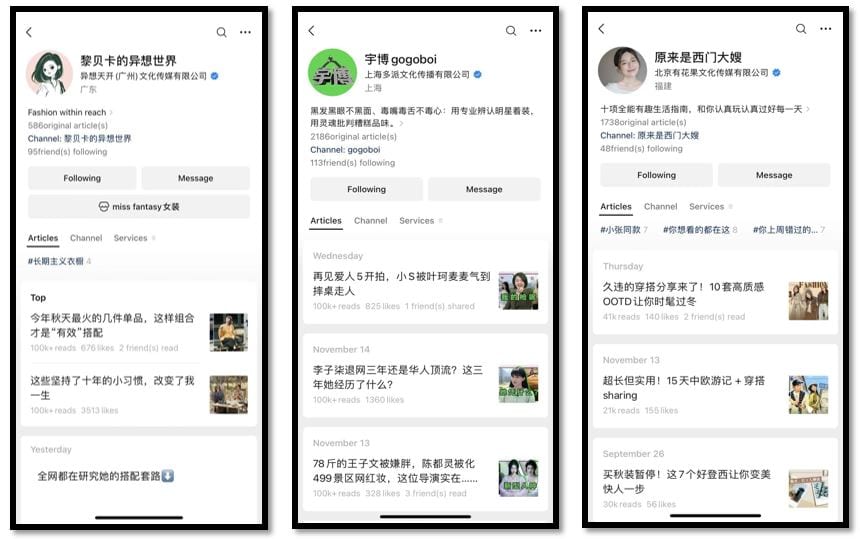
#### Weibo
Similar to Twitter, Weibo is ideal for content sharing, making it a popular space for influencer marketing, especially for news, entertainment, and product updates.
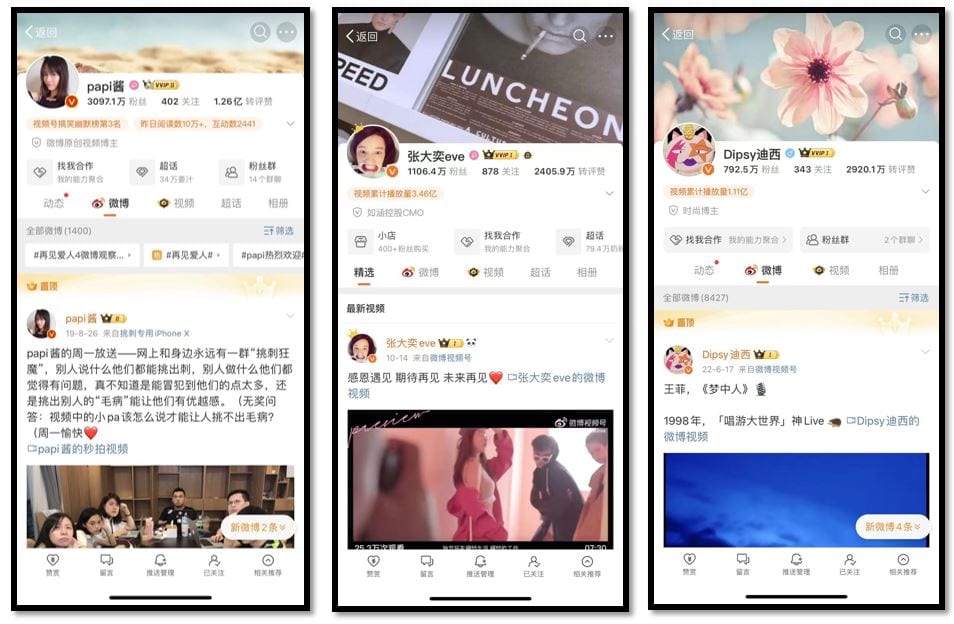
#### Douyin (TikTok)
As one of the leading short-video platforms, Douyin allows KOLs to showcase products through live streaming and engaging video content.
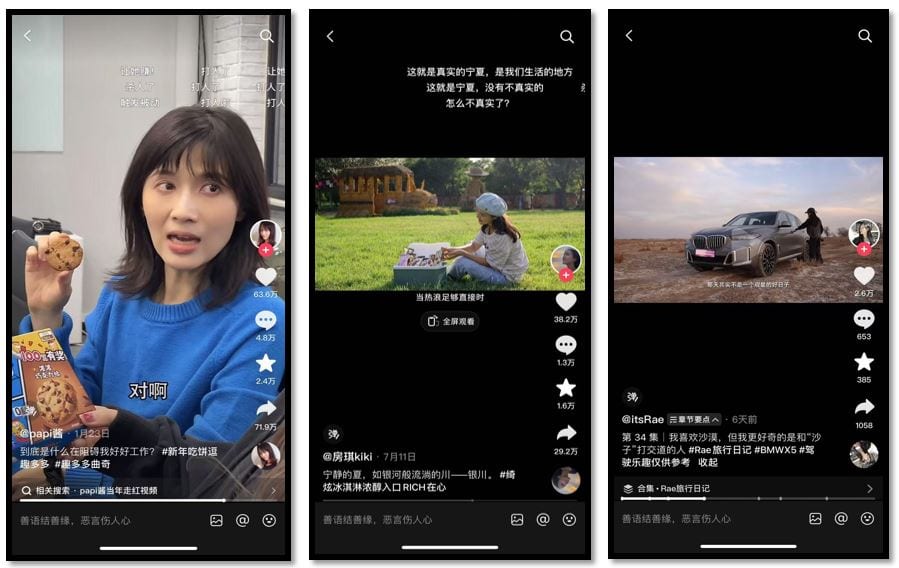
#### Xiaohongshu (Little Red Book)
Targeting mainly fashion and beauty enthusiasts, Xiaohongshu is known for its authentic community, where KOLs post product reviews and recommendations.
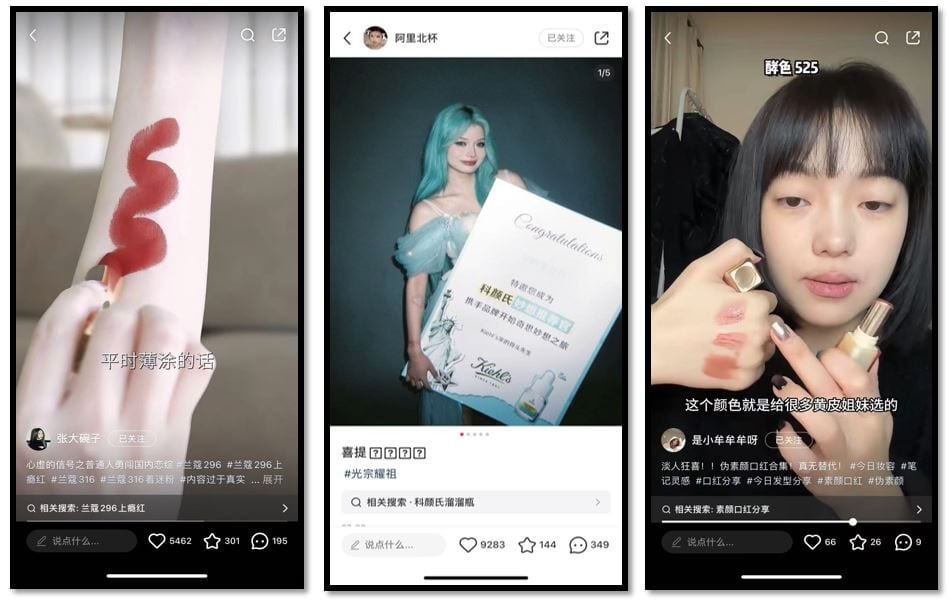
## How to Find the Right KOLs for Your Brand
Finding the right KOL requires a strategic approach to align with your brand goals and target audience. A few essential considerations can guide your search and help you make informed choices.
### Step 1: Define Your Objectives
* Increase Brand Awareness: For new brands or products, look for KOLs with a broad reach and high visibility.
* Drive Engagement and Sales: If your primary aim is sales, micro-KOLs with engaged followers may yield better results, as they tend to foster a more personal relationship with their audience.
* Build Credibility and Trust: For long-term brand building, work with KOLs whose content style aligns with your brand ethos and values.
### Step 2: Choose the Right Platforms
The choice of platform plays a significant role in influencer effectiveness. Each platform has its audience demographics and engagement levels, so matching your platform choice with your brand's audience is key.
### Step 3: Use KOL Discovery Tools
Several online tools are available to help brands identify and analyze KOLs:
* Yourank.cn: Provides analytics on KOLs, helping you evaluate potential candidates based on metrics like engagement rate and follower demographics.
* Newrank.cn: Offers a detailed database of influencers on multiple platforms, making it easier to find suitable KOLs across categories.
* WeMedia: While affordable, this platform requires careful selection, as it includes both established and emerging influencers.
## Types of KOLs in China
Understanding the different types of influencers in China can help you choose the right partner based on your budget, goals, and brand image.
### Mega-Celebrities
These are actors, musicians, and other public figures with massive followings, typically suited for luxury brands or large [campaigns](/grow-in-china/campaigns). They come at a high cost but can provide extensive reach.
### KOLs (Macro Influencers)
Specialists in a particular niche, KOLs work with brands across a specific industry, making them valuable for brands looking for targeted influence within a particular market segment.
### Micro-KOLs
These influencers generally have fewer followers but more intimate and engaged relationships with their audience. For brands with smaller budgets, micro-KOLs can be a cost-effective way to reach highly engaged communities.
### Key Opinion Consumers (KOCs)
Regular consumers with a strong online presence, KOCs offer authentic product reviews and recommendations. They are especially popular with brands aiming for grassroots marketing and customer trust.
## Strategies for Effective KOL Partnerships in China
Partnering with KOLs effectively involves several strategies tailored to optimize reach, engagement, and return on investment.
### Start with a Small Campaign
If new to the Chinese market, consider starting with a small campaign involving micro-KOLs or KOCs to test market response. This approach is cost-effective and allows you to gauge the success of your messaging before investing heavily.
### Mix Different Types of KOLs
For maximum reach and influence, a mix of KOLs can be beneficial. For instance, pairing a mega-celebrity for reach with a few micro-KOLs for engagement can help create a comprehensive campaign.
### Focus on Authentic Content
Chinese consumers value authenticity. Encourage KOLs to create genuine, relatable content instead of overly polished ads. Live streaming, for instance, is a popular method where influencers provide real-time product demonstrations and engage with their followers.
### Engage with Multiple Platforms
China's digital ecosystem thrives on cross-platform engagement. By using multiple KOLs across platforms like Douyin, Xiaohongshu, and Weibo, you can create a broader impact, reaching audiences in different spaces.
### Budget for KOL Campaigns
Costs can vary widely depending on the KOL's reach and popularity. Major KOLs may charge anywhere from thousands to millions of dollars per campaign, while micro-KOLs are generally more affordable. Budgeting well for KOL partnerships can maximize your campaign's impact.
## Navigating Potential Challenges in KOL Marketing
### Avoiding Fake KOLs
One of the main challenges in the Chinese KOL market is distinguishing between genuine influencers and fake KOLs, who often inflate follower numbers through bots. Platforms like Yourank.cn offer analytics that can help you verify KOL authenticity and engagement rates.
### Managing High Costs
KOLs, particularly mega-celebrities, can be expensive, so understanding the pricing model is crucial. Brands new to China should consider micro-KOLs to manage costs effectively while building brand presence.
### Cultural Sensitivity and Alignment
Ensuring that your brand's values and messaging align with Chinese cultural norms is essential. Work with KOLs who resonate with Chinese audiences and who understand the nuances of promoting products in a culturally sensitive way.
## Measuring the Success of Your KOL Campaign
Evaluating the performance of a KOL campaign is crucial to understanding its impact and planning future strategies.
### Track Engagement Metrics
Views, likes, shares, and comments are all important metrics to gauge the effectiveness of your campaign.
### Analyze Sales Conversions
Many platforms offer in-app purchasing features that make it easy to track conversions directly linked to influencer promotions.
### Measure Brand Sentiment
Monitoring social media sentiment and comments can provide insights into how your brand is perceived post-campaign.
## Conclusion
Finding and partnering with KOLs in China can be a transformative strategy for brands seeking to expand their reach and build trust in one of the world's largest markets. By understanding the types of influencers, choosing the right platforms, and implementing tailored strategies, brands can successfully use the power of Chinese KOLs to create meaningful connections with consumers. Whether you're a global brand or a niche company, aligning with the right KOLs can help elevate your brand's influence, drive sales, and establish a long-term presence in China's competitive market.
---
# What China social media marketing costs per month
URL: https://www.thechinapath.com/insights/china-social-media-marketing-cost-per-month
Published: 2026-09-29
Updated: 2026-10-13
Author: TheChinaPath
Category: Market Strategy
China social media marketing cost per month: content, paid media, and staff on Xiaohongshu, Douyin, WeChat, and Weibo, plus two year-one totals.
A foreign brand building an audience on two Chinese platforms should budget
about RMB 105,000 to RMB 127,000 a month, roughly US$14,900 to US$17,900.
That pays for creator content, paid media, and one operator per account.
An account kept merely alive costs a fraction of that, while selling
through the same pair runs close to double.
The table prices four platforms at three levels. At the lowest, maintain,
the account posts and answers comments and little else. Build adds paid
creators and ads to grow the following. Sell is the budget for moving
product through a store or a live room. All figures are monthly, in RMB,
and were checked on September 29, 2026. Each cell is a unit price, sourced
or taken from our own calculator, times a volume we state further down.
Swap in your own volumes and the rows still hold.
| Platform and level | Content (RMB) | Paid media (RMB) | Operations (RMB) | Total a month (RMB) |
|---|---|---|---|---|
| Xiaohongshu, maintain | In operations | 0 | 4,500 | 4,500 |
| Xiaohongshu, build | 47,500 | 10,000 | 9,000 | 66,500 |
| Xiaohongshu, sell | 95,000 | 20,000 | 13,700 | 128,700 |
| Douyin, maintain | In operations | 0 | 4,500 | 4,500 |
| Douyin, build | 41,700 | 10,000 | 9,000 | 60,700 |
| Douyin, sell | 83,400 | 20,000 | 13,700 | 117,100 |
| WeChat, maintain | In operations | 0 | 4,500 | 4,500 |
| WeChat, build | In operations | 30,000 | 9,000 | 39,000 |
| WeChat, sell | In operations | 50,000 | 13,700 | 63,700 |
| Weibo, maintain | In operations | 0 | 4,500 | 4,500 |
| Weibo, build | In operations | 10,000 | 9,000 | 19,000 |
| Weibo, sell | In operations | 20,000 | 13,700 | 33,700 |
The Douyin rows leave out creators paid by commission on each sale. That
cost moves with sales, so it sits with the store budget.
Our two year-one combinations pair platforms. Xiaohongshu with WeChat costs
RMB 105,500 a month at the build level. Xiaohongshu with Douyin costs
RMB 127,200. Both totals, and what drives the gap, are further down.
## Why a monthly number is so hard to find
Search for this and you get agency directories and a chart of national ad
spend. Nothing you can put in a budget.
There's a reason for that. Each of the three cost lines is sold its own way.
Ad platforms sell reach by auction, so the price moves by the hour.
Creators quote per post, and the quote depends on the creator. Agencies
fold staff and content, sometimes media too, into one retainer, and the split
never appears on the invoice. The platforms keep most rate cards
behind merchant logins. We found no public page where Xiaohongshu states
its ad minimums.
"It depends" is the usual answer. That's true, and useless. The budget
depends on things you can count, starting with how many creator posts you
buy and how much paid media runs behind them. Then come the people who run
the accounts. Each has a published unit price somewhere, and the table
above is what you get when you multiply them.
## Content, media, operations: the line that gets cut
**Content** is mostly creator posts. On Xiaohongshu (RedNote), China's
search-heavy lifestyle app, a brand pays creators to write notes. On
Douyin, ByteDance's Chinese sister app to TikTok, it pays them for short
videos. The going rates sit far apart.
> Sponsored creator posts averaged RMB 10,800 each on Xiaohongshu and
> RMB 39,700 on Douyin from January to October 2024. A Xiaohongshu brand
> ran 13.7 of them a month on average.
> Source: Jiemian (界面新闻), citing QuestMobile, March 2025. https://www.jiemian.com/article/12440261.html
The platforms take a cut on top. Xiaohongshu adds a 10% platform service
fee to the creator's price on deals booked through Pugongying, its creator
marketplace, so the model keeps 10%. Douyin's creator marketplace, Xingtu,
takes a fee as well, and it won't book a small order.
> On Xiaohongshu's Pugongying (蒲公英) platform, a custom creator deal costs
> the creator's flat price plus a 10% platform service fee.
> Source: Xiaohongshu Pugongying help center, October 2026. https://pgy.xiaohongshu.com/api/pgy/help/doc?shortcutId=eb3150fa550d424459f8838a77c7e433&role=4
> Xingtu recruitment tasks start at a RMB 10,000 order budget, with a 5%
> platform service fee.
> Source: Xingtu Help Center (巨量星图), August 2026. https://www.xingtu.cn/help-center/demander/126583
**Operations** is people. Someone has to post the brand's own notes and
videos and answer the comments. Someone briefs the creators and reads the
numbers each week.
The closest official pay data covers the national occupation that includes
new-media marketing.
> Internet marketing staff (互联网营销师) in Shenzhen earned a median of
> RMB 108,209 a year in 2024. The 75th percentile was RMB 164,915.
> Source: Shenzhen Human Resources and Social Security Bureau (深圳市人力资源和社会保障局), April 2026. https://hrss.sz.gov.cn/xxgk/tjsj/zxtj/content/post_12735120.html
That's about RMB 9,000 a month at the median. It is wages only. Social
insurance and the housing fund add to that, and we haven't included them.
**Paid media** is the third line, and the easiest to trim, since creator
posts feel like the real work and ads feel like an extra. But a sponsored
note reaches the creator's followers and whoever the feed decides to show
it to. Paid media lets the brand pick that second group.
It's also small. On Xiaohongshu at the build level, our model puts
RMB 10,000 of media behind RMB 47,500 of creator notes. Cut the media and
you save about a fifth of the content bill. The notes then go only as far
as the creators' followers and the feed will carry them.
## China social media marketing cost per month: what goes into it
Every figure in the table comes from these inputs. If you trust the table,
skip ahead. If you plan to change it, this is the part to read, because
change one input and the row changes with it.
Start with content. The build level buys four creator notes a month on
Xiaohongshu and one creator video on Douyin, and the sell level doubles
both. Each post is priced at the 2024 average above, plus the
platform's fee: 10% on Xiaohongshu, 5% on Douyin. So four notes come to
RMB 47,500, and one Douyin video to RMB 41,700.
On WeChat and Weibo the content cell reads "in operations." Neither
platform has a dated, public creator price we'd put in a budget, so the
operator writes the posts and the cost sits in the wage.
Staffing follows the Shenzhen table (Shanghai publishes no public
equivalent). Maintaining an account takes half a median operator, or
RMB 4,500. Building one takes a full median operator at RMB 9,000, and
selling through it takes someone at the 75th percentile, RMB 13,700.
For paid media we use our own numbers, taken from the Douyin cost
calculator on this site at its default settings.
> At RMB 2 million of year-one sales, with 15% of sales driven by paid ads
> at a return on ad spend of 2.5, the Douyin ad line comes to RMB 120,000
> a year, or RMB 10,000 a month on Qianchuan. The year-two defaults, at
> RMB 3 million of sales and a 20% paid share, put it at RMB 20,000 a
> month.
> Source: TheChinaPath calculator data, September 2026.
We use RMB 10,000 at the build level and RMB 20,000 at the sell level on
every platform, so the table compares content and staffing on equal media.
WeChat is the exception, because its own published minimum sits higher.
Tencent's last public Moments rate card that we could verify dates from the
second quarter of 2020. It carries the same minimums as the 2018 card, so
read that row as a floor at 2020 prices.
> In the second quarter of 2020, WeChat Moments ads bought at auction needed
> a daily budget of at least RMB 1,000. A reserved Moments campaign needed
> at least RMB 50,000, at list prices of RMB 150 per thousand image-ad views
> in Beijing and Shanghai.
> Source: WeChat Ads (微信广告), Q2 2020. https://wxa.wxs.qq.com/wxadtouch/upload/t2/ar2zl7ks_250201f1.pdf
A month of daily auction ads at that minimum is RMB 30,000. One reserved
campaign is RMB 50,000. Those are the WeChat build and sell figures, and
the least certain numbers in the table: prices have had six years to
move. The WeChat sell row also assumes a China entity or a distributor to
sell through, for reasons covered below.
## The platform floors, and what happens below them
A floor is the smallest order a platform will run. Below it, nothing goes
live. Only some of them are public.
| Platform | Published minimum | Fee on top | Source date |
|---|---|---|---|
| Douyin ads (Qianchuan) | RMB 100 a day per campaign plan | 0.6% on orders the ads generate, from 2026 | June 2025; January 2026 |
| Douyin creators (Xingtu) | RMB 10,000 per recruitment task | 5% of the task value | August 2026 |
| Xiaohongshu creators | None published | 10% on top of the creator's price | October 2026 |
| Xiaohongshu ads | None published | None published | No public page found |
| WeChat Moments ads | RMB 1,000 a day at auction; RMB 50,000 per reserved campaign | None published | Q2 2020 |
| Weibo ads | No dated minimum published | None published | No dated page found |
> A new Qianchuan campaign plan needs a daily budget, and the default
> minimum is RMB 100.
> Source: Douyin E-commerce Learning Center (抖音电商学习中心), June 2025. https://school.jinritemai.com/doudian/web/articlev0/aHvyeGCvMaTB
> From 2026, orders a Douyin merchant generates through Qianchuan carry a
> 0.6% technical service fee, across all categories.
> Source: Ebrun (亿邦动力), January 2026. https://m.ebrun.com/636020.html
The hard floors are low. RMB 100 a day on Qianchuan is RMB 3,000 a month,
and almost any brand clears it.
The floor that matters more is the budget below which paid media stops
changing what the account does. No platform publishes that one, and it
shifts by category and by season. Our planning figure of
RMB 10,000 a month is where the Douyin calculator starts. On a two-platform
plan, treat anything under it as a test, and give the test an end date.
## The two combinations we'd price for year one
A foreign brand doesn't need four platforms in its first year. It needs one
place where Chinese shoppers research the product and one place where they
buy it or come back to it. We'd start with one of two pairings.
| Combination and level | Content (RMB) | Paid media (RMB) | Operations (RMB) | Total a month (RMB) | About (US$) |
|---|---|---|---|---|---|
| Xiaohongshu + WeChat, build | 47,500 | 40,000 | 18,000 | 105,500 | 14,900 |
| Xiaohongshu + WeChat, sell | 95,000 | 70,000 | 27,400 | 192,400 | 27,100 |
| Xiaohongshu + Douyin, build | 89,200 | 20,000 | 18,000 | 127,200 | 17,900 |
| Xiaohongshu + Douyin, sell | 178,400 | 40,000 | 27,400 | 245,800 | 34,600 |
Dollar figures use the calculator's planning rate of RMB 7.10 to the dollar.
Over twelve months, the build level comes to about RMB 1.27 million for
Xiaohongshu with WeChat and RMB 1.53 million for Xiaohongshu with Douyin.
Pair Xiaohongshu with WeChat for considered purchases, the skincare or
baby formula a shopper looks up before paying. That research happens on
Xiaohongshu.
> Xiaohongshu has passed 400 million monthly active users, with 800
> million searches a day, according to the company.
> Source: Beijing Business Today (北京商报), via Sina Finance, May 2026. https://finance.sina.com.cn/jjxw/2026-05-27/doc-inhziqxq9291575.shtml
WeChat is where a brand keeps the customer it found, through an Official
Account and a mini program. It's also where Tencent says its ad business is
growing.
> Weixin and WeChat had 1,439 million combined monthly active users at the
> end of June 2026. Tencent's marketing services revenue rose 22% to
> RMB 43.6 billion in the second quarter.
> Source: Tencent Holdings, August 2026. https://www.tencent.com/wp-content/uploads/2026/08/Tencent-Announces-2026-Second-Quarter-Results.pdf
There's a catch for cross-border sellers. WeChat's own store format
doesn't take bonded cross-border goods, so the WeChat half of this pair
sells through a China entity or a distributor, or it stays a service and
loyalty channel.
> Asked whether WeChat Store supports cross-border bonded import goods, an
> overseas business license or overseas settlement, WeChat staff replied:
> not supported.
> Source: WeChat Open Community (微信开放社区), January 2025. https://developers.weixin.qq.com/community/minihome/doc/000aca314d43589a14c212ae461c00
The other pairing, Xiaohongshu with Douyin, fits brands that want the sale
on the same app as the video. Douyin runs its own cross-border store
format, so an overseas brand can sell there from a bonded warehouse.
> Douyin had 1.009 billion monthly active users in March 2026, up 14.43%
> from a year earlier, according to QuestMobile.
> Source: Kuai Technology (快科技), via Sina Tech, April 2026. https://finance.sina.com.cn/tech/discovery/2026-04-29/doc-inhwckrh8029807.shtml
This pair costs more because a Douyin creator video costs almost four times
what a Xiaohongshu note does, even with the smaller media line in our model.
Commission creators are extra, as noted under the first table.
Weibo didn't make either list. It has reach, and it works for a launch or a
celebrity moment. But advertisers aren't adding money there.
> Weibo had 561 million monthly active users in June 2026. Its advertising
> and marketing revenue fell 1% to US$381.0 million in the second quarter.
> Source: Weibo Corporation, August 2026. https://www.prnewswire.com/news-releases/weibo-announces-second-quarter-2026-unaudited-financial-results-302855055.html
For how each platform fits a brand's plan, our
[guide to social media in China](/social-in-china) goes platform by
platform.
## What this monthly budget doesn't buy
The accounts themselves are close to free. Xiaohongshu verifies a company
account for a few hundred renminbi, and WeChat charges an overseas company
less than US$100.
> Xiaohongshu charges RMB 600 to verify an enterprise professional account
> and RMB 600 for each yearly review. Companies registered outside the
> mainland can apply from regions the platform has opened, including Hong
> Kong, Singapore, and Malaysia.
> Source: Xiaohongshu Juguang Help Center (小红书聚光帮助中心), August 2026. https://ad.xiaohongshu.com/next_help/docs/195c5fe505c71b4b0335a2fe0d61d8e0
> WeChat charges an overseas entity US$99 for each verification
> application.
> Source: WeChat Open Community (微信开放社区), June 2025. https://developers.weixin.qq.com/community/develop/article/doc/000e64388c0f107faf739efcd66813
Several costs sit outside the table on purpose.
A store is one. Opening on Tmall Global, JD Worldwide, or Douyin's
cross-border format means a refundable deposit up front and a commission
on every order, plus an annual fee on some platforms. The
[Douyin cost calculator](/tools/douyin-cost-calculator) prices that side,
along with the creator commission paid on sales.
> On Douyin, a commission offer open to all creators can be set at 5% to
> 50% of the order's paid amount.
> Source: Douyin E-commerce (抖音电商), August 2026. https://school.jinritemai.com/doudian/web/articlev0/112620
Employer social insurance on the operators' wages isn't here either. Nor
is a livestream room, or a one-off launch with a top host. And if an agency
runs the accounts, its retainer either replaces the operations line or sits
on top of the whole table. Ask for the split between staff, content, and
media before comparing two quotes.
Then there's the work itself. Shooting the brand's own posts every week
and managing the community in the comments is a production job.
That work sits with [TheRedScroll, the group's China social media
agency](https://www.theredscroll.com). The money in this table buys inputs. The
plan for what to post, and the call to drop a creator whose notes don't
convert, come from whoever runs the account.
How the social spend connects to a store, and to sales you can count, is
the part we work on in
[social commerce in China](/grow-in-china/social-commerce). The ad buying
behind it, from Qianchuan to Moments, is covered on our
[China media page](/grow-in-china/media).
## Questions brands ask about the monthly budget
### How much does Xiaohongshu marketing cost per month?
About RMB 66,500 a month to build an audience, per the Xiaohongshu build
row in our table. That is four creator notes at the 2024 average of
RMB 10,800 plus Xiaohongshu's 10% fee,
RMB 10,000 of paid media, and one operator at the Shenzhen median wage. A
presence with no creators and no ads costs about RMB 4,500, mostly staff
time.
### Can a foreign company open Chinese social media accounts without a China entity?
On some platforms, yes. WeChat verifies overseas entities for US$99 per
application. Xiaohongshu accepts company accounts from regions it has
opened, including Hong Kong, Singapore, and Malaysia, for RMB 600. Selling
is harder. WeChat's store format doesn't take cross-border bonded goods,
while Douyin runs a cross-border store format for overseas brands.
### Is Weibo still worth a budget?
For a launch, a celebrity tie-in, or news a brand wants picked up fast,
often yes. Weibo had 561 million monthly users in June 2026. As a
year-one base, it's a weaker bet. Its advertising revenue fell 1% in the
second quarter. For product research, Xiaohongshu's 800 million daily
searches make it the stronger bet.
### What is the cheapest credible setup?
One platform at the build level, with the other held at maintain. For
Xiaohongshu plus a maintained WeChat account, that's about RMB 71,000 a
month in our model. Anything smaller is an experiment, so set the date it
stops and the number it has to reach.
[Talk to us about a monthly China social budget, platform by platform and level by level](/contact)
---
# China trade fairs to find a distributor in 2026-27
URL: https://www.thechinapath.com/insights/china-trade-fairs-find-distributor
Published: 2026-09-24
Updated: 2026-09-24
Author: TheChinaPath
Category: Market Strategy
The China trade fairs where foreign food and beauty brands meet distributors in 2026-27, who is buying at each, and what to book before you fly.
Five China trade fairs put a foreign food and drink brand, or a beauty brand,
in front of working distributors in the next eight months: the China Food and
Drinks Fair in Nanjing from October 15, CIIE and FHC in Shanghai in November,
then CBE and SIAL China in Shanghai next May. Go with a shortlist of stands.
A bag of business cards won’t get you a distributor.
Every date below comes from an organizer, a Chinese government page or state
media, and was checked on September 24, 2026. We’ll update the table when the
spring 2027 dates go up. The Nanjing fair opens on October 15. That’s close
enough that the meetings you book this week will be most of the meetings you
get.
## Why a fair works as a filter
Walk a Chinese food fair without a plan and you’ll leave with two hundred
cards. Most of them will belong to people who can’t sell your product.
The numbers from the spring edition in Chengdu this March show why.
> The 114th China Food and Drinks Fair (全国糖酒商品交易会), held March 26 to 28, 2026
> in Chengdu, covered 325,000 square meters, hosted 6,615 exhibitors from more
> than 40 countries and regions and logged more than 410,000 industry visits.
> The 115th edition runs October 15 to 17, 2026 at the Nanjing International
> Expo Center.
> Source: Xinhua (新华网), March 2026. http://www.xinhuanet.com/food/20260331/272302f4d9c246caba268dca11a777f4/c.html
Nobody meets 410,000 people. What a fair does well is narrower, and it’s more
useful. It puts the distributors who already buy your category in one building
for three days, so you can test in a morning what would otherwise take a month
of flights between Chengdu, Guangzhou and Shanghai.
So the search happens before you fly. The fair is where you check what the
search turned up.
## China trade fairs to find a distributor, 2026 to 2027
Dates are the organizers’ own. The crowd column describes who the organizer
says came to the last edition.
| Fair | City and dates | Who walks the floor | Suits | Book before you fly |
|---|---|---|---|---|
| China Food and Drinks Fair, autumn (糖酒会) | Nanjing International Expo Center, Oct 15 to 17, 2026 | Liquor and food distributors, wholesale-market buyers, platform and retail buying teams | Wine, spirits, packaged food, drinks | A stand in the international food or wine hall, and meetings through the fair’s mini program |
| China Food and Drinks Fair, spring | Chengdu, March 2027 (dates not yet on an official page) | The same trade, drawn from across China | Same as autumn | Watch for the 2027 dates; the 2026 edition ran March 26 to 28 |
| CIIE (China International Import Expo) | National Exhibition and Convention Center, Shanghai, Nov 5 to 10, 2026 | Provincial buying delegations, retail chains, ecommerce platforms, state-owned buyers | Food and farm goods, consumer goods, health | Visitor registration by Oct 20; buyer matchmaking sessions |
| FHC and ProWine Shanghai | Shanghai New International Expo Center, Nov 10 to 12, 2026 | Importers, distributors, supermarkets, ecommerce platforms, hotels, restaurant chains | Food, drinks, wine and spirits | One-to-one meetings the organizer sets up with verified buyers |
| Canton Fair, phase 3 | Guangzhou, Oct 31 to Nov 4, 2026 | Overseas buyers sourcing Chinese goods | Only the import hall, and only for a few brands | Usually nothing; it’s an export fair |
| CBE China Beauty Expo | Shanghai New International Expo Center, May 12 to 14, 2027 | Master distributors, importers, brand decision makers | Skincare, makeup, personal care | Your NMPA filing status, and a place in the buyer club |
| SIAL China | Shanghai New International Expo Center, May 18 to 20, 2027 | Food and drink trade from 132 countries and regions (forecast) | Food and drinks | A stand, ideally in your country pavilion |
> The 29th FHC Shanghai Global Food Trade Show opens November 10 to 12, 2026
> at the Shanghai New International Expo Center, with more than 3,000
> exhibitors and more than 180,000 professional buyers expected.
> Source: FHC organizer release on Foodmate (食品伙伴网), August 2026. https://fsc.foodmate.net/show.php?itemid=750559
> Phase 3 of the 140th Canton Fair runs October 31 to November 4, 2026.
> Source: Ministry of Commerce (商务部), Economic and Commercial Office in Kenya, July 2026. https://ke.mofcom.gov.cn/spgq/art/2026/art_34f0d0478b3946d2979f6af41b4035aa.html
> SIAL China returns to the Shanghai New International Expo Center from May 18
> to 20, 2027, and expects 180,000 professionals from 132 countries and
> regions.
> Source: SIAL China (西雅国际食品展), September 2026. https://www.sialchina.cn/topics/show-news/2027sialxiyazhandingdang.html
CBE’s 2027 dates are on the organizer’s site, chinabeautyexpo.com, checked
September 24, 2026.
> The 30th CBE, which closed May 14, 2026, hosted 3,200 companies from more
> than 40 countries and regions, with buyers from more than 120.
> Source: Cosmetic News (化妆品资讯), June 2026. https://www.cosmetic-news.net/archives/10203
## Who is on the stand, and who you need to meet
Each fair draws a different crowd, and that changes how you work it.
At the China Food and Drinks Fair, buyers walk the halls and come to you. The
organizer works hard to fill them with trade from outside the host province.
> In Chengdu in 2026, an alliance of seven major food and drink wholesale
> markets brought several thousand large regional distributors, and close to
> 60% of professional visitors came from outside Sichuan.
> Source: Xinhua (新华网), March 2026. http://www.xinhuanet.com/food/20260331/272302f4d9c246caba268dca11a777f4/c.html
The same report describes a newer format worth seeking out. At the liquor
channel sessions, the buyers take the stands and the producers visit them, one
table at a time, carrying their own selection criteria and annual needs. For a
foreign wine or spirits brand that’s the fastest hour of the fair.
CIIE flips the direction. You exhibit, and the buyers arrive in organized
delegations, many of them put together by provincial and city governments.
> The eighth CIIE drew 43 trading delegations and more than 700
> sub-delegations. Its buyer corridor hosted 20 retail chains and leading
> ecommerce platforms plus 14 central state-owned companies, with more than
> 600 rounds of talks, and its key buyer selection sessions ran 1,300 rounds
> in food and farm goods, consumer goods and medical products. Its trade and
> investment matchmaking drew more than 5,000 companies and industrial parks.
> Source: China International Import Expo Bureau (中国国际进口博览局), November 2025. https://www.ciie.org/zbh/businessEx/expoNews/20251112/54275.html
Those delegation buyers are real, and they’re large. Many are state-owned
importers or chains that carry hundreds of brands. A mid-sized brand can end
up as one more line on their price sheet. Meet them. Just don’t sign the first
one that says yes.
Then there’s the Canton Fair.
> The 140th Canton Fair has 32,000 exhibitors, and more than 210,000 overseas
> buyers had pre-registered as of September 18, 2026.
> Source: Guangzhou Daily (广州日报), via 21st Century Business Herald (21世纪经济报道), September 2026. https://m.21jingji.com/article/20260918/herald/5607d878505d248317029f589cf56e80.html
Those 210,000 buyers fly in to buy from Chinese factories and ship the goods
home. They are sourcing teams. The Chinese distributors who take on imported
brands spend their autumn in Nanjing and Shanghai.
One more thing about stands. The person staffing a distributor’s stand is
often from business development. In our experience the owner or category head,
the one who decides on new brands, is back at the office. Ask by name for the
one who signs.
## Book the meetings before you book the flight
Chinese distributors run their business on WeChat. Get the contact before the
fair, send a one-page brand sheet in Chinese (a PDF they can forward to the
boss), and ask for a 30-minute slot on a named day. Buyers who won’t fix a
slot beforehand tend to be hard to pin down on the day.
Then use what the organizer offers. FHC sets up one-to-one meetings between
verified buyers and exhibitors before the show, and its site counts 173,143
professional visitors at the last edition, importers and distributors among
them. CBE’s organizer runs a buyer club that it says opens doors to China’s
master distributors and importers. The China Food and Drinks Fair has its own
mini program, and buyers use it.
> At the spring 2026 fair, the official mini program logged 1,238,200 visits
> and 28,066 online inquiries.
> Source: Xinhua (新华网), March 2026. http://www.xinhuanet.com/food/20260331/272302f4d9c246caba268dca11a777f4/c.html
CIIE runs the biggest matchmaking program of the five, as the delegation
figures above show. Use it, but arrive with your own list of buyers to meet.
Watch the CIIE visitor deadline if you’re walking the show instead of
exhibiting.
> The ninth CIIE runs November 5 to 10, 2026 at the National Exhibition and
> Convention Center (Shanghai). Overseas professional visitors must register
> online by 24:00 Beijing time on October 20, 2026 and pay by October 23.
> There is no on-site registration, and passes cost 200 RMB for November 6 to
> 10 or 100 RMB for November 8 to 10.
> Source: China International Import Expo Bureau (中国国际进口博览局), May 2026. https://www.ciie.org/zbh/cn/19BusEx/SerArea/ProAud/Q&A/20260527/61239.html
Timing matters for the list itself too. A Compass shortlist, drawn from
TheChinaPath’s database of vetted China partners, usually takes two to three
weeks from the brief (from Compass, September 2026). That’s tight for Nanjing
if you start today. It’s comfortable for CIIE and FHC in November. Our [guide
to finding a distributor in China](/compass/find-a-distributor-in-china)
explains how the list gets built.
## What to bring: RMB prices, registrations and a sheet in Chinese
Once the meetings are set, pack for them. These papers do most of the work on
a stand. Leave one at home and the conversation stalls at the first question.
**A price list in RMB.** A euro ex-works price makes the buyer do the math
before they can decide whether they’re interested. Give them an RMB price they
can build a margin on and a suggested shelf price. If you haven’t worked out
where your product lands on a Chinese shelf, our comparison of [a China
distributor against your own store](/insights/china-distributor-vs-own-store)
walks through the cost lines.
**Your registration status.** Most first meetings turn on this question. For
food, China’s Food Safety Law puts the duty on both sides of the deal.
> Overseas food producers exporting to China must be registered with the
> customs authority, and the importer must file with it. Imported prepackaged
> food needs a Chinese label naming the country of origin and the domestic
> agent, or it cannot be imported.
> Source: Ministry of Commerce policy database (商务部), Food Safety Law of the People’s Republic of China (中华人民共和国食品安全法), Articles 96 and 97, as amended September 2025. https://policy.mofcom.gov.cn/claw/clawContent.shtml?id=104105
For beauty, the question is your NMPA status and who holds it.
> Special cosmetics need NMPA registration before import, and imported general
> cosmetics need an NMPA filing. An overseas registrant or filer must appoint
> a Chinese legal person to handle registration or filing.
> Source: State Council Gazette (国务院公报), Cosmetics Supervision and Administration Regulation, articles 17 and 23, June 2020. https://www.gov.cn/gongbao/content/2020/content_5525087.htm
Bring the registration number if you have one. If you don’t, say where you are
in the process and when you expect the number. Buyers will wait for a date. A
vague “we’re working on it” tends to end the meeting.
**A one-page brand sheet in Chinese.** What the product is, what it sells for
at home, where it sells, and what you want from a partner: which channels,
which regions. Put your WeChat QR code on it.
## After the fair: the check that separates a buyer from a trader
A trader buys a container and sells it to whoever pays. A distributor is
building a channel, so it’s already planning the second order before the first
one lands. At the stand the two look the same.
Start with the business license on the National Enterprise Credit Information
Publicity System, China’s official company register. The scope should cover
import or wholesale of your category.
For food, go one step further and check two more things: the food license or
filing, and the customs record.
> China runs a licensing system for food production and sale. A company that
> sells only prepackaged food needs no license but must file with the local
> regulator. Customs publishes the lists of filed importers and registered
> overseas producers.
> Source: Ministry of Commerce policy database (商务部), Food Safety Law of the People’s Republic of China (中华人民共和国食品安全法), Articles 35 and 96, as amended September 2025. https://policy.mofcom.gov.cn/claw/clawContent.shtml?id=104105
Then ask for sell-out data from a comparable brand, with the name blacked out
if they like. And visit a store they supply before you sign anything. These
are the checks our [distributor sourcing and
management](/enter-china/distribution) team runs before an introduction.
[Compass](/compass) only files a partner after meeting it in person and
vetting it on site.
## Common questions about China trade fairs
**Is CIIE worth it for a small brand?**
It can be, as an exhibitor inside your country’s pavilion. The buyers come in
delegations and include large retail chains and state-owned importers who buy
at volume. Meet them to learn the price they need, then compare that with
offers from regional distributors met at the food fairs.
**Can I find a distributor at the Canton Fair?**
Rarely. The Canton Fair is China’s export fair, and the more than 210,000
overseas buyers pre-registered for it come to source Chinese products. There
is an import exhibition, but the distributors who build channels for imported
brands spend their autumn at the China Food and Drinks Fair, CIIE and FHC.
**Do I need a stand, or can I walk the fair?**
Walking the halls is fine if every meeting is already booked. A stand helps
when you want buyers to find you, and at the China Food and Drinks Fair plenty
of them walk the aisles looking. For a first visit, a shared stand in your
country pavilion is the usual way in, and it puts you next to brands the same
buyers already know. Stand prices vary by fair and hall, so ask the organizer
or your pavilion for a quote early.
**When should I start booking meetings?**
Four to six weeks before the fair is comfortable. A buyer who has seen your
brand sheet and price list before the show comes ready to talk terms. Show it
for the first time on the stand and you’ll mostly get a card back. For CIIE
visitors, registration closes on October 20, 2026.
[Get a Compass shortlist of distributors worth meeting at the fair](/contact#shortlist)
---
# China's AI-Powered Commerce: Trends and Innovations to Watch
URL: https://www.thechinapath.com/insights/chinas-ai-powered-commerce-trends-and-innovations-to-watch
Published: 2025-01-10
Updated: 2026-05-15
Author: TheChinaPath
Category: AI & Innovation
How Alibaba, JD.com and other Chinese platforms use AI in marketing and commerce, from customer experience to retail operations, and what to watch next.
## AI-Powered Marketing Innovations
Chinese companies and digital [marketing](/grow-in-china/campaigns) agencies in China are leading the way in revolutionizing marketing strategies with AI. Platforms like Alibaba and JD.com use AI to offer personalized customer experiences, optimize campaigns, and enhance consumer engagement.
Key applications in marketing include:
- **Personalized Recommendations:** Advanced algorithms analyze consumer data to provide tailored product suggestions, boosting conversion rates.
- **Dynamic Pricing Models:** AI adjusts prices in real time based on demand, competition, and customer behavior.
- **Chatbots and Virtual Assistants:** AI-powered assistants improve customer interactions by providing instant support and personalized shopping guidance.
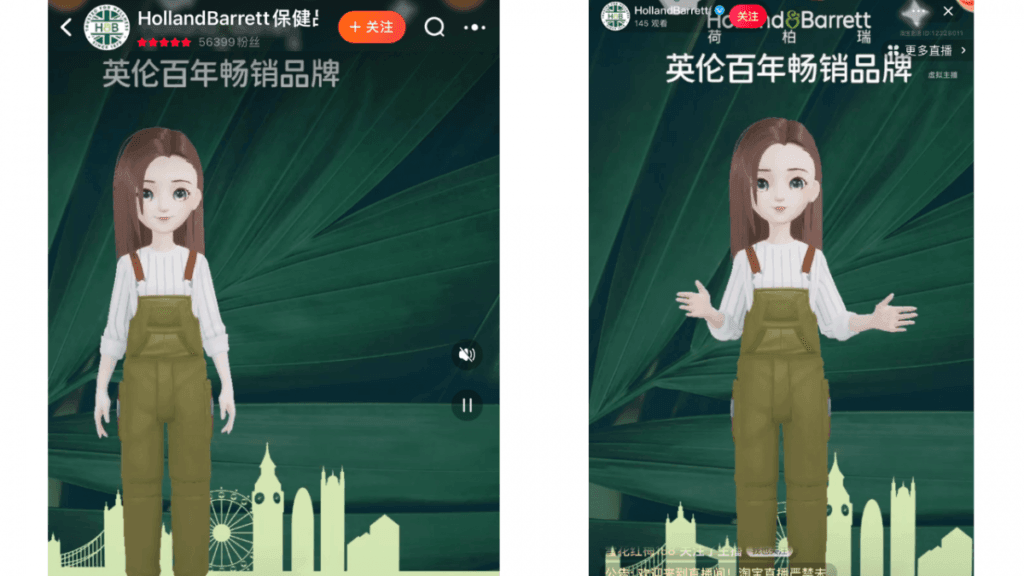
Source: Alibaba Group
These advancements have enabled media agencies in China to help brands achieve new heights in consumer-centric marketing, setting global standards.
## AI in E-Commerce
[E-commerce](/grow-in-china/cross-border-ecommerce) in China has been transformed by AI technologies, creating unparalleled user experiences. Ecommerce agencies in China utilize tools like machine learning and natural language processing to streamline operations and improve customer satisfaction.
### Key Advancements in E-Commerce
- **Visual Search Technology:** Platforms allow users to search for products using images, making online shopping more intuitive.
- **Augmented Reality (AR) Shopping:** AI-powered AR tools help customers visualize products in real-world settings, such as trying on clothes virtually.
- **Fraud Detection:** AI algorithms identify fraudulent transactions, ensuring secure shopping experiences.
As AI advances, crossborder e-commerce in China is becoming more efficient, allowing global brands to connect smoothly with Chinese consumers.
## AI's Impact on Social Commerce
Social commerce is a booming sector in China, with platforms like WeChat and Douyin integrating AI to analyze user behavior. AI-driven tools help creative agencies in China craft hyper-targeted campaigns that resonate with specific audiences.
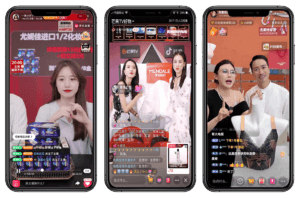
### AI Applications in Social Commerce
- **Content Personalization:** AI ensures users see ads and products that align with their preferences.
- **Livestream Shopping:** AI enhances live shopping experiences by providing real-time analytics and interaction tools.
- **[Influencer](/social-in-china) Marketing:** Algorithms identify suitable influencers for brands, maximizing campaign impact.
These developments empower social media agencies in China to create innovative marketing strategies, redefining how products are discovered and sold.
## Smart Retail: Bridging Online and Offline
AI is bridging the gap between online and offline retail in China, creating smarter shopping experiences. Marketing agencies in China are using AI to design smarter store layouts, improve inventory management, and provide smooth checkout solutions.
### Examples of Smart Retail Applications
- **Facial Recognition Payments:** AI-powered systems allow for smooth, contactless transactions.
- **Inventory Management:** Predictive analytics help retailers forecast demand, minimizing waste and ensuring stock availability.
- **Personalized In-Store Experiences:** AI enhances the physical shopping journey with customized offers and suggestions.
By integrating these solutions, digital agencies in China are helping businesses align with the evolving retail landscape.
## Generative AI in Advertising and Content Creation
Generative AI tools like Baidu's Ernie model are transforming how content is created. Advertising agencies in China use these tools to produce high-quality advertisements, videos, and promotional content at scale.
### Benefits of Generative AI in Marketing
#### Cost Efficiency
Automates repetitive tasks, freeing resources for strategic initiatives.
#### Creativity Enhancement
Produces innovative ad designs and content tailored to target audiences.
#### Multilingual Capabilities
Supports global campaigns by generating content in multiple languages.
Generative AI is empowering brands to innovate faster, maintain relevance, and deliver high-quality marketing materials.
## AI in Logistics and Supply Chain Management
China's commerce ecosystem relies on AI to enhance logistics and supply chain efficiency. Companies like JD Logistics utilize AI-powered systems to predict delivery times and minimize inefficiencies, often collaborating with ecommerce agencies in China to streamline operations.
### AI Applications in Logistics
- **Route Optimization:** AI determines the fastest delivery routes, reducing transit times.
- **Warehouse Automation:** Robotic systems manage inventory with precision, improving fulfillment speed.
- **Demand Forecasting:** Algorithms predict consumer demand, enabling proactive inventory management.
These advancements have significantly improved delivery speed and accuracy, making Chinese logistics a global standard.
## Ethical Challenges and Data Privacy Concerns
The rapid integration of AI in commerce raises important ethical and privacy concerns. With extensive data collection practices, China faces challenges in balancing innovation with consumer rights. Media agencies in China must navigate these issues carefully to maintain public trust.
To address these issues, the government has introduced regulations like the Data Security Law, mandating transparency and accountability in AI applications. Balancing innovation with ethical considerations remains a key challenge for China's AI ecosystem.
## The Global Influence of China's AI Ecosystem
China's AI advancements are influencing global commerce, with its innovations being adopted worldwide. From smart cities to crossborder ecommerce in China, the country's solutions are shaping international markets.
### Exporting AI Solutions
- **Smart Cities:** AI-powered urban management tools are improving global infrastructure.
- **Fintech Solutions:** China's AI-driven financial platforms are setting international standards.
- **AI-Powered Marketing Tools:** Innovations like real-time analytics are being integrated into global campaigns.
The contributions of branding agencies in China and other firms demonstrate the international significance of China's AI ecosystem.
## Future Outlook for AI in Chinese Marketing and Commerce
China's marketing and commerce landscape will continue to evolve with AI at its core. Agencies such as media buying agencies in China and digital marketing agencies in China will play key roles in advancing hyper-personalized campaigns and immersive shopping experiences.
- **Hyper-Personalized Marketing:** AI will refine customer segmentation, delivering even more precise campaigns.
- **Expanded AR/VR Integration:** Immersive shopping experiences will redefine consumer engagement.
- **Sustainable AI Solutions:** Companies will adopt eco-friendly AI practices to meet global demands.
As AI technology advances, China's marketing and commerce sectors will remain at the forefront of innovation, shaping the global economy.
## Conclusion
China's advancements in AI are revolutionizing the marketing and commerce landscape. With strong government support, innovative companies, and advanced research, the nation has become a global AI powerhouse. From personalized marketing to efficient logistics, AI's transformative impact is evident across all aspects of commerce.
As China continues to lead the way, the collaboration between government, academic institutions, and agencies like branding agencies in China will drive further innovation. These advancements not only benefit industries and consumers but also position China as a global AI powerhouse shaping the future of commerce.
---
# China's eCommerce Evolution Driven by Tech, Beauty, and Luxury Sales
URL: https://www.thechinapath.com/insights/chinas-consumer-trends-in-tech-beauty-and-luxury-insights-from-6-18-sales
Published: 2024-06-14
Author: TheChinaPath
Category: E-Commerce
Apple's Tmall store passed RMB1.5 billion in GMV in the first hour of 6.18. What the festival says about Chinese demand for tech, beauty and luxury.
## China's Consumer Landscape and Market Shifts
China's consumer landscape is rapidly evolving, with significant shifts in preferences and spending patterns. Recent sales data from Alibaba's Taobao and [Tmall](/grow-in-china/cross-border-ecommerce) during the 6.18 shopping festival reveal these changes vividly, showcasing strong demand across tech, beauty, and luxury segments.
## Tech Products Dominate Early Sales
The 6.18 shopping festival, one of China's largest, saw a remarkable surge in tech product sales. Apple's Tmall store alone achieved a gross merchandise value (GMV) of over RMB1.5 billion within the first hour on May 20. This surge was echoed by other smartphone brands like Huawei and Xiaomi, which reported GMV exceeding RMB100 million.
Home appliances also saw a significant uptick, with brands such as Haier, Gree, and Midea surpassing RMB100 million in GMV within the first hour.
The appeal of these tech products is driven by steep discounts and aggressive marketing strategies, emphasizing the growing consumer appetite for high-quality electronics. These trends show the importance of effective eCommerce strategy in China, where brands use online platforms to maximize sales.
## Beauty Brands Shine Bright
Beauty products were another standout category during the 6.18 sales. Within the first 30 minutes, brands like Proya, Lancome, L'Oreal, and Estee Lauder each reported GMV exceeding RMB100 million. This trend shows the strong demand for premium beauty products in China, driven by an increasing focus on personal care and grooming.
Marketing [campaigns](/grow-in-china/campaigns) for these brands often use social media platforms in China, creating an engaging shopping experience that resonates with young, tech-savvy consumers. Discounts and special offers during the festival further incentivized purchases, contributing to the impressive sales figures.
## Luxury Brands Capture Consumer Attention
Luxury brands also performed exceptionally well during the 6.18 sales. Over 200 brands from the world's five largest luxury conglomerates participated, with names like Miu Miu and Valentino surpassing their full-day sales from the previous year within the first hour. This strong performance reflects the strong demand for luxury goods among Chinese consumers, who are increasingly willing to invest in high-end products.
The luxury sector's success can be attributed to targeted marketing campaigns that emphasize exclusivity and prestige. Additionally, the introduction of special discounts and limited-time offers during the festival created a sense of urgency, prompting consumers to make quick purchasing decisions.
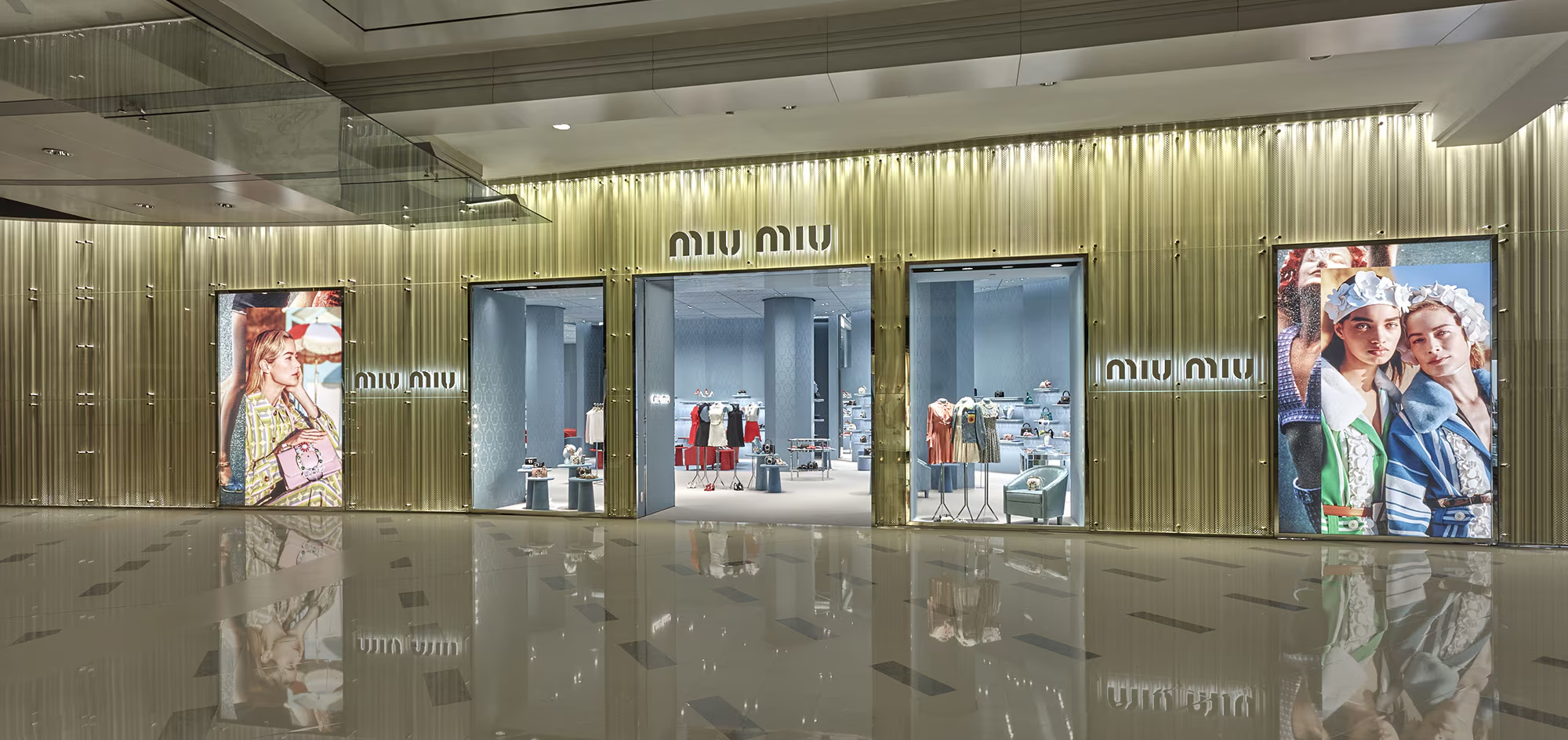
## Evolving Shopping Dynamics
This year's 6.18 festival marked a significant shift in shopping dynamics. Alibaba's decision to forgo a pre-sale period in favor of two shopping windows from May 20 to June 20 altered consumer behavior. The platforms also reintroduced popular in-app sales venues with products at 50% off, alongside traditional discounts and deals, such as RMB50 off every RMB300 spent.
These changes fostered a more immediate and dynamic shopping experience, encouraging consumers to engage more actively with the platforms. The increased visit volume by members of Tmall's 88VIP loyalty program, which rose by 40% year-over-year on the first day of sales, shows this shift. Moreover, the number of members placing orders surged by over 50%, and the average order value increased by over 30%.
## Small Businesses Benefit
Big brands were not the only winners. On the first day alone, 370,000 small businesses saw their GMV double compared to the previous year.
This trend highlights the inclusive nature of the festival, providing a platform for smaller enterprises to reach a broader audience and compete effectively. This aspect of the event showcases the potential for cross-border eCommerce in China, allowing international small businesses to tap into the vast Chinese market.
## Strategic Marketing Drives Success
The success of the 6.18 sales can be largely attributed to strategic marketing efforts. Brands used a mix of digital marketing techniques, including social media campaigns, influencer partnerships, and live streaming events. These strategies helped create buzz and anticipation, driving traffic to e-commerce platforms.
Moreover, personalized marketing, based on consumer data and preferences, played a crucial role. Tailored promotions and recommendations enhanced the shopping experience, making it more relevant and engaging for consumers.
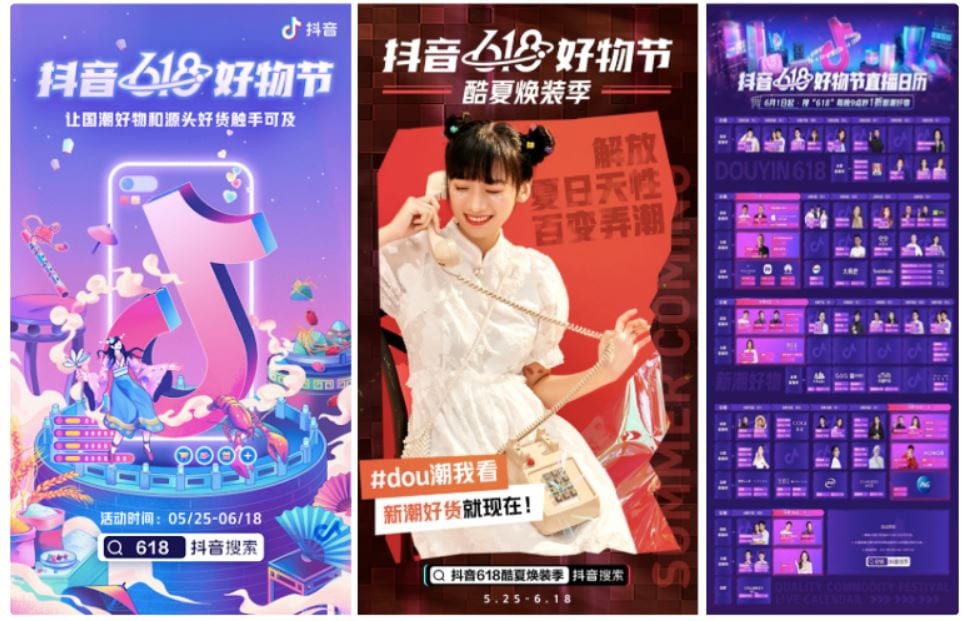
## Conclusion
The latest sales data from the 6.18 shopping festival offers valuable insights into China's consumer trends. The strong performance of tech, beauty, and luxury brands highlights the evolving preferences and increasing purchasing power of Chinese consumers. By using strategic marketing and dynamic sales strategies, brands can continue to capitalize on these trends, driving growth in one of the world's most lucrative markets.
---
# What it costs to sell dairy and spreads in China
URL: https://www.thechinapath.com/insights/cost-to-sell-dairy-and-spreads-in-china
Published: 2026-09-23
Updated: 2026-10-02
Author: TheChinaPath
Category: E-Commerce
Dairy and spreads open for 80,000 RMB on Tmall Global, 35,500 on JD Worldwide, 5,000 on Douyin. Tmall takes 2%. The parcel is what costs you.
Start on Tmall Global. Dairy and spreads cost 80,000 RMB to open there,
against 35,500 RMB on JD Worldwide and 5,000 RMB on Douyin cross-border.
Tmall takes 2% of each sale, the lowest band in our calculator. Then the parcel
decides your year: 15 RMB of pick, pack and last mile lands on every order,
whatever is inside.
Food is cheap to open and expensive to ship. That's the shape of this
category, and it catches brands who budget for platform fees and forget the
box.
Two routes exist for a butter, a yogurt, a honey or a nut spread. Bonded
cross-border walks past paperwork that has held brands at the border for
years. General trade walks straight into it.
## What it costs to open a dairy or spreads store in China
| Dairy and spreads, first year (RMB) | Tmall Global | JD Worldwide | Douyin cross-border |
|---|---|---|---|
| Security deposit, refundable | 50,000 | 35,500 (about US$5,000) | 5,000 |
| Annual platform fee | 30,000 | none | none |
| Commission on each sale | 2% | 2% | 2.5% |
| Cash in before the first sale | 80,000 | 35,500 | 5,000 |
> Deposit, annual fee and commission by category for packaged food, oil
> and snacks on Tmall Global, JD Worldwide and Douyin cross-border.
> Source: TheChinaPath calculator data, October 2026.
That 2% is the lowest commission in our Tmall Global calculator. Skincare
pays 4%, apparel and footwear pay 5%. Bands checked October 2026, and a TM
trademark or a multi-brand store raises the Tmall figure.
Douyin stopped pricing its deposit by category in June 2025. The amount now
follows the store's sales in the previous month: 500 RMB up to 50,000 RMB,
2,000 RMB up to 100,000, and 5,000 RMB above that, whether you sell butter or
handbags. The table shows the top tier, the one any store doing real volume
pays. The 2.5% is our calculator's midpoint for packaged food: Douyin charges
2% on grain and cooking oil and 3% on most of the rest.
> Douyin Global's base deposit is set by the store's paid GMV in the previous
> calendar month: 500 RMB from 0 to 50,000 RMB, 2,000 RMB above 50,000 to
> 100,000 RMB, and 5,000 RMB above 100,000 RMB.
> Source: Douyin E-commerce (抖音电商), 《【全球购】保证金管理规范》, latest
> revision effective June 5, 2025.
> https://school.jinritemai.com/doudian/web/articlev0/107821
> Source for the food rates: Douyin E-commerce (抖音电商),
> 《【全球购】技术服务费费率标准》, July 15, 2026.
> https://school.jinritemai.com/doudian/web/articlev0/aHMYyFoqESKn
JD undercuts Tmall by a wide margin. It charges no annual fee and quotes its
deposit in dollars: US$5,000 for a brand flagship, the 35,500 RMB above at
7.1. Other store types start at US$5,000 and step up to US$10,000 and then
US$15,000 as sales grow. JD adds a flat 0.9% transaction fee on top of the
2%.
> Food and drink (食品饮料) pays JD Worldwide a 2% operating support fee plus
> a 0.9% transaction fee, and a brand flagship deposits US$5,000.
> Source: JD Worldwide (京东全球购), category fee standard, revised
> September 24, 2026, effective October 1, 2026.
> https://jdw-rule.jd.hk/detail?ruleId=950583665543483392
## Two routes in: bonded cross-border and general trade
Bonded cross-border is the easy one. Goods have to sit on the cross-border
retail import positive list.
> The cross-border e-commerce retail import commodity list (2019 edition) was
> adjusted with effect from March 1, 2022.
> Source: eight departments including the Ministry of Finance and the General
> Administration of Customs, Announcement 2022 No. 7, January 2022.
> https://www.gov.cn/zhengce/zhengceku/2022-02/21/content_5674854.htm
> Cross-border e-commerce retail imports are supervised as personal-use
> inbound goods, and the first-import permit, registration and filing
> requirements are not applied to them.
> Source: Ministry of Commerce and five other bodies (商务部 发展改革委 财政部
> 海关总署 税务总局 市场监管总局), 商财发〔2018〕486号, November 2018.
> https://www.gov.cn/zhengce/zhengceku/2018-12/31/content_5437823.htm
The words doing the work there are "personal-use". Your goods clear as
something a shopper bought for herself, so the importer paperwork a wholesale
pallet would need never comes up.
The shopper pays 9.1% at checkout: zero duty, and 70% of the 13% import VAT.
Dairy and spreads carry no consumption tax, so they sit at the general-goods
rate instead of the higher one that lands on perfume and alcohol.
> The cross-border retail import tariff rate is set at 0%, and import VAT and
> consumption tax are levied at 70% of the statutory payable amount.
> Source: Ministry of Finance (财政部), 财关税〔2016〕18号, March 2016.
> http://www.mof.gov.cn/gp/xxgkml/gss/201603/t20160324_2510682.htm
General trade is a different building. Your plant has to be registered with
Chinese customs before a pallet moves, and for dairy and honey you cannot
apply directly. Your own government has to recommend you.
> Dairy products (乳品) and bee products (蜂产品) are among the food
> categories whose overseas producers are registered on the recommendation of
> the competent authority of the exporting country or region.
> Source: General Administration of Customs (海关总署), Decree No. 248,
> Article 7, April 2021.
> https://www.gov.cn/gongbao/content/2021/content_5616161.htm
Decree 248 was replaced by Decree 280 on June 1, 2026, and both categories
survived the rewrite. Unroasted coffee and cocoa beans came off the
recommendation list. Dairy and honey stayed on.
> The catalogue of imported foods requiring registration on the
> recommendation of the competent authority includes 乳品 and 蜂产品.
> Source: General Administration of Customs Announcement 2026 No. 27
> (海关总署公告2026年第27号), March 2026.
> https://www.gov.cn/zhengce/zhengceku/202603/content_7063537.htm
So the timeline runs through a ministry in Helsinki or Hamburg, and it can
take a season. Which is why so much European dairy arrives in China through a
bonded warehouse first and a customs declaration later.
General trade asks for more besides. A health certificate from the exporting
government on every shipment. A test report against the Chinese national food
safety standard on the first one, where "first" means same producer, same
product name, same formula, same exporter, same importer, same port.
> Imported prepackaged dairy must carry a Chinese label and Chinese
> instructions, and both must meet Chinese law and the national food safety
> standards.
> Source: Measures for the Inspection, Quarantine and Supervision of Imported
> and Exported Dairy Products (进出口乳品检验检疫监督管理办法), General
> Administration of Customs Decree No. 243, Article 14, as amended November
> 2018.
> https://policy.mofcom.gov.cn/claw/clawContent.shtml?id=65699
Then there is the label rewrite coming. GB 7718-2025 carries a two-year
transition and bites on March 16, 2027. Milk and nuts are on the allergen
list that has to be declared. Zero-added claims go.
> GB 7718-2025 makes eight allergen classes mandatory declarations. The list
> includes 乳及乳制品(包括乳糖)and 坚果及其果仁类制品.
> Source: Food Mate Network (食品伙伴网), March 2025.
> https://fsc.foodmate.net/show.php?itemid=712970
> The revised prepackaged food labeling standard takes effect March 16,
> 2027, and 零添加, 不添加 and 不使用 claims are prohibited under it.
> Source: Beijing Municipal Administration for Market Regulation
> (北京市市场监督管理局), May 2026.
> https://scjgj.beijing.gov.cn/zwxx/scjgdt/202605/t20260507_4639154.html
If your honey sells on "no added sugar" in Europe, the Chinese pack needs a
new argument before 2027. Put it to your packaging team this year.
Infant formula sits outside all of this. It has its own product registration.
It also has a three-month shelf-life gate at the border, and a Chinese label
that has to be printed on the pack before it lands, never stuck on afterwards.
Separate Tmall category, separate piece. Rules above checked September 2026.
## What one order actually costs
Start with what the goods are worth at the border.
> China imported 2,657,400 tonnes of dairy in 2025, up 1.6%, worth US$12.78
> billion. Packaged milk came to 371,600 tonnes, down 10.8%, at an average
> US$1,046 a tonne.
> Source: Dairy Online (乳业在线), from the January 2026 Dairy Economy
> Observer report on China Customs statistics.
> https://www.dairyonline.cn/13031.html
US$1,046 a tonne is about 7.4 RMB a litre. Now put that litre in a box and
ship it to an apartment in Chengdu.
| Per 100 parcels shipped, Tmall Global (RMB) | Single 128 jar | 250 basket | 498 case |
|---|---|---|---|
| Orders kept at a 5% return rate | 95 | 95 | 95 |
| Platform commission at 2% | 243 | 475 | 946 |
| Payment fee at 1% | 122 | 238 | 473 |
| Pick, pack and last mile | 1,500 | 1,500 | 1,500 |
| Return handling and the leg back | 130 | 130 | 130 |
| Cost per kept order | 21 | 25 | 32 |
| Share of the order value | 16.4% | 9.9% | 6.4% |
| Tax the shopper pays at checkout | 12 | 23 | 45 |
> Cost per kept order for three food baskets on the per-order logistics
> defaults in the Tmall Global model, at the calculator's 5% return rate.
> Source: TheChinaPath calculator data, September 2026.
Look at the row that doesn't move. Pick, pack and last mile costs 1,500 RMB
per hundred parcels at every basket size, because a courier charges by the
box. On the single jar that's 82% of your store cost. On the case it's 53%.
The commission barely registers next to it. Tmall takes 243 RMB per hundred
small orders, less than a fifth of what the couriers take. Brands arrive
arguing about commission bands and leave working on units per box.
Which is why imported milk sells in China as a 12-pack and imported honey
sells in gift boxes at Mid-Autumn. The arithmetic pushed the format there
long before anyone wrote a positioning deck about it.
Breakeven, at the 250 RMB basket on a 50% gross margin: each kept order
contributes about 100 RMB after store cost. Against the annual fee, a 25,000 RMB
store build over three years and a Tmall Partner retainer at a common 35,000
RMB a month, you need roughly 4,600 kept orders. About
1.15 million RMB of year-one GMV, near US$162,000, before advertising.
## Which platform first
Tmall Global, unless cash is the binding constraint. The 2% commission
compounds over every order you'll ever ship, and Tmall Global is where a
European food brand gets taken seriously by a distributor later.
Two things flip it. If year-one cash is under about 300,000 RMB all in, open
on JD Worldwide and move across when volume justifies the 80,000. And if you
already have Chinese-language video and somebody who can host, Douyin food
opens for 5,000 RMB and no annual fee. Cheapest way to find out whether
anyone wants the product.
All of that assumes ambient or chilled-tolerant stock. Short shelf life
changes the math in a way the fee table can't show you, because bonded
inventory that stops turning gets written off rather than carried.
## What the Valio and Langnese pages show
We have worked this category twice, and neither project was a platform-fee
problem.
[Valio](/work/valio), which takes 85% of Finland's milk production, came to
China to move from B2B to B2C. The work was positioning and a Chinese name
for the eila sub-brand, then the identity system that carried it. A Finnish
dairy brand arriving unnamed in a premium Chinese category has no price
argument.
[Langnese](/work/langnese) was harder. Germany's leading honey brand had
distribution and shelf space, and sales fell month after month anyway.
Chinese shoppers had no clear reason to pay roughly twice what the local jar
beside it cost. So we rebuilt the distribution map and ran consumer research
in tier 1 and tier 2 cities until the consumption occasions where a premium
European honey could win showed up. The decline reversed. Brand and distributor agreed
nine growth pillars, and Langnese opened regional channels where it had none.
Everything above is on the case pages. The content and creator side of that
work belongs to
[TheRedScroll, the group's China social media agency](https://www.theredscroll.com);
what we own is the commercial route.
## Run your own numbers
The table above is the food category as our calculator loads it. Change the
basket and the margin and it tells you a different story.
[Run the Tmall Global setup and run calculator](/tools/tmall-global-setup-and-run)
with "Packaged food, grain, oil, snacks" selected, then put in your real
average order value. For the general-trade route, the registration sequence
sits inside [cross-border setup](/enter-china/cross-border-setup) and the
partner side inside [distribution in China](/enter-china/distribution).
## Questions we get asked
**Does dairy need GACC registration to sell cross-border?**
Not under bonded cross-border. Customs supervises the goods as personal-use
imports and does not apply first-import permit, registration or filing
requirements there. Under general trade the registration is required, and for
dairy your own government's competent authority has to recommend the plant.
That recommendation is the slow part, and it is outside your control.
**What tax does the Chinese shopper pay on imported butter or honey?**
9.1% at checkout. Duty is zero under the cross-border route, and import VAT
is charged at 70% of the 13% statutory rate. Dairy and spreads carry no
consumption tax. On a 250 RMB basket that's about 23 RMB, shown before she
pays.
**Why is Tmall Global's food commission so much lower than skincare?**
Tmall bands commission by first-level category, and packaged food sits at 2%
against 4% for skincare and 5% for apparel. Basket size is the trade-off.
Food orders are small and heavy, so the courier takes more of the order than
the platform ever will.
Send us one product, its shelf life and the pack size you sell in
Europe, and we'll come back with the landed cost per order on all three
platforms. [Start with cross-border setup](/enter-china/cross-border-setup).
---
# What it costs to sell facial skincare in China
URL: https://www.thechinapath.com/insights/cost-to-sell-facial-skincare-in-china
Published: 2026-09-16
Updated: 2026-10-02
Author: TheChinaPath
Category: E-Commerce
Facial skincare opens at 80,000 RMB on Tmall Global, 35,500 on JD Worldwide, 5,000 on Douyin. Then your pack size decides the tax.
Start on Tmall Global. Facial skincare costs 80,000 RMB there before you sell
a jar, against 35,500 RMB on JD Worldwide and 5,000 RMB on Douyin
cross-border. Tmall takes 4% of each sale. The other two take 5%. Then the
tax your shopper pays at checkout, which your pack size controls, moves more
money than any of it.
Skincare is the most regulated category on this run of cost pages, and the
most forgiving on fees. Table first.
## What the three platforms charge for facial skincare
| Facial skincare, year one (RMB) | Tmall Global | JD Worldwide | Douyin cross-border |
|---|---|---|---|
| Security deposit, refundable | 50,000 | 35,500 (about US$5,000) | 5,000 |
| Annual platform fee | 30,000 | none | none |
| Commission on each sale | 4% | 5% | 5% |
| Cash in before the first sale | 80,000 | 35,500 | 5,000 |
> Deposit, annual fee and commission by category for skincare on Tmall
> Global, JD Worldwide and Douyin cross-border.
> Source: TheChinaPath calculator data, October 2026.
JD adds a flat 0.9% transaction fee on top and charges no annual fee. It
quotes its deposit in dollars: US$5,000 for a brand flagship, converted
above at 7.1, and US$10,000 to US$15,000 for other store types as sales
grow. A TM trademark or a multi-brand store raises the Tmall deposit. Bands
checked October 2026.
> Beauty and skincare (美妆护肤) pays JD Worldwide a 5% operating support fee
> plus a 0.9% transaction fee, and a brand flagship deposits US$5,000.
> Source: JD Worldwide (京东全球购), category fee standard, revised
> September 24, 2026, effective October 1, 2026.
> https://jdw-rule.jd.hk/detail?ruleId=950583665543483392
Douyin's deposit has nothing to do with skincare anymore. Since June 2025 it
tracks the store's sales in the previous month: 500 RMB up to 50,000 RMB,
2,000 RMB up to 100,000, and 5,000 RMB above that. We show the top tier.
> Douyin Global's base deposit is set by the store's paid GMV in the previous
> calendar month: 500 RMB from 0 to 50,000 RMB, 2,000 RMB above 50,000 to
> 100,000 RMB, and 5,000 RMB above 100,000 RMB.
> Source: Douyin E-commerce (抖音电商), 《【全球购】保证金管理规范》, latest
> revision effective June 5, 2025.
> https://school.jinritemai.com/doudian/web/articlev0/107821
One number in that table is doing something unusual. Skincare, makeup and
hair care are the only three of the nineteen categories in our Tmall Global
calculator set at 4%. Everything else sits at 2, 3 or 5, and skincare lands
in the lower annual fee band too, 30,000 rather than 60,000.
Worth knowing where the neighboring line sits. Beauty devices (美容美体仪器)
share the cosmetics group and its 30,000 annual fee, but pay 5% a sale.
> Skin care, makeup and hair care pay Tmall Global 4% and beauty devices
> 5%, all with a 30,000 RMB annual fee.
> Source: Tmall Global (天猫国际), category annual fee and technical service
> fee rates, adjustment effective September 9, 2026.
> https://rule.tmall.hk/?type=detail&ruleId=11005909&cId=625
You do not pick the label, the product does.
## The route into China for facial skincare
Two doors. The cross-border one is open. The general trade one has a filing
queue behind it.
Cosmetics sit on the cross-border retail import positive list, which is what
makes the first door usable.
> The list covers 1,142 eight-digit tariff lines, described as including
> 部分食品饮料、服装鞋帽、家用电器以及部分化妆品 (some food and drink,
> clothing and footwear, home appliances and some cosmetics).
> Source: Cyberspace Administration of China (中央网信办), carrying People's
> Daily, April 2016. https://www.cac.gov.cn/2016-04/08/c_1118561924.htm
The 2019 edition, adjusted in March 2022, names tariff lines rather than
categories, so have your broker confirm your own HS code. Then comes the
clause that surprises most brands.
> 对跨境电商零售进口商品按个人自用进境物品监管,不执行有关商品首次进口许可
> 批件、注册或备案要求。 Cross-border retail imports are supervised as goods
> for personal use, so the first-import permit, registration and filing
> requirements do not apply.
> Source: MOFCOM and five other bodies (商财发〔2018〕486号), effective
> January 2019.
> https://www.gov.cn/zhengce/zhengceku/2018-12/31/content_5437823.htm
No NMPA filing. No registration certificate. For a brand that normally
budgets the better part of a year and an agent's fee before it can sell
legally, that clause is the argument for opening cross-border first. The
same article carves out quarantine-suspended goods and emergency risk
responses, so it is a route, not a blanket waiver.
General trade is where the filing agent earns their money. China splits
cosmetics in two.
> 用于染发、烫发、祛斑美白、防晒、防脱发的化妆品以及宣称新功效的化妆品为
> 特殊化妆品。 Cosmetics for hair dye, perming, spot-lightening and whitening,
> sun protection and anti-hair-loss, plus anything claiming a new efficacy,
> are special cosmetics. Everything else is a general cosmetic. Special
> cosmetics need NMPA registration before import. Imported general cosmetics
> need an NMPA filing before import.
> Source: Cosmetics Supervision and Administration Regulation (化妆品监督管理
> 条例), State Council Decree 727, in force January 1, 2021.
> https://www.gov.cn/gongbao/content/2020/content_5525087.htm
Read your own claims against that list first. A moisturizer is a general
cosmetic and takes a filing. Put a whitening claim or an SPF number on it and
the same formula becomes a special cosmetic, which takes a registration:
longer, dearer. Brands lose quarters to this, because marketing wrote the
claim before regulatory saw it.
Three more things bite under general trade.
A Chinese entity carries the file. The regulation makes an overseas filer
appoint a domestic legal person for the paperwork, adverse reaction
monitoring and recalls. Your distributor can do that, so can an agent.
Whoever holds the filing has a grip on your China business.
Animal testing is no longer automatic, under conditions.
> An imported general cosmetic may skip the toxicology test report where the
> manufacturer holds a quality management system certificate issued by its
> home regulator and the product safety risk assessment fully confirms the
> product is safe. Excluded: products claimed for infants and children,
> products using a new ingredient still under safety monitoring, and filers
> or manufacturers flagged as key supervision targets.
> Source: NMPA (国家药监局) Announcement 2021 No. 32, 化妆品注册备案资料管理
> 规定, in force May 1, 2021.
> https://yjj.scjgj.fujian.gov.cn/hzp/flfg/202106/t20210608_5616054.htm
Narrower than the 2021 headlines suggested. It covers general cosmetics, not
special ones, and rests on a certificate your manufacturer either holds or
does not.
And since January 2022, a registration or filing has meant uploading an
evidence summary for every efficacy claim to a public NMPA site.
> Source: NMPA Announcement 2021 No. 50, 化妆品功效宣称评价规范, published
> April 2021, in force May 1, 2021.
> https://www.cqn.com.cn/ms/content/2021-04/09/content_8681664.htm
The label is where the routes part again. Sold inside China, a cosmetic
carries a Chinese label on the visible face of the pack: full ingredient
list, net content, use-by date, filing details.
> Mandatory for anything registered or filed from May 1, 2022. Products
> already on the register had to be relabeled by May 1, 2023.
> Source: NMPA Announcement 2021 No. 77, 化妆品标签管理办法, May 2021.
> https://www.gov.cn/gongbao/content/2021/content_5631831.htm
Cross-border goods do not. The platform serves a risk notice instead: the
goods meet the standards of the country they came from, those may differ from
China's, and the pack may carry no Chinese label (可能无中文标签), with a
Chinese electronic label on the website. Your pack ships as it is, and your
product page does the work it would otherwise do.
None of this is legal advice and the rules move. Take the list to a filing
agent, confirm which door your SKUs go through, then price both.
## What facial skincare costs per order
Now the part that eats more margin than the fee table.
Cross-border imports pay no duty. Import VAT and consumption tax are charged
at 70% of the statutory amount, on the actual transaction price including
freight and insurance.
> Source: Ministry of Finance (财政部), 财关税〔2016〕18号, effective April
> 2016. http://www.mof.gov.cn/gp/xxgkml/gss/201603/t20160324_2510682.htm
For most goods that lands at 9.1%: 70% of the 13% VAT rate. Skincare is where
it stops being most goods.
> China cancelled consumption tax on ordinary cosmetics in 2016 and renamed
> the tax item 高档化妆品 (high-end cosmetics), at 15%. High-end skincare is
> defined as a production or import stage price excluding VAT of 10 RMB per
> milliliter (gram), or 15 RMB per piece, and above.
> Source: Ministry of Finance and State Administration of Taxation
> (财税〔2016〕103号), effective October 1, 2016.
> https://shanghai.chinatax.gov.cn/zcfw/zcfgk/xfs/201610/t427459.html
Run the two together: 15% plus 13%, divided by 1 minus 15%, then 70% of the
result. That is 23.06%, against 9.1% a yuan under the line.
A 30ml serum at 680 RMB works out at 22.7 RMB a milliliter, a high-end
cosmetic, and the shopper pays roughly 157 RMB of tax at checkout. A 200ml
toner at 280 RMB is 1.4 RMB a milliliter, and the shopper pays about 25 RMB.
Same brand, same bonded warehouse.
The store side of those baskets, on Tmall Global.
| Per 100 parcels shipped, Tmall Global (RMB) | 200ml toner at 280 | 30ml serum at 680 |
|---|---|---|
| Orders kept at a 5% return rate | 95 | 95 |
| Platform commission at 4% | 1,064 | 2,584 |
| Payment fee at 1% | 266 | 646 |
| Pick, pack and last mile | 1,500 | 1,500 |
| Return handling and the leg back | 130 | 130 |
| Cost per kept order | 31 | 51 |
| Share of the order value | 11.1% | 7.5% |
| Tax the shopper pays at checkout | 25 | 157 |
> Cost per kept order for two skincare baskets on the per-order logistics
> defaults in the Tmall Global model, at the calculator's 5% return rate.
> Source: TheChinaPath calculator data, September 2026.
Store cost falls as a share of the basket while the tax climbs, which is why
premium skincare gets compared on price in China harder than its owners
expect.
Breakeven. The non-refundable floor in year one is the 30,000 RMB annual fee,
since the deposit comes back when the store closes in good standing. At a 60%
gross margin, an assumption here rather than a sourced figure, the serum
contributes 357 RMB per kept order, so 84 orders clears the fee. Your barrier
sits elsewhere, in media spend and in stock waiting in bond.
## Which platform first
Tmall Global. The 4% commission is the lowest of the three, the annual fee
sits in the lower band, and a flagship there is still the page a Chinese
shopper opens to decide whether a foreign skincare brand is real. That is
worth the 44,500 RMB gap over JD.
JD Worldwide flips it when the open question is whether China wants the brand
at all. Same route, same rules, a little under half the cash to get live.
Douyin does a different job. Smallest deposit, no annual fee, and it rewards
brands that already have content that sells. Our [footwear cost
page](/insights/cost-to-sell-footwear-in-china) runs the same three platforms
where returns decide the year.
## What the skincare cases leave out
Two skincare projects are published here. [ROC Skincare](/work/roc)
is a French dermo-skincare brand we localized for China, down to the Chinese
name and the packaging. Shiseido RQ Pyology is a dermo-cosmetic brand we
built from positioning through launch, with China as its first market
anywhere.
Neither page publishes a deposit, a commission or a cost figure, so there is
no fee number from client work here. The Xiaohongshu (RedNote) note grid that
skincare lives or dies on sits with TheRedScroll, the group's China social
media agency (https://www.theredscroll.com).
## Run your own numbers
The [Tmall Global setup and run
calculator](/tools/tmall-global-setup-and-run) holds the category data behind
the fee table above. Set the category picker to Skincare and the deposit, the
commission and the annual fee fill in from the same bands used here. Then
change the cross-border VAT field. It ships at 9.1%. If your hero SKU clears
10 RMB a milliliter, put 23.1 in that box and watch the shelf price move.
Store not built yet? [Cross-border setup](/enter-china/cross-border-setup)
covers the sequence that comes first.
## Questions we get asked
**Does facial skincare need NMPA approval to sell in China?**
Not on the cross-border route. Those goods are supervised as personal-use
imports, so permit, registration and filing requirements do not apply. Under
general trade they do: a filing for a general cosmetic, a registration for a
special one such as a whitening cream or an SPF product.
**Is animal testing still required for imported skincare in China?**
Not automatically, since May 2021. An imported general cosmetic can skip the
toxicology test report where the manufacturer holds a quality management
system certificate from its home regulator and the safety assessment confirms
the product is safe. Infant and children products are excluded.
**Why does my serum cost more at Chinese checkout than my toner?**
Consumption tax. A skincare item at or above 10 RMB a milliliter counts as a
high-end cosmetic, which pushes the cross-border rate from 9.1% to about 23%.
Small high-priced formats cross that line easily.
Send us your SKU list with sizes and prices and we will tell you which items
cross the high-end cosmetics line, then price the store both ways: [talk to
the cross-border ecommerce team](/grow-in-china/cross-border-ecommerce).
---
# What it costs to sell footwear in China
URL: https://www.thechinapath.com/insights/cost-to-sell-footwear-in-china
Published: 2026-09-09
Updated: 2026-10-02
Author: TheChinaPath
Category: E-Commerce
Footwear costs 110,000 RMB to open on Tmall Global, 35,500 on JD Worldwide, 5,000 on Douyin. Commission runs 5% to 6%. Then returns decide the year.
Start on Tmall Global. Footwear costs 110,000 RMB there before you sell a
pair, against 35,500 RMB on JD Worldwide and 5,000 RMB on Douyin
cross-border. Tmall takes 5% of every sale, JD and Douyin 6%. After that your
return rate decides the year, and shoes come back often enough to eat a thin
margin.
Footwear is one of the easier categories to bring into China. It sits on the
cross-border positive list, needs no import license, and ships to the customer
from a bonded warehouse inside China. The hard part starts after the sale.
Fees first, though, because that is what brands ask.
## What the three platforms charge for footwear
| Footwear, first year (RMB) | Tmall Global | JD Worldwide | Douyin cross-border |
|---|---|---|---|
| Security deposit, refundable | 50,000 | 35,500 (about US$5,000) | 5,000 |
| Annual platform fee | 60,000 | none | none |
| Commission on each sale | 5% | 6% | 6% |
| Cash in before the first sale | 110,000 | 35,500 | 5,000 |
> Deposit, annual fee and commission by category for footwear on Tmall
> Global, JD Worldwide and Douyin cross-border.
> Source: TheChinaPath calculator data, October 2026.
Those are the published bands, checked October 2026. A TM trademark or a
multi-brand store raises the Tmall deposit above the flagship figure, and your
partner may quote differently. Argue from the row.
Douyin's two figures moved recently. Its deposit stopped following category in
June 2025 and now tracks last month's sales: 500 RMB up to 50,000 RMB, 2,000
RMB up to 100,000, 5,000 RMB above that. We show the top tier. The 6% comes
from the fee schedule Douyin published on July 15, 2026.
> Douyin Global's base deposit is set by the store's paid GMV in the previous
> calendar month: 500 RMB from 0 to 50,000 RMB, 2,000 RMB above 50,000 to
> 100,000 RMB, and 5,000 RMB above 100,000 RMB.
> Source: Douyin E-commerce (抖音电商), 《【全球购】保证金管理规范》, latest
> revision effective June 5, 2025.
> https://school.jinritemai.com/doudian/web/articlev0/107821
> Footwear (鞋靴) pays a 6% base technical service fee on Douyin Global.
> Source: Douyin E-commerce (抖音电商), 《【全球购】技术服务费费率标准》, July
> 15, 2026. https://school.jinritemai.com/doudian/web/articlev0/aHMYyFoqESKn
JD quotes its deposit in dollars. A brand flagship pays US$5,000 for
footwear, converted above at 7.1, and other store types pay US$15,000. There
is no annual fee, just a 0.9% transaction fee on each order.
> Footwear (鞋靴) pays JD Worldwide a 6% operating support fee plus a 0.9%
> transaction fee, and a brand flagship deposits US$5,000.
> Source: JD Worldwide (京东全球购), category fee standard, revised
> September 24, 2026, effective October 1, 2026.
> https://jdw-rule.jd.hk/detail?ruleId=950583665543483392
Douyin has no annual fee either, which makes it look like the cheap door
until you get to returns.
None of that includes stock, media, a Tmall Partner retainer or the bonded
stack. Add the bonded warehouse deposit, the tax prepayment and the store
build and a Tmall Global footwear flagship needs about 535,000 RMB wired
before launch, roughly 150,000 of it refundable.
## The route, and the trap inside it
Shoes are on the positive list, which decides what may enter this way at all.
> The list runs to 1,142 eight-digit tariff lines and covers apparel and
> footwear among the consumer goods it admits.
> Source: Cyberspace Administration of China (中央网信办), carrying People's
> Daily, April 2016. https://www.cac.gov.cn/2016-04/08/c_1118561924.htm
The edition in force is the 2019 list as adjusted by Announcement 2022 No. 7
(https://www.gov.cn/zhengce/zhengceku/2022-02/21/content_5674854.htm). Being
on it comes with something most brands underrate.
> Cross-border retail import goods are supervised as goods for personal use,
> and the first-import permit, registration and filing requirements do not
> apply to them.
> Source: MOFCOM and five other bodies, 商财发〔2018〕486号, effective January
> 2019. https://www.gov.cn/zhengce/zhengceku/2018-12/31/content_5437823.htm
No import license. No Chinese label glued to the box. The product page carries
the Chinese information instead, and the customer buys as an importer of one.
The same rule caps them at 5,000 RMB per order and 26,000 RMB a year
(https://policy.mofcom.gov.cn/claw/clawContent.shtml?id=65769), a ceiling
footwear rarely reaches.
Tax is light too.
> Duty on cross-border retail imports is set at 0%, and import VAT and
> consumption tax are levied at 70% of the statutory amount.
> Source: Ministry of Finance (财政部), 财关税〔2016〕18号, March 2016.
> http://www.mof.gov.cn/gp/xxgkml/gss/201603/t20160324_2510682.htm
The general VAT rate has been 13% since April 2019
(https://www.gov.cn/gongbao/content/2019/content_5416183.htm), so a pair of
shoes carries 9.1%. General trade pays the full 13% plus duty, needs a Chinese
label, and falls under the mandatory standards, GB 30585-2024 for children's
shoes since June 1, 2025
(https://std.samr.gov.cn/gb/search/gbDetailed?id=19BBE2758DF1574AE06397BE0A0A5337).
Now the trap. China sizes shoes by foot length in millimeters.
> GB/T 43293-2022 《鞋号》, a modified adoption of ISO 9407:2019, has applied
> since May 1, 2023.
> Source: National Standard Information Public Service Platform
> (全国标准信息公共服务平台), October 2022.
> https://std.samr.gov.cn/gb/search/gbDetailed?id=EB58F4DA9225B2A2E05397BE0A0A7D33
A European 41 is not a number a Chinese shopper carries around. They know 250,
or 255. Paste a conversion chart onto the product page and move on, and
your returns run hot by month two, because the half-size gap between a Spanish
last and an Italian one does not survive a lookup table. Photograph the insole
against a ruler. Publish the inner length per size, in millimeters. That work
shows up in the returns column.
## What one order actually costs
No reliable public figure exists for the average order value of imported
footwear, so the 600 RMB below is an assumption, not a statistic. Change it in
the calculator to your own basket. The rates are the calculator's defaults: 4
RMB to pick and pack, 11 RMB of last-mile shipping, 15 RMB to handle a parcel
that comes back, 1% to Alipay.
| Per 100 parcels shipped, 600 RMB order (RMB) | 5% returns | 30% returns | 50% returns |
|---|---|---|---|
| Orders kept | 95 | 70 | 50 |
| Platform commission at 5% | 2,850 | 2,100 | 1,500 |
| Payment fee at 1% | 570 | 420 | 300 |
| Pick, pack and last mile | 1,500 | 1,500 | 1,500 |
| Return handling and the leg back | 130 | 780 | 1,300 |
| Cost per kept order | 53 | 69 | 92 |
| Share of the 600 RMB order | 8.9% | 11.4% | 15.3% |
> Cost per kept order for footwear at three return rates, on the per-order
> logistics defaults in the Tmall Global model.
> Source: TheChinaPath calculator data, September 2026.
The calculator ships with a 5% return rate. For shoes that is fiction. The only
dated public number close to this category covers apparel:
> During Double 11 2025 the overall e-commerce return rate was 61.5%, and in
> apparel livestream it ran above 80%.
> Source: Beijing Daily (京报网), carrying CCTV News, January 2026.
> https://news.bjd.com.cn/2026/01/11/11517038.shtml
Plan against that as a ceiling rather than adopting it as your number. Footwear
sits in the same fit-driven bucket and behaves like it, ugly on the first
purchase and better on the repeat.
Breakeven, then. At a 60% gross margin and a 30% return rate, each kept order
contributes 291 RMB. The non-refundable floor on Tmall Global, counting only
the annual fee and the store build, is 85,000 RMB. Call it 292 kept orders,
roughly 417 parcels out the door. Add the retainer and the media budget and
real breakeven sits several times higher.
## Which platform first
Tmall Global, if the brand already has some search demand in China and can fund
the bonded stack. In our experience a flagship there is still the page a
Chinese buyer opens to decide whether a foreign shoe brand is real, and it
outlives the campaign that launched it.
JD Worldwide flips it when you are testing whether China wants the brand at
all. A point more in commission, about a third of the cash to get live, a shorter
conversation with your CFO if the answer comes back no.
Douyin cross-border deserves more caution than its price tag suggests. No
annual fee, a 5,000 RMB refundable deposit, the lowest paper cost of the three
even at 6% commission, and the whole exposure sitting in the
returns column. Go there once your size data is
clean, not to collect it. The
[Douyin cost calculator](/tools/douyin-cost-calculator) prices that route the
same way.
## What the Camper page shows
One more thing, and it has nothing to do with fees. Camper's China numbers are
published on this site, and they point at the part of footwear no fee table
reaches.
Over 18 months the brand's combined following across WeChat, Weibo and
Xiaohongshu (RedNote) went from 43,000 to 187,000. RedNote drove 38% of all
ecommerce traffic while holding the smallest audience of the three. Same-store
sales in tier-one cities rose 31% year over year. The rest is on the
[Camper case page](/work/camper).
Platform cost is knowable to the yuan before you start. Demand is not, and for
shoes it gets built somewhere other than the store. Day-to-day social account
operations and KOL seeding sit with TheRedScroll, the group's China social
media agency (https://www.theredscroll.com). We run the storefront and the
commerce behind it, through
[cross-border ecommerce operations](/grow-in-china/cross-border-ecommerce).
## Run your own numbers
The [Tmall Global setup and run calculator](/tools/tmall-global-setup-and-run)
holds the category data behind the table above. Open it, pick Footwear in the
category picker, and the deposit, the commission and the annual fee fill in
from the same bands used here. Then override the return rate. That one field
moves the year-one result more than anything else on the page, and if the store
is not built yet, [cross-border setup](/enter-china/cross-border-setup) covers
the sequence that comes first.
## Questions we get asked
**Does footwear need a license or a test report to enter China?**
Not on the cross-border route. Goods sold this way are supervised as
personal-use imports, so the first-import permit, registration and filing
requirements do not apply. General trade is a different regime, with the
Chinese label and the mandatory standards.
**What tax does the shopper pay on a pair of imported shoes?**
9.1% for general goods. Duty on the cross-border route is 0% and import VAT is
charged at 70% of the statutory amount, so 70% of 13%. It holds within the
5,000 RMB and 26,000 RMB limits.
**Do I have to convert my size chart to Chinese sizes?**
Yes, and a conversion table is the weak version of doing it. The Chinese
standard measures foot length in millimeters. Publish the inner length for
every size you list, next to your own numbering, and write the fit note for the
market rather than translating yours.
Send us your size chart and the last twelve months of returns, and we will
price the footwear store both ways: [talk to the cross-border ecommerce
team](/grow-in-china/cross-border-ecommerce).
---
# What it costs to sell bedding and linens in China
URL: https://www.thechinapath.com/insights/cost-to-sell-home-textiles-and-bedding-in-china
Published: 2026-09-30
Updated: 2026-10-02
Author: TheChinaPath
Category: E-Commerce
Bedding opens on JD Worldwide for a US$5,000 deposit and 3.9% a sale. Tmall Global asks 50,000 RMB and 5%. Above 5,000 RMB an item, tax jumps.
Start on JD Worldwide. A bedding brand opens there on a US$5,000 flagship
deposit, pays no annual fee and gives up 3.9% of each sale. Tmall Global asks
50,000 RMB, a 60,000 RMB annual fee and 5%, though new stores pay at most half
until April 2027. Douyin opens from 500 RMB and takes 6%. Then keep every
item under 5,000 RMB.
The cost to sell bedding in China is mostly a percentage. That sets this
category apart from food, where a 15 RMB parcel eats the margin on a small
basket. A duvet set sells for hundreds or thousands of yuan, so the
commission line outgrows the courier bill fast.
Bedding also runs into a ceiling most cross-border categories never reach.
The 5,000 RMB single-transaction limit sits right inside the price band of a
premium imported duvet.
## The cost to sell bedding in China, platform by platform
| Bedding, first year (RMB unless stated) | Tmall Global | JD Worldwide | Douyin cross-border |
|---|---|---|---|
| Security deposit, refundable | 50,000 | US$5,000 (about 35,500) | 500 to 5,000 |
| Annual platform fee | 60,000 (30,000 or none for stores opening by March 2027) | none | none |
| Commission on each sale | 5% | 3% plus a 0.9% transaction fee | 6%, plus 4% on Douyin Mall and Doubao orders |
| Cash in before the first sale | 50,000 to 110,000 | about 35,500 | 500 to 5,000 |
Rates as posted on each platform's rule pages, checked September 30, 2026.
Tmall Global is the priciest door.
> Tmall Global charges bedding (床上用品) a 5% technical service fee and a
> 60,000 RMB annual fee, under the category schedule in force from
> September 9, 2026.
> Source: Tmall Global (天猫国际), category annual fee and technical service
> fee rates, September 2026.
> https://rule.tmall.hk/?type=detail&ruleId=11005909&cId=625
> The home category deposit is 50,000 RMB for a flagship, specialty or
> multi-brand store, and 100,000 RMB for a brand that holds only a pending
> TM application.
> Source: Tmall Global (天猫国际), platform deposit rules, May 2026.
> https://rule.tmall.hk/?type=detail&ruleId=8942&cId=625
JD quotes in dollars and scales the deposit by store type and sales.
> JD Worldwide charges bedding a 3% operating support fee plus a 0.9%
> transaction fee, and asks US$5,000 from a brand flagship. Other store
> types pay US$10,000 to US$15,000.
> Source: JD Worldwide (京东全球购), category fee standard, revised
> September 24, 2026, effective October 1, 2026.
> https://jdw-rule.jd.hk/detail?ruleId=950583665543483392
Douyin is the odd one. It barely asks for a deposit, then takes the biggest
cut: 10% on orders that come through its Mall app or Doubao, ByteDance's AI
assistant.
> Douyin's cross-border stores pay 6% on home goods (居家日用), the group
> that holds bedding, plus a 4% supplement on orders placed through the
> Douyin Mall app and Doubao.
> Source: Douyin E-commerce (抖音电商), cross-border technical service fee
> standard, July 2026.
> https://school.jinritemai.com/doudian/web/articlev0/aHMYyFoqESKn
> The cross-border base deposit is 500, 2,000 or 5,000 RMB, set each month
> by the store's paid GMV the month before.
> Source: Douyin E-commerce (抖音电商), cross-border deposit rules, June 2025.
> https://school.jinritemai.com/doudian/web/articlev0/107821
JD is cheaper on every line. Tmall softens the annual fee for stores that
open before March 31, 2027: 30,000 RMB instead of 60,000, or nothing at all
for the home categories on a separate waiver list. Tmall doesn't publish that
list, so ask the category manager before you budget. From April 2027 the full
fee comes back.
> Merchants in the 60,000 RMB annual fee tier that open between April 1,
> 2026 and March 31, 2027, or opened in the year before, pay 30,000 RMB for
> that period.
> Source: Tmall Global (天猫国际), 2026 annual fee incentive for new and
> second-year merchants, July 2026.
> https://rule.tmall.hk/?type=detail&ruleId=20010439&cId=625
Chinese bedding buyers are on JD, too. Fuanna, one of the big listed bedding
makers, took 41.9% of its 2025 online sales there and 28.3% on Tmall. One
company's numbers, granted.
> Fuanna's online channels made about 44.38% of 2025 revenue. JD accounted
> for 41.87% of online sales, Tmall for 28.30%.
> Source: Shenzhen Fuanna Bedding and Furnishing (富安娜), 2025 annual
> report, April 2026.
> http://static.cninfo.com.cn/finalpage/2026-04-25/1225189767.PDF
## Bedding clears cross-border, up to 5,000 RMB an item
Start with the list. Blankets, bed linen, towels and down-filled bedding all
sit on the positive list of goods the bonded route accepts.
> The cross-border retail import list (2019 edition) covers blankets,
> printed and other bed linen of cotton and man-made fibers, bath towels
> and down-filled bedding.
> Source: Ministry of Finance (财政部) and 12 other departments,
> Announcement 2019 No. 96, December 2019.
> https://gss.mof.gov.cn/gzdt/zhengcefabu/201912/t20191227_3451448.htm
Inside the limits the shopper pays 9.1%: zero duty, and 70% of the 13%
import VAT. Bedding carries no consumption tax.
> The cross-border retail import tariff rate is set at 0%, and import VAT
> and consumption tax are levied at 70% of the statutory payable amount.
> Source: Ministry of Finance (财政部), 财关税〔2016〕18号, March 2016.
> http://www.mof.gov.cn/gp/xxgkml/gss/201603/t20160324_2510682.htm
Now the ceiling. A single transaction tops out at 5,000 RMB. One item priced
above that can still come in cross-border, but the tax is charged in full at
general rates. Two items over the line in one order can't use the route at
all.
> Where the dutiable price exceeds the 5,000 RMB single-transaction limit
> but stays under the 26,000 RMB annual limit, and the order holds only one
> item, it may enter through cross-border retail with duty, import VAT and
> consumption tax charged in full.
> Source: Ministry of Finance, General Administration of Customs and State
> Taxation Administration, 财关税〔2018〕49号, November 2018.
> http://gss.mof.gov.cn/gzdt/zhengcefabu/201811/t20181129_3079073.htm
> The 2026 most-favored-nation duty is 6% on cotton bed sheets and 10% on
> down or feather-filled quilts.
> Source: State Council Tariff Commission (国务院关税税则委员会), Customs
> Tariff of the PRC (2026), Announcement 2025 No. 12, December 2025, as
> published by the Wuxi Finance Bureau (无锡市财政局).
> https://cz.wuxi.gov.cn/doc/2026/01/04/4711263.shtml
Run that on a 5,200 RMB down duvet. Duty is 520 RMB, and 13% VAT on the
price plus duty adds another 744. The shopper pays 1,264 RMB in tax, about
24%. At 4,990 RMB the same duvet would carry 454, so a 210 RMB price cut is
worth 810 RMB of tax to the shopper.
Labels split by route. Cross-border goods ship in their original packaging,
and the order page tells the shopper they may carry no Chinese label, with a
Chinese electronic label online instead.
> Goods are bought directly from overseas and may have no Chinese label;
> consumers can view the Chinese electronic label on the website.
> Source: Ministry of Commerce (商务部) and five other bodies,
> 商财发〔2018〕486号, article 4, November 2018.
> https://www.gov.cn/zhengce/zhengceku/2018-12/31/content_5437823.htm
A range that lives above the limit ends up in general trade, sold through a
Chinese importer into domestic stores. That brings in China's mandatory
textile safety code, GB 18401. It
sorts products into baby goods, goods that touch skin and everything else,
and grades them A, B and C. Sheets and pillowcases touch skin. A crib set is
baby goods, held to the strictest formaldehyde limit.
> GB 18401-2010 groups textiles as infant products, skin-contact products
> and non-skin-contact products, graded A, B and C, with formaldehyde capped
> at 20, 75 and 300 mg/kg.
> Source: China Quality News (中国质量新闻网), March 2014.
> https://m.cqn.com.cn/xfzn/content/2014-03/21/content_2131036.htm
> GB 18401-2010 is a mandatory national standard, in force since August 1,
> 2011, and was confirmed on review in April 2022.
> Source: State Administration for Market Regulation (市场监管总局), national
> standards register, record reviewed April 2022.
> https://std.samr.gov.cn/gb/search/gbDetailed?id=71F772D7D9F6D3A7E05397BE0A0AB82A
The pack also needs Chinese before it reaches a shop.
> Product labels must give the product name and the maker's name and
> address in Chinese, plus specification, grade and main components where
> the product calls for them.
> Source: Product Quality Law (产品质量法), article 27, as amended December
> 2018, published by the China National Intellectual Property
> Administration (国家知识产权局), July 2019.
> https://www.cnipa.gov.cn/art/2019/7/31/art_104_67810.html
Down gets tested once it's on a Chinese shelf. Jiangsu's market regulator
failed 6 of 63 down quilts in its 2025 check, most of them on how much down
was actually inside.
> Of 63 batches of down quilts sampled in Jiangsu, 6 failed, on down
> content, fiber content and goose or duck down share.
> Source: Jiangsu Administration for Market Regulation (江苏省市场监督管理局),
> January 2026.
> https://scjgj.jiangsu.gov.cn/art/2026/1/4/art_78969_11705277.html
## What one bedding order actually costs
We couldn't find an average bedding basket in any filing or trade report. The
price bands are public, though. They're high.
> LOVO, Luolai's online-only line, sells at 300 to 2,000 RMB. The Australian
> and Italian bedding labels Luolai licenses, Sheridan and Zucchi, list 5,000
> to 25,000. Luolai reported a 17.70% return rate on Tmall for 2025.
> Source: Luolai Lifestyle Technology (罗莱生活), 2025 annual report, April
> 2026.
> http://static.cninfo.com.cn/finalpage/2026-04-23/1225148171.PDF
> Fuanna's main label sells at 2,000 to 6,000 RMB. It reported a 9.80%
> return rate on Tmall for 2025, and 10.17% on JD.
> Source: Fuanna (富安娜), 2025 annual report, April 2026.
> http://static.cninfo.com.cn/finalpage/2026-04-25/1225189767.PDF
That's two to three times the 5% our own calculators assume by default. On
the cross-border route a return at least doesn't cost you the tax.
> Returns applied for within 30 days of release, with the goods back at the
> original bonded site within 45 days, have the tax not collected.
> Source: General Administration of Customs (海关总署), Announcement 2020
> No. 45, March 2020.
> https://www.gov.cn/zhengce/zhengceku/2020-03/28/content_5496571.htm
Here's what Fuanna's 9.8% does to a store. Bear with the arithmetic; it's what
picks the platform.
| Basket (RMB) | Tmall Global, cost per kept order (RMB) | Share of the order | JD Worldwide, cost per kept order (RMB) | Share of the order | Tax the shopper pays (RMB) |
|---|---|---|---|---|---|
| 400 duvet cover | 44 | 10.9% | 35 | 8.8% | 36 |
| 1,500 bedding set | 110 | 7.3% | 78 | 5.2% | 137 |
| 4,800 down duvet | 308 | 6.4% | 207 | 4.3% | 437 |
> Cost per kept order at a 9.8% return rate, from the per-parcel defaults in
> our Tmall Global and JD Worldwide models (4 RMB pick and pack, 11 RMB last
> mile, 15 RMB return handling) and the platform rates above.
> Source: TheChinaPath calculator data, September 2026.
On a 1,500 RMB set, commission and payment fees make up 82% of the Tmall
store cost. The parcel barely registers. So the rate matters more here than
in a food or beauty store. Tmall takes 6% with the Alipay fee, JD takes 3.9%,
and the 2.1-point gap is worth about 31 RMB on every kept order. A thousand
orders in, it has paid for Tmall's discounted annual fee.
One caveat on the parcel line. The 15 RMB default was set for a shoebox. A
boxed king duvet costs more to move, so treat it as the floor.
Breakeven next, at the 1,500 RMB set and a 50% gross margin. Each kept order
contributes about 640 RMB on Tmall.
The fixed side is mostly people. If an operating partner runs the store for
you (on Tmall, a Tmall Partner), our calculator loads 35,000 RMB a month for
one by default. Add the 30,000 RMB new-merchant
annual fee and a 25,000 RMB store build written off over three years, and
you need about 720 kept orders. That's roughly 1.07 million RMB of year-one
sales, near US$151,000, before advertising. On JD the same store needs about
640 orders.
In cash, that fixed side comes to about 475,000 RMB for year one on Tmall and
445,000 on JD, before stock, ads and the refundable deposit. Nearly all of it
is the partner.
## Which platform first
JD Worldwide. It's cheaper to open and cheaper per order. Chinese bedding
buyers are there already.
Two things flip it. If your range lives above 5,000 RMB an item, the
cross-border tax advantage is gone, and a sets-and-pillows order over the
line can't ship that way at all. Go general trade with a Chinese partner,
meet GB 18401 and sell on a domestic store. And if you can shoot video and
have someone to host it, Douyin opens on a 500 RMB deposit. At 6% to 10% a
sale you wouldn't want to scale there first. As a test of whether Chinese
shoppers want your sheets, it costs next to nothing to set up.
## Our record in this category
We haven't run a bedding store in China. The figures above come from public
sources and our own calculator.
## Run your own numbers
[Run the JD Worldwide setup and run calculator](/tools/jd-worldwide-setup-and-run)
with "Home, kitchen, kitchenware" selected. That row loads the rate for
general household goods. For bedding, set the commission to 3% and the annual
fee to zero, then put in your real basket. The
[Tmall Global calculator](/tools/tmall-global-setup-and-run) takes the same
inputs under "Home, bedding, kitchenware", where the 30,000 RMB annual fee it
loads is the new-store rate. For a range above the 5,000 RMB line, the
partner side sits in [distribution in China](/enter-china/distribution).
## Questions we get asked
**Can I sell a duvet priced above 5,000 RMB cross-border?**
Yes, if it ships alone. A single item over the 5,000 RMB limit can still
clear as a cross-border order, but the shopper pays full duty and full VAT,
about 24% on a down duvet instead of 9.1%. The order also counts toward the
shopper's 26,000 RMB annual quota. Two or more items worth over 5,000 RMB
together can't use the route.
**Does imported bedding need a Chinese label?**
Not on the bonded cross-border route. The order page carries a risk notice
and a Chinese electronic label instead. Under general trade the goods have to
meet the mandatory safety code GB 18401, which holds baby bedding to the
strictest formaldehyde limit, and the pack needs a Chinese label before it
reaches a shop.
**What return rate should I plan for?**
Plan for at least 10%. Two listed Chinese bedding brands reported 9.8% and
17.7% on Tmall for 2025, against the 5% our calculators assume by default.
Returned cross-border goods back in the bonded zone within 45 days of release
have their tax cancelled. What you lose is the freight and the handling.
Send us your five best-selling pieces with their home-market retail prices,
and we'll tell you which ones clear the 5,000 RMB line and what each costs
per order on all three platforms.
[Start with cross-border setup](/enter-china/cross-border-setup).
---
# What it costs to sell pet food in China
URL: https://www.thechinapath.com/insights/cost-to-sell-pet-food-in-china
Published: 2026-10-11
Updated: 2026-10-11
Author: TheChinaPath
Category: E-Commerce
Cat and dog food opens on JD Worldwide for US$5,000 and 2.5% a sale. Tmall Global wants 80,000 RMB. First, China has to register your factory.
Start on JD Worldwide. Cat and dog food opens there for a US$5,000 deposit,
no annual fee, and 2.5% of each sale plus a 0.9% transaction fee. Tmall
Global takes the same
2.5% but wants 80,000 RMB up front. Break-even sits near 1 million RMB of
year-one sales. Before any of that, China has to register your factory.
Pet food is a factory question before it's a store question. Chinese customs
treats it as animal feed, and imported feed has to come from a plant customs
has already registered. A brand can't apply for that itself, and money
doesn't speed it up.
The prize is real.
> China's urban dog and cat owners spent 312.6 billion RMB in 2025, up 4.1%,
> and food took 53.7% of it.
> Source: CCTV.com (央视网), on the 2026 China Pet Industry White Paper
> (《2026年中国宠物行业白皮书》), January 2026.
> https://business.cctv.com/2026/01/05/ARTIdmv2AWmVeRVodaZYLOvQ260105.shtml
Imports are going the other way. They fell in 2025, and Chinese brands now
crowd the top of the festival charts.
> China imported US$474.1 million of packaged pet food in 2025, down 5.2%
> from 2024, according to China Customs.
> Source: USDA Foreign Agricultural Service, ATO Shanghai, Pet Food Market
> Update 2026 (GAIN CH2026-0046), April 2026.
> https://apps.fas.usda.gov/newgainapi/api/Report/DownloadReportByFileName?fileName=Pet+Food+Market+Update+2026_Shanghai+ATO_China+-+People%27s+Republic+of_CH2026-0046.pdf
> Of the pet brands that passed 10 million RMB in sales on the first day of
> Tmall's Double 11 in 2025, 68% were Chinese.
> Source: Huanqiu.com (环球网), via Sina Finance, November 2025.
> https://finance.sina.com.cn/roll/2025-11-08/doc-infwsynp1202307.shtml
## What it costs to open a pet food store in China
| Cat and dog food, first year (RMB) | Tmall Global | JD Worldwide | Douyin cross-border |
|---|---|---|---|
| Security deposit, refundable | 50,000 | 35,500 (US$5,000) | 5,000 |
| Annual platform fee | 30,000 | none | none |
| Commission on each sale | 2.5% | 2.5% | 3.5% |
| Other fee on each order | 1% payment fee | 0.9% transaction fee | 4.6% on Douyin Mall and Doubao orders |
| Cash in before the first sale | 80,000 | 35,500 | 5,000 |
> Deposits, annual fees and per-order fees for cat and dog food on the three
> cross-border platforms, with JD's dollar deposit at 7.1 RMB.
> Source: TheChinaPath calculator data, October 2026.
All three platforms put pet food in a low band. Tmall Global charges 2.5% on
dog food, cat food and treats alike, with the 30,000 RMB annual fee that
food categories pay.
> 犬主粮, 猫主粮, 狗零食 and 猫零食 pay a 2.5% technical service fee and a
> 30,000 RMB annual fee.
> Source: Tmall Global (天猫国际), 《天猫国际各类目年费、技术服务费率》,
> effective September 9, 2026.
> https://rule.tmall.hk/?type=detail&ruleId=11005909&cId=625
JD Worldwide matches the 2.5% on dry and wet food but charges 5% on dog and
cat treats. It quotes its deposit in dollars and bills no annual fee.
> 猫狗主粮 (cat and dog staple food) pays a 2.5% operating support fee plus a
> 0.9% transaction fee, and a brand flagship deposits US$5,000.
> Source: JD Worldwide (京东全球购), category fee standard, revised September
> 24, 2026, effective October 1, 2026.
> https://jdw-rule.jd.hk/detail?ruleId=950583665543483392
Douyin costs least to open and can cost the most per order. Its deposit follows
last month's sales, from 500 RMB to a top tier of 5,000 RMB. Its base rate on
dog and cat food is 3.5%, and orders that arrive through the Douyin Mall app
or Doubao (ByteDance's AI assistant app) pay another 4.6%. That's 8.1% on
those orders.
> 狗食品 and 猫食品 carry a 3.5% base technical service fee and a 4.6%
> supplementary fee on orders from specified channels (the Douyin Mall app
> and Doubao).
> Source: Douyin E-commerce (抖音电商), 《【全球购】技术服务费费率标准》, July
> 15, 2026, with 《【全球购】招商管理规则》 5.2.2.
> https://school.jinritemai.com/doudian/web/articlev0/aHMYyFoqESKn
> Douyin Global's base deposit is 500 RMB for a prior-month paid GMV up to
> 50,000 RMB, 2,000 RMB up to 100,000 RMB, and 5,000 RMB above that.
> Source: Douyin E-commerce (抖音电商), 《【全球购】保证金管理规范》, latest
> revision effective June 5, 2025.
> https://school.jinritemai.com/doudian/web/articlev0/107821
## The route in: a registered plant first, a store second
Here's the rule that sets your timeline. Under the customs regulation on
imported feed, pet food and chews count as feed. Feed has to come from a
plant on the customs register, and your company can't put itself on it. The
exporting country's own authority reviews the plant and recommends it to
China. Registration then runs five years.
> Imported feed must come from a registered overseas producer, recommended
> to the General Administration of Customs by the exporting country's
> competent authority after its own review. Registration is valid for five
> years. The definition of feed includes 宠物食品及咬胶 (pet food and chews).
> Source: General Administration of Customs (海关总署), Measures for the
> Inspection, Quarantine and Supervision of Imported and Exported Feed and
> Feed Additives, as amended by Decree No. 262, March 2023, arts. 10 to 13
> and 68.
> https://policy.mofcom.gov.cn/claw/clawContent.shtml?id=97519
Your country also needs a pet food protocol with China, and each protocol
spells out the paperwork. When the UK got access in November 2025, every lot needed a
health certificate. The outer packaging needed the plant's name, its
registration number, and Chinese wording saying the goods are bound for
China and are for pets only.
> Pet food exported from the UK must come from plants registered with China
> on the UK's recommendation, carry a health certificate with every lot, and
> show the plant name, its registration number, 输往中华人民共和国 and
> 仅用于宠物食用 on the outer packaging.
> Source: General Administration of Customs Announcement 2025 No. 230
> (海关总署公告2025年第230号), November 2025, via the Ministry of Commerce.
> https://www.mofcom.gov.cn/zcfb/zgdwjjmywg/art/2026/art_2c3ecb1ff8354d818fe48d7d56539092.html
So if your contract manufacturer has never shipped to China, you're waiting
on two governments. No budget shortens that.
Bonded cross-border doesn't change it. Both pet food lines sit on the
cross-border retail import list, but only as bonded stock, so you can't
ship single bags by direct mail from Europe.
> 23091010 (retail-packed dog or cat food, canned) and 23091090 (other
> retail-packed dog or cat food) are on the cross-border retail import list,
> 仅限网购保税商品 (bonded online stock only).
> Source: Ministry of Finance and 12 other departments, Announcement 2019
> No. 96, December 2019.
> http://gss.mof.gov.cn/gzdt/zhengcefabu/201912/t20191227_3451448.htm
The 2018 cross-border rules waive the first-import registration that general
trade demands. Quarantine is the exception.
> Cross-border retail imports are supervised as personal-use goods without
> first-import permit, registration or filing requirements, except for goods
> from epidemic areas whose import is suspended. Customs applies necessary
> quarantine before sale.
> Source: Ministry of Commerce and five other bodies, 商财发〔2018〕486号,
> November 2018.
> https://www.gov.cn/zhengce/zhengceku/2018-12/31/content_5437823.htm
Customs reads pet food straight into that exception.
> Customs applies quarantine access control to the countries and products
> allowed to export pet food to China, and imported pet food must come from
> registered overseas producers.
> Source: Chengdu Customs (成都海关), via the Shanghai Cross-border
> E-commerce Association (上海跨境电子商务行业协会), November 2023.
> https://www.scea.co/trends/show/id/2552.html
Tax is the good news. Pet feed sits in China's 9% VAT band, so a
cross-border shopper pays 70% of that: 6.3%, with no duty and no
consumption tax.
> 宠物饲料,属于饲料的征税范围 (pet feed falls within the scope of feed),
> which the VAT Law taxes at 9%.
> Source: Ministry of Finance and State Taxation Administration (财政部
> 税务总局), Announcement 2026 No. 9, Annex 1, January 2026.
> https://hainan.chinatax.gov.cn/xxgk_6_1/30163239.html
> Within the limits, cross-border retail imports carry a 0% tariff, and
> import VAT and consumption tax are levied at 70% of the statutory amount.
> Source: Ministry of Finance (财政部), 财关税〔2016〕18号, March 2016.
> http://www.mof.gov.cn/gp/xxgkml/gss/201603/t20160324_2510682.htm
The limits are 5,000 RMB an order and 26,000 RMB a shopper a year. Two big
bags fit with room to spare.
> The single-transaction limit for cross-border retail imports is 5,000 RMB
> and the annual limit 26,000 RMB.
> Source: Ministry of Finance, General Administration of Customs and State
> Taxation Administration, 财关税〔2018〕49号, November 2018.
> https://www.gov.cn/zhengce/zhengceku/2018-12/31/content_5440499.htm
General trade stacks more on top. A provisional 10% duty in 2026, then 9%
VAT. And complete foods need a product registration from the Ministry of
Agriculture and Rural Affairs, filed through a Chinese agent or a China
office, with verification testing that can take three months. Treats are
exempt.
> Retail-packed dog or cat food (23091010 and 23091090) carries a 15%
> most-favored-nation duty and a 10% provisional rate for 2026.
> Source: State Council Tariff Commission (国务院关税税则委员会),
> Announcement 2025 No. 11, Annex 1, December 2025.
> https://gss.mof.gov.cn/gzdt/zhengcefabu/202512/P020251229510521217364.pdf
> The ministry reviews the dossier within 10 working days, the testing
> laboratory completes verification testing within three months, and the
> import registration certificate is valid for five years.
> Source: Ministry of Agriculture (农业部), Administrative Measures for the
> Registration of Imported Feed and Feed Additives, arts. 9, 10 and 14, as
> amended November 2017.
> https://www.moa.gov.cn/gk/nyncbgzk/gzk/202210/t20221013_6413266.htm
> Imported 宠物配合饲料 (complete pet food) and 宠物添加剂预混合饲料 (pet
> additive premix) need an import registration certificate. Other pet feed,
> treats included, does not.
> Source: Ministry of Agriculture and Rural Affairs (农业农村部), Pet Feed
> Administrative Measures, Announcement No. 20, arts. 2 and 14, republished
> June 2025.
> https://www.moa.gov.cn/ztzl/sqxzjcgs/xzjcbz/202506/t20250630_6475260.htm
The Chinese label for general trade is its own small project. It names the
product type in set words (全价宠物食品 for a complete food, 宠物零食 for a
treat). It also carries the guaranteed analysis, the registration number,
the country of origin in Chinese and the Chinese company selling it.
> Imported complete pet food and premix labels must show the registration
> number matching the import certificate, the producer and site, the
> country of origin in Chinese, and the name, address and contact details of
> the product's registered sales entity in China.
> Source: Ministry of Agriculture and Rural Affairs (农业农村部), Pet Feed
> Labeling Regulations (《宠物饲料标签规定》), arts. 3, 5 and 15, republished
> June 2025.
> https://www.moa.gov.cn/ztzl/sqxzjcgs/xzjcbz/202506/t20250630_6475269.htm
Rules above checked October 2026.
## What one order of kibble actually costs
Start with a real shelf price.
> A 5.4 kg bag of an imported premium cat kibble sold for 502.55 RMB after
> coupons on Tmall Global's own direct store.
> Source: SMZDM (什么值得买), January 2025.
> https://www.smzdm.com/p/139914873/
So take three baskets around that bag: a 1.8 kg bag at 180 RMB, the 5.4 kg
bag at 500, and two of them at 1,000.
| Per 100 parcels shipped, JD Worldwide (RMB) | 1.8 kg bag, 180 | 5.4 kg bag, 500 | Two 5.4 kg bags, 1,000 |
|---|---|---|---|
| Orders kept at a 5% return rate | 95 | 95 | 95 |
| Commission at 2.5% | 428 | 1,188 | 2,375 |
| Transaction fee at 0.9% | 154 | 428 | 855 |
| Pick, pack and last mile | 1,500 | 1,500 | 1,500 |
| Return handling and the leg back | 130 | 130 | 130 |
| Cost per kept order | 23 | 34 | 51 |
| Share of the order value | 12.9% | 6.8% | 5.1% |
| Tax the shopper pays at 6.3% | 11 | 32 | 63 |
> Cost per kept order for three pet food baskets on the per-order defaults
> in the JD Worldwide model (4 RMB pick and pack, 11 RMB last mile, 15 RMB
> return handling, 5% returns). Tmall Global lands within 1 RMB of each
> figure.
> Source: TheChinaPath calculator data, October 2026.
The small bag is the trap. Couriers and the warehouse take 1,630 RMB of
every hundred parcels whatever's in the box, which is 74% of the store cost
on the 180 RMB bag. On the two-bag order it falls to a third.
One honest caveat. Our calculator prices the parcel, not the kilo, at 11 RMB
for the last mile. A 10.8 kg box costs more to deliver than that. Put your
warehouse's real quote for the heavy box into the shipping field before you
believe the right-hand column.
Even so, the shape holds. Pet food wants a big bag and a two-bag offer.
Break-even, at the 500 RMB bag on a 50% gross margin: each kept order leaves
about 216 RMB after store cost. Against a 25,000 RMB store build over three
years and a partner retainer at the calculator's default 35,000 RMB a month,
JD Worldwide needs about 2,000 kept orders. That's roughly 1 million RMB of
year-one sales, near US$140,000, before advertising. Tmall Global's annual
fee pushes it to about 2,130 orders.
## Which platform first
JD Worldwide, for a first year. At every basket in our model it lands within
1 RMB of Tmall Global per order. What it doesn't ask for is 44,500 RMB of
first-year cash: 14,500 RMB more deposit and the 30,000 RMB annual fee.
Two things flip it. If your year-one plan runs to several million RMB, the
annual fee shrinks to a rounding error. At that size we'd put an imported
brand on Tmall Global, because in our experience it's the store a Chinese
distributor pulls up first when you start talking. Go there.
And if you can film in Chinese and have a host, Douyin opens for 500 to 5,000 RMB.
Pet is growing fast there.
> Douyin e-commerce's pet category GMV has risen 95% year on year since the
> start of 2025, and new brands' GMV 75%.
> Source: Douyin E-commerce (抖音电商), 2025 Pet Consumption Trend Report,
> via Paidai (电商派), August 2025.
> https://www.pai.com.cn/p/01k3ga6n37f0qszmxpfc0yr77g
Watch the channel fee, though. If every order on the 500 RMB bag came
through Douyin Mall at 8.1%, store cost would run about 58 RMB an order.
None of it matters if your plant isn't registered. Then no platform is
first.
## What we have and haven't done
We haven't run a pet food store or a pet food distributor in China. This
page is built from the platforms' rule pages, the regulators' texts and our
own calculators.
## Run your own numbers
[Run the JD Worldwide setup and run calculator](/tools/jd-worldwide-setup-and-run)
with "Cat and dog food" selected. Then set the cross-border tax to 6.3%,
because the default is the 9.1% general rate, and type your warehouse's
quote for the heavy box into last-mile shipping.
For the Tmall Global side, the
[Tmall Global setup and run calculator](/tools/tmall-global-setup-and-run)
has no pet food row yet. Pick Custom and enter 50,000 RMB, 2.5% and 30,000
RMB. For the general-trade route, the importer and the agriculture ministry
registration sit with [distribution in China](/enter-china/distribution).
## Questions we get asked
**Can I sell pet food in China through cross-border without registering my
factory?**
No. Customs applies quarantine access to pet food on every route, so the
product has to come from an approved country and a plant on the customs
register. The 2018 cross-border waiver of first-import registration stops
at quarantine. Your own government recommends the plant to China, and that
step sets your timeline.
**What tax does a Chinese shopper pay on imported pet food?**
6.3% on the cross-border route. Pet feed is taxed at 9% VAT in China, and
cross-border shoppers pay 70% of it, with no duty and no consumption tax. On
a 500 RMB bag that's about 32 RMB. General trade is heavier: a 10%
provisional duty in 2026, then the full 9% VAT.
**Do pet treats need the same paperwork as kibble?**
Partly. Treats count as feed, so the plant still needs customs
registration. But the agriculture ministry's import registration covers
complete foods and premixes only, so treats skip it under general trade.
On JD Worldwide they pay 5% commission against 2.5% for kibble.
Send us your plant's China registration number, or tell us it doesn't
have one yet, and we'll map the route and the year-one cost on all three
platforms. [Start with cross-border setup](/enter-china/cross-border-setup)
---
# Digital Human: The Rise of AI-Driven Live Streaming in China
URL: https://www.thechinapath.com/insights/digital-human-the-rise-of-ai-driven-live-streaming-in-china
Published: 2024-04-25
Author: TheChinaPath
Category: AI & Innovation
JD.com's AI avatar of founder Liu Qiangdong drew 20 million viewers in one hour. What digital humans mean for livestream eCommerce in China.
## Rapid Viewer Engagement
On April 16, 2024, [JD](/grow-in-china/cross-border-ecommerce).com introduced a novel digital avatar of its founder, Liu Qiangdong, which attracted massive attention during a [livestream](/social-in-china). Within the first 30 minutes, over 10 million viewers tuned in, and by the 40-minute mark, the audience grew to 13 million. The event set a new record by drawing nearly 20 million viewers in the first hour, showcasing the vast potential of AI in engaging large audiences effectively.
## Lifelike Interaction Increases Viewer Retention
This digital persona, powered by JD's advanced AI technology ChatRhino, not only replicated Liu's appearance but also his unique mannerisms and speech, making the interaction feel remarkably lifelike. The AI's ability to mimic human-like expressions and engage with the audience contributed to an average viewer duration that was 5.6 times longer than typical sessions. This indicates a strong retention rate and a growing interest in AI-driven content.
## Enhanced E-Commerce Experience Through AI
JD.com's use of AI like ChatRhino represents a significant shift in e-commerce, where digital avatars can handle complex customer interactions cleanly. These AI hosts are designed to handle thousands of queries autonomously, improving efficiency and reducing operational costs. By integrating deep learning and real-time data, JD's AI platforms offer personalized shopping experiences and improve customer satisfaction.
## Setting a New Standard in Digital Marketing
This development highlights a trend that could redefine global e-commerce strategies. As AI technologies continue to evolve, their integration into online platforms could become more prevalent, enhancing the shopping experience and creating new opportunities for digital marketing. This innovative approach by JD.com could inspire other companies worldwide to explore the benefits of AI in engaging and retaining customers.
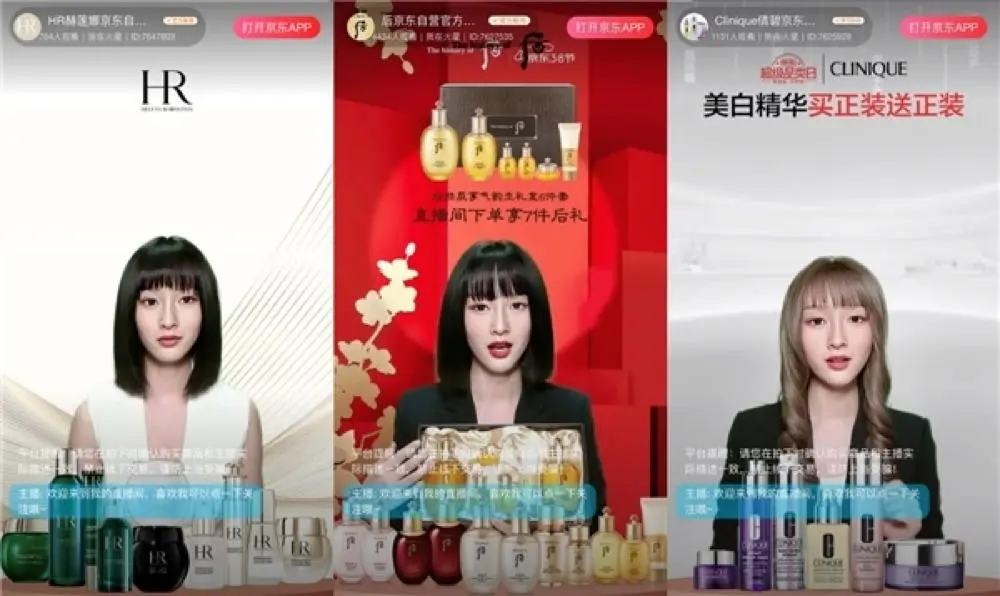
---
# 11.11 2025: From GMV Theater to AI-First Efficiency
URL: https://www.thechinapath.com/insights/double-11-2025-ai-ecommerce-efficiency-china
Published: 2025-11-14
Updated: 2026-05-15
Author: Cyril Drouin
Category: E-Commerce
Double 11 2025 traded the GMV spectacle for efficiency. AI-run systems, clearer pricing and dependable service counted for more than gimmicks.
## 11.11's Systems Check: From GMV Theatre to AI-First Efficiency
Double Eleven used to be a craze. In 2025, it's a systems test: can your brand run cleaner operations, serve calmer consumers, and compound brand equity while the whole country is shopping?
### What actually changed this year
The headline isn't "bigger GMV." It's better systems. Platforms and brands shifted toward prioritizing efficiency, transparency, and repeatability. Consumers rewarded the transparent approach: fewer gimmicks, clearer pricing, better service.
Under the surface runs an AI-led operating model. Promotions, ranking, forecasting, and routing are increasingly orchestrated by learning systems. And while the big platforms have largely stopped publishing single GMV headlines, they're leaning into participation, service quality, and delivery metrics. When everyone discounts, the operator who runs smartest wins, with faster delivery, fewer stockouts, and unit economics that still make sense on November 12.
### Architect the Creative OS that make ops convert
11.11 is more than inventory math. It is the content system that turns operations into outcomes. That is our lane.
* Codify Brand DNA into a Creative OS. HubStudio translates visual codes and audience truths into reusable intelligence like private prompt packs, negative guardrails, and consistency sets for product, people, color, and type.
* Pair elite creatives with AIGC engineers. Creativity sets the standard; AI scales it across placements, languages, and markets without diluting craft.
* Ship on real studio rails. GPU power, [production](/grow-in-china/production-studio) workflows, and post for the final 5%, so assets are launch-ready, not "almost."
* Measure what matters. HubStudio optimizes toward save/share rate, 3-second hold, Brand Fit, Distinctive Asset Recognition, Speed-to-Asset, and Cost per Qualified View, and links them to commercial levers.
The result: fewer rounds, faster learning, and content that stays on-brand at speed.
### The AI‑first efficiency stack (designed for P&L impact)
* **Precision demand & pricing**
Offer architecture guided by cohort and SKU signals. Use targeted coupons as retention levers.
* **Personalized merchandising at asset level**
Variant sets (angles, backplates, seasons) mapped to cohorts and placements turn discovery into conversion instead of noise.
* **Logistics that reinforces trust**
Tighter routing and service levels matter. [JD](/grow-in-china/cross-border-ecommerce), for example, cites ~95% of first‑party retail orders delivered within 24 hours. They're an expectation‑setter that pushes everyone toward speed. Meanwhile, robotics and autonomous delivery remain early‑stage/augmentative and are useful in pilots and dense nodes.
* **Creative that reduces cost‑to‑serve**
Clear PDP expectations, localized size/fit logic, and post‑purchase content that deflects WISMO and lowers refunds/complaints.
* **Ops over optics**
North stars move from one‑day GMV to cost‑to‑serve, repeat rate, CAC/LTV, refund rate, and on‑time delivery supported by the creative metrics above.
### Livestreaming still sells
Trust and personality convert. The unlock in 2025 is format discipline and studio stamina:
* Merchant‑owned studios with consistent pricing logic and longer hours.
* AI‑assisted pre‑production: shot lists, storyboards, talking points; instant cut‑downs for retargeting within minutes.
For context, [livestream](/social-in-china) GMV reached RMB 332.5B during Double 11 in 2024 (+54.6% YoY). 2025 results are still being compiled, but the structural advantage of live commerce remains: trust + clarity + proven conversion.
### Omnichannel that actually connects & crosses borders
* Offline ↔ online loops: QR receipts, store demos, and pop‑ups that unlock digital bundles; in‑store screens sync with the same Creative OS powering PDPs and ads.
* Built for cross‑border: rights‑clean talent, localized visuals and policies, and last‑mile expectations embedded in the asset set, so the playbook travels. In 2025, Taobao localized 11.11 promotions in roughly twenty markets, while AliExpress continued U.S./overseas pushes; JD Worldwide deepened its support for cross‑border merchants.
* AI brand ambassadors where appropriate brand‑safe, consistent, and designed for multi‑market use.
### The new scorecard (pass/fail)
* Speed & reliability: promise vs. actual SLA; % delivered <24h
* Unit economics: cost‑to‑serve/order; refunds & recovery speed
* Trust & transparency: one price across device/account; promo clarity
* Retention & equity: cohort repeat, subscriber lift from streams, content saves/shares; Brand Fit/DAR
* Sustainability & scale: lighter packaging, efficient routes, global creative/ops stack that scales without drift
### Bottom line
11.11 doesn't need more flare. It needs a creative‑led, AI‑native system that respects consumers, protects margins, and scales across borders. The winners used the festival as a systems check and passed on speed, clarity, and brand consistency.
If you want to see this in your numbers, let's co‑create a few visuals on the house and walk through live brand cases. We'll design the Creative OS together and turn the next shopping moment into a moat.
---
# China's Biggest E-Commerce Festival Goes Back to Old Media
URL: https://www.thechinapath.com/insights/double-11-2025-old-media-strategy-china-ecommerce
Published: 2025-11-14
Updated: 2026-05-15
Author: Cyril Drouin
Category: E-Commerce
Double 11 is borrowing from TV, with galas, comedy sketches and variety shows, to win back Chinese shoppers who've learned every retail trick.
## Why a digital-native festival is borrowing TV-era humour to reconnect with retail-pro shoppers. This is not nostalgia. It is a strategy.
Double 11 was born in the browser.
Tabs, banners, flash sales, app only perks. For more than a decade, China's biggest shopping festival has been the clearest expression of digital commerce at scale. If you wanted to understand platform power, you watched 11.11.
## Seventeen years in, something unexpected is happening.
You open your phone and it feels strangely like television.
There are gala-style launch shows with celebrity hosts. Comedy sketches about prices that feel too high and quality that feels too low. Variety segments where KOLs argue with brand managers on stage to unlock one more bundle for the audience. Metro tunnels and outdoor boards start to look like classic brand [campaigns](/grow-in-china/campaigns) again, with big slogans and simple promises.
The same platforms that taught China to swipe are suddenly speaking in the language of prime time.
This is not nostalgia. It is a strategy. A digital native festival is reaching for old [media](/grow-in-china/media) tools to solve a very modern problem: how to win back the trust and attention of consumers who now shop like professionals.
## From tab takeover to variety show, in three quick moves
The journey here is simple.
Double 11 started as a one-day tab takeover, with a single promise of the lowest price of the year and a homepage drowned in banners. It then expanded into a long social season, with pre-sale, deposits, red envelopes, and mini games turning the festival into a week-long quest. Livestream commerce completed the shift, concentrating demand into a few super KOL rooms where split screens, countdowns, and complex coupon stacks made every purchase feel like a live performance.
For a while, each layer felt like an upgrade. Then the upgrades started to blur into noise.
By the seventeenth edition, the festival is no longer a surprise. Big purchases are planned around it. Every surface is loud, red banners and low price stickers melt into one. Most importantly, the audience has outgrown the script.
Chinese consumers now compare across platforms by default, track price movements before and after campaigns, share stacking tactics in WeChat groups and Xiaohongshu notes, and know which promises are real and which are cosmetic. They do not behave like rookies in a carnival. They behave like retail professionals managing their own portfolio.
In that world, one more hyperactive banner or intense livestream is not exciting. It is just more noise. So Double 11 reaches for something older and bigger than the feed: the emotional grammar of television.
## Why old media is back in the frame
On the surface, it looks like a stylistic choice. More shows, more jokes, more long-form entertainment wrapped around the sale. Underneath, it is doing three jobs at once.
### Rebuilding a shared moment
Early Double 11 felt like a shared countdown. Everyone knew when it started and when it ended. As the festival stretched into weeks of pre-sale and long tail, that sense of we are all here now faded.
Variety style launch nights, live galas, and heavily promoted specials pull focus back to a few big moments. They give platforms a central stage again, instead of yet another slot in the scroll.
### Owning the jokes before consumers do
Chinese shoppers have seen every play. Inflated original prices. Recycled lowest price claims. Bundles designed to confuse more than delight. So the campaigns lean into self-awareness.
They joke about products that are too expensive or not good enough. Hosts pretend to argue with stingy brand representatives on behalf of viewers. Skits show scammy sellers getting called out, then the platform stepping in as the hero.
It is theatre, but it is theatre built on real frustration. By laughing at the old tricks, platforms are trying to draw a line. That was then; this year, we are on your side.
### Signalling a cleaner game without losing drama
Regulations around online promotions and misleading pricing have tightened. Public backlash against tone deaf comments and fake deals is faster and louder.
At the same time, the commercial pressure has not gone away. Platforms still want growth. Brands still need to make the quarter.
Old media formats offer a way to dramatise real value and real lowest price in a way that feels public and serious. Prices are revealed on stage in big type. KOLs assemble bundles live, with the maths visible before and after narratives are spelled out instead of being buried in fine print.
The message is simple. We know you are watching the details. We are willing to put them on a bigger stage.
## The real protagonist: China's retail pro shopper
Under all of this sits one hard truth.
Double 11 did more than create more buyers. It created better operators on the consumer side.
People have been training for this festival for more than a decade. They know how each platform plays to its strengths, when a claim feels wrong, and how price, quality, service, and cross-border options line up in their category.
That is the audience 11.11 year seventeen is speaking to. Not a naive mass, but a market of retail pros who expect offers they can summarise in one line, logic they can explain to a friend, and value that makes sense beyond the punchline.
Seen that way, the shift back to old media language is less about going backwards and more about changing the tone of the relationship. Less one-way hype, more we know you are not easy to impress, here is our case.
## What global brands should take from 11.11 this year
For teams watching from Paris, London, or New York, the temptation is to fixate on formats: the gala, the sketch, the big show.
The more useful takeaway sits underneath.
Trust has quietly become the main creative brief. The jokes, the retro aesthetics, the staged fights for better prices all orbit one need, to make the price and the promise feel believable again.
Localisation now means respecting the audience's intelligence. You are entering a space where consumers have a deeper, more granular understanding of discount logic and platform behaviour than most foreign headquarters. Your offers and storytelling have to assume that fluency.
Old media style combined with new media mechanics, needs a system behind it. Consistent pricing architecture, a clear value story, and a coherent creative language across TV style content, livestream rooms and short video are what separate a one off stunt from a brand that feels credible all year.
Seventeen years in, Double 11 is still a barometer for Chinese commerce. This year the signal is clear. Old media spectacle is being redeployed not to create hype, but to rebuild trust with a market of shoppers who already know the rules of the game.
For brands willing to meet those shoppers as peers, not targets, that is not a threat.
It is an opening.
---
# Double 11 2025: The End of China's Shopping Wars
URL: https://www.thechinapath.com/insights/double-11-2025-the-end-of-chinas-shopping-wars
Published: 2025-11-14
Updated: 2026-05-15
Author: TheChinaPath
Category: E-Commerce
Double 11 has stretched from one day into a five-week marathon. Growth is slowing, brand margins are thinner and Chinese shoppers now play the system.
## Why Double 11 Stopped Working (And What To Do Instead)
There was a time when Double 11 was simple. One date. One promise. "Lowest price of the year."
As 11.11 hits the clock, you're ready to shop your favorite brands, slashing prices with amazing discounts, rushing to buy all of the good deals. You feel like a winner.
### Fast forward to 2025, and the picture looks very different.
The festival now stretches from early October to mid-November, with overlapping pre-sales, "plus" events, and endless coupon ladders. GMV still grows roughly 1.7 trillion RMB this year, up from 1.44 trillion, but the growth rate is slowing, and the mood is described as "muted," "cautious," "value focused."
Retailers push harder on promotions and incentives. Consumers research more before they spend.
Somewhere along the way, the game changed, and this year feels dangerously close to a breaking point.
This is The Last 11.11 Playbook: not because the festival disappears, but because brands can no longer afford to treat it as a one-night stunt. Especially in a country where shoppers are already retail pros.
## How the hype started (and what it got right)
The original Double 11 formula was genius:
* **A clear focal point.** One day, one story, one simple call to action.
* **A genuine deal moment.** Platforms subsidised heavily; brands got volume and new users; shoppers actually did see real price breaks in many categories.
* **A new ritual.** "Stay up, check out, brag about your haul." Commerce became culture.
For international brands, it was the easiest story to sell upstream: "China has a national shopping day. We show up, discount hard, and watch the line go up."
In that era, the math worked. Margins took a hit, but the story was about acquisition, market share, and learning the ecosystem.
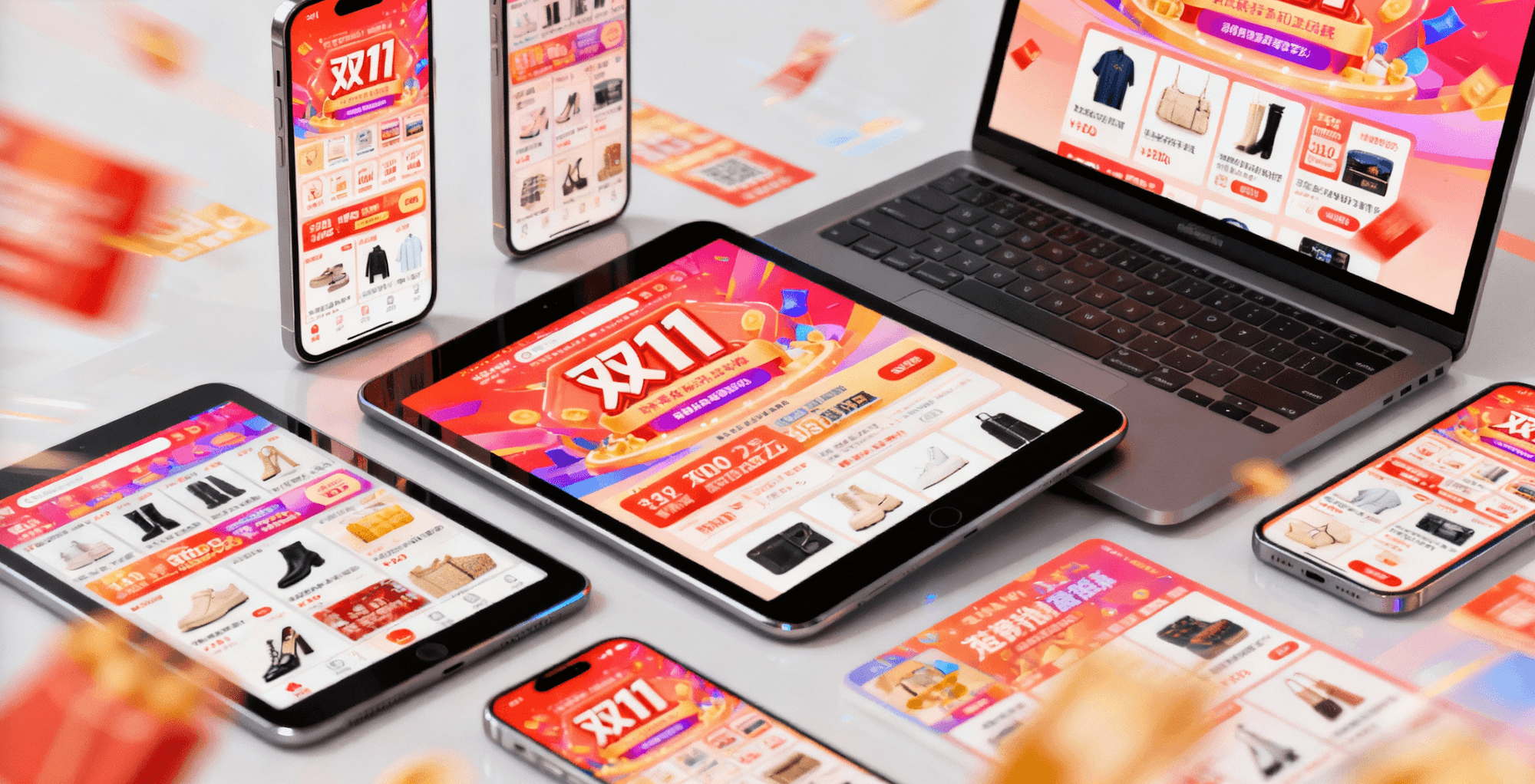
## The compounding effect: more platforms, more tricks, less clarity
Then the game got crowded.
* New players like **Douyin and Kuaishou** brought livestream commerce into the core of Double 11.
* [Cross-border](/enter-china/cross-border-setup) demand grew. Platforms pushed Double 11 overseas into 20+ markets.
* Pre-sales crept earlier and earlier, until the festival became a **five-week marathon** instead of a one-night sprint.
**Every year added a new layer:**
* Pre-pre-sale.
* Deposit periods.
* "Pay the balance" windows.
* Red envelope drops.
* Platform coupons.
* Brand coupons.
* Bank cards.
* Member clubs.
* Secret codes.
**And with each new mechanic, two things happened:**
* Sellers built for the game and stopped building for the shopper.
* List prices quietly crept up ahead of the festival, just to be "discounted" back to normal.
* [Marketing](/grow-in-china/campaigns) budgets inflated to chase GMV headlines and buy placements that looked impressive on internal dashboards.
* Unit economics became something you checked after the festival, not before.
* Shoppers levelled up faster than the system.
* Guides teaching you how to "stack everything" and "time your order perfectly" are now their own content genre.
* Users compare Taobao vs [JD](/grow-in-china/cross-border-ecommerce) vs Pinduoduo vs Douyin across weeks, channels, and devices.
* Tools and social groups track prices before, during, and after Double 11 to call out fake deals.
The more complex the game became, the more professional the players on the other side of the screen became.
## China's shoppers are retail pros. The game backfired.
This is the core truth that a lot of overseas boards still underestimate.
They know:
* How to spot inflated "before" prices.
* When a "limited time" discount quietly repeats next week.
* How to arbitrage across platforms, cross-border options, and even grey channels.
* How to wait out the noise and buy in the quiet windows when brands get desperate.
At the same time, macro realities: property pressure, wage stagnation, and youth unemployment, make shoppers more cautious and more value-driven. They still spend, but they spend like portfolio managers, not kids in a candy store.
The result?
* **Margin compression for brands.** You raise list prices to protect margin, then discount harder to keep up with the war around you. Net, you give away more than you planned.
* **Trust erosion for consumers.** Each "fake lowest price" makes the next story harder to believe.
* **Signal loss for platforms.** GMV is still huge, but so politically and competitively sensitive that major platforms now avoid publishing a single festival number at all.
Double 11 used to be the clearest signal of China's consumption story. Now, even people inside the ecosystem are asking if the model itself is overheating.
## 2025 feels like a tipping point
Look at the 2025 pattern:
* The festival starts even earlier, on October 9, and runs past November 11.
* GMV grows, but the growth rate slows.
* Retailers rely on deeper discounts and heavier subsidies to move a more cautious consumer.
Behind closed doors, you hear the same stories:
* "We hit revenue targets, but we don't know what we actually earned."
* "We increased marketing spend because everyone else did."
* "We discounted harder just to defend last year's GMV line."
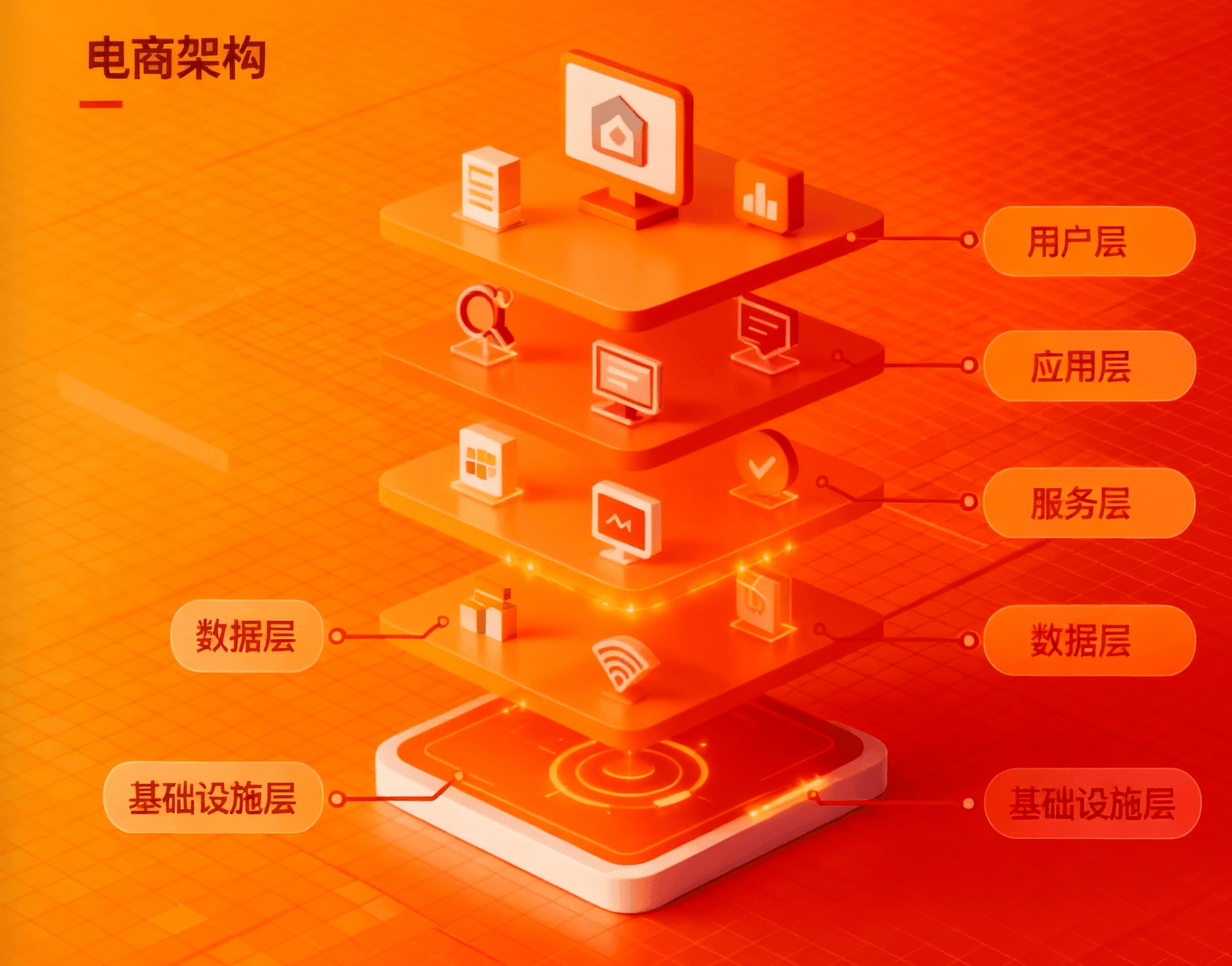
## E-Commerce in China
Looking at China from the outside, Double 11 has outgrown its local-shopping-festival roots. It is an early view of how commerce behaves when AI is embedded in the stack and shoppers think like operators.
Three ideas to carry forward:
* Treat 11.11 as a stress test rather than a one-off stunt. If something breaks in November, it was fragile all year.
* Build a creative and pricing system that can hold its shape while platforms, formats, and tools keep changing.
* Assume consumers will compare everything, and be the brand that rewards that intelligence with clear value and honest pricing.
This is what a game that is dragging everyone down looks like.
Not a crash. A grinding, exhausting equilibrium where no one wants to be the first to step out of the war.
Which is exactly why this is the right moment to declare your own Last 11.11 Playbook.
---
# Double 11 preparation checklist: 50 days out
URL: https://www.thechinapath.com/insights/double-11-preparation-checklist
Published: 2026-09-22
Updated: 2026-10-02
Author: TheChinaPath
Category: E-Commerce
A dated Double 11 preparation checklist for foreign brands, counting back from November 11, with the owner and the cost of every slipped line.
Fifty days sit between September 22 and November 11. Use them in this
order: fund the bonded channel and finish your origin paperwork now, lock
price and stock by October 12, submit creative and livestream assets by
October 21, and treat October 15 as your real opening day, since the
platforms open weeks before the eleventh.
That last point is the one that catches foreign brands. This Double 11
preparation checklist counts back from November 11 because that is the fixed
date, but nobody waits for it. Last year the selling was open for a month
before the headline day, and the platforms have already started the 2026
cycle.
Most Double 11 countdowns start at 60 days. Sixty days out was September 12,
and it has gone. So the first two rungs of the usual ladder are already
behind you. Everything below assumes that and says what to do about it.
Here is the whole thing on one screen. A printable version with checkboxes
and a line for each owner sits at
[the Double 11 checklist guide](/guides/double-11-preparation-checklist).
| Days out | Date | What has to be locked | Owner | What breaks if it slips |
|---|---|---|---|---|
| 50 | Sep 22 | Bonded cash funded, origin and circulation documents filed, and category registrations submitted | Finance and regulatory lead | Stock cannot enter the bonded warehouse, so nothing you plan after this matters |
| 40 | Oct 2 | Promotional price set against a documented base price, discount mechanic chosen | Commercial director | The discount is unsupportable under the pricing rules and the platform pulls the listing |
| 30 | Oct 12 | Stock landed in the bonded warehouse, SKU-level forecast signed, return buffer funded | Supply chain lead | You sell what you don't have, or you sit on stock past Chinese New Year |
| 21 | Oct 21 | Creative, livestream scripts and presenter disclosures approved, media budget committed | Ecommerce lead | You miss the mid-October opening wave, which is where the volume now sits |
| 14 | Oct 28 | Customer service staffed and scripted, return and refund policy published, and quota rules built into bundles | Ecommerce lead | Baskets breach the 5,000 RMB cross-border limit and orders fail at customs |
| 7 | Nov 4 | Stock reallocated on real sell-through, ad bids and daily caps reset, warehouse shift plan confirmed | Ecommerce lead | Winners go out of stock on the day while losers eat the storage bill |
| 0 | Nov 11 | Nothing new. Watch inventory, bids and clearance throughput hourly | Ecommerce lead | Any change you make today is a change you did not test |
## The sale does not start on November 11
It hasn't started on November 11 for years. The 2025 festival was the
longest on record, and each big platform ran its own window.
> Douyin sold from October 9 to November 11, JD from October 9 to November
> 14, and Tmall from October 15 to November 14 in the 2025 Double 11.
> Source: The Paper (澎湃新闻), November 2025.
> https://m.thepaper.cn/newsDetail_forward_31971814
Read that as an operator and the 50 days collapse. By the back half of the
countdown you are already trading.
The 2026 cycle is already moving.
> Douyin opened merchant registration for its 2026 Double 11 on September
> 14 and will run the sale from October through November 11 in three
> phases.
> Source: Ebrun (亿邦动力), September 2026.
> https://news.qq.com/rain/a/20260919A088XY00
Kuaishou moved a day later and published its calendar with it.
> Kuaishou opened merchant recruitment for its 2026 Double 11 on September
> 15.
> Source: 21st Century Business Herald (21世纪经济报道), September 2026.
> https://www.21jingji.com/article/20260916/herald/ae0a3b105798bb224bacac429cb5487c.html
> The Kuaishou cycle runs October 7 to November 15, split into pre-sale,
> opening, category days, closing and an encore window.
> Source: Ebrun (亿邦动力), September 2026.
> https://news.qq.com/rain/a/20260919A088XY00
Tmall and JD dated their own windows the same week.
> Tmall opens Double 11 2026 presale and deposit payments on October 15.
> Final payments start at 20:00 on October 20, and spot selling runs from
> then until 23:59 on November 13.
> Source: Beijing Business Today (北京商报), via NetEase, September 2026.
> https://www.163.com/dy/article/L7E4TETQ0519DFFO.html
> JD opens its 2026 Double 11 in full, with spot goods on sale, on October
> 12.
> Source: National Business Daily (每日经济新闻), September 2026.
> https://www.nbd.com.cn/articles/2026-09-24/4591116.html
So Kuaishou sells from October 7, JD from October 12 and Tmall from
October 15, with Douyin somewhere in October. Early October is the date
that belongs on your wall.
For scale, and for anyone still arguing internally about whether the festival
is worth the working capital:
> Total online sales across the 2025 Double 11 period reached 1,695 billion
> RMB, up 14.2% on the year before.
> Source: Sina Finance (新浪财经), citing Syntun (星图数据), November 2025.
> https://finance.sina.com.cn/stock/bxjj/2025-11-12/doc-infxcura4872746.shtml
Imported brands had a strong festival inside that total.
> In the first two weeks of the 2025 Double 11, 927 imported brands on
> Tmall Global doubled their sales year on year, and nine passed 100
> million RMB.
> Source: E-Commerce Daily (电商报), October 2025.
> https://www.yilantop.com/news/74594
## 50 days out: cash and paper, in that order
Two things have no shortcut, and both start today.
The first is money in the bonded channel. Before a unit ships, a bonded
warehouse wants a deposit and a prepayment against the tax it will clear on
your behalf.
> Our Tmall Global calculator carries a 100,000 RMB bonded warehouse
> deposit and a 300,000 RMB tax prepayment as its working defaults, so
> 400,000 RMB is committed before the first festival order.
> Source: TheChinaPath calculator data, September 2026.
> https://www.thechinapath.com/tools/tmall-global-setup-and-run
You can model your own version in the
[Tmall Global setup and run calculator](/tools/tmall-global-setup-and-run).
The number moves with category and volume. The sequence never does: the
cash clears before the stock does, and the stock clears before the sale
does.
The second is documentation, and Tmall Global raised the bar on it last
week.
> Tmall Global's upgraded 全球探源计划 asks overseas brands for proof of
> origin, evidence of authorization for free sale or market approval, and
> visual evidence of genuine overseas circulation, either an unbroken
> video walkthrough filmed in a foreign retailer or pharmacy, or sales
> screenshots from a recognized overseas platform. Claims may not imply
> disease treatment, may not assert benefits without scientific support, and
> may not use misleading data or reviews. More than 300 overseas brands have
> enrolled since May 2026.
> Source: Global Network (环球网), September 2026.
> https://news.qq.com/rain/a/20260915A091CT00
Getting a retailer in Germany or Korea to film a shelf walk takes a week of
asking and a week of waiting. Start it today.
## 40 to 30 days out: price, then stock
This is the first Double 11 to run under two new rulebooks, and both land on
the pricing and returns work you are about to do.
> The 网络交易平台规则监督管理办法, joint order 116 of the market regulator
> and the cyberspace administration, took effect February 1, 2026. Article
> 27 bars a platform from forcing merchants to carry refund-without-return
> liability, and article 12 requires seven days' public notice before a
> rule change takes effect, or fifteen days where the change affects many
> users or major interests.
> Source: State Administration for Market Regulation (国家市场监督管理总局),
> December 2025.
> https://www.samr.gov.cn/zw/zfxxgk/fdzdgknr/fgs/art/2026/art_85b474fc5a08494bb60ca6a280b98d7d.html
> The 互联网平台价格行为规则, issued by the NDRC, the market regulator and
> the cyberspace administration as 发改价格规〔2025〕1607号, took effect
> April 10, 2026.
> Source: National Development and Reform Commission (国家发展和改革委员会),
> December 2025.
> https://www.ndrc.gov.cn/xxgk/jd/jd/202512/t20251220_1402517.html
The practical read: your discount needs a defensible base price, and you
need the records that prove it. That has been the rule since 2022.
> Article 19 of the 明码标价和禁止价格欺诈规定, order 56, prohibits selling
> goods or services through false discounting, false markdowns or false
> price comparison. It took effect July 1, 2022.
> Source: State Council Gazette (国务院公报), April 2022.
> https://www.gov.cn/gongbao/content/2022/content_5699926.htm
So set the base price by October 2 and leave it alone. Every day you spend
“testing” a price in late October is a day you erode the comparison you are
about to publish.
Stock follows price, because the forecast depends on the discount. And the
forecast has to survive returns, which is where most Double 11 plans quietly
fail.
> The overall e-commerce return rate across the 2025 Double 11 period was
> 61.5%, with apparel sold through livestream running above 80%.
> Source: Beijing Daily (京报网), carrying CCTV News (央视新闻), January
> 2026.
> https://news.bjd.com.cn/2026/01/11/11517038.shtml
That 61.5% is every platform and every category together, so treat it as a
planning ceiling rather than your number. Even as a ceiling it rewrites the
math. Our Tmall Global calculator prices pick and pack at 4 RMB, last-mile
delivery at 11 RMB and return handling at 15 RMB per parcel. A returned
order burns all three, so 30 RMB. Ship 1,000 orders at a 61.5% return rate
and 615 come back, which spreads 18,450 RMB of dead logistics across the 385
you keep. About 48 RMB a kept order. At the 5% return rate the calculator
uses by default, the same drag is under 2 RMB.
Price that in before you set the discount.
## 21 to 7 days out: the lines people forget
What goes wrong at this stage is almost never strategy.
Livestream sits under its own rulebook now. Order 117, the
直播电商监督管理办法, took effect on the same February 1 date as order 116.
> Article 37 requires an operator using an AI-generated presenter to label
> it under the national rules and to keep telling viewers, throughout the
> stream, that the figure is machine generated. Article 32 requires the
> comparison basis of any discount shown in a stream to be displayed
> clearly.
> Source: State Council Gazette (国务院公报), December 2025.
> https://www.gov.cn/gongbao/2026/issue_12666/202604/content_7065114.html
If a virtual host is running your overnight slots, your agency has to build
that label into the stream itself. A line in a brief won't do it.
The seeding and creator side of a festival plan is a different job from
running the store, and we hand that to [TheRedScroll, the group's China
social media agency](https://www.theredscroll.com).
Then the quota. Cross-border retail import has a per-order ceiling, and
Double 11 bundles are exactly the mechanic that breaches it.
> Cross-border retail import is capped at 5,000 RMB per transaction and
> 26,000 RMB per shopper per year.
> Source: Ministry of Commerce (商务部) policy database, 财关税〔2018〕49号,
> in force January 1, 2019.
> https://policy.mofcom.gov.cn/claw/clawContent.shtml?id=65769
A gift set that looks clever in a deck can push a basket past 5,000 RMB and
strand the order at clearance on the busiest night of the year. Cap the
bundle in the builder itself. A customer service script can't undo a failed
clearance.
Last, the reallocation on November 4. Week-one sell-through tells you which
SKUs are real. Move stock and budget toward them then, while the warehouse
can still act on it. Our
[campaigns team](/grow-in-china/campaigns) and the
[cross-border ecommerce team](/grow-in-china/cross-border-ecommerce) run
that reallocation as one meeting with one owner, because split ownership is
how a brand ends up out of stock on its winner and long on its dog.
## How to run this Double 11 preparation checklist
Print it. Every line gets a person's name on it, never a department. Then
read the “what breaks” column out loud in the kickoff, because that column
is the only part of a checklist anybody remembers in week six.
Every date above was counted back from Wednesday, November 11, 2026, and
every platform window here was checked against its source announcement:
Douyin and Kuaishou on September 22, Tmall and JD on October 2. Platforms
move their own dates. Check the ones that matter to you on the merchant back
end before you commit budget against them.
## Questions we get asked
**When does Double 11 2026 actually start?**
November 11 is the headline day, but the selling starts weeks earlier.
Kuaishou's cycle opens October 7 and JD opens on October 12. Tmall starts
presale and deposits on October 15, with spot selling from 20:00 on
October 20. Douyin has said its 2026 sale runs from October through
November 11. Plan for the second week of October.
**Is it too late to join Double 11 2026 if we have no China store?**
For this year, yes, in practice. Store approval, bonded onboarding and
category registration do not compress into 50 days, and the origin
documentation Tmall Global now asks for adds weeks on its own. Use this
cycle to watch the category, then open in the first quarter so you have a
full run at 618.
**How much stock should we send to the bonded warehouse?**
Forecast the sale, then subtract for returns before you commit. The 2025
festival returned 61.5% of orders across all platforms. Stock you can't
sell by mid-November sits in a bonded warehouse through Chinese New Year and
pays storage the whole time, so the cost of over-forecasting is larger than
one lost sale.
**Do we need a Tmall Partner to run Double 11?**
Most foreign brands use one, because the festival is an operations job with
a fixed deadline rather than a marketing job. What matters is that one
person owns the reallocation decision on November 4. If your agency, your
distributor and your head office all have a vote that week, nobody moves.
Send us your SKU list, your landed cost and the date your stock can leave
the origin warehouse, and we will tell you which lines on this checklist you
can still hit.
[Talk to the cross-border ecommerce team](/grow-in-china/cross-border-ecommerce)
---
# Douyin agency cost: retainer, commission, creators
URL: https://www.thechinapath.com/insights/douyin-agency-cost
Published: 2026-09-24
Updated: 2026-09-24
Author: TheChinaPath
Category: E-Commerce
Douyin agency cost, line by line: the retainer, GMV commission, creator fees and Qianchuan ads, with a worked year at RMB 5 million of sales.
Douyin agency cost comes in two layers. The agency, called a Douyin Partner
(DP), charges a monthly retainer of about RMB 30,000 to RMB 100,000 in our
calculator data, plus 5% to 8% commission on sales. You then fund the ads
and the creator commission yourself. Price the whole stack at one sales
target before comparing quotes, because the commission terms move it more
than the retainer does.
Douyin is China's short-video app, and brands sell on it through live rooms
and short videos. A foreign brand shipping from abroad sells through Douyin
Global, the cross-border store format. Douyin calls the agencies that run
brand shops e-commerce service providers. Brands call them DPs. The ads run on Qianchuan
(巨量千川), Douyin's ad system for shops. At our planning rate of RMB 7.10 to the
dollar, the retainer range works out to about US$4,200 to US$14,100 a month.
Every figure below was checked on September 24, 2026.
Three lines in the table below go to the DP. The other three, creator
commission, session fees, and Qianchuan, are paid outside the agency. In our
worked year they cost more than the agency does.
| Cost line | Who is paid, and how | Typical range | Source | What to watch |
|---|---|---|---|---|
| Retainer | The DP, a flat monthly fee | RMB 30,000 to 100,000 a month | TheChinaPath calculator data | The live hours and videos it buys |
| DP commission | The DP, a share of sales on top | 5% to 8%, near 10% at the ceiling | TheChinaPath calculator data | Gross or net of returns, and the ladder math |
| Creator commission | Creators, per sale, settled by Douyin | 5% to 50% open to all; up to 80% for named creators | Douyin affiliate rules, Aug. 2026 | Rate ladders, and who picks the creators |
| Slot and session fees | Hosts or their agencies, a fixed fee for airtime | RMB 500,000 to 3 million for a dedicated session with a mid-tier or top host | Xinhua, Aug. 2024 | Refund terms if the session misses |
| Qianchuan ads | Douyin, from an ad account you fund | Paid sales divided by return on ad spend | TheChinaPath calculator data | Account in your name, no markup |
| Co-fund | The DP, a yearly pot for peak dates | Negotiated; zero in the calculator default | TheChinaPath calculator data | A plan attached to the money |
## The fee models Douyin Partners use
DPs price their work in a few ways. A fixed retainer plus a commission on
GMV (gross merchandise value, the sales total before returns) is the default
in our calculator. Commission-only deals drop the retainer, which moves risk
to the agency and usually pushes the rate up. And some DPs quote a flat fee
with no commission at all, mostly for a set scope of work.
The fourth arrangement is a different deal altogether. The partner buys your
stock and resells it, and once it owns the stock, it sets the price.
Creators sit outside the DP's fee. A brand sets their rate in Douyin's
affiliate marketplace, Jingxuan Lianmeng (精选联盟), and Douyin pays it out of
each order. Douyin sets the floor and the ceiling.
> An open commission offer to all creators can be set at 5% to 50% of the
> order's paid amount. An offer limited to named creators, tiered offers
> included, can run from 5% to 80%. Some special categories can go as low
> as 1%.
> Source: Douyin E-commerce (抖音电商), affiliate commission settlement rules, August 2026. https://school.jinritemai.com/doudian/web/articlev0/112620
Pure-commission creator deals, which the trade calls chunyong (纯佣), pay only
on sales. Bigger hosts also charge for airtime: a slot fee (坑位费) for a
place in a session shared with other brands, or a flat fee for a session of
their own.
> A Yalu representative told Xinhua that in the company's past deals, a
> dedicated session with a top host cost RMB 1 million to 3 million and one
> with a mid-tier host RMB 500,000 to 1 million, with commission of roughly
> 10% to 20% on top.
> Source: Xinhua (新华网), August 4, 2024. https://www.news.cn/fortune/20240804/ec11b5b85b514e8b9332998d0b23b020/c.html
Treat it as one company's 2024 experience. It does show the size of a fee
that gets paid before a single unit sells.
### Read where a ladder steps up
Douyin's own tiered creator offer is marginal. The base rate applies up to
the sales threshold, and the higher rate applies only to sales above it.
> In a tiered offer, sales up to the threshold earn the base commission and
> sales above the threshold earn the raised commission.
> Source: Douyin E-commerce (抖音电商), affiliate commission settlement rules, August 2026. https://school.jinritemai.com/doudian/web/articlev0/112620
DP contracts use ladders too, and the math varies. Take an illustrative
ladder of 5% on the first RMB 3 million and 8% above it. On RMB 5 million of
sales, paid the way Douyin pays creators, it costs RMB 310,000. Paid
retroactively, with 8% on the whole year once the threshold falls, it costs
RMB 400,000. The headline rates are identical, and the bills end up
RMB 90,000 apart.
Ask for the formula in writing, with a worked example at your own target.
## Douyin agency cost over one year, at RMB 5 million
We ran the Douyin calculator at RMB 5 million of first-year sales, about
US$704,000. Your target will differ, so watch the ratios more than the
totals. At a RMB 250 average order, that's 20,000 orders.
The retainer, the 5% DP commission, the 20% creator rate, and a return on ad
spend of 2.5 all come from the calculator's defaults, the lean end of the
range. We changed two things. The channel mix is 40% paid ads, 40% creators,
and 20% organic, and a RMB 120,000 co-fund pays for a Double 11 push. No
client's numbers are in any of it.
| Partner stack, year one | RMB | Share of sales | How it is built |
|---|---|---|---|
| DP retainer | 360,000 | 7.2% | RMB 30,000 x 12 |
| DP commission | 250,000 | 5.0% | 5% of RMB 5 million |
| Campaign co-fund | 120,000 | 2.4% | Selected input |
| Qianchuan ads | 800,000 | 16.0% | 40% of sales at a return of 2.5 |
| Creator commission | 400,000 | 8.0% | 40% of sales at 20% |
| Slot and session fees | 0 | 0% | Not in the model; add any you sign |
| Total partner stack | 1,930,000 | 38.6% | About US$272,000 |
| Per placed order | 96.50 | | 20,000 orders |
| Per kept order, 5% returns | 101.58 | | 19,000 orders |
| Per kept order, 20% returns | 120.63 | | 16,000 orders |
TheChinaPath calculator data, September 2026. The 20% row is a stress case,
far below the festival return rate quoted further down. Both kept-order rows
hold every line at its gross value, the way the calculator books them.
In practice the creator line would shrink as refunds come in, because Douyin
cancels commission on refunded orders. At 20% returns spread evenly, that's up
to RMB 80,000 back. The DP line shrinks only if the contract says so.
The fixed lines, retainer plus co-fund, come to RMB 480,000. The sales-linked
lines come to RMB 1.45 million, three times as much, and they grow with every
order while the retainer stays put. The full calculator year adds deposits,
import tax, logistics and Douyin's fee, and needs RMB 3,287,000 of cash.
Of that, RMB 405,000 is refundable deposits that come back when the store
closes. Most of the rest is the partner stack above.
Douyin itself takes RMB 125,000 of the year's cash. Packaged food, the
calculator's default category, pays a 2.5% tech service fee on sales, halfway between Douyin's 2%
and 3% rates for the category. The store deposit is RMB 5,000. That's the top
of three tiers set by last month's sales, and a shop selling RMB 5 million a
year sits in it.
> Douyin Global charges a base tech service fee of 2% on grains, cooking oil
> and a few condiments, and 3% on most other packaged food. Orders from the
> Douyin Mall app and the Doubao assistant pay a supplement on top.
> Source: Douyin E-commerce (抖音电商), Douyin Global tech service fee schedule, July 15, 2026. https://school.jinritemai.com/doudian/web/articlev0/aHMYyFoqESKn
> Douyin Global's base deposit is RMB 500 up to RMB 50,000 of last month's
> sales, RMB 2,000 up to RMB 100,000 and RMB 5,000 above that, in every
> category.
> Source: Douyin E-commerce (抖音电商), Douyin Global deposit rules, revised June 2025. https://school.jinritemai.com/doudian/web/articlev0/107821
Now change one input at a time and see what it adds.
| Change at RMB 5 million of sales | Added cost, RMB |
|---|---|
| Retainer up RMB 10,000 a month | 120,000 |
| DP commission from 5% to 8% | 150,000 |
| Creator commission from 20% to 30% | 200,000 |
| Return on ad spend from 2.5 to 2.0 | 200,000 |
| The illustrative ladder paid retroactively | 90,000 |
| DP commission on gross instead of net sales, at 20% returns | 50,000 |
TheChinaPath calculator data, September 2026.
At this size every point of DP commission is worth RMB 50,000 a year, and
every point of creator commission RMB 20,000. Negotiate the commission
terms first. The retainer is one line out of five.
## Commission on gross or on net of returns
This is the clause that's easiest to skim past. Returns in Chinese e-commerce run high. Livestream returns run highest.
> China's overall e-commerce return rate during the 2025 Double 11 period was
> 61.5%, with apparel livestreams above 80%.
> Source: Beijing Daily (京报网), carrying CCTV (央视网), January 11, 2026. https://news.bjd.com.cn/2026/01/11/11517038.shtml
That's an all-platform festival figure. Use it as a planning ceiling for
your category.
Douyin's own settlement already pays creators on kept orders. The commission base
excludes shipping, and on cross-border orders it also excludes tax.
> If an order is refunded during the after-sale period, the creator's
> commission is not settled, and commission already paid is clawed back.
> Commission is settled 15 days after the buyer confirms receipt, plus two
> working days for cross-border orders.
> Source: Douyin E-commerce (抖音电商), affiliate commission settlement rules, August 2026. https://school.jinritemai.com/doudian/web/articlev0/112620
Brand payouts on Douyin Global follow the same logic.
> Douyin Global orders still in after-sale on their settlement date are held
> until the after-sale closes, and cross-border payouts take two working days
> beyond the settlement period.
> Source: Douyin E-commerce (抖音电商), Douyin Global merchant settlement rules, revised January 2026. https://school.jinritemai.com/doudian/web/article/aHyMoi13Bhx5
So ask the DP for the same terms. Its commission should run on the
platform's settled sales after refunds, and be paid on the platform's clock.
At 20% returns, 5% of RMB 5 million gross is RMB 250,000. On the RMB 4
million that stays sold, it's RMB 200,000.
The difference is RMB 50,000 a year, and it turns on whether the contract
says gross or net.
The ad side moved the same way this year.
> From 2026, orders a Douyin merchant generates through Qianchuan's automated
> product (千川·乘方) carry a technical service fee of 0.6%, in every
> category. A "net transaction" bid option cuts ad spend on orders that are
> refunded almost as soon as they are placed.
> Source: Ebrun (亿邦动力), January 8, 2026. https://m.ebrun.com/636020.html
The report didn't say whether Douyin Global stores qualify, so get your DP
to show the platform fee your store actually pays on the monthly statement.
## What the retainer should buy
A retainer is mostly a headcount bill, paid monthly. Get the headcount
written down.
- **Live hours.** On-air hours per month, the host shifts, and who pays for
the studio.
- **Short videos.** How many a month, to feed the live room and the ads.
- **Ad operation.** Daily Qianchuan management, with a weekly report of spend
and return by campaign. The ad account stays in your company's name.
- **Customer service.** The hours covered, evenings included, and the reply
time.
- **Reporting.** Sales after returns, exported from the shop backend each
month.
Our livestream budget put the fixed cost of a daily brand room at RMB 80,000
a month, before traffic and sales-linked costs. A RMB 30,000 retainer can't
hide a room like that. Either the room is part-time, or it's billed somewhere
else. The [livestream room budget](/insights/china-livestream-cost-for-brands)
shows the arithmetic.
Our [social commerce](/grow-in-china/social-commerce) page lists the work a
Douyin channel needs, and it doubles as a checklist against a proposal.
Creator seeding paid by the post, rather than by the sale, is a separate
budget. [TheRedScroll, the group's China social media agency](https://www.theredscroll.com),
covers that side.
## How to compare three quotes on one page
Three DPs will send three differently shaped quotes. Rebuild them into one.
1. Fix the target in writing: one sales figure, one average order, one
channel mix. Send the same brief to every DP.
2. Put each quote into the six lines of the first table. A blank line is a
question to send back.
3. Turn every commission into money at your target, with the ladder formula
and the base spelled out.
4. Add what the DP doesn't bill. This is where a cheap quote gets
expensive, because Qianchuan and the creator costs sit here.
5. Divide the total by kept orders, not placed orders.
6. Read the scope last. Check the hours and videos, then whose name the
accounts sit in.
The [Douyin cost calculator](/tools/douyin-cost-calculator) runs steps three
to five for you. Our guide to [finding a Douyin
Partner](/compass/find-a-douyin-partner-in-china) covers the checks to run
before fees come up, and [Compass](/compass) holds the DPs we have watched
run rooms in our categories.
## Frequently asked questions
### How much does a Douyin agency cost per month?
Our calculator data puts the retainer at about RMB 30,000 a month for a lean
setup and up to RMB 100,000 for a larger team, roughly
US$4,200 to US$14,100. Commission of 5% to 8% on sales comes on top. Ads and
creator commission are separate, and at RMB 5 million of sales they cost
more than the agency.
### Should the agency pay for Qianchuan ads?
No. Fund the ad account yourself, in your company's name, and let the DP run
it. Our calculator treats ad spend as a direct brand cost for that reason. In
our experience, deals where the agency fronts the spend tend to fall over,
and a markup buried in ad billing is hard to see from outside.
### Is a commission-only deal cheaper?
Sometimes, while sales are small. The agency carries more risk, so it asks
for a higher rate, and that rate keeps running as the shop grows. Model both
structures at your year-one and year-two targets. The crossover point tells
you which one to sign.
### What should a first-year quote include at low sales?
Start with a retainer that names its live hours and its videos. Commission
should be paid on net sales, and any ladder needs its formula written out.
Keep Qianchuan as a separate budget you control. Then check the scale: at
RMB 2 million of sales, a RMB 30,000 retainer alone eats 18% of the year's
revenue, before a single ad runs.
### When does Douyin pay creator commission?
Fifteen days after the buyer confirms receipt, plus two working days on
cross-border orders, under Douyin's settlement rules. A refund inside the
after-sale period cancels the commission, and any amount already paid is
clawed back. Ask your agency to be paid on the same clock.
[Get a shortlist of Douyin Partners that sell in your category](/contact#shortlist)
---
# Douyin cross-border brand verification: what it changes for your partner
URL: https://www.thechinapath.com/insights/douyin-cross-border-brand-verification
Published: 2026-10-11
Updated: 2026-10-11
Author: TheChinaPath
Category: Compliance & Setup
Douyin cross-border brand verification asks brands to prove they are made and sold abroad. Your partner can file it, but only you hold the evidence.
Since May 2026, Douyin Global, Douyin's cross-border store platform, asks
every brand to prove two things before it sells: the goods are made outside
mainland China, and they are sold outside it. Your Douyin Partner can build
and file that proof. Only you hold the evidence, so the partner earns its fee in
operations from here on.
Douyin cross-border brand verification is the platform's answer to what
Chinese media call 假洋牌, fake foreign brands: products made in China,
given an overseas name and sold as imports. The check covers both a
merchant's own brands and the brands it sells under authorization.
For a foreign brand that works through a Douyin Partner (DP), it moves one
job across the table. Until May, the brand's part of an application was the
home-market trademark certificate and, for a licensee, an authorization
letter. The file now needs factory contracts, export paperwork and proof of
shelf sales abroad. Those sit with you.
Every rule and figure below was checked against its source on October 11,
2026.
## The rule and its dates
Douyin Global (抖音全球购) opened the change for comment on April 28 and
posted it on May 6.
> Douyin Global began verifying overseas production and overseas
> circulation for merchants' own and authorized brands. The notice ran from
> May 6 to May 12, 2026, with the rule expected to take effect on May 13.
> Fake overseas backgrounds, spliced documents and staged videos are banned,
> and penalties run from restricted trading and delisting to store
> suspension and removal.
> Source: Douyin E-commerce (抖音电商), notice revising the Douyin Global admission rules, May 2026. https://school.jinritemai.com/doudian/web/articlev0/aJikTPY3ctGa
Douyin announced the launch on May 26. Existing stores aren't all checked
at once.
> Douyin checks merchants in batches. A merchant that receives a notice has
> 30 natural days to submit the overseas production and circulation proof.
> Late, incomplete or false files lead to delisting and restricted store
> functions, up to removal of the store.
> Source: China News Service (中国新闻网), carried by Sina Finance, May 2026. https://finance.sina.cn/2026-05-26/detail-inhzffsk2883470.d.html
The requirement now sits in the admission rules themselves, clause 4.2.2,
in the revision that took effect on July 15, 2026. New stores file the
proof with their application. For a store that's already trading, the
clock starts when Douyin's notice lands, and 30 days goes fast when the
factory is on another continent.
## What Douyin's cross-border brand verification asks for
Douyin splits the file in two. Production proof shows a qualified factory
abroad makes the goods. Circulation proof shows they sell abroad and
entered China lawfully.
| Requirement | Evidence Douyin accepts | What fails | Who prepares it | Timing |
|---|---|---|---|---|
| Factory identity | Registered name and address, plus the factory's official business registration | Details that differ from the registration | Brand supplies, DP uploads | At application, or within 30 days of a notice |
| Production license | The local license for that product category, such as GMP | A license whose scope doesn't cover the goods | Brand, from the factory | Same |
| Production agreement | Signed directly by the brand (or an affiliate, with proof of ownership) and the factory, naming the brand | A maker on the pack that differs from the agreement | Brand | Same |
| Origin and photos | Certificate of origin from an official body; real photos of product, pack, brand mark and production details | Spliced or staged images | Brand or DP | Same |
| Free sale certificate | Issued by an official body in the country of origin, for sale outside mainland China | A certificate from a private body | Brand | Same |
| Customs declaration | One from the last 90 days, with goods, quantity, origin, destination, date and number, on a sensible route | Older than 90 days; a transit port with no first-leg shipping proof | Brand or its forwarder | Under 90 days old when filed |
| One proof of sales | Wholesale invoices, or three overseas stores on video and photo with receipts, or a live listing on a known overseas marketplace | Wholesale invoices for health supplements or traditional tonics | Brand; DP can brief the filming | Invoices and receipts under 90 days old |
> The table follows Douyin's verification guide, which the admission rules
> of July 15, 2026 link from clause 4.2.2.
> Source: Douyin E-commerce (抖音电商), overseas production and circulation verification guide, April 2026. https://school.jinritemai.com/doudian/web/article/aJigvdmNLoZw
Read the last column again. Two rows expire. A declaration dated in
mid-October is too old by mid-January.
## What counts as overseas sales
Douyin accepts one of three proofs, and each has a trap.
Wholesale invoices are the easiest if a distributor buys from you at home.
They must show the brand, quantities, amounts, both parties in full and a
date inside the last 90 days. Health supplement and traditional tonic
brands can't use this route at all.
The store route takes the most legwork. You need three different shops.
At least one has to be a single unbroken video that walks in from the
street, past the shelf and price tag, through the checkout scan and on to
the receipt printing. Two more shops need photos of the entrance and the
shelf, and every shop needs a real receipt under 90 days old.
Online counts too, if the listing is a main product page on a well-known
general or specialist marketplace abroad, in stock, with recent sales and
reviews. The rule names marketplaces, so a brand's own web shop doesn't fit
the wording. A brand that sells nowhere outside China has no route in.
Douyin's May launch notice also listed warning signs for creators and
agencies. One was goods shipped into China's bonded warehouses through Hong
Kong with no complete logistics record. If your stock moves through a
regional hub, ask your forwarder for the first-leg paperwork now, before
the declaration row turns into a problem.
## What your Douyin Partner should and should not do
The file work stays with the DP as a routine job, and it shouldn't be what
you pay a premium for. A good one runs a gap check against the table
before Douyin's notice arrives, keeps a calendar for the two
documents that expire, translates what needs translating and briefs the
store filming so the video isn't shot twice.
The DP or the bonded warehouse often doubles as the store's domestic agent,
the mainland company Douyin requires, which shares liability for the store.
> A Douyin Global store needs a mainland entity carrying joint liability,
> the domestic agent, and each own or authorized brand must file proof of
> overseas production and overseas circulation.
> Source: Douyin E-commerce (抖音电商), Douyin Global admission rules, July 2026. https://school.jinritemai.com/doudian/web/article/108056
Douyin has put agencies on notice as well.
> Douyin asked creators and operating agencies to check a cross-border
> brand's qualifications before working with it, and to turn down products
> with doubtful, contradictory or untraceable papers.
> Source: China News Service (中国新闻网), carried by Sina Finance, May 2026. https://finance.sina.cn/2026-05-26/detail-inhzffsk2883470.d.html
So a DP that offers to "sort out" a missing factory agreement, or to stage
the shop video, is offering to put your store on the removal list.
The cost of getting this wrong lands on the brand.
> At our Douyin calculator's defaults, a cross-border store run by a DP
> ties up 430,000 RMB before its first order, 405,000 of it refundable.
> The model's DP retainer is a fixed 30,000 RMB a month, live products or
> not. At 2 million RMB of yearly sales, one month offline is
> about 166,700 RMB of sales that never happen.
> Source: TheChinaPath calculator data, October 2026. https://www.thechinapath.com/tools/douyin-cost-calculator
You can run those numbers for your own category in the
[Douyin cost calculator](/tools/douyin-cost-calculator).
If the partner opened the store under its own overseas company, the file
still needs your documents, and you bargain from a weaker spot. Our piece on
[who owns your Tmall store and your Douyin shop](/insights/tmall-partner-store-ownership)
covers what to sign before that happens.
Then judge a DP on what happens after the file clears: the live room and
the customer service desk. The
[guide to finding a Douyin Partner](/compass/find-a-douyin-partner-in-china)
lists the questions to ask.
## Tmall Global's parallel rules
Tmall Global, Alibaba's marketplace for imported goods, asks for much of
the same evidence, but through a program brands join.
> Tmall Global's 全球探源计划 (Global Origin Tracing), started in May
> 2026, asks enrolled brands for proof of origin, free sale or market
> approval, and visual proof of real overseas circulation: an unbroken
> video in a large overseas retailer or pharmacy, or sales screenshots from
> a known overseas marketplace. Supplement factories need GMP, TGA or NSF
> certification. More than 300 overseas brands have signed up.
> Source: Global Network (环球网), carried by Tencent News, September 2026. https://news.qq.com/rain/a/20260915A091CT00
The binding rules sit in Tmall Global's merchant qualification standards,
and they hit food hardest.
> Since May 27, 2026, every Tmall Global food category, plus infant
> formula and maternal nutrition, requires a mainland company's business
> license, its food business license, its legal representative's ID and a
> cross-border food entrusted-operation agreement.
> Source: Tmall Global (天猫国际), notice on the merchant qualification standards, May 2026. https://rule.tmall.hk/?type=detail&ruleId=20010174&cId=636
That mainland company is often your importer or your partner, so check who
signs that agreement and what your contract says when you part ways.
One supplement category gets a closer look still.
> For NAD+ supplements, Tmall Global's current standards, in force since
> September 28, 2026, add the factory's production license, the
> brand-factory production contract and proof of home-market sales, which
> Tmall's overseas staff check on site.
> Source: Tmall Global (天猫国际), merchant qualification standards, September 2026. https://rule.tmall.hk/?type=detail&ruleId=11000442&cId=624
On October 11, 2026, Tmall Global's public rule center carried no
store-wide check to match Douyin's. If you sell on both, build one evidence
file and refresh it every quarter.
## Frequently asked questions
**Does Douyin's dual verification apply to stores that are already open?**
Yes. Douyin checks existing Douyin Global stores in batches and sends each
one a notice. From that notice, the merchant has 30 natural days to file
the production and circulation proof. Missing the deadline, or filing
something false, can get products delisted and, at worst, the store
removed.
**Can my Douyin Partner supply the documents for me?**
It can gather and translate them and handle the upload. It can also brief
the overseas store filming. What it can't do is create them. The factory agreement must be signed
directly by your company and the factory, and the free sale certificate
comes from an official body at home. A partner that offers to produce
those papers is a risk to your store.
**My brand sells only online outside China. Can it qualify?**
Possibly. Douyin accepts a main product listing on a well-known general or
specialist marketplace abroad, if it is in stock and shows recent sales and
reviews. You still need the production proof, the free sale certificate
and a customs declaration from the last 90 days. A brand with no sales
outside China at all can't pass.
**Does Tmall Global ask for the same proof?**
Partly. Its Global Origin Tracing program asks enrolled brands for very
similar evidence, including shop videos. Its binding rules add a mainland
licensed company and an entrusted-operation agreement for every food
category since May 27, 2026, and factory and sales proof for NAD+
supplements. One file, kept fresh, covers most of both.
Once your evidence file is ready, [Compass](/compass) finds the Douyin
Partners that already sell your category.
[Get a shortlist of Douyin Partners for your category](/contact#shortlist)
---
# Douyin Live Commerce in 2025: Why Store-Led Rooms Beat Celebrity Events
URL: https://www.thechinapath.com/insights/douyin-live-commerce-2025-store-led-livestream-strategy
Published: 2026-01-06
Updated: 2026-05-15
Author: Cyril Drouin
Category: KOLs & Livestream
Store-led livestreams now dominate Douyin. Merchants run their own rooms rather than rent celebrity hosts, so compliance is easier and growth repeats.
Douyin is no longer "a channel where you do a big [livestream](/social-in-china)."
In 2026, it behaves like a retail operating system. Content creates demand, ads amplify it, search captures it, and checkout happens inside the same loop. If you treat it like a one-off campaign, you will burn budget fast and learn slowly.
The brands getting repeatable growth are building store-led live rooms that run like studios, not celebrity events.
## The shift that matters: from star hosts to store-led rooms
Douyin commerce has been moving away from dependency on a few mega influencers and toward merchant-run broadcasting. Store-led livestreaming is now a core growth story, not a side trend.
The logic is straightforward.
A store's live room is controllable. You can standardise claims, service scripts, and after-sales, and you can iterate daily. That matters as platforms tighten governance and as consumers get more cautious.
It is also where Douyin is investing on the product side. The platform has been bringing its performance ad stack closer to e-commerce operations, with tighter integration designed to improve conversion efficiency and reduce "wasted" traffic.
This is why "store-led" goes beyond content. It is a trading model.
## Case study: Zara made Douyin live shopping feel like a weekly show
Zara is a clean example of how a global brand can win without copying the high-pressure, deal-first style that dominates parts of China's live commerce.
Zara ran weekly multi-hour live shopping shows on Douyin in China. The format built enough momentum that the brand later exported a similar approach to other markets.
Two strategic choices stand out.
First, the format was content-led. Styling, product pairing, and a relaxed pace made it feel closer to an editorial channel with a checkout than a discount room.
Second, it matched Zara's broader China direction. The brand has been rationalising its physical footprint while leaning harder into digital and flagship locations, with Douyin livestreaming part of that digital focus.
The takeaway is not "copy Zara's show length". It is that Douyin rewards brands that treat live as an always-on retail channel, built to compound.
## What to do differently on Douyin in 2026
Most global brands already know the basics: have a host, run offers, and work with creators. The difference is the operational discipline Douyin now rewards.
**1) Build a conversion script that runs every day**
* Start with one promise (who it is for, what problem you solve).
* Run a repeatable rhythm: hook, demo, proof, offer.
* Turn comments into your script. Keep a living list of the top objections and answer them on rotation.
**2) Design a product architecture for daily broadcasting**
* Anchor the room with 1 to 2 hero SKUs that are easy to explain and fulfil.
* Add margin protectors: bundles, sets, and add-ons that lift AOV without deeper discounts.
* Pre-plan "festival ladders" for 618 and Double 11 so you do not train users to wait for extreme price cuts.
**3) Treat traffic as three engines, not one**
* Recommendation feed: cut highlights from live streams into short videos to fuel distribution.
* Search: your live room title, product naming, and keyword tagging shape intent traffic.
* Paid amplification: use Qianchuan to stabilise winners (high-retention clips, proven SKUs), not to rescue weak creative.
**4) Operate like a studio, not a personality**
* A scalable store-led room usually needs:
* Host + assistant (pace and demonstrations)
* Moderator (community and compliance)
* Customer service aligned with refund and shipping policies
* A data lead tracking retention, product-card clicks, and conversion by SKU
This is why store-led rooms keep gaining share. The model is ownable.
**5) Close the loop with retention as well as conversion**
* You do not "own" customers on Douyin the way you do in [WeChat](/grow-in-china/social-commerce). But you can still build compounding value through:
* Fan follow incentives and member perks
* Retargeting based on viewers and product clickers
* A content library that becomes performance creative fast
## Governance is now a performance variable
Platforms are policing low-quality selling harder, especially around peak festivals. Douyin has also tightened rules around misleading claims and low-quality content, and enforcement has become more visible.
For global brands, compliance is not a legal afterthought. It is a trust lever. Store-led rooms win because they reduce chaos: clearer claims, more consistent service, and fewer reputational surprises.
The question is not whether you should do Douyin live commerce.
It is whether you can run Douyin like an always-on retail channel, where creative and trading work as one team.
---
# Douyin turns its product-card fee waiver into a rebate
URL: https://www.thechinapath.com/insights/douyin-product-card-fee-rebate
Published: 2026-10-05
Updated: 2026-10-05
Author: TheChinaPath
Category: E-Commerce
Douyin cross-border stores now pay the full fee on product-card orders and get most of it back a month later. What that costs in cash through Double 11.
From October, Douyin’s product-card fee rebate replaces the old waiver. A
Douyin Global Purchase store pays the full category fee when a product-card
order settles, and Douyin returns most of it on the 20th of the month after
the order was paid. A skincare store now fronts 5% of those sales instead of
1%, right through Double 11.
Douyin Global Purchase (抖音全球购) is the cross-border store a foreign brand
opens on Douyin from an overseas company, usually with a Douyin Partner
running it. A product-card order starts from a product tile on the Douyin
Mall page inside the app. Sales made in a livestream, a short video, or a
creator’s shop window don’t count.
Douyin posted the updated 2026 product-card policy on October 1. We read
it on October 5.
> Product-card orders now earn a rebate after settlement, paid on the 20th
> of the month after payment. For cross-border goods Douyin keeps 1% of the
> order under the first rebate type, or 90% of its fee under the second.
> Domestic goods keep a 0.6% floor.
> Source: Douyin E-commerce (抖音电商), October 2026. https://school.jinritemai.com/doudian/web/articlev0/aJcQ5pzG2Vk4
Until September, the same benefit came straight off the fee at settlement.
The policy page sets the handover itself. Tasks finished in September keep
the old waiver on orders that settle in October; tasks finished in October
earn rebates.
## What the Douyin product-card fee rebate costs in cash
Start with the rate.
> Douyin Global Purchase’s base technical service fee is 5% on facial care
> and on makeup and fragrance, and 6% on apparel, for flagship stores.
> Source: Douyin E-commerce (抖音电商), July 2026. https://school.jinritemai.com/doudian/web/articlev0/aHMYyFoqESKn
Here’s a skincare store at three sales levels. Which rebate type it gets
depends on the monthly tasks it completes, and the store’s back end shows
which one applies.
| Product-card sales in a month (RMB) | Fee taken at settlement, 5% | Douyin keeps, type one | Rebate on the 20th, type one | Rebate on the 20th, type two |
|---|---|---|---|---|
| 100,000 | 5,000 | 1,000 | 4,000 | 500 |
| 300,000 | 15,000 | 3,000 | 12,000 | 1,500 |
| 1,000,000 | 50,000 | 10,000 | 40,000 | 5,000 |
Over a full year, a store that clears its tasks every month ends up paying
the same. It just pays sooner and gets the money back later.
> Douyin pays most stores three days after the buyer confirms receipt, in
> categories with an after-sale period of 30 days or less.
> Source: Douyin E-commerce (抖音电商), September 2026. https://school.jinritemai.com/doudian/web/article/111412
> Douyin Global Purchase payouts take two more working days for payment
> processing.
> Source: Douyin E-commerce (抖音电商), January 2026. https://school.jinritemai.com/doudian/web/article/aHyMoi13Bhx5
So the full fee comes out of the payout a few days after the buyer confirms
receipt, and the rebate turns up on the 20th of the next month. Most
months the gap is modest. Double 11 is where it bites.
> Douyin’s Double 11 opens in October and ends November 11.
> Source: Ebrun (亿邦动力), September 2026. https://news.qq.com/rain/a/20260919A088XY00
By our arithmetic, a skincare store that sells RMB 1 million through
product cards between November 1 and 11 pays RMB 50,000 in fees as those
orders settle, most of them in November. It waits until December 20 for
RMB 40,000 of that. Under the old waiver it would have paid RMB 10,000 and
been done.
## Which budget line moves
The platform fee line in the monthly cash plan. Book product-card fees at
the full category rate in the month the orders settle, and the rebate as
income on the 20th of the month after. Miss a month’s tasks and that
month’s orders stay at the full rate, as they always did.
Refunds reach further back now.
> A refund on an order already rebated is deducted from later rebates, or
> from the store’s payouts or deposit. Non-RMB deductions use the exchange
> rate on the day. Rebates may pause while the deposit is short.
> Source: Douyin E-commerce (抖音电商), October 2026. https://school.jinritemai.com/doudian/web/articlev0/aJcQ5pzG2Vk4
A store paid out in a foreign currency can see that clawback land at a
different rate from the one it was rebated at. On most orders that’s small
money, though it adds up in a category where returns run high.
## What to do, and by when
By October 31, check in the store’s back end that it’s registered for the
2026 policy (stores registered in 2025 roll over on their own) and that
October’s tasks are done. Those tasks decide whether October’s product-card
orders earn a rebate on November 20.
Before November 20, top up the deposit and confirm the receiving bank
account. If Douyin can’t pay a rebate for a reason on the store’s side, it
holds the money only until the last day of the following month. After
that, it’s gone.
Plan November’s cash with product-card fees at the full rate and the
Double 11 rebate landing on December 20.
If a Douyin Partner runs the store, ask for product-card rebates as their
own line on the monthly statement, read from the back end’s rebate
management page (返佣管理). The rebate lands in the store’s receiving
account, so it goes to whoever holds that account.
Our [Douyin cost calculator](/tools/douyin-cost-calculator) already charges
the full category rate on every order, which is now what a store pays at
settlement (TheChinaPath calculator data, October 2026). Put your own sales
level through it before you sign off the November budget.
[Talk to us about running your Douyin store](/grow-in-china/social-commerce)
---
# Douyin return rate by category and what it costs
URL: https://www.thechinapath.com/insights/douyin-return-rate
Published: 2026-09-24
Updated: 2026-09-24
Author: TheChinaPath
Category: E-Commerce
The Douyin return rate runs from about 5% in food to 50% or more in women's apparel. What it does to cost per kept order, and how to pay a partner.
The Douyin return rate depends on what you sell, and live rooms push it past
what shelf stores see. Merchants put food and daily goods near 5%. CCTV puts
women's clothing bought online at 50% to 60%, and apparel livestreams above
80% during Double 11 2025. So pay your partner on sales after returns, and
budget by the kept order.
Douyin is China's short-video app. Brands sell on it through live rooms and
short videos, and a foreign brand shipping from abroad uses Douyin Global, the
cross-border store format. The agency that runs the store is what Douyin calls
a service provider and brands call a Douyin Partner (DP).
Douyin doesn't publish return rates by category. The table keeps what traces
to a dated source, checked in September 2026, and shows what each rate does to
the cost of an order the customer keeps. One warning: Chinese reports often
lump refunds before shipping in with parcels sent back.
| Category or channel | Reported return rate | Source and date | Running cost per kept order, RMB 250 basket |
|---|---|---|---|
| Food and daily goods, Douyin | About 5% | Merchants, Jiemian, Aug. 2023 | RMB 167 |
| Women's apparel, Taobao shelf store | 30% to 40% | An apparel merchant, Jiemian, Aug. 2023 | RMB 232 at 30% |
| Women's apparel, Douyin | 50% to 60% (Douyin disputes it) | The same merchant, Jiemian, Aug. 2023 | RMB 331 at 50% |
| Women's apparel online, all platforms | 50% to 60% | CCTV, Jan. 2026 | RMB 331 at 50% |
| All e-commerce, Double 11 2025 | 61.5% | CCTV, Jan. 2026 | RMB 435 |
| Apparel livestreams, Double 11 2025 | Above 80% | CCTV, Jan. 2026 | RMB 851 at 80% |
> Women's clothing bought online is returned at 50% to 60% as a rule. Over the
> 2025 Double 11 period the overall e-commerce return rate was 61.5%, and
> apparel livestreams ran above 80%.
> Source: CCTV (央视网), carried by Beijing Daily (京报网), January 2026. https://news.bjd.com.cn/2026/01/11/11517038.shtml
> Several merchants told Jiemian that food and general goods return at about
> 5% on Douyin. A women's apparel merchant put Douyin at 50% to 60% and
> Taobao, Alibaba's marketplace, at 30% to 40%. Douyin said the 60% figure did
> not match the facts.
> Source: Jiemian (界面新闻), August 2023. https://www.jiemian.com/article/9873801.html
> Running cost per kept order: year-one running cash at the Douyin
> calculator's defaults (RMB 2 million of sales, RMB 250 basket, 8,000
> orders), setup excluded, divided by the orders customers keep.
> Source: TheChinaPath calculator data, September 2026.
Beauty, footwear and electronics are missing on purpose. The rates that
circulate for them trace back to unsigned lists.
## Why the Douyin return rate runs higher in live rooms
A shelf store waits for a shopper who already wants the product. A live room
sells to people who hadn't heard of it ten minutes earlier, while a host
counts down the stock and comments scroll past faster than anyone can read.
The order goes in on a feeling (that's the format working as designed).
Then the buyer cools off.
Plenty of shoppers ask for a refund before the parcel leaves the warehouse,
merchants told Jiemian. The rest open the box at home. Clothing is where that
goes wrong: size, fit, fabric, a color that looked different under studio
lights.
Food behaves differently. An opened pack rarely comes back, and a cheap item
isn't worth a trip to the courier.
Douyin has also made returns cheaper for the buyer. Since July 3, 2026 its
return-shipping insurance covers door pickup for parcels up to 3 kg, up from 1
kg.
> Douyin raised free door pickup under its return-shipping insurance from the
> first 1 kg to the first 3 kg, without raising merchants' premiums. Cuts to
> the insurance saved merchants more than RMB 6.5 billion in the first half of
> 2026.
> Source: Guangzhou Daily (广州日报), July 2026. https://news.dayoo.com/finance/202607/03/171077_54975872.htm
That helps conversion. It also means your category's rate won't drift down by
itself.
## What Douyin says about its return rate
Douyin argues with the extreme figures and says little about ordinary ones.
During the June 2025 sale known as 618, posts claiming Douyin returns topped
90% spread on social media. Douyin called it a paid smear.
> Douyin said low-follower accounts claimed during 618 that its return rate
> exceeded 90%, that their screenshots showed refund rates that did not match,
> and that one poster admitted inventing it for advertising money.
> Source: Yangtse Evening News (扬子晚报), June 2025. https://www.yangtse.com/news/sh/202506/t20250610_219490.html
What it didn't do was publish a rate of its own. Inside the company, the tone
was different. At the group's all-hands in January 2026, ByteDance chief
executive Liang Rubo put the return rate among the quality metrics Douyin still has to
improve.
> Liang Rubo said Douyin e-commerce had kept good growth but still had room to
> improve on key quality metrics, including the return rate.
> Source: 21st Century Business Herald (21世纪经济报道), May 2026. https://www.21jingji.com/article/20260519/405e1b01c27de014f97f27670fe0cb1c.html
Meanwhile the rules have tilted toward the merchant. In April 2025 Douyin said
it would stop stepping into refund-without-return claims on goods already
received, unless necessary, and leave them to seller and buyer. Opened food
and damaged goods are the exception: the buyer gets the refund and the seller
collects the goods.
> Douyin put out for comment a revision saying it would not step into requests
> for a full refund without return on goods already received, unless
> necessary.
> Source: Beijing Business Today (北京商报), April 2025. https://www.bbtnews.com.cn/2025/0422/554611.shtml
Since February 1, 2026 national rules bar platforms from pushing that cost
onto merchants.
> Platforms may not use their rules to force merchants, openly or in disguise,
> to bear refund-without-return liability (Article 27, in force February 1,
> 2026).
> Source: State Administration for Market Regulation (市场监管总局), December 2025. https://www.samr.gov.cn/zw/zfxxgk/fdzdgknr/fgs/art/2026/art_85b474fc5a08494bb60ca6a280b98d7d.html
Douyin's 2026 merchant package leans the same way, with more support for
stores whose settlement rate (the share of orders that stick) is high.
> Douyin said it would support merchants with high settlement rates and fast
> shipping, screen out abnormal orders earlier to cut malicious returns, build
> a tool that diagnoses return causes and use "net transaction bidding" to cut
> ad spend lost on instant refunds.
> Source: China News Service (中国新闻网), January 2026. https://www.chinanews.com.cn/cj/2026/01-08/10548441.shtml
## Cost per kept order at 5%, 30% and 50% returns
We ran our Douyin cost calculator at its defaults and moved only the return
rate. Year-one sales of RMB 2 million at a RMB 250 basket make 8,000 orders.
The DP retainer is RMB 30,000 a month with 5% commission. Creators sell 80% of
the volume at 20% commission, and Qianchuan, Douyin's ad system, returns 2.5
times its spend.
| Return rate | Orders kept | Running cash, year one (RMB) | Per order placed (RMB) | Per order kept (RMB) | Sales kept (RMB) |
|---|---|---|---|---|---|
| 5% | 7,600 | 1,270,800 | 158.85 | 167.21 | 1,900,000 |
| 30% | 5,600 | 1,300,800 | 162.60 | 232.29 | 1,400,000 |
| 50% | 4,000 | 1,324,800 | 165.60 | 331.20 | 1,000,000 |
> Year-one running cash at the calculator defaults: DP fees, ads, creator
> commission, platform fee, import tax and logistics. Setup and deposits
> excluded. Only the return rate changes.
> Source: TheChinaPath calculator data, September 2026.
The running bill barely moves, since the model charges RMB 15 to handle a
return. Kept orders fall instead. At 50% returns you spend
RMB 331, about US$47, to keep an order worth RMB 250. The year's running cost
is higher than its kept sales, and you haven't paid for any product yet.
The model charges packaged food, its default, a 2.5% platform fee. Apparel
pays 6%, adding RMB 8.75 per order placed.
> Douyin Global's base tech service fee is 2% to 3% on packaged food, 6% on
> apparel.
> Source: Douyin E-commerce (抖音电商), Douyin Global tech service fee schedule, July 15, 2026. https://school.jinritemai.com/doudian/web/articlev0/aHMYyFoqESKn
The model is harsh in two places. It charges pick, pack and delivery on every
order placed, though many Douyin refunds happen before anything ships. And it
holds the sales-linked lines at gross, which is where your contract comes in.
## Commission on gross or net sales
This is the part to carry into the negotiation. Douyin already pays creators
on kept orders.
> Commission is not settled on orders refunded inside the after-sale period,
> and settled commission is recovered (for cross-border stores, from the
> commission account).
> Source: Douyin E-commerce (抖音电商), affiliate settlement rules, August 2026. https://school.jinritemai.com/doudian/web/articlev0/112620
Customs treats cross-border tax much the same way.
> Where the return is applied for within 30 days of release and the goods
> reach the original bonded site within 45 days, the tax is not collected.
> Source: General Administration of Customs (海关总署), Announcement No. 45 of 2020, carried by China Quality News (中国质量新闻网), March 2020. https://www.cqn.com.cn/ms/content/2020-03/30/content_8445884.htm
Run both through the same inputs and the kept-order cost drops to RMB 205 at
30% returns and RMB 268 at 50%, by our arithmetic on the calculator's lines.
That leaves the DP commission at gross: 5% of RMB 2 million, or RMB 100,000 a
year. Paid on net sales it would be RMB 70,000 at 30% returns and RMB 50,000
at 50%, which brings the kept-order cost down to RMB 200 and RMB 256.
So write the base into the contract: sales after refunds and returns, as the
shop backend reports them once the after-sale window closes. Douyin runs
creators on that clock.
## What a partner can do to bring returns down
A good DP treats the return rate as its own number. You can see it in how the
store is run:
- **Answer inside Douyin's clocks.** A day for a refund asked before shipping,
a day and a half for a return request. Silence counts as a yes.
- **Sell the fit.** Chinese sizes on the chart, and the host's own height and
size said on air.
- **Cool the script.** Countdown pressure fills the cart, then the returns
pile. Watch a recorded session before you sign.
- **Report returns by reason.** Per SKU and per creator, every week.
- **Bid on kept orders.** Qianchuan's net-transaction bidding stops paying for
clicks that end in an instant refund.
- **Watch the customs clock.** Cross-border returns have to reach the bonded
site inside the window, or the tax on them stays payable.
> Merchants must handle a pre-shipment refund request within 24 hours and a
> return-and-refund request within 36 hours. If they don't, the system treats
> the request as approved.
> Source: Douyin E-commerce (抖音电商), merchant after-sale rules, revised August 2026. https://school.jinritemai.com/doudian/web/articlev0/104600
Ask every candidate DP for its return rate in your category, after returns,
straight from the backend. Our guide to [finding a Douyin
Partner](/compass/find-a-douyin-partner-in-china) lists the other numbers to
ask for, and the [Douyin cost calculator](/tools/douyin-cost-calculator) runs
your own rate through a full year. The 61.5% figure came from Double 11,
China's November sale, so give the peak its own numbers; our [Double 11
checklist](/insights/double-11-preparation-checklist) covers it.
The weekly work a Douyin channel needs is on our [social
commerce](/grow-in-china/social-commerce) page. [Compass](/compass) holds the
DPs we've watched run rooms in our categories.
## Frequently asked questions
### What is a normal return rate on Douyin?
There isn't a single one. Food sits near the bottom, women's apparel near the
top, with apparel livestreams past 80% at Double 11 2025. For planning, run
5% for food and both 30% and 50%
for apparel, then replace them with your partner's own rate from the backend.
### Who pays for return shipping on Douyin?
Usually return-shipping insurance, with the premium on the merchant's side.
Since July 2026 that cover includes free door pickup for parcels up to 3 kg,
and Douyin says merchants' premiums didn't rise. Heavier parcels are charged
less for the extra weight than before.
### Should I pay a Douyin Partner on gross or net sales?
Net. Douyin already cancels creator commission on refunded orders. Pay the DP
on sales after refunds and returns, taken from the backend once the after-sale
window closes. At 50% returns on RMB 2 million of sales, that's RMB 50,000 a
year less at a 5% rate.
[Get a shortlist of Douyin Partners that sell in your category](/contact#shortlist)
---
# Douyin store vs Douyin ads: which one you actually need
URL: https://www.thechinapath.com/insights/douyin-store-vs-douyin-ads
Published: 2026-10-06
Updated: 2026-10-11
Author: TheChinaPath
Category: Platforms
Douyin store vs Douyin ads: setup cost, daily workload, content, who must be in China, and margin, side by side, with our calculator's numbers.
A Douyin store is an operating commitment. Someone answers shopper chats in
under 90 seconds from 8 a.m. to 11 p.m., China time, ships bonded orders
within 48 hours, and puts up new video every week. Douyin ads and creator
posts are a budget line. Most foreign brands that open the store only wanted
the budget line.
So the Douyin store vs Douyin ads decision comes down to staffing more than
marketing. Media runs on money and a brief. Opening a store means a team
that works to the platform's deadlines seven days a week, plus a mainland
company that answers for it to customs.
The cash gap is wide. At the default settings of our Douyin calculator, a
cross-border store costs RMB 1,700,800 in its first year on RMB 2 million
of sales. RMB 405,000 of that comes back on exit. Every Douyin rule cited
below was rechecked on the platform's own pages on October 2, 2026.
> A Douyin cross-border store at RMB 2 million of year-one sales costs
> RMB 1,700,800 in year-one cash, RMB 405,000 of it refundable, and its
> running cost equals 63.5% of sales.
> Source: TheChinaPath calculator data, September 2026.
## Why brands mix them up, and what it costs
Douyin has just over a billion monthly users.
> Douyin's main app had 1,009.0 million monthly active users in March 2026.
> Source: Kuai Technology (快科技) citing QuestMobile, via Sina Tech, April 2026. https://finance.sina.com.cn/tech/discovery/2026-04-29/doc-inhwckrh8029807.shtml
A brand manager watches a creator clear a product's stock in one evening
and concludes the brand needs a store. On Douyin, that's correct as far as
it goes, because a sale only happens in a Douyin store. Taobao and JD
products left the livestream cart in 2020, and the current creator rules
bar videos from steering viewers to buy anywhere else.
> From October 9, 2020, products from third-party platforms could no longer
> enter Douyin livestream carts.
> Source: Jiemian (界面新闻), August 2020. https://www.jiemian.com/article/4887329.html
> Douyin's creator rules list third-party platform links or QR codes not
> integrated by Douyin as violations, and bar content that steers users to
> browse or buy on a third-party site.
> Source: Ocean Engine Xingtu (巨量星图) help center, June 2026. https://www.xingtu.cn/help-center/author/109258
The trouble is the order. Being seen on Douyin is a media purchase.
Checkout on Douyin comes with a year of daily operations, RMB 1.7 million
of cash at our calculator's defaults, and you pay before anyone knows
whether the brand's videos convert.
## Douyin as media: what it does, what it costs, what it leaves behind
For a brand without a store, media on Douyin means creator posts bought
through Xingtu (巨量星图), the platform's creator marketplace, and feed ads
bought through Ocean Engine, ByteDance's ad system.
Xingtu's floor is low.
> A Xingtu recruitment task starts at a RMB 10,000 order budget, and the
> platform charges a 5% service fee.
> Source: Ocean Engine Xingtu (巨量星图) help center, August 2026. https://www.xingtu.cn/help-center/demander/126583
The creators are where the money goes.
> Sponsored creator posts averaged RMB 39,700 each on Douyin from January
> to October 2024.
> Source: Jiemian (界面新闻) citing QuestMobile, March 2025. https://www.jiemian.com/article/12440261.html
> Brands spent an average of RMB 324,000 a month on sponsored creator
> content on Douyin from January to July 2024.
> Source: DoNews citing QuestMobile, September 2024. https://www.donews.com/news/detail/1/4547390.html
Divide one by the other (the two periods differ by three months) and the
average brand bought about eight sponsored posts a month, roughly two a
week. Feed ads come on top. Ocean Engine publishes no dated rate card for
them, so we haven't priced them here.
Qianchuan, the tool most people mean by "Douyin ads," belongs to the store
route. Douyin opens it to merchants, agencies, and creators who sell on the
platform, and its credits only promote Douyin products and livestreams
with a cart.
> Qianchuan is open to merchants, agencies, and creators with livestream,
> short-video selling, or mall promotion needs; its promotion credits are
> used only for Douyin e-commerce products and cart-enabled livestreams,
> and a plan's daily budget defaults to a minimum of RMB 100.
> Source: Douyin E-commerce Learning Center (抖音电商学习中心), June 2025. https://school.jinritemai.com/doudian/web/articlev0/aHvyeGCvMaTB
Where does the buyer go, then? To search. A viewer who likes the video
opens Tmall or JD and types the brand name. You won't see that path order
by order. You'll see it in your Tmall Global or JD Worldwide store's search
traffic, and in comments asking where to buy.
The reach ends with the budget. The videos stay, though. Xingtu lets a
brand run a creator's original post as an ad once the creator agrees, and
that authorization doesn't expire.
> On Xingtu, a creator's authorization to boost the original video is
> long-term; an optional flat license fee runs from RMB 20 up to 50% of the
> task amount.
> Source: Ocean Engine Xingtu (巨量星图) help center, June 2026. https://www.xingtu.cn/help-center/demander/139122
The creator side can be bought from outside China. Xingtu clears an
overseas brand's paperwork within 24 hours.
> Xingtu reviews a brand's qualifications in about six hours, and an
> overseas entity's within 24 hours.
> Source: Ocean Engine Xingtu (巨量星图) help center, June 2026. https://www.xingtu.cn/help-center/demander/112557
Picking and briefing creators is seeding work. That sits with
TheRedScroll, the group's China social media agency
(https://www.theredscroll.com). The ad buying, and the numbers behind it,
are on our [China media page](/grow-in-china/media).
## The Douyin store: the daily commitment behind the storefront
A foreign brand sells on Douyin through Douyin Global (抖音全球购), the
cross-border store format. The paperwork is the easy part.
> A Douyin Global store must be opened by a company registered outside
> mainland China, with an overseas corporate bank account and a mainland
> domestic agent; a flagship store needs a home-market trademark
> certificate valid for more than six months. Since May 2026, each own or
> authorized brand must also prove it is made and sold outside mainland
> China.
> Source: Douyin E-commerce (抖音电商), Douyin Global merchant admission rules, July 2026. https://school.jinritemai.com/doudian/web/article/108056
Choose the domestic agent with care.
> The domestic agent registers with customs, is responsible for truthful
> declaration, and carries joint civil liability.
> Source: Ministry of Commerce (商务部) and five agencies, Shangcaifa [2018] No. 486, November 2018. https://www.gov.cn/zhengce/zhengceku/2018-12/31/content_5437823.htm
The deposit is small and follows last month's sales.
> Douyin Global's base deposit is RMB 500 at up to RMB 50,000 of last
> month's sales, RMB 2,000 up to RMB 100,000, and RMB 5,000 above that.
> Source: Douyin E-commerce (抖音电商), Douyin Global deposit rules, June 2025. https://school.jinritemai.com/doudian/web/articlev0/107821
Then the clocks start. Douyin times how fast a store answers chats in
Feige, its merchant messaging tool. The average reply has to land in under
90 seconds on chats opened between 8 a.m. and 11 p.m., and a message left
unanswered counts as ten minutes.
> A store's average Feige response time must be under 90 seconds, measured
> on chats opened between 8:00:00 and 22:59:59; an unanswered message
> counts as 10 minutes.
> Source: Douyin E-commerce (抖音电商), Feige service rules, January 2026. https://school.jinritemai.com/doudian/web/articlev0/101788
That's 15 staffed hours a day, or about 450 hours of desk time in a 30-day
month, by our arithmetic. And that's before a box is packed or a camera
goes on.
Bonded orders ship within 48 hours of payment, and lateness is charged.
> Bonded orders must ship within 48 hours of payment; late shipments are
> deducted 1% to 5% of the amount paid, with minimums of RMB 2 to RMB 5,
> and mass violations freeze 15% of the last 15 days' settlement, at least
> RMB 1,000, for up to 90 days.
> Source: Douyin E-commerce (抖音电商), Douyin Global shipping rules, April 2026. https://school.jinritemai.com/doudian/web/articlev0/107820
Refund requests have their own timers, and silence counts as a yes.
> Douyin gives merchants 24 hours on pre-shipment refund requests, 36 hours
> on post-shipment requests, and 48 hours after a return is signed for; on
> timeout, the system treats the merchant as agreeing.
> Source: Douyin E-commerce (抖音电商), merchant after-sale rules, August 2026. https://school.jinritemai.com/doudian/web/articlev0/104600
Every one of those timers feeds a merchant experience score, and a low
score shuts the store out of Qianchuan.
> Douyin Global scores stores from 0 to 100 over 30 days; service weighs
> 33% for cross-border FMCG and 55% for cross-border health, and a store
> below the threshold is barred from buying Qianchuan ads.
> Source: Douyin E-commerce (抖音电商), Douyin Global merchant experience score rules, September 2026. https://school.jinritemai.com/doudian/web/articlev0/aHMSpgQDfmxK
Content is the other daily load. Store livestreams, run by the brand's own
team, now outsell creator livestreams.
> Store livestreams accounted for more than 30% of Douyin e-commerce GMV in
> 2024 and outsold creator livestreams for a second year running.
> Source: Economic Information Daily (经济参考报), via Xinhua, March 2025. https://app.xinhuanet.com/news/article.html?articleId=f748ec944eff412bf8a1fb4b9c21f2f6
The cadence our [social commerce](/grow-in-china/social-commerce) team
commits to for a store is three to seven livestreams a week, with short
videos in between. Creators sell on top of that, on commission.
> Douyin creator commissions run from 5% to 50% of the order on open plans
> and up to 80% on plans set for named creators.
> Source: Douyin E-commerce (抖音电商), affiliate settlement rules, August 2026. https://school.jinritemai.com/doudian/web/articlev0/112620
Douyin's own cut is one of the lighter lines: a base technology fee of 2%
to 6% by category, plus a supplement on orders that come through the
Douyin Mall app and Doubao (ByteDance's AI assistant, which now sells too).
> Douyin Global's base technology service fee runs from 2% to 6% by
> category; orders from the Douyin Mall app and Doubao add a supplement,
> for example 4% on apparel and 5% on makeup.
> Source: Douyin E-commerce (抖音电商), Douyin Global fee schedule, July 2026. https://school.jinritemai.com/doudian/web/articlev0/aHMYyFoqESKn
People cost more than the platform does. At our calculator's defaults, the
operating partner's retainer is the biggest single line at RMB 360,000 a
year, just ahead of RMB 320,000 in creator commission, and the whole store
runs at RMB 105,900 a month.
The retainer is what pays for the people who keep those deadlines.
## Douyin store vs Douyin ads, side by side
| Line | Douyin as media | Douyin store (Douyin Global) |
|---|---|---|
| Setup cost (RMB) | Nothing to open. A Xingtu task starts at 10,000 | 430,000 cash at calculator defaults, 405,000 of it refundable |
| Monthly operating load | Briefs and approvals, no daily clock | About 450 staffed chat hours, plus 48-hour shipping and livestream shifts |
| Content per week | About two sponsored posts at the 2024 average spend | Three to seven store livestreams, plus short videos |
| Who has to be in China | No one for creator posts. Xingtu reviews overseas entities | A mainland domestic agent, a bonded warehouse, a service desk on China hours, hosts |
| Monthly cost (RMB) | 324,000 average creator spend per brand, 2024 | 105,900 running cost at calculator defaults |
| Margin after platform fees | Douyin takes no cut; the sale lands on Tmall or JD at their fees | At calculator defaults, 63.5% of sales goes to running the channel, before product cost |
| What you keep when you stop | The videos, with long-term reuse rights | The deposits. Not the store, which can't be transferred, or its data |
The two monthly figures aren't like for like. The media number is what an
average brand chose to spend on creators. The store number is what a store
at RMB 2 million of sales costs to run, and a store usually pays creators
on top.
Read the exit row twice.
> A Douyin Global merchant may not transfer the store or let others use
> it, data collected by the platform belongs to Douyin, and after exit the
> merchant can no longer view store information.
> Source: Douyin E-commerce (抖音电商), Douyin Global store service agreement and admission rules, July 2026. https://school.jinritemai.com/doudian/web/article/aHPKRKjRGhpj
## The three questions that decide it
**Who answers Feige at 10 p.m. on a Sunday?** Your own team in China, or
an operating partner on a retainer. Our calculator's retainers run from
about RMB 30,000 a month for a lean setup to RMB 100,000 for the
international-brand tier. If neither exists, you're buying media.
Then ask where the demand lands. A brand with a Tmall Global or JD
Worldwide store can treat Douyin as the shop window and let search finish
the sale. A brand with no store anywhere in China has to pick its first
one, and the Douyin store is one candidate next to those two.
**Does your margin carry the store?** Creators, ads, tax, and fees take a
fixed share of every sale before the margin pays for the team. So
breakeven climbs fast as the margin thins.
> At the Douyin calculator's default settings, breakeven sales are
> RMB 1.25 million a year at a 75% gross margin, RMB 2.55 million at 60%,
> and RMB 8.26 million at 50%.
> Source: TheChinaPath calculator data, September 2026.
## The sequence that works: media first, store when the numbers say so
Start with media. Buy a few creator posts through Xingtu, keep the reuse
rights, and put a modest ad budget behind the two or three videos that hold
attention. Give the test a quarter and a fixed budget, then watch your
Tmall or JD search traffic and the comments.
The store comes later. Creators start asking for a cart link, the
comments keep asking where to buy, and your sales plan clears breakeven at
your margin. Put someone on the Feige desk before launch day.
Open small. A store selling under RMB 50,000 a month posts a RMB 500
deposit, so the platform doesn't punish a slow start. The clocks don't
scale down, though. The 90-second reply target applies at ten orders a day
the same as at a thousand.
If you'd rather not hire, a vetted operating partner is the usual route.
Our guide to
[finding a Douyin partner in China](/compass/find-a-douyin-partner-in-china)
lists seven checks to run before you hand over the account.
## Questions brands ask about a Douyin store
### Can I sell on Douyin without a Douyin store?
Not through a link of your own. Livestream carts have carried only Douyin
store products since October 2020, and creator videos can't point viewers
to Tmall or JD. A creator can still sell your product from a Douyin store
authorized to carry your brand. Without any store, Douyin works as media
that sends people to search elsewhere.
### Does a foreign brand need a Chinese company to open a Douyin store?
The store itself must sit with a company outside mainland China. You also
need a mainland company as your domestic agent with customs, and it
carries joint civil liability for the declarations. In the setup our
calculator models, the operating partner or the bonded warehouse usually
takes that role inside its fees.
### How much does a Douyin store cost per month?
About RMB 105,900 a month to run at our calculator's defaults, for RMB 2
million of yearly sales. The retainer, creator commission, and
cross-border tax are the largest lines. Setup adds RMB 430,000 in the
first year, and RMB 405,000 of that is refundable deposits and tax
prepayment.
### How much do Douyin ads cost?
Creator posts are the big line: RMB 39,700 per sponsored post on average
in 2024, per QuestMobile, and RMB 324,000 a month per brand. A Xingtu task
starts at RMB 10,000. Qianchuan plans can start at RMB 100 a day, but
Qianchuan only promotes products and livestreams in a Douyin store, so it
can't send traffic to Tmall.
[Run your own store numbers in the Douyin cost calculator](/tools/douyin-cost-calculator)
---
# Empowering Women in China's Digital Commerce: 2024 Trends
URL: https://www.thechinapath.com/insights/empowering-women-in-chinas-digital-commerce-2024-trends
Published: 2024-06-14
Author: TheChinaPath
Category: Market Strategy
Women entrepreneurs are building fast-growing businesses on Taobao and China's other eCommerce platforms. The 2024 trends behind their rise.
## The Rise of Women Entrepreneurs in China's Digital Commerce Scene
The rise of [digital commerce in China](/grow-in-china/cross-border-ecommerce) has been a game-changer for women entrepreneurs, especially in 2024. With the advent of accessible online platforms and evolving eCommerce strategies, women are finding new opportunities to launch and grow their businesses. This shift is transforming individual lives and driving economic growth globally.
## Empowering Women Entrepreneurs through Digital Platforms
Women-owned businesses are making significant strides in the [eCommerce China](/grow-in-china/cross-border-ecommerce) landscape. On platforms like [Taobao](/grow-in-china/cross-border-ecommerce), women have emerged as leading sellers, accounting for over half of the top 100 best-selling stores. This trend reflects a broader global movement where women are increasingly taking the helm of early-stage businesses.
The success stories of young women entrepreneurs in China, particularly on Alibaba's Taobao, are remarkable. Last year, over 30% of new businesses on Taobao were owned by women born after 2000. Many of these entrepreneurs hail from third and fourth-tier cities, illustrating that digital commerce is democratizing business opportunities beyond metropolitan areas.
## Economic Impact of Gender Equality in Employment
The economic implications of empowering women in the business world are profound. According to a World Bank report, GDP per capita increases by nearly 20% when women have the same employment opportunities as men. This highlights the critical role of gender equality in driving economic development.
In China, women entrepreneurs are using digital platforms to overcome traditional barriers. The ease of setting up and scaling businesses online allows women to bypass the constraints of brick-and-mortar establishments. This accessibility is crucial, especially in regions where women face significant obstacles in accessing finance and resources.
## The Role of Digital Commerce in Bridging the Gender Gap
Digital commerce platforms like [Taobao](/grow-in-china/cross-border-ecommerce) and Lazada are instrumental in leveling the playing field for women entrepreneurs. These platforms offer low barriers to entry, enabling aspiring business owners to start selling their goods with minimal initial investment. This model has proven especially beneficial for women, who often face greater challenges in securing funding and resources.
For instance, Lorina Tan, a Filipino marketer-turned-entrepreneur, co-founded the baby-care brand Tiny Buds using knowledge gained from the e-commerce platform Lazada. Stories like Tan's underscore the transformative power of digital commerce in empowering women to build and scale successful businesses.
## AI and Technology: Allies in Promoting Gender Equality
The integration of AI and other high-tech tools is further shrinking the opportunity gap between men and women in business. AI can assist in developing more equitable hiring practices, identifying gender pay gaps, and suggesting corrective actions. These technologies are essential in creating a more inclusive business environment.
Platforms like DiverseUp, founded by Angel Vossough, are at the forefront of this movement. By curating feedback on gender equality in workplaces, DiverseUp helps organizations implement more equitable practices. Such initiatives are vital in fostering an environment where women can thrive as entrepreneurs.
## The Broader Impact of Women's Entrepreneurship
The impact of women's entrepreneurship extends beyond individual success stories. It sends a powerful message about women's empowerment and resonates deeply with consumers. Brands that support women's issues and promote gender equality can build stronger connections with their audience.
[Campaigns](/grow-in-china/campaigns) celebrating women's achievements, from the boardroom to various other domains, are gaining traction. These campaigns not only highlight the successes of women entrepreneurs but also inspire the next generation of women to pursue their business ambitions.
## The Future of Women in Digital Commerce
The future of women in digital commerce looks promising. As more women embrace digital platforms to launch and grow their businesses, we can expect to see a continued rise in women-led enterprises. This trend will likely contribute to greater economic growth and innovation globally.
Digital commerce is empowering women entrepreneurs and reshaping the entire eCommerce China ecosystem. By providing women with the tools and platforms to succeed, we are paving the way for a more inclusive and prosperous future.
The empowerment of women entrepreneurs through digital commerce is a transformative trend that is shaping the global economy. By using digital platforms, women are breaking down barriers and achieving unprecedented success in the business world. This movement is not only beneficial for women but also essential for economic growth and development. As we move forward, it is crucial to continue supporting and promoting gender equality in the entrepreneurial space.
---
# How to tell a real China distributor from a trading company
URL: https://www.thechinapath.com/insights/find-distributor-china-verify
Published: 2026-10-14
Updated: 2026-10-14
Author: TheChinaPath
Category: Market Strategy
A real China distributor holds stock and retail accounts. A trading company takes an order and leaves. Eight checks tell them apart, six from a desk.
A real China distributor buys your stock, keeps it in its own warehouse and
sells it to retailers it already supplies. A trading company takes an order,
books a margin and moves on. To verify a China distributor, run eight checks.
Six run on public records and storefronts, so you can finish them before
the first call. The last two need a conversation.
Both kinds of company turn up at the same fair booth, handing out the same
card with "importer and distributor" printed under a WeChat QR code.
The pool is big.
> More than 780,000 businesses in China had import or export records in 2025.
> Source: Xinhua (新华社), reporting General Administration of Customs
> (海关总署) figures released at a State Council Information Office press
> conference, January 2026.
> https://www.news.cn/fortune/20260114/cde5cc17877d4284aac90e0c6ef48717/c.html
Any of them can call itself a distributor. Far fewer will put a sales team
behind a brand Chinese shoppers haven't heard of yet. The eight checks below are
the ones our
[guide to finding a distributor in China](/compass/find-a-distributor-in-china)
lists. This piece adds the method behind each one, and the answers that should
end the conversation. Every rule cited here was checked against its source on
October 14, 2026.
## Why the distinction matters more than category fit
Brands usually screen for category first. Does this company sell cheese, or
skincare, or pet food? It's a reasonable question asked too early, because a
trading company can show category fit on a slide. It may well have shipped
your category last quarter. Once.
The real difference is what each company does with the goods after customs.
A distributor puts its own money into stock and holds it until retailers
buy. That's a heavy commitment, and the people who make it say so.
> One distributor put a year in numbers: four to five million RMB spent on
> stock, for less than 300,000 RMB of actual profit.
> Source: Jiemian (界面新闻), carrying Kuaidao Caijing (快刀财经), July 2025.
> https://www.jiemian.com/article/13003026.html
Margins that thin make a real distributor picky. It will push hard on
your price and on who pays for marketing, because the stock it buys from
you is its risk until a store reorders.
A trading company buys when a buyer has already placed an order, back to
back, and its interest ends when that invoice clears. Your brand gets a
first shipment and then silence. No one is selling it into stores, so no store
reorders, and a stray pallet can turn up online below the shelf price you
had planned.
The people differ too. A distributor employs key-account managers who see
buyers at chains like Sam's Club and Ole' every month. A trading company
has a founder and a phone full of buyers' WeChat contacts. Ask about
category once you know which of the two you're talking to.
## Six checks to verify a China distributor before you call
All six run on public records or public storefronts. A colleague in China,
or a commercial database such as Qichacha (企查查), can pull most of them
without ever contacting the candidate.
### The business license, and who is on the payroll
Pull the company record and read the business scope against your product.
Our [Chinese company report checklist](/guides/verify-chinese-company-qichacha)
covers the eight registry fields that matter, with a pass or stop box for
each.
Then find the headcount line. The annual report a company files on
the national credit system (GSXT) states how many employees it insures, and
the company can't hide that number.
> Since the 2016 annual report, companies report the types of social
> insurance they pay and their number of insured employees, and both items
> must be public. The contribution base, the amount paid and any arrears are
> the company's choice to publish.
> Source: State Administration for Industry and Commerce, Ministry of Human
> Resources and Social Security and National Bureau of Statistics, notice
> 工商企监字〔2016〕226号, via the Qiaokou District Government of Wuhan
> (武汉市硚口区人民政府), July 2023.
> https://www.qiaokou.gov.cn/hdjl/cjwt/cjwt/201804/t20180427_147988.shtml
A distributor that claims key-account teams in four cities and its own
delivery vans can't run all that on three insured people. The figure sits
in last year's report, and some firms pay staff through an outsourcing
agency, so a low number is a question for the first call. Ask it.
### The court and credit record
One pattern matters more than the rest: suppliers suing the company over
unpaid goods, in sale-of-goods disputes (买卖合同纠纷).
A distributor sells on credit, so it will have some cases, mostly as the
plaintiff chasing retailers for invoices. That's normal. A run of suits in
which suppliers are the plaintiffs means it pays late, and you'd be its next
supplier.
Check the dishonest-debtor list (失信被执行人) too, for the company and its
legal representative. The checklist above has a box for both.
### Customs and category filings in its own name
A company that will import for you has to be on the customs register itself.
> A customs declaration entity is an importer or exporter of goods, or a
> customs broker, that has filed with customs. Customs completes the filing
> within three working days and publishes it on the China Customs enterprise
> import and export credit platform.
> Source: General Administration of Customs (海关总署), Decree 253,
> Provisions on the Filing of Customs Declaration Entities, articles 2 and 7,
> in force January 1, 2022, via the Ministry of Commerce (商务部) policy
> database.
> https://policy.mofcom.gov.cn/claw/clawContent.shtml?id=92148
Search the candidate's name on that platform. You want it filed as a
consignee or consignor of imported and exported goods (进出口货物收发货人),
in its own name. A trading company may not be. It brings goods in through
an import agent that holds the filing, and customs only knows the agent.
Food adds a second register.
> Food importers must file with the entry-exit inspection authority, which
> regularly publishes the lists of filed importers and registered overseas
> producers.
> Source: Ministry of Commerce (商务部) policy database, Food Safety Law
> (食品安全法), article 96, as amended September 2025.
> https://policy.mofcom.gov.cn/claw/clawContent.shtml?id=104105
Then comes the sales permit. That's a food business license, or a simple
filing for a company that sells prepackaged food only. Cosmetics and
infant formula, to name two, run on regimes of their own. Whatever the
category, the permit should carry the candidate's name.
### The brands it carries today
Take the logos off the deck and check them one at a time. With imported
food, the pack tells you who brought it in.
> Imported prepackaged food must carry a Chinese label stating the place of
> origin and the name, address and contact details of the domestic agent.
> Food without it may not be imported.
> Source: Ministry of Commerce (商务部) policy database, Food Safety Law
> (食品安全法), article 97, as amended September 2025.
> https://policy.mofcom.gov.cn/claw/clawContent.shtml?id=104105
Product photos on JD.com and on Tmall, Alibaba's marketplace for brands,
often show the back label. If three of the
"portfolio" brands name some other company as their agent, ask why. There
can be a fair answer (the candidate sells, a separate importer clears), and
it's better to hear it before the first call.
Then pick two brands from the deck and email their export managers
yourself. Ask what the candidate sells for them, and since when.
### The retail accounts it names
Ask for the account list in writing, then go and look. A distributor that
says it supplies Ole' and Hema in East China should have its brands on those
shelves in Shanghai and Hangzhou, and in those chains' own apps. If someone
on your side visits China before the first call, two store walks will tell
you more than the deck.
Watch the verbs, too. "We work with" a chain can mean a direct supply
contract, or a wholesaler two steps down that sells to it once a quarter.
Write it down if the answer is "we cover all of China." No distributor
does.
### The stores it runs online
Many distributors sell online as well, through stores of their own
on Tmall, JD or Douyin, or as a supplier to the platforms' self-run arms.
Their own stores are the easy part to check.
> An online seller must continuously display its business license
> information, or a link to it, in a prominent place on its store homepage.
> Source: Cyberspace Administration of China (中央网信办), E-Commerce Law
> (电子商务法), article 15, September 2018.
> https://www.cac.gov.cn/2018-09/01/c_1123362506.htm
Open the license badge on each store the candidate says it runs. The company
named there should be the candidate, or a subsidiary that shows up in its
registry record. If the store belongs to somebody else, you have found
the company that actually sells.
## The two checks that need a call
These need the candidate across the table, or at least on a video call that
walks you through the warehouse.
### Sell-out data
Ask for scan or depletion data from a brand like yours, with the name
blacked out: units leaving each account, month by month, and how many days
of stock sit in the warehouse. A distributor that sells into chains has
this, because the chains send it.
A trading company has sell-in, the orders it placed with brands. Sell-in
tells you what went into a warehouse. Whether any of it left is a separate
question, and sell-in can't answer it.
### The team that would sell your brand
Ask who, by name. Then ask where those people sit and how much of their
week would go to you. Ask to meet the key-account manager
as well as the business development director who staffed the fair booth.
A real answer has names and cities in it. The red flag is a founder who
pitches well and promises a dedicated team you never get to meet before
signing.
## The eight checks at a glance
Print this and keep it next to the call notes.
| Check | What to ask | What a real answer sounds like | What the red flag sounds like |
|---|---|---|---|
| License and headcount | "Can you send the license and your latest annual report?" | "Here they are. Most of our insured staff are in sales and the warehouse." | "We're lean. Our partners do the selling." |
| Court and credit record | "Tell me about this case number." | "We sued a retailer over an unpaid invoice. It settled." | "That was the old company. Different people now." |
| Customs and category filings | "Who is the consignee on your import declarations?" | "We are. Here's our customs filing and our food business license." | "Our partner holds the import license." |
| Brands carried | "Which two brands can I call?" | Two brand names, two export managers, two email addresses | "Our brands are confidential." |
| Retail accounts | "Which chains, in which cities?" | "Ole' and Hema in Shanghai and Hangzhou. Here's the store list." | "We cover all of China." |
| Online stores | "Which stores do you run, under which company?" | "Our JD store, under this entity. Check the license badge." | "We have a WeChat account and a website." |
| Sell-out data | "Can I see depletion data for a comparable brand?" | Monthly units by account and days of stock, brand name blacked out | Sell-in totals only, or "retailers don't share that." |
| The team | "Who sells my brand, and how much of their week is mine?" | Named people in named cities, with a share of their week | "The founder handles key brands personally." |
## The three answers that end a conversation
Some answers don't deserve a second meeting.
**"Our partner holds the license."** Then the partner is your importer, and
the company in front of you sits between you and it, taking a cut. Meet the
partner instead.
**"Ship the first order on consignment. We'll pay as it sells."** Buying
stock and carrying the risk is what a distributor does for a living. A
company that won't buy your first order wants you to carry its risk while
it finds out whether your brand sells itself.
**"We'll register your trademark here for you."** China gives a trademark to
whoever files first. File in your own company's name before the first
meeting, and never let a candidate file on your behalf.
## What a vetted shortlist actually looks like
Run the six desk checks on a long list and it gets short quickly. That's
the point of doing them before anyone books a flight.
Compass, our database of distributors and partners in China, works from the
other end. We have met every company in it in person, and we file each one
under the categories we have seen it sell.
> A typical Compass shortlist runs three to five distributors, usually two
> to three weeks from the brief.
> From Compass, September 2026.
Each name comes with a short note on its strengths and weak spots, and on
where to push in the negotiation. The two call checks still happen: you
meet the team and read the sell-out data. You just start from companies
that have already cleared the first six.
Compass takes no commission from the partners in it, so no partner pays us
to put its name on your list. The shortlist itself is project-based, quoted after
the first call.
Signing is where the work begins. Langnese had stable distribution in China
and falling sales. The brand and its distributor agreed nine growth pillars
and opened regional channels where the honey had never sold before; the
[Langnese case](/work/langnese) shows how. Brands that want the search and
the negotiation run for them use our
[distributor sourcing and management](/enter-china/distribution) work, and
the database itself is at [Compass](/compass).
## Questions buyers ask
**What's the difference between an importer and a distributor in China?**
An importer clears customs and puts the Chinese label on your pack. A distributor sells to retailers and keeps stock for
them. Some companies do both. Plenty of importers only move boxes, so if the
company you sign has no sales team, you'll need someone else who sells.
**Can I verify a China distributor from outside China?**
Mostly. Commercial databases such as Qichacha and Tianyancha (天眼查) work
from abroad and copy the registry and court data, and store license badges on Tmall, JD and Douyin are public. The national credit
system refused our requests from outside mainland China in September 2026,
so have someone in China confirm the credit code before you sign.
**Does a trading company ever make sense?**
Sometimes, as an importer of record when you already have a distributor that
doesn't import, or your own sales team. Then hire it as a service provider,
paid per shipment, with no exclusivity and no say over your trademark. The
selling still needs a distributor, or your own team.
[Get a Compass shortlist of distributors already selling your category](/contact#shortlist)
---
# How Foreign Brands Test the Chinese Market. And Why Most Get It Wrong.
URL: https://www.thechinapath.com/insights/foreign-brands-in-china-why-most-market-tests-fail
Published: 2026-03-25
Updated: 2026-05-15
Author: Cyril Drouin
Category: Market Strategy
An analysis of why foreign brands fail when entering China, examining common mistakes in cross-border e-commerce strategy, pricing, and market approach.
## An article from our CEO
After 20 years on the ground in China, I keep seeing the same expensive mistakes. The entry door is wider than ever. The path behind it is not.
### Cross-Border Looks Cheap. Until You Do the Math.
The typical path into China today starts with [cross-border](/enter-china/cross-border-setup) e-commerce, or CBEC. No company registration required. No local entity, no warehouse, no staff on the ground. Platforms like Tmall Global, JD Worldwide, Douyin, and Xiaohongshu all offer CBEC programs that let [foreign brands](/enter-china/market-entry-consulting) sell directly to Chinese consumers from overseas.
On paper, it is fast and affordable. In practice, it is neither.
> The brand still needs a full infrastructure and a team to operate in China. That is where costs spiral.
Foreign brands almost always need what the industry calls a TP, a Trade Partner. A TP is a local agency that runs your online store day to day: setup, product listings, content creation, customer service, media buying, campaign execution, [KOL](/social-in-china) partnerships, and logistics coordination. Everything happens in Mandarin, during Chinese business hours, on platforms that change rules without notice. No foreign headquarters can manage this remotely.
A quality TP charges a monthly retainer plus a commission on sales. Add the platform fees, the media spend, and the bonded warehouse logistics, and you are looking at 30 to 40 percent of your targeted annual revenue eaten up by operations in the first two to three years. I have seen mid-size European brands budget $500,000 for a China launch and burn through it in six months with almost nothing to show. For brands with thin margins, this math breaks before it starts.
### The Premium Pricing Trap
Here is where many foreign brands hit a wall they did not expect. Chinese consumers are paying less and less for imported products. Domestic brands have closed the quality gap in most categories. The old logic that "foreign equals premium" is fading fast.
> Domestic brands now claim 76 percent of China's FMCG market. Price deflation has hit the sector for four straight years.
A few categories still reward foreign origin. Beauty, skincare, health supplements, baby products, pet nutrition, and niche fragrances continue to attract shoppers willing to pay more for imported quality and safety standards. But outside those pockets, competing on "made in France" or "made in Germany" alone is a losing hand. I watched a well-funded European food brand enter Tmall Global two years ago with premium pricing and beautiful packaging. They lasted eight months. Their Chinese competitors offered comparable quality at half the price, and consumers did not hesitate.
### Stop Starting on Tmall
One of the most persistent mistakes I see is testing first on the big platforms. Tmall and JD are where established brands fight for shelf space. The barrier to entry is high. Customer acquisition costs in categories like beauty and consumer electronics can run $15 to $30 per new buyer. And the process from application to first sale can take months.
I now advise brands to start testing with a focused KOL campaign on Douyin. It is faster, cheaper, and delivers real consumer feedback before you commit to a full storefront. Douyin has become a commerce engine where product discovery happens through content, not search. A well-targeted short video or livestream with the right influencer can validate demand in weeks.
> In 2026, product discovery in China starts on Douyin and Xiaohongshu. Not in a Tmall flagship store.
### The "1.4 Billion Shoppers" Fantasy
This one still comes up in almost every briefing I attend. A brand executive stands up and says: "China has 1.4 billion consumers. Even if a tiny fraction buys our product, we will be profitable."
I have heard this pitch dozens of times. I have never seen it work.
You need to know who you are up against. What Chinese consumers in your category buy, at what price, on which platforms, and why. You need the right product mix, the right pricing, and branding adapted to this market. Walk in without that homework and failure stops being a risk. It becomes a certainty.
> Market research in China used to cost six figures and take months. With AI tools, we now run competitive studies for our clients in weeks at a fraction of the price. There is no excuse to skip it.
### China Punishes Tourism
If there is one thing I have learned from watching this market since the early 2000s, it is that China does not reward visitors. It rewards residents. Brands that treat China as a side project, with a small test budget, a distracted team, and a one-year timeline, always fail. The budget is never enough to run a real campaign. The team is never close enough to react when a platform changes its algorithm overnight.
I am not saying every brand should enter China. I am saying that if you do, commit to it. Test with discipline. Start on Douyin, not Tmall. Run a proper market study before you ship a single product. Budget for the real cost, not the brochure cost.
The brands that win in China are the ones that showed up prepared and stayed long enough to learn. Everyone else just paid tuition.
---
# Effective Green Marketing Campaigns by Leading Brands in China
URL: https://www.thechinapath.com/insights/green-marketing-in-china-how-brands-are-embracing-sustainability
Published: 2024-06-17
Author: TheChinaPath
Category: Brand & Localization
How Starbucks, Proya, Purcotton and other brands ran green marketing campaigns in China that connected with eco-conscious shoppers around Earth Day.
## Importance of Green Marketing in China
In today's market, green marketing has become a powerful tool for brands. It not only highlights a [brand](/enter-china/branding-localisation)'s commitment to the environment but also resonates deeply with consumers who are increasingly making eco-conscious purchasing decisions. Successful green [marketing campaigns](/grow-in-china/campaigns) draw attention to environmental issues and encourage consumers to adopt more sustainable lifestyles.
## Starbucks and Proya Cosmetics: Leading the Way
Starbucks and Proya Cosmetics have set exemplary standards with their plastic reduction initiatives, particularly around Earth Day. Starbucks incentivized customers to bring their own cups by offering a free medium Americano and upgrading the first 30 participants to an oat milk latte. This initiative not only reduces plastic waste but also embeds sustainable practices into daily routines.
Proya Cosmetics, on the other hand, has taken a creative approach by recycling empty bottles into useful eco-friendly items. Their campaign cleverly links the rejuvenation of the skin with the repurposing of empty bottles, reinforcing their brand's sustainable and eco-friendly attributes.
## Creating Emotional Resonance: Purcotton and Goofish
Emotional resonance is key to effective green marketing. Purcotton launched the "Mountain and Sea Cure Plan," a campaign that invited people to recycle old clothes in exchange for environmental protection bags. This initiative not only reduces waste but also fosters a community spirit around environmental protection.
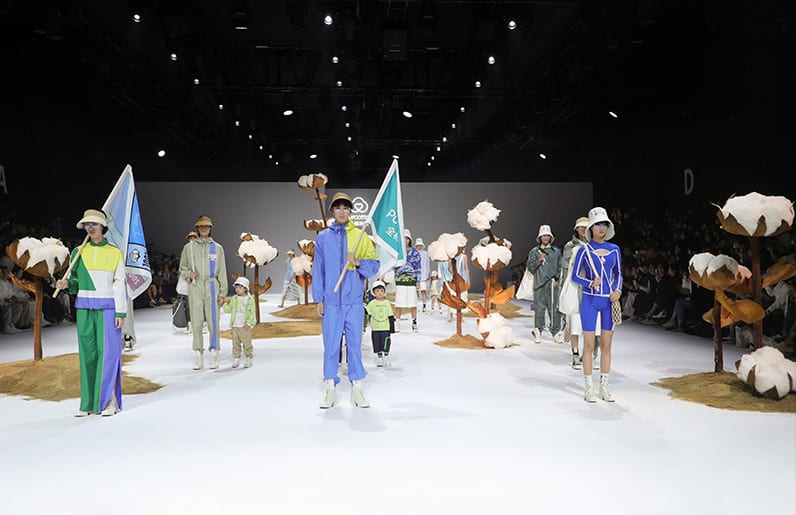
Goofish, a leading platform for second-hand goods in China, established a green savings center to encourage users to share and spread carbon-reduction knowledge. By engaging users both online and offline, Goofish maximizes the impact of their green initiatives and inspires more people to participate in the circular economy.
## Innovative Earth Day Campaigns on Chinese Social Media Platforms
Earth Day serves as a pivotal moment for brands to spotlight their sustainability efforts. This year's theme, "Planet vs. Plastics," emphasizes the need to reduce plastic use. Many brands have risen to the challenge, launching campaigns that address plastic pollution directly. Seesaw, a coffee brand, partnered with VANS to promote the "No Carbon Gas" drink, encouraging users to reduce carbon dioxide emissions through green travel. Additionally, they created limited-edition neck coffee cups made from environmentally friendly straw materials, further promoting reusable products.
## Sustainable Practices in Everyday Life
Beyond Earth Day, brands like Starbucks ensure that their sustainability initiatives are integrated into everyday practices. Offering discounts for customers using reusable cups year-round exemplifies how sustainability can become a core part of a brand's philosophy rather than a one-off event. Practical actions are crucial in demonstrating a brand's commitment to sustainability. Brands can either use recyclable, biodegradable materials to replace disposable items or repurpose discarded products into new, useful items. For instance, Proya Cosmetics' recycling of empty bottles into eco-friendly items showcases a tangible commitment to environmental sustainability.
## Emotional and Visual Impact: Zhao Ri Wei Pin
Engaging consumers emotionally and visually can significantly enhance a green marketing campaign's impact. Zhao Ri Wei Pin, an organic milk brand, constructed a globe out of milk cartons on Anfu Road in Shanghai. This interactive installation invited users to deposit their milk cartons into a recycling cylinder, symbolizing their support for the environment. This activity not only promotes recycling but also engages consumers in a fun and meaningful way.
## Tapping Consumer Interest in Sustainability Through Social Marketing in China
According to the 2023 Higher Impact report by Amazon Advertising, "66% of global consumers actively seek out brands that conduct business sustainably, a figure that continues to grow." Brands can tap into this growing interest by maintaining a consistent focus on sustainability throughout the year, instead of saving it for Earth Day.
For brands with inherent environmental attributes, such as Purcotton and Zhao Ri Wei Pin, Earth Day campaigns can deepen their eco-friendly image. These campaigns link green issues to their products and services, reinforcing their commitment to sustainability.
For other brands, presenting sustainability in creative and engaging ways, like Proya Cosmetics and Seesaw, can still effectively communicate their dedication to environmental protection. Such initiatives reflect a long-term business philosophy centered on sustainability.
Incorporating sustainability into a brand's core values and marketing strategies has moved from trend to necessity in today's market. Effective green marketing campaigns address environmental issues, resonate with consumers, build loyalty and encourage sustainable consumer behaviours. As more brands embrace sustainability, these efforts will collectively contribute to a more environmentally conscious society.
---
# How Allbirds entered China, and what it cost them
URL: https://www.thechinapath.com/insights/how-allbirds-entered-china
Published: 2026-09-10
Updated: 2026-10-02
Author: TheChinaPath
Category: Market Strategy
Allbirds ran China itself for five years, opened six stores, then sold the Shanghai entity for $2.1 million and licensed the market to Belle.
Allbirds ran China itself for five years. It opened six stores, built a
Shanghai entity, then sold that entity's net assets for $2.1 million in
August 2024 and licensed the market to Belle Fashion for ten years. The
storefronts are still trading. The company that built them no longer sells
shoes.
Every number below comes from a filing, a company release or a dated Chinese
report. Where something could not be checked, it says so.
One thing could not be checked. On September 10, 2026 the allbirds.tmall.com
address redirected to allbirds.world.tmall.com, which wants a Taobao login,
and JD Worldwide serves a bot check to anything that is not a browser. So no
assortment count, no review count. The dates and the money are on the record.
## Where they are now
Allbirds官方旗舰店 was live on JD Worldwide on September 10, 2026, and Belle
International's corporate site carries an Allbirds brand page. Store count has
barely moved since the handover.
> Allbirds had 7 stores in China at the end of 2025, up from the 6 it ran
> itself. It had listed on Nasdaq in November 2021 at $15 a share, worth
> $4.1 billion on its first day of trading.
> Source: Sports Business (体育大生意), April 2026.
> https://www.163.com/dy/article/KQA9RCBQ0529818P.html
Belle's rights are broad and long.
> Belle Fashion Group was appointed exclusive distributor and licensee in
> mainland China, Macau and Taiwan, effective June 28, 2024, overseeing
> distribution across retail, online and wholesale channels.
> Source: Allbirds press release, August 2024.
> https://www.globenewswire.com/news-release/2024/08/02/2923520/0/en/Allbirds-Announces-Agreement-with-Belle-Fashion-Group-in-China.html
The US parent, meanwhile, has left the category.
> American Exchange Group agreed to acquire Allbirds' intellectual property
> and certain other assets and liabilities for an estimated $39 million,
> with closing expected in the second quarter of 2026.
> Source: World Footwear, April 2026.
> https://www.worldfootwear.com/news/american-exchange-group-agrees-to-acquire-allbirds-assets/11382.html
> The registrant now files as Smartbird, Inc., "formerly: Allbirds, Inc.
> (filings through 2026-06-15)".
> Source: SEC EDGAR company filings index, CIK 0001653909, checked September
> 2026.
> https://www.sec.gov/cgi-bin/browse-edgar?action=getcompany&CIK=0001653909&type=10-K
So the China business sits under a ten-year license held by a Chinese
retailer, granted by a company that has since sold the brand out from under
it. Long licenses outlive the people who sign them.
## The sequence they ran, with dates
| Date | What the record shows | Source |
|---|---|---|
| February 2019 | Xiaohongshu (RedNote) and WeChat accounts opened | 36Kr (36氪) |
| April 2019 | First Asia store at HKRI Taikoo Hui, Shanghai; Tmall flagship in trial; China site live | Jiemian (界面新闻) |
| November 2021 | Nasdaq listing at $15 a share, $4.1 billion on day one | Sports Business (体育大生意) |
| End 2023 | 6 China stores, against 22 for On | Sina Finance (新浪财经) |
| June 28, 2024 | Belle Fashion becomes exclusive distributor and licensee, ten-year term | Allbirds release |
| July 4, 2024 | Tmall flagship operator changes to a Belle subsidiary | Sina Tech (新浪科技) |
| August 6, 2024 | Agreement to sell the Shanghai subsidiary's net assets | Allbirds 10-Q |
| March 30, 2026 | Brand and IP sold to American Exchange Group | World Footwear |
> The 2019 plan covered Shanghai, Beijing, Guangzhou and Chengdu with Swire,
> and the China team said it had studied the market for about two years
> before launch.
> Source: 36Kr (36氪), April 2019. https://www.36kr.com/p/1723508817921
Fast, tidy launch, and the part they got right.
## The channel they picked first, and what it locked in
They picked themselves. Own entity, own lease, own staff, own flagship, and
they said so out loud at the launch. Fair enough as a brand decision. As an
operating decision it commits you to four things at once: a legal entity, a
payroll, retail leases and a returns process, all before you know your repeat
rate.
> The co-founders said the conventional route would have meant a regional
> partner or a joint venture, and that they wanted their own team telling
> the brand's story in China. The shoes launched at 899 to 1,099 RMB behind
> a 25-person Shanghai team.
> Source: Jiemian (界面新闻), April 2019.
> https://www.jiemian.com/article/3043672.html
The cheaper way to buy the same information was on the table well before
2019. A cross-border store puts the product in front of Chinese buyers with
no Chinese company behind it. Footwear on Tmall Global takes a 50,000 RMB
deposit and a 60,000 RMB annual fee at 5% commission; JD Worldwide asks a
35,500 RMB flagship deposit, no annual fee and 6% (TheChinaPath calculator
data, October 2026).
Today's numbers, not 2019's. Run them in the [Tmall Global setup and run
calculator](/tools/tmall-global-setup-and-run), or read the category
breakdown in [what it costs to sell footwear in
China](/insights/cost-to-sell-footwear-in-china).
## What it visibly cost
Allbirds never broke out China revenue in any 10-K. So the only
China-specific number in five years of filings is the exit, and the exit is
small.
> "On August 6, 2024, we entered into an asset purchase agreement with an
> unrelated third party for the sale of certain net assets used in
> connection with the operation of our China subsidiary, Allbirds (Shanghai)
> Trading Co., LTD." Consideration was $2.1 million against a net book value
> of $2.2 million, a loss of about $0.2 million. International revenue for
> the nine months to September 30 fell from $46.5 million in 2023 to $36.0
> million in 2024.
> Source: Allbirds 10-Q, quarter ended September 30, 2024, filed November
> 2024.
> https://www.sec.gov/Archives/edgar/data/1653909/000162828024045882/bird-20240930.htm
$2.1 million for the fixtures, inventory and working capital of a
five-year-old China business with six stores in four cities. Whatever the
license itself was worth, the filing does not say.
The group was shrinking around it.
> Full-year 2024 net revenue fell 25.3% to $189.8 million, with a net loss of
> $93.3 million.
> Source: Allbirds, fourth quarter and full year 2024 results, March 2025.
> https://www.globenewswire.com/news-release/2025/03/11/3041000/0/en/Allbirds-Reports-Fourth-Quarter-and-Full-Year-2024-Financial-Results.html
Those are group figures, not China figures.
## Where they lost time
Six stores in five years. The comparison makes it plain.
> Allbirds had opened 6 China stores and its Tmall flagship had 230,000
> followers. On, which arrived around the same time, had 22 stores by
> the end of 2023 and 720,000 Tmall followers. Belle Fashion runs more than
> 8,000 directly operated stores in China.
> Source: Sina Finance (新浪财经), August 2024.
> https://finance.sina.com.cn/stock/hkstock/ggscyd/2024-08-06/doc-inchsrzh0104012.shtml
The 2019 plan named Shanghai, Beijing, Guangzhou and Chengdu.
> By July 2024 the six stores were in Shanghai, Beijing, Hangzhou and
> Shenzhen, and on July 4 the Tmall flagship's operating entity changed from
> 欧布斯(上海)贸易有限公司 to 凡尚服饰(上海)有限公司, a wholly owned Belle
> Fashion subsidiary, under a ten-year license effective June 28, 2024.
> Source: Sina Tech (新浪科技), July 2024.
> https://finance.sina.com.cn/tech/roll/2024-07-27/doc-incfqazc6472819.shtml
Two of the four target cities never opened. Two cities nobody had planned for
got stores instead. That is what it looks like when the retail program gets
rewritten every year rather than executed.
And the entity kept costing money the whole time. A wholly foreign-owned
company carrying a retail payroll does not scale down quietly. It gets sold,
and it gets sold for what its net assets are worth.
## What to copy, and what to avoid
Copy the opening move. Xiaohongshu and WeChat went live two months before
anything was for sale, so the first Chinese search for the brand landed
somewhere the brand controlled. Cheap, and it still works. If account
building is the piece you are missing, that sits with [TheRedScroll, the
group's China social media agency](https://www.theredscroll.com).
The single-city start is worth copying too. One store, one team, one city.
Shanghai first is right for most Western footwear brands.
Avoid the entity-first sequence. Allbirds incorporated, hired 25 people and
signed a mall lease before it had a repeat-purchase number from Chinese
buyers.
Avoid treating the license as an ending. Belle got ten years and every
channel. The company's own filing names the trade-off.
> "We have limited ability to control how distributors represent our brand,
> manage customer experience, or adhere to our sustainability and ESG
> standards."
> Source: Allbirds Form 10-K for fiscal 2025, filed March 2026.
> https://www.sec.gov/Archives/edgar/data/1653909/000162828026022192/bird-20251231.htm
Weighing the same choice? [Distributor sourcing and
management](/enter-china/distribution) and [cross-border
setup](/enter-china/cross-border-setup) are the two routes, and year one
costs very different things on each.
## Questions brands ask
**Does Allbirds still sell in China?**
Yes. The JD Worldwide flagship was live on September 10, 2026, and Belle
International lists Allbirds among its brands. Belle Fashion has run it since
June 28, 2024 under a ten-year exclusive distribution and license agreement.
**Why did Allbirds hand China to Belle Fashion?**
Scale it did not have: more than 8,000 Belle stores against Allbirds' six.
The company framed the move as part of its overseas plan, calling the shift
from a direct go-to-market model to third-party distributors a component of
its strategy for growth abroad.
**What did the China business actually sell for?**
Total consideration of $2.1 million against a net book value of $2.2 million,
a loss of roughly $0.2 million, covering the net assets of Allbirds
(Shanghai) Trading Co., Ltd. The 10-Q for the quarter ended September 30,
2024 carries the figures.
**Should a footwear brand open its own China stores first?**
Rarely. A cross-border store on Tmall Global or JD Worldwide buys you real
Chinese demand data for a deposit and an annual fee, with no Chinese company
and no lease behind it. Open retail once the repeat rate justifies it, which
is the sequence Allbirds ran backwards.
If you are choosing between running your own China entity and licensing
a distributor who already has one, [request a Compass
shortlist](/contact#shortlist) and we will come back with vetted partners for
your category.
---
# How automotive and EV brands actually reach buyers in China
URL: https://www.thechinapath.com/insights/how-automotive-and-ev-brands-reach-buyers-in-china
Published: 2026-10-07
Updated: 2026-10-07
Author: TheChinaPath
Category: Market Strategy
Cars can't be sold cross-border in China. What Douyin, RedNote, Autohome, and Dongchedi cost per lead, and how dealers close the sale on WeChat.
A foreign car or EV brand can't sell a vehicle in China through Tmall Global
or any other cross-border store. Cars aren't on the import list. Buyers find
the car on Douyin, Xiaohongshu (RedNote), and the car portals, and a dealer
or brand store closes the sale. Your job is to get qualified leads into that
salesperson's WeChat, fast.
So for a carmaker, China is a demand and handoff problem. The marketplace
playbook written for skincare or snacks assumes a product page and a
checkout. A car has neither. It has a research cycle measured in months, a
showroom visit, and a salesperson who works the buyer on WeChat until the
deposit lands.
The market a newcomer walks into is shrinking at home. It has also gone
electric.
> China's domestic vehicle sales were 1.701 million in August 2026, down
> 24.2% on a year earlier.
> Source: China Association of Automobile Manufacturers (中国汽车工业协会),
> September 2026. http://www.caam.org.cn/chn/4/cate_32/con_5237330.html
> New-energy vehicles took 65.7% of domestic sales in August 2026.
> Source: China News Service (中国新闻网), citing the China Association of
> Automobile Manufacturers, September 2026.
> https://www.chinanews.com.cn/cj/2026/09-11/10694386.shtml
## How car buyers in China are reached, channel by channel
| Channel | Who it reaches | Monthly cost to run (RMB) | Cost per lead or sale (RMB) | Who owns the buyer |
|---|---|---|---|---|
| Autohome and Yiche (car portals) | 77.5 million daily Autohome users, December 2025 | About 19,500 per dealer, on a 234,000 entry membership (2023) | About 27 per raw lead, on Autohome's own 2019 math | The dealer who bought the lead |
| Dongchedi (ByteDance's car app) | 10 million+ daily users, August 2025 | About 21,000 per dealer, on a projected 256,000 for 2023 | 912 per car sold (2023 projection) | The dealer |
| Douyin | 30,200 active dealer stores, 2025 | Ad budget set by the advertiser | 67 to 200 per valid lead (2026) | Whoever ran the ad, brand or dealer |
| Xiaohongshu (RedNote) | 230 million car-interest users | 600 to verify the account, then content and ads | No published figure | The brand account, until a dealer takes over |
| WeChat | The salesperson's contact list | US$99 one-off to verify an overseas brand account | Converts leads more than it finds them | The sales consultant |
| 4S dealers | 32,432 stores, end of 2025 | Carried by the dealer | Not applicable | The dealer |
| Auto shows | 1.28 million visits, Auto China 2026 | Quoted per show by the organizer | No published figure | The brand on the day, the dealer after |
Monthly figures divide the published annual fee by 12. Every figure was
checked against its source in October 2026, and the sources follow.
The portals are where buyers compare trims and transaction prices. Dealers pay
most of that bill, and they're paying less.
> Autohome had 77.5 million mobile daily active users in December 2025
> (QuestMobile) and sells dealer subscriptions "mainly on a fixed-fee basis,
> typically for a period of one year."
> Source: Autohome Inc., annual report on Form 20-F, April 2026.
> https://www.sec.gov/Archives/edgar/data/1527636/000119312526155932/athm-20251231.htm
> Seventy-nine 4S stores in Hunan expected to pay the three car portals more
> than 25 million RMB in membership fees for 2023, above 300,000 RMB a store.
> Autohome's cheapest tier was about 234,000 RMB, after it dropped the
> 162,000 RMB tier it sold in 2022. Dongchedi's membership was projected at
> about 256,000 RMB after rebates, for a store selling the same 280 cars.
> Source: National Business Daily (每日经济新闻), via Securities Times
> (证券时报), January 2023. https://www.stcn.com/article/detail/768317.html
> Autohome's leads revenue fell to 560.4 million RMB in the second quarter of
> 2026 from 732.6 million RMB, on "reduced spending from dealers" and fewer
> paying dealers.
> Source: Autohome Inc., second quarter 2026 results, August 2026.
> https://www.sec.gov/Archives/edgar/data/0001527636/000119312526357963/d404747dex991.htm
Dongchedi is the newer portal, and its users sit inside ByteDance's wider
traffic. The trade press measures its bill per car sold.
> Dongchedi passed 10 million mobile daily active users as of August 2025
> and served more than 30,000 car dealers.
> Source: The Paper (澎湃新闻), via Sina Finance, February 2026.
> https://finance.sina.com.cn/jjxw/2026-02-27/doc-inhphcxh3621410.shtml
Douyin now produces the volume. Dealers run their own accounts and
livestreams, and the ad budget decides how many leads come back.
> Douyin had more than 30,200 active car dealer stores in 2025, a regional
> head of the joint Douyin and Dongchedi dealer business said. Data shown at
> the same event put single-day car leads on Douyin above 810,000, with one
> in six auto-industry leads coming from Douyin.
> Source: China News Service (中国新闻网), November 2025.
> https://www.sh.chinanews.com.cn/chanjing/2025-11-28/142813.shtml
RedNote works as a search engine for owner reviews. Buyers read it before
they draw up a shortlist.
> Xiaohongshu counts 230 million car-interest users, 200 million car-content
> reads a day, and more than 1 billion car searches a month, on its own data
> to October 2025.
> Source: Securities Times (证券时报), April 2026.
> https://www.stcn.com/article/detail/3753715.html
> An enterprise professional account costs 600 RMB to verify, plus a 600 RMB
> annual review.
> Source: Xiaohongshu Juguang Help Center (小红书聚光帮助中心), August 2026.
> https://ad.xiaohongshu.com/next_help/docs/195c5fe505c71b4b0335a2fe0d61d8e0
The creator posts that feed both platforms are a content job, and that work
sits with [TheRedScroll, the group's China social media agency](https://www.theredscroll.com).
The commerce question is what happens after the lead. Our
[China social hub](/social-in-china) covers how the platforms connect to a
sale.
WeChat is where the sale gets worked. The lead lands in a
salesperson's contact list and stays with that person, unless the dealer
contract says the brand sees it too. Tencent's own video feed now sends
buyers to the showroom as well.
> After interacting with car content on WeChat Channels, 28% of users went
> to a 4S store for a test drive, Tencent's advertising unit said in a 2025
> white paper.
> Source: Tencent Advertising (腾讯广告), via Sina Finance, April 2025.
> https://finance.sina.com.cn/roll/2025-04-22/doc-inetzkuu7762499.shtml
> An overseas entity pays a one-off review fee of US$99 for each WeChat
> verification application.
> Source: WeChat Open Community (微信开放社区), June 2025.
> https://developers.weixin.qq.com/community/develop/article/doc/000e64388c0f107faf739efcd66813
The 4S dealership (sales, service, parts, and surveys under one roof) is
still the backbone of car retail in China. It's churning, though.
> China had 32,432 4S dealerships at the end of 2025, 1.4% fewer than a
> year earlier. Nearly 5,000 left their brand networks during the year, and
> nearly as many joined.
> Source: China Automobile Dealers Association (中国汽车流通协会), via Sina
> Finance, March 2026.
> https://finance.sina.cn/2026-03-18/detail-inhrmayp7468550.d.html
Shows are a launch tool. They put a new model in front of the press and the
dealers you want to sign, in the same ten days.
> Auto China 2026 in Beijing drew 1.28 million visits over ten days and
> showed 1,451 vehicles, 181 of them world premieres.
> Source: Beijing Daily (北京日报), May 2026.
> https://xinwen.bjd.com.cn/content/s69fa0b7de4b0687a28951641.html
## Why there's no cross-border route for a car
China's cross-border retail import list names every product a shopper can
buy from abroad through Tmall Global, JD Worldwide, or a Douyin cross-border
store. Cars aren't on it.
> The 2019 cross-border retail import list, in force from January 1, 2020,
> runs to 1,413 tariff lines. In chapter 87 (vehicles) it names only
> bicycles, wheelchairs, and baby carriages.
> Source: Ministry of Finance (财政部) and 12 other departments, Announcement
> 2019 No. 96, December 2019.
> http://gss.mof.gov.cn/gzdt/zhengcefabu/201912/t20191227_3451448.htm
> The 2022 adjustment, in force from March 1, 2022, added 29 products. None
> of them is a vehicle.
> Source: Ministry of Finance and other departments, Announcement 2022 No. 7,
> February 2022.
> https://www.gov.cn/zhengce/zhengceku/2022-02/21/content_5674854.htm
The price caps would rule a car out anyway.
> Cross-border retail imports are capped at 5,000 RMB a transaction and
> 26,000 RMB a year per buyer.
> Source: Ministry of Finance, General Administration of Customs, and State
> Taxation Administration, Caiguanshui (2018) No. 49, November 2018.
> https://www.gov.cn/zhengce/zhengceku/2018-12/31/content_5440499.htm
So an imported car comes in through general trade. It needs China Compulsory
Certification (CCC) before it can be sold, and it pays import duty.
> China cut the import tariff on passenger cars to 15% from July 1, 2018.
> Source: Customs Tariff Commission of the State Council (国务院关税税则委员会),
> Announcement (2018) No. 3, May 2018.
> http://m.mof.gov.cn/zcfb/201805/t20180522_2903728.htm
Imports are a shrinking slice of the market. Since 2022 a foreign carmaker
can own its Chinese factory outright, and building locally takes the duty
out of the price.
> China imported 476,000 vehicles in 2025, down 32.4%, worth US$23.64
> billion.
> Source: China Association of Automobile Manufacturers, from customs data,
> via CCTV (央视网), February 2026.
> https://news.cctv.com/2026/02/04/ARTI5WxHlrO5lEbBzoUBVRKL260204.shtml
> China removed the foreign ownership cap on passenger-car manufacturing
> from January 1, 2022.
> Source: National Development and Reform Commission (国家发展和改革委员会) and
> Ministry of Commerce, foreign investment negative list, December 2021.
> https://www.ndrc.gov.cn/xwdt/xwfb/202112/t20211227_1309928_ext.html
Douyin's own store can't move the metal either.
> Douyin's car categories (deposit, full payment, prepayment) open by
> invitation only, to carmakers, authorized dealer groups, car markets, and
> large dealers. What sells is an e-voucher the buyer redeems in store
> within 90 days.
> Source: Douyin E-commerce (抖音电商), automotive category rules, September
> 2026. https://school.jinritemai.com/doudian/web/articlev0/aHKhRwPcmzWa
The dealer rules matter just as much. Under the Ministry of Commerce's 2017
car sales measures, a carmaker can't stop its dealers selling other brands.
It also can't sell direct to consumers inside a dealer's territory unless
the contract allows it, so write the direct-sales carve-out into the dealer
contract on day one.
> Suppliers may not restrict dealers from carrying other suppliers' goods,
> and may not sell direct to consumers in a dealer's authorized territory
> unless the contract says otherwise.
> Source: Ministry of Commerce (商务部), Measures for the Administration of
> Automobile Sales, Order 2017 No. 1, April 2017.
> https://tfs.mofcom.gov.cn/swfg/sclt/art/2017/art_2b877ff893bc4900aef9f3b37164e555.html
## What a qualified lead costs, and how long a sale takes
Lead prices are climbing on Douyin, and fake leads are getting harder to
pass off.
> One live-stream ad buyer said 10,000 RMB of Douyin ad spend brings 50 to
> 150 valid leads, 67 to 200 RMB each.
> Source: ChinaVenture (投中网), via Sina Tech, May 2026.
> https://finance.sina.com.cn/tech/roll/2026-05-13/doc-inhxtqxr4627675.shtml
Since September 1, dealers on the Douyin and Dongchedi lead tools can't type a
buyer's WeChat ID in by hand, and a buyer leaving details in a live room has
to enter an SMS code.
> Dealer streamers put the average ad cost of a lead at about 70 RMB, rising
> to 500 RMB in some sessions after the September 1, 2026 rule. Dealers ask
> them to keep each valid lead under 65 RMB.
> Source: Dianchang (电厂), via Huxiu (虎嗅), September 2026.
> https://www.huxiu.com/article/4891366.html
The portals look cheap per raw lead, at least on Autohome's own math from
2019. Per car sold, the bill is higher, and Dongchedi's was set to double in
a year.
> An Autohome vice president said a 200,000 RMB annual membership brought a
> dealer an average of 7,500 leads. A 4S store finding leads on its own paid
> 200 to 300 RMB each, he said.
> Source: Jiemian (界面新闻), January 2019.
> https://www.jiemian.com/article/2803749.html
> Dongchedi's average fee per car sold was 472 RMB in 2022 and was
> projected at 912 RMB for 2023.
> Source: The Economic Observer (经济观察报), January 2023.
> http://m.eeo.com.cn/2023/0107/574117.shtml
The cycle is long. That makes speed of follow-up the cheapest lever you have.
> Chinese car buyers take an average of 2.5 months from first browsing the
> market to placing an order.
> Source: Autohome Research Institute (汽车之家研究院), March 2026.
> https://www.autohome.com.cn/news/202603/1313166.html
> Sales consultants who followed up on the day of a store visit scored 12
> points higher on satisfaction than those who waited until the next day,
> and their share of deals closed within a week was 25.6% higher.
> Source: J.D. Power China, 2025 China NEV Sales Satisfaction Study, August
> 2025.
> https://china.jdpower.com/sites/china/files/file/2025-08/China%20NEV-SSI%20CN_FV_0.pdf
## The verdict: fund the leads yourself, and own the handoff
Don't expect dealers to pay for a new brand's demand. Most can't.
> 55.7% of Chinese car dealers lost money in 2025 and 23.5% made a profit.
> Source: China Automobile Dealers Association (中国汽车流通协会), via
> National Business Daily (每日经济新闻), May 2026.
> https://www.nbd.com.cn/articles/2026-05-28/4411257.html
Here's the order we'd plan in. Douyin lead ads and RedNote search content
come first, paid by the brand, because that's where buyers build a
shortlist. The portals follow, bought through dealers once they're signed.
A show is for a launch moment and not much else. And every dealer signs one
rule: leads get answered on WeChat the same day, with the outcome logged
where the brand can see it. Paid reach on these platforms is what
[our media team](/grow-in-china/media) buys.
Count leads the way Douyin now counts them. Since the September rule, ask
dealers and agencies for SMS-verified leads and the share that reached a
test drive. A raw form fill tells you very little.
Direct stores are an option, too, and EV makers lean on them.
> China had 26,260 outlets in independent new-energy sales networks in
> 2025. Among those that sell cars, direct and agency stores made up more
> than half, ahead of traditional franchised dealers.
> Source: China Automobile Dealers Association (中国汽车流通协会), via Sina
> Finance, March 2026.
> https://finance.sina.cn/2026-03-18/detail-inhrmayp7468550.d.html
## What our automotive work shows, and what it doesn't
Our China-side car work is social. We've run a year-round program in China
for [Jaguar Land Rover](/work/jaguar-land-rover), and an annual one for JAC
Automobile on WeChat, RedNote and Weibo. Neither case page publishes a lead
or sales figure, so we don't quote one here.
The published number closest to the dealer handoff comes from production.
For JAC's EV launch we shot more than 250 exterior and interior images for
its international partner and reseller network (published case figure,
[JAC global asset production](/work/jac)). A dealer sells from the brand's
pictures. Give every dealer the same library, or each one makes its own.
## Where to start
A launch plan for a car brand starts with the dealer contract and the lead
route. The media comes after. Sign the first dealers before the ad budget
moves, because in a two-and-a-half-month cycle a lead with no showroom
behind it goes cold. That's the order a
[China campaign plan](/grow-in-china/campaigns) follows. The work is
project-based and quoted after the first call.
## FAQ
### Can a foreign car brand sell on Tmall Global or a Douyin store?
No. Cars are not on the cross-border retail import list, and a car breaks
the 5,000 RMB per-order cap anyway. Douyin's car categories are invitation
only, for carmakers and authorized dealers, and they sell a voucher the
buyer redeems in store. The vehicle itself is imported through general
trade or built locally, then sold in a showroom.
### How long does a Chinese car buyer take to decide?
About 2.5 months from first browsing to order, according to Autohome's
research arm in March 2026. Once the buyer is in a salesperson's WeChat,
speed matters. J.D. Power found that consultants who follow up the same day
close a 25.6% higher share of deals within a week than those who wait a day.
### Do I need dealers, or can I sell direct?
Either can work. Direct and agency stores now make up more than half of the
outlets that sell cars in China's independent new-energy networks. If you
do sign dealers, the 2017 car sales measures stop you selling direct inside
their territory unless the contract allows it. Put that carve-out in
writing before launch.
[Talk to us about your China launch and dealer handoff plan](/grow-in-china/campaigns).
---
# How Blackmores entered China, and what it cost them
URL: https://www.thechinapath.com/insights/how-blackmores-entered-china
Published: 2026-10-08
Updated: 2026-10-08
Author: TheChinaPath
Category: Market Strategy
Blackmores rode bonded warehouses and Australian pharmacy shelves into China from 2012. Then the rules moved. What its filings show it cost.
Blackmores, the Australian vitamin brand, entered China in 2012 and grew on
two channels it only half controlled: bonded cross-border warehouses and
Chinese shoppers buying off Australian pharmacy shelves. A rumor in 2016
and a law in 2019 cut into the second, then COVID shut the border. China
revenue fell 28% in two years. When it came back, the China profit
didn't.
Every figure below comes from Blackmores' annual reports, filed in
Australian dollars, or from a dated Chinese report, all checked on October
8, 2026. Kirin Holdings bought the company in 2023. The last full-year China
figures in an annual report are for fiscal 2022, the year to June 2022.
## Where Blackmores stands in China now
Blackmores still sells in China, mostly online. Its Chinese website,
blackmores.com.cn, was live on October 8, 2026, and every product on it
links to a Tmall Global listing. Those listings sit behind a Taobao login
for a logged-out visitor, so there's no assortment count, no current price
check and no review count here.
China is now a smaller share of the business than Southeast Asia.
> Southeast Asia makes up nearly 30% of Blackmores revenue, above mainland
> China's 20%, and is its fastest-growing market. Kirin wants to use
> Blackmores' regulatory experience and sales channels to grow in Asian
> health foods.
> Source: Economic Daily News (經濟日報), October 2026.
> https://money.udn.com/money/story/5599/9787415
That is a long way from 2018, when Peter Osborne, then president of
Blackmores Asia, called China the brand's second market after Australia.
> China had grown into Blackmores' second market after Australia, with 40%
> of global sales, Osborne said.
> Source: The Paper (澎湃新闻), November 2018.
> https://www.thepaper.cn/newsDetail_forward_2619490
In the annual report for the year to June 2018, the China segment was
A$143.3 million out of A$601.1 million, about 24%. Our reading is that
Osborne's 40% also counts the Chinese buyers who shopped in Australia.
The last figure the company filed was for fiscal 2022.
> China revenue rose 10.6% to A$145.6 million in fiscal 2022 and reported
> China EBIT was A$16.0 million. Blackmores remained a top 4 vitamin and
> supplement brand on every cross-border platform in China that year.
> Source: Blackmores Limited, Annual Report 2022, August 2022.
> https://announcements.asx.com.au/asxpdf/20220818/pdf/45cz6p0pw9r1s3.pdf
Then Kirin paid for the whole company.
> Kirin Holdings offered A$95 a share, A$1.88 billion in total, a 24%
> premium to the previous close. Marcus Blackmore, who held 18%, backed
> the deal.
> Source: Sina Finance (新浪财经), April 2023.
> https://finance.sina.com.cn/world/2023-04-27/doc-imyruraw1873790.shtml
## The sequence they ran, with dates
| Date | What the record shows | Source |
|---|---|---|
| 2012 | Formal entry into China, after years of Chinese tourists buying the brand abroad | Jiemian (界面新闻) |
| 2013 | Among the first companies into the new Shanghai free trade zone | The Paper (澎湃新闻) |
| Fiscal 2014 | Wholly foreign-owned company set up in China | Annual Report 2015 |
| 2014 | Licence to trade directly inside the new free trade zones | Annual Report 2015 |
| Fiscal 2016 | In-country China sales A$48 million, up 536%, through a bonded warehouse | Annual Report 2016 |
| April 2016 | Talk of new China import rules hits buying through Australian stores | Annual Report 2017 |
| August 2017 | Tmall Global flagship shut for most of the month to change service provider | Niuxuan (牛选) |
| January 2019 | China's E-commerce Law takes effect; China sales fall 15% for the year | Annual Report 2019 |
| May 2020 | Category captain status with Tmall | Annual Report 2020 |
| Fiscal 2021 | Free trade zone channel passes 70% of China net sales | Annual Report 2021 |
| 2023 | Kirin Holdings buys the company for A$1.88 billion | Sina Finance (新浪财经); Economic Daily News (經濟日報) |
> Before Blackmores formally entered China in 2012, many Chinese consumers
> were already buying its products on trips to Australia and elsewhere in
> Asia.
> Source: Jiemian (界面新闻), April 2019.
> https://www.jiemian.com/article/2995052.html
The free trade zones came next, and Osborne credited them with the jump.
> The Shanghai free trade zone opened in 2013. Blackmores was among the
> first companies in, and within a year its share price went from the low
> 30s to more than A$200.
> Source: The Paper (澎湃新闻), November 2018.
> https://www.thepaper.cn/newsDetail_forward_2619490
Blackmores' 2015 annual report explains the mechanics.
> Sales to China were supported by the wholly foreign-owned enterprise set
> up the prior year. The free trade zones that opened in 2014 created "a
> substantial opportunity, especially as Blackmores was one of only a few
> companies in this category to secure a licence to directly trade within
> the zone."
> Source: Blackmores Limited, Annual Report 2015, August 2015.
> https://www.annualreports.com/HostedData/AnnualReportArchive/B/ASX_BKL_2015.pdf
## The channel they picked first, and what it locked in
Cross-border came first, and it stayed first. A product shipped into a
bonded warehouse and sold online to Chinese buyers skips the Chinese
product registration that general trade requires. Osborne put numbers on
the gap.
> Through general trade, a food product needs three months to register,
> then one to two weeks to clear customs. Cross-border products take about
> six weeks in total, and the route let 70% of Blackmores' range into
> China.
> Source: The Paper (澎湃新闻), November 2018.
> https://www.thepaper.cn/newsDetail_forward_2619490
> 90% of Blackmores' China sales came from cross-border ecommerce
> platforms and 10% from offline.
> Source: Jiemian (界面新闻), April 2019.
> https://www.jiemian.com/article/2995052.html
The second channel was never on a Chinese platform at all. It was the
daigou trade: Chinese shoppers and resellers buying on Australian
pharmacy and supermarket shelves and shipping the goods home. Blackmores
booked those sales in Australia, and it tried to size them.
> In-country China sales reached A$48 million, up 536%, helped by the
> bonded warehouse. "We estimate that Chinese consumers now influence over
> $250 million of our Group sales, almost a four-fold increase in the last
> 12 months."
> Source: Blackmores Limited, Annual Report 2016, August 2016.
> https://www.annualreports.com/HostedData/AnnualReportArchive/B/ASX_BKL_2016.pdf
So about A$200 million of that demand sat outside China, mostly on
Australian shelves Blackmores didn't run, bought by shoppers it couldn't track.
That's our arithmetic from the two figures. The rest of this story turns
on it.
A supplement brand can test the same route today. On Tmall Global, health
supplements take a 300,000 RMB deposit and a 30,000 RMB annual fee at 3%
commission, 330,000 RMB before the first sale. JD Worldwide asks a 35,500
RMB deposit at 5%, and Douyin's cross-border store a 5,000 RMB deposit at
4% (TheChinaPath calculator data, October 2026). Run your own category in
the [Tmall Global setup and run calculator](/tools/tmall-global-setup-and-run).
## What it visibly cost
No filing puts a figure on what Blackmores spent building China. The
filings do show what China earned, year by year, from fiscal 2018 to
fiscal 2022.
| Fiscal year to June | China revenue (A$ million) | China EBIT (A$ million) |
|---|---|---|
| 2018 | 143.3 | 35.6 |
| 2019 | 122.2 | 21.5 |
| 2020 | 102.9 | break-even |
| 2021 | 131.6 | 14.3 |
| 2022 | 145.6 | 16.0 |
> China segment revenue was A$122.2 million in fiscal 2019 against A$143.3
> million in fiscal 2018, and China EBIT A$21.5 million against A$35.6
> million, down 40%.
> Source: Blackmores Limited, Annual Report 2019, August 2019.
> https://www.annualreports.com/HostedData/AnnualReportArchive/B/ASX_BKL_2019.pdf
> China revenue rose 28% to A$131.6 million in fiscal 2021, and the
> segment posted reported EBIT of A$14.3 million against break-even the
> year before. The free trade zone channel now made up "more than 70% of
> net sales."
> Source: Blackmores Limited, Annual Report 2021, August 2021.
> https://www.annualreports.com/HostedData/AnnualReportArchive/B/ASX_BKL_2021.pdf
Read the first and last rows together. Revenue in 2022 was back above
2018. China EBIT was less than half, a margin of about 11% against about
25% four years earlier (our arithmetic from the filed figures). Our
reading: Blackmores had swapped a channel that cost it little to serve,
other people's shops in Australia, for platforms where it paid for traffic
and service.
There were smaller bills too.
> Infant nutrition sold A$4 million through the Bemore partnership, hit by
> "continued regulatory uncertainty in China." Blackmores' share of Bemore
> operating losses was A$7 million for the year, with all finished goods
> inventory written down.
> Source: Blackmores Limited, Annual Report 2017, August 2017.
> https://www.annualreports.com/HostedData/AnnualReportArchive/B/ASX_BKL_2017.pdf
## Where they lost time
Twice, a rule change in China pulled demand off the Australian shelves.
The company's own words for the first drop: it "came without warning." And
it started as a rumor.
> "Speculation in April 2016 about potential regulatory changes in China
> impacted the buying patterns of Chinese entrepreneurs and tourists who
> previously were purchasing through Australian retailers." The decline
> "came without warning." Group sales fell 3% to A$693 million and net
> profit 42% to A$58 million. Direct China sales rose 71% to A$132
> million.
> Source: Blackmores Limited, Annual Report 2017, August 2017.
> https://www.annualreports.com/HostedData/AnnualReportArchive/B/ASX_BKL_2017.pdf
The second was the E-commerce Law, in force from January 1, 2019.
> Sales grew in every market except China, "down 15% due to e-commerce law
> changes taking effect from January 2019." In-country sales to ecommerce
> platforms rose 22%. Counting China-influenced sales through Australian
> retailers, Blackmores estimated sales to Chinese consumers fell about
> 14%.
> Source: Blackmores Limited, Annual Report 2019, August 2019.
> https://www.annualreports.com/HostedData/AnnualReportArchive/B/ASX_BKL_2019.pdf
COVID closed the border on what was left.
> Demand from Chinese shoppers was 24% of Australian retail sales of
> vitamins and supplements in calendar 2019, and 16% in the second half of
> fiscal 2020. China revenue fell 16% to A$103 million.
> Source: Blackmores Limited, full year results release, August 2020.
> https://www.belldirect.com.au/smarter/wp-content/uploads/2020/08/Blackmores-Presentation.pdf
The same year, Blackmores relabeled its range, which the company also
blamed for lower China sales, and started over with the platforms.
> From December 2019 Blackmores reshaped its China range and reset its
> work with the main ecommerce platforms. It became category captain with
> Tmall in May 2020. During the 618 festival that June, GMV rose 75% and
> 3 million unique visitors came to the Tmall flagship.
> Source: Blackmores Limited, Annual Report 2020, August 2020.
> https://www.annualreports.com/HostedData/AnnualReportArchive/B/ASX_BKL_2020.pdf
The Tmall store itself went dark for most of a month.
> Blackmores' Tmall Global official flagship closed on August 1, 2017 and
> reopened on August 28. After signing a deeper agreement with Tmall Global
> in July, Blackmores planned to switch to a more suitable service
> provider.
> Source: Niuxuan (牛选), September 2017.
> https://www.niuxuan.cn/redian/4187.html
A year before that, the same product carried three prices.
> A Blackmores cranberry supplement sold for 99 RMB on JD's self-operated
> store, 169 RMB from a third-party seller and 189 RMB in the Tmall Global
> flagship.
> Source: China Industry Information (中国产业信息研究网), July 2016.
> https://m.china1baogao.com/news/20160712/8066828.html
## What to copy, and what to avoid
Copy the license. Blackmores was early into the bonded zones and could put
most of its range in front of Chinese buyers in weeks, without registering
each product first. That route is still open, and it's where a
supplement brand should test demand. The setup sits in [cross-border
store setup](/enter-china/cross-border-setup).
Copy the counting, too. In 2016 Blackmores tried to measure the Chinese
demand it couldn't see in its own China numbers, and published the
estimate. That number told the board how much of its China business sat
outside China.
Then avoid the dependence. The A$250 million figure was the warning. When
roughly four dollars of every five in that estimate run through someone
else's shop in another country, a rumor about China's import rules can
take a year's growth. Move that demand onto a store you run in China, with
your own customer data, before a regulator moves it for you.
Pick the service provider for the long run. A flagship that goes dark for
four weeks to change operators gives up nearly a month of sales. Check
who owns the store and how you leave before you sign; that's what [finding
a Tmall partner](/compass/find-a-tmall-partner-in-china) is built around.
Hold one price across platforms. A 99 RMB listing next to a 189 RMB one
teaches buyers to wait for the cheap channel.
Budget the wait in any category where China's rules are still moving.
The Bemore infant nutrition venture lost Blackmores more in a year than it
sold.
And plan for the margin you'll actually keep. Blackmores' China revenue
came back and its China profit didn't. Our reading of the filings is that
selling on the platforms costs more than selling through Australian shelves
ever did.
## Questions brands ask
**When did Blackmores enter China?**
Blackmores formally entered China in 2012, according to its Asia
leadership, and set up a wholly foreign-owned company in fiscal 2014. In
2014 it won a license to trade directly inside China's new free trade
zones, which let it sell into China online from a bonded warehouse.
**How much does Blackmores sell in China?**
The last full-year figure in an annual report is A$145.6 million of China
revenue in fiscal 2022, with A$16.0 million of China EBIT. Kirin Holdings
bought the company in 2023. Economic Daily News reported in October 2026
that mainland China is about 20% of Blackmores revenue.
**Does Blackmores sell through cross-border or general trade?**
Mostly cross-border. In 2019 Blackmores said 90% of its China sales came
from cross-border ecommerce platforms, and by fiscal 2021 the free trade
zone channel made up more than 70% of China net sales. In 2019 the
remaining 10% came from offline sales.
**What does a supplement brand pay to open on Tmall Global?**
Health supplements are a special category on Tmall Global: a 300,000 RMB
deposit and a 30,000 RMB annual fee, 330,000 RMB before the first sale,
then 3% commission (TheChinaPath calculator data, October 2026). JD
Worldwide and Douyin's cross-border store ask far smaller deposits.
If you sell supplements and want a partner who'll run your China
store for the long haul, [request a Compass shortlist](/contact#shortlist)
and we'll come back with vetted partners for your category.
---
# Navigating Advertising Laws in China: Essential Insights for International Brands
URL: https://www.thechinapath.com/insights/how-chinas-advertising-laws-impact-global-brands
Published: 2024-10-29
Updated: 2026-05-15
Author: Cyril Drouin
Category: Compliance & Setup
China's advertising law bans absolute claims such as 'best' and adds strict rules by industry and platform. What global brands must check before posting.
## Understanding the Regulatory Landscape in China's eCommerce Market
China's eCommerce landscape is regulated by several government bodies that enforce stringent [advertising](/grow-in-china/campaigns) standards. The State Administration for Market Regulation (SAMR) oversees general advertising laws, while the Cyberspace Administration of China (CAC) monitors social [media](/grow-in-china/media) and online content, essential for brands looking to succeed on platforms like Douyin (the Chinese counterpart of TikTok) and WeChat. Additionally, the National Radio and Television Administration (NRTA) has regulatory oversight of broadcast and video content, impacting brands that leverage livestreaming or video ads.
These regulatory bodies collectively enforce the Chinese Advertising Law, a framework aimed at eliminating misleading or harmful content, protecting consumers, and ensuring fair market competition. This law applies to all advertising across digital, print, and broadcast media, making it crucial for brands in China to align their marketing strategies with the national standards. For companies aiming to break into the Chinese eCommerce market, understanding the scope and enforcement of these regulations is critical for developing compliant, consumer-friendly marketing campaigns.
Due to the substantial impact of digital advertising in eCommerce, these regulations are particularly strict for online and social media advertising. Platforms like WeChat, Douyin, and eCommerce sites such as Tmall and JD.com often have additional advertising guidelines to ensure content aligns with both national and platform-specific standards. This regulatory framework is especially important in managing foreign brands, protecting Chinese consumers, and maintaining a stable commercial environment.
## Restrictions on Absolute Claims and Superlative Language
One of the key aspects of China's advertising regulations is the restriction on "absolute terms" and superlative language. Common in Western advertising, terms like "best" or "most advanced" are heavily regulated in China to avoid misleading consumers. Brands that claim to be the "most effective" or offer the "highest quality" must back these assertions with substantiated data, which can be challenging for foreign brands new to China's compliance environment.
For example, an international skincare brand claiming to be the "best anti-aging product" on a China eCommerce website would be required to provide scientific evidence or third-party validation to support this claim. Without this proof, brands risk fines, restrictions, and reputational harm. This rule against absolute claims ensures that brands do not set unrealistic expectations, fostering a fair and transparent marketplace.
Exceptions to these rules include cases where brands use such terms in non-public or internal communications, or in descriptions of company values, like "striving to be the best." This distinction allows brands some flexibility in expressing their values while adhering to compliance standards. For global brands entering the [China market](/enter-china/market-entry-consulting), especially those using eCommerce platforms, careful language adjustment to avoid absolute terms is a critical step in building a sustainable and compliant business.
## Industry-Specific Advertising Regulations: Healthcare, Education, Real Estate, and Alcohol
While advertising regulations apply across all industries, certain sectors in China face additional restrictions due to their direct impact on public welfare. These include healthcare, education, real estate, and alcohol, each highly regulated due to the influence they wield on consumer health, financial security, and societal behavior.
### Healthcare and Pharmaceuticals
China's advertising regulations restrict healthcare advertising to prevent misinformation. Prescription drugs, narcotics, and specialized health products either cannot be advertised or are heavily restricted. Health claims require scientific validation, meaning an advertisement suggesting that a health supplement can "cure" a condition would be disallowed unless clinically verified.
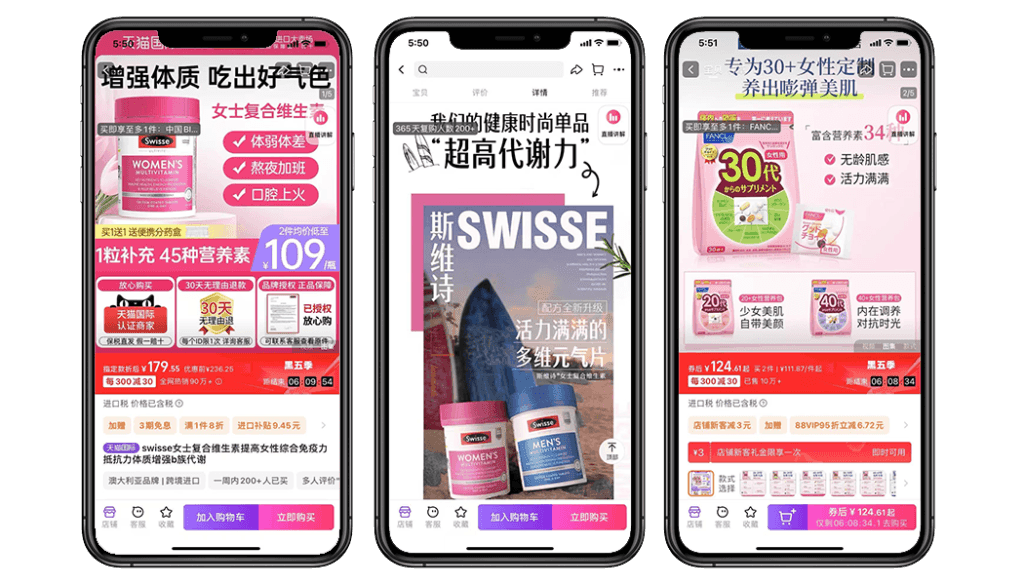
### Education
The education sector is also tightly regulated to protect consumers from misleading claims. Ads promoting guaranteed educational outcomes or prestigious placements are restricted, as these claims are considered deceptive. The use of testimonials or endorsements by former students is similarly regulated to prevent exaggerated or unfounded promotional tactics.
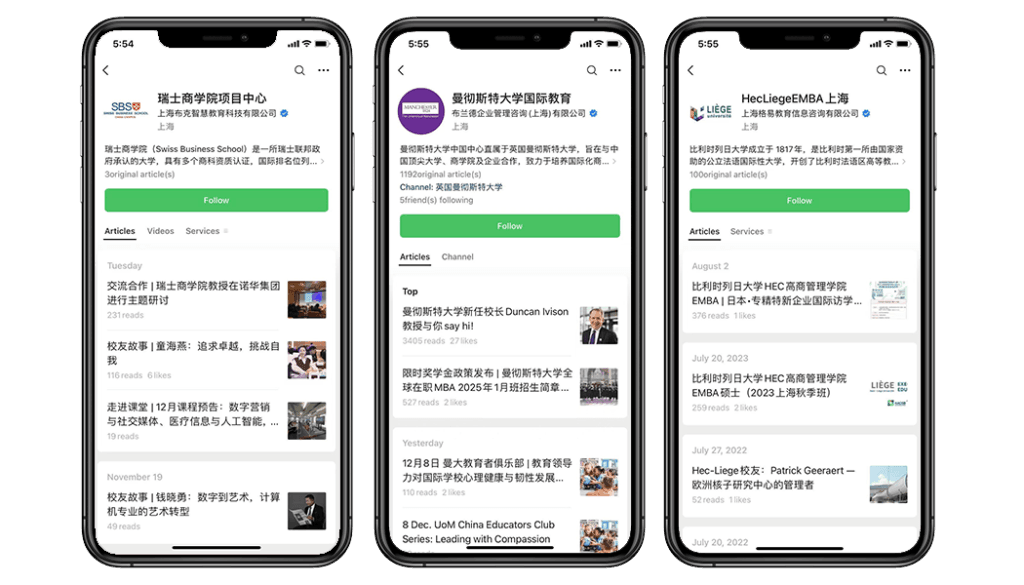
### Real Estate
Real estate advertising in China must adhere to strict rules requiring clear distinction between total building area and usable living space. Additionally, promotional content must be accurate in describing nearby amenities to prevent consumer deception about location benefits.
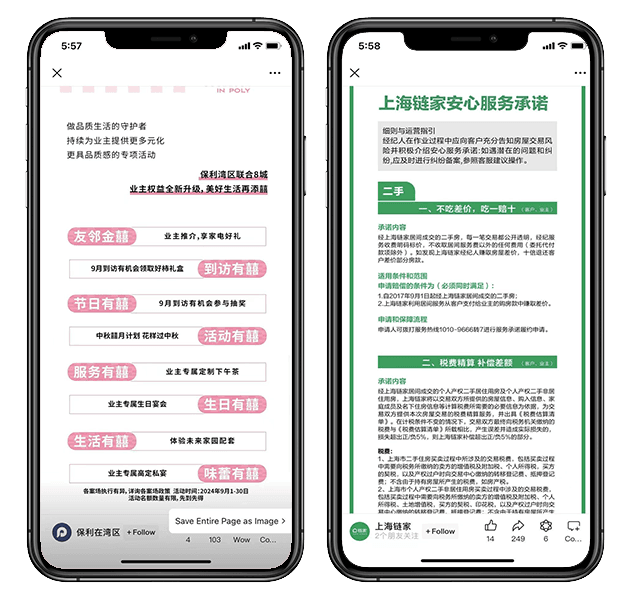
### Alcohol and Tobacco
Strict advertising laws also apply to alcohol and tobacco products. Alcohol ads cannot imply stress relief, physical improvement, or social status enhancement. Tobacco advertising, meanwhile, is generally banned across public-facing platforms to limit its promotion and influence.
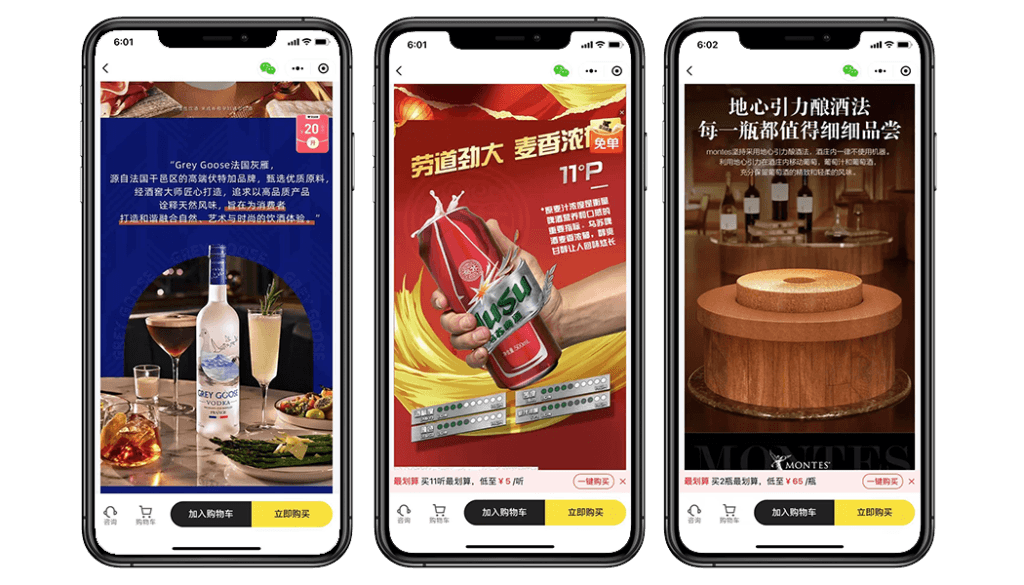
For brands in these sectors, navigating these stringent advertising laws is critical for compliance. Partnering with a China marketing agency that understands local regulations can help ensure adherence to the laws while effectively reaching the intended audience through compliant advertising channels.
## Navigating Digital Advertising Rules and Platform-Specific Policies on Chinese Social Media
Digital advertising is at the core of China's eCommerce success, with platforms like WeChat, Douyin, and Tmall serving as central channels for brand engagement. However, these platforms each have distinct advertising guidelines, often beyond the national regulations. This makes understanding platform-specific rules essential for any brand engaging in China's digital marketplace.
* **Transparency and Marking Requirements:** Ads must clearly indicate their commercial nature. Pop-up ads must have accessible "close" buttons, and sponsored content must be marked as promotional. This transparency is a preventative measure to keep brands from disguising ads as organic content, a common issue globally but one that China regulates closely.
* **Platform-Specific Restrictions:** WeChat and Douyin, among other platforms, have advertising guidelines that affect which content categories are permitted. WeChat limits ads for healthcare, financial services, and alcohol. Douyin has restrictions related to youth protection, particularly affecting brands targeting a younger demographic, making it vital to consult a social media agency in China when planning campaigns.
* **Content Moderation and Censorship:** Chinese social media platforms must censor any content that conflicts with public policy or promotes culturally inappropriate themes, such as gambling or superstition. Restrictions also extend to the use of political symbols, government names, or content that could be viewed as socially disruptive. By complying with these guidelines, brands help maintain the integrity of China's social media environment while building positive consumer relationships.
These digital advertising rules are central for foreign brands using social commerce in China, particularly those investing in livestreaming and social media promotions. A professional China eCommerce agency can offer guidance on aligning ads with both national regulations and platform-specific rules, ensuring that campaigns are both effective and compliant.
## Compliance Strategies for Global Brands in China's eCommerce Landscape
Successfully navigating China's complex advertising laws requires strategic planning, transparency, and collaboration with local experts. Here are essential strategies for foreign brands entering the China eCommerce and social commerce space:
* **Partner with a Local China Marketing Agency:** Working with a China-based marketing agency provides brands with essential knowledge on regulations, consumer trends, and platform-specific requirements. Agencies are equipped to navigate the nuances of Chinese social media platforms like Douyin and WeChat, making them valuable partners in executing compliant marketing strategies.
* **Prioritize Transparency and Data-Driven Claims:** Chinese advertising laws emphasize accuracy and transparency. Brands must back all claims with evidence, making it crucial to substantiate any product benefits or features. For example, rather than stating that a product is "the best," brands should highlight specific advantages without exaggeration, helping them build trust with consumers and avoid regulatory penalties.
* **Cultural Adaptation and Sensitivity:** Adapting to Chinese cultural norms is essential. Understanding and respecting local traditions and values can help brands resonate with consumers. Adjusting product offerings, messaging, and campaign timing to align with cultural events can make a brand more appealing and help avoid unintentional offenses that could harm a brand's reputation.
* **Stay Updated on Policy Changes:** The regulatory landscape in China is ever-evolving, particularly as digital commerce grows. Regular updates and consultations with local partners help brands stay ahead of new policies, preventing disruptions and maintaining compliance.
By implementing these strategies, foreign brands can create successful advertising campaigns that align with Chinese laws, fostering trust with consumers and building a positive brand presence in one of the world's most dynamic eCommerce markets.
## Conclusion
China's advertising laws are fundamental to ensuring a fair, safe, and culturally respectful eCommerce environment. For brands hoping to succeed in China, adhering to these regulations is a non-negotiable first step toward establishing credibility and longevity in the market. Partnering with a local China eCommerce agency and maintaining a commitment to transparency and cultural adaptation can make a significant difference in navigating these regulations. With the right approach, brands can leverage China's vast digital market while respecting the regulatory landscape that protects its consumers.
---
# How JD Is Turning Offline Stores Into Experience Hubs
URL: https://www.thechinapath.com/insights/how-jd-mall-turns-offline-stores-into-experience-hubs
Published: 2025-11-26
Updated: 2026-05-15
Author: Cyril Drouin
Category: E-Commerce
JD Mall is turning physical stores into places where Chinese shoppers test products hands-on. What that means for brands in high-consideration categories.
## How JD Is Turning Offline Stores Into Experience Hubs
For years, [JD](/grow-in-china/cross-border-ecommerce) was the "engineering" answer to Chinese e-commerce: logistics, speed, and reliability.
Walk into a JD Mall in Xi'an or Beijing now, and you see something different. Kids are baking cookies. Parents are testing PlayStations. People are learning how to use their smart ovens and hair dryers, not scrolling through manuals.
If you play in home, appliances, consumer electronics, beauty tech, or home living, this is a channel you can't ignore.
## From E-commerce Giant To Neighbourhood Mall
JD Mall sits at the top of a broader network of physical formats, with malls in core cities and other concepts in lower tiers. The goal: recreate JD's appliance strength offline with a better experience than traditional chains.
For global brands, JD is no longer just a line in a Tmall vs JD media plan. It is building its own end-to-end customer journey, from app to living room.
## Experience-First, Not Display-First
The core principle is "experience-driven sales". JD wants people to use products, not browse them.
Stores are wired for real use: ovens and coffee machines run all day; cleaning devices are tested on real mess; laundry and shoe-care areas use professional equipment, not props.
Three things matter here:
* Active participation: customers are guided to cook, clean, or test instead of watching staff demonstrate.
* High-consideration categories: the model is built for big-ticket decisions like full kitchen sets, air systems, home theatre, beauty devices.
* Confidence before conversion: after testing several machines and baking with one oven, price becomes one factor, not the only factor.
If you are a global brand, the key question is: what do you want people to actually do with your product inside a JD Mall?
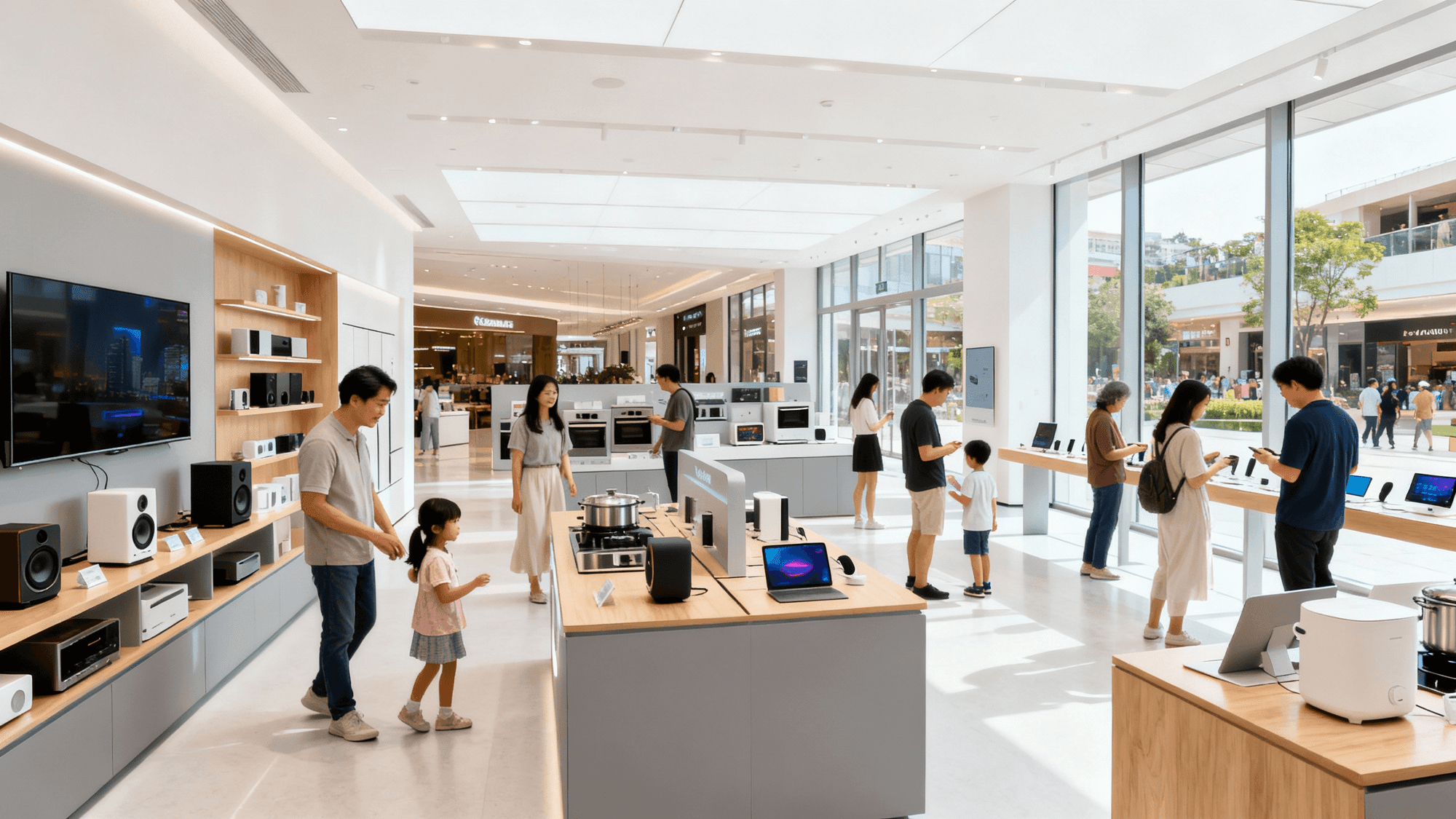
## The 5 km Strategy: Mall as Community Hub
JD describes each mall as serving a 5 km radius. The aim is repeat visits and familiarity, rather than a single big purchase.
To do this, JD layers retail with neighbourhood services such as cleaning services via mini program, kids' DIY classes using in-store appliances, and weekend lobby events from launches to cosplay.
The result is a destination where people drop by even when they are not actively shopping for a fridge. For brands, these touchpoints build memory and trust long before someone hits "buy" on JD.com.
## Staff as Creators and Guides
The staffing model is also different from a traditional electronics store.
JD employees manage experience zones and overall service. Brand specialists sit in your areas with the brief to educate and guide, rather than push volume. Many staff are also encouraged to behave like small KOLs: they run Xiaohongshu accounts with clear personas such as foodie, tech geek, or home organiser, and create short videos and livestream from the store, turning quiet weekdays into "virtual store" days.
If JD Mall is in your mix, you need to decide how these people talk about your brand, and whether they have the right demos, stories, and content to share.
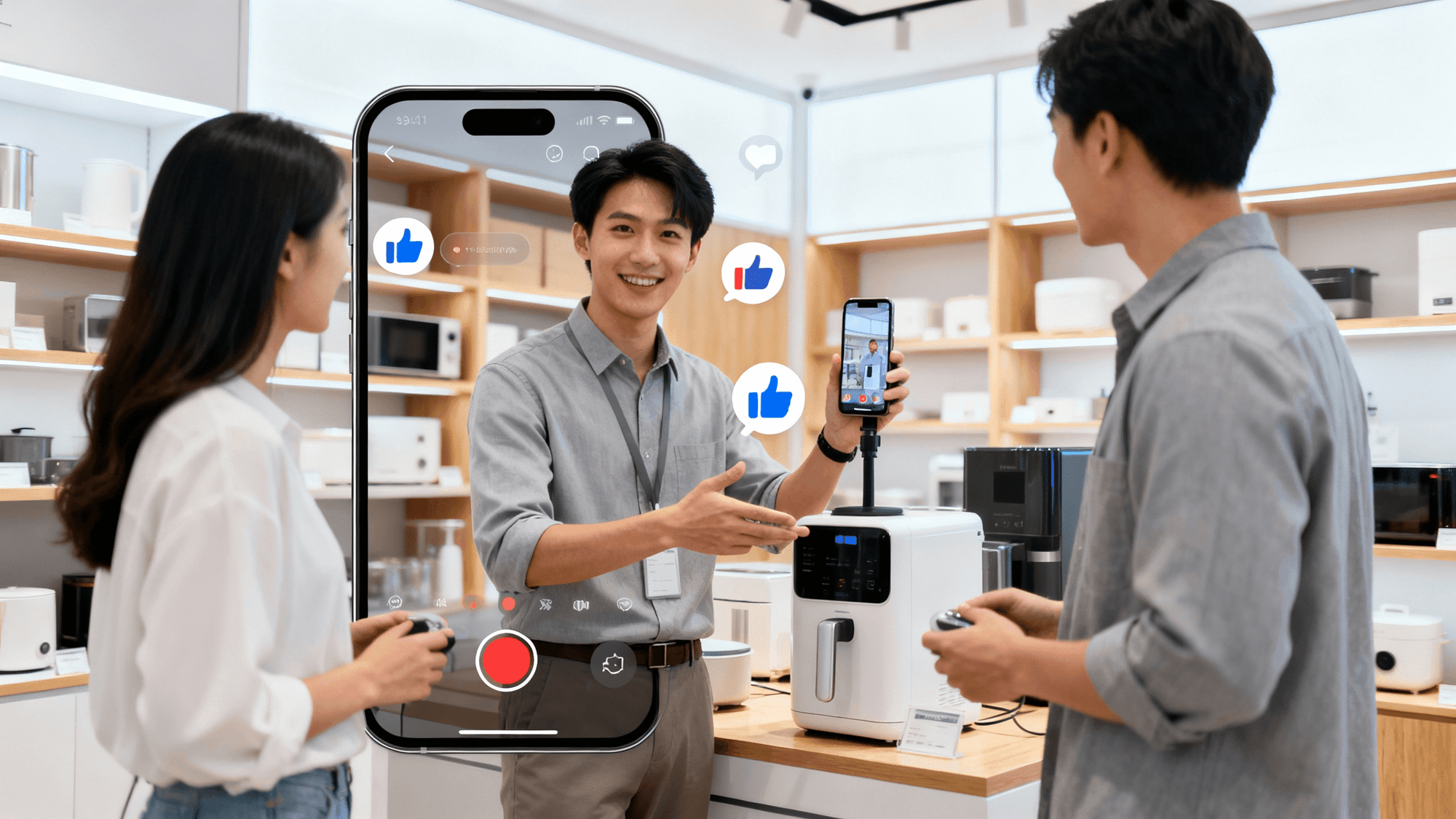
## Closing the Loop Between App and Store
JD connects the mall tightly to its main app and data layer.
Search for a product in the JD app, and you may see the nearest mall and its [campaigns](/grow-in-china/campaigns). Register for an in-store class and your JD ID is linked to that visit. Electronic price tags keep prices aligned with online and carry QR codes that track "see offline, buy online" behaviour.
This matters because your investment in JD Mall should be judged on both store sales and uplift across JD's online ecosystem, and any mismatch in assortment, pricing, or messaging between online JD and JD Mall will be instantly visible to shoppers.
The most successful brands will treat JD Mall as a testbed where content, merchandising, and service are coordinated with their JD.com strategy.
## If You Are a Global Brand, What Now?
If your category fits JD Mall's focus, treat it as more than "another offline door".
A few concrete moves:
* **Define your in-store use cases.** Be clear about the experiences you want to design: a full meal cooked on your appliances, a skincare routine, a home cinema walkthrough.
* **Align content and staff enablement.** Give JD staff simple, localised stories, checklists, and content that make your products easy to explain and film.
* **Measure beyond the store.** Work with JD to read the combined impact of mall exposure and online sales, rather than POS numbers from one location.
## Turning JD Mall into a Brand Engine, Not a Side Channel
At TheChinaPath, we help global brands translate JD's ecosystem into clear decisions mapping where JD Mall fits in your broader China portfolio, which cities and formats to prioritise, and how to structure pilots instead of one-size-fits-all rollouts.
We work with brands to design in-store experiences, local community hooks, and staff playbooks that work on the ground, from demo flows and class formats to Xiaohongshu content angles that feel native to Chinese consumers, not imported.
Because content volume is now a real constraint, especially when every store employee is a creator, we also work with AI-native partners such as HubStudio to scale visual and video assets on-brand and at speed.
If you are rethinking your JD strategy or planning how to engage with JD Mall, we can help you turn insight into a concrete roadmap and turn these experience hubs into a real engine for your brand in China.
---
# How On Running entered China, and what it cost them
URL: https://www.thechinapath.com/insights/how-on-running-entered-china
Published: 2026-09-24
Updated: 2026-10-02
Author: TheChinaPath
Category: Market Strategy
On Running entered China in 2018 with no store and sold CHF 1.8 million there in 2019. By 2025 it ran 38 locations. What the filings show.
On Running, the Swiss shoe brand listed as On Holding, entered China in
2018 without a store. It joined Tmall in early 2019, opened one shop in
Shanghai that December and sold CHF 1.8 million that year. By the end of
2025 it ran 38 locations in China, more than in the rest of the world
combined. The filings never put a price on the build, but they record the
pace, store by store.
Every figure below comes from On's SEC filings or a dated Chinese report,
checked on September 24, 2026. Where something could not be checked, the
piece says so.
On September 24, 2026, on.tmall.com resolved to a live shop page behind a
captcha, and JD answered with a bot check. So there's no assortment count
and no fresh review count here.
## Where On Running stands in China now
On runs more stores in China than anywhere else.
> "As of December 31, 2025, our global footprint consists of 67 retail
> locations. This includes 14 retail stores in the Americas, 10 retail
> stores in Europe and 5 in Asia Pacific (excluding China). We also operate
> 38 locations in China, including Hong Kong."
> Source: On Holding AG, Form 20-F for fiscal 2025, filed March 2026.
> https://www.sec.gov/Archives/edgar/data/1858985/000185898526000008/onholdingag-20251231.htm
Count the dealer-run stores too and the number is higher.
> On had more than 80 stores in over 30 Chinese cities in August 2026 and
> planned to pass 100 by the end of the year.
> Source: 21 Finance (21财闻汇), on Sina Finance, August 2026.
> https://finance.sina.com.cn/wm/2026-08-12/doc-ininaezk5274648.shtml
On doesn't report China sales on their own. It reports Asia-Pacific, and it
names China first when it explains the growth.
> Asia-Pacific net sales rose 96.4% to CHF 511.1 million in 2025, 17.0% of
> the group's CHF 3,014.0 million, "primarily driven by strong sales growth
> in China and Japan across both channels."
> Source: On Holding AG, Form 20-F for fiscal 2025, filed March 2026.
> https://www.sec.gov/Archives/edgar/data/1858985/000185898526000008/onholdingag-20251231.htm
Growth has cooled this year, though from a much bigger base.
> Asia-Pacific net sales rose 43.1% to CHF 170.5 million in the second
> quarter of 2026, 20.0% of group sales.
> Source: On Holding AG, second quarter 2026 results, August 2026.
> https://www.sec.gov/Archives/edgar/data/1858985/000185898526000018/a26q2-exhibit992xmda.htm
Prices sit high, and they stay put.
> The Tmall flagship had 680,000 followers in May 2024. The average On shoe
> sold for more than 1,000 RMB, and upper models for more than 2,000 RMB.
> Source: Southern Metropolis Daily (南方都市报), May 2024.
> https://m.mp.oeeee.com/a/BAAFRD000020240516953884.html
> During Double 11 2024, 85% of On's orders on Tmall fell in the 1,000 to
> 2,000 RMB band, and its sales rose more than 40% year on year, according
> to Tmall data.
> Source: Jiemian (界面新闻), on Sina Finance, November 2024.
> https://finance.sina.com.cn/jjxw/2024-11-11/doc-incvskcn0716845.shtml
On the August 2026 results call, co-founder David Allemann singled out
Tmall as especially strong and said On never discounts, 21 Finance
reported. Its reporter found no On product in a Tmall promotion.
## The sequence they ran, with dates
| Date | What the record shows | Source |
|---|---|---|
| 2018 | Enters China, builds a running community before any store | 424B4 prospectus; Lanjinger (蓝鲸财经) |
| Q1 2019 | Tmall flagship opens | Ecommerce Online (电商在线) |
| December 2019 | First store, Kerry Parkside, Pudong, Shanghai | Lanxiong Sports (懒熊体育) |
| 2019 | China net sales CHF 1.8 million | 424B4 prospectus |
| 2020 | China net sales CHF 5.5 million, up 199% | 424B4 prospectus |
| September 2021 | NYSE listing at $24 a share | 424B4 prospectus |
| End 2021 | 8 owned stores in Shanghai, Chengdu, Shenzhen and Beijing | 20-F, fiscal 2021 |
| Q2 2022 | Stores and warehouse shut by lockdowns | 20-F, fiscal 2022 |
| End 2022 | 13 owned stores in China | 20-F, fiscal 2022 |
| End 2023 | 22 owned stores in China | 20-F, fiscal 2023 |
| End 2024 | 30 smaller mall-based stores in China | 20-F, fiscal 2024 |
| End 2025 | 38 locations in China, including Hong Kong | 20-F, fiscal 2025 |
| March 2026 | Shenzhen MixC World flagship, 802 square meters | National Business Daily (每日经济新闻) |
> On formally entered China in 2018. It did not open a store right away. It
> built a community first and ran a mix of its own stores and dealer
> stores, aimed at the middle-class running scene in top-tier cities.
> Source: Lanjinger (蓝鲸财经), May 2024.
> https://www.lanjinger.com/d/232884
> On joined Tmall in the first quarter of 2019 and grew there 263% and 125%
> in the two years that followed.
> Source: Ecommerce Online (电商在线), on Sohu, April 2022.
> https://www.sohu.com/a/538204412_197955
> Offline business started with the first store, at Kerry Parkside in
> Pudong, Shanghai, in December 2019.
> Source: Lanxiong Sports (懒熊体育), on NetEase, December 2023.
> https://c.m.163.com/news/a/IM098E5K052989GA.html
The later store counts come straight from the annual reports.
> On operated "10 own retail stores outside of China and 22 in China" at the
> end of 2023. A year later it listed "30 smaller format mall-based stores
> in China."
> Source: On Holding AG, Forms 20-F for fiscal 2023 and fiscal 2024, filed
> March 2024 and March 2025.
> https://www.sec.gov/Archives/edgar/data/1858985/000185898524000012/onholdingag-20231231.htm
> https://www.sec.gov/Archives/edgar/data/1858985/000185898525000003/onholdingag-20241231.htm
> The Shenzhen MixC World flagship opened on March 5, 2026. At 802 square
> meters it is On's largest store in China.
> Source: National Business Daily (每日经济新闻), March 2026.
> https://www.nbd.com.cn/articles/2026-03-06/4282694.html
That first Pudong store was also the first On ran anywhere. The 20-F for
2021 says the first owned store "opened in late 2019 in China, followed by
our flagship location in New York City in late 2020."
## The channel they picked first, and what it locked in
Tmall came before any shop. And On treats the marketplace as its own
channel, run by its own people. (There's a China web store too,
on-running.cn, live on September 24, 2026.)
> "Within China, we also consider our distribution through Tmall and JD.com
> as DTC."
> Source: On Holding AG, Form 20-F for fiscal 2021, filed March 2022.
> https://www.sec.gov/Archives/edgar/data/1858985/000185898522000006/onholdingag-20211231.htm
The filings don't say which Tmall. Two things point to the domestic
marketplace, where a brand sells through its own Chinese company: every
20-F lists a subsidiary, On Running Sports Products (Shanghai) Company Ltd.,
and the store lives at on.tmall.com rather than on a tmall.hk address, the
domain Tmall Global stores use. That is our inference. No filing names the
entity behind the store.
That choice commits a brand to a Shanghai payroll and a Chinese entity
before the first sale. On could carry it. A brand selling CHF 1.8 million a
year in China usually can't carry it for three years.
The cheaper test runs through a cross-border store, with no Chinese company
behind it. Sports and outdoor on Tmall Global takes a 50,000 RMB deposit and
a 60,000 RMB annual fee at 5% commission. JD Worldwide asks a 35,500 RMB
flagship deposit, no annual fee and 6%. Douyin cross-border also takes 6% on
sports and outdoor, and its deposit no longer depends on category: since June
2025 it follows last month's sales and tops out at 5,000 RMB (TheChinaPath
calculator data, October 2026; Douyin's 《【全球购】保证金管理规范》,
https://school.jinritemai.com/doudian/web/articlev0/107821). Run your own
numbers in the [Tmall Global setup and run
calculator](/tools/tmall-global-setup-and-run).
## What it visibly cost
On has never priced its China build in a filing. What the filings do show
is how small the business was for how long.
> "We entered China in 2018 and grew our net sales in the region by 199%
> from CHF 1.8 million in 2019 to CHF 5.5 million in 2020." China accounted
> for CHF 8 million of net sales in the first half of 2021.
> Source: On Holding AG, prospectus (Form 424B4), September 2021.
> https://www.sec.gov/Archives/edgar/data/1858985/000119312521275158/d175570d424b4.htm
Three years of small numbers behind a Shanghai office and a handful of
mall stores. Then On listed in New York.
> On's September 2021 listing raised gross proceeds of CHF 652.5 million
> (US$702.2 million) from 29,258,125 new shares at $24.00.
> Source: On Holding AG, Form 20-F for fiscal 2021, filed March 2022.
> https://www.sec.gov/Archives/edgar/data/1858985/000185898522000006/onholdingag-20211231.htm
China store openings sped up in the two years after the listing. The
filings don't tie the two together; we do, as an inference.
The stores also got bigger.
> Co-CEO Martin Hoffmann said stores opened three years earlier had mostly
> been about 100 square meters. New ones reached 200 or even 300.
> Source: Huxiu (虎嗅), April 2025.
> https://www.huxiu.com/article/4252374.html
Bigger boxes in core malls mean more rent and more staff. At group level,
overhead has so far grown a little slower than sales.
> Selling, general and administrative expenses rose 27.0% to CHF 1,516.6
> million in 2025, against net sales growth of 30.0%. The operating result
> rose 78.2% to CHF 377.0 million.
> Source: On Holding AG, fourth quarter and full year 2025 results, March
> 2026.
> https://www.sec.gov/Archives/edgar/data/1858985/000185898526000010/ex991pressreleasedatedmarc.htm
On doesn't split costs by country. Its risk section does say where they
rose.
> "In connection with our expansion efforts, especially in the US and
> Asia-Pacific, we have encountered increased costs of operations resulting
> from higher customs, payroll and other expenses."
> Source: On Holding AG, Form 20-F for fiscal 2025, filed March 2026.
> https://www.sec.gov/Archives/edgar/data/1858985/000185898526000008/onholdingag-20251231.htm
Some money came the other way.
> In the fourth quarter of 2022 On "received a government grant of CHF 0.5
> million from the Chinese government due to On having its APAC
> headquarters in Shanghai, China."
> Source: On Holding AG, Form 20-F for fiscal 2022, filed March 2023.
> https://www.sec.gov/Archives/edgar/data/1858985/000185898523000011/onholdingag-20221231.htm
## Where they lost time
Three years, 13 stores. From the first shop in December 2019 to the end of
2022, On added about four stores a year in China. Then it added nine in
2023 alone.
> "China had been negatively impacted by store and warehouse closures due
> to COVID-19 lockdowns for the majority of the second quarter in 2022,
> though it has seen a strong recovery since re-opening in both retail and
> e-commerce channels."
> Source: On Holding AG, Form 20-F for fiscal 2022, filed March 2023.
> https://www.sec.gov/Archives/edgar/data/1858985/000185898523000011/onholdingag-20221231.htm
The China team puts it more gently. Li Meina, who runs the offline business
for Greater China, told Lanxiong Sports the three COVID years let On finish
its first commercial push and gave it time to build up and think.
The public target is the other open question.
> In October 2023 On set a long-term target of "a China share of 10%+" of
> its overall net sales.
> Source: On Holding AG, Investor Day release, October 2023.
> https://www.sec.gov/Archives/edgar/data/1858985/000185898523000045/oninvestorday2023-pressrel.htm
No filing since says whether it got there. Asia-Pacific as a whole was 17.0%
of sales in 2025 (Japan, South Korea and Australia sit inside that figure,
so China's own share is smaller).
## What to copy, and what to avoid
Copy the order. The community came in 2018 and Tmall early the next year,
and the first lease was signed only after both. Each step bought
information before the next one cost money. If the community piece is the
one you're missing, that sits with [TheRedScroll, the group's China social
media agency](https://www.theredscroll.com).
The pricing is worth stealing outright. With 85% of its Double 11 orders in
the 1,000 to 2,000 RMB band and no product in a Tmall promotion, On tells
buyers what a shoe costs and holds the line.
So is the store mix.
> Of the 44 stores On had opened in China by late 2023, 20 were directly
> operated and 24 belonged to dealers.
> Source: Lanxiong Sports (懒熊体育), on NetEase, December 2023.
> https://c.m.163.com/news/a/IM098E5K052989GA.html
Dealer stores put the brand in front of buyers without On signing every
lease. Picking those partners is the work behind [distributor sourcing and
management](/enter-china/distribution).
Be careful with the spending curve. On's fastest store years came after a
listing that raised CHF 652.5 million. A brand paying for China out of
operating cash should sign its next lease only when its Tmall sales can
carry one more.
And plan for lookalikes once the price is high.
> A genuine On T-shirt sells for 400 to 800 RMB. The lookalike brand SKON
> sells similar items at 79, 99 and 199 RMB.
> Source: Huxiu (虎嗅), from Lanxiong Sports, June 2025.
> https://m.huxiu.com/article/4503253.html
Allbirds opened its first Shanghai store in April 2019, eight months
before On's first, and also ran China through its own entity. The results
split fast.
> Allbirds had opened 6 China stores and its Tmall flagship had 230,000
> followers. On, which arrived around the same time, had 22 stores by
> the end of 2023 and 720,000 Tmall followers.
> Source: Sina Finance (新浪财经), August 2024.
> https://finance.sina.com.cn/stock/hkstock/ggscyd/2024-08-06/doc-inchsrzh0104012.shtml
The full story is in [how Allbirds entered
China](/insights/how-allbirds-entered-china). It ended with a license to
Belle Fashion.
## Questions brands ask
**Does On sell in China through Tmall Global?**
The filings name Tmall and JD, both treated as direct-to-consumer, plus a
WeChat mini program and On's own stores. The Tmall store sits at
on.tmall.com, the domestic marketplace address. Our reading, which no
filing confirms, is that it runs through On's Shanghai subsidiary on the
domestic route.
**How many stores does On have in China?**
On's 20-F counts 38 locations in China, including Hong Kong, at the end of
2025, out of 67 worldwide. Chinese press counts including dealer-run stores
put the total above 80 in more than 30 cities by August 2026, with 100
targeted by year end.
**How much does On sell in China?**
On last filed a China-only figure in its 2021 prospectus: CHF 5.5 million
for 2020 and CHF 8 million for the first half of 2021. Since then it
reports Asia-Pacific only. That region made CHF 511.1 million in 2025, and
On names China first among the markets behind the growth.
**Should a smaller running brand copy On's rollout?**
Yes, in sequence. On sold on Tmall for most of 2019
before its first store opened, and its store count climbed fastest after
the 2021 listing. A smaller brand can test the same demand through a Tmall
Global sports store for 110,000 RMB before the first sale, the deposit plus
the annual fee, with no Chinese company behind it (TheChinaPath calculator
data, September 2026).
If you're deciding whether to build your own China entity or start
with a partner who already runs stores, [request a Compass
shortlist](/contact#shortlist) and we'll come back with vetted partners for
your category.
---
# How to Apply for an ICP License for Your Website in China
URL: https://www.thechinapath.com/insights/how-to-apply-for-an-icp-license-for-your-website
Published: 2025-02-05
Author: TheChinaPath
Category: Compliance & Setup
An ICP license from China's MIIT lets a website operate legally in China. Who needs one, how to apply, and what it does for your business there.
## How to Apply for an ICP License for Your Website in China
Expanding your business into the [Chinese market](/enter-china/market-entry-consulting) offers huge potential, especially for companies involved in ecommerce and digital marketing in China. However, this growth comes with strict regulatory requirements. One of the most important steps to legally operate a [website](/grow-in-china/website) in China is securing an ICP (Internet Content Provider) License. Without this license, your website can be blocked, fined, or even shut down, resulting in limited access to one of the largest online audiences in the world.
In this guide, we'll break down everything you need to know about applying for an ICP License, particularly if you're running an e-commerce platform or working with a marketing agency China. We'll cover who needs an ICP License, the types of licenses available, the step-by-step application process, and the marketing benefits of staying compliant.
## What is an ICP License and Why is it Important for Your Business?
An ICP License is a mandatory permit issued by the Chinese Ministry of Industry and Information Technology (MIIT) that allows websites to legally operate within China. It ensures that your online platform complies with the country's strict internet regulations, which cover areas like content censorship, data security, and national security.
If you're a business looking to establish an online presence in China, whether through an e-commerce site, a blog, or even a WeChat Mini Program, having an ICP License is non-negotiable. Without it, your website might be inaccessible to Chinese users, thus, severely limiting your market reach.
### Why Does It Matter for E-Commerce and Digital Marketing?
China is the world's largest e-commerce market, and consumers there expect fast, reliable access to websites. An ICP License not only makes your website legally accessible but also boosts your credibility. Chinese consumers are more likely to trust and engage with businesses that comply with local regulations, which can significantly improve your brand's reputation and marketing efforts.
## Types of ICP Licenses: Which One Does Your Business Need?
When applying for an ICP License in China, it's crucial to understand the two primary types available, as selecting the correct one depends on the nature of your website:
### ICP Filing (备案 or ICP Bei'an)
This type of license is intended for non-commercial websites that share information without engaging in sales or financial transactions. If your site functions purely as an informational platform, such as a blog or a corporate website that doesn't feature e-commerce, you'll need an ICP Filing. This process is generally quicker and less complex than obtaining a commercial license.
**Key Requirements for ICP Filing:**
* A valid form of identification for the legal representative (such as an ID card or passport).
* A domain name registered with an accredited Chinese domain registrar.
* A declaration stating that the website does not serve commercial purposes.
### ICP Commercial License (许可证 or ICP Zheng)
If your website is involved in any kind of commercial activity, whether that's selling products, offering paid services, or displaying advertisements, you'll need an ICP Commercial License. This is a must-have for businesses engaged in ecommerce China, online service platforms, and digital marketing targeting Chinese consumers.
**Key Requirements for ICP Commercial License:**
* A valid Chinese business license, which means your company must be legally registered in China (commonly as a Wholly Foreign-Owned Enterprise, WFOE).
* A domain name registered through a Chinese domain registrar.
* Documentation proving ownership or authorization of the website's content.
## Who Needs an ICP License?
If your website falls into any of the following categories, you are required to have an ICP License to operate legally in China:
### E-Commerce Sites
Online stores, marketplaces, and service platforms selling products directly to consumers, especially those involved in ecommerce China.
### Advertising Platforms
Websites displaying ads or offering services related to marketing or advertising in China.
### Social Media and Forums
Platforms that allow user interaction and content sharing, including WeChat H5 pages and Mini Programs.
### User-Generated Content Websites
Blogs, video-sharing platforms, or any site allowing users to upload content, including platforms focused on social media China.
## Eligibility Criteria for Foreign Businesses
For foreign businesses, obtaining an ICP License requires meeting specific legal and operational criteria:
### Establish a Legal Entity in China
You must have a registered business in China, such as a WFOE or a Joint Venture (JV). This is the foundation for your application and particularly relevant for companies focusing on ecommerce or digital business in the Chinese market.
### Meet Capital Requirements
Your business must meet the minimum registered capital for your chosen legal structure. These amounts can vary depending on the industry but are critical for digital marketing and ecommerce operations.
### Physical Presence in China
A physical office in China is required. Virtual offices or overseas addresses are not accepted by the MIIT. This is essential for any company aiming to operate legally within Chinese e-commerce or digital marketing sectors.
## Step-by-Step Guide to Applying for an ICP License
Now that you understand the basics, let's go to the application process. Here's how to apply for an ICP License, whether you're managing an ecommerce platform or working in digital marketing China.
### Step 1: Establish a Legal Entity in China
Before you start the application, your business must be legally registered in China. Setting up a Wholly Foreign-Owned Enterprise (WFOE) is the most common approach for foreign businesses. This process involves registering with Chinese authorities, meeting capital requirements, and obtaining necessary business permits.
### Step 2: Choose a Chinese Hosting Provider
Your website needs to be hosted on a server physically based in China. You'll need to choose a local hosting provider, as websites hosted outside China cannot obtain an ICP License. Many Chinese hosting providers also assist with the ICP application process, which is crucial for businesses operating in ecommerce China.
### Step 3: Register a Domain Name in China
Your domain name should be registered with a Chinese domain registrar, preferably with a .cn top-level domain. This is an important step, as foreign-registered domains won't qualify for an ICP License.
### Step 4: Prepare Your Documents
You'll need to gather the following documents:
* Your Chinese business license.
* Personal ID of the legal representative.
* Domain registration details.
* Hosting provider contract.
### Step 5: Submit the Application
Submit your documents to the hosting provider, who will forward them to the Ministry of Industry and Information Technology (MIIT). The evaluation process may take anywhere from several weeks to a few months.
### Step 6: Verification and Approval
MIIT will review your application to ensure compliance with Chinese regulations. Once approved, you'll receive your ICP License number, which must be displayed on your website.
## Marketing and Business Benefits of Obtaining an ICP License
Beyond legal compliance, an ICP License offers several marketing and operational advantages:
### Improved Accessibility and Faster Loading Speeds
Hosting your website in China ensures faster loading times, improving user experience and boosting your site's SEO ranking on Chinese search engines like Baidu.
### Increased Trust and Credibility
Chinese consumers are cautious about online scams. Displaying your ICP License signals that your business is legitimate and trustworthy, which is particularly important for companies involved in ecommerce and digital marketing China.
### Access to Local Payment Gateways and Ad Networks
Many popular Chinese payment platforms like Alipay and WeChat Pay require an ICP License. Additionally, you can access local ad networks to better target Chinese e-commerce consumers, a major advantage for digital marketers and ecommerce platforms.
### Legal Protection and Risk Mitigation
An ICP License helps protect your business from fines, shutdowns, or other legal actions. It also ensures you're in compliance with China's strict cybersecurity and content laws.
## What to Do After Getting Your ICP License
Once you've secured your ICP License, you need to stay compliant:
### Display the License Number on Your Website
Your ICP License number must be visible, typically in the footer of your website.
### Ongoing Compliance with Content Regulations
Regularly monitor your website to ensure it complies with Chinese censorship and cybersecurity laws. This includes managing user-generated content and staying updated with regulatory changes.
### Renew Your License
ICP Licenses usually need to be renewed every 1–3 years. Ensure you're aware of the expiration date and submit the renewal documents on time.
## Final Thoughts
Securing an ICP License is more than just a regulatory requirement. It is your ticket to one of the world's most lucrative digital markets. Whether you're an ecommerce agency China or a digital marketing agency China, following the correct procedures ensures your business can tap into millions of potential customers, build brand trust, and expand its global presence.
Taking the time to understand and navigate this process can seem daunting, but the rewards for your business's growth and marketing potential in Chinese e-commerce make it well worth the effort.
---
# Comprehensive Guide to Finding a Distributor for Your Products in China in 2024
URL: https://www.thechinapath.com/insights/how-to-find-a-distributor-for-your-products-in-china-in-2024
Published: 2024-06-28
Author: TheChinaPath
Category: E-Commerce
How to find, vet and work with a distributor in China, with examples of food and beverage distributors serving retail, eCommerce and high-end hotels.
## Overview of the Distribution Landscape in China
China's distribution landscape offers substantial growth opportunities, especially for the food and beverage sector. Understanding local market dynamics and using established networks are key to success. Companies like Pinlive Foods Co. Ltd., with a strong presence in major cities, exemplify effective distribution to retail stores and consumers. Similarly, ESB Shanghai, an online grocery service, highlights the growing importance of eCommerce in China with its advanced logistics and commitment to quality, making it an ideal partner for e-commerce-focused businesses.
For premium or gourmet products, Classic Fine Foods China offers a strategic channel, catering to high-end hotels, restaurants, and specialty stores. These examples illustrate the diversity of food distributors in China, each catering to specific market segments. Assessing a [distributor](/enter-china/distribution)'s capabilities, network, and alignment with your product is crucial for navigating the Chinese market. Partnering with the right distributor can unlock significant growth potential and drive business success in China.
## Key Factors to Consider When Choosing a Distributor in China
### 1. Geographic Vastness and Cultural Diversity
**Understanding Regional Differences:** China is not a monolithic market but a collection of diverse regional markets, each with its own cultural preferences and economic conditions. For example, food consumption habits can vary significantly between northern and southern China. It's essential to choose distributors who are well-versed in the local customs and consumer behaviors of the specific regions you are targeting.
**Local Presence and Network:** Distributors with an established local presence and strong networks in specific regions can provide more efficient and targeted distribution. Their local knowledge and relationships with retailers can facilitate smoother [market entry](/enter-china/market-entry-consulting) and better customer engagement.
### 2. Distribution Network Capabilities
**Logistics and Infrastructure:** Evaluate the distributor's logistics capabilities, including their warehousing facilities, transportation networks, and technological infrastructure. Efficient logistics are critical in ensuring timely delivery and maintaining product quality, especially for perishable goods.
**Sales Force and Coverage:** Assess the size and expertise of the distributor's sales force. A larger and more experienced sales team can cover more ground and effectively push your products into various retail channels. Ensure that the distributor has adequate coverage in the regions where you plan to expand.
### 3. Market Expertise and Product Alignment
**Experience in Your Industry:** Choose a distributor with a proven track record in your specific industry. For instance, if you are selling premium food products, a distributor with experience in the luxury food sector will better understand the nuances of marketing and selling high-end products.
**Product Portfolio:** Examine the distributor's current product portfolio. A distributor handling complementary products is likely to have established relationships with the right retail channels for your products. However, avoid distributors who handle competing products to prevent conflicts of interest.
### 4. Financial Stability and Performance
**Financial Health:** The financial stability of a distributor is a critical factor. A financially strong distributor will have the resources to invest in marketing and promotion, maintain inventory, and manage the logistics efficiently. Review their financial statements and creditworthiness to ensure they can support your business growth.
**Track Record of Success:** Investigate the distributor's performance history. Look for metrics such as sales growth, market share, and customer retention rates. A distributor with a history of successful product launches and sustained sales growth is more likely to be a reliable partner.
### 5. Legal and Regulatory Compliance
**Import and Market-Entry Authorizations:** Ensure that the distributor has all necessary import licenses and market-entry authorizations. Compliance with local regulations is essential to avoid legal complications and ensure smooth market operations.
**Product Certification:** Verify that the distributor is familiar with and capable of obtaining any required product certifications. Compliance with Chinese standards is mandatory for product acceptance and consumer trust.
### 6. Intellectual Property Protection
**Brand and IP Management:** Protecting your intellectual property (IP) is vital when entering the Chinese market. Choose a distributor who respects and enforces IP rights, including trademarks and domain names. This can prevent unauthorized use and ensure your brand integrity.
**Contractual Safeguards:** Establish clear terms in your distribution contract to safeguard your IP. Include clauses that protect your brand and product information, and outline the consequences of any breaches.
### 7. Communication and Cultural Compatibility
**Language Proficiency:** Effective communication is key to a successful partnership. Ensure that your distributor has proficient English speakers or that you have access to reliable translation services to bridge any language gaps.
**Cultural Understanding:** Cultural compatibility can significantly impact the effectiveness of your collaboration. A distributor who understands and respects your business culture and practices can facilitate smoother interactions and align better with your strategic goals.
### 8. Strategic Fit and Commitment
**Alignment with Business Goals:** Ensure that the distributor's goals and strategies align with your own. They should be committed to growing your brand and willing to invest in marketing and promotional activities.
**Long-Term Partnership Potential:** Look for distributors interested in a long-term partnership rather than short-term gains. A distributor dedicated to building a lasting relationship will be more invested in your success and more likely to provide consistent support.
## What Kind of Distributor to Look For
### 1. Multiple Distributors for Different Regions
China is not a monolithic market but rather a collection of regional submarkets with distinct preferences and consumption habits. To effectively penetrate this vast and diverse market, consider working with multiple distributors who are well-established in their respective regions. This approach allows you to cater to local tastes and ensures broader market coverage.
### 2. Specialized Distributors
Identify distributors that specialize in your product category. Specialized distributors have deep knowledge of the specific market segment, established relationships with key retailers, and an understanding of consumer preferences. This expertise can significantly enhance your product's market entry and growth.
### 3. Large vs. Small Distributors
Large distributors often have extensive networks and greater resources, allowing for widespread distribution and higher sales volumes. However, they may also have higher demands and less flexibility. Smaller distributors, on the other hand, can offer more personalized service and may be more willing to take risks on new products. Assess your needs and capabilities to determine whether a large or small distributor is the best fit for your business.
### 4. Online vs. Offline Distributors
With the rise of eCommerce in China, online distributors like ESB Shanghai play a crucial role in reaching consumers directly through digital platforms. These distributors are ideal if you want to leverage China's booming online retail sector. Conversely, offline distributors, such as those with established relationships with brick-and-mortar stores, are essential for penetrating traditional retail channels. A balanced approach utilizing both online and offline distributors can maximize your market reach.
## How to Find Distributors in China
### 1. Trade Shows and Exhibitions
Participating in trade shows and exhibitions provides an excellent platform for networking and forging connections with potential distributors. Events such as SIAL and FHC are particularly relevant for food product companies, allowing them to showcase their products to a targeted audience. These events draw key industry players, enabling you to meet numerous distributors in a short period, understand their capabilities, and assess their interest in your products.
### 2. Engaging Third-Party Services
Hiring third-party services can significantly streamline the process of finding distributors in China. These services often specialize in conducting market analyses, providing detailed insights into potential distribution partners. They assist with Chinese translations of product descriptions, which is crucial for clear communication. Additionally, they can list products on Chinese B2B platforms, attend trade shows on your behalf, and provide targeted exposure to a curated list of potential distributors.
### 3. Online Searches and Directories
While finding distributors through online searches can be time-consuming, it remains a viable method. Utilize specialized business-to-business (B2B) directories and platforms designed for connecting companies with distributors in China. Websites such as Alibaba, Made-in-China, and Global Sources offer comprehensive directories of distributors. These platforms allow for filtering based on industry, product type, and geographic region, facilitating a more efficient search process.
### 4. Referrals and Network Utilization
Using your existing network can be an effective way to find reliable distributors. Engage with industry contacts, business partners, and professional associations to seek referrals. Personal introductions and recommendations can carry significant weight, as they come from trusted sources familiar with the Chinese market dynamics. Networking through industry events, seminars, and webinars can also yield valuable connections.
### 5. Chambers of Commerce
Contacting local embassies or Chambers of Commerce in China can provide access to extensive networks of business contacts. These organizations often have dedicated trade promotion departments that facilitate connections between foreign businesses and local distributors. They can provide valuable resources, market intelligence, and referrals, enhancing your ability to find reputable distributors. Engaging with these bodies can also lend credibility to your business efforts in China.
### 6. Tmall B2D
Tmall Business-to-Distributor (B2D) is a platform specifically designed for connecting with distributors in China. Though its popularity may vary, it offers access to a vast network of 85,000 Chinese distributors. Creating a profile on Tmall B2D can expose your products to a wide range of potential partners. This platform enables you to present your product portfolio, reach out to interested distributors, and initiate conversations for potential collaborations.
### 7. Building an Online Presence
A strong online presence is essential for attracting potential distributors. Translating and optimizing your website for Chinese search engines like Baidu ensures greater visibility. Engage experienced eCommerce agencies that specialize in Chinese SEO and SEM strategies. These agencies can help tailor your digital marketing efforts to the preferences of Chinese distributors, increasing your chances of being discovered online.
### 8. Utilizing Chinese Social Media
Chinese social media platforms, particularly WeChat, play a crucial role in business communication and product promotion. Establishing an official presence on WeChat allows you to engage with potential distributors directly. Utilize features such as WeChat brochures to showcase your products and create interactive content that can be easily shared. Building a strong following on WeChat increases your brand's visibility and credibility, making it more attractive to distributors.
### 9. Meeting Distributors in Person
In-person meetings are invaluable for establishing trust and assessing the capabilities of potential distributors. Arrange face-to-face meetings and visit their facilities to evaluate their operations and infrastructure. Prepare a comprehensive list of questions to ask during these meetings, such as their experience with similar products, their current client portfolio, and their distribution strategies. Personal interactions demonstrate your commitment and facilitate a deeper understanding of the distributor's potential to meet your business needs.
## Conclusion
Successfully finding and partnering with the right distributor in China can significantly enhance your market penetration and business growth. The diverse and complex distribution landscape requires strategic planning and thorough evaluation of potential partners. By understanding the local market dynamics, using established networks, and considering regional differences, businesses can navigate the Chinese market effectively. Utilizing eCommerce China strategies and Chinese social media platforms can further bolster your efforts to reach a broader audience and establish a strong market presence.
---
# How to Host Your Website in China for Maximum Marketing Impact
URL: https://www.thechinapath.com/insights/how-to-host-your-website-in-china-for-maximum-marketing-impact
Published: 2025-01-24
Author: TheChinaPath
Category: Compliance & Setup
Hosting a website in China means registering a domain, securing an ICP license and ranking on local search engines like Baidu. A step-by-step guide.
## How to Host Your Website in China for Maximum Marketing Impact
Hosting a website in China is an essential step for businesses looking to tap into one of the world's largest online markets. With over a billion internet users and a rapidly growing e-commerce sector, China presents immense opportunities for international brands. However, the process of hosting a website in China requires careful planning, compliance with local regulations, and a clear understanding of the market's digital ecosystem.
By focusing on proper [website hosting](/grow-in-china/website), using tools like Baidu China, and adapting your site to meet local preferences, you can create a powerful digital presence that supports your business goals. This guide will walk you through the essential steps to hosting your website in China, while also highlighting opportunities for integrating with Chinese eCommerce platforms and using China search engines to your advantage.
## Why Hosting Your Website in China Matters
Hosting your website in China is about having an online presence and delivering a fast, reliable, and culturally tailored experience to your audience. China's Great Firewall regulates the flow of internet traffic and favors websites hosted locally over those hosted abroad. This means that websites hosted outside of China often load slower, face accessibility issues, or get blocked entirely.
By hosting your website within China:
* **Improved Website Performance:** Websites hosted locally load up to four times faster than those hosted internationally.
* **Better Search Engine Visibility:** Hosting locally can increase your ranking on Baidu, the leading China search engine.
* **Compliance with Regulations:** Local hosting ensures your business adheres to China's strict digital laws, reducing the risk of censorship or bans.
## Steps to Host a Website in China
Hosting a website in China involves several critical steps that ensure your website operates effectively, complies with local regulations, and resonates with the target audience. Below is a detailed breakdown of these steps:
### Register a Chinese Domain Name
Registering a domain with a Chinese extension, such as .cn, is one of the first steps toward localizing your website for the Chinese market. A .cn domain not only improves your search engine ranking in China but also signifies credibility and trustworthiness among local consumers.
#### How to Register a .cn Domain
* **Choose an Accredited Registrar:** Partner with a domain registrar authorized by the Chinese Ministry of Industry and Information Technology (MIIT). Some of the top options include Alibaba Cloud, Tencent Cloud, and Huawei Cloud.
* **Real Name Validation:** The Chinese government mandates a Real Name Validation process, requiring individuals or businesses to submit identification documents.
- For Individuals: Submit a government-issued ID card or passport.
- For Businesses: Provide a valid business license and related documents in Chinese.
* **Secure Additional Variants:** To protect your brand, consider registering similar domain variations and extensions, such as .com.cn or .net.cn.
### Choose a Local Hosting Provider
After securing your domain name, the next step is to select a hosting provider with servers based in Mainland China. A local hosting provider ensures compliance with Chinese internet regulations and delivers optimal performance for users within the country.
#### Factors to Consider When Choosing a Hosting Provider
* **Server Location:** Confirm that the servers are physically located in Mainland China to ensure fast load times and compliance.
* **Scalability and Resources:** Choose a hosting plan that aligns with your website's traffic demands, storage needs, and potential growth.
* **Security Measures:** Ensure the provider has strong security protocols, such as firewalls and DDoS protection, to safeguard your website.
* **Customer Support:** Look for providers offering 24/7 technical support in both English and Chinese.
#### Top Hosting Providers in China
* **Alibaba Cloud:** Known for scalable solutions and integration with other Alibaba services, such as its ecommerce China tools.
Source: Alibaba Cloud
* **Tencent Cloud:** Known for its strong infrastructure and services tailored to international businesses.
* **China Telecom:** Ideal for businesses needing comprehensive support and additional telecommunications services.
### Apply for an Internet Content Provider (ICP) License
The ICP license is a legal requirement for all websites hosted in China. Without this license, your website cannot be hosted within the country and may be blocked by the Great Firewall.
Official website of the government. website: http://beian.miit.gov.cn/
#### Types of ICP Licenses
* **ICP Filing (Beian):** For non-commercial websites, such as informational or blog sites.
* **Commercial ICP License:** Required for e-commerce websites, online advertising, or any site generating revenue directly.
#### How to Obtain an ICP License
* **Establish a Legal Entity in China:** Only businesses registered in China can apply for an ICP license. Foreign companies need to set up a representative office, joint venture, or wholly foreign-owned enterprise (WFOE).
* **Submit Required Documents:** The application requires documents such as:
- Business license (translated into Chinese).
- Identification documents of the legal representative.
- Website hosting agreement with a local provider.
* **ICP Application Process:**
- Complete the application forms provided by your hosting provider.
- Submit the documents to MIIT for review.
- Once approved, you'll receive an ICP license number, which must be displayed on your website's footer.
* **Processing Time:** The approval process can take 20–30 business days, depending on the completeness of the application.
### Set Up Your Website on a Local Server
Once your ICP license is approved, you can proceed to configure your website on a local server.
#### How to Set Up Your Website
* **Migrate Your Website:** If your website is already hosted outside China, transfer all files and databases to the new local hosting environment.
* **Optimize for Local Compliance:** Adapt your website to meet Chinese internet regulations, including:
- Removing non-compliant features like Google Analytics or Google Fonts, which are often blocked in China.
- Ensuring content adheres to censorship guidelines by avoiding sensitive topics.
* **Integrate a Content Delivery Network (CDN):** Use a China-based CDN to ensure faster load times for users across the country.
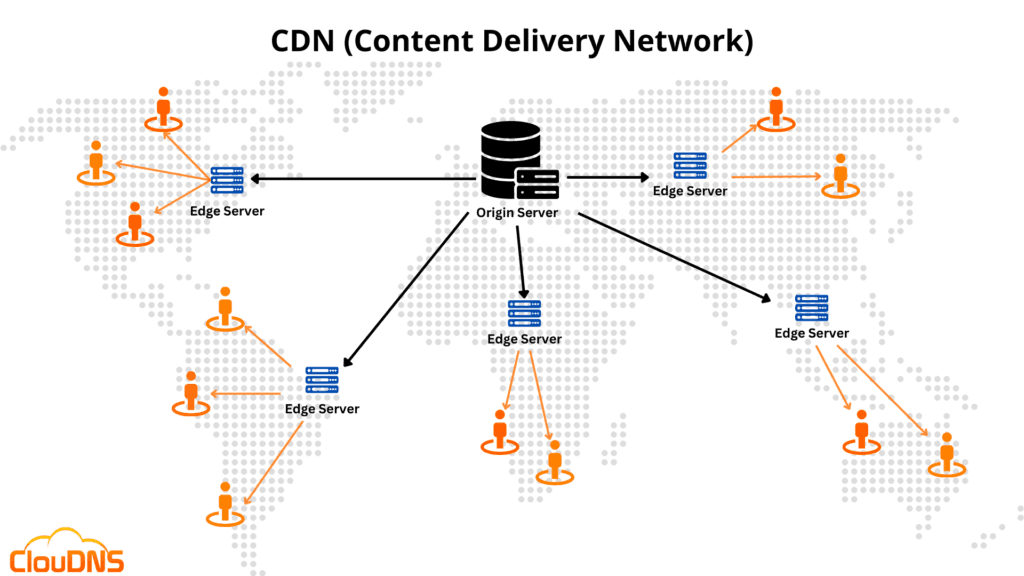
Source: ClouDNS
* **Pro Tip:** Partner with local web development agencies or consultants to navigate technical and compliance challenges efficiently.
### Implement Website Localization
Localization ensures your website is culturally and linguistically aligned with Chinese users. This step is critical for improving user engagement and boosting conversions.
#### Key Localization Elements
* Language: Use simplified Chinese for all content.
* Design: Incorporate culturally relevant images, colors, and symbols. For example, red is often associated with prosperity in Chinese culture.
* Formatting: Adjust date formats, measurements, and currencies to Chinese standards.
* Mobile Optimization: Given the prevalence of mobile internet use in China, ensure your website is responsive and user-friendly on smartphones.
### Conduct Testing and Compliance Checks
Before launching your website, conduct thorough testing to ensure it functions smoothly and complies with all Chinese regulations. Partnering with a web agency in China or a digital [marketing](/grow-in-china/campaigns) agency in China can streamline this critical step.
#### Checklist for Testing
* Loading Speed: Verify that your website loads within 2 seconds to meet the expectations of Chinese users.
* Cross-Browser Compatibility: Test your website on popular Chinese browsers like UC Browser and QQ Browser.
* Content Compliance: Double-check all content to ensure it adheres to local censorship rules.
#### Tools for Testing
* Chinalytics: A web analytics tool designed specifically for websites operating within China.
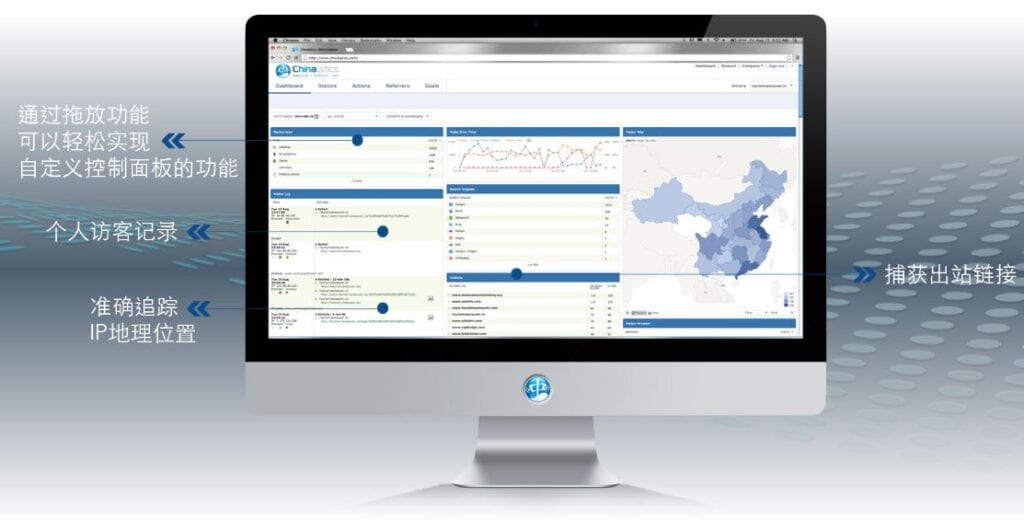
Source: Chinalytics
* Baidu Webmaster Tools: Monitor your website's performance on Baidu China, the country's leading search engine. Use this tool to identify and resolve technical issues that could impact your search rankings.
### Launch and Promote Your Website
Once your website is live, it's time to focus on marketing and driving traffic.
#### Strategies for Promotion
* **Search Engine Optimization (SEO):** Optimize your website for Baidu and other China search engines by incorporating localized keywords and acquiring backlinks from credible Chinese websites. A digital agency in China can help you refine your SEO strategy to improve visibility and drive organic traffic.
* **Social Media Marketing:** Platforms like WeChat, Weibo, and Douyin are essential for engaging with your audience. Share localized content, run targeted campaigns, and link your website to your social media profiles. A social media agency in China can create tailored campaigns that resonate with local users.
* **Influencer Collaborations:** Partner with China influencers, also known as Key Opinion Leaders (KOLs), to build credibility and drive traffic to your website. Influencers can connect your brand to specific demographics, enhancing trust and visibility.
* **Integration with E-Commerce Platforms:** Link your website to popular Chinese e-commerce platforms like Tmall and JD.com. These platforms offer extensive reach and enable smooth cross-channel marketing opportunities.
### Maintain and Update Your Website
Operating a website in China requires ongoing maintenance to remain competitive and compliant.
#### Regular Maintenance Tasks
* Monitor website performance and analytics using tools like Chinalytics.
* Stay updated on changes to Chinese internet regulations and adapt your website accordingly.
* Refresh your content regularly to align with trends and maintain user engagement.
## Benefits of Hosting Your Website in China
### Faster Load Times
Speed is a major factor in user experience and search engine rankings. Websites hosted within China's Great Firewall load significantly faster, ensuring you meet the expectations of Chinese consumers.
### Enhanced Visibility on Chinese Search Engines
Hosting your website locally improves its chances of ranking higher on China search engines like Baidu. This increases organic traffic and helps your brand reach a broader audience.
### Lower Risk of Censorship
Websites hosted abroad face higher risks of being blocked or restricted by the Great Firewall. Hosting locally ensures compliance with Chinese regulations, minimizing these risks.
### Access to Advanced Analytics
Google Analytics may not function reliably in China. Instead, consider using local tools like Chinalytics for accurate performance insights, click tracking, and heat mapping.
## Challenges to Consider
### Regulatory Complexity
The process of obtaining an ICP license and complying with China's digital laws can be time-consuming and challenging, especially for businesses unfamiliar with the regulations.
### Initial Costs
Setting up local hosting, securing an ICP license, and optimizing your website for the Chinese market can be expensive. However, the long-term advantages typically justify the initial expense.
### Ongoing Maintenance
The Chinese digital setting is constantly changing. Businesses need to stay updated on regulatory changes, market trends, and technological advancements to maintain compliance and competitiveness. Collaborating with a media buying agency in China or a web agency in China ensures that your website remains relevant and effective.
## Conclusion
Hosting your website in China is an essential step for businesses looking to succeed in this vast and fast-paced market. By following the necessary steps, registering a Chinese domain, securing an ICP license, and optimizing your site for Baidu, you can build a competitive and compliant online presence.
Integrating with Chinese eCommerce platforms and promoting your website through tools like Douyin eCommerce and China search engines further enhances your brand's visibility and engagement.
With the right strategy, your business can tap the full potential of China's digital scene and thrive in one of the world's most dynamic markets.
---
# How to localize a brand for China before you sell
URL: https://www.thechinapath.com/insights/how-to-localize-a-brand-for-china
Published: 2023-02-03
Updated: 2026-10-01
Author: TheChinaPath
Category: Brand & Localization
Localizing a brand for China starts at the trademark office, then labels, ad copy and returns. The rules and official fees, with the court cases.
Localizing a brand for China starts at the trademark office. File your Latin
mark and your Chinese name there before you announce anything; online, it
costs 270 RMB a class. Then fix what Chinese law reads: the label on the
pack, the product pages, ad copy stripped of "best" and a seven-day return
policy.
Updated October 1, 2026. The February 2023 version of this page was a
seven-point checklist with no figures and no sources. This one puts the steps
in the order Chinese law and the platforms enforce them. It adds the official
fees and the cross-border exemption, plus two court cases that show what a
late filing costs.
| Step | The rule | Who it binds | Cost |
|---|---|---|---|
| Latin mark and Chinese name | First to file wins | Every route into China | 270 RMB a class online (official fee), about 4 months of examination |
| Chinese label on the pack | Chinese name, maker and contents on the package | General trade; cross-border goods may ship without one | Printing or relabeling, by range |
| Product pages and ad copy | No "national-level," "highest-level" or "best" | Every platform, every route | Fines of 200,000 to 1,000,000 RMB |
| Returns | Seven days, no reason needed, for goods sold online | Online sales; custom-made and perishable goods are exempt | Buyer pays return shipping unless agreed otherwise |
| Store build and launch content | Chinese store pages and product detail | Tmall Global, JD Worldwide, Douyin | 25,000 RMB in our calculators |
Only the first row is something a competitor can take from you.
## Register the name before anyone sees it
China's trademark system rewards whoever files first. If two companies file
the same or a similar mark for the same goods, the earlier application goes
through, even if the other company sold under the name for years.
> When two applicants file identical or similar marks for the same or similar
> goods, the trademark office approves the earlier application; a same-day tie
> goes to the earlier user.
> Source: China National Intellectual Property Administration (国家知识产权局),
> Trademark Law (2019 amendment), article 31, July 2019.
> https://www.cnipa.gov.cn/art/2019/7/30/art_95_28179.html
Filing is cheap. The official fee covers one class and ten goods or services.
> An online trademark application costs 270 RMB per class for up to ten
> items, plus 27 RMB for each extra item. A paper filing costs 300 RMB and
> 30 RMB.
> Source: CNIPA Trademark Office (国家知识产权局商标局), fee list in force since
> July 1, 2019. https://sbj.cnipa.gov.cn/sbj/sbsq/sfbz/
So a brand that files its Latin mark and its Chinese name in, say, three
classes pays 1,620 RMB in official fees. Agent fees come on top. Then it waits.
> The average examination period for a trademark registration has held at
> four months.
> Source: CNIPA, 2026 national work report, January 2026.
> https://www.cnipa.gov.cn/art/2026/1/7/art_53_203564.html
New Balance found out what waiting costs. It sold in China under the name
新百伦. A Chinese businessman, Zhou Lerong, already owned the registered marks
百伦 and 新百伦, the second approved in January 2008, and sued.
> A Guangzhou court ordered New Balance to pay 98 million RMB, half its
> estimated profit from the name. The Guangdong High People's Court cut the
> award to 5 million RMB on June 23, 2016.
> Source: Yangcheng Evening News (羊城晚报), carried by People's Daily Online
> (人民网), June 2016.
> http://finance.people.com.cn/n1/2016/0624/c1004-28477265.html
Michael Jordan was on the other side of the same problem, and spent four
years on it. He began challenging Qiaodan Sports, a Chinese sporting goods
company, in 2012. In December 2016 China's Supreme People's Court ruled that
its registration of 乔丹, the characters for "Jordan," violated his prior
right to his name. The pinyin version, QIAODAN, stayed with the company.
> The court ordered the Chinese-character 乔丹 marks re-examined because they
> harmed Jordan's prior name right, and upheld the seven cases over the pinyin
> QIAODAN, in which he held no name right.
> Source: China National Radio (央广网), December 2016.
> http://china.cnr.cn/xwwgf/20161208/t20161208_523312598.shtml
The lesson is narrow. Chinese shoppers search for the characters and say
them out loud. Own them, and own the Latin spelling, in every class you sell
in.
The 2026 revision of the law helps a little. From January 1, 2027, it spells
out that filings not meant for use, and far beyond normal business needs, are
refused, and it puts a number on the fine for bad-faith filers: up to 100,000
RMB. The window to oppose someone else's published mark also shrinks, from
three months to two. Somebody on your side has to watch the gazette.
> The revised law keeps the first-to-file rule word for word as Article 35,
> refuses registration where a filing is not made for use and clearly exceeds
> normal business needs (Article 19), fines bad-faith filers up to 100,000 RMB
> (Article 54) and takes effect January 1, 2027.
> Source: CNIPA, Trademark Law (2026 revision), June 2026.
> https://www.cnipa.gov.cn/art/2026/6/26/art_95_206942.html
## Pick a Chinese name shoppers can say
A foreign name reaches Chinese through its sound, its meaning, or some of
each. Coca-Cola's 可口可乐 (roughly "tasty and fun") does both. A name built only on sound can land on
characters that read badly, or on characters someone else already registered.
Reverse the order most naming projects use. Clear the trademark register
first, in your classes, for every shortlisted name. Then test the survivors
with shoppers in the city tiers you plan to sell in. That's how our
[Chinese naming and trademark screening](/enter-china/branding-localisation)
work runs. An uncleared shortlist is a list of names you might not be allowed
to use.
## Labels: where cross-border saves a step
The route you choose decides what goes on the box. Goods sold through Tmall
Global or JD Worldwide under China's cross-border retail import rules are
treated as personal imports, and they can ship in their home-market
packaging.
> Cross-border retail imports are supervised as goods for personal use, and
> first-import permits, registration and filing requirements do not apply.
> Source: Ministry of Commerce (商务部) and five other bodies, notice
> 商财发〔2018〕486号, November 2018.
> https://www.gov.cn/zhengce/zhengceku/2018-12/31/content_5437823.htm
The exemption has a condition. The seller and the platform must warn the
buyer that the goods may carry no Chinese label, and show a Chinese
electronic label on the product page. So the translation still gets done.
It lives online.
> The risk notice must state that the goods are bought directly from
> overseas, may have no Chinese label and that the consumer can view the
> product's Chinese electronic label on the website.
> Source: MOFCOM and five other bodies, 商财发〔2018〕486号, article 4,
> November 2018.
> https://www.gov.cn/zhengce/zhengceku/2018-12/31/content_5437823.htm
General trade is different. Once a distributor or your own China entity
imports the goods and sells them inside the country, the Chinese label goes
on the pack. The Product Quality Law asks for the product name and the
maker's name and address in Chinese, and category rules add more. Cosmetics
need the full ingredient list, the filing number and the domestic
responsible person, for a start.
> Product labels must carry the product name and the maker's name and
> address in Chinese.
> Source: CNIPA, repost of the Product Quality Law, article 27, July 2019.
> https://www.cnipa.gov.cn/art/2019/7/31/art_104_67810.html
> Cosmetics sold in China must carry a Chinese label showing the Chinese
> product name, the registration or filing details, the full ingredient list,
> net content and use-by date, and for an overseas registrant the name and
> address of its domestic responsible person.
> Source: National Medical Products Administration (国家药监局) announcement
> 2021 No. 77, in the State Council Gazette (国务院公报), May 2021.
> https://www.gov.cn/gongbao/content/2021/content_5631831.htm
It's one reason to test China cross-border first and move to a
[distributor under general trade](/enter-china/distribution) once a product
proves itself. The relabeling bill waits until the volume justifies it. Our
[cross-border setup](/enter-china/cross-border-setup) work covers the first
route. Start the label file for the second one early anyway.
## Copy the Advertising Law will read
Global taglines are where this goes wrong. "The world's best
serum." "No. 1 in Europe." Translated faithfully, both break Chinese
advertising law. SAMR's own guideline applies the rule to a seller's own
website as well as to paid media.
> Advertisements may not use terms such as "national-level," "highest-level"
> or "best." Advertisers who do face fines of 200,000 to 1,000,000 RMB, and
> in serious cases the loss of their business license.
> Source: State Administration for Market Regulation (国家市场监督管理总局),
> Advertising Law as amended April 2021, articles 9 and 57.
> https://www.samr.gov.cn/zw/zfxxgk/fdzdgknr/fgs/art/2023/art_5474cf75173c45d6a0379730fb4e8d97.html
There's some room for a first mistake. SAMR's 2023 enforcement guideline lets
regulators waive the penalty when a first use does little harm and is fixed
quickly. The same guideline says ads for health food, drugs and medical
devices generally don't count as minor, so supplement and device brands
should expect no grace period.
> A first use of an absolute term that causes minor harm and is promptly
> corrected may go unpunished; ads for health food, drugs and medical devices
> are generally not treated as minor violations.
> Source: SAMR, Guidelines on Enforcement Against Absolute Terms in
> Advertising, announcement No. 6, February 2023.
> https://www.samr.gov.cn/ggjgs/tzgg/art/2023/art_183b5cb48d9e4f0dba67f9f912a913ba.html
These fines get issued. In April 2024 a market regulator in Anyang, Henan,
fined a company 109,600 RMB for an online cosmetics ad that claimed to be
first in sales across the whole internet.
> The ad used absolute terms such as "first in sales, nationwide, across the
> whole internet," and the claims did not match the facts. The Anyang market
> regulator fined the company 109,600 RMB in April 2024.
> Source: SAMR release, carried by the Shanghai Medical Products
> Administration (上海市药品监督管理局), January 2025.
> https://yjj.sh.gov.cn/zjyw/20250117/e9ebc3d76a4146d2aa2cc5b2a5035918.html
Brief your translator on this list before the first product page goes up.
Ranking claims need proof you can hand to a regulator, with a source and a
date.
## Store pages and the seven-day rule
Chinese shoppers expect a store that works like the domestic stores they
already use, down to Chinese-speaking service in the platform chat. The
return policy is set by law.
> Consumers who buy online may return goods within seven days of receipt
> without giving a reason. Custom-made goods, fresh and perishable goods,
> unsealed digital products and delivered newspapers are excluded.
> Source: SAMR, Consumer Rights Protection Law, article 25, as amended
> October 2013.
> https://www.samr.gov.cn/zw/zfxxgk/fdzdgknr/fgs/art/2023/art_0a323e046fba43f0b6e9e977f1e8d5fc.html
For the store build, our three calculators each carry one localization line: 25,000 RMB for store setup and launch content on
Tmall Global and JD Worldwide, and the same figure as a brand setup
contribution on Douyin, written off over three years. The trademark line in
all three defaults to zero (TheChinaPath calculator data, October 2026). The
Tmall Global model also assumes a registered mark: its 50,000 RMB deposit
baseline is for a flagship store with a registered (R) mark, and a pending
(TM) application raises it.
That zero is an assumption, and it's ours. The model expects you to own your
Chinese marks before the store opens, since a store selling under a name
another company registered can be ordered to stop, and the reviews and search
history it built under that name stay behind when it does. If you don't own
the marks yet, put the filing in. Change both inputs in the
[Tmall Global setup and run calculator](/tools/tmall-global-setup-and-run)
and watch the cost per order move.
It barely moves. At the official fee, two marks in three classes add about
540 RMB a year over the three-year write-off.
## What sits with the rest of the group
The 2023 version of this page also told brands to open WeChat and Weibo
accounts and hire influencers. Those are content and community jobs, and
they come after the legal groundwork above. For them, talk to [TheRedScroll,
the group's China social media agency](https://www.theredscroll.com). A
Chinese website hosted inside the country needs an ICP filing first; [ChinaWebFoundry, the group's China web and
hosting practice](https://www.chinawebfoundry.com) handles that.
## FAQ
### How long does it take to register a trademark in China?
Examination averages about four months, according to CNIPA. A mark that
passes is then published, and other parties have three months to oppose it
under the current law. From January 1, 2027, the revised Trademark Law
shortens that window to two months. File early, because the first filer
wins and nothing you do in another country reserves the name in China.
### Do cross-border products need a Chinese label?
Not on the pack. Goods sold under China's cross-border retail import rules,
on Tmall Global or JD Worldwide, can ship in their original packaging. The
seller and the platform must warn the buyer the goods may have no Chinese
label and show a Chinese electronic label online. Goods sold through a
distributor under general trade need the Chinese label on the package.
### Can I say "best" in Chinese advertising?
No. The Advertising Law bans terms such as "national-level," "highest-level"
and "best," with fines of 200,000 to 1,000,000 RMB. SAMR may waive a first,
minor, quickly fixed breach, though health food, drugs and medical devices
are generally not treated as minor. Ranking claims need evidence you can
show a regulator, with a source and a date.
### What does localization cost before the first sale?
The official trademark fee is 270 RMB per class online, so two marks in three
classes is 1,620 RMB before agent fees. Our calculators budget 25,000 RMB for
store setup and launch content. Naming research, packaging and translation
depend on the range and are scoped as a project after a first call.
[Plan your Chinese name and trademark filing with our branding and localization team](/enter-china/branding-localisation)
---
# How to Localize Brand Content for China
URL: https://www.thechinapath.com/insights/how-to-localize-brand-content-for-china
Published: 2025-02-11
Author: TheChinaPath
Category: Brand & Localization
How to localize brand content for China, with real cultural adaptation, the right local platforms and messaging that fits what Chinese consumers value.
## How to Localize Brand Content for China
Expanding your brand into the Chinese market offers exciting opportunities and at the same time presents unique challenges. China is one of the most dynamic and diverse consumer bases in the world with more than 1.4 billion population. However, the key to capture the hearts of Chinese consumers lies far beyond simple translation. It requires deep [localization](/enter-china/branding-localisation) of your content to align with their cultural, linguistic, and regional distinctions.
In this article, we'll explore how to effectively localize your brand content for China, focusing on digital marketing, e-commerce strategies, and communication techniques that resonate with Chinese consumers. Even though you are an established global brand or a newcomer, one of the things you can do is to partner with a marketing agency in China that can help you navigate the complexities of China's digital market and make sure that your brand makes a significant impact.
## Why Content Localization Matters in China
You need to understand that localization is more than just translating words into Mandarin. It's about adapting your entire brand message to fit the cultural context of your target audience. Research shows that more than 52% of consumers prefer to shop on websites in their native language, which makes content localization a powerful tool for building trust and driving sales.
In China, where consumer behavior is shaped by distinctive cultural values, local customs, and unique digital ecosystems, localized content is important for standing out in a crowded marketplace. Brands that succeed in China go beyond language, they usually immerse themselves in the local culture, preferences, and digital trends. This is where a branding agency in China can make a major difference as they can make sure that your message aligns perfectly with the local audience.
## Understanding the Chinese Digital Landscape
Before discussing further about content localization, it's important to understand the digital ecosystem in China, which differs considerably from Western markets. Unlike the U.S. or Europe, where platforms like Google, Facebook, and Amazon dominate, China has its own set of homegrown digital giants.
### Search Engines
Baidu is the leading search engine in China, and understanding how to optimize content for its algorithms is essential for visibility.
### Social Media
Platforms like [WeChat](/grow-in-china/social-commerce), Weibo, and Douyin e-commerce are central to social engagement and brand promotion.
### E-commerce Platforms
Alibaba's Tmall and JD.com are major players in the Chinese e-commerce scene, offering unique advertising and marketing opportunities.
Understanding the nuances of these platforms is important to localize your marketing content effectively. A social media agency in China can guide you on how to create engaging content tailored to these platforms' specific audiences.
## Key Strategies for Localizing Brand Content in China
### Conduct In-Depth Market Research
Effective localization begins with an in-depth market research. Before entering the Chinese market, it's important to understand local competitors, consumer preferences, and digital trends. This involves both qualitative and quantitative research methods:
* **Competitor Analysis:** You need to examine how local and international brands communicate with Chinese consumers. You also need to identify gaps in their strategies that your brand can use.
* **Consumer Insights:** You need to develop customer personas based on detailed demographic and psychographic data. This helps in understanding what resonates with different segments, from urban Gen Z consumers to rural families.
* **Surveys and Focus Groups:** You need to engage directly with potential customers to gain firsthand insights into their needs and preferences.
The Chinese market is incredibly diverse and strategies that work in one region may not be effective in another. Tailoring your approach based on specific market segments will considerably enhance your brand's relevance in e-commerce China.
### Go Beyond Translation
Simply translating your content into Mandarin is not enough. Successful brands in China adapt their messaging to fit local cultural norms and preferences.
* **Cultural Sensitivity:** You need to make sure that your content respects Chinese traditions, holidays, and values. Avoid symbols or language that could be misinterpreted.
* **Localized Imagery and References:** You need to use visuals and references that align with Chinese culture. For example, Nike tailors its content based on regional preferences, highlighting basketball in the U.S. and football in Argentina.
McDonald's provides a prime example of cultural adaptation by introducing menu items like the Mac Maharajah in India to cater to local tastes. Similarly, adjusting your product offerings and marketing messages for the Chinese audience can significantly boost your brand's appeal. A creative agency in China can assist you to develop culturally resonant [campaigns](/grow-in-china/campaigns) that connect with local audiences.
### Optimize for Baidu and Local Search Engines
Baidu dominates the search engine market in China, thus making it crucial to optimize your content for its unique algorithms. Unlike Google, Baidu's search algorithms prioritize different factors and understanding these can give your brand a competitive edge.
* **Keyword Research in Mandarin:** You need to identify relevant keywords that resonate with your Chinese audience. Focus on both high-traffic keywords and long-tail keywords that target specific niches.
* **Content Structure:** You need to organize your website with a clear hierarchy that aligns with Baidu's indexing system. This includes creating a structured tree diagram for your pages, using main keywords and their variations strategically.
Additionally, platforms like WeChat and Weibo have their own search functionalities, and optimizing your content for these platforms will further increase your brand's visibility. Tapping into the power of China search engines is important to maintain a strong digital presence.
### Use Local Digital Platforms for Engagement
Engaging with Chinese consumers requires a strong presence on the platforms they use daily. Social media and news aggregators play an important role in how brands connect with audiences in China.
* **WeChat:** WeChat offers mini-programs, payment systems, and marketing tools that allow brands to create immersive customer experiences.
* **Weibo:** As one of China's most influential social networks, Weibo provides opportunities for brands to engage through trending topics, influencer collaborations, and paid promotions.
* **Toutiao and Tencent News:** These news aggregators offer targeted advertising opportunities and allow brands to integrate into newsworthy content, increasing their reach and credibility.
By using these platforms, your brand can build a strong digital presence that resonates with the Chinese consumers.
### Monitor and Refine Your Localization Strategy
Localization is an ongoing process that requires constant monitoring and adjustment. Once your content is live, it is important to track the performance metrics and gather feedback to refine your strategy.
* **Data Analysis:** You can use tools like KAWO to analyze engagement rates, click-through rates, and conversion metrics. This data will help you understand what content resonates with your audience and where adjustments are needed.
* **Flexible Strategies:** You need to be prepared to adapt your approach based on consumer behavior and feedback. In the fast-paced Chinese market, staying agile and responsive is important to sustained success.
Regularly reviewing your marketing campaigns and making data-driven decisions will make sure that your localization efforts remain effective and relevant. Whether it's fine-tuning your approach to cross-border e-commerce in China or adjusting your social media strategy, continuous improvement is important for long-term success.
## Examples of Successful Brand Localization in China
Several global brands have successfully localized their content to thrive in the Chinese market. Here are some of the examples:
### ASOS
This online fashion retailer not only translates its website but also offers localized payment options and multiple currency choices, enhancing the shopping experience for Chinese customers.
### Nike
By highlighting popular sports like basketball in some regions and football in others, Nike aligns its brand with local passions and values.
## Conclusion
Localizing brand content for China is a multifaceted process that goes beyond simple translation. It involves deep cultural adaptation, strategic use of local digital platforms, and ongoing refinement based on consumer feedback and data analysis. By understanding the unique dynamics of the Chinese market and tailoring your content accordingly, your brand can successfully connect with Chinese consumers and achieve long-term growth.
Whether you're an established brand or just entering the market, adopting these localization strategies, and collaborating with a reputable marketing agency in China, will help your business succeed in China's fast-growing market.
---
# How to Localize Your Website for China: Tips for Global Marketers
URL: https://www.thechinapath.com/insights/how-to-localize-your-website-for-china-tips-for-global-marketers
Published: 2025-01-21
Author: TheChinaPath
Category: Brand & Localization
Localizing a website for China takes more than translation: regulatory rules, cultural fit and technical fixes. Practical tips for global marketers.
## Importance of Website Localization in China
Localizing your [website](/grow-in-china/website) for the Chinese market, a specialty of proficient ecommerce agencies in China, goes beyond simple translation. It is crucial for navigating regulatory requirements and aligning with consumer expectations. Effective [localization](/enter-china/branding-localisation) ensures that your website is accessible, culturally relevant, and compliant with local laws, significantly enhancing your business's presence and success in ecommerce China.
### Great Firewall and Censorship
The Great Firewall of China enforces strict internet regulations that can block or slow down unlocalized websites. This digital barrier impacts how content is delivered and can prevent access to many international websites.
Localizing your website ensures that it complies with Chinese laws and censorship norms, thus improving visibility and accessibility for users within China. It also prevents your site from being blacklisted or experiencing slow loading times, which can deter potential customers.
### Consumer Preferences
Chinese consumers have different expectations when it comes to the usability and content of websites. A website that acknowledges and respects these preferences through localization, as typically managed by a branding agency in China, will likely be more successful.
For example, websites in China often use more direct and detailed product descriptions and prefer a design that is rich in information yet easy to navigate. Localizing your website to align with these traits can significantly enhance user engagement and trust. This leads to better conversion rates and customer retention.
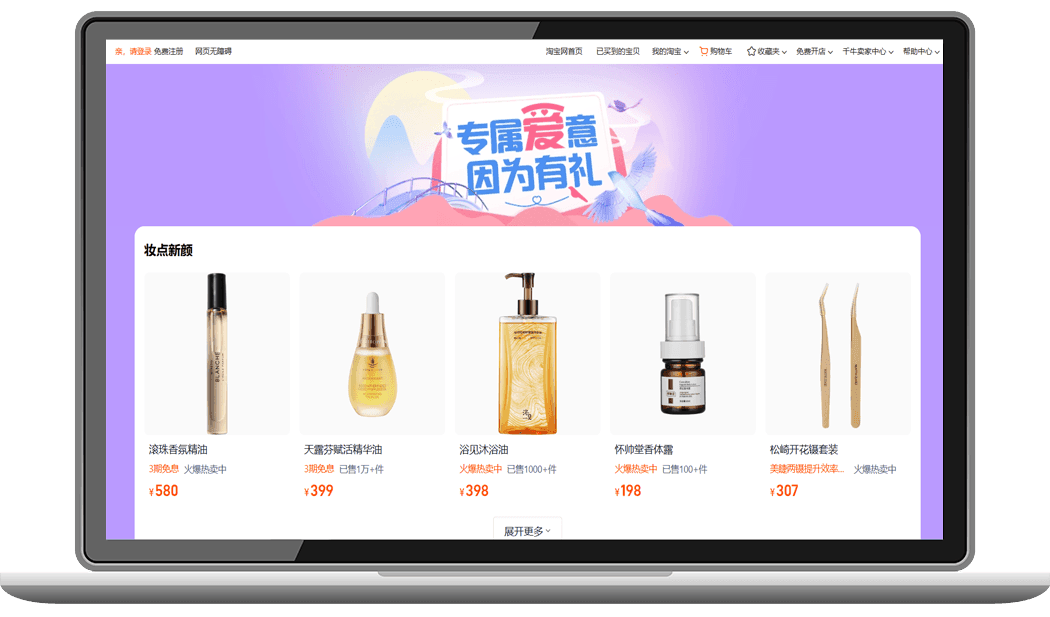
## Key Strategies for Website Localization
### Domain Name and Local Hosting
Establishing a local presence starts with securing a relevant domain and choosing a hosting provider within China. This foundational step not only boosts SEO but also enhances user trust and site performance.
* **.CN Domain Registration:** Registering a .CN domain not only reinforces the legitimacy of your business in China but also boosts your SEO efforts on local China search engine platforms. It signals to consumers and China search engines that your business is officially recognized and established within China.
* **Choosing a Local Hosting Provider:** Hosting your site locally can radically improve site speed and reliability for users in China. Local hosting providers are also more familiar with China's regulatory environment. This ensures that your site remains compliant with local data privacy and storage laws.
### Cultural and Linguistic Adaptation
Effective localization involves adjusting your content and design to fit local cultural and language standards. This ensures that your website resonates with Chinese consumers on a deeper level, an area where an experienced branding agency China can provide invaluable insights.
* **Language Choices:** The choice between Simplified and Traditional Chinese should be guided by your target demographic. Simplified Chinese is used in mainland China, while Traditional Chinese is prevalent in Hong Kong and Taiwan. Knowing these distinctions is essential for effective communication and engagement.
* **Cultural Nuances:** Localizing content includes adapting your marketing messages to fit cultural contexts and values. This might involve modifying images, color schemes, and promotional messages to resonate more deeply with local consumers.
### Navigating Regulatory Requirements
China's strict internet regulations require a thorough understanding and compliance with local laws. Obtaining an ICP license and meeting PSB filing requirements are essential for legally operating your business.
* **ICP License Acquisition:** An Internet Content Provider (ICP) license is mandatory for hosting a website in China. This license is a part of China's regulatory framework to control internet content and ensure that it complies with national standards.
* **PSB Filing for Sector-Specific Regulations:** Certain sectors such as news, entertainment, and online gaming require a Public Security Bureau (PSB) filing in addition to the standard ICP license. This involves providing detailed information about your website's operations and content, which ensures transparency and compliance with specific industry regulations.
### Optimizing for Chinese Search Engines
Tailoring your SEO strategy to fit the algorithms of Chinese search engines like Baidu China can significantly improve your site's visibility. This involves detailed keyword research, meta tag optimization, and adapting content strategies specifically for the local search landscape.
* **SEO Adaptations for Baidu:** Unlike Google, Baidu China favors websites that heavily utilize keywords and meta tags and are hosted within China. Optimizing your website's content for Baidu's specific algorithms can significantly increase your visibility in the ecommerce China market.
* **Content Localization:** Ensure that all content, including meta descriptions, headers, and tags, is fully translated into Chinese and optimized for keywords that are trending within your industry in China.
### Mobile-First Design
With the predominance of mobile internet usage in China, adopting a mobile-first design is essential. This approach caters to the majority of users and ensures an optimal browsing experience across various mobile devices.
* **Responsive Design:** Given the high penetration of mobile internet usage in China, having a mobile-responsive website is crucial. This ensures that your website adapts to various screen sizes and devices, offering an optimal viewing experience.
* **Mobile Optimization:** Implement features that cater to mobile users, such as touch-friendly interfaces, faster load times, and mobile-specific functionalities like in-app payments or mobile-optimized checkout processes.
### Social Media Integration
Social media platforms are crucial for digital marketing in China. Properly using platforms like WeChat and Douyin can greatly increase traffic and engagement, making them valuable for marketing and direct sales.
* **Platform-Specific Integrations:** With platforms like Facebook and Twitter blocked in China, integrating with local social networks such as WeChat and Weibo is essential. These platforms offer unique marketing opportunities like direct purchases through social media and access to a vast network of users.
* **Engagement Strategies:** Utilize QR codes and social sharing buttons specific to these platforms to increase engagement and drive traffic from social media to your website.
### APIs and Technical Adjustments
The technical backbone of your website must be compatible with China's internet infrastructure. Adapting APIs and replacing restricted services with local alternatives are critical steps to ensure smooth functionality and user satisfaction.
* **Replacing Restricted Services:** Many common Western services, such as Google Maps, are blocked in China. Utilizing local services like Baidu Maps instead can enhance functionality and user experience.
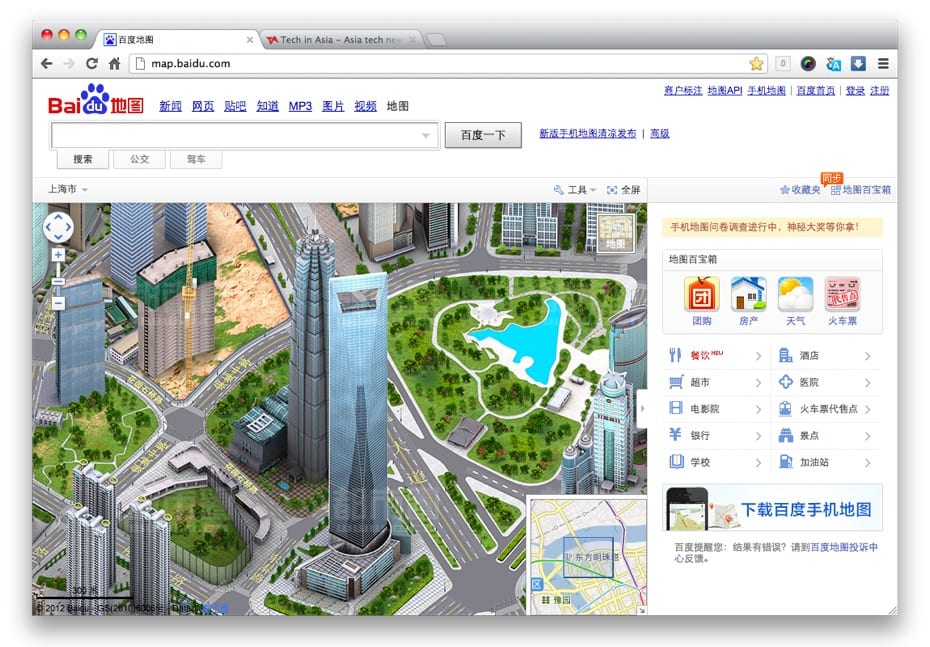
* **Local API Integration:** Integrating APIs that are permitted and optimized for the Chinese internet infrastructure can improve the performance and reliability of your website's features.
## Design and User Interface Considerations
Designing a website for the Chinese ecommerce market involves focusing on both the look and usability of the site. Here's a closer look at how to adjust your website's design and user interface to meet the preferences of Chinese consumers:
### High Information Density
Unlike Western websites, which often favor minimalism, Chinese websites are known for their high-density layouts. This stems from the character-based nature of the China search engine, which conveys more information in less space. Design your pages to include plenty of text and links, offering comprehensive information without necessitating multiple clicks. However, it's essential to balance this with clear navigation to avoid overwhelming users.
### Visual Preferences
The visual design of your website should reflect branding China preferences and norms. Bright colors like red and gold are popular as they symbolize good fortune and happiness. Avoid using dark and dull colors which might not be as appealing. Incorporating vibrant, animated elements and flashy banners can also be more attractive to Chinese ecommerce users, as these features are commonly seen in local digital content.
### User Experience (UX) Adaptations
Tailor the UX to suit the browsing behaviors prevalent in ecommerce China. Chinese ecommerce users often prefer interactive elements and quick access to information. Features like pop-up windows for promotions and live chat options can enhance engagement. Additionally, ensure that the website navigation is intuitive for a user who might be more accustomed to Chinese internet norms, which can include more direct links and less reliance on search functionality within the site.
### Adapting to Local Devices
The vast majority of Chinese internet users access the web via mobile devices. Make sure your website goes beyond mobile-friendly and is optimised for the screen sizes and mobile operating systems used in China. This includes faster load times, adaptable layouts and touch-friendly interfaces.
### Integration of Visual and Textual Cues
Given the importance of context and nuance in Chinese ecommerce, combine visual storytelling with clear textual information. This approach helps in bridging any gaps that might arise from cultural and linguistic differences, ensuring that the message is both engaging and clear.
### Cultural Symbols and Imagery
Utilize local symbols, icons, and imagery that resonate with Chinese cultural values and aesthetics. For instance, using images that depict local landmarks, cultural events, or national celebrations can create a sense of familiarity and trust. It's also crucial to ensure that all visual content is culturally appropriate and sensitive to local norms and tastes.
## Conclusion
Effectively localizing your website for the Chinese market is crucial for capturing and engaging this vast audience. By integrating cultural, technical, and regulatory best practices into your localization strategy, you can enhance your site's visibility, user experience, and compliance within China. This approach not only aligns with local expectations but also positions your business for success in one of the world's most dynamic digital landscapes.
---
# How to Sell on Douyin in China: Best Practices for Success in 2024
URL: https://www.thechinapath.com/insights/how-to-sell-on-douyin-boost-sales-with-effective-marketing-strategies
Published: 2024-10-21
Author: TheChinaPath
Category: KOLs & Livestream
Douyin, China's TikTok, has 750 million daily active users and a built-in store. How brands sell on it with livestreams, KOLs and targeted content.
## Why Sell on Douyin?
Douyin is a vital part of [social commerce](/grow-in-china/social-commerce) in China, offering businesses a content-driven platform where users engage deeply with videos, live streams, and shoppable content. Its algorithm-driven recommendations make it easier for brands to target specific audiences, increasing the potential for sales and brand awareness.
### Key Benefits of Selling on Douyin:
* **Massive User Base:** With millions of daily users, Douyin offers significant reach.
* **High Engagement:** Short videos and interactive content boost brand visibility and interaction rates.
* **Integrated Shopping Experience:** Users can shop without leaving the app, making purchases easier and faster.
* **Viral Marketing Potential:** Content spreads quickly, allowing brands to reach broader audiences through organic means.
## Douyin's E-commerce Ecosystem
Douyin has developed an integrated e-commerce ecosystem that blends content with commerce. For businesses looking to succeed, it's essential to understand the platform's tools and strategies to maximize engagement and conversion.
### Types of E-commerce Features on Douyin:
* **Douyin Flagship Store:** A customizable storefront where brands can showcase products and sell directly within the app.
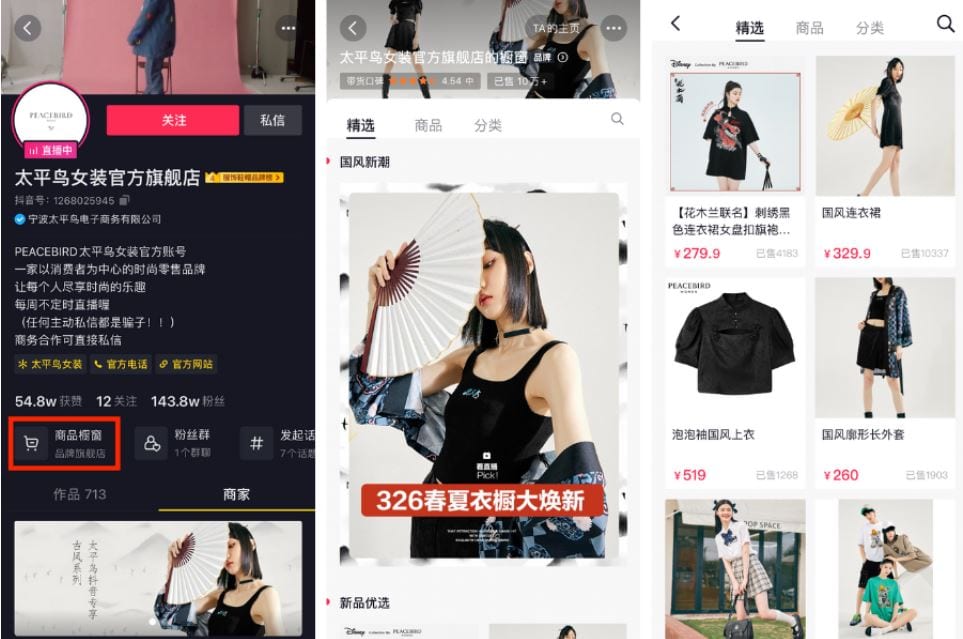
* **Shoppable Links in Videos:** Douyin allows brands to add product links to videos, enabling users to shop while watching.
* **Live Streaming:** A powerful tool for real-time product demonstrations, often used in China Livestreaming [campaigns](/grow-in-china/campaigns).
This blend of content and commerce makes Douyin unique compared to other eCommerce platforms in China. By using these features, brands can directly engage with users while they consume content.
## Setting Up a Douyin Store
To start selling on Douyin, you must first establish a China Douyin business account and set up your e-commerce store. This involves following a few essential steps to ensure your brand is ready to reach the platform's massive audience.
### Steps to Launch a Douyin Store:
1. **Create a Douyin Business Account:** Provide the necessary legal documentation to verify your business.
2. **Upload Content:** You must upload at least 10 short videos before activating your store. These should introduce your brand and highlight your products.
3. **Add Products to Your Catalog:** List your products with high-quality images, detailed descriptions, and clear pricing, ensuring they are adapted for China brand localization.
## Creating Engaging Content for Douyin
The heart of Douyin's platform is its content. Brands need to develop videos that are not only informative but also entertaining. Videos that capture attention and encourage interaction will have a greater chance of success, making your brand more visible in Chinese social media.
### Content Ideas:
* **Product Demonstrations:** Show off your products in creative, engaging ways through short video clips.
* **Behind-the-Scenes Content:** Let your audience see how your products are made or give them a peek into your business operations.
* **Interactive Challenges:** Use Douyin's hashtag challenges to invite users to engage with your brand by creating their own content.
### Best Practices for Content Creation:
* **Consistency:** Post regularly to keep your audience engaged.
* **Keep It Short:** Douyin users prefer bite-sized content. Ensure your videos are concise yet engaging.
* **Use Music and Effects:** Enhance your videos with Douyin's music library and special effects to make them more captivating.
## Using Live Streaming for Sales
China Livestreaming has emerged as one of the most effective tools for driving sales on Douyin. Brands use live streaming to interact with potential buyers in real time, showcase products, and offer exclusive deals that drive immediate conversions.
### Tips for Successful Live Streaming:
* Announce Live Sessions: Build anticipation by promoting your live streams in advance.
* Offer Exclusive Deals: Entice viewers with special discounts available only during the live stream.
* Engage the Audience: Encourage viewers to ask questions and interact with your product demonstrations.
Live streaming not only enhances user engagement but also offers real-time feedback and helps build trust among consumers.
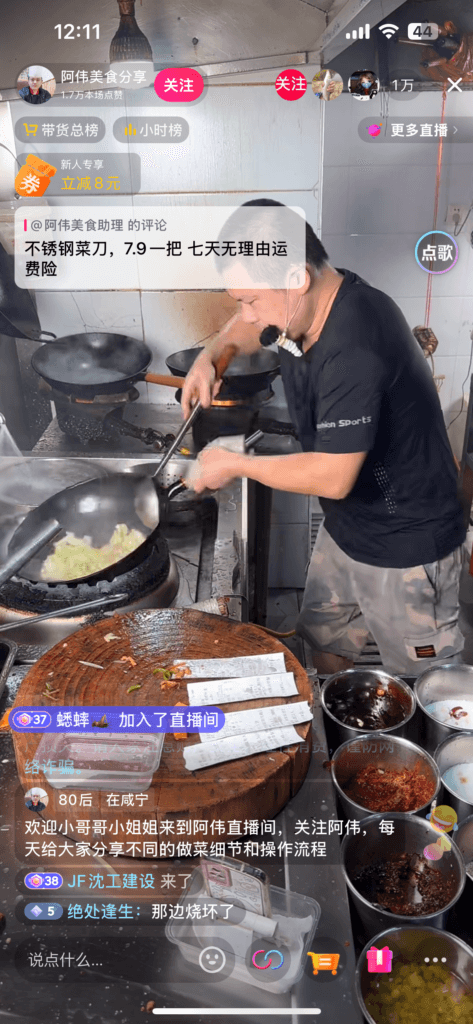
## Collaborating with Key Opinion Leaders (KOLs)
In social commerce in China, [KOL](/social-in-china) marketing is an essential strategy for building credibility and expanding reach. By collaborating with China KOLs, brands can tap into their vast followings to reach targeted demographics more effectively.
### How to Work with KOLs:
* Choose Relevant KOLs: Ensure the influencers you select have a follower base that aligns with your target market.
* Set Clear Objectives: Define whether your goal is brand awareness, sales, or customer engagement.
* Native Integration: KOLs should present your products in a way that feels natural to their content style, whether through live streams, product reviews, or short videos.
Working with KOLs can boost brand credibility, especially for new brands entering the Chinese market.
## Utilizing Douyin's Advertising Tools
Paid advertising on Douyin can significantly increase your visibility. The platform offers various ad formats that can be used in conjunction with organic strategies to maximize your reach.
### Types of Douyin Ads:
* In-Feed Ads: Ads that appear within the video feed and blend with user content.
* Brand Takeovers: Full-screen ads that display when users open the app.
* Hashtag Challenges: These invite users to engage with your brand by creating content around a specific hashtag.
### Best Practices for Douyin Ads:
* **Targeting:** Use Douyin's advanced targeting tools to reach specific demographics based on user interests, location, and behavior.
* **Creative Optimization:** Ensure your ads are visually compelling and aligned with the platform's content style.
* **Performance Tracking:** Regularly monitor your ad performance through Douyin's analytics to optimize for better results.
## Building a Community with Hashtags and Challenges
Douyin's hashtag and challenge features are valuable tools for creating viral content and building a dedicated community around your brand. Brands can encourage users to create content using a specific branded hashtag, driving organic engagement and increasing brand exposure.
### Steps to Launch a Hashtag Challenge:
1. Create a Branded Hashtag: Choose a catchy and memorable hashtag that reflects your campaign.
2. Encourage User Participation: Invite users to create their own videos using your hashtag.
3. Promote Your Challenge: Use ads, KOL collaborations, and social media channels to amplify your campaign.
## Douyin vs Other E-commerce Platforms
Douyin offers unique advantages compared to other eCommerce platforms in China. Its combination of content and commerce, high engagement rates, and viral potential make it a standout platform for brands looking to tap into the China marketplace.
### Advantages of Douyin:
* High Engagement: Douyin's short video format and personalized content recommendations lead to more user interaction.
* Native Shopping Experience: Users can browse, engage, and purchase without leaving the app.
* Viral Marketing: The platform's content structure encourages viral sharing, increasing organic reach.
## Conclusion
Douyin offers businesses a powerful platform to engage with Chinese consumers through a blend of content and commerce. By creating engaging videos, using live streaming, collaborating with China KOLs, and utilizing Douyin's advertising tools, brands can build a strong presence and succeed in China's competitive eCommerce market. Whether you're a local company or a global brand, Douyin provides the tools to effectively connect with Chinese consumers and drive significant sales.
---
# How Xianyu Transforms Bargains into Side Hustles for Young Entrepreneurs in China
URL: https://www.thechinapath.com/insights/how-xianyu-powers-young-entrepreneurs-side-hustles-in-china
Published: 2024-07-12
Author: TheChinaPath
Category: Platforms
Alibaba's Xianyu is moving past second-hand goods. Young Chinese entrepreneurs now use it to sell their skills and hobbies as side jobs.
## How Xianyu Transforms Bargains into Side Hustles for Young Entrepreneurs in China
Alibaba's Xianyu, originally known for its extensive array of second-hand goods, is evolving into a hub for young entrepreneurs seeking side hustles. As China's largest consumer-to-consumer platform for second-hand goods, Xianyu is moving beyond mere bargains to offer a platform where users can monetize their hobbies and skills. This shift is opening new avenues in China's dynamic [e-commerce landscape](/grow-in-china/cross-border-ecommerce), particularly among budget-conscious young consumers. This evolution aligns with the broader trends in social commerce China, where young people are using [platforms](/learn-china/platforms) to create income streams from their skills and hobbies.
## The Rise of Side Hustles on Xianyu
Xianyu's latest feature is a side job marketplace that enables users to offer various services. This initiative encompasses eight categories and hundreds of sub-categories, covering services from pet massages to language tutoring. This addition reflects a significant trend among young users who are increasingly turning to online platforms to find flexible work opportunities. A notable aspect of Xianyu's transformation is its appeal to users under the age of 30. According to data analysis by QuestMobile, this demographic accounts for nearly half of the platform's 178 million monthly active users. These young users are not only buying and selling second-hand goods but also using Xianyu to develop small businesses and find part-time work. Users born after 1995, who make up about 43% of the platform's user base, fulfill more than 60% of all service orders. This statistic highlights the entrepreneurial spirit of China's younger generation, who are using Xianyu's vast reach to create income streams from their skills and hobbies.
## Features and Popular Services on Xianyu
Xianyu's side job marketplace offers users a platform to advertise their services and connect with potential customers. The [marketplace](/grow-in-china/cross-border-ecommerce) is designed to be user-friendly, allowing sellers to detail their work experience, upload resumes, and outline their skill sets. This feature provides prospective customers with an easy way to search for services and review the seller's qualifications before placing an order. Certain services are particularly popular among young people on Xianyu. Education and training, pet services, and online consultation are some of the top categories that attract young entrepreneurs. These services offer flexibility and the potential for significant earnings, making them attractive options for those looking to supplement their income. Over the past decade, Xianyu has evolved into more than just a platform for buying and selling goods. It has become a vibrant online and offline community where users can connect over shared interests and collaborate on various projects. This sense of community is a key factor in Xianyu's success, as it fosters engagement and loyalty among its users.
## Community and Offline Presence
In addition to its [online marketplace](/grow-in-china/cross-border-ecommerce), Xianyu has expanded its reach into the physical world with the opening of brick-and-mortar shops in Hangzhou and Shanghai. These shops provide a convenient way for users to send items to the platform for sorting and pricing, enhancing the overall user experience. Xianyu is not only a marketplace but also a platform where users can develop and showcase their skills. Many sellers use their experience on Xianyu to build their resumes, highlighting their abilities in product description writing, price negotiation, and customer service. This experience can be valuable in various professional contexts, providing users with a competitive edge in the job market. Xianyu has fostered a strong sense of community among its users. The platform serves as a forum where hobbyists and collectors can exchange ideas and collaborate on projects. This community aspect enhances user engagement and provides additional value beyond the basic buying and selling functions.
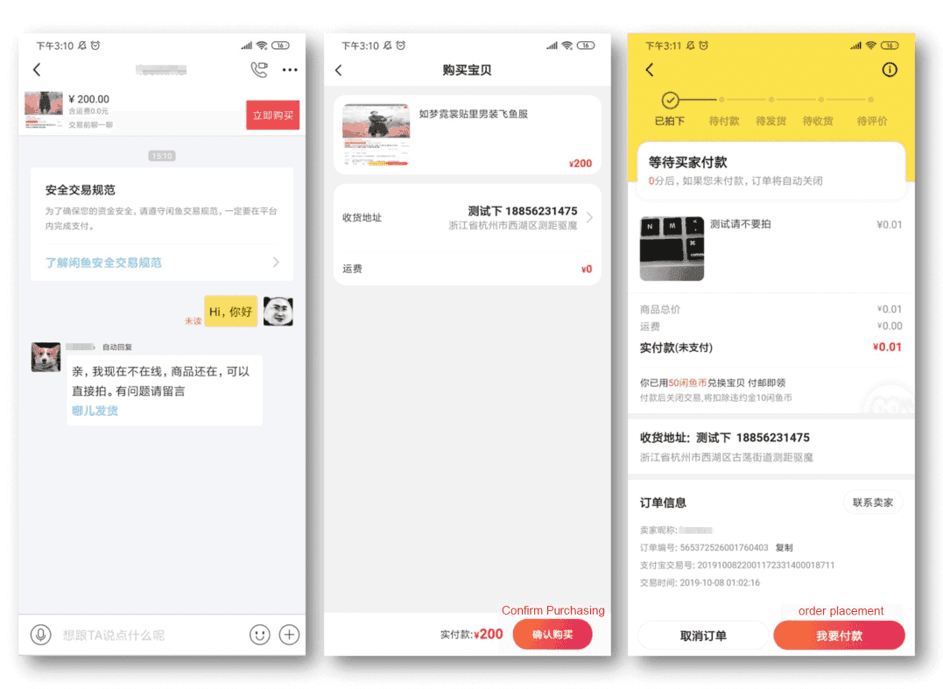
Source: Alibaba Cloud
Xianyu's growth is closely linked with the broader China social media landscape. Platforms like WeChat, Douyin, and Weibo play a significant role in social marketing China, helping users promote their services and reach a wider audience. This integration with social media platforms China enhances the visibility and accessibility of the services offered on Xianyu.
## The Future of Xianyu and Side Hustles
Looking ahead, Xianyu is poised to continue its growth as a hub for side hustles and entrepreneurial activities. The platform's ability to adapt to the changing needs of its users and provide opportunities for income generation will be key to its ongoing success. Xianyu's focus on empowering young users is likely to remain a central aspect of its strategy. By offering a diverse range of services and creating a supportive community, Xianyu helps young entrepreneurs explore new opportunities and achieve financial independence. This evolution not only benefits individual users but also contributes to the broader [e-commerce](/grow-in-china/cross-border-ecommerce) landscape in China, fostering innovation and entrepreneurial spirit among the younger generation. Alibaba's Xianyu platform is transforming the way young entrepreneurs approach side hustles. By offering a marketplace for both second-hand goods and diverse services, Xianyu empowers users to turn their hobbies and skills into viable income streams.
This transformation is particularly significant in the context of the [China eCommerce ecosystem](/grow-in-china/social-commerce), where young entrepreneurs are increasingly looking for ways to use digital platforms for economic opportunities. The integration with China social media platforms like WeChat, Douyin, and Weibo, as well as the broader trend of social marketing in China, underscores Xianyu's role in shaping the future of eCommerce in China. By staying at the forefront of these trends, Xianyu not only supports individual entrepreneurs but also contributes to the ongoing evolution of China's dynamic e-commerce landscape.
---
# Emerging Trends and Business Strategies of Independent Chinese Designers in 2024
URL: https://www.thechinapath.com/insights/independent-chinese-designers-2024-trends-marketing-and-commerce-insights
Published: 2024-06-25
Author: TheChinaPath
Category: Brand & Localization
Independent Chinese fashion designers are winning at home and abroad with cultural roots, sustainability and sharp digital commerce. The 2024 trends.
## Emerging Trends and Business Strategies of Independent Chinese Designers in 2024
China, often associated with technological advancements and manufacturing prowess, has also become a fertile ground for creative minds in fashion. Despite being relatively young, China's fashion ecosystem has shown remarkable resilience and innovation. Independent Chinese designers are now at the forefront, setting trends and redefining the global fashion landscape.
In recent years, China's fashion scene has undergone a significant transformation. The country's post-COVID reopening, economic maturation, and demographic changes have all contributed to a dynamic shift in fashion trends. Homegrown designers are capturing the essence of these changes, crafting high-quality, innovative designs that resonate with local tastes and often surpass global brands.
## Focus on Domestic Markets
The pandemic posed significant challenges for many designers, leading them to refocus on the domestic market as international movements were restricted. This shift has resulted in a growing interest in unique, niche brands that draw on cultural heritage and global trends. Consumers are increasingly confident in domestic brands, with over half expressing trust in their growth. The eCommerce China landscape has adapted to these changes, providing a strong platform for these designers.
## Cultural Integration in Design
Chinese designers are adept at incorporating cultural elements into their creations, blending traditional motifs with modern aesthetics. This approach not only appeals to local consumers but also attracts international attention. The emphasis on cultural heritage allows designers to create unique products that stand out in a crowded market. Social [marketing](/grow-in-china/campaigns) in China plays a crucial role in promoting these culturally rich designs on platforms like Wechat and Douyin.
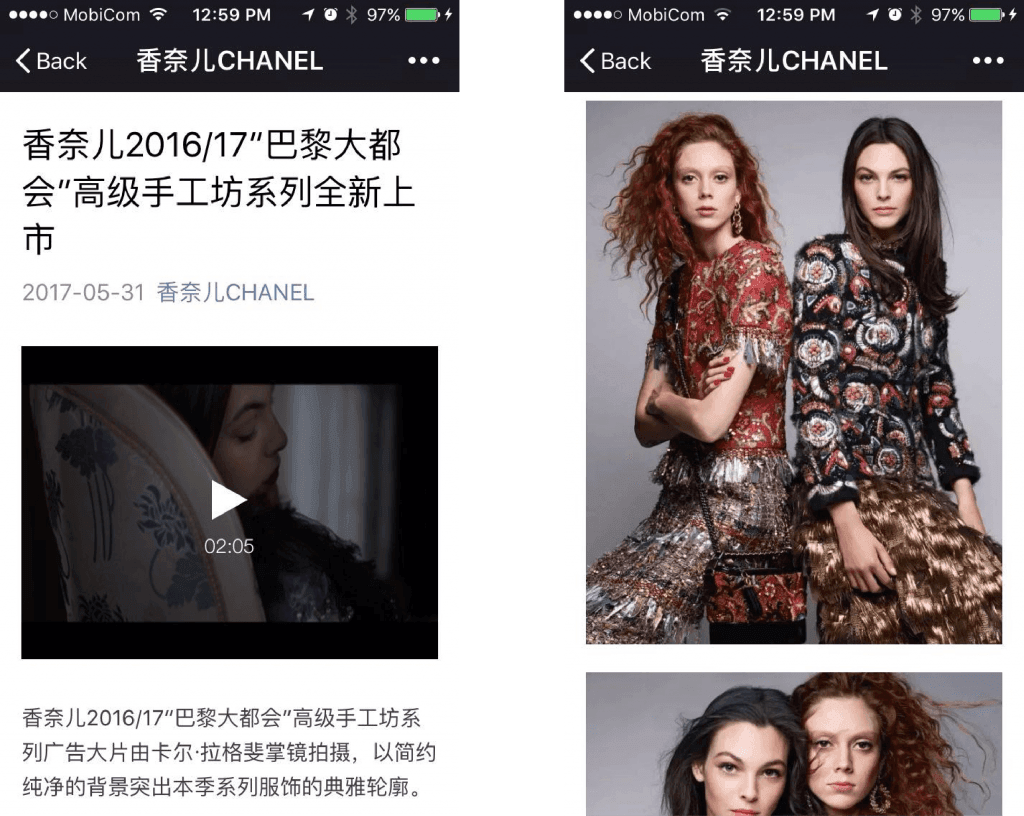
Source: China Briefing
## Sustainability as a Core Value
Sustainability has become a key focus for many independent Chinese designers. Brands like Susan Fang have made significant strides in eco-conscious fashion, using innovative techniques and sustainable materials. Fang's air-weaving method and collaborations with major brands like Zara and Swarovski highlight how sustainability can be integrated into mainstream fashion. This trend is also reflected in social commerce in China, where consumers are increasingly drawn to eco-friendly products.
## Digital Innovation and the Metaverse
The digital landscape in China is highly advanced, providing designers with numerous opportunities to innovate. Brands like 8ON8 are using the power of digital integration, combining physical and digital experiences to create immersive fashion presentations. The use of the Metaverse and NFTs has opened new avenues for [brand](/enter-china/branding-localisation) engagement and consumer interaction. Social media platforms in China, such as Weibo and Little Red Book, are instrumental in promoting these digital innovations.
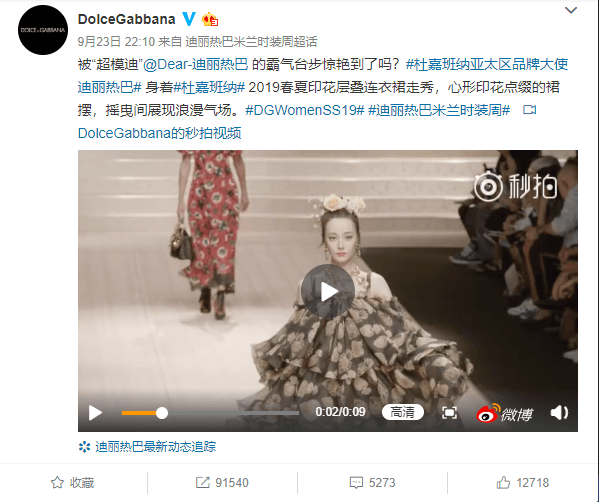
Source: Digital Crew
## Collaborations and Partnerships
Collaborations play a crucial role in the growth strategy of independent designers. By partnering with both global and local companies, designers can increase visibility, improve supply chains, and reach new audiences. These partnerships have evolved beyond financial motives to mutually beneficial relationships that enhance brand value. The role of China influencers and KOLs (Key Opinion Leaders) is vital in these collaborations, driving consumer engagement and brand loyalty.
## Reaching the Youth Market
The tastes of younger shoppers, particularly millennials and Gen Z, are driving the fashion industry's evolution. These consumers value uniqueness and individuality, preferring products that reflect personal style rather than overt logos. Independent Chinese designers are adept at meeting these preferences, offering sophisticated designs that resonate with this demographic. Social media strategy in China is key to reaching this audience, using platforms like Douyin and Wechat.
## Business Strategies for Success
### 1. Eco-Conscious Co-Creation
Susan Fang's brand exemplifies how sustainability and collaboration can drive success. Her innovative designs and strategic partnerships with major brands have broadened her reach and amplified her message of responsible beauty. Other brands can learn from Fang's approach, using social media and aligning with companies that share their values. Social commerce in China is a critical avenue for these brands to engage with eco-conscious consumers.
### 2. Immersive Digital Integration
8ON8's integration of digital experiences into their brand strategy provides valuable insights for other designers. By embracing platforms like the Metaverse, brands can present their vision in dynamic ways, reaching new audiences and enhancing customer experiences. This approach not only captures the current zeitgeist but also sets a precedent for future fashion presentations. Digital marketing in China offers the tools and platforms necessary for these innovative presentations.
### 3. Adapting to Market Fluctuations
The fashion industry in China has seen fluctuating sales trends, particularly during the pandemic years. However, the upward trajectory observed in 2023 indicates a promising future. Local designers are gaining international recognition, and global brands are seeking partnerships to tap into the unique cultural resonance these designers offer. ECommerce strategy in China has adapted to these changes, providing strong support for these emerging brands.
### 4. Global Influence and Recognition
Chinese designers are not only making an impact within China but also gaining recognition on the international stage. Their ability to blend cultural narratives with advanced design and sustainability has positioned them as leaders in the fashion industry. Global brands are increasingly looking to these designers for inspiration and collaboration. The integration of China marketing strategies has been central in achieving this global influence.
## Future Outlook for Chinese Fashion
The future of Chinese fashion looks bright, with independent designers leading the way. As digital avenues for self-expression expand and sustainability becomes increasingly important, these designers are well-positioned to shape the next wave of fashion. Their adaptability, innovation, and cultural integration will continue to drive the industry forward.
---
# JD's New Subsidy Plan Is Really a Supply Chain Play
URL: https://www.thechinapath.com/insights/jd-double-subsidy-plan-supply-chain-play
Published: 2026-07-05
Author: Cyril Drouin
Category: E-Commerce
JD.com and 100 brands put RMB 10 billion behind appliance trade-ins. Why the Double Subsidy plan is a supply chain and loyalty play, not a price war.
## JD's New Subsidy Plan Is Really a Supply Chain Play
A RMB 10 billion trade-in push with Haier, Midea and more than 100 other brands looks like one more price promotion. The mechanics tell a different story.
On April 2, [JD.com](/grow-in-china/cross-border-ecommerce) (京东) gathered more than 100 appliance and home brands, Haier (海尔) and Midea (美的) among them, and put RMB 10 billion, about USD 1.4 billion, on the table. The money funds what JD calls the Double Subsidy plan (百亿双补): twelve months of extra trade-in discounts meant to get Chinese households replacing aging appliances faster.
At first glance, another discount campaign. China runs on those. Look at the mechanics and a different picture shows up. JD is spending subsidy money to buy control over how appliances get chosen, delivered, installed and recycled. If you sell anything that plugs in, cools, washes or gets slept on, that's worth ten minutes of your attention.
> JD and its partner brands will jointly invest RMB 10 billion in trade-in subsidies over the coming year, according to JD's April 2 announcement as reported by Yicai (第一财经).
## What is actually on the table
| The plan | The detail |
| ------------- | ----------------------------------------------------------------- |
| Budget | RMB 10 billion over one year, co-funded by JD and 100+ brands |
| Coverage | 200+ subcategories, air conditioners to mattresses and toilets |
| Consumer deal | Up to 10% extra on trade-ins, on top of the 15% national subsidy |
| Old products | Accepted regardless of brand, age, condition or purchase channel |
| Service | Delivery, installation, removal and recycling handled in one visit |
| Reach | Nationwide, including lower-tier cities and rural counties |
The stack is the headline for consumers. A family replacing a ten-year-old refrigerator first takes the national subsidy (国补), the government trade-in discount running at 15 percent in 2026. JD and the brand then add up to 10 percent more. On a big-ticket appliance, that stack decides whether the purchase happens this year or slips to the next.
Just as important is what JD removed. Trade-in programs in China used to stall on fine print: wrong brand, too old, bought somewhere else. JD's terms accept the old unit whatever its brand, age, condition or purchase channel. The classic excuse for keeping a dying fridge is gone.
JD and its partners have also formed the Super Trade-In Alliance (超级换新联盟) to work on trade-in standards, service levels and subsidy terms. Easy to skim past, but this is how a promotion hardens into infrastructure.
## The half of the deal nobody reads
The consumer subsidy is one side of the announcement. Procurement is the other. JD commits to large centralized purchase orders with the partner brands, using the demand the subsidies create as its bargaining chip.
The loop is simple. Subsidies stimulate demand, bulk orders capture it. Predictable volume lets JD buy at scale, buying at scale pushes factory prices down, and lower costs fund part of the next round of subsidies. Brands get certainty in a soft market. JD gets margin room and a tighter grip on supply.
Partner brands also get a dedicated campaign zone on the platform, plus targeted traffic support to reach households sitting on old appliances. JD is not just discounting products. It is systematizing demand, then selling access to that system.
## The subsidy is the hook. The service is the lock.
Price was never the only reason Chinese households kept old appliances. Hassle was. An old refrigerator weighs 90 kilos and lives up six flights of stairs, nobody wants to deal with it, so it hums along for another five years.
JD's answer is to make delivery, installation, removal and recycling one standard visit, not a paid add-on, with coverage that reaches past the big cities into towns and rural counties where competitors don't reliably go.
Every trade-in routed this way runs on JD Logistics. Every recycled unit feeds JD's reverse supply chain. Every subsidized purchase happens inside JD's app, tied to a JD account. Households buy a major appliance every eight to ten years, and the plan is built so that when the moment comes, the default answer is JD rather than [Tmall](/grow-in-china/cross-border-ecommerce) (天猫) or the store downstairs. Price wars burn margin. That loyalty is the actual prize.
## If you sell into China, read the fine print
The scale behind this is bigger than one platform's campaign.
> Sales under China's consumer trade-in program passed RMB 430 billion in the first quarter of 2026, China Daily reported in April.
Beijing keeps funding it, too.
> The 2026 national program opened with a first funding tranche of RMB 62.5 billion, according to the National Development and Reform Commission.
Three things follow for international brands in appliance, home, sleep and bathroom categories.
- **Price in the subsidy stack.** Shelf price in these categories is now a three-layer construction: state money, platform money, brand money. Your China P&L has to model all three, and what happens to demand the day one layer gets pulled.
- **Standing outside the program has a cost.** Brands inside get the campaign zone and the traffic. Brands outside compete against a combined discount that can reach 25 percent. That gap decides high-ticket sales.
- **Bulk procurement cuts both ways.** Centralized orders bring volume commitments. They also bring price pressure and a heavier JD hand on your channel, so go in with your distributor economics already worked out.
One more thing sits underneath it all: data. Who upgraded, from what model, in which city, at what price point, all of that now lives with JD. For a foreign brand weighing the market, the sharper question is which platform controls your category, and on what terms you plug in. That is ground we walk through in [market entry consulting](/enter-china/market-entry-consulting) and [Cross-Border eCommerce Setup](/enter-china/cross-border-setup).
---
# Exploring Luxury Brand Marketing Trends in China
URL: https://www.thechinapath.com/insights/luxury-brand-trends-mastering-social-media-in-china
Published: 2024-06-07
Author: TheChinaPath
Category: Market Strategy
Most luxury spending in China happens in the top 50 cities, and over 80% of shoppers research online first. How luxury brands use Chinese social media.
## Geographic Concentration of Luxury Consumption
Luxury consumption in China is geographically concentrated, with the majority occurring in the top 50 cities. First and second-tier cities dominate, contributing around 70% of total luxury sales. However, luxury consumption is gradually penetrating second-tier cities, highlighting the need for brands to expand their reach beyond traditional hotspots.
## The Influence of Social Media
Social media plays a central role in the purchasing decisions of Chinese luxury consumers. With a social media penetration rate of 67%, platforms like [WeChat](/grow-in-china/social-commerce), Weibo, and Xiaohongshu are essential for brand visibility and customer engagement. More than 80% of Chinese consumers research online before making offline purchases, underscoring the importance of a strong digital presence.
## Using Social Media to Reach Customers
Effective use of social media is critical for luxury brands aiming to reach and influence Chinese consumers. Key opinion leaders (KOLs) and influencers hold significant sway, and brands must engage with them strategically. Brands are increasingly setting up WeChat official accounts and mini-programs to create proprietary traffic channels, allowing for in-depth interaction and customer retention.
## Enhancing Customer Loyalty
Building and maintaining customer loyalty is a central challenge for luxury brands. Proprietary online channels, such as mini-programs and WeChat public accounts, offer a controlled environment to provide a boutique-like shopping experience. These platforms facilitate emotional connections with consumers through personalized content and collaborations with influencers.
## Data-Driven Growth Strategies
Data assets are invaluable for luxury brands aiming to drive business growth. Collecting and analyzing consumer data allows brands to develop strategic insights and optimize [marketing](/grow-in-china/campaigns) efforts. Tencent's Data Think Tank provides tools to identify target audiences, optimize budget allocation, and enhance conversion rates, acting as a compass for brands navigating the Chinese market.
## Omnichannel Marketing Approaches
An omnichannel strategy, integrating online and offline experiences, is crucial for luxury brands in China. Tencent's Smart Marketing & Smart Retail Solutions enable brands to convert offline traffic into online engagement, creating a smooth customer journey. This approach not only enhances customer experience but also maximizes sales opportunities across multiple channels.
## The Role of KOLs in Luxury Marketing
Key Opinion Leaders (KOLs) are influential in shaping consumer perceptions and driving sales. Luxury brands must collaborate with KOLs to reach younger audiences effectively. These partnerships can amplify brand messages, create buzz around new product launches, and foster deeper connections with consumers.
## Social Commerce and Luxury Brands
Social commerce is gaining traction in China, where consumers prefer the convenience of purchasing through social media platforms. Brands like Cartier and Gucci are using Tencent's traffic solutions to expand their customer base and boost sales. Social commerce offers a direct, engaging way to reach consumers and drive conversions.
## Building Brand Equity Through Content
Content marketing is essential for building brand equity and connecting with consumers on a deeper level. Luxury brands should focus on creating high-quality, engaging content that reflects their brand values and resonates with their target audience. Storytelling, behind-the-scenes glimpses, and interactive content can enhance brand perception and loyalty.
## Personalization and Customer Experience
Personalization is key to providing a superior customer experience. Luxury brands must use data insights to tailor their marketing efforts, offering personalized recommendations and experiences that meet the unique preferences of each consumer. This level of customization can significantly enhance customer satisfaction and loyalty.
---
# Marketing Strategies Revolutionizing AI-Integrated PCs in China
URL: https://www.thechinapath.com/insights/marketing-strategies-revolutionizing-ai-integrated-pcs-in-china
Published: 2024-06-07
Author: TheChinaPath
Category: AI & Innovation
AI is turning the PC into a personal assistant. How brands market AI-integrated PCs in China through education, pricing and ecosystem tie-ins.
The personal computing landscape in China is on the brink of a revolutionary transformation, largely driven by the integration of artificial intelligence (AI) technologies. As AI evolves, personal computers are becoming more than just computational tools, they are transforming into sophisticated personal assistants capable of anticipating and meeting user needs. This shift is not only redefining the entire PC ecosystem but also revolutionizing the way these advanced devices are marketed.
## AI's Role in Reinventing PCs
AI integration is significantly enhancing the capabilities of personal computers, making them smarter and more intuitive. Despite the ubiquity of smartphones, PCs remain the preferred platform for running sophisticated AI applications due to their superior processing power. This makes AI-enhanced PCs a key market opportunity for manufacturers.
## Transforming the PC Industry
AI is doing more than boosting computational capabilities. It reimagines PCs as intelligent entities that can handle complex tasks and anticipate user needs. This transformation is leading to a radical restructuring of the PC industry, from hardware components to the end-user experience.
## Strategic Marketing Approaches
### Highlighting Unique Selling Points
To market AI-integrated PCs effectively, manufacturers focus on their unique selling points (USPs). Emphasizing capabilities such as enhanced productivity, personalized user experiences, and advanced security features helps differentiate AI PCs from traditional models.
### Consumer Education and Awareness Campaigns
Educating consumers about the benefits of AI-integrated PCs is crucial. [Marketing campaigns](/grow-in-china/campaigns) often focus on real-world applications, showcasing how AI PCs can improve productivity and user experience. Demonstrating practical uses helps consumers understand the value of AI technology in their daily lives.
### Premium Positioning and Affordability
Currently viewed as premium products, AI PCs are positioned as high-end devices. However, manufacturers like Lenovo are working to negotiate cost reductions with their supply chains, aiming to make AI PCs more affordable and accessible. Highlighting efforts to bring AI PCs within mainstream price ranges can attract a broader audience.
### Using Influencer Partnerships
Collaborations with tech influencers and experts can enhance credibility and reach. Influencers can provide hands-on reviews and demonstrations, helping to build trust and excitement around AI PCs. This strategy uses the influencers' established audiences to promote new technology effectively.
### Creating a Connected Ecosystem
Manufacturers are also focusing on creating a connected ecosystem of interconnected devices. Strategic partnerships with other tech companies aim to integrate AI PCs with smart home devices, enhancing overall user experience. Marketing this interconnected ecosystem can attract tech-savvy consumers looking for comprehensive smart solutions.
## Future Outlook
As AI-integrated PCs become more advanced and affordable, they are expected to gain widespread adoption. The next few years will be crucial as manufacturers continue to innovate and market these intelligent machines. The goal is to make AI PCs a standard in personal computing across China, offering a smarter, more personalized experience.
The rise of AI-integrated PCs in China is more than just a technological advancement; it represents a significant shift in marketing strategies. By highlighting unique selling points, educating consumers, using [influencer](/social-in-china) partnerships, and focusing on affordability, manufacturers are poised to revolutionize the personal computing market. The transformation of PCs into intelligent personal assistants marks the dawn of a new era in personal computing, driven by innovative marketing and strategic collaborations.
---
# How Meituan Fits Your China eCommerce Plan
URL: https://www.thechinapath.com/insights/meituan-instant-retail-china-ecommerce-strategy
Published: 2026-07-13
Author: Cyril Drouin
Category: E-Commerce
Meituan bought Dingdong Maicai for $717M. How instant retail and Meituan Instashopping fit a foreign brand's China commerce plan.
## Instant retail just became a channel you plan for
On February 5, 2026, Meituan (美团) told the Hong Kong exchange it would pay about $717 million for all of Dingdong Maicai (叮咚买菜), the fresh-grocery app known for landing a bag of vegetables at your door in about thirty minutes. On paper it reads like one grocery player buying another. It is not. Meituan already runs its own fresh-grocery arm, Xiaoxiang Supermarket (小象超市). What it wanted was the network underneath Dingdong: a thousand-plus neighborhood warehouses across East China, a supply chain that already turns a profit, and the years of head start that come with them.
> Meituan agreed to buy 100% of Dingdong Maicai's China business for an initial $717 million, per its February 5, 2026 filing with the Hong Kong exchange, Xinhua (新华网) reported. The overseas business was carved out before the deal.
For a foreign brand deciding how to sell in China, forget who owns which warehouse. Read what the purchase says out loud: the fast lane of Chinese retail is consolidating, and it is moving in on the everyday purchases your marketplace stores quietly depend on. If a shopper buys your product on repeat, that shift lands on you whether or not you have a plan for it.
## First, what instant retail is
Two systems have run side by side in China for years, and they optimized for different things.
Marketplace e-commerce, Tmall (天猫) and JD (京东), competes on price, range and reviews. You browse, you compare, you fill a basket, and a parcel shows up in a day or two from a central or bonded warehouse. It is built for the considered purchase.
Instant retail (即时零售) competes on one thing: how fast it reaches you. You open an app, tap, and a rider brings it from a store or small warehouse a few kilometers away, usually inside thirty minutes. Meituan built this on the same rider fleet that powers its food delivery, one of the largest in the country. The everyday version is Meituan Instashopping (美团闪购), and the infrastructure behind it is the lightning warehouse (闪电仓), a pure-online mini-warehouse that carries thousands of SKUs and never needs a storefront.
> Meituan Instashopping handles more than 18 million non-food orders a day and reached close to 300 million buyers in 2024, according to China Fund (中国基金报), which cited Meituan's own figures.
The two lanes used to stay in their own territory. You did not open a delivery app to buy a television, and you did not wait two days for toothpaste. That line is dissolving, and the Dingdong deal is one more push.
| At a glance | Marketplace (Tmall, JD) | Instant retail (Meituan) |
| -------------------- | ------------------------------- | ----------------------------------- |
| What wins the sale | Price, selection, reviews | Speed, being nearby |
| Delivery time | One to a few days | Around 30 minutes |
| Where the stock sits | Central or bonded warehouse | Store or warehouse within 3 to 5 km |
| Best-fit demand | Planned, researched buys | Replenishment, impulse, need-it-now |
| Cross-border bonded | Yes, Tmall Global, JD Worldwide | No, domestic stock only |
| The moment | The big basket, the research | The forgotten item, the top-up |
## Where a foreign brand plugs in
You do not need to build any of this yourself. Last autumn Meituan opened the door to brands directly.
> On October 29, 2025, Meituan Instashopping said it would build brand flagship lightning warehouses (品牌官旗闪电仓) with more than 10,000 brands, providing the warehousing, delivery and software so brands can enter light and low-cost, Sina Finance (新浪财经) reported.
The model is straightforward. You open an official flagship store inside Instashopping. Meituan handles the local warehouse network, the rider layer and the operating system. You keep control of your assortment, your pricing and your merchandising. A shopper five kilometers away taps once and your product arrives in roughly thirty minutes. The fixed costs that usually make China retail expensive, a prime street-front lease and a warehouse to build out, sit with the platform rather than with you. What you fund is stock and the daily operation. Foreign brands are already live on it. L'Oréal (欧莱雅), Philips (飞利浦) and Sony (索尼) were in the first wave of brand flagship warehouses, and multinationals like Muji (无印良品), Watsons (屈臣氏) and Decathlon (迪卡侬) were already selling on Instashopping before that.
The categories that work are mostly the ones you would guess.
| Your category | Instant-retail fit | Why |
| ---------------------------------- | ------------------ | ---------------------------------- |
| Beauty basics, masks, sunscreen | High | Repeat, impulse, small gifts |
| Snacks, drinks, alcohol | High | Occasion-driven, wanted now |
| Pet food and supplies | High | Run-out replenishment |
| Mother and baby | High | Urgent, no patience to wait |
| Small appliances and electronics | Medium | Planned, but same-day sells |
| Hero SKUs, gift sets, new launches | Low | Better on the marketplace flagship |
## The brands already doing it
By mid-2026 this had stopped being a pilot channel. The numbers coming out of it are real, and plenty of them belong to brands you would recognize.
Beer is the clearest case. Global names move serious volume through instant retail because the moment it serves, a cold one for a gathering that started an hour ago, is a moment a next-day parcel can never touch.
> Carlsberg (嘉士伯) reached RMB 1 billion, about $140 million, in 2024 sales on Meituan Instashopping and Budweiser (百威) reached RMB 1.3 billion, with Tsingtao (青岛) also above RMB 1 billion, each larger than the brand's take on other e-commerce platforms, Jiemian News (界面新闻) reported.
Food and drink tells the same story. PepsiCo (百事) treats instant retail as a way to sit on a shelf near the shopper at the exact moment of a craving, not a channel it dabbles in.
> PepsiCo's instant-retail sales in China have passed RMB 1 billion at a five-year compound growth rate above 20 percent, its China omnichannel lead said at the FBIF industry forum, as reported by Sina Finance (新浪财经).
It comes down to reach. PepsiCo already sells through roughly three million outlets in China, and even that leaves most of the country beyond what a sales force on foot can cover. Instant retail hands it shelf visibility in stores it will never staff.
The category spread is wide, and it covers the ground foreign brands actually compete on.
> During the 618 shopping festival (China's mid-year sales peak) in June 2025, Meituan Instashopping reported beauty and personal care up 77 percent and mother-and-baby and toys up 175 percent year on year, across more than 700,000 stores in over 360 cities, according to its own 618 report.
Those are the repeat-purchase categories at the heart of most consumer portfolios, and they are exactly where instant retail is pulling orders.
## The catch nobody puts in the deck
Here is where the planning gets harder.
A thirty-minute promise means the product is already sitting in a warehouse inside the shopper's city. That one physical fact rewrites the commercial model, and it is usually the piece brands miss until they are well into planning.
The usual soft-landing route into China is cross-border, meaning bonded: you hold stock in a bonded warehouse offshore or in a free-trade zone, and each order clears customs as an individual parcel. Tmall Global and JD Worldwide run this way, and it is a smart first test because you skip registering a local company. But bonded stock cannot service a rider who needs to leave in twenty minutes. Instant retail runs on general-trade goods: imported, cleared, invoiced domestically, and held in-country close to the buyer.
So instant retail is a grow-stage decision, not a day-one one. To use it, you need domestic inventory, which usually means a local entity or a distributor holding your stock and a store license, plus general-trade registration for the SKUs that require it, cosmetics filing being the common one. This is exactly the line where [our distribution work](/enter-china/distribution) earns its place, because the answer is rarely "do it all yourself." The real question is who holds the stock, and on what terms.
## How to sequence it against Tmall and JD
Instant retail will not replace your marketplace stores. Think of it as a second layer, and the brands that get it right run the two for different jobs.
Your Tmall or JD flagship stays the home of discovery: the full range, the hero products, the launch moments, the brand story a shopper researches before a bigger buy. Instant retail takes the other half of the shelf, the replenishment and the impulse. The sunscreen someone runs out of on a hot Saturday, or the pet food that finished this morning and cannot wait for a parcel. Those orders are small and unglamorous, yet they are frequent and sticky, and for years they routed through the marketplace by default. Instant retail is now peeling them away.
There is a reach argument too. The lightning-warehouse network is expanding fastest in lower-tier cities and counties, where marketplace logistics can be slower and where thirty-minute delivery still feels new.
> Meituan's lightning warehouses have passed 30,000 and are projected to top 100,000 by 2027, China Fund (中国基金报) reported, citing Meituan.
The market these fold into is not a niche.
> China's instant-retail market is on track to pass RMB 1 trillion by 2026, China.com.cn (中国网) projects.
## The strategic read
Two things sit underneath all of this, and they matter more than the delivery speed.
The first is a shorter supply chain. Instant retail collapses the classic Chinese distribution chain, brand to distributor to retailer to shopper, into something much shorter, often brand to forward warehouse to shopper. Fewer hands on the product means fewer margin stacks and cleaner price control. It also means the brand watches real demand in real time instead of guessing at sell-through from a distributor's purchase orders.
> Instant retail compresses the traditional four-tier alcohol distribution chain into three tiers or even two, brand to forward warehouse to consumer, Sina Finance (新浪财经) reported.
The second is what kind of channel this really is. A marketplace is a shelf you push product onto and hope it sells. Instant retail works the other way round. Shoppers search near their location, and the warehouses stock whatever those searches keep asking for. The consultancy Oliver Wyman (奥纬咨询) frames it as merging the moment of buying with the moment of using, which is why it rewards the brand that shows up in the everyday scene, not the one that just discounts hardest.
> Meituan Instashopping's transaction volume grew about 75 percent a year on average over three years, Oliver Wyman (奥纬咨询) found.
Read together, instant retail stops looking like faster shipping and starts looking like a separate channel with its own economics: a shorter chain, plus demand you can actually read, aimed at an occasion your marketplace store was never going to win. So the question the Dingdong deal forces is not whether instant retail matters. It is which of your SKUs belong in the thirty-minute lane and who holds the stock that makes it possible, without letting price and margin slip across a shorter chain. That is the ground we work through in [market entry consulting](/enter-china/market-entry-consulting) and [our distribution work](/enter-china/distribution).
---
# Navigating Cross-Border Commerce Livestreaming: Insights from TheChinaPath's CEO Cyril Drouin
URL: https://www.thechinapath.com/insights/navigating-cross-border-commerce-insights-from-beyondbordergroups-ceo-cyril-drouin
Published: 2024-11-05
Updated: 2026-05-15
Author: Cyril Drouin
Category: KOLs & Livestream
TheChinaPath CEO Cyril Drouin on livestream commerce, localization, KOLs and cross-border eCommerce, and how China's livestreams differ from the West's.
## Our CEO was interviewed during the last MCN International conference in Shanghai last month, discussing key topics like live broadcast commerce, brand localization, KOLs, and cross-border eCommerce challenges and opportunities.
### Introduce yourself
My name is Cyril Drouin, a French national who has lived in China for many years. After spending seven years as the CEO of Publicis China, where I led initiatives in commerce, performance marketing, and creative work, I founded a [cross-border](/enter-china/cross-border-setup) agency called TheChinaPath. Our agency focuses on helping Chinese brands expand internationally while supporting global companies entering the Chinese market. We offer a comprehensive range of services, including branding, content creation, social media management, media planning, public relations, exhibitions, distribution, logistics, and more.
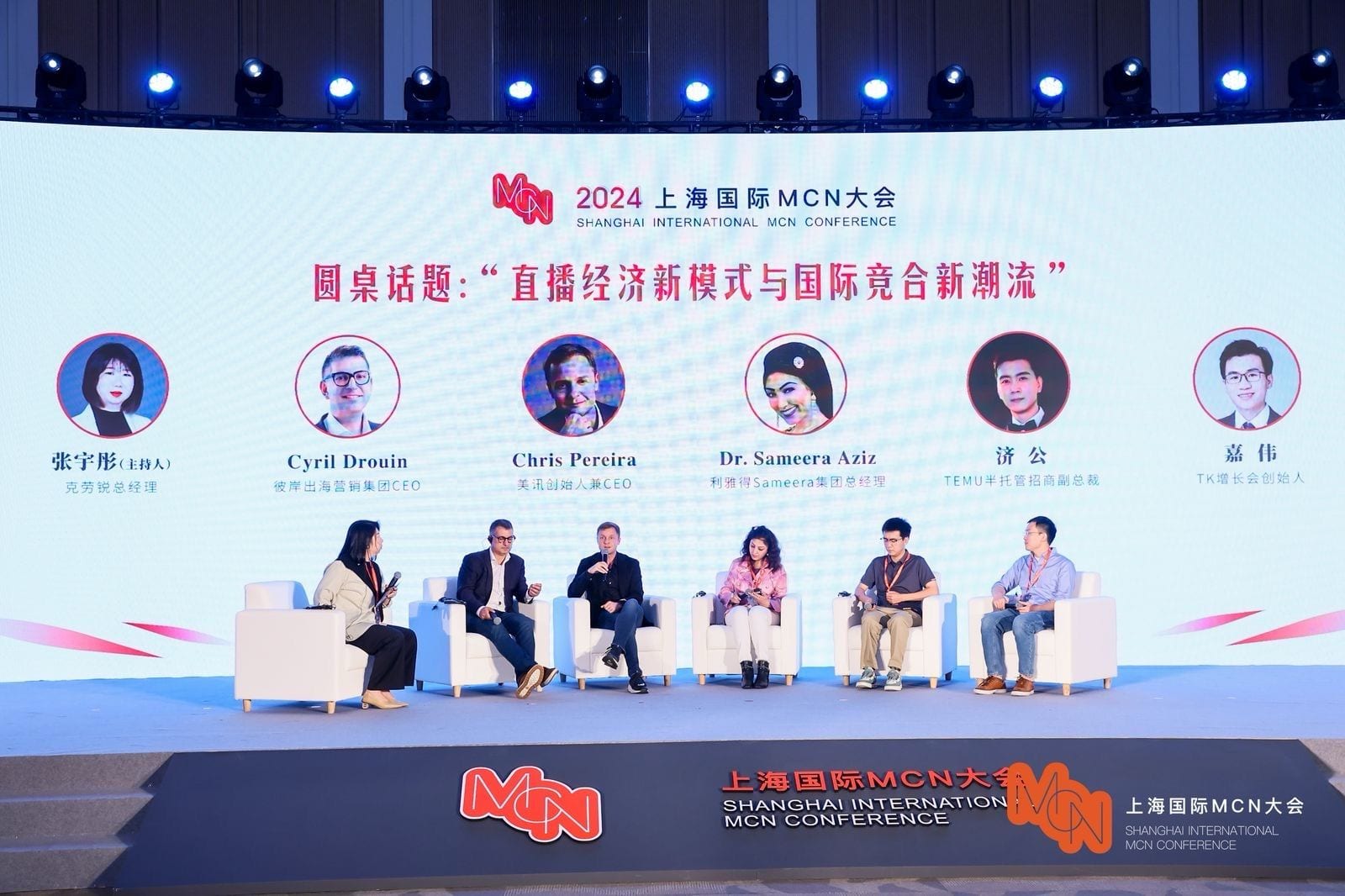
### What do you think about the live broadcast economy, in China and internationally?
The live broadcast economy in China is significantly more commerce-driven compared to the West. In China, most livestreams are transactional, focusing on eCommerce or gifting. However, in Europe and the United States, direct sales through livestreams are still seen as more complex and less intuitive for shoppers. For example, Amazon Live has yet to gain substantial traction, and the sales generated are relatively low. Instagram and Facebook live sessions also struggle to drive meaningful traffic to eCommerce. Shopify, for instance, does not include live commerce as a standard feature in its basic offering, which highlights the difference in adoption rates between these regions.
### Can you share your experience of localizing international brands in China?
In recent years, we have worked on localizing beauty, food, and furniture brands for the Chinese market. The initial steps always involve creating a localized Chinese brand name and logo, adapting brand assets such as photos and videos, setting up social media and eCommerce accounts, and launching initial campaigns with Key Opinion Leaders (KOLs). Beyond these fundamentals, a brand must have a compelling story and a well-defined market niche in China to be successful. Without these elements, the cost of acquiring customers becomes unsustainable for long-term growth. The brands that succeed in China often share certain characteristics: they offer a unique product that is difficult to replicate, they have a strong brand legacy, they set clear Gross Merchandise Value (GMV) and profitability goals, and they have a well-thought-out five-year growth plan.
### What is the key to overseas branding?
The key to successful overseas branding lies in localization and market exposure. Localization involves developing a local brand name, adapting product or service assets to suit the local market, and working with appropriate partners. Relying solely on a Chinese partner to enter Western markets such as the United States or Germany is not effective, you need partners with teams both in China and on the ground in the target market. While Chinese origins are not always positively perceived in all markets, focusing on the product's strengths in your marketing and communication can help. Western markets are also costly, and the business landscape is different. For instance, in the United States, there is little room for negotiation on payment terms with media platforms. Understanding these market-specific dynamics is crucial to avoid expensive missteps.
### How do you see the role of KOLs evolving in both Chinese and international markets?
The role of Key Opinion Leaders (KOLs) in China remains crucial for brand success, but their involvement is changing. In China, KOLs are moving beyond simple endorsements; they are becoming integral to product development and brand strategy. Brands collaborate with KOLs early in the product lifecycle to co-create items that resonate directly with their audiences. In contrast, influencer marketing in Europe and the United States is still developing. In these markets, influencers are not yet as embedded in the commerce cycle as they are in China. However, as live commerce gains traction in the West, we may see influencers taking on a more active role in driving sales, similar to their Chinese counterparts.
### What are some of the major challenges that brands face when expanding from China to Western markets?
The major challenges for brands expanding from China to Western markets include cultural differences, regulatory requirements, and variations in consumer behavior. Brands often underestimate how different Western markets are from China. The marketing approach that works well in China, typically fast-paced and high-energy, often needs adjustment to appeal to Western audiences. Navigating regulatory requirements also presents significant challenges, including dealing with differences in data privacy laws, product certifications, and advertising standards, all of which require deep local knowledge. Additionally, Chinese brands often face perception issues in Western markets. To compete effectively against well-established legacy brands, Chinese companies must focus on building trust and delivering high-quality products that meet Western standards.
### How do you envision the future of cross-border eCommerce evolving in the next five years?
In the next five years, I anticipate a convergence of eCommerce approaches across different regions. China's influence on Western eCommerce trends is evident, [livestream](/social-in-china) commerce, super apps, and social shopping are already gaining popularity in the West. At the same time, Chinese companies are learning from Western practices, focusing more on branding and creating experience-driven sales. We can expect to see more seamless integration of commerce within social media platforms, increased use of artificial intelligence to provide personalized shopping experiences, and a greater emphasis on sustainability. Consumers are becoming increasingly conscious of the origins and production methods of the products they purchase, and brands that align with these values will have a distinct advantage. Cross-border eCommerce will evolve beyond simply entering new markets to creating a truly integrated global shopping experience.
---
# How to choose an influencer in China who sells
URL: https://www.thechinapath.com/insights/optimizing-your-brand-choosing-the-right-influencer-in-2024-in-china
Published: 2023-11-17
Updated: 2026-10-14
Author: TheChinaPath
Category: KOLs & Livestream
Pick a China influencer by settled sales: what Douyin shows a brand about a creator, what creators cost, fake-follower fines and the ad rules you sign.
Choose an influencer in China by what they have already sold. On Douyin,
the creator's page in the affiliate plaza shows settled sales after
refunds, buyer reviews and the categories they move. Start on commission,
at 5% to 50% of each order, and write China's advertising rules into the
contract. The brand answers for what the creator says.
Updated October 14, 2026. The November 2023 version of this page sorted
influencers into follower tiers borrowed from Instagram and TikTok and
quoted a survey figure with no source. This version works from Douyin's
and Xiaohongshu's own rule books, the livestream regulation in force since
February 2026 and our Douyin cost calculator.
China calls them 达人 (creators) or KOLs, and the deal comes in four shapes.
| Deal | How the brand pays | Platform's cut | Reference price (RMB) |
|---|---|---|---|
| Douyin affiliate program (精选联盟) | Commission on orders the buyer keeps | Paid by the creator: 10% to 40% of the commission | 5% to 50% of the order on open plans, up to 80% on some named-creator plans |
| Douyin sponsored video, booked on Xingtu | Flat fee per video, priced by length | 5% service fee on recruitment tasks | 39,700 average per sponsored post (2024); tasks from 10,000 |
| Xiaohongshu (RedNote) sponsored note, booked on Pugongying | The creator's flat price | 10% on top of the price | 10,800 average per sponsored post (2024) |
| Dedicated livestream with a top host | Event fee plus commission | Not published | 1 million to 3 million per event plus 10% to 20% (2024 interview) |
Only the first row pays purely for sales you can count. The others buy
attention up front, and you learn afterward whether it sold.
> A manager at Chinese apparel maker Yalu Group (雅鹿集团) put a top host's
> dedicated session at 1 million to 3 million RMB, with commission of about
> 10% to 20%, based on the company's past collaborations.
> Source: Xinhua (新华网), August 2024. https://www.news.cn/fortune/20240804/ec11b5b85b514e8b9332998d0b23b020/c.html
## Followers are the wrong first number
The old advice was to pick a tier, from nano to mega. On Douyin, most of
the money sits below the top tier.
> More than 570,000 creators doubled their sales year on year during Douyin
> Mall's 618 festival in 2026, and creators with fewer than 1 million
> followers drove more than 80% of creator sales.
> Source: China National Radio (央广网), citing Douyin's 2026 618 data
> report, June 2026. https://www.cnr.cn/mspd/jrhm/20260620/t20260620_527669642.shtml
Douyin itself grades creators by money. Every month, on the 8th, it sets
each creator's level from the previous month's settled sales: what buyers paid, minus refunds filed within seven days, minus
orders the platform flags as abnormal.
| Douyin creator level | Settled sales in the previous month (RMB) |
|---|---|
| L1 | Up to 30,000 |
| L2 | 30,000 to 300,000 |
| L3 | 300,000 to 1 million |
| L4 | 1 million to 3 million |
| L5 | 3 million to 10 million |
| L6 | 10 million and above |
> Douyin grades creators from L0 to L6 on the 8th of each month, by the
> previous month's paid sales net of refunds within seven days and of
> abnormal orders.
> Source: Douyin E-commerce (抖音电商), creator level rules, revised March
> 2026. https://school.jinritemai.com/doudian/web/articlev0/aHRbnsP5fSGu
A creator at L3 sold more than 300,000 RMB of goods last month that buyers
didn't send back. A creator with 3 million followers and no level has sold
nothing you can see.
One warning about agency decks. Some still quote a creator's "reputation
score" (带货口碑分). It's gone.
> Douyin abolished its creator reputation score rule on April 1, 2025, and
> took the score off creator showcases and profile pages by the end of that
> month.
> Source: Douyin E-commerce (抖音电商), rule repeal notice, March 2025.
> https://school.jinritemai.com/doudian/web/articlev0/aJNmFjfDRcGA
## Read the creator's page before you send a sample
A merchant on Douyin finds creators in the affiliate program's creator
plaza (达人广场). It ranks them by settlement rate and flags creators whose
linked companies carry a risk warning. Each page holds more than most
agency decks.
> A creator's page in Douyin's creator plaza shows recent settled sales,
> livestream and video results, followers by gender, age, activity and
> device, the main categories sold, and earlier brands' reviews of the
> creator's delivery and communication.
> Source: Douyin E-commerce Learning Center (抖音电商学习中心), creator plaza
> guide, March 2026. https://school.jinritemai.com/doudian/web/article/110796
Read the settlement rate first. It's the share of sales still standing
after refunds, and Douyin now prices it into the creator's own costs.
Since July 8, 2026, a creator with a weak rating pays Douyin a bigger
share of every commission.
> Creators rated A, B+ or B pay Douyin a technical service fee of 10% of
> their commission, creators rated C pay 20% and creators rated D pay 40%.
> The rating counts settled sales seven days after purchase against paid
> sales, and requires a clean record on fake orders.
> Source: Douyin E-commerce Learning Center (抖音电商学习中心), affiliate fee
> rule explainer, October 2026. https://school.jinritemai.com/doudian/web/articlev0/aJkY84jEGbWa
That matters to you twice. A low-rated creator returns fewer kept orders
for the same sample, and will ask for a higher commission to cover the
platform's bigger cut.
So the shortlist comes from four reads: the creator's level, the
settlement rate, the categories sold in the last three months, and two or
three full livestream replays. Watch the replays. A host who can't explain
an ingredient in Chinese without a script won't sell your serum either.
Xingtu (巨量星图), Douyin's marketplace for sponsored video, shows a
different card: an index for reach, value and follower growth, expected
plays and an estimated cost per thousand views built from the creator's
latest quote. Use it to compare prices (our
[China media page](/grow-in-china/media) covers the buying). It tells you
less about sales.
## Fake followers cost pennies, and the fines are real
A fake follower costs one or two US cents. A case from 2025 puts an exact
price on it.
> A media company in Xichong, Sichuan, ran 1,200 phones to sell fake
> followers to merchants on livestream platforms at 0.07 to 0.15 RMB each,
> taking about 5,800 orders for some 2.7 million fake follows. Regulators
> confiscated and fined 270,000 RMB in September 2025.
> Source: State Administration for Market Regulation (市场监管总局),
> livestream e-commerce cases, November 2025. https://www.samr.gov.cn/xw/zj/art/2025/art_cb90a1860b3d4cd18c87b1fa35baeeff.html
Douyin punishes the creator too. A creator caught on fake transactions pays
a penalty of 1% of the faked amount, at least 1,000 RMB and at most 20,000
RMB, and the worst cases lose product sharing for good.
> Douyin charges creators found running fake transactions a penalty of 1% of
> the fake payment amount, from 1,000 to 20,000 RMB, and can close their
> product-sharing function permanently.
> Source: Douyin E-commerce (抖音电商), fake transaction rules, August 2026.
> https://school.jinritemai.com/doudian/web/articlev0/113470
Xingtu, the sponsored-video side, keeps its own ban list.
> Xingtu treats faked follows, likes, comments or conversions as a
> violation, with penalties up to a ban, and cuts off order-taking for any
> creator whose main Douyin account shows serious follower fraud.
> Source: Ocean Engine Xingtu (巨量星图) creator management rules, October
> 2026. https://www.xingtu.cn/help-center/author/134035
Then there's the state. On September 30, 2026, the Cyberspace
Administration of China (CAC) announced a two-month campaign against fake
creator personas.
> The CAC's two-month campaign targets short-video accounts that invent
> credentials, fake public figures with AI for endorsements and marketing,
> or mass-produce personas through MCN account matrices.
> Source: Cyberspace Administration of China (中央网信办), September 2026.
> https://www.cac.gov.cn/2026-09/30/c_1792520301987752.htm
The check for a brand takes five minutes. Compare views with sales. A
creator whose videos draw a million plays and whose page shows almost no
settled sales has an audience that doesn't buy, or one that doesn't exist.
## Pay on commission first, then buy reach
Commission puts the risk on the creator. Douyin pays it only on orders the
buyer keeps.
> A brand sets creator commission at 5% to 50% of the order on plans open
> to all creators, and at 5% to 80% on some plans for named creators.
> Douyin settles it 15 days after the buyer confirms receipt. If an order
> is refunded within the after-sale period, the commission is cancelled,
> and commission already settled is clawed back.
> Source: Douyin E-commerce (抖音电商), affiliate settlement rules, October
> 2026. https://school.jinritemai.com/doudian/web/articlev0/112620
Run the numbers at scale. Our
[Douyin cost calculator](/tools/douyin-cost-calculator) starts from 2
million RMB of first-year sales, 80% of them through creators, at a 20%
commission and a 250 RMB basket. That's 1.6 million RMB of creator sales
and 320,000 RMB of commission, or 50 RMB on each of 6,400 orders
(TheChinaPath calculator data, October 2026).
Now set that against a flat fee. One sponsored video at Douyin's 2024
average of 39,700 RMB costs the same as the commission on 794 of those
orders, close to 200,000 RMB of sales (our arithmetic). A flat-fee video
has to sell that much before it beats paying on results.
> Sponsored creator posts averaged 39,700 RMB each on Douyin and 10,800 RMB
> on Xiaohongshu from January to October 2024.
> Source: Jiemian (界面新闻), citing QuestMobile, March 2025. https://www.jiemian.com/article/12440261.html
Flat fees still have a job. A creator with no selling record but the right
audience can be tested cheaply on Xingtu, where a recruitment task opens
at 10,000 RMB.
> Xingtu recruitment tasks start at a 10,000 RMB budget, with a 5% platform
> service fee, for creators with 1,000 to 5 million followers.
> Source: Ocean Engine Xingtu (巨量星图) help center, August 2026.
> https://www.xingtu.cn/help-center/demander/126583
On Xiaohongshu, the brand pays the creator's price plus 10%.
> On Xiaohongshu's Pugongying (蒲公英) platform, a custom creator deal costs
> the creator's flat price plus a 10% platform service fee: 11,000 RMB on a
> 10,000 RMB quote.
> Source: Xiaohongshu Pugongying help center, October 2026. https://pgy.xiaohongshu.com/api/pgy/help/doc?shortcutId=eb3150fa550d424459f8838a77c7e433&role=4
A commission deal needs a Douyin store for the creator to link to. For a
foreign brand that usually means a Douyin Global store, often run by a
Douyin Partner, and our
[Douyin Partner finder](/compass/find-a-douyin-partner-in-china) lists
what to check in one. Seeding, where the job is awareness rather
than orders, belongs to [TheRedScroll, the group's China social media
agency](https://www.theredscroll.com).
## What Chinese law puts on the brand
This is the part the 2023 page skipped. In China, a brand that sells
through a livestream is the advertiser in the eyes of the law, and the
creator who vouches for the product is its endorser.
> A seller that promotes goods through a livestream that amounts to a
> commercial ad bears the advertiser's duties; a host who recommends goods
> in their own name bears the endorser's duties.
> Source: State Administration for Market Regulation (市场监管总局), Internet
> Advertising Measures, Order No. 72, February 2023. https://www.gov.cn/gongbao/2023/issue_10506/202306/content_6885261.html
The endorser's duties come from the Advertising Law. A creator may only
vouch for goods they've used. For goods that bear on health, the creator
shares liability for a false ad whether or not they knew it was false, and
the brand that hired them is on the hook as the advertiser.
> An endorser may not recommend goods it has not used or services it has
> not received. For false ads of goods or services bearing on consumers'
> life and health that cause harm, the endorser is jointly liable with the
> advertiser.
> Source: State Administration for Market Regulation (市场监管总局),
> Advertising Law, articles 38 and 56, as amended April 2021. https://www.samr.gov.cn/zw/zfxxgk/fdzdgknr/fgs/art/2023/art_5474cf75173c45d6a0379730fb4e8d97.html
And regulators fine the brand. In 2025 it cost one seller of a health food
100,000 RMB.
> A trading company in Dongying hired a host who claimed on a February 2025
> livestream that its health food had sold 21.85 million orders and that
> anyone over 14 could take it. Regulators fined the company 100,000 RMB in
> August 2025.
> Source: State Administration for Market Regulation (市场监管总局),
> livestream e-commerce cases, November 2025. https://www.samr.gov.cn/xw/zj/art/2025/art_cb90a1860b3d4cd18c87b1fa35baeeff.html
Since February 1, 2026, whoever runs a live room also has to check the
host. That's the brand when the brand runs its own room.
> A live-room operator must verify each host's name, ID, address, agency
> and relevant qualifications, report the verified details to the platform
> before every stream and keep the records for at least three years. An
> operator that fails the checks and doesn't correct them faces a fine of
> 10,000 to 100,000 RMB.
> Source: Cyberspace Administration of China (国家网信办), Livestream
> E-commerce Supervision Measures, SAMR and CAC Order No. 117, January
> 2026. https://www.cac.gov.cn/2026-01/07/c_1769516655383334.htm
Disclosure is the other line. A review or "experience" post that carries a
buy link has to say 广告 (advertisement), in plain view.
> Goods promoted through knowledge sharing, experience sharing or consumer
> reviews with a shopping link attached must be clearly labelled
> "advertisement".
> Source: State Administration for Market Regulation (市场监管总局), Internet
> Advertising Measures, Order No. 72, article 9, February 2023. https://www.gov.cn/gongbao/2023/issue_10506/202306/content_6885261.html
Xiaohongshu enforces its own version. Since January 12, 2026, it has
cracked down on creator deals that skip Pugongying, limiting the notes and,
for repeat cases, the brand's own accounts.
> From January 12, 2026, Xiaohongshu targets KOC and KOL deals taken
> outside the official partnership platform without being reported, with
> penalties from limiting the notes' reach to restricting the brand
> account's posting and exposure for repeat cases.
> Source: Xiaohongshu Pugongying help center, brand trust notice, August
> 2026. https://pgy.xiaohongshu.com/api/pgy/help/doc?shortcutId=1627df51a4c861f13e462aa2067d6c15&role=4
So the creator contract carries a few lines most templates leave out:
- The creator confirms in writing that they have used the product.
- Every claim about efficacy, sales or rankings comes from a list the brand
approved, with the evidence on file.
- Posts with a buy link carry the 广告 label, and Xiaohongshu deals go
through Pugongying.
- Commission follows Douyin's settlement, so refunds come off.
- Fake data ends the contract, and the creator repays what they earned.
Put them in before the first sample ships. Renegotiating after a fine is
harder.
## FAQ
### How much does an influencer cost in China?
On commission, nothing up front: Douyin creators take 5% to 50% of each
kept order on open plans. Flat-fee posts averaged 39,700 RMB on Douyin and
10,800 RMB on Xiaohongshu in 2024, according to QuestMobile data, before
Xiaohongshu's 10% service fee. A test task on Xingtu starts at 10,000 RMB.
### Do follower counts matter at all?
They measure reach. During Douyin's 618 festival in 2026, creators with
fewer than 1 million followers drove more than 80% of creator sales. Douyin's own creator levels run on settled sales after
refunds, which is the better number to shortlist on.
### Who is liable if a creator makes a false claim?
Both of you, often. The seller behind a livestream ad carries the
advertiser's duties, and the creator carries the endorser's. For health
products, the creator is jointly liable even without knowing the claim was
false. Chinese regulators fined one brand 100,000 RMB in 2025 for what its
host said on air.
### How fast can we tell whether a creator works?
Within a month. Douyin settles commission 15 days after the buyer confirms
receipt and claws back refunds, so the kept-order count firms up a couple
of weeks after the stream.
[Plan a commission-first creator program with our social commerce team](/grow-in-china/social-commerce)
---
# Payment terms with a Chinese distributor
URL: https://www.thechinapath.com/insights/payment-terms-chinese-distributor
Published: 2026-09-24
Updated: 2026-09-24
Author: TheChinaPath
Category: Market Strategy
Prepayment or a letter of credit first, open terms after a payment record, then insurance. What each payment term costs with a Chinese distributor.
Ask a new Chinese distributor to pay before shipment, or to open a confirmed
letter of credit, on the first orders. Offer open terms only after it has
paid on time, and insure the receivable when you do. Distributors in China
are short of cash this year, so settle payment terms in the same meeting as
the price.
*Surveys, bank tariffs and regulations checked September 24, 2026.*
In our experience, brands leave payment terms for the lawyers at the end.
By then the distributor has priced its offer around the credit it expects,
and every day of that credit is your money sitting in China.
This is general information, not legal or financial advice. Have your lawyer
and your bank read the contract before you sign.
## Why Chinese distributors are short of cash
Liquor is the best proxy, whatever you sell, because its trade association
surveys the channel every year. The 2026 mid-year survey, run with KPMG
China, went to 1,350 companies, 450 of them distributors, and drew 1,115
usable answers.
> 44.1% of liquor distributors and retailers said cash-flow pressure rose in the
> first half of 2026, and 51.2% said the money they paid back to producers fell.
> Source: China Alcoholic Drinks Association (中国酒业协会) and KPMG China, 2026
> Baijiu Market Mid-Year Report, June 2026.
> https://assets.kpmg.com/content/dam/kpmgsites/cn/pdf/zh/2026/06/2026-chinese-baijiu-market-mid-term-research-report.pdf
The year before was already bad.
> More than 40% of liquor distributors and retailers said they faced cash-flow
> pressure in the first half of 2025.
> Source: China Alcoholic Drinks Association (中国酒业协会) and KPMG China, 2025
> Baijiu Market Mid-Year Report, June 2025.
> https://assets.kpmg.com/content/dam/kpmgsites/cn/pdf/zh/2025/06/mid-term-research-report-on-the-chinese-baijiu-market-2025.pdf
Other trades look much the same.
> Companies in mainland China offer customers 81 days of credit on average.
> 86% suffered late payment in the past year, and late payments ran 73 days
> past due on average.
> Source: Coface (科法斯), APAC Payment Survey 2026, August 2026.
> https://www.prnasia.com/story/543914-1.shtml
Your distributor pays you, then waits for retailers and platforms to pay
it, and somebody has to fund the gap in between. If you give it credit,
you're the one funding it.
Kweichow Moutai, the Guizhou baijiu maker, makes its distributors pay first.
This year even Moutai changed its prepayment policy.
> Moutai sells on advance receipts, so its credit risk is small. Its advance
> receipts fell 60.31%, to 3.18 billion RMB, in the first half of 2026 after it
> changed its sales model and adjusted its prepayment policy.
> Source: Kweichow Moutai (贵州茅台), 2026 interim report, August 2026.
> https://www.moutaichina.com/mtgf/articleFileDir/2026-08/17/277c9b776bff4ae89dde75e987437760.pdf
A new foreign brand has a fraction of that pull, so decide what credit
costs you before the meeting.
## Five payment terms for a Chinese distributor, side by side
| Term | Risk to the brand | Cost | When it fits |
|---|---|---|---|
| Prepayment, 100% before shipment | Lowest. The distributor carries it | Wire fees. The distributor reports long prepayments to SAFE | First orders, and any distributor you met at a trade fair |
| Deposit plus balance, say 30% with the order and 70% before documents are released | Low, if you hold the original bill of lading, which releases the goods, until the balance lands | Wire fees | Made-to-order goods, or a first order with an established importer |
| Letter of credit, confirmed, at sight | Low if your documents match the credit exactly | Distributor: 1.5 per thousand to open (minimum 300 RMB) at Bank of Ningbo. You: a confirmation fee at home, US$60 per discrepancy | Large first orders from a distributor with a bank credit line |
| Open account with credit insurance | Medium. You keep at least 10% of any loss | A premium the insurer quotes per buyer (get it before you promise terms), plus a credit report from 1,200 RMB at Sinosure | After several orders paid on time |
| Consignment | Highest. You own the stock in China until it sells | The stock itself. A bonded warehouse behind a Tmall Global store ties up 400,000 RMB before the first order in our calculator | Rarely. A test launch you run yourself |
## How a letter of credit works, and where it fails
A letter of credit swaps the distributor's promise for a bank's. The
distributor's bank undertakes to pay you when you present the documents the
credit lists, usually the invoice, packing list, bill of lading and
certificate of origin. Chinese courts hold the bank to it.
> Once the issuing bank has undertaken to pay, it must pay within the
> credit's term as long as the documents match the credit and each other on
> their face. The buyer can't block payment by disputing the sale contract,
> fraud aside.
> Source: Supreme People's Court (最高人民法院), provisions on letter of
> credit disputes, Art. 5, as amended December 2020.
> http://gongbao.court.gov.cn/Details/1873edbb83fb8247ac0a04da813050.html
Everything rides on "match." A misspelled port or a shipment one day late
is a discrepancy. The bank can then refuse the documents, and the buyer gets
a second shot at renegotiating. Banks charge for it too.
> Bank of Ningbo charges 1.5 per thousand of the amount to open an import letter
> of credit of up to 90 days (minimum 300 RMB), 2 per thousand from 90 to 360
> days (minimum 500 RMB), and US$60 to the seller for each set of documents with
> a discrepancy.
> Source: Bank of Ningbo (宁波银行), corporate fee schedule, May 2026.
> https://www.nbcb.com.cn/home_page/jrxx/fwsfcx/sctjj/gjyw/202605/P020260527722678775361.pdf
Ask for the credit at sight, payable on presentation. Have a bank in your own
country confirm it, so a bank you deal with owes you the money.
And before the credit is issued, read the draft line by line with your
freight forwarder, who produces half the paperwork (most discrepancies start
there).
Expect resistance. An LC eats into the distributor's credit line at its
bank, and if it can't get one opened for a first order, that tells you
something.
## Credit insurance: Sinosure and private insurers
Where the sale happens decides who can insure it. Sell from your own
Chinese company and it's domestic trade, which Sinosure, China's state-owned
credit insurer, covers.
> Sinosure's domestic trade credit insurance covers receivables lost to a
> buyer's insolvency or default, on credit periods generally within one
> year. It pays up to 90% of the loss. The insured must be a company
> registered in China.
> Source: Sinosure (中国信保), domestic trade credit insurance, observed
> September 2026.
> https://www.sinosure.com.cn/ywjs/myxcp/gnmyxybx/gnmyxybxjj/index.shtml
If you ship from abroad, you're the exporter, and the policy comes from your
home export credit agency or a private insurer such as Coface or Atradius.
Sinosure also covers Chinese banks and factors that buy receivables from
importers, so ask your bank whether it works with one.
An insurer checks the distributor before it sets a limit, and you can buy
the same report.
> Sinosure lists a standard credit report on a Chinese company at 1,200 RMB,
> and a credit-limit report, which suggests how much trade credit to extend,
> at 1,440 RMB.
> Source: Sinosure (中国信保), credit information fee schedule, September
> 2026. https://www.sinosure.com.cn/khfw/sfbz/zgckxybxgs/2026/09/220663.shtml
When an insurer refuses a limit on your distributor, stay on prepayment or a
letter of credit.
## RMB or dollars: who carries the exchange-rate risk
When you invoice in your own currency or in dollars, the exchange risk stays
with the distributor. That's still how most of China's goods trade settles.
> RMB made up 28.1% of China's cross-border settlement for trade in goods in
> January to June 2025, up from 27.2% in 2024.
> Source: People's Bank of China (中国人民银行), RMB Internationalization
> Report 2025, October 2025.
> http://www.pbc.gov.cn/huobizhengceersi/214481/3871621/5885243/index.html
A distributor that insists on RMB wants you to carry that risk. Agree only
with a buffer in the price or a forward contract at your bank.
SAFE, China's foreign-exchange regulator, also limits what a distributor
can offer.
> A company must report to SAFE within 30 days any prepayment made more than 30
> days ahead, and any deferred payment or deferred-payment letter of credit over
> 90 days. Companies rated class B or C may not in principle pay on deferred
> terms beyond 90 days.
> Source: State Administration of Foreign Exchange (国家外汇管理局), current-account FX
> guidelines (2020 edition), Art. 20, 34 and 35, August 2020.
> https://www.safe.gov.cn/safe/file/file/20200831/f0127756271c43ef9b3908d5d157bd91.pdf
So ask which SAFE class your distributor is in. A class B or C importer is
under closer watch and generally can't take long credit from you, even if it
wants to.
## When to move to open terms
The rule we use when we set up distributor deals: three orders paid on time and
an insurer's limit on the buyer. Read the credit report yourself as well. Then
open at 30 days, and stretch to 60 only after a clean year. Write late-payment
interest into the contract, with the right to stop shipping while an invoice is
overdue.
The 81-day Coface average is what competition forces Chinese suppliers to
give each other. You'd be lending across a border.
One clause needs striking every time: payment "within X days of receipt of
payment from our customers." Chinese courts now void it when a large buyer
imposes it on a small Chinese supplier.
> Where a large company makes payment to a small or medium supplier
> conditional on receiving payment from a third party, courts must hold the
> clause void.
> Source: Supreme People's Court (最高人民法院), reply on back-to-back
> payment clauses (法释〔2024〕11号), August 2024.
> http://gongbao.court.gov.cn/Details/a56bf04193752b0ae2dd77152dbeb3.html
It was written for Chinese small businesses, so a foreign exporter shouldn't
count on it.
Consignment is the last case: your stock sits in China, unpaid for, until
it sells. Without a Chinese entity, the nearest version is a bonded
warehouse behind your own cross-border store, and our
[Tmall Global calculator](/tools/tmall-global-setup-and-run) shows what
that costs before the first sale.
> Bonded warehouse deposit of 100,000 RMB plus a bonded tax prepayment of
> 300,000 RMB: 400,000 RMB committed before the first order.
> Source: TheChinaPath calculator data, September 2026.
Our [comparison of a distributor and your own
store](/insights/china-distributor-vs-own-store) prices both roads.
Payment is one of seven terms to settle before the first container ships.
The rest are in our
[guide to finding a distributor in China](/compass/find-a-distributor-in-china).
Every distributor in [Compass](/compass) has been met in person, and
[distributor management](/enter-china/distribution) covers the relationship
after signature.
## FAQ
**What payment terms do Chinese distributors usually ask for?**
Long credit.
Companies in mainland China offer customers 81 days on average (Coface, 2026),
and a distributor may open near that. Without a payment history between you,
start with prepayment, a deposit plus balance or a confirmed letter of credit.
**Is a letter of credit from a Chinese bank safe?**
The bank is safe enough, since Chinese courts make it pay against documents
that match. Your paperwork is the risk. Have a bank at home confirm the
credit, and go through the document list with your forwarder before the
distributor's bank issues it.
**Can Sinosure insure my sales to a Chinese distributor?**
Only if you invoice
from a company registered in China. A brand exporting from Europe or the US buys
its policy at home, from an export credit agency or a private credit insurer,
and that insurer decides how much credit the distributor gets.
[Ask Compass for a shortlist of vetted distributors in your category](/contact#shortlist)
---
# When PIPL Bites: Dior's Wake-Up Call for Global Brands in China
URL: https://www.thechinapath.com/insights/pipl-compliance-in-china-diors-wake-up-call-for-global-brands
Published: 2025-11-26
Updated: 2026-05-15
Author: Cyril Drouin
Category: Compliance & Setup
Dior is the first foreign brand formally punished under China's Personal Information Protection Law. What PIPL enforcement now means for global brands.
## When PIPL Bites: Dior's Wake-Up Call for Global Brands in China
For years, China's Personal Information Protection Law (PIPL) sat at the edge of many [global brands](/enter-china/market-entry-consulting)' China plans. Legal teams flagged it; marketing and e-commerce teams mostly carried on.
Dior's recent prosecution in China changed that. After a data breach at its Shanghai subsidiary, the French luxury house became the first foreign brand formally punished under PIPL. The message from regulators is simple: data protection is no longer theoretical.
If you run CRM, e-commerce, or media in China, treat this as more than a legal story. It is about how your customer data system is designed.
## From Vague Threat to Real Enforcement
PIPL came into effect in November 2021 as China's first comprehensive data protection law. For a while, many brands treated it like GDPR-lite for China: important, but solvable with a privacy policy update and a few checkboxes.
The Dior case marks a shift.
Regulators highlighted three core issues:
* user data was sent overseas without approved transfer mechanisms
* customers were not clearly informed or asked for separate consent
* basic safeguards, such as encryption and de-identification, were not in place
## Why Enforcement Is Ramping Up Now
Over the past few years, China has filled in PIPL with practical rules on [cross-border](/enter-china/cross-border-setup) transfers, standard contracts, and certification, giving regulators a clear checklist to audit against. At the same time, data sovereignty has moved centre stage: who owns Chinese user data, where it sits, and who can access it is now tied to national security, tech competition, and consumer trust.
A high-profile case like Dior is both punishment and a public signal. For senior marketers and e-commerce leads, the takeaway is simple: PIPL is no longer something you can leave to "legal and IT". It shapes what your teams can do with customer data day to day.

## What PIPL Changes For Marketing And E-commerce
Under PIPL, three questions become unavoidable for any global brand operating in China.
### 1. What data really needs to leave China?
Many organisations still default to pushing China customer data into global CRMs, CDPs, analytics and personalisation systems. Under PIPL, that "copy everything to HQ" mindset is high risk. You need a clear view of which personal data truly must cross borders, and what can stay onshore with only aggregated or anonymised insights shared globally.
### 2. How are you explaining and proving consent?
PIPL expects explicit, informed, and separate consent for uses such as cross-border transfers and certain types of profiling. Privacy language buried in a global footer is not enough. Consent journeys across mini programs, brand apps, websites, and offline forms must be consistent, understandable, and backed by logs you can actually produce during an audit.
### 3. Can your stack support a China-first design?
When core marketing platforms are hosted overseas, campaigns that rely on identified user data will typically be subject to cross-border data compliance requirements. In practice, this is why many brands consider setting up China-specific instances of their core tools, or using local solutions, so teams can still run segmented journeys and measurement while managing user data in a locally compliant way.
Seen this way, PIPL is less a one-off legal project and more a design constraint for your China customer system.

## Practical Moves For Global Brands In China
You do not need to rebuild everything at once, but you do need a plan.
A few concrete steps:
* Map your China data flows. Start with marketing, e-commerce, and CRM. Where is data collected? Where does each stream go next, inside and outside China?
* Separate "must-move" from "nice-to-have" exports. Executive dashboards and global benchmarks usually do not require raw personal data. Decide what can be aggregated or anonymised before it leaves China.
* Redesign consent journeys. Align wording and logic across touchpoints so customers clearly understand what they are agreeing to, especially if their data may be processed overseas.
* Audit vendors and reset expectations with HQ. Check where partners host data and how they handle Chinese identifiers. Be explicit with global teams about what is possible under PIPL and what must stay local.
## Turning Compliance Into An Advantage
Dior's case is a warning shot and an opportunity. Brands that treat PIPL as a last-minute legal review will stay in firefighting mode, patching gaps whenever a breach or complaint surfaces. Brands that design for clear data flows, transparent consent, and local control will be better placed to earn trust from both Chinese consumers and regulators.
If you are building for the long term in China, PIPL is more than another hurdle. It is part of the market reality, and a chance to build a cleaner, more resilient China business.
---
# Replace a China distributor without losing the shelf
URL: https://www.thechinapath.com/insights/replace-distributor-china
Published: 2026-09-24
Updated: 2026-09-24
Author: TheChinaPath
Category: Market Strategy
How to replace a China distributor: sign the new partner first, give written notice, clear old stock, then move labels, filings and store rights.
To replace a China distributor without losing the shelf, line up the new
partner before you give notice. Send written notice the way the contract
says. Buy back or sell through the old stock, and move every registration,
label, listing and authorization to the new partner in one plan. Brands lose
the shelf when they switch in the wrong order.
Order matters because a distributor holds far more than a warehouse of your
goods. It's usually the importer of record and the name on your Chinese
label. It's the supplier on file at every chain that stocks you, and
sometimes it owns the online store as well.
Give notice first, and the old partner stops ordering while the new one is
still negotiating. Appoint the new one quietly without ending the old
contract, and you can end up paying damages to the partner you thought you'd
left.
This is an operator's guide, not legal advice, and the rules quoted here
were checked against the official texts in September 2026. Have a lawyer
qualified in China read your contract before you send anything.
## Where distributor switches go wrong
In our experience, most switches break on sequence. A brand gets fed up,
sends an angry email, and only then starts looking. The old distributor, with
nothing left to lose, slows its orders and clears stock at whatever price
moves it. The chain buyer who gave you the shelf doesn't hold it open while
you shop for a partner.
The other failure is quieter. A brand decides the contract died when the
distributor missed its numbers, and appoints someone new without ending the
first agreement. That one tends to end in court, and there's a Beijing case
that shows how.
## Missed targets did not end the exclusivity: the Beijing case
Dirui, a urinalysis equipment maker from Changchun, signed Beijing
Cheng'antang as its exclusive distributor for the city in March 2008. Both
companies are Chinese, but the contract is the kind foreign brands sign all
the time. Six years later, preparing to list in Shenzhen, Dirui had to
explain in its prospectus what happened next.
> Cheng'antang was Dirui's exclusive Beijing distributor for all urinalysis
> products for five years, with targets set each January: 32,000 tubes of
> test strips and 8 H800 analyzers in 2008, then 34,000 tubes and 10
> analyzers in 2009. After two straight years of missed targets, Dirui
> canceled the exclusivity from 2010, treated Cheng'antang as an ordinary
> distributor, stopped setting annual targets and began supplying other
> Beijing distributors and hospitals.
> Source: Dirui Medical (迪瑞医疗), IPO prospectus, August 2014.
> http://static.cninfo.com.cn/finalpage/2014-08-28/1200180236.PDF
Read that account again. It describes a decision taken inside Dirui. The
prospectus mentions no termination notice, and in July 2012 Dirui went to
court to ask for the contract to be terminated, a request that only makes
sense if the contract was still standing. Cheng'antang sued back for
7,508,040 RMB, counted to the end of 2012.
Almost four years later, the appeal came down.
> The Beijing No. 1 Intermediate People's Court set aside the first-instance
> judgment and ordered Dirui to pay Cheng'antang 5,864,950 RMB in liquidated
> damages. Dirui's counterclaim was dismissed and the judgment was final.
> Source: Dirui Medical (迪瑞医疗), announcement on litigation progress,
> quoting judgment (2015)一中民(商)终字第7955号, April 2016.
> http://static.cninfo.com.cn/finalpage/2016-04-16/1202187573.PDF
(The first-instance court had awarded 6,256,430 RMB, according to the same
filing, so the appeal trimmed the bill without changing who paid it.)
The judgment itself sits behind a login on China Judgements Online, so we
couldn't read the court's reasoning. The filings are enough to see the shape
of it. The targets were missed. Dirui's own filings show no written
termination before it moved Beijing to other distributors. And Dirui paid.
The Civil Code spells out the step those filings never mention.
> A party that terminates a contract must notify the other party, and the
> contract ends when the notice arrives. If the other side objects, either
> party can ask a court or an arbitrator to confirm the termination.
> Source: National People's Congress, Civil Code (民法典), article 565, via
> the Ministry of Commerce (商务部) policy database, in force January 2021.
> https://policy.mofcom.gov.cn/claw/clawContent.shtml?id=70524
It also starts a clock.
> Where neither the law nor the contract sets a deadline, a termination
> right lapses if it isn't used within one year of the day the holder knew,
> or should have known, the grounds.
> Source: National People's Congress, Civil Code (民法典), article 564, via
> the Ministry of Commerce (商务部) policy database, in force January 2021.
> https://policy.mofcom.gov.cn/claw/clawContent.shtml?id=70524
A target missed in 2025 and ignored until 2027 may not be grounds anymore.
So read the termination clause the week a target slips. Then act on it in
writing, or agree a revised target in writing.
## What has to move, who holds it and how long it takes
That's the contract. The paperwork is the bigger job, and everything below
sits in somebody's name. Find out whose before you give notice.
| Asset | Who usually holds it | How it moves | Time |
|---|---|---|---|
| Stock in China | The distributor, which bought it | Buy-back at an agreed price, or a sell-off window in the exit terms | Whatever the exit terms set |
| Retail listings | The distributor, as supplier on file at each chain | Each chain opens the new partner as supplier | Each chain's own process; no rule sets it |
| Product registrations (food) | Importer filing: the distributor. Overseas producer registration: your factory | The new importer files with customs; the factory's registration stays put | Before the new partner's first shipment |
| Responsible person (cosmetics) | The distributor, named in your filings | Your notarized authorization, the product list and the new partner's commitment | No processing time in the rules; notarizing your letter sets the pace |
| Labels | Printed with the distributor's name and address | A new print run naming the new partner | Before the first new shipment; cosmetics already imported sell to the end of shelf life |
| Trademark license | You, if the mark is registered in your name | Early-termination record for the old license, new filing for the new one | No published processing time; 30 days to fix a flawed filing |
| Tmall Global and Douyin authorizations | The distributor's store, under your brand authorization | The old authorization ends; the new partner opens under a new one | The platform's onboarding for the new store; a Tmall Global account can't be transferred without consent |
| Customer data | Whoever collected it | With each customer's separate consent, or returned if it was processed for you | As long as consent takes |
Retail listings have no rule behind them at all. Each chain's buyer decides
whether your product stays, so the letter introducing the new supplier
should come from you. The other rows each rest on a rule.
Start with the trademark, because a license protects you only if it's on
file.
> A licensor must file the license with the Trademark Office, which
> publishes it. A license that isn't filed can't be asserted against a
> good-faith third party.
> Source: China National Intellectual Property Administration (国家知识产权局),
> Trademark Law, article 43, 2019 revision.
> https://www.cnipa.gov.cn/art/2019/7/30/art_95_28179.html
The rule survives China's rewritten Trademark Law under a new number.
> The revised Trademark Law keeps the license filing rule as article 55 and
> takes effect on January 1, 2027.
> Source: CNIPA (国家知识产权局), Trademark Law, 2026 revision, June 2026.
> https://www.cnipa.gov.cn/art/2026/6/26/art_95_206942.html
Ending a license early has its own paperwork, and it's cheap.
> The licensor can file an early-termination record when the parties end a
> license early, and a change of licensee needs a new filing. CNIPA gives an
> applicant 30 days to correct a deficient filing. The filing fee is 135 RMB
> online, 150 RMB on paper.
> Source: CNIPA (国家知识产权局), guideline on trademark license filing,
> October 2024.
> https://www.cnipa.gov.cn/art/2024/10/29/art_66_195761.html
If your distributor registered your mark in its own name, the fight is
bigger, and it's a separate one.
> An agent that registers its principal's mark in its own name without
> authorization is refused registration and barred from using it if the
> principal objects. A registration made that way can be challenged within
> five years of the registration date.
> Source: CNIPA (国家知识产权局), Trademark Law, articles 15 and 45, 2019
> revision.
> https://www.cnipa.gov.cn/art/2019/7/30/art_95_28179.html
Store accounts are harder, because the platform decides who holds them.
> A Tmall Global merchant may not transfer its account, or authorize anyone
> else to use it, without Tmall Global's written consent.
> Source: Tmall Global (天猫国际), Merchant Service Agreement, last updated
> October 2022.
> https://terms.alicdn.com/legal-agreement/terms/suit_bu1_tmall/suit_bu1_tmall202111051504_43705.html
Douyin ties a flagship to the brand's authorization.
> A Douyin flagship store selling a brand its operator doesn't own needs an
> exclusive authorization from that brand. A store's entity type can't be
> changed once it's verified.
> Source: Douyin shop help center (抖店官网), store type FAQ, undated page,
> observed September 2026.
> https://fxg.jinritemai.com/question/type
In practice, plan for the new partner to open its own store and for the old
one to lose your authorization on the switch date. Its reviews and followers
stay with that account.
Customer data is the row brands most often get wrong.
> A company that provides personal information to another company must tell
> each person the recipient's name, contact details, purpose and the kind of
> data involved, and get that person's separate consent.
> Source: Cyberspace Administration of China (国家网信办), Personal
> Information Protection Law, article 23, in force November 2021.
> https://www.cac.gov.cn/2021-08/20/c_1631050028355286.htm
If the distributor collected those customers as its own, you get the list
only as far as consent reaches. If it processed data for you under a written
contract, article 21 of the same law makes it return or delete the data when
that contract ends.
## Stock: buy it back or sell it through, and stay out of the pricing
The old stock decides how the switch looks from the shelf. You have two
clean options.
Buy it back and hand it to the new partner. You pay cash up front, and you
decide where the product goes. Check the dates first: stock with three
months of shelf life left isn't worth full cost to anyone.
Or give the old distributor a sell-off window written into the exit terms,
with a ban on dumping into channels it never served. That's cheaper for you
and riskier for the shelf, since a partner on its way out wants its cash
back fast.
What you can't do is set its prices.
> China's Anti-Monopoly Law bars a supplier from agreeing with a buyer to
> fix the resale price, or a minimum resale price, unless the supplier can
> show the agreement doesn't restrict competition or meets the market-share
> conditions set by the regulator.
> Source: National People's Congress, Anti-Monopoly Law (反垄断法), article
> 18, via the Ministry of Commerce (商务部) policy database, in force August
> 2022.
> https://policy.mofcom.gov.cn/claw/clawContent.shtml?id=97047
A buy-back sidesteps that problem. Goods you own again are yours to price,
which is often the real argument for spending the cash.
## Registrations, labels and the responsible person
For food and drink, the name on the pack follows the importer.
> Food importers must file with the entry-exit inspection authority, and
> overseas food producers must be registered with it. Imported prepackaged
> food needs a Chinese label showing the origin and the domestic agent's
> name, address and contact details, or it may not be imported.
> Source: Ministry of Commerce (商务部) policy database, Food Safety Law
> (食品安全法), articles 96 and 97, as amended September 2025.
> https://policy.mofcom.gov.cn/claw/clawContent.shtml?id=104105
Your factory's registration belongs to the factory and doesn't move. The
importer filing belongs to the distributor. So the new partner files its
own, and the first container it clears carries labels with its name.
Cosmetics changed in July 2026. The domestic responsible person, the Chinese
company named in your filings and on your label, is usually the distributor,
and until then it could block a switch by refusing to sign.
> A product changing its domestic responsible person no longer needs the old
> one's sealed consent letter or a court judgment. The brand files a
> notarized authorization letter, the product list and the new responsible
> person's commitment to take on the old one's responsibilities, including
> for products already on the market.
> Source: National Medical Products Administration (国家药监局), Announcement
> No. 70 of 2026, item 8, July 2026.
> https://www.nmpa.gov.cn/xxgk/ggtg/hzhpggtg/jmhzhptg/20260729115807198.html
The veto is gone. The timing still runs on a 2021 rule.
> A change must be completed before the changed product is imported.
> Products made, sold or imported before the change may be sold until the
> end of their shelf life.
> Source: NMPA (国家药监局), Provisions on Cosmetics Registration and Filing
> Documents, Announcement No. 32 of 2021, article 38, via the Fujian
> Provincial Medical Products Administration, June 2021.
> https://yjj.scjgj.fujian.gov.cn/hzp/flfg/202106/t20210608_5616054.htm
The filing itself is covered step by step in
[changing your cosmetics responsible person in China](/insights/change-domestic-responsible-person-china-cosmetics).
## A calendar to replace a China distributor
Here's the order, using a 90-day notice period as the example. Swap in your
contract's number.
**Before notice.** Brief the search and get a shortlist. A Compass shortlist
usually takes two to three weeks from the brief and runs to three to five
names (from Compass, September 2026). Meet them and check them, then sign the
winner with a start date tied to your notice. Then read the old contract's
termination clause, including any deadline on using it, and count the stock.
**Notice day.** Send written notice in the form, and to the address, the
contract names. Keep proof of delivery, because the notice takes effect when
it arrives. Make the buy-back offer, or confirm the sell-off window, in the
same letter.
**The first month.** Notarize the responsible-person authorization if you
sell cosmetics. File the license termination and the new license. The new
partner files as importer, prints labels and starts onboarding its store on
Tmall Global or Douyin. Write to each retail chain yourself.
**Months two and three.** Old stock sells through or comes back. The new
partner's first order has to land before the old stock runs out, and the
gap between those two dates is where we see shelves go empty. On day 90 the
old partner's authorizations end. Collect its records and filing copies,
plus any data it held for you.
For a sense of the lead time a large partner gets:
> Topsports received Nike's formal notice after trading on July 21, 2026
> that its online platform sales of Nike products in mainland China would
> end fully from January 1, 2027. Those sales were about 22% of group revenue
> in the year to February 28, 2026. Offline cooperation continues.
> Source: Securities Times (证券时报), July 2026.
> https://www.stcn.com/article/detail/4033646.html
A little over five months of runway, with the offline business
carrying on.
It also helps to be sure the next partner is the right one before you start.
The guide to
[finding a distributor in China](/compass/find-a-distributor-in-china) covers
the vetting. Our [distribution work](/enter-china/distribution) includes
unwinding a partner and managing the handover, and [Compass](/compass) holds
the partners we've already checked.
## Quick answers on switching distributors
**Can I end an exclusive distributor for missing its targets?**
Only if the contract or the Civil Code gives you the right, and only if you
use it in writing. Termination takes effect when your notice arrives. If the
contract sets no deadline, the right lapses one year after you knew the
target was missed.
**How long does it take to replace a distributor in China?**
Plan in months. A Compass shortlist usually takes two to three weeks, then
meetings and checks before anything is signed. After that the notice
period in your contract sets the pace. Nike gave Topsports a little over
five months on its online business.
**Can the new distributor take over the old one's Tmall Global store?**
Not without Tmall Global's written consent, since the account can't be
transferred. Plan for the new partner to open its own store under your
authorization.
If you're lining up a replacement before you give notice,
[request a Compass shortlist](/contact#shortlist) of distributors for your
category.
---
# Science + Emotion: China's New Brand Playbook
URL: https://www.thechinapath.com/insights/science-emotion-chinas-new-brand-playbook
Published: 2026-03-12
Updated: 2026-05-15
Author: Cyril Drouin
Category: Market Strategy
One dermocosmetics brand grew 47% at Double 11 while a rival fell 57% on the same platforms. Distribution and brand strategy made the difference.
## One brand grew 47% at Double 11. Its direct rival dropped 57%. Same shelf, same platforms, same customers. The gap came down to distribution architecture and brand soul.
## When the Numbers Tell the Story
Last November, two Chinese dermocosmetics brands went head-to-head during the country's biggest shopping festival. Collgene posted 47.6% year-on-year GMV growth. Kefumei lost more than half its volume.
Same product category. Same platforms. Same scroll.
That swing does not happen over a formula difference. It happens when one [brand](/enter-china/branding-localisation) builds a real commerce engine and the other just rents traffic.
## Same Category, Opposite Architecture
> Brands that rely on a single functional claim with no emotional connection, and an overreliance on hard-sell KOL ads, produce homogenized content.
Both brands had hospital partnerships, pharmacy distribution across thousands of outlets, and legitimate clinical credentials. On paper, peers.
The difference was structural. Kefumei concentrated 75% of its revenue inside top-tier KOL livestreams. No private domain. No CRM. No community. When Double 11 traffic costs spiked and platform algorithms shifted, the whole stack folded. There was nothing underneath to hold customers.
This is one of the most common mistakes we see international brands make when entering China. They treat livestreaming as a distribution channel rather than a top-of-funnel tool. It works until it stops working.
## Building the Trust Layer First
> Collgene's patented recombinant collagen showed 3x higher skin absorption than traditional collagen.
Collgene ran [Tmall](/grow-in-china/cross-border-ecommerce) and JD as their trust base. Search optimization, SKU architecture, personalized skincare plans, and repurchase flows were all built before they scaled spend. The result was a 42% repurchase rate, 15 points above the industry average.
This is how shelf eCommerce is supposed to work. Not as a transaction layer, but as a credibility asset. Consumers who discover a brand on [Douyin](/social-in-china) will search for it on Tmall before they buy. What they find there either closes the sale or kills it.
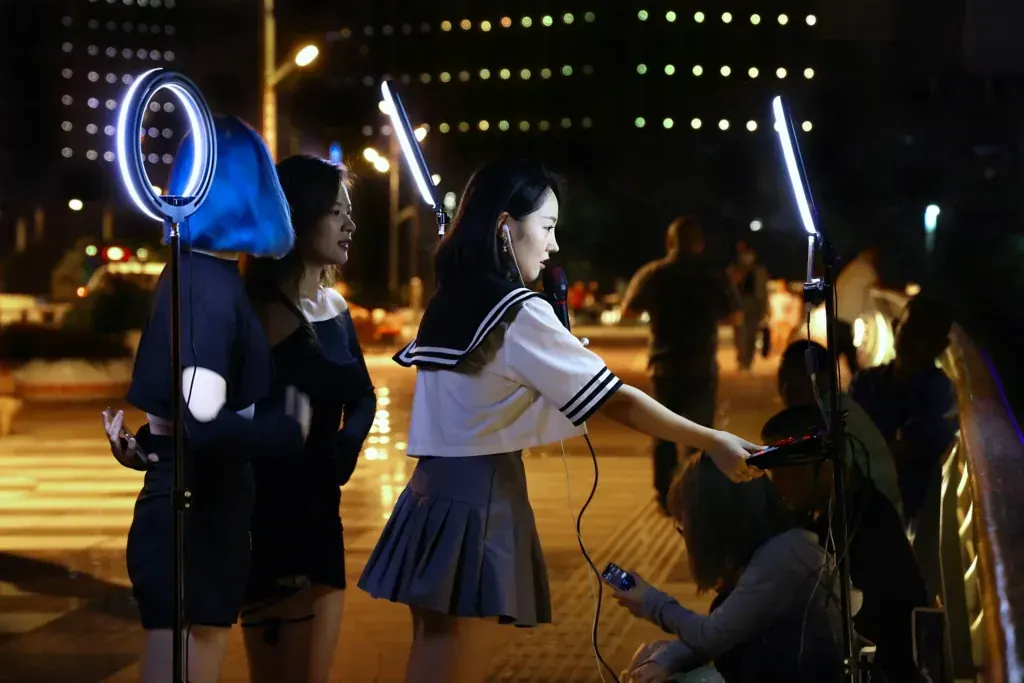
## Douyin as a Growth Engine, Not a Crutch
> Collgene's mid-tier KOL matrix combined with scientific storytelling drove 60% new customer acquisition.
Their Douyin strategy avoided the single celebrity livestream trap. Instead, they built a matrix of mid-tier KOLs who could hold two registers at once: ingredient transparency and emotional resonance. Creators who talked about sensitive skin recovery in the same breath as workplace exhaustion.
That content served two jobs. It converted first-time buyers. And it seeded the search terms that fed back into Tmall and RED.
## Xiaohongshu as the Long-Tail Search Engine
> The #MyEmotionalOasis campaign generated over 120,000 UGC posts and 210% search growth on Xiaohongshu.
Most brands underestimate what Xiaohongshu does in a purchase funnel. Calling it a mood board misses the point. It is where Chinese consumers verify a brand before spending real money. Notes about ingredients, routines, before-and-after skin, and honest reviews build the long-tail search foundation that makes paid media more efficient everywhere else.
Collgene seeded emotional narratives there. Gift sets named "Overtime Rescue Kit" and "Stress-Relief Set." Campaigns built around urban life and skin that reacts when you have not slept. That content drove community before it drove conversion.
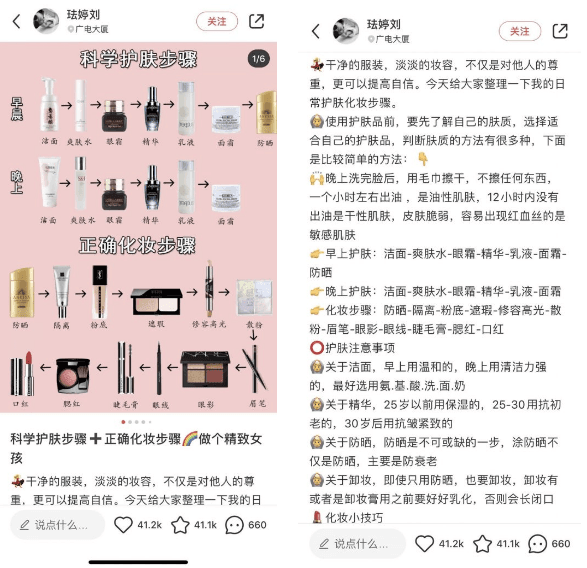
## Three Platforms, Three Jobs
> Pierre Fabre's next growth phase depends on combining medical heritage with platform agility, emotional storytelling, and data intelligence.
Tmall and JD build trust and protect repurchase. Douyin discovers and converts new buyers. Xiaohongshu earns organic search and community. None of these platforms are interchangeable. Running the same message across all three is one of the fastest ways to waste a China budget.
The brands we work with that grow sustainably have one thing in common: they know which job each platform is supposed to do, and they staff and fund them differently.
That is the playbook. It is not about picking science or emotion. It is about knowing where each one belongs.
---
# Sell-in vs sell-out with a Chinese distributor
URL: https://www.thechinapath.com/insights/sell-in-vs-sell-out-china-distributor
Published: 2026-09-24
Updated: 2026-09-24
Author: TheChinaPath
Category: Market Strategy
Sell-in is what your distributor buys. Sell-out is what shoppers buy. How to spot stock pushing in China, and the one ratio to check every month.
Sell-in is what your distributor buys from you. Sell-out is what shoppers
buy, in a store or online. When sell-in grows faster than sell-out,
stock is piling up in the channel, and a price war or a fight over returns
usually follows. Get scan or depletion data every month and judge the
distributor on weeks of cover. Orders only tell you what left your
warehouse.
*Filings, surveys and regulations checked September 24, 2026.*
Chinese has a word for the problem: 压货 (yāhuò), pushing stock onto the
channel. The brand books a sale when the distributor pays. Whether a shopper
ever buys the product becomes the distributor's worry, and then, a year
later, the brand's.
For a foreign brand, year one tends to look fine on paper. The distributor
orders, pays and orders again. Then the reorders stop, a promotion you
never approved shows up on Pinduoduo, and the distributor asks you to take
back stock that expires in four months. The signals show up well before
that call.
## Why Chinese distributors are refusing stock in 2025 and 2026
For thirty years the deal in Chinese consumer goods ran the same way. The
brand set a quarterly target, the sales rep leaned on the distributor at
month end, and the distributor took the stock for rebates. Growth covered
the mistakes: stock overbought in March sold by September, because the
market had grown.
Growth stopped doing that job.
> "In this market, forget pushing stock. We won't even take on a brand that
> has no after-sales policy. Once you count the returns, you've worked for
> nothing."
> Source: Huxiu (虎嗅), carrying New Distribution (新经销), July 2026.
> https://www.huxiu.com/article/4873623.html
The economics explain the mood.
> A consumer goods distributor put four to five million RMB a year into
> stock for less than 300,000 RMB of actual profit. A drinks wholesaler in
> Chongqing found the same product selling online during 618 for less than
> he paid for it.
> Source: Jiemian (界面新闻), carrying Kuaidao Caijing (快刀财经), July 2025.
> https://www.jiemian.com/article/13003026.html
Baijiu, the Chinese white spirit, shows the whole chain in one survey.
Sell-out slowed and stock backed up, so distributors dumped it to raise
cash.
> In the first half of 2026, weak sell-out left baijiu stock piling up in
> the channel. Distributors and retailers sold at low prices to raise cash,
> and 56.6% said price inversion (selling below what they paid) had got
> worse. Producers cut back on stock pushing and lowered targets, and 51.2%
> of distributors and retailers remitted less money to producers.
> Source: China Alcoholic Drinks Association (中国酒业协会) and KPMG China,
> 2026 Baijiu Market Mid-Year Report, June 2026.
> https://assets.kpmg.com/content/dam/kpmgsites/cn/pdf/zh/2026/06/2026-chinese-baijiu-market-mid-term-research-report.pdf
Bottled drinks, usually the easy category, had the same spring.
> At the 2026 start-of-season order meetings for bottled drinks,
> distributors were less willing to attend and less willing to pay. Some
> that paid could not take delivery: the stock they held was not selling
> and their warehouses were full.
> Source: Huxiu (虎嗅), carrying Food Insider (食品内参), May 2026.
> https://www.huxiu.com/article/4861863.html
A foreign brand arriving now sits across from someone who remembers all of
it. A first-year plan that only works if the distributor loads up will
mostly get a polite no.
## Sell-in vs sell-out: five signs your distributor is overstocked
| Signal | What it looks like | Seen in China | What to ask for |
|---|---|---|---|
| Orders vs scans | Orders rise while scans or depletions stay flat or fall | Li Ning, 2026: sales to franchised distributors up 1.7% in H1; their stores' sell-through down mid single digits in Q2 | Monthly sell-out by SKU, set next to your invoices |
| Weeks of cover | Stock divided by weekly sell-out keeps climbing | Xtep, H1 2026: channel stock at 4.5 to 5 months of sales | Stock on hand by SKU and batch, every month |
| Discounting online | Your product on Tmall, JD, Pinduoduo or Douyin below your suggested retail price | Baijiu, H1 2026: 56.6% of distributors and retailers saw price inversion worsen | Where the stock behind each cheap listing came from |
| Sudden promotions | Gift boxes, bundles and bulk deals outside the plan | Shede Spirits, 2024: 3% to 5% of extra rebates to help distributors clear stock | A promotion calendar a month ahead |
| Late payment | Payments slip, reorders space out, rebate claims get louder | Baijiu, H1 2026: 51.2% of distributors and retailers remitted less | Aged receivables monthly. [Hold new shipments until a late payment clears](/insights/payment-terms-chinese-distributor) |
Any one signal can have an innocent cause, a public holiday or a
retailer's own promotion. Two or three in the same quarter usually mean the
channel is full.
Li Ning, the sportswear brand, publishes both sides of the first signal.
> Li Ning's revenue from franchised distributors rose 1.7% in the first
> half of 2026. Sell-through in its wholesale (franchised distributor)
> channel rose by a low single digit in the first quarter and fell by a mid
> single digit in the second.
> Source: Li Ning Company (李宁), 2026 interim results and Q1 and Q2 2026
> operational updates, HKEX, April to August 2026.
> https://www1.hkexnews.hk/listedco/listconews/sehk/2026/0820/2026082001445.pdf
> https://www1.hkexnews.hk/listedco/listconews/sehk/2026/0422/2026042200179.pdf
> https://www1.hkexnews.hk/listedco/listconews/sehk/2026/0715/2026071500286.pdf
It's a small gap, and Li Ning reports it to the Hong Kong exchange every
quarter. A private distributor reports what its contract asks for.
## Weeks of cover: the one ratio to track
Weeks of cover is stock on hand divided by average weekly sell-out. Count
stock in the distributor's warehouse, in transit and, when you can get it,
on retailers' shelves. Average sell-out over the last eight weeks so one
promotion doesn't flatter it (Double 11 will try, every year).
A worked example. A distributor holds 9,000 cases and has sold out 4,800
over the past eight weeks. That's 600 cases a week, or 15 weeks of cover.
Before Double 11 it orders another 3,000 cases. If sell-out holds at 600 a
week, cover jumps to 20 weeks.
Your sales report will call that order growth. For the distributor it's
five more weeks of stock to carry, with the cash tied up in it.
Where should the line sit? Our working rule is your replenishment lead time
plus about a month. If a container takes eight weeks from your factory to
the distributor's warehouse, cover much above 12 weeks is stock it doesn't
need yet. Shelf life pulls the number lower again for food and cosmetics.
Past your line, hold the next shipment until cover comes back down.
Big Chinese sportswear brands publish their own figure.
> Xtep's core brand ran channel inventory turnover of 4.5 to 5 months in
> the first half of 2026, with retail discounts of 25% to 30%.
> Source: Xtep International (特步国际), operational update for Q2 and H1
> 2026, HKEX, July 2026.
> https://www1.hkexnews.hk/listedco/listconews/sehk/2026/0717/2026071700195.pdf
Li Ning's interim filing, cited above, puts its channel inventory-to-sales
ratio at 4 months. Four months is about 17 weeks; five is about 22. Those
brands clear old seasons through outlets, and an imported snack with a
nine-month shelf life can't sit that long. Read their figures as the outer
limit.
The trend tells you more than the level.
Cover that climbs three months running is the signal, whatever number it
started from.
## Where to get sell-out data in China
The distributor holds most of it, and its first answer will probably be
that the numbers are confidential. Get them anyway: monthly, by SKU, in the
same format.
**Scan data.** China's big drinks brands print a code on every unit and pay
shoppers or shopkeepers to scan it. Each scan tells the brand where a unit
actually sold.
> Dongpeng Beverage says its one-code-per-item and "five-code linkage"
> systems give it real-time monitoring of channel inventory and outlet
> sell-out, across more than 3,400 distributors and over 4.5 million active
> outlets. Smart fridges upload sales data in real time, and data models
> flag abnormal flows of goods between regions.
> Source: Dongpeng Beverage (东鹏饮料), 2025 annual report, March 2026.
> https://static.cninfo.com.cn/finalpage/2026-03-31/1225063447.PDF
A foreign brand with one distributor won't build that in year one. A QR
code on each pack, with a small scan reward, still gives you a sell-out
signal the distributor can't edit.
Baijiu makers pay for the same signal. Shede Spirits, quoted further down,
lists scan fees to liquor shops and scan rewards to shoppers among its
costs.
**Retailer portals.** Many national supermarket and convenience chains give
suppliers a portal with sales by store. Ask your distributor which chains it
sells to and whether it has a login, then ask for the monthly export.
**Platform backends.** If the distributor runs a Tmall or JD store with your
goods, the platform's analytics show orders, refunds and stock. On Tmall
the tool is Business Advisor (生意参谋), and the store owner can hand a
sub-account to an outside party.
> A Taobao or Tmall seller can set up sub-accounts for employees, agents,
> advisers or third-party service providers, with access to tools such as
> Business Advisor within the permissions the main account grants.
> Source: Taobao (China) Software Co. (淘宝(中国)软件有限公司),
> sub-account software license agreement, revised June 2023.
> https://terms.alicdn.com/legal-agreement/terms/suit_bu1_tmall/suit_bu1_tmall201802012028_72666.html
Put a read-only sub-account on the list for day one. It's a small ask, and
it shows you online sell-out with no spreadsheet in between.
**The distributor's own system.** Most distributors run an ERP or a
distribution management system. A monthly export of stock by SKU and batch,
with expiry dates, is enough. The batch column matters most: it shows which
stock is aging before anyone asks you to take it back.
Good distributors share this without a fight. Our
[guide to finding a distributor in China](/compass/find-a-distributor-in-china)
makes sell-out data a vetting question, asked before any contract, for that
reason.
## What to write into the distribution contract
Most fights over stock start with a contract that only covers orders. Add
these terms before you sign:
- **Monthly reporting.** Sell-out and stock on hand by SKU and batch, by a
fixed day each month, in a template attached to the contract.
- **Data access.** A read-only sub-account on every platform store selling
your goods, and the right to visit the warehouse with notice.
- **A cover ceiling.** You may refuse or delay any shipment that would push
cover past an agreed number of weeks.
- **Rebates on sell-out.** Pay volume rebates on depletions or scans. That
removes the reason to load up at quarter end.
- **Aging stock and returns.** Agree now what happens to stock near its
date, including who pays for the markdown and where the goods go.
- **Buy-back on exit.** On termination, you or the next distributor buy
the remaining saleable stock at landed cost or a stated discount to it.
A minimum resale price can't go in. China bans it.
> The Anti-Monopoly Law bars an operator from agreeing with a trading
> counterparty to fix the resale price to a third party or to set a minimum
> resale price. An implemented agreement can draw a fine of 1% to 10% of
> the previous year's sales.
> Source: Anti-Monopoly Law of the People's Republic of China
> (中华人民共和国反垄断法), 2022 amendment, arts. 18 and 56, in force August
> 1, 2022. https://policy.mofcom.gov.cn/claw/clawContent.shtml?id=97047
Price discipline has to come from how much stock you ship. A distributor
sitting on 10 weeks of cover has little reason to dump. At 30 weeks it
needs the cash more than it needs your price.
For brands that want us to stay on after signature, our
[distribution service](/enter-china/distribution) runs monthly business
reviews built on these reports.
## What to do when the channel is already full
Stop shipping, or slow down to what the shelves are selling. Cases sent into
a full channel tend to come back later as discounts.
Shede Spirits, a listed baijiu maker, did exactly that in 2024 and
explained it to the Shanghai Stock Exchange.
> After several years of fast growth, distributors' stock of Shede's lead
> product had risen. The company adopted a policy of "strong sell-out,
> destocking, stable prices", cut volume to hold price and helped
> distributors clear stock, so distributor orders fell in 2024. It added 3%
> to 5% of sales rebates on several products, mainly to help customers
> clear stock, and distributors' reorder cycle lengthened.
> Source: Shede Spirits (舍得酒业), reply to the Shanghai Stock Exchange
> inquiry letter on its 2024 annual report, June 2025.
> https://money.finance.sina.com.cn/corp/view/vCB_AllBulletinDetail.php?stockid=600702&id=11175958
Shede told the exchange the policy cut its 2024 revenue in the short term.
That's the cost of stopping. Brands that keep shipping to protect this
year's number pay later, in price.
Then work the stock down:
- **Count it.** Stock by SKU and batch, with expiry dates. A clear-out
planned from order history misses the aging lots.
- **Fund the sell-out.** Put promotion money behind shelf activity and
scans, paid on proof. Money handed over as an order discount tends to
surface as a lower price online.
- **Pick the exit for old stock.** Near-date goods will leave through some
channel. Choose it yourself (a staff sale or a food-service buyer,
say) before the goods turn up on a live stream at half price.
- **Reset the target.** Build next year's plan from sell-out.
If the online price is the problem, fix the channels together. For Kerry's
DaVinci Gourmet, we brought Tmall and distributor pricing into line so the
two stopped undercutting each other, as the
[DaVinci Gourmet case](/work/kerry-davinci) describes.
A distributor that still won't share data after a full channel has told you
what you need to know. The honest comparison of
[a distributor and your own store](/insights/china-distributor-vs-own-store)
is worth reading next, and [Compass](/compass) is where to look for a
replacement.
## FAQ
**What is the difference between sell-in and sell-out?**
Sell-in is what your distributor buys from you, the number on your
invoices. Sell-out is what shoppers buy from retailers or online stores,
measured by scans, retailer reports or depletions. Sell-in is your revenue,
and sell-out is the only proof that shoppers want the product. When
sell-in grows faster, the difference sits in a warehouse.
**How many weeks of stock should a Chinese distributor hold?**
Your replenishment lead time plus about a month, as a working rule, so
about 12 weeks on an eight-week shipping cycle. Chinese sportswear brands
report 4 to 5 months across their channel, but they have outlets to clear
old seasons. Food and cosmetics with a shelf life should sit well below
that.
**Can I stop my distributor from discounting online?**
Not through a contract price. China's Anti-Monopoly Law bans agreements that
fix a resale price or set a minimum one, with fines of 1% to 10% of the
prior year's sales. What you control is how much stock you ship and what
you pay rebates on. Your own store's pricing is yours to set too.
**What if my distributor won't share sell-out data?**
Make it a condition before signature, with the reporting template attached
to the contract. If a current distributor refuses, ship less and base each
order on the stock and sell-out it can show you. A distributor that hides
its stock position has a reason.
[Ask Compass for a shortlist of vetted distributors for your category](/contact#shortlist)
---
# Exploring Social Commerce in China Platforms: Strategies and Market Impact
URL: https://www.thechinapath.com/insights/social-commerce-china-platforms-strategies-best-practices
Published: 2024-06-24
Author: TheChinaPath
Category: Platforms
How social commerce works in China on Xiaohongshu, WeChat and Douyin, where user content, influencers and livestreams turn browsing into buying.
## Exploring Social Commerce in China Platforms: Strategies and Market Impact
[Social commerce](/grow-in-china/social-commerce) has revolutionized the way people shop online, particularly in China. This hybrid of social interaction and online shopping has created a vibrant ecosystem where consumers engage with brands, influencers, and each other in unprecedented ways. China's social commerce [platforms](/learn-china/platforms), such as Xiaohongshu, WeChat, Douyin, Taobao, Pinduoduo, and Weibo, have been at the forefront of this transformation. These platforms use user-generated content, Key Opinion Leaders (KOLs), and innovative features like live streaming to create an engaging and dynamic shopping experience.
## The Rise of Social Commerce in China
Social commerce in China merges the convenience of e-commerce with the engagement of social media, offering a dynamic shopping experience that appeals to the country's vast online population. With over 1 billion internet users, China leads the world in integrating social interactions with online shopping. This unique market uses the power of recommendations from friends, family, and influencers, driving consumer trust and engagement.
## Key Features of Chinese Social Commerce
### 1. User-Generated Content
User-generated content (UGC) is at the heart of social commerce in China. Consumers actively share their experiences, opinions, and visuals such as reviews, photos, and videos, which influence the purchasing decisions of others. This communal sharing fosters a sense of trust and authenticity, making UGC a powerful tool in the social commerce landscape.
### 2. Role of Key Opinion Leaders (KOLs)
Key Opinion Leaders (KOLs) are influential figures who play a critical role in Chinese social commerce. KOLs use their online presence to endorse products, engage with their followers, and drive sales through strategies like live streaming and product reviews. Their active involvement not only shapes consumer preferences but also enhances brand recognition, making them indispensable in the social commerce ecosystem.
### 3. The Power of Live Streaming
Live streaming has become a significant aspect of social commerce in China, allowing brands and influencers to showcase products in real-time to large audiences. Consumers can interact with KOLs during live streams, ask questions, and provide feedback, creating an interactive and engaging shopping experience. The effectiveness of live streaming is evident, with 763 million live streaming users as of June 2023, demonstrating its impact on driving sales and consumer engagement.
## Evolution of Marketing Strategies in Chinese Social Commerce
To stay ahead in the competitive social commerce landscape, brands must continually adapt their marketing strategies and embrace technological innovations. A prime example is Alibaba's launch of Tmall mobile app version 13.1.0 in 2022, which introduced a advanced 3D shopping feature. This innovation allows users to explore products in an immersive virtual environment, enhancing the shopping experience and setting new standards for online retail.
## Influence of Social Commerce in China
Social commerce in China is steadily gaining influence, merging online shopping with social interactions to create a dynamic and engaging environment. Traditional e-commerce channels still dominate, but social commerce is growing rapidly, driven by user-generated content, KOLs, and live streaming. Platforms like Xiaohongshu, WeChat, and Douyin (Chinese TikTok) are at the forefront of this revolution, offering businesses unique opportunities to connect with consumers and enhance their shopping experiences.
## Major Social Commerce Platforms in China
China's social commerce landscape is characterized by a variety of platforms, each with unique features that cater to different aspects of consumer interaction and purchasing behavior. Below is an in-depth exploration of some of the major social commerce platforms in China, highlighting their key functionalities and advantages.
### 1. Xiaohongshu (Little Red Book)
Xiaohongshu, or Little Red Book, is one of the most influential social commerce platforms in China. Initially recognized for its reliable and authentic reviews on products, particularly in the cosmetics, fashion, and beauty sectors, Xiaohongshu has since diversified its offerings to include a broader range of product categories.
**Key Features of Xiaohongshu:**
* High Engagement Metrics: The platform boasts high engagement rates, with users spending an average of 40 minutes per day on the app. This level of interaction is driven by the quality and authenticity of the content, as well as the platform's user-friendly interface.
* Live Streaming Integration: Xiaohongshu integrates live streaming features, allowing influencers and brands to showcase products in real-time, enhancing user engagement and driving sales.
* Young User Base: With 90% of its users under 32 years old, Xiaohongshu appeals to a younger demographic, particularly those born in the 1990s, who are often more tech-savvy and open to online shopping.
* Smooth Integration with WeChat and Alipay: Jointly invested in by Tencent and Alibaba, Xiaohongshu benefits from smooth integration with major digital payment systems, enhancing the overall user experience and facilitating easy transactions.
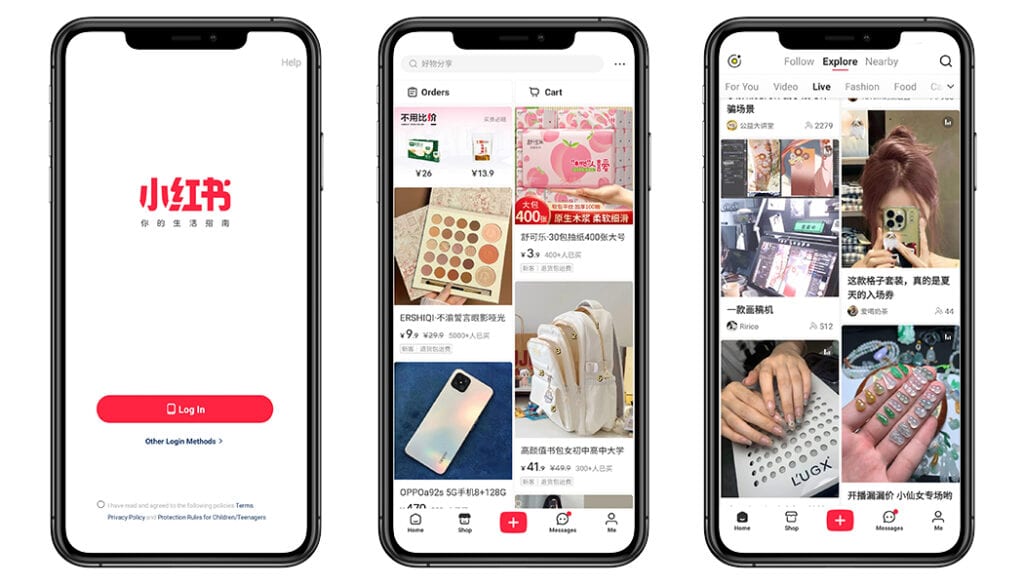
### 2. WeChat
WeChat is widely recognized as China's all-in-one super-app. Originally launched as a messaging platform, it has evolved into a comprehensive ecosystem encompassing social media, e-commerce, mobile payments, and more. This evolution has cemented WeChat's position as a central social commerce platform.
**Key Features of WeChat:**
* WeChat Channels: This feature allows users to share and recommend products within their social networks, using word-of-mouth marketing. Brands can also conduct live demos and unveil new products directly to their target audience.
* Mini-Programs: WeChat Mini-Programs can be embedded within Channels and official accounts, providing a smooth consumer journey from content discovery to purchase. These mini-apps enhance the shopping experience by allowing users to complete transactions without leaving the WeChat environment.
* WeChat Pay: Integrated digital payment capabilities through WeChat Pay facilitate easy and secure transactions, enhancing user convenience and trust.
* Extensive Consumer Reach: WeChat's vast user base and comprehensive features make it a vital tool for businesses looking to tap into the Chinese market.
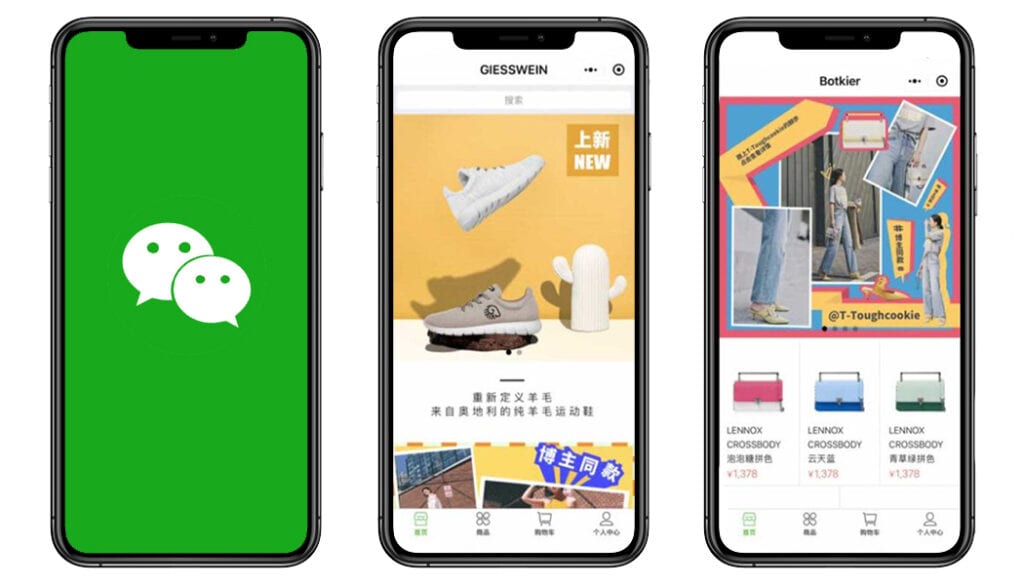
### 3. Taobao / Tmall Platform (GuangGuang)
Taobao and Tmall, part of Alibaba Group, have been key players in China's e-commerce scene. The GuangGuang platform integrates these marketplaces, using the power of social commerce to enhance consumer engagement and sales.
**Key Features of GuangGuang:**
* Market Share and Influence: Taobao and Tmall hold a significant share of the e-commerce market in China, offering a vast consumer base for social commerce activities.
* Livestreaming KOLs: The platform has seen the rise of influential KOLs like Li Jiaqi, also known as the "lipstick king," who have redefined the online shopping experience through engaging live streams and product endorsements.
* Retail-Specific Platform: Unlike general social media platforms, Taobao and Tmall are designed specifically for shopping, with algorithms that prioritize buying intent and optimize the user experience for commerce.
* Special Sales Events: The platform hosts a variety of sales events throughout the year, beyond the famous Singles' Day (11/11), offering customers exclusive deals and driving significant traffic and sales.
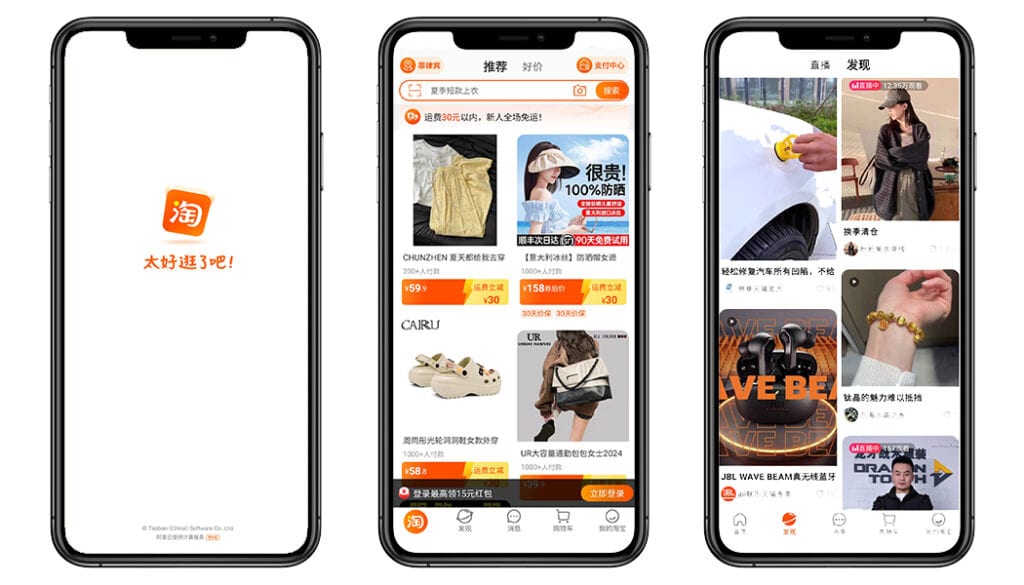
### 4. Pinduoduo
Pinduoduo is a unique social commerce platform that emphasizes group buying, allowing users to purchase products at discounted prices by forming teams with friends and acquaintances. This model has proven highly effective in creating a sense of community and exclusivity.
**Key Features of Pinduoduo:**
* Group Buying: The platform's core feature is its group buying model, which encourages users to team up to access special discounts, using social proof and collective purchasing power.
* Gamified Features: Pinduoduo incorporates gamified elements, such as time-limited deals and daily check-in bonuses, to keep users engaged and incentivize frequent interactions.
* Focus on International Brands: The platform has seen a growing popularity of international brands, appealing to consumers looking for diverse and high-quality products.
* Mini-Games: Pinduoduo retains consumer engagement through in-app mini-games, enhancing the overall user experience and encouraging repeated use.
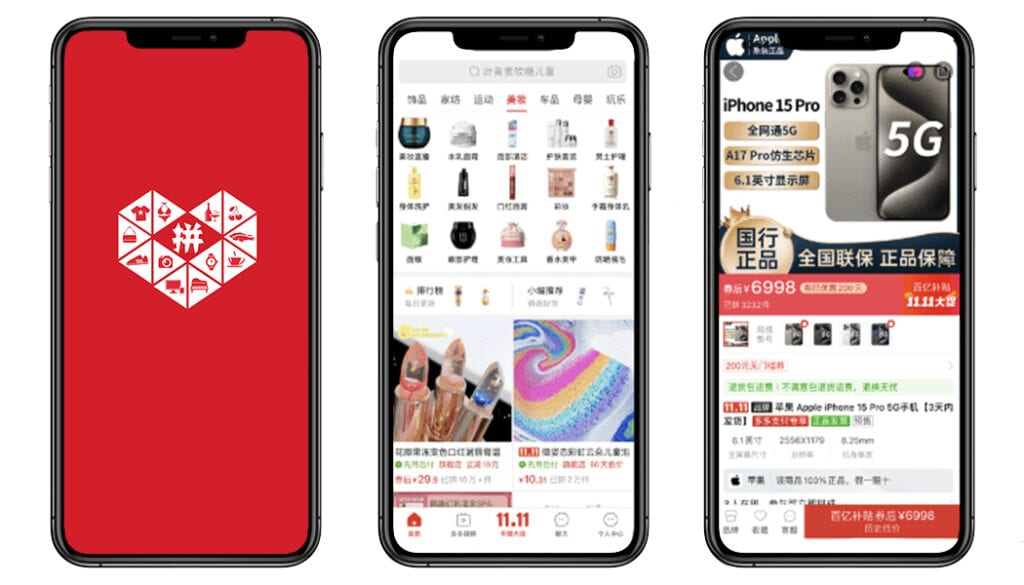
### 5. Weibo
Weibo, often likened to Twitter, has successfully transitioned into a powerful social commerce platform with the introduction of Weibo Xiaodian. This feature enables brands to manage inventory, process orders, and establish digital storefronts within the platform.
**Key Features of Weibo:**
* Strong Presence: Weibo's longevity and adaptability have cemented its position as a major social media platform in China, appealing to a wide range of demographics.
* [KOL](/social-in-china) Marketing: The platform is ideal for finding and collaborating with KOLs, who can significantly boost brand visibility and sales through their influence.
* Smooth Communication: Weibo facilitates direct communication between brands and customers, enhancing engagement and customer service.
* E-Commerce Management: Weibo Xiaodian allows brands to control their e-commerce operations within the platform, providing a smooth and integrated shopping experience for users.
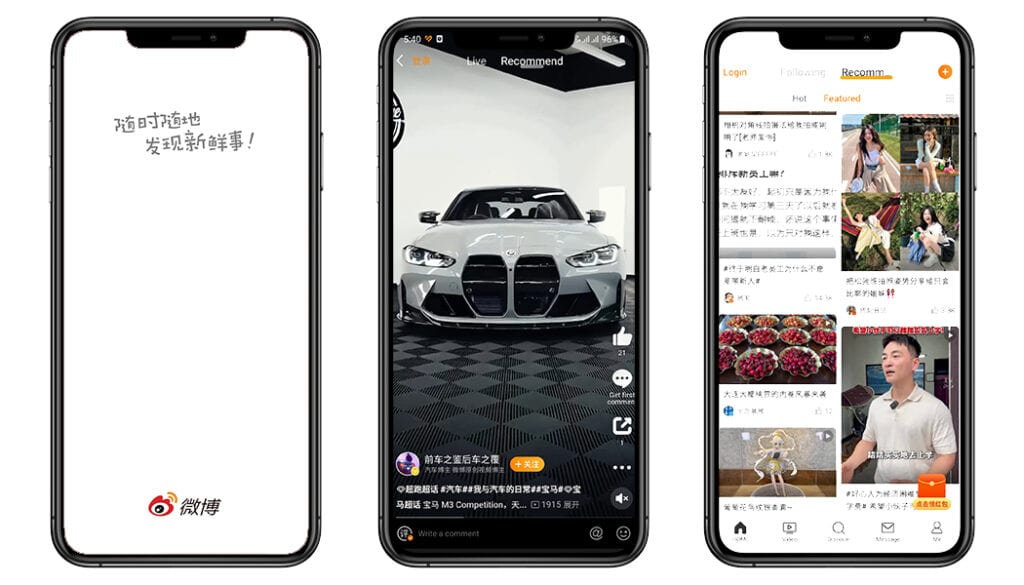
## Why China Leads the World in Social Commerce
China's dominance in social commerce can be attributed to its unique digital infrastructure and consumption culture. Companies like Tencent and Alibaba have created comprehensive digital ecosystems that dominate e-commerce, social media, and digital payments. This integration allows for a smooth consumer journey, where users can browse social feeds, purchase products, and complete transactions effortlessly.
Cultural nuances also play a crucial role. Chinese consumers are accustomed to interactive and engaging digital experiences, making live streaming and mobile video apps popular for both entertainment and shopping. This cultural foundation has provided a solid base for social commerce to thrive, setting China apart from global counterparts.
Social commerce platforms in China have revolutionized the way consumers shop and interact online. By using user-generated content, the influence of KOLs, and the power of live streaming, these platforms create a dynamic and engaging shopping experience. As technology continues to advance and consumer expectations evolve, businesses must adapt their strategies to stay competitive in this rapidly growing market. With platforms like Xiaohongshu, WeChat, Taobao, Pinduoduo, and Weibo leading the charge, the future of social commerce in China looks promising and full of opportunities for brands to connect with their audience in meaningful ways.
---
# Storytelling in B2B Marketing: Enhancing Brand Connection in China
URL: https://www.thechinapath.com/insights/storytelling-in-b2b-marketing-enhancing-brand-connection-in-china
Published: 2024-04-16
Author: TheChinaPath
Category: Brand & Localization
How B2B brands in China use storytelling to explain complex offers, humanize the company and build the trust that long, calculated deals depend on.
## Understanding Storytelling's Role in B2B Marketing within China
In the context of B2B [marketing](/grow-in-china/campaigns) in China, storytelling is about crafting and sharing stories that embody your [brand](/enter-china/branding-localisation)'s ethos, mission, and solutions in a compelling way. It involves translating complex concepts into relatable narratives for the target audience, facilitating a deeper personal connection. Given the strategic nature of B2B transactions, where decisions are calculated rather than impulsive, the use of an authentic brand voice and supportive content becomes crucial. Storytelling thus plays a key role in building and maintaining strong customer relationships in this market.
The strength of storytelling in B2B marketing, especially for Chinese brands, lies in its capacity to humanize your brand and forge deeper connections with your audience. By sharing real-life examples, utilizing influencers, and presenting [case studies](/work) and success stories, companies can demonstrate the positive impacts of their products or services on clients' businesses in China. This not only builds trust and credibility but also makes the brand more relatable and memorable to Chinese consumers. When prospects see their own scenarios reflected in your stories, they are more inclined to engage with your content and consider your solutions, creating an emotional resonance.
Storytelling significantly enhances your brand's distinction in a competitive market. By conveying unique stories that showcase your brand's personality, values, and expertise, you create a standout brand identity. This is especially crucial in the B2B sector where products and services often appear similar. Effective storytelling sets you apart from competitors and is essential for attracting business, particularly for Chinese brands aiming to establish a unique presence in crowded markets.
## Key Strategies for Crafting Engaging B2B Stories in the Chinese Market
To effectively engage and convert in B2B marketing, especially for Chinese brands, certain key elements must align. First, a deep understanding of your audience is essential. Developing detailed buyer personas provides insight into their needs, challenges, and decision-making processes. With this knowledge, you can craft stories that are directly aligned with their solution-seeking efforts. Integrating storytelling into your content strategy ensures that blogs, videos, and case studies contribute to a cohesive narrative that progressively guides prospects toward making a purchase.
To create compelling B2B narratives in China, focus on the unique challenges your Chinese audience faces and how your brand can solve them. Employ storytelling techniques such as character development and customer journey narratives, incorporating elements of conflict and resolution, to forge a strong narrative arc that resonates with Chinese brands and consumers. By emphasizing the specific pain points and aspirations of your buyer personas in China, you can craft stories that not only inform but also inspire and drive them to take action, positioning your brand as a crucial guide in their journey to success.
## Embedding Authenticity and Emotional Connections in B2B Marketing for Chinese Brands
Authenticity is the cornerstone of effective B2B narratives, especially crucial for Chinese brands in today's market where consumers distinguish genuine messages from promotional fluff. Sharing true stories that embody your brand's values and establishing emotional connections are key, even in the logical, data-driven realm of B2B transactions. People behind the decisions are influenced by emotions, and narratives that evoke empathy or excitement can significantly enhance your marketing appeal in China.
Being transparent about your brand's journey, including challenges and lessons, builds vulnerability and relatability, strengthening connections. Consider using platforms like LinkedIn to share these authentic narratives and gauge the impact on your audience.
## Strategic Storytelling for B2B Marketing in the Chinese Market though the consumer journey
Storytelling through the customer journey is especially crucial in the B2B context for engaging the Chinese audience, where the buying process involves multiple stages and decision-makers. Effective storytelling should introduce tailored narratives at each phase, from initial discovery through consideration to the final decision, carefully aligning content to highlight your brand's unique offerings and a profound understanding of the Chinese market's specific challenges and needs. This strategy ensures that each piece of content helps guide potential clients towards a decision, using lead nurturing strategies to keep prospects engaged and moving forward.
Storytelling in B2B marketing transcends being just a trend; it's fundamental to effective content marketing. By crafting stories that resonate emotionally and align with the customer journey, companies can genuinely engage their audiences and drive greater conversions. In the B2B realm, where purchase cycles are longer and more complex, a compelling and authentic narrative is essential for maintaining lead interest and achieving marketing objectives.
---
# Taobao Flash Sale and the 30-Minute Shift: Why China Retail Is Going Deeper Online to Offline
URL: https://www.thechinapath.com/insights/taobao-flash-sale-and-chinas-30-minute-retail
Published: 2025-12-22
Updated: 2026-05-15
Author: Cyril Drouin
Category: E-Commerce
Alibaba turned Ele.me into Taobao Flash Sale, one platform for food delivery, instant retail and in-store services, built around 30 to 60 minute delivery.
## Chinese retail used to start with a familiar question.
"What is our plan for [Taobao](/grow-in-china/cross-border-ecommerce) traffic this week?"
Now the question is changing.
"What is our plan for [Taobao](/grow-in-china/cross-border-ecommerce) traffic and local fulfilment, in the same flow?"
Alibaba's decision to rebrand Ele.me into Taobao Flash Sale (淘宝闪购) goes beyond a name change. It is a structural reset that pulls food delivery, instant retail, and in-store services into a unified Taobao experience.
China is pushing deeper into online and offline integration, and the platforms are doing it at speed.
---
## The real message behind the orange
Ele.me's old "blue knights" were a symbol of a standalone delivery brand.
Under Taobao Flash Sale, riders become part of a broader fulfilment network. The color shift is symbolic, but the strategic move is practical: delivery is no longer a parallel universe, it becomes shared infrastructure for Taobao's instant retail ambitions.
Alibaba has been building toward this for years, and in June 2025, it merged Ele.me and Fliggy into its core China e-commerce division, keeping operations separate but aligning strategy and data under one group.
The rebrand is simply the consumer-facing moment where the org chart becomes visible in the app.
---
## Taobao is trying to feel more like a local delivery network
The biggest change is not branding. It is a consumer expectation.
Taobao is pushing toward a faster, more physical shopping experience, where a meaningful share of everyday orders are delivered within 30 to 60 minutes, competing in the same arena as Meituan and JD's quick commerce efforts.
This is what "deeper online and offline integration" looks like in China now.
Not a buzzword.
A platform designed to pull demand, route it locally, and fulfill it from nearby stores and micro-warehouses.
Once consumers get used to that, the bar rises for everyone.

---
## Why Alibaba is doing it
There are three pressures behind this move.
**1) Competition is now full-stack.**
Meituan dominates local services. JD is investing heavily in quick commerce. If Taobao remains "national marketplace first," it risks losing high-frequency moments that shape daily habits.
**2) The market is expanding beyond food.**
China's instant retail market is forecast to exceed RMB 2 trillion by 2030. People's Daily Online Food, groceries, pharmacy, convenience, and "anything that can be delivered" are converging into one expectation.
**3) Alibaba wants Taobao to be inside daily life.**
If Taobao can own more of the everyday rhythm, it strengthens loyalty, increases session frequency, and gives it more use in category growth.
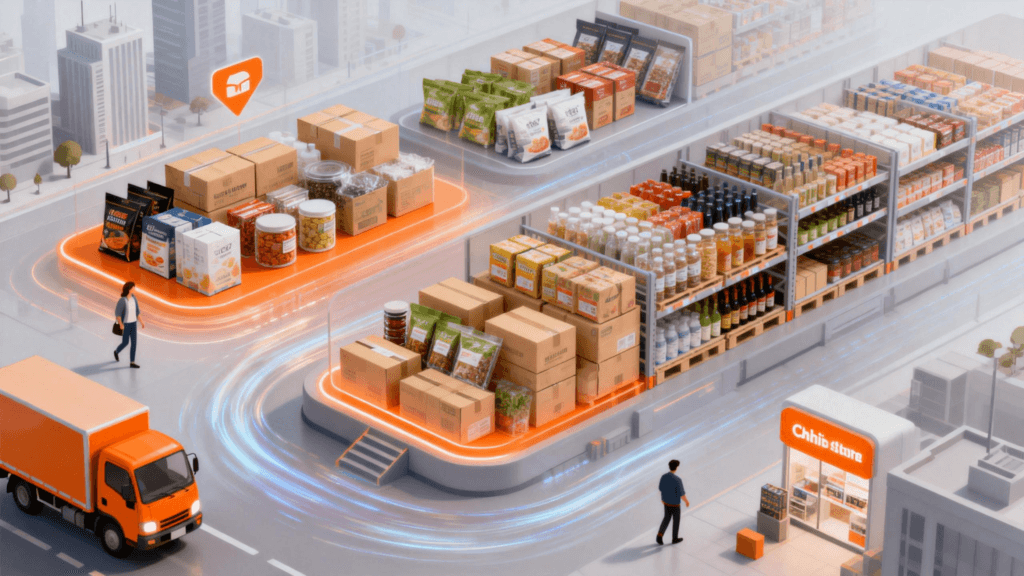
---
## What this means for global brands and practical implications
This is where many non-Chinese brands misread the shift.
They see "instant retail" and think it is another [marketing](/grow-in-china/campaigns) channel.
In reality, it is a new operating model that forces brands to connect marketing, merchandising, and fulfilment.
**1) Your assortment needs an instant retail logic**
Not every SKU belongs in a 30-minute promise.
Start by splitting your portfolio:
* **Instant heroes**: small, high-frequency, low-consideration items that benefit from speed (refills, essentials, accessories)
* **Planned purchase**: higher consideration items where speed is less important than education and reassurance
* **Long tail**: SKUs that should remain marketplace-first due to inventory complexity
If you try to put everything into instant retail, you will create stockouts, inconsistent service, and customer disappointment.
**2) Local availability becomes a conversion driver**
In instant retail, the question is not "do they like the product."
It is "is it nearby right now."
That changes what your content and merchandising should emphasize:
* Clear "available now" cues
* Delivery time promise clarity
* Pack size, use case, and urgency moments
* Store-level promotions that actually match local inventory
This is also where many global brand teams struggle, because it requires tighter coordination between brand, TP, and offline distribution.
**3) Your brand story has to survive speed**
Fast commerce often pulls brands toward generic, price-led messaging.
That is a trap.
The winners build "speed-friendly brand assets":
* A small set of benefit-led visuals that still feel premium
* A consistent tone of voice across Taobao, Douyin, and Xiaohongshu
* KOL content that bridges discovery to instant conversion
* Service cues that signal trust (authenticity, freshness, warranty, official store)
Speed sells. Trust keeps you.
**4) You will need a clear operating lane inside your team**
Taobao Flash Sale is not "another tab."
It is a lane with its own rhythm, metrics, and constraints.
Treat it like a new playbook:
* Weekly assortment and inventory checks
* Store or city-level promo calendars
* A content cadence designed for high-frequency purchase moments
* A measurement model that links media to local fulfilment outcomes
---
## A simple readiness checklist
If you are a global brand active in China, ask these five questions now:
* Do we know which SKUs win in "need it now" scenarios?
* Do we have local inventory close enough to fulfill reliably?
* Are our Taobao assets built for fast conversion as well as brand storytelling?
* Can our TP and retail partners execute store-level merchandising consistently?
* Do we have governance for pricing and promotions across Taobao, Meituan, and other channels?
If you cannot answer these, you are not behind on marketing. You are behind on the operating model.
---
## Closing insight
Chinese retail is not choosing between online and offline. It is compressing them into one experience. Taobao Flash Sale is a signal that the next phase of growth belongs to brands who can connect demand creation with local fulfilment, without losing brand control.
The question is not whether this trend continues. The question is whether your China team is structured to win inside it. TheChinaPath helps global brands adapt to China's platform reality with practical execution. That includes Taobao and Tmall strategy, instant retail readiness planning, content and merchandising systems for conversion, and integration across key channels like Douyin, Xiaohongshu, and WeChat.
If you are exploring Taobao Flash Sale, we can help you define the right assortment lane, partner setup, and go-to-market plan, then localize the assets and operating rhythm needed to make it work city by city.
---
# How Taobao and Tmall Are Revolutionizing Consumer Shopping and Merchant Support with AI
URL: https://www.thechinapath.com/insights/taobao-transforming-shopping-and-merchant-support-with-ai-in-ecommerce-china
Published: 2024-07-12
Author: TheChinaPath
Category: AI & Innovation
How Taobao and Tmall use AI, from the Taobao Wenwen shopping assistant to image generation and smart customer service, to serve shoppers and merchants.
## Transforming the Consumer Experience
### AI-Driven Personalization
For years, [Taobao](/grow-in-china/cross-border-ecommerce) and Tmall have utilized consumer insights and algorithms to offer personalized user interfaces and recommendations. Today, their AI capabilities have taken these efforts to new heights in eCommerce China.
### Taobao Wenwen: An AI-Powered Shopping Assistant
Launched in September 2023, Taobao Wenwen integrates AI into the Taobao app, offering a unique question-and-answer interaction platform. Wenwen provides detailed product recommendations, guided purchasing decisions, and multi-[media](/grow-in-china/media) content, including videos and livestreams. During major shopping festivals like 11.11 and 6.18, Wenwen's ability to identify the best deals and provide instant pricing analysis has been a game-changer for millions of users.
## Enhancing Merchant Efficiency
In October 2023, Taobao and Tmall introduced a suite of 10 AI tools to a select group of merchants, and by early 2024, these tools became available to all merchants. This rollout signifies a significant milestone in improving operational efficiency and optimizing various aspects of e-commerce business management.
### Visual Generative Tools
The visual generative tools offered by Taobao and Tmall are game-changing for merchants. These tools allow merchants to upload product images and manipulate them using AI, such as changing models pictured and inserting them into various background styles. For example, a furniture retailer can place a couch in different room settings to showcase versatility and appeal. This reduces the need for costly photo shoots and extensive visual production work. Over 20,000 brands in the home category have utilized this technology, generating over 900,000 enhanced product images. The AI-enhanced images have improved the click-through rate by 25%, demonstrating the effectiveness of these tools in capturing consumer attention and driving engagement.
### AI-Generated Marketing Content
Creating compelling marketing content can be time-consuming and challenging for merchants, particularly small businesses with limited resources. Taobao and Tmall's AI tools simplify this process by generating product descriptions, titles, and other marketing materials based on trending keywords and consumer insights. These tools ensure that the content is not only relevant but also tailored to the merchant's specific audience. Additionally, the AI can publish posts on in-app social media channels, maintaining a consistent and engaging presence. This automation supports merchants' marketing efforts, enhances product visibility, and boosts conversion rates, all while freeing up valuable time for other business activities.
### Market Insights with Business Advisor
The Business Advisor tool is an AI-powered market insights monitoring system designed to support merchants' operational analytics needs. By leveraging consumer demand insights, industry trends, and competitor analysis, Business Advisor helps merchants capture new opportunities to grow their businesses. The tool provides a simple user interface that offers strong AI-driven analytics, enabling merchants to make real-time adjustments to optimize product assortments, pricing strategies, and marketing [campaigns](/grow-in-china/campaigns). This dynamic and data-driven approach allows merchants to stay competitive in a fast-paced market, ensuring they can respond quickly to changing consumer preferences and market conditions in eCommerce China.
### Smart Customer Service with Ali Xiaomi
Ali Xiaomi, also known as Ali Assistant, is a Qwen-powered chatbot that enhances customer service for merchants on Taobao and Tmall. This smart assistant offers around-the-clock support, providing accurate, personalized responses to a wide variety of inquiries, including product recommendations, order tracking, sales and discounts, and exchanges and returns. Ali Xiaomi addresses common challenges faced by small and medium-sized merchants, such as insufficient customer service staff, limited service hours, and inconsistent service quality. By minimizing wait times and improving service efficiency, Ali Xiaomi ensures a superior customer experience, helping merchants retain customers and build loyalty.
### Enhanced Inventory Management
AI tools also play a crucial role in inventory management for merchants. Predictive analytics and demand forecasting capabilities allow merchants to optimize stock levels, reducing the risk of overstocking or stockouts. By analyzing past sales data and current market trends, AI can predict future demand with high accuracy. This ensures that merchants maintain the right amount of inventory, improving cash flow and reducing storage costs. Additionally, automated inventory tracking helps merchants monitor stock levels in real-time, enabling them to make timely restocking decisions and avoid potential sales losses.
### Automated Pricing Strategies
Pricing is a critical aspect of e-commerce, and AI tools can significantly enhance pricing strategies for merchants. AI-driven dynamic pricing models analyze a wide range of factors, including competitor prices, market demand, and consumer behavior, to recommend optimal pricing for products. This ensures that merchants remain competitive while maximizing their profit margins. During shopping festivals and promotional campaigns, AI tools can automatically adjust prices to attract more customers and boost sales. By taking the guesswork out of pricing, these tools help merchants achieve better financial outcomes.
### Optimized Advertising Campaigns
Advertising is essential for driving traffic and sales, but managing campaigns can be complex and resource-intensive. Taobao and Tmall's AI tools simplify this process by optimizing advertising campaigns based on real-time data and insights. AI algorithms can identify the most effective ad placements, target the right audience segments, and allocate budgets efficiently. This ensures that merchants get the best return on their advertising spend, increasing visibility and driving higher conversion rates. Additionally, AI tools provide detailed performance reports, allowing merchants to fine-tune their campaigns and achieve better results over time in social marketing China.
### Streamlined Supply Chain Management
Efficient supply chain management is crucial for meeting consumer demand and maintaining profitability. AI tools help merchants streamline their supply chains by providing end-to-end visibility and automation. From procurement and production planning to logistics and distribution, AI can optimize every aspect of the supply chain. For instance, AI-powered demand forecasting can help suppliers adjust their production schedules to match market demand, reducing lead times and improving delivery accuracy. By automating supply chain processes, merchants can reduce costs, improve efficiency, and enhance overall business performance.
### Enhanced Fraud Detection and Prevention
Fraud is a significant concern for e-commerce merchants, but AI tools can help mitigate this risk. Advanced machine learning algorithms can detect fraudulent activities by analyzing transaction patterns and identifying anomalies. These tools can flag suspicious transactions in real-time, allowing merchants to take immediate action to prevent potential losses. By enhancing fraud detection and prevention, AI tools help merchants protect their businesses and maintain consumer trust.
### Personalized Consumer Engagement
AI tools also enable merchants to engage with consumers in a more personalized manner. By analyzing consumer behavior and preferences, AI can help merchants create tailored marketing campaigns and product recommendations. Personalized engagement not only enhances the shopping experience but also builds stronger relationships between merchants and consumers. This leads to increased customer satisfaction, loyalty, and repeat business in social commerce China.
## Future Prospects: AI in E-Commerce
As AI technology continues to evolve, so will its applications in e-commerce. Taobao and Tmall are committed to staying at the forefront of these advancements, continuously improving their platforms to meet the needs of consumers and merchants.
Future prospects include expanding AI capabilities to further enhance personalization, efficiency, and innovation. This commitment ensures that Taobao and Tmall remain leaders in the digital retail space.
Taobao and Tmall's integration of AI is revolutionizing the e-commerce landscape. By enhancing consumer shopping experiences and providing strong support to merchants, these platforms are setting new standards for digital retail. As AI technology continues to advance, the future of e-commerce on Taobao and Tmall looks brighter than ever, promising continued innovation and growth for all stakeholders involved.
---
# The Cost of Chinese Influencers: Case Studies and Marketing Insights
URL: https://www.thechinapath.com/insights/the-cost-of-chinese-kols-case-studies-and-marketing-insights
Published: 2024-11-29
Author: TheChinaPath
Category: KOLs & Livestream
What Chinese KOLs cost on Douyin and Xiaohongshu, with price breakdowns by platform and case studies of influencer campaigns that drove sales.
## Key Opinion Leaders (KOLs) and Digital Marketing in China
Key Opinion Leaders (KOLs) and influencers dominate China's digital [marketing](/grow-in-china/campaigns) landscape, making them essential for effective brand promotion. Platforms like Douyin, Xiaohongshu, and WeChat drive consumer engagement, enabling businesses to build trust and boost sales. Collaborating with KOLs has become a core strategy for global and domestic brands, especially those working with a digital agency China, a branding agency China, or a social [media](/grow-in-china/media) agency China to navigate this dynamic market.
## Understanding the Role of KOLs in Chinese Marketing
KOLs are influential figures in niches like beauty, tech, and fashion. They offer authentic endorsements, which resonate deeply with Chinese consumers who prioritize trust and relatability. For brands working with a branding agency China or a communication agency China, KOLs can bridge the gap between traditional advertising and modern consumer expectations.
## Factors Affecting KOL Costs in China
### Follower Count and Engagement Rates
- **Micro-Influencers (KOCs)**: With 10,000 to 100,000 followers, these influencers are affordable and highly effective for niche targeting.
- **Mega-Influencers**: Over 1 million followers with high visibility but premium costs.
### Platform Type
Each platform caters to distinct demographics, impacting campaign costs:
- **Douyin**: Popular for video content but can be expensive for brands aiming to capitalize on douyin ecommerce trends.
- **Xiaohongshu**: Ideal for luxury and lifestyle brands working with a creative agency China.
- **WeChat**: Offers personalized marketing through private group interactions.
### Content Format
Videos, live streams, and custom posts are high-impact but more expensive due to their production complexity.
### Industry and Product Type
Luxury brands, especially those working with a social media agency China, typically face higher costs as they collaborate with top-tier influencers to maintain their prestige.
## Estimated Costs of KOLs in China
### Micro-Influencers (KOCs)
- Price per post: $100 to $1,000
- Campaigns: $5,000 to $15,000
Suitable for niche engagement and better ROI in targeted markets.
### Mid-Tier KOLs
- Price per post: $1,000 to $10,000
- Campaigns: $20,000 to $50,000
Balances reach and engagement, ideal for medium-budget campaigns.
### Top-Tier KOLs
- Price per post: $10,000 to $50,000
- Campaigns: $50,000 to $200,000+
Widely recognized, they offer broad visibility for high-stakes campaigns.
### Celebrity KOLs
- Price per post: $100,000 to $1,000,000+
- Campaigns: $500,000+
Reserved for large brands with significant budgets, often working with a digital marketing agency China to maximize impact.
## Case Studies: Successful KOL Campaigns in China
### Crazy Little Brother Yang, The Power of Humor in Live Streaming
- Platform: Douyin
- Audience: 100 million followers
- Campaign Cost: $3.5 to $7 million per live-stream session
Crazy Little Brother Yang consistently generated millions in sales during his live-stream sessions. His humorous content and relatable personality captured wide appeal, particularly among young audiences. Humor and authenticity are critical for brands working with a media buying agency China to drive real-time sales through live-stream campaigns.
### Dong Yuhui, The Education-Led Approach
- Platform: Douyin
- Audience: 12 million viewers per session
- Campaign Revenue: $3.12 million (21 million RMB) in gross merchandise value per session
Dong Yuhui combined product promotions with educational content, earning massive engagement and trust. Educational content enhances campaign value, especially for brands aligned with a digital agency China specializing in innovative marketing.
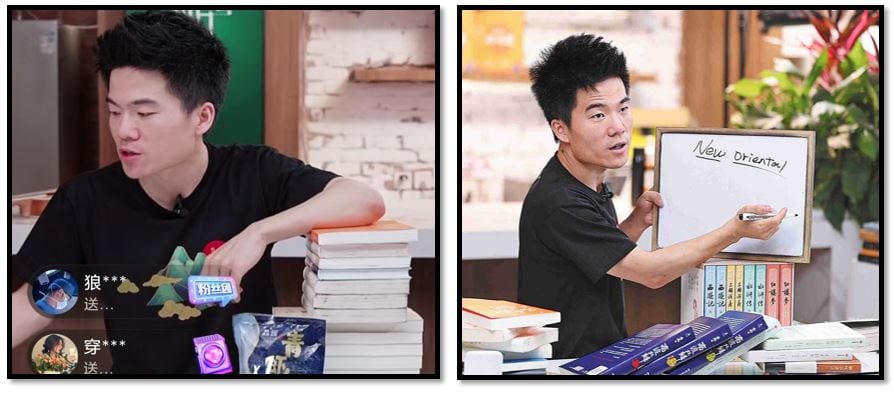
### Bo Ge Wei Wu, Relatable Family Content
- Platform: Douyin
- Audience: Millions of followers
- Campaign Cost: $5,000 to $15,000 per video
The duo of young brothers resonated with family audiences by showcasing products in playful, relatable videos. For family-focused campaigns, storytelling is an invaluable tool. Brands can collaborate with a communication agency China to craft emotionally resonant narratives.

Source: ixigua.com
### Isabella Ye, Luxury Lifestyle Influencer
- Platform: Xiaohongshu
- Audience: 1.85 million followers
- Campaign Cost: Estimated $50,000 per campaign
Isabella Ye's partnerships with brands like Buccellati highlight the power of luxury influencers in promoting high-end products. Luxury campaigns thrive with influencers who embody exclusivity. Collaborating with a branding agency China ensures alignment with elite brand values.

Source: @1saye
## Types of KOL Collaborations
### Sponsored Posts
One-off promotional posts targeting niche audiences. Ideal for brands testing influencer impact on platforms like Douyin or Xiaohongshu.
### Live Streaming
High-performing campaigns for brands focused on douyin ecommerce or direct sales.
### Long-Term Endorsements
Partnerships for sustained impact, often facilitated by a digital marketing agency China to maintain campaign momentum.
## Lessons From Successful KOL Campaigns
### Prioritize Engagement Over Reach
Smaller influencers with loyal, engaged audiences can deliver better ROI than larger but less interactive profiles.
### Embrace Platform-Specific Strategies
Tailoring campaigns to platforms like Douyin or Xiaohongshu ensures maximum relevance and effectiveness.
### Value-Driven Content Wins
Integrating education or storytelling into campaigns fosters trust and drives consumer action.
## The Future of KOL Marketing in China
### Virtual Influencers
AI-powered influencers are emerging as cost-effective and reliable alternatives.
### Enhanced Analytics
Data-driven insights provided by a digital agency China help brands refine campaigns for improved performance.
### Cross-Platform Marketing
With new platforms like Bilibili and Pinduoduo rising, diversification is becoming crucial.
## Conclusion
[KOL](/social-in-china) marketing in China remains a cornerstone of successful branding and digital marketing strategies. From small micro-influencers to celebrity partnerships, the cost of KOL campaigns varies but consistently delivers high returns when managed effectively. Working with a branding agency China, social media agency China, or digital marketing agency China can help businesses navigate this intricate landscape and craft impactful campaigns tailored to their goals.
By learning from case studies and understanding the nuances of Chinese consumer behavior, brands can tap immense potential in the world's largest ecommerce market.
---
# The power of Wechat QR Codes for businesses in China
URL: https://www.thechinapath.com/insights/the-power-of-wechat-qr-codes-for-businesses-in-china
Published: 2025-02-07
Author: TheChinaPath
Category: Platforms
WeChat QR codes run payments, engagement and marketing in China, where 95.7% of mobile payment users rely on them. How businesses put them to work.
In China's rapidly growing digital world, [WeChat](/grow-in-china/social-commerce) QR codes have become a part of everyday life. People use them for everything from social networking to shopping and payments. With 95.7% of Chinese mobile payment users depending on QR codes, these simple black-and-white squares have become essential tools for modern business and marketing, well beyond a passing tech trend.
For businesses looking to succeed in the Chinese market, especially in ecommerce China and digital marketing China, understanding how to effectively utilize WeChat QR codes is important. These codes do more than just simplify transactions. They enhance customer engagement, streamline marketing strategies, and create a direct connection between brands and consumers. This guide will explore everything you need to know about using WeChat QR codes to drive your business success in China.
## What Are WeChat QR Codes?
WeChat QR codes are unique, scannable codes linked to user profiles, businesses, or specific content within the WeChat ecosystem. Unlike traditional QR codes that simply redirect to websites, WeChat QR codes can perform multiple functions, from adding friends to making payments or following official accounts.
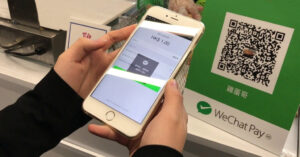
Every WeChat user is assigned a personal QR code that others can scan to connect. For businesses, QR codes can link to official accounts, mini-programs, or promotional content, making them a versatile tool for customer interaction. This is especially valuable for companies involved in Chinese ecommerce or cross-border ecommerce China, as QR codes streamline the connection between brands and consumers.
## Why Are WeChat QR Codes So Popular in China?
### Integration with Daily Life
QR codes have become a staple in China's cashless society. From paying for a morning coffee to accessing public transportation, QR codes simplify countless daily activities. This widespread adoption is largely driven by apps like WeChat and Alipay, which have embedded QR codes into their payment systems. For businesses partnering with a digital marketing agency in China, using QR codes is a natural way to connect with tech-savvy consumers.
### Convenience and Efficiency
WeChat QR codes eliminate the need for lengthy processes. Instead of typing usernames, entering payment details, or searching for product information, users simply scan a code to complete the action in seconds. This speed and simplicity are highly valued in China's fast-paced market, making them indispensable for ecommerce agencies in China looking to optimize customer experiences.
### Versatility for Businesses
For brands, WeChat QR codes offer an efficient way to connect with customers. Whether it's promoting a new product, offering discounts, or facilitating payments, QR codes can be adapted to various business needs. This flexibility has made them a powerful marketing tool for digital agencies in China looking to create targeted, engaging [campaigns](/grow-in-china/campaigns).
## How WeChat QR Codes Work
### Accessing Your WeChat QR Code
Every WeChat user is assigned a personal QR code that others can scan to connect. Here's how to find yours:
1. Open the WeChat app and go to the Me tab.
2. Tap on your avatar, then select My QR Code.
3. Share your QR code with others to add them as friends.
### Scanning a WeChat QR Code
To scan a QR code in WeChat:
1. Open the app and navigate to Discover > Scan.
2. Point your camera at the QR code.
3. WeChat will automatically process the code, whether it's to add a friend, access a mini-program, or make a payment.
## Business Applications of WeChat QR Codes
WeChat QR codes aren't just for personal use. They are powerful tools for businesses looking to grow their presence in China. Here's how they can be used effectively in marketing and commerce, especially for companies working with a marketing agency in China or a WeChat agency in China.
### Growing Your Official Account Following
Businesses can use QR codes to attract followers to their official WeChat accounts. By placing QR codes on marketing materials, both online and offline, you can encourage potential customers to engage with your brand. Common placements include:
* Product packaging
* Print advertisements
* Storefront displays
* Event signage
This approach is particularly effective in Chinese ecommerce, where building a loyal follower base is key to driving repeat business.
### Tracking Marketing Campaigns with Custom QR Codes
Understanding where your followers come from is important for refining your marketing strategy. Standard WeChat QR codes don't offer tracking capabilities, but custom QR codes do. Digital agencies in China often use these custom QR codes to gain valuable insights into which marketing channels are most effective.
For example, a QR code used in a print ad can be tracked separately from one shared on social media, helping businesses allocate resources more effectively. This is especially useful for ecommerce agencies in China looking to optimize their advertising spend.
### Facilitating Payments with WeChat Pay
One of the most significant uses of WeChat QR codes is for payments. Businesses can generate QR codes that customers scan to pay for products and services. This feature is widely used in both online and physical stores across China, offering a smooth, cashless transaction experience.
By adopting WeChat Pay, businesses not only streamline the purchasing process but also demonstrate an understanding of local consumer behavior, which can build trust and credibility among Chinese customers. Partnering with a WeChat agency in China can help businesses integrate this feature smoothly into their operations.
### Enhancing Engagement with Mini Programs
WeChat Mini Programs are lightweight apps embedded within the platform, offering services like online shopping, booking, and customer support. QR codes can direct users to these mini-programs, enhancing the customer experience and driving engagement.
For instance, a QR code on a product package could link to a mini-program offering loyalty rewards or additional product information. This strategy is widely used in Chinese ecommerce to encourage customer retention and repeat purchases.
### Promoting Events and Special Offers
WeChat QR codes are highly effective for promoting events and special offers. Businesses can link QR codes to exclusive discounts, event registrations, or digital experiences. This strategy drives traffic and also provides insights into consumer behavior, as you can track who scans the codes and how they interact with your content.
This tactic is particularly useful for companies involved in digital marketing China or businesses participating in China livestream shopping events, where QR codes can drive instant engagement and sales.
## Customizing Your WeChat QR Codes for Branding
### Reflect Your Brand Identity
A customized QR code is very functional and an opportunity to reinforce your brand identity. Many QR code generators allow businesses to incorporate logos, brand colors, and other design elements into their QR codes. This not only makes the code visually appealing but also increases brand recognition, a crucial factor in the competitive world of Chinese ecommerce.
### Use QR Codes Across Multiple Channels
Custom QR codes can be used across various marketing channels to maintain a consistent brand presence. Whether in digital formats like websites and social media or physical materials like packaging and event banners, a well-designed QR code can capture attention and encourage engagement. Marketing agencies in China often recommend this multi-channel approach to maximize exposure.
## Best Practices for Using WeChat QR Codes in Marketing
### Optimize Placement and Visibility
Make sure that your QR codes are placed where they are easily visible and accessible. High-traffic areas like store entrances, event booths, and product packaging are ideal spots. The easier it is for customers to spot and scan your QR code, the more effective it will be.
### Include a Clear Call to Action
Simply placing a QR code is not enough. You need to tell people why they should scan it. Include a clear, compelling call to action like "Scan to get 10% off" or "Join our exclusive WeChat group." This encourages users to take immediate action.
### Monitor and Adjust Your Strategy
Use custom QR codes to track the effectiveness of different marketing channels. Analyze the data to see which campaigns are performing best, and adjust your strategy accordingly. This approach helps maximize your marketing ROI and guarantees you're investing in the right areas.
## Conclusion
WeChat QR codes aren't just a tech feature. They're a powerful way to reach millions of consumers in China's digital market. By integrating these codes into your marketing and commerce strategies, you can enhance customer engagement, streamline transactions, and build a strong, recognizable brand presence.
Whether you're promoting products, facilitating payments, or growing your follower base, mastering WeChat QR codes is essential for any business looking to succeed in China. Working with a digital agency in China or a WeChat agency in China can help you tap the full potential of this versatile tool and guarantee your brand thrives in one of the world's most dynamic markets.
---
# The Ultimate Guide to WeChat Channels for Brands
URL: https://www.thechinapath.com/insights/the-ultimate-guide-to-wechat-channels-for-brands
Published: 2024-11-01
Author: TheChinaPath
Category: Platforms
WeChat Channels lets brands reach engaged WeChat users with short videos and photos. How to use it for brand growth and eCommerce in China.
## Introduction to WeChat Channels and Social Commerce China
[WeChat](/grow-in-china/social-commerce) Channels, developed by Tencent, is a content-sharing feature within the WeChat app that enables users and brands to connect through short videos and photos. With over a billion monthly active users, WeChat offers brands an enormous audience, making Channels a unique platform for China social commerce. Similar to platforms like Douyin and Little Red Book (known as Xiaohongshu), WeChat Channels focuses on delivering interactive and engaging visual content, ideal for China eCommerce strategies.
With smooth integration into WeChat's "super app" ecosystem, Channels connects with messaging, payments, mini-programs, and e-commerce features, making it an ideal place for China brand localization and increasing sales potential.
## Key Features of WeChat Channels and Audience Insights
WeChat Channels offers several valuable features for brands targeting Chinese social media users. These include short-form video, [live streaming](/grow-in-china/production-studio), interactive comments, and organic content discovery, which appeal to Chinese users who increasingly prefer interactive and mobile-first digital experiences.
**Key features:**
* **Video and Photo Content:** Videos up to 30 minutes and carousel photo posts allow brands to diversify content and reach audiences through rich media.
* **Live Streaming:** Real-time interaction through live broadcasts offers a personal way for brands to showcase products, host Q&A sessions, and run sales events, a common strategy in China livestreaming.
* **Interactive Comments and Discovery:** Channels offers an algorithm-based recommendation system, enhancing organic reach and increasing engagement with relevant audiences.
**Audience Insights**
WeChat Channels attracts a slightly older demographic than Douyin, with a strong interest in informative, educational, and lifestyle content. This audience makes WeChat Channels an attractive platform for China performance marketing and reaching high-value customers who are engaged with topics in technology, fashion, and more.
## Why WeChat Channels Matter for China eCommerce and Branding
With WeChat's extensive user base, Channels is a natural fit for brands looking to strengthen their China branding and boost their presence in Chinese social media. Channels combines the power of social media and e-commerce, making it ideal for brands interested in social commerce China strategies and direct sales.
* **Massive Audience Base:** WeChat's reach provides brands with access to millions of potential customers, essential for brands looking to build or expand in China.
* **Integrated Ecosystem:** WeChat Channels is integrated with WeChat Pay and mini-programs, making it easy for brands to promote products and process payments directly within the app.
* **Authentic Engagement:** Through both organic content discovery and paid advertising options, Channels provides brands with flexibility in reaching new users while engaging existing followers.
## Content Marketing and Live Streaming Strategies for WeChat Channels
Content marketing on WeChat Channels centers on delivering high-quality, engaging content that either entertains or educates users. Here are some strategies for impactful content on Channels:
* **Educational Content:** Tutorials, "how-to" guides, and product demos are effective for establishing brand authority while providing valuable insights to users, especially for lifestyle and tech brands.
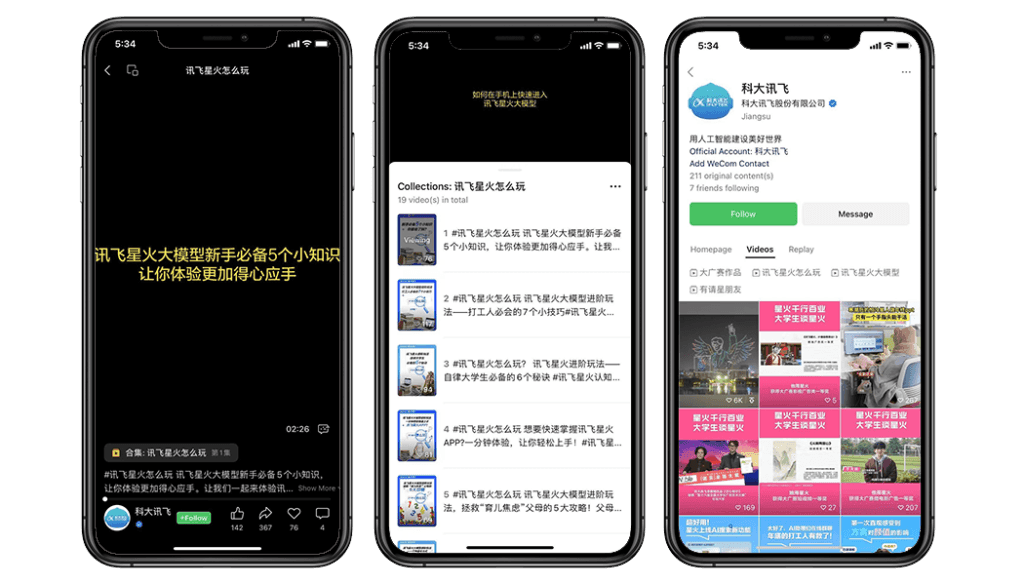
* **Localized Content for Festivals:** Cultural festivals like Chinese New Year and Singles Day are ideal times for brands to share themed content that resonates with Chinese audiences, boosting both brand awareness and sales.
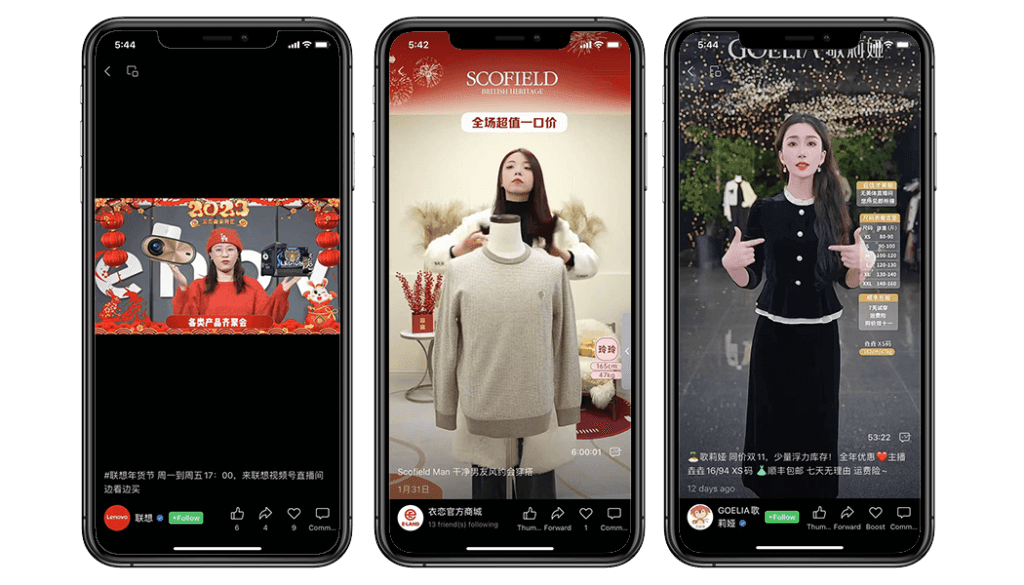
### Live Streaming on WeChat Channels
Live streaming on Channels allows brands to engage directly with followers, answering questions in real-time, showcasing product demos, and even running limited-time offers. As part of China livestreaming, it is particularly effective for brands interested in China performance marketing, as it can drive immediate engagement and conversions.
## Influencer and Key Opinion Leader Marketing
Partnering with China influencers and Key Opinion Leaders (KOLs) is a proven way for brands to expand their reach on WeChat Channels. [KOL](/social-in-china) marketing in China offers brands credibility and access to targeted audiences, as followers trust KOLs' recommendations, making it easier to capture engagement and build brand affinity.
* **KOL Partnerships:** By collaborating with KOLs who specialize in areas relevant to the brand, such as beauty, fashion, or technology, brands can achieve high engagement.
* **Paid Ads with KOLs:** WeChat Channels offers native ads that appear within users' video feeds, influencer ads, and CPC/CPM ads, giving brands flexibility to increase brand visibility with targeted audiences.
Brands can select ad formats based on marketing goals and budget. For example, native ads blend smoothly into video feeds, while mutual selection ads enable brands to work directly with KOLs. These ad options are part of a strong China social media strategy and enable brands to maximize reach while managing costs.
## E-commerce Integration for Smooth Shopping on WeChat Channels
WeChat Channels is integrated with WeChat Pay and mini-programs, which support direct purchases within the app. This feature simplifies the buyer's journey from content discovery to purchase, allowing brands to build a smooth e-commerce experience.
* **Shoppable Videos:** In-app purchase links allow users to buy products directly from the video content, a critical element of China eCommerce and social commerce China.
* **Flash Sales and Promotions:** Using flash sales on shopping festivals, such as Singles Day, lets brands drive engagement and increase sales during peak shopping periods.
* **Mini-Program Integration:** WeChat mini-programs, linked to WeChat Channels, provide more detailed product pages, personalized shopping, and direct e-commerce functionality, allowing brands to control every step of the customer experience.
## Challenges and Tips for Success on WeChat Channels
**Challenges**
While WeChat Channels offers numerous advantages, brands should be mindful of certain challenges that can affect their success:
* **Content Regulations:** Content must align with WeChat's guidelines and avoid sensitive topics.
* **Localized Content:** To resonate with Chinese audiences, brands must invest in localization, including language, cultural references, and design.
* **Competition:** Creating high-quality, unique content is essential to stand out on WeChat Channels and successfully reach audiences in a crowded market.
**Tips for Success**
For brands to succeed on WeChat Channels, a well-thought-out strategy is essential. Here are some effective tips:
* **Prioritize High-Quality Content:** Professional production quality enhances credibility and attracts higher engagement.
* **Focus on Authentic Engagement:** Content that aligns with brand values, shares useful information, or tells an engaging story resonates strongly with WeChat Channels users.
* **Track Key Metrics:** Monitoring engagement metrics like views, likes, shares, and conversions can help brands refine their strategy and increase effectiveness over time.
## Conclusion
WeChat Channels has rapidly become a key tool in China digital marketing, offering brands a platform for eCommerce China and China brand localization through social media. By leveraging features such as short videos, live streaming, KOL partnerships, and direct e-commerce integration, brands can strengthen their presence and engage meaningfully with audiences across Chinese social media. For brands looking to expand in China, WeChat Channels provides an unmatched opportunity to connect, engage, and sell within one of the most vibrant digital markets in the world.
---
# Tmall's 2026 Strategy: What It Now Pays For
URL: https://www.thechinapath.com/insights/tmall-2026-strategy-foreign-brands
Published: 2026-07-27
Updated: 2026-07-27
Author: Cyril Drouin
Category: E-Commerce
The platform's 2026 strategy moves money away from traffic and toward your margin. Here is what that actually means if you sell into China.
Almost a third of Chinese e-commerce merchants lost money last year.
Not slowed down. Lost money.
> A January 2026 survey of more than a thousand Chinese e-commerce
> merchants found that 30.1% posted a negative net profit, and another
> 30% cleared margins of between zero and 5%. Asked what was eating the
> profit, 78% pointed to the cost of traffic and 60.2% to price
> undercutting by competitors.
> Source: 36Kr (36氪), citing the 2025 E-Commerce Survival Survey
That is the backdrop to everything Tmall announced on March 26 at
TopTalk (天猫TOP TALK), its annual invitation-only summit for brand
partners in Shanghai. Around a thousand brands in the room. Tmall
president Liu Bo, who goes by Jialuo (家洛) internally and in all Chinese
coverage, spent the session explaining how the platform intends to make
its best merchants more profitable rather than simply larger.
Four months on, most of it has shipped. The AI back office went live at
the end of March, the new product traffic pool ran through 618, and the
88VIP coupon budget is being spent as you read this. So the mechanics
below are not a roadmap. They are the rules your competitors are already
playing by.
For a foreign brand weighing a China move, or already running a store
and wondering why the numbers feel tight, there is a more useful way to
read the announcement than as good news. Tmall is not being generous here. It is
trying to fix a supply-side problem that has started to threaten its own
base.
## The 2026 plan at a glance
| Commitment | The mechanic | Size |
| -------------------- | ------------------------------------------------------------------- | --------------------------- |
| Consumer subsidy | Coupons issued to 88VIP members, plus an algorithm memory upgrade | RMB 100 billion (USD 14.0B) |
| Merchant conversion | AI-issued store coupons, plus a platform top-up on converting ads | RMB 10 billion (USD 1.4B) |
| New product launches | Dedicated traffic for super new products, 30-day first-sale support | RMB 60 billion (USD 8.4B) |
| AI operations | Business Advisor "Lobster" release, AI Dianxiaomi, Wukong platform | Trillion-token commitment |
## Tmall spent a year proving the incentive works
None of this arrived out of nowhere. Tmall spent 2025 testing it. A
February pilot in beauty, apparel and sports and outdoor paid quality
brands an operating rebate, and the detail that mattered was the form it
took: cash, not traffic vouchers. By the end of the year the payment was
running quarterly.
The results are the reason it is being expanded.
> Brands turning over more than RMB 100 million a year on Tmall grew 15%
> year over year in 2025. More than 13,000 brands in the RMB 10 million
> band posted double-digit growth in annual transaction value.
> Source: China Daily (中国日报网), citing Tmall
Liu framed the year ahead in the language of certainty rather than scale,
telling the room that the platform's 2026 investment in quality brands
would be "stronger and more comprehensive," aimed at giving brands a
predictable path to growth. Read against the survey data, that is less a
boast than an admission of what has been missing.
Chinese business commentator Liu Run put the underlying problem more
bluntly than any platform would: brands built on bought traffic
eventually die of bought traffic. The survey data backs him up. Among
mid-sized merchants doing between RMB 10 million and RMB 100 million a
year, nearly half were pushing between a fifth and all of their revenue
straight back into media.
You cannot build a brand on that math. We see it in the P&Ls we review,
where media has become the second largest line after cost of goods and the
only one still climbing. Tmall appears to have worked that out about its
own merchants.
## The money is going to 88VIP, not to everyone
If you take one number away from TopTalk, take this one.
> Tmall will issue coupons worth RMB 100 billion to 88VIP members in
> 2026, exceeding previous years. The program has grown for ten straight
> quarters at double-digit rates, doubling from 30 million members to
> close to 60 million.
> Source: 36Kr (36氪), citing Tmall
### What 88VIP actually is
88VIP (88VIP会员) is Alibaba's paid membership tier, and it is not a
loyalty scheme in the Western sense. Membership costs RMB 888 a year at
full price, dropping to RMB 88 for shoppers whose Taobao activity score
clears a threshold. People pay for the status, and they shop like people
who have paid for something.
> 88VIP members spend eleven times more per year on Tmall than
> non-members, and account for more than half of the business done by
> the platform's leading brands.
> Source: 36Kr (36氪), citing Tmall
Sixty million people out of roughly a billion annual buyers generate the
majority of top-brand revenue. Sit with that for a second, because it
should reset how you think about merchandising here. Your Chinese
consumer, in practical terms, is that person, and the mass-market volume
play you may have modeled in a spreadsheet is chasing the wrong half of
the platform.
### Brands have already noticed
Tmall opened its marketing IP to partners last year, covering
member-exclusive buys, calendar moments and collaborations. Take-up was
fast.
> The number of brands working with 88VIP grew 51% over the past year,
> the number of member-benefit products grew 42%, and those products
> received roughly double the exposure they had previously.
> Source: 36Kr (36氪), citing Tmall
Alongside this, Tmall lengthened the memory window on its recommendation
algorithm. Instead of reacting to what a shopper searched an hour ago,
the system now weights how their interests and life stage have shifted
over months. For a brand selling considered purchases, skincare regimes,
supplements, prams, appliances, that is a meaningful change. Your
product no longer has to win a single moment of intent. It has to keep
showing up as the shopper's situation changes, which rewards range and
consistency over a clever launch.
## Tmall will now co-pay your discount
The second commitment is the one most brands will feel in their P&L, and
it is barely covered in English.
The mechanic is called intelligent follow-on investment (智能跟投). When
one of your ad placements converts above a threshold, the platform layers
a product coupon on top of it. Tmall funds the coupon. You keep the
conversion and you keep your margin, because the discount that closed
the sale did not come out of your gross.
They have a reason to think this works.
> AI-issued red packets from Tmall's Smart Engine at Double 11 last year
> lifted conversion rates by 81% quarter on quarter. Tmall is committing
> RMB 10 billion to continue issuing AI store coupons in 2026.
> Source: 36Kr (36氪), citing Tmall
| What gets subsidized | Who pays | What you need to bring |
| ------------------------ | -------- | ------------------------------------ |
| 88VIP member coupons | Tmall | Products approved into the pool |
| Coupon on converting ads | Tmall | Ad placements already working |
| New product launch reach | Tmall | A genuine new SKU, ideally exclusive |
| Baseline store traffic | You | Media budget, as before |
Worth noticing what has not moved. Your own money still buys exactly what
it always bought. Everything new sits on top of performance you have to
produce first.
### The launch pool nobody translated
The new product commitment is the largest traffic number of the year and
it did not make it into most English coverage at all.
> Tmall is adding RMB 60 billion in dedicated traffic in 2026 for
> launching super new products, with resources weighted toward
> Tmall-exclusive editions and technology-led products. All qualifying new
> products receive traffic support during a 30-day first-sale window.
> Source: 36Kr (36氪), citing Tmall
The 2025 base was already large.
> Super new products first launched on Tmall generated RMB 120 billion in
> sales during 2025, up 20% year over year, drawn from more than 16
> million quality new products introduced on the platform.
> Source: China Daily (中国日报网) and 36Kr (36氪), citing Tmall
An executive at appliance brand Dreame described how the launch spike
creates a large pool of shoppers who add to cart or favorite without
buying, and Tmall's mechanics then let you re-approach those hesitators
during the follow-on selling period. Treat the launch window as
list-building rather than as the sale itself and the second month stops
looking like a collapse.
## The AI tools are shipping, not previewing
So much for the money. The other half of the announcement was about who
does the work.
Every platform in China announced an AI strategy this year, and most of
it was slideware. Tmall's is more concrete, mainly because it is shipping
into tools merchants already open every morning.
Business Advisor (生意管家), the store back office, went live at the end of
March with an upgrade internally nicknamed the Lobster release. It covers
the full operating chain and runs around the clock, and Tmall's stated
ambition is that one person can once again run a store. Store inspection,
sales analysis, ad placement, creative generation, customer service, all
executed rather than merely reported.
The customer service layer is further along than most people outside
China assume.
> AI Dianxiaomi has cumulatively served 300 million customer
> interactions and will receive a trillion-token investment this year as
> it shifts from answering questions toward guided selling.
> Source: 36Kr (36氪), citing Tmall
> From March 2026, Taobao and Tmall's A/B test data showed AI Dianxiaomi
> combined with human agents beating human-only service on conversion
> rate, not only overnight but in every hour of the day.
> Source: GeekPark (极客公园)
Sitting above all of this is Wukong (悟空), which Alibaba launched on
March 17 as an enterprise AI-native work platform built by the DingTalk
team. Commerce capabilities from Taobao, Tmall, 1688, Alipay and Alibaba
Cloud plug in as modular skills. Our honest read after four months is
that Wukong matters less for what it does today than for what it signals:
Alibaba intends store operations to be assembled from agents rather than
staffed by headcount, and the pricing of every service provider you deal
with will eventually reflect that.
A caveat nobody at TopTalk mentioned. These tools are Chinese-first in
interface and in data model, and the support behind them is too. A brand
running its Tmall store from a European headquarters with no
Chinese-reading operator will not extract the value. In our experience it
usually cannot even find the settings.
## The gate nobody puts in the press release
Here is the part that gets skipped in the recaps, and it is the part that
decides whether any of the above reaches you.
Most of these programs are allocated, not published. The 88VIP benefit
pool, the follow-on ad subsidy and the new product traffic weighting are
distributed through category teams during annual planning, and in most
categories that conversation happens inside an annual framework agreement
(年框) that commits you to a minimum spend and a set of platform
activities. No agreement, no allocation. Plenty of cross-border brands run
for years without signing one and never work out why the subsidies they
read about in the trade press never show up in their back office.
Timing matters here more than most brands expect. Those conversations
cluster in the fourth quarter for the year ahead, so a brand reading this
in the summer is realistically negotiating for 2027, not for what is left
of 2026.
The cost side has not changed either. You still carry a store deposit and
an annual technical service fee, a commission on every transaction that
varies by category, and either a team or a Tmall Partner retainer to
actually run the thing. Subsidies improve the return on that spend. They
do not remove it, and any model that treats platform money as a
substitute for operating budget will be wrong by the second quarter.
If you need a number before your next budget meeting, our [Budget
Calculator](/tools/tmall-global-setup-and-run) walks through the line
items.
## Where this could go wrong for you
A plan funded this heavily deserves a skeptical question or two. Three,
in our case.
Subsidized conversion flatters your numbers. If Tmall is paying for the
coupon that closed the sale, your reported conversion rate is partly the
platform's money, and the baseline underneath it is lower than the
dashboard suggests. Model the unsubsidized case before you scale spend
against it.
Concentrating on 88VIP narrows your audience on purpose. That is fine
while the program grows. It also ties a large share of your China revenue
to the economics of somebody else's membership scheme, and those
economics are reviewed annually by people who do not work for you.
And "going all-in on quality brands" is a selection policy, which means
somebody is not selected. Brands that fall outside the favored tier are
not standing still. They are competing against rivals whose customer
acquisition is now partly funded by the platform. If you are not in the
program, your position got harder this year, not neutral.
## What this means if you sell in from outside
Most of the above applies whether you run a domestic Tmall store or a
cross-border Tmall Global store. The 88VIP shopper does not care which
warehouse the parcel leaves from. Our piece on [the 2,415 overseas brands
that opened on Tmall Global in
2025](/insights/tmall-global-2025-overseas-brands) covers the entry
mechanics if you are earlier in the process, and [our China 2026
predictions piece](/insights/china-2026-8-ecommerce-marketing-predictions)
sets this alongside what Douyin, JD and Xiaohongshu are doing with the
same budgets.
Four things we would do differently this year, based on what was
announced.
Getting products into the 88VIP benefit pool is the single most valuable
merchandising decision available on the platform right now, and it is
negotiated rather than granted. It happens through your category team,
usually during annual planning, and if nobody on your side has asked, the
answer is no by default.
**Reserve a real launch for the new product window.** RMB 60 billion is
chasing new SKUs, and the weighting favors platform-exclusive editions. A
market-specific size, format or bundle can qualify. Shipping your global
range unchanged and calling it a launch will not.
The third change is harder because it means spending less. The subsidy
structure now rewards placements that already convert, so the money follows
whoever fixed the product page and the pricing ladder first, with service
response close behind. Buying more traffic against a weak page just moves
your own cash out faster than before.
**Budget for a Chinese-speaking operator, not just media.** The AI tooling
collapses the workload of running a store, but somebody has to be inside
the back office reading it.
One last thing, because it catches brands out every year. None of this
changes the festival calendar. 618 and Double 11 still carry a large
share of annual sales, and subsidies are heaviest around them. Build your
inventory and content plans around those dates from the start, with the
livestream calendar locked at the same time, not in the six weeks before.
Both things are true at once. Tmall has lowered the cost of running a good
brand on its platform, and it has done nothing about the difficulty of
becoming one. If your team can say in a sentence why a Chinese shopper
should choose you over the domestic alternative, this year's mechanics
will pay you for that clarity. If it cannot, the subsidies just get you to
the same conclusion faster, with a larger media invoice attached.
This piece reflects what had actually shipped as of late July 2026. Tmall
revises these programs at TopTalk each spring, so check the current year's
announcement before you build a plan on the numbers above.
---
# When a Tmall agency fakes orders, the brand pays
URL: https://www.thechinapath.com/insights/tmall-agency-fake-orders-brand-liability
Published: 2026-09-24
Updated: 2026-09-24
Author: TheChinaPath
Category: Compliance & Setup
When an agency fakes orders on your Tmall or Douyin store, your deposit, listings and name are on the line. What China's courts and rules say.
When a Tmall or Douyin agency fakes orders, the brand carries most of the
risk. An agency in a case the Supreme People's Court published in August
2026 paid a RMB 100,000 fine and lost its RMB 50,000 deposit. The store's
penalties land on its account holder, which is you. Ban fake orders in
writing and audit the traffic.
Fake orders have a name in Chinese ecommerce: 刷单炒信, brushing orders to
hype a store's credit. An agency that runs your store has every reason to
try it. Most charge a retainer plus a commission on sales, and a ranking
bump is fast.
On August 3, 2026, the Supreme People's Court put one of these cases on a
list of five typical platform cases. The agency lost. The court's summary
says nothing about the merchants whose stores it pumped up. Their exposure
sits in the platform agreements and the law.
We checked the rules and cases below on September 24, 2026. This isn't
legal advice. Have a lawyer qualified in China look at your contract.
## The case: fake group-buy orders and a lost deposit
In February 2021 an agency signed a service-provider agreement with a
platform the court didn't name. It would run stores and marketing for the
platform's merchants in one area, and it paid a RMB 50,000 deposit.
Then it arranged accounts to buy cheap group-buy vouchers that sold nothing
real, and redeemed them, to lift its merchants up the rankings.
> A market regulator found the agency had helped other businesses publish
> false claims by organizing fake transactions, and fined it RMB 100,000.
> The platform docked its integrity score, kept the whole RMB 50,000 deposit
> and cut its back-end access. The Yangpu District court in Shanghai
> dismissed the agency's suit to get the deposit back on September 5, 2025.
> Source: Supreme People's Court (最高人民法院), typical cases on platform business, case 3, August 2026. https://www.court.gov.cn/zixun/xiangqing/507691.html
The judgment, case (2025)沪0110民初8092号, is final. The agency's argument
was that the deposit clause sat in the platform's
standard terms and nobody had pointed it out. The court didn't buy it. The
clause was printed in bold, which it counted as fair notice, and a
professional operator should know fake orders are banned anyway. Keeping
all RMB 50,000 wasn't excessive either, given the damage to the platform's
reputation.
The People's Court Daily, the court system's newspaper, opened its write-up
on the court's own site with the question merchants ask: if a store pays
someone to brush orders, can the platform take a deposit?
Here the deposit was the agency's own. A store's deposit sits under the
store's own agreement, which lets the platform deduct for any breach of the
law.
## How fake orders are run and how platforms catch them
The Yangpu case shows how simple it is. Accounts the agency lined up bought
deals nobody used. On a product marketplace the same trick looks like
friends' accounts buying your goods, empty parcels, a reused tracking
number, or cash-back for a five-star review.
Douyin spells out the list in the revised merchant rule on fake
transactions it published for comment in July 2024. The wording that
matters for a brand is that the third party counts as you.
> Fake transactions include a merchant using third-party hype groups, or a
> third party's tools, services or help. Douyin checks logistics, buyer
> accounts, trading behavior and after-sale requests with big data, judges
> on probability, and treats abnormal orders as fake unless the merchant
> can explain them with evidence.
> Source: Douyin E-commerce (抖音电商), revised merchant rule on fake transactions (虚假交易), July 2024. https://school.jinritemai.com/doudian/web/article/aJADoQgL6cAS
So the burden sits with the merchant. The rule gives you seven days to
appeal a penalty, and it says an appeal won't succeed where a hired
brushing group or tool placed the orders.
## Who pays when an agency fakes orders
Four kinds of bill can follow a fake-order scheme, and the agency doesn't pay
all of them.
| Consequence | Who bears it | What the source says | Source |
|---|---|---|---|
| Platform deposit | The agency's own service deposit, and your store deposit | The platform kept the agency's full RMB 50,000. Tmall Global can deduct your deposit and Alipay account when you break a law. | Supreme People's Court case 3, Aug 2026; Tmall Global merchant agreement, 7.4 |
| Store penalties and delisting | The store holder, which is you | Tmall Global can delete fake-order data, remove products, block search, close the store. Douyin blocks the products and strips fake sales and reviews. | Tmall Global merchant agreement, 1.9 and 5.2; Douyin fake-transaction rule |
| Regulator fines | The seller whose sales were faked, and whoever organized the fakes | Up to RMB 1 million, RMB 1 million to 2 million if serious, and the business license can go. The penalty goes on the public credit record. | Anti-Unfair Competition Law, art. 9, 25 and 33 |
| Criminal exposure | The people who sell fake orders, and anyone who knowingly funds them | Illegal business operation from RMB 50,000 of turnover for a person, or RMB 150,000 for a company. The first organizer convicted got five and a half years and a RMB 900,000 fine. | Supreme People's Court and Procuratorate interpretation, 2013, art. 7 and 8; Yuhang court, 2017 |
> Businesses may not make false or misleading claims about their goods'
> sales or user reviews, and may not help others do so by organizing fake
> transactions or fake reviews. The fine is up to RMB 1 million, or RMB 1
> million to 2 million in serious cases, and the business license can be
> revoked.
> Source: China National Intellectual Property Administration (国家知识产权局), Anti-Unfair Competition Law (revised June 2025, in force October 15, 2025), articles 9 and 25, May 2026. https://www.cnipa.gov.cn/art/2026/5/20/art_104_206437.html
The criminal bar sits higher. The convictions we found were of the people
selling the fake orders.
> Knowingly posting false information online for pay is the crime of
> illegal business operation once turnover reaches RMB 50,000 for a person
> or RMB 150,000 for a company. Knowingly funding such a crime is treated as
> joint crime.
> Source: Supreme People's Court and Supreme People's Procuratorate (最高人民法院 最高人民检察院), interpretation 法释〔2013〕21号, articles 7 and 8, September 2013. http://gongbao.court.gov.cn/Details/2a817c79a6dbd485eb37b8f6fcd7f8.html
> A Hangzhou court sentenced the founder of a fake-order site to five years
> and six months and fined him RMB 900,000, the first such conviction.
> Source: Beijing Youth Daily (北京青年报), carried by China Securities Journal (中证网), June 2017. https://www.cs.com.cn/xwzx/201706/t20170621_5334300.html
## Tmall agency fake orders and brand liability: why the store is yours
If you [run your own store](/insights/china-distributor-vs-own-store)
instead of selling through a distributor, register it to your own company
during [cross-border setup](/enter-china/cross-border-setup) and let the
agency work inside it. That's the right setup. It also means the store's
record is yours.
> Operations, actions and undertakings made through the merchant's Tmall
> Global account are deemed the merchant's, and the merchant alone bears the
> legal consequences.
> Source: Tmall Global (天猫国际), Merchant Service Agreement, clause 5.1, October 2022. https://terms.alicdn.com/legal-agreement/terms/suit_bu1_tmall/suit_bu1_tmall202111051504_43705.html
Tmall's domestic agreement, for stores on Tmall itself, uses almost the same
words.
> All actions completed through a Tmall account are regarded as the
> merchant's own, or as fully authorized by it.
> Source: Tmall (天猫), Merchant Service Agreement, section 3, March 2026. https://terms.alicdn.com/legal-agreement/terms/TD/TD201609271722_89275.html
The sub-account your agency logs in with doesn't change that.
> The seller bears all legal consequences of what it, or anyone it
> authorizes, does through a sub-account.
> Source: Taobao (淘宝), sub-account software license agreement, clause 8.7, June 2023. https://terms.alicdn.com/legal-agreement/terms/suit_bu1_tmall/suit_bu1_tmall201802012028_72666.html
The law points at you too. Article 9 of the Anti-Unfair Competition Law has
two halves: one for the business whose sales and reviews are inflated, and
one for whoever organized the fakes. The agency in the Yangpu case was
fined under the helping half.
Sellers whose own stores are inflated get fined as well.
> In Shanghai's 2025 unfair-competition cases, a company that inflated its
> online store with more than 20,000 fake orders to lift sales and search
> ranking was fined by the Qingpu District market regulator, which also
> referred leads onward.
> Source: China Quality News (中国质量报), on the State Administration for Market Regulation site (市场监管总局), February 2026. https://www.samr.gov.cn/xw/df/art/2026/art_4ab8f37427034d6182dfcbb59482ab6a.html
The E-Commerce Law has said much the same since 2019.
> Ecommerce businesses may not make false or misleading claims through
> fake transactions or invented user reviews.
> Source: Cyberspace Administration of China (国家网信办), E-Commerce Law (adopted August 31, 2018), article 17, September 2018. https://www.cac.gov.cn/2018-09/01/c_1123362506.htm
Those rules apply to the store, whoever placed the orders.
## What to write into the agency contract
Pick an agency that doesn't need fake orders to look good. Our
[guide to finding a Tmall Partner](/compass/find-a-tmall-partner-in-china)
and our
[guide to finding a Douyin Partner](/compass/find-a-douyin-partner-in-china)
both say to judge work you can open on the platform yourself. A promise to
"buy traffic" is a warning sign on its own.
Then write it down.
- **Ban it by name.** The contract lists fake orders, fake reviews, paid
cash-back for reviews, bought followers and traffic tools, whether the
agency does it or a subcontractor does.
- **Price the breach.** Set a fixed penalty per incident. On top of it, the
agency repays every fine and deposit deduction its fake orders cause, and
you can end the contract the same day.
- **Keep the keys.** Main account with you, named sub-accounts for the
agency.
- **Audit monthly, from your own login.** In Business Advisor, Tmall's
analytics suite, or the shop back end on Douyin, look for orders bunched on one address or
device, the same buyers coming back for the same item, refunds in batches,
and conversion that jumps with no campaign behind it.
- **Keep the evidence.** You get seven days to appeal on Douyin. Proof that
orders were real (customer chats, ad spend, invoices, shipping records)
is what wins one.
[Compass](/compass) is where we keep the Tmall and Douyin Partners we've met
and checked.
## Frequently asked questions
### Can my agency's fake orders get my Tmall store closed?
Yes. Tmall Global's merchant agreement lets the platform remove products,
block search, close the store and freeze or deduct the deposit. It treats acts
through your account as yours, and your agency works through your account.
Whether the agency acted behind your back matters when you sue it. It
doesn't change what the platform does to the store.
### Does the platform's deposit deduction cover my losses?
No. In the Yangpu case the platform kept the agency's own RMB 50,000
deposit, and the court weighed it against the platform's own loss. The
summary says nothing about compensation for the merchants. Your recovery
comes from your contract with the agency, which is why the penalty and
pass-through clauses matter.
### Does any of this apply if my company is outside China?
The platform side does. A Tmall Global store is contracted by the overseas
merchant, and the agreement treats acts through that account as the
merchant's, wherever the company sits. How far a Chinese regulator can reach
an overseas company is a separate question. It's one to put to your lawyer
before it comes up.
### Is buying fake orders a crime in China?
It can be. The 2013 judicial interpretation makes paid posting of
known-false information a crime above set amounts, and treats anyone who
knowingly funds it as an accomplice. Courts have jailed the people who run
fake-order operations. For a brand, the likelier bill is administrative: a
fine that goes on the public credit record, plus whatever the platform does
to the store.
[Get a shortlist of Tmall and Douyin Partners we've vetted](/contact#shortlist)
---
# The Year 2,415 Brands Bet on China
URL: https://www.thechinapath.com/insights/tmall-global-2025-overseas-brands
Published: 2026-07-13
Updated: 2026-10-09
Author: Cyril Drouin
Category: Market Strategy
What the 2025 Tmall Global numbers say about how foreign brands actually get into China, and which ones are already winning.
Six new overseas brands opened a store and started selling in China every single day last year. Not applications, not pilots. Live stores, taking orders.
That is the headline from Tmall Global's 2025 wrap-up, and it is worth sitting with for a second. Tmall Global (天猫国际) is Alibaba's cross-border arm, the storefront that lets a brand sell to mainland consumers without registering a Chinese company or shipping inventory into the country first. Goods clear from a bonded warehouse or ship direct from overseas. For most foreign brands, it is the first real door into China.
What that door costs, fee by fee, and how it compares with JD, Douyin and Xiaohongshu, is in [our guide to every cross-border channel into China](/guides/china-cross-border-ecommerce-channels).
> In 2025, 2,415 overseas brands opened their first store on Tmall Global, a double-digit year-over-year increase in new flagship stores. That works out to more than six new brands a day.
> Source: China Economic Net (中国经济网), citing Tmall Global data
The fourth quarter was the busiest stretch of the year, with 691 new brands landing in those three months alone. You can see why. China is still the market global brands cannot afford to skip, and for most of them Tmall Global is where they test the water first.
## The 2025 picture, at a glance
| What | The number |
|---|---|
| New overseas brands on Tmall Global | 2,415 |
| Average per day | 6+ |
| Peak quarter (Q4) | 691 new brands |
| Countries and regions represented | 52 |
| First-time countries | Cuba, Chile, Lithuania, Slovenia, San Marino |
| Total brands on platform to date | 40,000+ from 110+ countries |
> The new cohort came from 52 countries and regions. The U.S., Japan and South Korea led on volume, while France, New Zealand and Australia grew fastest. Cuba, Chile, Lithuania, Slovenia and San Marino sent their first brands to the platform in 2025.
> Source: China Economic Net (中国经济网), citing Tmall Global data
## Where they aimed matters more than how many showed up
If you are weighing a China move, this is the part to pay attention to. The brands showing up are not chasing the mass market anymore. They find a narrow, specific need and make it their own.
Health, beauty and personal care, and mother-and-baby drew the most new entrants. But inside those big categories, brands went hunting for the tight segments. Infant food was the hottest lane of all.
> New infant food brands surged 128% in 2025. In personal care, where domestic Chinese brands have taken over the mainstream, new overseas brand numbers grew 37%, and more than half of those went straight into hair care.
> Source: China Economic Net (中国经济网), citing Tmall Global data
That last detail is the whole point. When the middle of a category fills up with strong local players, the foreign brands that win are the ones stepping sideways into a problem nobody else is solving well. Scalp sensitivity. Oral-care oils. Toothpaste made for people in braces. Single-use hair dye pens. The Tmall report lists these specific lanes as the fast movers.
This lines up with what we tell brands before they spend a yuan. The "1.4 billion consumers" pitch is a trap. A sharp answer to one real consumer problem beats a broad answer to a vague one, every time. If you want the longer version of that argument, [our piece on why most foreign market tests fail](/insights/foreign-brands-in-china-why-most-market-tests-fail) walks through it.
## Five categories that doubled
Opening a store is the easy part. What you sell once you are inside is the real test, and in 2025 five categories pulled away from everything else.
> Tmall Global's fastest-growing categories by sales in 2025 were collectible toys, outdoor gear, infant food, fashion cosmetics and pet wellness. All five doubled their annual sales year over year.
> Source: China Economic Net (中国经济网), citing Tmall Global data
Those five categories have one thing in common. Chinese shoppers are spending on themselves, and on the people and pets they love. Collectible toys rode the same wave that put LABUBU, the toothy little character from Chinese toymaker Pop Mart, on every other bag in Shanghai. Outdoor gear reflects a country that discovered camping and hiking a few years ago and has not put it down since. And pet wellness is pure "it economy," with owners now buying supplements for their cats using the same care they give their own.
None of these are impulse buys. They are exactly the categories where a foreign brand with real quality and a clear point of view can still ask for a premium price and hold it.
## The brands already winning, and how they did it
Category data tells you where the demand is. Individual brands tell you what to actually do about it. Numbers are easy to nod at, but names are harder to argue with, so here are real brands, real products, and real results from the last cycle, each one showing a different way in.
| Brand | Origin | What happened |
|---|---|---|
| BORJOMI | Georgia | Mineral water. GMV up 7x vs. launch; 500ml glass bottle a sell-out |
| brieye | Europe | Eye care. Grew 8x its home-market rate; 30M+ RMB cumulative |
| WHC | Australia | Supplements. From 2.6M RMB (2019) to 120M+ RMB (2025) |
| Nutrafol | USA | Hair-growth supplement (Unilever-owned). Monthly GMV past 1M RMB within 3 months |
| COVERNAT | South Korea | Streetwear. Winter down jackets sold out on launch |
| Weverse Shop | South Korea | Fan merch. Top-3 new brand by GMV; broke 3M RMB fast |
Take brieye, a European eye-care brand most people outside the category have never heard of. Being unknown in China turned out not to matter at all, because the niche was theirs to take.
> European eye-care brand brieye grew at eight times its home-market rate after opening on Tmall Global, passing 30 million RMB in cumulative sales in a little over half a year. "The support and the dedicated service made entering China simple," the brand said.
> Source: NetEase (网易), citing Tmall Global
**Hair care was the wedge.** That 37% jump in personal-care brands, with half of it going into hair, was not random. UK brand Xcare shows the play in miniature: find the specific pain point, solve it, say so plainly.
> UK hair-growth brand Xcare targeted the "sensitive and oily scalp" shopper with a propylene-glycol-free formula, using an "effective but gentle" angle to break out of a crowded anti-hair-loss field.
> Source: China Economic Net (中国经济网), citing Tmall Global data
Livestream is what turns a slow entry into a fast one, and BORJOMI is the story I point to when a brand asks how it actually works day to day. The Georgian mineral water brand did not build slowly. It prepared, then spiked.
> BORJOMI air-freighted hundreds of thousands of bottles into a bonded warehouse ahead of Double 11, then got onto Luo Yonghao's livestream in about two weeks through Tmall Global's team. Store GMV is now up roughly 7x versus opening.
> Source: Sina Finance (新浪财经), citing Tmall Global
**Patience compounds.** And then there is WHC, the Australian supplement brand, which is the long-game counterpoint to all the fast-spike stories.
> WHC went from 2.6 million RMB in Double 11 sales in 2019 to more than 120 million RMB in 2025, its seventh year on Tmall Global. Its executive described the growth as exponential.
> Source: Sina Finance (新浪财经), citing Daily Economic News
Six brands from six different starting points, each using its own tactics to get there. The thing they share is that not one of them tried to be everything to everyone. Each found the narrow thing it could win, and then went all in on it.
## What this means if you're thinking about China
The door is genuinely open, wider than it has been in years. Tmall Global has now onboarded more than 40,000 overseas brands from over 110 countries, and the platform has been cutting entry costs to pull in more, including deposit reductions and commission rebates for new merchants.
But open doors are not the same as easy money. Every brand above did its homework first. They knew their category and their price point, and they knew exactly which consumer they were chasing, all before a single unit shipped. The ones who treated China as a side project, with a small budget and a one-year clock, are not in these numbers. They washed out.
Most of that homework happens before a store ever opens: the category read, the pricing model, the choice between cross-border setup and a domestic entity, the decision on who runs the store day to day. Get those calls right and the platform data starts working for you instead of against you.
A few things we would take from the 2025 data if we were in your seat. Pick a narrow segment you can genuinely win, not the mass middle where domestic brands now dominate. Run a focused Douyin (抖音) test to validate real demand before you commit to a full storefront. And open your cross-border store when you are ready to run it properly, not as a flag to plant.
One more, because it catches a lot of brands out. The festival calendar is not a nice-to-have. Days like 618 and Double 11 do a serious chunk of the whole year's sales, so inventory and livestream plans need to be built around them from day one, not bolted on later.
The brands winning on Tmall Global right now got two things right. They showed up prepared, and they stayed long enough for the work to compound.
---
# Tmall Global sets new return rules for diaper-rash and allergy claims
URL: https://www.thechinapath.com/insights/tmall-global-diaper-allergy-returns
Published: 2026-10-12
Updated: 2026-10-12
Author: TheChinaPath
Category: E-Commerce
From October 15, Tmall Global caps how much of a diaper or skincare order a buyer can open before an allergy or rash claim. What it does to refunds.
From October 15, Tmall Global’s return rules for diaper-rash and allergy
claims limit what a buyer can open before asking for a refund. For diapers
that’s one pack in a multi-pack order; skincare buyers get one opened item.
The rest comes back sealed, so most of a disputed multi-pack claim returns
to the shelf as stock you can sell.
Both rules are guarantees a Tmall Global store attaches to its listings: the
diaper-rash guarantee (红屁屁包退) and the allergy guarantee (过敏包退). A
buyer who reports a rash or a reaction within 60 days of delivery, with
photos or a hospital note, gets a full refund. That part hasn’t moved.
What’s new is what happens when the store and the buyer disagree and Tmall
Global steps in to rule on it. The final text went up on October 8, after a
week of consultation. We read it on October 12.
> Tmall Global’s updated diaper-rash and allergy return guarantees were
> published on October 8, 2026 and take effect on October 15, 2026.
> Source: Tmall Global (天猫国际), October 2026. https://rule.tmall.hk/?type=detail&ruleId=20010962&cId=636#/rule/detail?ruleId=20010962&cId=636
## What the new Tmall Global return rules change
Under the diaper-rash rule, a buyer can open one pack from a multi-pack
order line and use up to half of it. The allergy rule allows one opened item
from several identical ones, used up to 20%. Sets count item by item, and
non-consumables such as makeup brushes or maternity wear have to come back
whole. Opened goods go back too, at the store’s freight cost.
> In a disputed diaper-rash claim, a multi-pack order line may have at most
> one opened pack, used up to 50%; the platform’s example is four packs of
> 30, with up to 15 diapers used from one pack.
> Source: Tmall Global (天猫国际), October 2026. https://rule.tmall.hk/?type=detail&ruleId=20010962&cId=636#/rule/detail?ruleId=20010962&cId=636
Two cases skip the return entirely. An order line paid at 10 RMB or less is
refunded and the buyer keeps it. So is a baby food item (infant nutrition
products, purees, snacks, and seasonings) eaten up to 20%.
Until now the diaper-rash rule set no limit on use at all. The allergy rule
asked for 80% of the product back but said nothing about how many items a
buyer could open.
> Goods returned under the allergy guarantee must keep at least 80% of the
> product’s quantity or volume.
> Source: Tmall Global (天猫国际), October 2026. https://rule.tmall.hk/?type=detail&ruleId=5509&cId=634#/rule/detail?ruleId=5509&cId=634
## What a claim costs from October 15
Take a mother-and-baby store selling 1 million RMB of diapers a month in
four-pack order lines at 400 RMB. That’s 2,500 order lines. Say 20 of them
end in a rash claim the store can’t settle with the buyer. Those are our
assumptions; Tmall Global publishes no claim rates.
Each claim refunds 400 RMB. Under the old text all four packs could come
back opened, and an opened pack of diapers is worth nothing as stock. From
October 15, at least three of the four come back sealed. Across 20 claims
that’s 8,000 RMB refunded and 6,000 RMB of stock back on sale, counted at
shelf price. The return parcels cost about 300 RMB to process at our Tmall
Global calculator’s 15 RMB a parcel (TheChinaPath calculator data, October
2026).
| Disputed order line | Paid (RMB) | What comes back | Sealed stock recovered (RMB) | Return handling (RMB) |
|---|---|---|---|---|
| Diapers, four packs at 100 | 400 | three sealed packs, one opened | 300 | 15 |
| Toner, two bottles at 200 | 400 | one sealed bottle, one opened | 200 | 15 |
| Baby puree, one jar at 35 | 35 | nothing, refund only | 0 | 0 |
| Trial-size cream at 9.9 | 9.9 | nothing, refund only | 0 | 0 |
The last two rows cost the goods and save the parcel. On a 9.9 RMB item,
that’s cheaper than a return.
The rest of the guarantee stays as it was, including the penalty.
> A store that fails to answer a diaper-rash claim within 48 hours, or
> refuses it, pays the buyer 100 RMB per order line on top of the refund,
> which includes the buyer’s shipping and the import tax paid.
> Source: Tmall Global (天猫国际), October 2026. https://rule.tmall.hk/?type=detail&ruleId=5510&cId=634#/rule/detail?ruleId=5510&cId=634
The allergy guarantee carries the same 100 RMB.
## Which budget line moves
Refunds and returns. Stores carrying either guarantee can book a disputed
diaper or skincare claim as a partial loss from now on, with most of a
multi-pack order line returning as sellable stock. Book low-price lines and
baby food claims as straight write-offs.
The rules also land on the day Tmall’s Double 11 opened last year.
> Tmall’s Double 11 in 2025 ran from October 15 to November 14.
> Source: The Paper (澎湃新闻), November 2025. https://m.thepaper.cn/newsDetail_forward_31971814
So the new text covers this year’s festival. And with a 60-day window, a
buyer who receives a Double 11 order in mid-November can still claim in
mid-January.
## What to do, and by when
By October 15, list which of your Tmall Global listings carry either badge,
and give customer service the two caps in plain words: one opened pack, half
used; one opened item, a fifth used. The caps bind when Tmall Global rules
on a dispute, so an agent who can quote them early has a better chance of
closing the claim in the chat.
Staff the 48-hour response through the festival and the weeks after it. At
100 RMB per missed order line, a weekend backlog in November gets expensive
quickly.
Keep the returns reserve for Double 11 open until mid-January, when the last
claims on November deliveries expire.
Put your own return rate and the 15 RMB handling cost into the
[Tmall Global cost calculator](/tools/tmall-global-setup-and-run) before you
lock the Double 11 budget.
[Talk to us about running your Tmall Global store](/grow-in-china/cross-border-ecommerce)
---
# Tmall Global importer of record: who fills the role
URL: https://www.thechinapath.com/insights/tmall-global-importer-of-record
Published: 2026-10-14
Updated: 2026-10-14
Author: TheChinaPath
Category: Compliance & Setup
Tmall Global has no importer of record. Your overseas company owns the stock, a mainland agent clears it and a TP runs the store. What each one costs.
Nobody, in the sense you mean. Tmall Global has no Chinese importer of
record: your overseas company sells and owns the goods, and each parcel
clears customs as the shopper's own import. You still need a mainland
company that registers with customs and shares liability, and a bonded or
direct-mail logistics route. You'll probably hire a Tmall Partner (TP) too.
The question usually comes from a brand that already imports somewhere. In
the US or the EU, someone on the ground files the entry and owns the duty.
China has that route too. It's called general trade (一般贸易): a Chinese
importer declares the goods, pays full duty and VAT, puts on the Chinese
label and holds the product filings, then sells to distributors and stores.
Tmall Global, Alibaba's marketplace for imported goods, runs on the other
route, cross-border retail import. The shopper buys from you abroad.
> In cross-border retail import, the seller is the overseas-registered
> company selling to mainland shoppers and the owner of the goods. The goods
> are supervised as personal-use imports, with no first-import permit,
> registration or filing required.
> Source: Ministry of Commerce and five other agencies (商务部等六部门),
> 商财发〔2018〕486号, November 2018.
> https://www.gov.cn/zhengce/zhengceku/2018-12/31/content_5437823.htm
So the job an importer of record does in general trade gets split across
several companies on Tmall Global.
## Tmall Global importer of record duties: who holds each one
| Role | On Tmall Global | In general trade | Who usually fills it | Cash at our calculator defaults, RMB |
|---|---|---|---|---|
| Overseas selling entity | Required. It opens the store and owns the stock | Optional. It sells to the importer | Your own company outside mainland China | 50,000 deposit, refundable, plus a 30,000 annual fee |
| Mainland agent | Required by customs. It registers, declares and shares liability | Not used | The TP or the bonded warehouse, sometimes through its customs broker | 0 in our default, since the TP or warehouse covers it |
| Tmall Partner (TP) | Optional. Tmall must be told who runs the store | Not used for store shelves | A store-operations agency, paid a retainer and a share of sales | 35,000 a month plus 10% of sales |
| Logistics provider | Required. A bonded warehouse (1210) or a direct-mail forwarder (9610) | A freight forwarder and a customs broker | A bonded warehouse operator in China, or a forwarder at home | 400,000 before the first order on the bonded route |
| Importer of record | Not used. Each parcel clears as the shopper's import | Required. It declares, pays full duty and VAT, holds filings | The distributor, or an importer that sells to it | Carried by the importer, inside its price |
| Distributor | Not used | Required for supermarket and store shelves | A Chinese company that buys your stock and resells it | None from you. It keeps a margin |
Cash column: TheChinaPath calculator data, October 2026, packaged-food
category at the model's defaults. The roles come from the rules cited below,
all checked on October 13, 2026.
The overseas entity is the one fixed piece. Tmall Global won't take anything
else.
> Merchants must be companies with qualifications outside mainland China and
> an overseas registered trademark. The store entity must be a company
> overseas or in Hong Kong, Macau or Taiwan, and the merchant must give
> Tmall Global the identity and details of any agent operator running the
> store.
> Source: Tmall Global (天猫国际), Merchant Acceptance Standards
> (天猫国际招商标准), in force March 2025.
> https://rule.tmall.hk/?type=detail&ruleId=11003210&cId=624#/rule/detail?ruleId=11003210&cId=624
## The mainland agent is the closest thing to an importer of record
This is the role buyers miss. The seller can stay offshore. Customs still
wants a mainland name on the file.
> A cross-border retail import seller must appoint a company registered in
> mainland China. That company registers with customs, is responsible for
> truthful declaration, accepts supervision and bears joint civil liability
> with the seller.
> Source: Ministry of Commerce and five other agencies (商务部等六部门),
> 商财发〔2018〕486号, article 4, November 2018.
> https://www.gov.cn/zhengce/zhengceku/2018-12/31/content_5437823.htm
In practice it rarely costs a separate fee. Our
[Tmall Global calculator](/tools/tmall-global-setup-and-run) carries a line
for a clearance agent and leaves it at zero by default, because on the
bonded route the TP or the warehouse usually takes the job. Read the
contract anyway. Joint liability means that company answers for your
declarations, so it will check your product data before it files, and
you'll want to know who holds the customs registration if you change
partners.
Food is now stricter.
> Since May 27, 2026, Tmall Global stores in food, infant formula and baby
> food, and supplements and tonics must file a mainland company's business
> license and food business license, its legal representative's ID, and a
> cross-border retail import food entrusted-operation agreement. Tmall gives
> food recall duties as the reason.
> Source: Tmall Global (天猫国际), notice on the Merchant Qualification
> Standards (天猫国际商家资质标准), May 2026.
> https://rule.tmall.hk/?type=detail&ruleId=20010174&cId=636#/rule/detail?ruleId=20010174&cId=636
That company still isn't an importer of record, and the goods stay yours.
But a food brand now needs a licensed mainland partner on file before the
store opens. Find out which company your TP plans to put there.
## 1210 bonded vs 9610 direct mail
Customs gives the two cross-border routes a code each.
> Cross-border retail imports reach the shopper either as bonded online
> purchases (网购保税进口, customs code 1210) or as direct purchases
> (直购进口, customs code 9610), and the goods must be on the cross-border
> retail import list.
> Source: Ministry of Commerce and five other agencies (商务部等六部门),
> 商财发〔2018〕486号, article 1, November 2018.
> https://www.gov.cn/zhengce/zhengceku/2018-12/31/content_5437823.htm
Under 1210 you ship stock in bulk to a bonded warehouse in China before
anyone orders. It clears one parcel at a time when a shopper pays, so
delivery is domestic. Under 9610 the order ships from abroad, parcel by
parcel, and nothing sits in China.
The tax is the same on both.
> Within the limits, cross-border retail imports pay 0% duty, and import VAT
> and consumption tax are charged at 70% of the statutory amount.
> Source: Ministry of Finance, General Administration of Customs and State
> Taxation Administration (财政部 海关总署 税务总局), 财关税〔2016〕18号,
> March 2016. http://www.mof.gov.cn/gp/xxgkml/gss/201603/t20160324_2510682.htm
For most goods that works out to 9.1% (13% VAT times 70%), usually paid by
the shopper at checkout.
Cash isn't. Bonded means money in China up front. Our
calculator puts a 100,000 RMB warehouse deposit and a 300,000 RMB tax
prepayment ahead of the first order, out of 505,000 RMB in total before day
one (about US$71,000 at a 7.1 planning rate), so the warehouse ties up more
than the platform deposit, the annual fee and the store build combined. Then
it charges per order: 17.35 RMB at the defaults (storage, pick and pack, last
mile and a 5% return allowance), or 6.9% of a 250 RMB basket.
TheChinaPath calculator data, October 2026.
Direct mail skips the deposit and puts the wait on the shopper instead (a
parcel from Europe doesn't land overnight). It suits a test, or a long tail
of slow sellers. Pick one route per product
and label it honestly, because Tmall checks.
> A product listed as a mail-declared, overseas direct-mail item that is
> actually shipped from a bonded warehouse in China is deleted, and a store
> caught three times is closed.
> Source: Tmall Global (天猫国际), Market Management Rules
> (天猫国际市场管理规则), in force May 2026.
> https://rule.tmall.hk/?type=detail&ruleId=11004788&cId=628#/rule/detail?ruleId=11004788&cId=628
## When a distributor comes in
A distributor belongs to general trade. It shows up when you want something
cross-border can't do, and there are two common triggers.
The first is a physical shelf. Cross-border stock is meant for single
parcels to shoppers, and the rules keep it there.
> Goods bought through cross-border e-commerce are final goods for the
> shopper's personal use and may not be resold in the domestic market.
> Bonded online-purchase goods are in principle not allowed to run a
> "bonded plus offline pickup" model outside special customs zones. A single
> item priced above the 5,000 RMB per-order limit may still come in alone in
> its order, paying full duty, VAT and consumption tax.
> Source: Ministry of Finance, General Administration of Customs and State
> Taxation Administration (财政部 海关总署 税务总局), 财关税〔2018〕49号,
> November 2018. https://policy.mofcom.gov.cn/claw/clawContent.shtml?id=65769
So supermarkets and restaurants get their goods through general trade, and
someone has to be the importer of record. Usually it's the distributor
itself, or an importer that sells to it. Budget the time, too: in our own
work, a distributor contract takes three to five months from the first
meeting to a signature.
The second is a product the cross-border route can't carry at all:
anything missing from the cross-border retail import list, or an order that
would take a shopper past the 26,000 RMB annual quota.
Either way, general trade brings the paperwork back. For food, the importer
files with customs and your plant has to be registered. The pack needs a
Chinese label as well.
> Imported prepackaged food must carry a Chinese label stating the origin
> and the name, address and contact of the domestic agent, or it may not be
> imported. Food importers and overseas exporters must file with the
> inspection authority, and overseas food plants must be registered.
> Source: Ministry of Commerce (商务部) policy database, Food Safety Law
> (食品安全法), articles 96 and 97, as amended September 2025.
> https://policy.mofcom.gov.cn/claw/clawContent.shtml?id=104105
Once a distributor owns the stock, it also sets the shelf price. The same
line runs through Tmall stores: a service TP works on your stock, while a
buy-out TP buys it and behaves like a distributor. Our piece on
[service and buy-out Tmall Partners](/insights/tmall-partner-agency-vs-distributor-model)
walks through who sets the price in each.
## Common set-ups, from a test to a shelf
**A brand testing China.** Your overseas company opens the store, sometimes
on direct mail for a short range, and a TP runs it. Keep the first year small
enough to read the data. Check that the TP, or a warehouse it works with,
will act as the mainland agent, and get that in writing.
**A brand ready to commit online.** Same entity, now on the bonded route
with a TP. At the calculator's default target
of 3.5 million RMB in first-year sales, the TP's retainer and commission come
to 770,000 RMB, about 22% of sales, on top of the 400,000 RMB the warehouse
holds (TheChinaPath calculator data, October 2026). Run the calculator at
your own target before you compare quotes.
**A brand that wants shelves as well.** The Tmall Global store keeps
running, and a distributor imports a separate general-trade range for
offline. That's two partners on two customs routes. Write the split into both
contracts by channel so the distributor's territory doesn't reach the
platforms.
Whichever fits, our guide to
[finding a Tmall Partner](/compass/find-a-tmall-partner-in-china) sets out
the checks, and our
[cross-border setup team](/enter-china/cross-border-setup) settles the entity
and the warehouse route, and who signs as mainland agent, before the store
opens.
## Frequently asked questions
**Does Tmall Global need a Chinese importer of record?**
No. Your overseas company is the seller and owns the goods, and each parcel
clears as the shopper's personal import, so no Chinese company imports them.
Customs does require a mainland company to register, declare and share
joint civil liability with you. That's usually your TP or your bonded
warehouse, sometimes through its customs broker.
**Can my Tmall Partner act as my mainland agent?**
Usually, either directly or through the bonded warehouse it works with.
Ask before you sign. That company shares liability for
your declarations, so the contract should say who holds the customs
registration and how it moves to a new partner if you switch.
**Can a distributor sell the stock from my bonded warehouse?**
Plan on no. Goods bought through cross-border retail import are for the
shopper's personal use and may not be resold, and bonded stock in principle
can't serve offline pickup outside special customs zones. A distributor
needs its own general-trade shipment with a Chinese label and an importer of
record.
**Do I need a company in China to open a Tmall Global store?**
No. The store must be opened by a company outside mainland China with an
overseas trademark. Food and supplement stores, baby food included, are the
exception in practice: since May 2026 they also file a mainland company
holding a food business license, under an entrusted-operation agreement,
before the store can open.
Still missing a TP? [Compass](/compass) finds the Tmall Partners that
already run your category.
[Get a shortlist of Tmall Partners for your category](/contact#shortlist)
---
# Tmall Partner agency vs distributor: who sets price
URL: https://www.thechinapath.com/insights/tmall-partner-agency-vs-distributor-model
Published: 2026-09-24
Updated: 2026-09-24
Author: TheChinaPath
Category: E-Commerce
A service Tmall Partner runs your store for a fee while you own the stock and the price. A buy-out partner buys your stock and sets the price.
A service Tmall Partner runs your store for a monthly fee plus a cut of sales.
You own the stock and you set the price. A buy-out partner buys your stock and
sets the price itself, because the sale is now its sale. Decide how much
control you need first, then pick the partner.
Most foreign brands meet the Tmall Partner agency vs distributor model
question in the first meeting, when the partner asks whether you want to sell
to it or sell through it. Every figure below was checked on September 24,
2026.
A Tmall Partner, or TP, is an outside company that runs a store on Tmall
Global, Alibaba's cross-border marketplace, for a brand. Some TPs sell only
their service and others only buy stock. Some do both, and a few add
consignment, a third arrangement that sits in between. Our guide to
[finding a Tmall Partner](/compass/find-a-tmall-partner-in-china) covers how
to vet one. This piece covers which deal to sign with it.
| Line | Service TP (代运营) | Buy-out TP (经销) | Consignment |
|---|---|---|---|
| Who owns the stock | You, until a shopper buys it | The TP, once it pays you | You, stored in the partner's warehouse |
| Who sets the retail price | You | The TP | You |
| Who holds the store | Your overseas company | The TP's overseas company | Usually you; check the contract |
| Cash you put in | About 480,000 RMB of deposits and prepayments before the first order, plus the stock, plus the TP's fee | Your stock, sold to the TP at a discount; often a marketing contribution | The stock, plus the partner's warehousing and service fees |
| What goes wrong | The retainer eats a small store alive, and a commission on sales rewards discounts | The TP discounts to clear stock and you cannot stop it | Slow stock sits in someone else's warehouse, still on your books |
Cash line: TheChinaPath calculator data, September 2026, food category.
## Agency vs distributor in Tmall Global's own rules
Tmall Global certifies the outside companies that run stores on its platform,
and it sorts them into two groups.
> A distribution-type partner (经销类服务商) is not the brand itself, and all
> of its stores work with the brand on a distribution basis. An operating
> partner (代运营服务商) is not the brand either. It runs at least one store
> that a different company opened, under an operating arrangement, and it
> already operates one or more stores on Tmall or Tmall Global.
> Source: Tmall Global service provider market (天猫国际服务市场), service
> provider certification process (天猫国际服务商入驻认证流程), September 30,
> 2025. https://globaltp.tmall.com/import_tp/TP/informationDetail?id=788
Ask any TP which certification it holds, and which company will be the
registered seller of the store it proposes. Both answers should match the
model in the contract.
The line matters because of how cross-border retail works in China. The
company that sells to the shopper is the company that owns the goods.
> Under China's cross-border retail import rules, the seller to the Chinese
> shopper is an overseas-registered company that owns the goods, and it
> carries primary responsibility for product quality and safety, returns
> and recalls.
> Source: Ministry of Commerce (商务部) and five other bodies, 商财发〔2018〕486号,
> November 2018. https://www.gov.cn/zhengce/zhengceku/2018-12/31/content_5437823.htm
Under the service model, your overseas company is that seller and the TP works
for you. Switch to buy-out and the TP's overseas company becomes the seller,
with your brand as one of its products.
In practice the labels blur. A company stays in the distribution group only
while every store it runs is a distribution deal. One operating store moves it to the other group, even if
it still buys stock for its other brands. So the certificate tells you what
the company does somewhere. It doesn't tell you which deal it's offering you.
The contract settles it with one line: who pays for the stock, and when.
## Who sets the price under each model
China's accounting rules draw the line in the same place the contract does.
> A company that controls the goods before they reach the customer is the
> principal in the sale and books the full amount. Otherwise it is an agent
> and books only its commission or fee. The signs of control include
> carrying the inventory risk before or after the sale and having the right
> to set the price on its own.
> Source: Ministry of Finance (财政部), Accounting Standard for Business
> Enterprises No. 14, Revenue (企业会计准则第14号), article 34,
> 财会〔2017〕22号, July 2017. http://m.mof.gov.cn/zcfb/201707/t20170719_2653110.htm
A buy-out TP passes that test. It owns the stock, carries the risk and books
the whole sale, so the price is its call. A service TP books a fee. Under
consignment the goods stay yours until a shopper buys them, which leaves the
partner on the agent side of the line and the price with you.
A price floor written into a buy-out contract is legally shaky.
> China's Anti-Monopoly Law bars an operator from agreeing with a trading
> partner to fix the resale price or to set a minimum resale price, unless
> it proves the deal has no anti-competitive effect or its market share is
> below a threshold the regulator sets. Fines run from 1% to 10% of the
> prior year's sales.
> Source: Ministry of Commerce (商务部) policy database, Anti-Monopoly Law
> (反垄断法) articles 18 and 56, as amended June 2022, in force August 1,
> 2022. https://policy.mofcom.gov.cn/claw/clawContent.shtml?id=97047
A suggested retail price is fine. Getting a buy-out TP to hold it through
Double 11 (China's November 11 shopping festival) with a full warehouse is
another matter.
The service model has a price problem of its own. A service TP usually
takes a cut of GMV, the gross value of sales (10% in our calculator). A
partner paid on GMV gains from volume, and discounts buy volume. Write your
price floor into the brief and hold the store to it every week.
## What each model costs you in cash
Then there's cash, and the service model needs a lot of it up front.
Our [Tmall Global calculator](/tools/tmall-global-setup-and-run) starts a food
store at a 50,000 RMB platform deposit, a 30,000 RMB annual fee, a 100,000 RMB
bonded warehouse deposit and a 300,000 RMB tax prepayment. That is 480,000 RMB
before the first order, 450,000 RMB of it refundable, and the stock and the
TP's fee still come on top.
Store size shows up in the TP fee, which the calculator sets by default at
35,000 RMB a month plus 10% of sales.
| First-year sales, RMB | TP retainer, RMB | TP commission, RMB | Total TP cost, RMB | Share of sales |
|---|---|---|---|---|
| 1,000,000 | 420,000 | 100,000 | 520,000 | 52% |
| 3,500,000 | 420,000 | 350,000 | 770,000 | 22% |
| 10,000,000 | 420,000 | 1,000,000 | 1,420,000 | 14.2% |
TheChinaPath calculator data, September 2026. These are the model's default
fee settings, a yardstick for real quotes, which move both ways.
At 1 million RMB of sales, half the revenue goes to the partner before you pay
for ads or stock. Run the same retainer against a store that sells ten times
as much and the partner's share falls to about a seventh. That arithmetic is
why small brands get steered toward buy-out and large ones rarely are.
Buy-out moves the risk to the TP. It pays for the stock, waits for it to
sell and absorbs the markdowns when it doesn't. It prices that risk into
what it pays you.
That price is negotiated deal by deal. Ask the TP to show its build: the
landed cost of your goods, the retail price it plans and the margin it keeps
in between. The margin should be wide enough to cover slow stock. Much
wider than that, and you're the one paying for its room to discount.
## Which model fits your brand
Start with the sales plan. Below about 1 million RMB in year one, the
calculator's default fee takes half your revenue, and a buy-out deal or a
smaller retainer starts to look sensible. At 3.5 million RMB the same fee is
22% of sales, and control gets cheaper with every step up from there.
A brand with cash and a price worth defending should be the seller of record.
That goes double if gray-market sellers watch your European price list, or if
you want the customer data.
Buy-out suits a brand testing China on a small budget, in a category where
price is not the brand. It also suits a company that already sells to
distributors at home and thinks in sell-in.
Consignment is a trial run. You keep title and price while the partner keeps
the warehouse, so neither side has sunk much.
Our comparison of a
[China distributor vs your own store](/insights/china-distributor-vs-own-store)
prices the wider version of this choice.
## Switching models after you sign
Service to buy-out is the simple move. You sell the TP your stock, at a
discount, and your own store goes quiet or closes.
Going back is where brands get stuck. A buy-out store [belongs to the TP's company](/insights/tmall-partner-store-ownership), and it cannot hand the store to you on a whim.
> A Tmall Global merchant may not transfer its account, or let anyone else
> use it, without Tmall Global's prior written consent.
> Source: Tmall Global Merchant Service Agreement (天猫国际商户服务协议),
> clause 5.1, last updated October 2022. https://terms.alicdn.com/legal-agreement/terms/suit_bu1_tmall/suit_bu1_tmall202111051504_43705.html
So the switch usually means a new store in your own name, with no reviews and
no sales history. It's the story we hear most when a brand calls to replace
its TP. Write the exit into the first contract: a notice period, a buy-back
price for stock left in the TP's warehouse, the date its store stops selling
your goods and the handover of your product photos and listing copy.
## Frequently asked questions
**What is the difference between a Tmall Partner agency and a distributor?**
An agency, or service TP, runs your Tmall Global store for a monthly retainer
and a commission on sales. Your company stays the seller, so the stock and the
price are yours. A distributor, or buy-out TP, buys your stock and resells it
through a store its own company holds. From then on the retail price is its
call.
**Can I set the retail price if my TP buys my stock?**
You can suggest one. China's Anti-Monopoly Law bars agreements that fix a
reseller's price or set a minimum resale price, with narrow defenses for deals
that don't restrict competition or for small market shares. Fines run from 1%
to 10% of the prior year's sales. Treat any price clause as a legal exposure.
**How much does a service TP cost?**
Our calculator's defaults are 35,000 RMB a month plus 10% of sales, which
comes to 770,000 RMB a year at 3.5 million RMB of sales, or 22%. At
1 million RMB of sales the same terms take 52%. Real quotes move both ways,
and paid media comes on top.
**Is consignment the same as the service model?**
Close. In both, you own the stock and set the price. Under consignment the
partner also warehouses and ships your goods and bills you for it. That suits
a trial, since neither side buys stock it may not sell. Confirm who holds
the store account before you sign.
Once you know the model, [Compass](/compass) finds the partners that run your
category that way.
[Get a shortlist of Tmall Partners that run your category, in the model you want](/contact#shortlist)
---
# Tmall Partner contract terms that decide your exit
URL: https://www.thechinapath.com/insights/tmall-partner-contract-terms
Published: 2026-09-24
Updated: 2026-09-24
Author: TheChinaPath
Category: E-Commerce
Tmall Partner contract terms that decide a clean exit: store ownership, data handover, notice, KPIs, commission base, ad spend and a sabotage penalty.
Seven Tmall Partner contract terms decide whether you can leave cleanly: who
owns the store, how accounts and data come back, the notice and transition
period, the KPIs that let you terminate, what the commission is charged on,
who controls ad spend, and a no-sabotage clause with a penalty. Settle all
seven at signing. By the exit, you have nothing left to trade.
On March 31, 2021, the last day of a one-year contract, a Chongqing
ecommerce agency logged into the flagship store it ran for a Shanghai
instant-food brand. At about 10 a.m. it deleted the promotion links for three
best-selling products. The brand had already told the agency it wouldn't
renew, and planned to take the store back at midnight.
> The agency deleted the promotion links of three best-selling products on
> the last day of the contract. The court found it breached good faith and
> upheld 20,000 RMB in damages, against the 76,485.68 RMB the brand claimed.
> Source: Chongqing No. 5 Intermediate People's Court (重庆市第五中级人民法院), 2023 commercial cases, as carried by Tahota Law Firm, March 2024. https://www.tahota.com/CN/article.aspx?mdid=2dee3c858729caec&KeyID=34e7554e7e98bbf5
So the brand won, and collected about a quarter of its claim. The court
didn't name the platform. It hardly matters. Any agency still holding the
keys on its last morning can do the same to a Tmall or Tmall Global store.
This isn't legal advice. Have a lawyer qualified in China read your draft
before you sign.
## Tmall Partner contract terms: the seven clauses
A Tmall Partner, or TP, is the agency that runs your store day to day. Most
charge a monthly retainer plus a commission on sales; our calculator starts
from 35,000 RMB a month and 10%. Our
[guide to finding a Tmall Partner](/compass/find-a-tmall-partner-in-china)
covers how to pick one, and [Compass](/compass) is where we file the TPs we've
watched run stores. This table covers what to sign.
| Clause | What to write | What goes wrong without it |
|---|---|---|
| Store ownership | The Tmall Global store is registered to your company. The TP runs it under a service agreement. | The platform bars transferring an account without its written consent, so a store opened in the TP's name may never come back. |
| Account and data handover | You hold the main account. The TP works through named sub-accounts. Reports, chat logs and creative files are exported monthly. | A Qingdao ex-employee kept the store password and deleted a listing with 4.38 million RMB of sales. Its reviews never came back. |
| Notice and transition | 60 to 90 days' notice, a written handover plan and a cutover date outside Double 11 and 618. | You fall back on the Civil Code's at-will exit, and the side that quits a paid mandate owes the other's lost profit. |
| KPIs that allow termination | Quarterly targets on net sales, read from the store backend, with a right to terminate and a fixed refund. | Xiamen courts ordered refunds because the contracts named them. One agency promised 1.1 million RMB in six months; the store sold 69,847 RMB. |
| Commission base | Commission on sales net of refunds, tax and shipping, trued up after the return window. | A gross base pays the TP on goods that came back. Douyin's own creator rule cancels commission on refunds. |
| Ad-spend control | The ad account sits under your store, you fund it, and spend above a monthly cap needs written approval. | A Xiamen agency steered its client's promotion money to a third party. Getting any of it back took a lawsuit. |
| No sabotage, with a penalty | A named list of acts (deleting links, changing prices, pausing ads) and a fixed penalty for each. | The Chongqing brand proved the breach and collected 20,000 RMB. |
The first row comes before everything else. Open the store in your own
company's name during [cross-border setup](/enter-china/cross-border-setup),
before a TP touches it.
> Without Tmall Global's written consent, a merchant may not transfer its
> Tmall Global account or authorize others to use it. Acts done through the
> account are deemed the merchant's own.
> Source: Tmall Global (天猫国际), Merchant Service Agreement, updated October 2022. https://terms.alicdn.com/legal-agreement/terms/suit_bu1_tmall/suit_bu1_tmall202111051504_43705.html
If the [registered owner](/insights/tmall-partner-store-ownership) is your TP, you're not even a party to that
agreement.
Brands tend to skip the last row because it feels hostile at signing. Then
a court has to set the damages, and the Chongqing court set them low. A
fixed penalty per act moves the argument onto your number.
> An agreed penalty more than 30% above the loss caused can generally be
> treated as excessive, but a party in malicious breach that asks for the
> penalty to be reduced will generally not be supported.
> Source: Supreme People's Court (最高人民法院), interpretation of the Civil Code's contract rules, Article 65, December 2023. https://www.court.gov.cn/zixun/xiangqing/419382.html
Deleting a best-seller's links on your way out the door is hard to call
an accident.
## Sub-accounts and Business Advisor access: set the revocation date now
Every Tmall store has one main account, and it belongs to whoever owns the
store. Everyone else, your TP included, should work through sub-accounts
that the main account creates, limits and switches off.
> A seller can set up sub-accounts for employees, agents, consultants or
> third-party service providers, grant each one permissions, query its
> operation records, and enable, disable or restore it. A sub-account given
> the same permissions as the main account carries the same legal effect.
> Source: Taobao (淘宝), sub-account software licence agreement, revised June 2023. https://terms.alicdn.com/legal-agreement/terms/suit_bu1_tmall/suit_bu1_tmall201802012028_72666.html
The same agreement lists what a sub-account can reach, including Tmall's ad
tools and Business Advisor (生意参谋), the analytics suite that holds your
sales and traffic history. Give the TP the permissions the job needs. Keep
main-account rights, and the payment account that funds the ads, to
yourself. Read the operation log once a month.
The ad money deserves its own line in the contract. Reporting on a run of
agency disputes in Xiamen, the People's Court Daily described agencies that
pushed spending with no regard to cost until the merchant ran short of cash
and quit, then blamed the merchant for not cooperating. A monthly cap with
written sign-off above it closes that door.
Be precise about "your data," too, because the platform claims most of it.
> Data Tmall Global collects and records from a merchant's use of its service
> belongs to Tmall Global and is its trade secret. The merchant may not use it
> beyond the agreement or give it to others without written consent.
> Source: Tmall Global (天猫国际), Merchant Service Agreement, updated October 2022. https://terms.alicdn.com/legal-agreement/terms/suit_bu1_tmall/suit_bu1_tmall202111051504_43705.html
What you can own is the working file: Business Advisor exports, chat
transcripts, product copy and images, and the ad campaign structure. Name
the exports and the format, and have them delivered every month. A TP
that's leaving has no reason to hurry.
Shopper data runs the other way. The law says the TP gives it back or
deletes it.
> When an entrusted processing contract ends, the entrusted party must return
> the personal information to the processor or delete it, and may not keep it.
> Source: Cyberspace Administration of China (国家网信办), Personal Information Protection Law, Article 21, in force November 2021. https://www.cac.gov.cn/2021-08/20/c_1631050028355286.htm
Write in a deletion date and a written confirmation.
Now the revocation itself. The Chongqing brand planned to take the store
back at midnight after the last day, and the damage was done fourteen hours
earlier. A Qingdao case shows what an unrevoked password can do.
> A former employee who never returned the store's admin account logged in
> and fully deleted a listing with 4.38 million RMB of sales and 138,000
> orders, just before Double 11. The sales count and reviews could not be
> restored. He was sentenced to two years.
> Source: Procuratorial Daily (检察日报), carried by China National Radio, August 2024. https://law.cnr.cn/jcfc/20240829/t20240829_526876980.shtml
Take the keys back before the last day, at the start of the final week if
you can, and pay the TP through the end of the term for handover work. On
cutover day, change the main account password and disable every TP
sub-account. Pull its access to the ad and payment accounts too. A weekday
morning with both teams on a call works best.
## KPIs that let you leave, and refunds courts have ordered
China's Civil Code does give each side of a mandate contract a way out.
> Either party may terminate a mandate contract at any time. In a paid
> mandate, the party that terminates compensates the other side's direct loss
> and the benefit it would have obtained had the contract been performed.
> Source: National People's Congress, Civil Code, Article 933, in force January 2021, via the Ministry of Commerce (商务部) policy database. https://policy.mofcom.gov.cn/claw/clawContent.shtml?id=70524
Don't build your exit on that article. A court may not read a TP agreement
as a mandate, and even if it does, you pay the TP's lost profit on the way
out. A written right to terminate on a missed target costs nothing.
Courts in Xiamen showed how that plays out in three agency cases the
People's Court Daily reported in 2021.
> One agency promised 1.1 million RMB of store sales in six months or an
> 84,000 RMB refund. The store sold 69,846.69 RMB, and the court ordered the
> full refund. In a second case, a store that sold 345 RMB against a 2.3
> million RMB target got its fees back plus 12,000 RMB of promotion spend.
> Source: People's Court Daily (人民法院报), carried by the Beijing Political-Legal Affairs Commission, December 2021. https://www.bj148.org/dj/fxyj/202112/t20211203_1623327.html
The refunds came because the contracts put a target and a refund in
writing. In the third case the brand asked for monthly targets after a
dead first month, and the agency said no. The brand still won. It took a
lawsuit and an appeal.
So split the annual target into quarters, measured on net sales in the
store backend. Then add one quality measure the platform itself uses, so a
TP can't hit revenue by wrecking the store.
> To join Tmall's 2026 618 sale, a store needed a real experience score of at
> least 4.2 and no more than 24 penalty points in the previous 90 days.
> Source: Ebrun (亿邦动力), carried by Sina Tech, April 2026. https://finance.sina.com.cn/tech/roll/2026-04-29/doc-inhwefve6787805.shtml
A store below that line sits the campaign out. Put it on your list of
grounds to terminate.
## The commission base: gross, net or after returns
"10% of GMV" sounds settled until someone asks what GMV means. It can mean
what the shopper paid, tax included. It can mean sales after refunds. The
gap is real money, and it's widest in the busiest months.
Here's one average month on our Tmall Global calculator defaults: 3.5
million RMB of year-one sales and 10% commission.
| How the contract defines the base | Monthly base (RMB) | TP commission at 10% (RMB) |
|---|---|---|
| What the shopper paid, 9.1% cross-border tax included | 318,208 | 31,821 |
| Sales before tax | 291,667 | 29,167 |
| Net of refunds, at the calculator's 5% return rate | 277,083 | 27,708 |
| Net of refunds, at Double 11 2025's 61.5% overall return rate | 112,292 | 11,229 |
TheChinaPath calculator data, September 2026. The 61.5% covers all
ecommerce during the 2025 festival, so treat it as a ceiling for planning.
> The overall ecommerce return rate during the 2025 Double 11 sales period
> was 61.5%.
> Source: Beijing Daily (京报网), carrying CCTV News (央视新闻), January 2026. https://news.bjd.com.cn/2026/01/11/11517038.shtml
> Cross-border retail imports carry 0% duty, with VAT and consumption tax
> levied at 70% of the statutory amount. At the 13% VAT rate, general goods
> pay 9.1%.
> Source: Ministry of Finance (财政部), 财关税〔2016〕18号, March 2016, and 2019 Announcement No. 39, March 2019. http://www.mof.gov.cn/gp/xxgkml/gss/201603/t20160324_2510682.htm and https://www.gov.cn/gongbao/content/2019/content_5416183.htm
In an ordinary month the net base saves 1,458 RMB, or 17,500 RMB a year. A
tax-inclusive base costs 31,850 RMB a year in commission on a tax the
shopper pays. And in a festival month with heavy returns, a gross base pays
the TP more on goods that came back than on goods that stayed sold.
You won't be asking for anything exotic. Douyin already pays creators on a
net base on its own platform.
> On Douyin, a refund inside the after-sale period cancels the creator's
> commission, and commission already settled is clawed back. For
> cross-border orders, shipping and tax come out of the commission base.
> Source: Douyin E-commerce (抖音电商), affiliate commission settlement rules, August 2026. https://school.jinritemai.com/doudian/web/articlev0/112620
Write it this way: commission on the amount paid, less refunds, tax and
shipping, settled monthly and trued up once the return window closes.
## A transition calendar that avoids Double 11 and 618
A handover month costs more than a normal one. On the same calculator
defaults, a TP month runs 64,167 RMB (about 9,040 USD): the 35,000 RMB
retainer plus commission. With the outgoing TP working its notice and the new
one onboarding, you pay two retainers and one commission, 99,167 RMB. If the
contract lets both claim commission on the same sales, it's 128,333 RMB.
Write in that commission goes to whichever team runs the store on the day
the order is placed.
Then pick a month when the store can take a wobble.
> Tmall's 2026 618 pre-sale ran May 21 to June 3, with spot selling from May
> 21 to June 21.
> Source: Ebrun (亿邦动力), carried by Sina Tech, April 2026. https://finance.sina.com.cn/tech/roll/2026-04-29/doc-inhwefve6787805.shtml
> Tmall's 2026 Double 11 opens pre-sale and deposits on October 15, with spot
> selling from October 20 to November 13.
> Source: Beijing Business Today (北京商报), carried by NetEase, September 2026. https://www.163.com/dy/article/L7E4TETQ0519DFFO.html
A TP change after mid-September puts a new team on the store for the
biggest weeks of the year. That leaves two clean windows: mid-July to the
end of August, and early December to mid-January, ahead of the Chinese New
Year shutdown (the holiday falls on February 6 in 2027). Count back from the
cutover:
- 90 days out: give written notice, name the cutover date and agree the
handover list.
- 30 days out: list every sub-account and its permissions.
- Cutover morning: the keys come back, as above.
- 30 days after: the TP confirms in writing that shopper data is deleted,
and the final payment goes out.
The Chongqing brand stumbled into that last step. It held back 80,763.10 RMB
of promotion fees after the deletion, and the court let it. Don't leave that
to luck. Write it in: the final invoice is paid when the handover list is
signed off.
Price your own handover month in the
[Tmall Global cost calculator](/tools/tmall-global-setup-and-run). And if an
agency-run store looks like more exposure than you want, a distributor can
carry the stock instead. We compared
[selling through a distributor or your own store](/insights/china-distributor-vs-own-store).
## Frequently asked questions
### How long is a Tmall Partner contract?
There's no standard length. The Chongqing contract above ran one year, and
one of the Xiamen agencies promised its sales target within six months. For a
first TP, sign for twelve months with a renewal right. A short first term is
an exit clause that costs nothing to ask for.
### Can I terminate a Tmall Partner contract early?
Safely, only if the contract says so. The Civil Code's at-will exit from a
mandate leaves the side that quits paying the other's lost profit, if a
court treats the deal as a mandate at all. Write in a right to terminate on
a missed quarterly target, with a fixed refund.
### Who owns the store data when the TP leaves?
Tmall Global's merchant agreement says the data it collects belongs to the
platform. You can secure the working file: monthly Business Advisor
exports, chat transcripts, product content and the ad structure. Shopper
personal information goes the other way. Under the Personal Information
Protection Law, the TP must return or delete it.
[Get a shortlist of Tmall Partners that run stores in your category](/contact#shortlist)
---
# Can the same agency be your Tmall Partner and Douyin Partner?
URL: https://www.thechinapath.com/insights/tmall-partner-douyin-partner-same-agency
Published: 2026-10-11
Updated: 2026-10-11
Author: TheChinaPath
Category: E-Commerce
One agency can run your Tmall store and Douyin shop if its live-room team has its own Douyin results. How to check that team and write the contract.
Yes, when the agency has a separate live-room team with its own Douyin
results in your category. Running a Tmall Global store and running a Douyin
live room are different trades. One contract is fine, but judge the Douyin
side on its own evidence: the people who would run your live room and the
stores they already sell for.
*Douyin's rules and the pricing regulation checked October 11, 2026.*
Your Tmall Partner (TP), the agency that runs your store on Tmall Global,
Alibaba's cross-border marketplace, says it can run Douyin for you too. A Douyin Partner (DP) does
that job on Douyin, ByteDance's short-video app: the shop, the live room, the
ads and the customer service desk.
One agency for both sounds tidy: one contact and one monthly report. It can
also save real money, because the fixed fees are large.
> At default settings, a Tmall Partner costs 770,000 RMB a year (35,000 RMB
> a month plus 10% of 3.5 million RMB in sales) and a Douyin Partner 460,000
> RMB (30,000 RMB a month plus 5% of 2 million RMB). Together: 1.23 million
> RMB, of which 780,000 RMB is retainers.
> Source: TheChinaPath calculator data, October 2026.
So the offer deserves a fair hearing. The test is whether the Douyin half
of the agency exists yet.
## Why Tmall agencies are pitching Douyin now
On Douyin, brands' own live rooms now carry about half of livestream
sales. Somebody has to staff those rooms, and Tmall-first agencies want the
work.
> During the 618 festival in 2025, half of the sales Douyin livestreams
> drove came from brands' own store broadcasts, and nearly 70% of merchants
> with more than 10 million RMB of livestream sales used them.
> Source: 21st Century Business Herald (21世纪经济报道), January 2026.
> https://www.21jingji.com/article/20260130/herald/50ea314a64d44c9664cf2c6a0132a9cc.html
Douyin makes room for those operators. Its program for operating agencies
works by invitation, and a Tmall five-star operator rating counts as
supporting proof in the application. Then the bar goes up.
> Douyin's operating agencies need more than 20 staff, more than 12 of them
> on a Douyin e-commerce team, an office of at least 100 square meters and
> a 100,000 RMB deposit. An agency serving mainly cross-border stores must
> ship at least 500,000 RMB a quarter through the stores it is bound to.
> Source: Douyin E-commerce (抖音电商), operating service provider rules,
> July 2026. https://school.jinritemai.com/doudian/web/article/aJ2D2SbD5GWe
That quarterly bar is about to quadruple.
> A revision posted October 7, 2026, and due in force October 15 puts
> agencies whose main business is luxury or cross-border at 2 million RMB
> of shipped sales a quarter. Team size and the deposit stay the same.
> Source: Douyin E-commerce (抖音电商), notice revising the operating
> service provider rules, October 2026.
> https://school.jinritemai.com/doudian/web/article/aJr9FiM4w6mc
A Tmall rating won't tell you much about any of this. Tmall Global scores
its partners mostly on store size.
> Tmall Global's 2026 partner star list weights store scale and growth at
> 77%, service experience at 20% and content and innovation at 3%.
> Source: Tmall Global service provider market (天猫国际服务市场), FY26
> star list, April 2026.
> https://globaltp.tmall.com/import_tp/TP/informationDetail?id=821
Content is 3% of a Tmall star. On Douyin, it's most of the job.
## Tmall Partner and Douyin Partner: same agency or two
| Issue | One agency for both | Two agencies | What to check |
|---|---|---|---|
| Coordination | One festival calendar and one stock plan | Two calendars to reconcile; stock can be promised twice | Who books bonded-warehouse stock for each store |
| Pricing between channels | One team sets both price ladders; it can also tilt sales toward the better-paid channel | Each agency discounts its own channel to hit its own target | A written price floor per channel, per product |
| Cost (model defaults) | Room to negotiate below the 65,000 RMB a month that two retainers cost | 65,000 RMB a month in retainers, 1.23 million RMB a year with commission | Which commission rate applies to Douyin sales (10% vs 5% is 100,000 RMB at 2 million RMB) |
| Accountability | One phone number when sales dip, and one agency to blame both stores on | Clear blame per store; arguments over who caused a dip | Separate KPIs and a separate exit right for each store |
| Douyin capability | Depends on whether a live-room team already exists | A DP that works only on Douyin | More than 12 named Douyin staff and live rooms you can watch |
> Default fees from the Tmall Global calculator (35,000 RMB a month, 10%)
> and the Douyin calculator (30,000 RMB a month, 5%); the 100,000 RMB gap
> is our arithmetic on 2 million RMB of Douyin sales.
> Source: TheChinaPath calculator data, October 2026.
Read the cost row twice. A combined agency may quote one commission
rate for everything. If that rate is the Tmall one, the Douyin store pays
for the convenience.
## Price conflict between the two stores
Douyin sells through live rooms, and live rooms run on offers: a live-only
price, a gift with purchase, a coupon that ends with the
broadcast. A Tmall Global store holds the everyday price a shopper finds by
searching for your brand.
Shoppers see both prices, and the customer service desk on the dearer store
hears about it.
And the law now keeps the platforms out of it.
> A merchant selling on several platforms sets its own prices. A platform
> may not force it to price no higher there than on other channels, or to
> switch on automatic price-matching, through fees, deposits, traffic
> limits, search demotion or delisting. In force April 10, 2026.
> Source: National Development and Reform Commission, State
> Administration for Market Regulation and Cyberspace Administration of
> China (国家发展改革委、市场监管总局、国家网信办), Internet platform
> pricing rule, December 2025.
> https://www.cac.gov.cn/2025-12/20/c_1767870953332182.htm
That leaves the price gap between your two stores as a decision you make,
or one your agencies make for you. Two agencies on commission will each
push their own channel, and the cheaper store tends to win the comparison.
One agency removes the fight, but it also controls both prices. If it earns
10% on Tmall sales and 5% on Douyin, you'd want to know which store it is
steering shoppers toward.
The fix is the same either way. Write a price ladder per product and per
channel (list, everyday, festival, live-only floor) into the contract, and
read both stores against it each month.
## How to check the Douyin team
Ask for what Douyin asks for. Under the July rules, its admission file
includes a stamped organization chart, the staff roster, proof that staff
are on the company's social insurance, and at least two selling cases
covering live rooms, short video, creator sales and the shop. An agency that
sends those to Douyin can send them to you.
Then go further.
**Names on the Douyin team.** Ask who would host your live room and who
would buy its paid traffic. If those names also appear on the Tmall team,
you're buying one team stretched over two jobs.
**Douyin client stores in your category.** A store counts toward an
agency's Douyin record only when it is bound to the agency through an order
in Douyin's service market. Ask for the bound stores, then open their live
rooms. Douyin files padding under false transactions.
> Douyin's operating-agency code counts binding stores the agency doesn't
> actually serve, to pass assessments or ratings, as a bottom-line
> violation: 120 points at once, which means removal and loss of the whole
> deposit.
> Source: Douyin E-commerce (抖音电商), operating service provider
> management code, July 2026.
> https://school.jinritemai.com/doudian/web/articlev0/aJ5N3Pxir67C
Check the category, too. Douyin's service market lists brand live-room
service as its own category, apart from full brand operations, and keeps
cross-border operations in a third, for agencies serving Douyin Global, the
platform's cross-border storefront. Ask which categories the agency holds.
And sit in the studio for one live broadcast before you sign.
Our guide to [Douyin partner ratings](/insights/tmall-partner-rating-douyin-service-provider)
explains the Diamond, Gold and Silver badges and what they leave out.
## How to write the contract, for one agency or two
**One agency.** Sign a master agreement with two schedules, one per store.
Each schedule names its own team and its own KPIs, and each can be ended on
its own notice. That way a weak Douyin year doesn't force you to move a
Tmall store that works.
Give each store its own access. On Tmall, the agency should work through
sub-accounts under your main account.
> Taobao and Tmall sellers can set sub-accounts for third-party service
> providers, grant permissions, query operation logs and switch the
> accounts off.
> Source: Taobao (China) Software Co. (淘宝(中国)软件有限公司),
> sub-account license, June 2023.
> https://terms.alicdn.com/legal-agreement/terms/suit_bu1_tmall/suit_bu1_tmall201802012028_72666.html
On Douyin, the agency binds to your store through a service-market order,
and some take their commission through the platform's own revenue split.
Douyin wants the scope of that split spelled out.
> Douyin treats it as a bottom-line violation when an agency describes its
> commission as covering specified product links while the real split
> covers the whole store, every live stream, every short video or every
> product card.
> Source: Douyin E-commerce (抖音电商), operating service provider
> management code, July 2026.
> https://school.jinritemai.com/doudian/web/articlev0/aJ5N3Pxir67C
Name the scope in your contract too: which product links, and whether
creators' sales count.
**Two agencies.** Put the same price ladder in both contracts. Name one of
them as owner of the festival calendar, and hold one joint call a month
with both in the room. Neither agency should get the other's channel by
default when a contract ends.
## Frequently asked questions
**Is one agency for Tmall and Douyin cheaper?**
It can be. At our calculators' default settings, two agencies cost 65,000
RMB a month in retainers before any commission. A combined deal saves money
only if it cuts that figure and applies a Douyin-level commission to Douyin
sales. If the agency charges its Tmall rate across both stores, 2 million
RMB of Douyin sales costs 100,000 RMB more.
**Can a Tmall Partner become an approved Douyin agency?**
Yes, by Douyin's invitation. A Tmall five-star operator rating counts as
supporting proof. The agency still needs more than 12 people on a Douyin
team and a 100,000 RMB deposit. After admission comes a quarterly sales
bar, which a revision due October 15, 2026, sets at 2 million RMB for
agencies serving mainly cross-border stores.
**Does Douyin require my Tmall price to match?**
No platform can force that now. Under China's internet platform pricing
rule, in force since April 10, 2026, a merchant on several platforms sets
its own prices, and a platform may not punish it with fees or lost traffic
for pricing higher there than elsewhere. Set the ladder yourself and write
it into the contract.
**What if the Douyin side underperforms?**
That's why each store needs its own schedule and its own exit. With
separate notice periods, you can move Douyin to a specialist DP and keep the
Tmall team. Before you sign, write a handover clause for the shop and for
the Douyin accounts behind its live room and its ads.
[Compass](/compass) finds the agencies that already sell your category on
each platform. Start with our guides to finding a
[Tmall Partner](/compass/find-a-tmall-partner-in-china) and a
[Douyin Partner](/compass/find-a-douyin-partner-in-china).
[Get a shortlist of Tmall and Douyin Partners for your category](/contact#shortlist)
---
# Tmall and Douyin partner ratings: what they mean
URL: https://www.thechinapath.com/insights/tmall-partner-rating-douyin-service-provider
Published: 2026-09-24
Updated: 2026-09-24
Author: TheChinaPath
Category: E-Commerce
Tmall Global rates partners Gold, Silver or Bronze Star, Tmall certifies five- and six-star operators, Douyin grades Diamond, Gold or Silver.
Tmall Global rates the partners that run its stores once a year and sorts
them into Gold, Silver and Bronze Star. Domestic Tmall certifies five-star
and six-star operators on a yearly list. Douyin grades its brand service
providers Diamond, Gold or Silver. Each badge shows a partner's size and
standing with the platform. Use it to build a long list.
It won't tell you whether the partner has ever sold a product like yours.
*Platform pages and news reports checked September 24, 2026.*
Agency pitches in China tend to put a platform badge up front. A Tmall
Partner (TP), the agency that runs a brand's store on Tmall or Tmall Global
(Alibaba's cross-border marketplace), shows its stars. A Douyin Partner
(DP), which runs a brand's shop and live room on Douyin, ByteDance's
Chinese short-video app, shows a Diamond or a Gold.
The badges are real. The platforms hand them out on their own data, and
that data mostly measures how much a partner sells across all its stores.
There's a crowd to sort through, too.
> Douyin had more than 1,500 registered e-commerce service providers in
> 2025, and more than 350 of them held a rating tier.
> Source: Paidai (派代), on NetEase, January 2026.
> https://c.m.163.com/news/a/KIM90VO8055684L8.html
And the contract behind the badge is big money.
> Default partner fee in year one: 770,000 RMB on Tmall Global (35,000 RMB a
> month plus 10% of 3.5 million RMB in sales) and 460,000 RMB on Douyin
> (30,000 RMB a month plus 5% of 2 million RMB in sales).
> Source: TheChinaPath calculator data, September 2026.
Neither calculator has an input for the partner's rating. The cost comes
from the retainer, the commission and your sales.
## Why Tmall and Douyin rate their partners at all
Most foreign brands can't staff a store in China themselves, so they hire
an operator. A badly run store brings the platform complaints and lost
sales. So the platforms score the operators and point brands toward the
high scorers.
> Once an overseas brand decides to open on Tmall Global, the platform
> recommends partners whose star level matches the brand's size: three-star
> partners for mid-size brands, four-star for large brands and five-star
> for the largest.
> Source: Tmall Global partner growth page (天猫国际服务商成长), newest
> bulletin dated Q1 2018, live September 2026.
> https://www.tmall.hk/wow/import/act/tpgrowth
Douyin scores on five counts, per Paidai's January 2026 review: business
scale, the number of merchants served, shop and live-room operations and
use of Douyin's ad tools. The fifth is capability and compliance. Two of
the five are plain size measures.
## Tmall Global partner stars: from a 12-point score to Gold Star
Tmall Global built its scheme on a score out of 12. Its partner page tells
TPs where to work on it: a store's daily sales, its shopper service ratings
and platform penalty points.
> Partners scoring 7 to 8 points out of 12 were rated three stars, 9 to 10
> four stars and 11 to 12 five stars. Strong four- and five-star partners
> are invited each year to Alibaba's international recruitment events.
> Source: Tmall Global partner growth page (天猫国际服务商成长), newest
> bulletin dated Q1 2018, live September 2026.
> https://www.tmall.hk/wow/import/act/tpgrowth
Those events are where overseas brands meet TPs with the platform's
endorsement on display. Five-star partners were also invited to a
roundtable with Tmall Global's general manager every six months.
Then the rules changed.
> From October 18, 2021, Tmall Global rated partners every quarter, with
> results in early January, April, July and October. Each tier carried a
> baseline for the combined 12-month sales of every store bound to the
> partner. Purple Star, the top tier, was chosen twice a year through an
> in-person pitch.
> Source: E-Commerce Daily (电商报), October 2021.
> https://www.dsb.cn/162249.html
That rule assessed a partner only after it had run a Tmall Global store for
three months and filed the store relationship with the platform.
It has been rewritten since. The version in force from March 31, 2026, puts
a sales floor under each tier.
> Tmall Global rates every operating partner that has stores bound to it,
> in three tiers: Gold, Silver and Bronze Star. A Gold Star needs at least
> three bound stores and 40 million RMB of confirmed-receipt sales in the
> year.
> Silver needs two stores and 15 million RMB, Bronze two stores and 10
> million RMB. Below that, no star. Fake orders and promises a partner can't
> keep, such as guaranteed sales, cost it points or its rating.
> Source: Tmall Global service provider market (天猫国际服务市场), 2026 star
> rating rules (天猫国际2026服务商生态星级考核规则), March 20, 2026.
> https://globaltp.tmall.com/import_tp/TP/informationDetail?id=815
> The first list under the 2026 rules, published April 29, 2026, covers
> April 2025 to April 2026. Store scale and growth carry 77% of the
> score, service experience 20% and content and innovation 3%.
> Source: Tmall Global service provider market (天猫国际服务市场), FY26
> annual star list (FY26天猫国际年度星级服务商榜单), April 29, 2026.
> https://globaltp.tmall.com/import_tp/TP/informationDetail?id=821
Purple Star doesn't appear in the 2026 rules, and the weighting still leans
hard on size. The sales count adds up every store a partner runs, so a TP with ten busy
supplement flagships can hold a Gold Star without ever having opened a pet
food store. A starred TP has bound its stores to its account with the
platform, though. Ask for the list.
## Domestic Tmall's v-partner list
Domestic Tmall, the marketplace for goods already inside China, runs its
own certification, Tmall v-partner, published as a yearly list.
> Tmall's 2025 certification list, published December 26, 2024, covers two
> star levels (six-star and five-star operating service provider), six new
> industry certifications (sports and outdoor, apparel, FMCG, home living,
> 3C digital and automotive) and two capability certifications (digital
> operations and service experience).
> Source: China Wealth (中国财富网), on Tencent News, December 2024.
> https://news.qq.com/rain/a/20241227A067I400
The industry badges are the closest any platform comes to saying what a
partner knows. They're wide, though. A beauty brand and a coffee brand
would both be looking at the same FMCG badge.
Which list applies depends on the store. Selling cross-border on Tmall
Global? Ask about Tmall Global stars. If you or your distributor run a
domestic Tmall store, v-partner is the one that counts. Some operators hold
both.
## Douyin Diamond, Gold and Silver service providers
Douyin calls these agencies e-commerce service providers, and its tiers
have moved around.
> Douyin's brand service provider rating ran every six months, with
> Diamond, Gold, Silver, Bronze and ordinary tiers. The second-half 2023
> round named 12 Diamond, 12 Gold and 27 Silver providers.
> Source: Bianews (鞭牛士), on Tencent News, September 2023.
> https://news.qq.com/rain/a/20230915A02JQI00
Six months later Douyin cut a tier.
> Douyin's rating mechanism for brand service providers from the second
> quarter of 2024 dropped Bronze and kept three tiers: Diamond, Gold and
> Silver.
> Source: 36Kr (36氪), on Tencent News, March 2024.
> https://news.qq.com/rain/a/20240318A04T5T00
Paidai's review says Douyin now rates by the quarter, the half year and
the year. And Bronze hasn't disappeared from every track.
> Providers are rated within their track, brand or industry belt, and end
> up Diamond, Gold, Silver or Bronze. Rated providers get a clearer growth
> path and first call on platform resources.
> Source: Adquan (广告门), December 2025.
> https://www.adquan.com/article/357549
The Bronze example in that piece is an industry-belt provider, the track
that serves merchants in China's manufacturing clusters. A foreign brand
hires from the brand track, so a Bronze badge in a pitch to you most
likely comes from the other one. Ask which. If the badge is a Diamond, ask
which platform resources it would actually bring to your shop.
## Tmall and Douyin partner ratings side by side
| Platform | Rating scale | How it's scored, how often | What a top rating gets the partner | What it doesn't tell you |
|---|---|---|---|---|
| Tmall Global | Gold, Silver or Bronze Star under the 2026 rules (earlier: a score out of 12, then quarterly tiers with Purple Star on top) | Yearly, April to April; sales and growth of all bound stores 77%, service 20%, content 3%; Gold Star needs three stores and 40 million RMB | A star badge in the list brands use to choose a partner; invitations to run Tmall Global's own direct-sale projects; a dedicated platform contact | Whether the partner has run your category; who would run your store |
| Tmall (domestic) | v-partner: five-star and six-star operating service provider, plus six industry and two capability badges | Yearly list, first published December 26, 2024 | Platform support, per Tmall's announcement | Category fit inside broad badges such as FMCG |
| Douyin | Brand track: Diamond, Gold, Silver (Bronze remains in the wider scheme) | Five dimensions; rated by quarter, half year and year | A clearer growth path and first call on platform resources | Whether its live rooms sell your kind of product; sales after returns |
## How to check a partner's rating yourself
A rating on a slide is a claim. Here's how to test it.
**Ask which round.** Tmall Global now rates once a year, April to April,
and Douyin rates by quarter, half year and year. A Diamond from 2023 tells you
where the partner stood in 2023.
**Ask for the platform's own notice.** That means a screenshot of the
announcement or of the partner backend, with the date showing.
**Match the company name.** The rating belongs to the company certified
with the platform. Check it against the one that will sign your contract.
Agency groups sometimes pitch under one name and sign under another.
**Check the Douyin service market.** Douyin's service market for shops
(抖店服务市场) has a provider lookup behind a login. It also posts notices
naming operating providers that broke its rules, in numbered batches. On
September 24, 2026, the latest was batch 2026.3.
**Ask for the bound stores.** A starred TP has bound its stores to its
account with Tmall Global, so it can name them. Ask for the ones in your
category, then open them the way a shopper would.
That last check does most of the work. Our guides on
[how to find a Tmall Partner](/compass/find-a-tmall-partner-in-china) and
[how to find a Douyin Partner](/compass/find-a-douyin-partner-in-china)
cover the rest, from the named team to the exit terms.
[Compass](/compass) files partners by the categories we've watched them
run, with the star as a footnote. To measure a quote, run the
[Tmall Global calculator](/tools/tmall-global-setup-and-run) or the
[Douyin cost calculator](/tools/douyin-cost-calculator).
## Questions brands ask about partner ratings
**Is a five-star Tmall Partner better than a four-star one?**
It's bigger by the platform's own measures. Tmall Global's tiers rest on
combined sales across all of a partner's stores, so a higher star tells
you about volume and standing. A smaller partner running six stores in
your category can still be the stronger pick.
**What is a Diamond service provider on Douyin?**
Diamond is the top tier Douyin gives its e-commerce service providers. A
Diamond provider is large and in good standing with Douyin. Watch two
evenings of its live rooms before you decide whether it can sell your
product.
**Should I only meet top-rated partners?**
The top tiers are small and full of large operators. Use the ratings to
build a long list, then cut it on category experience, the named team and
the stores you can open yourself. An unrated specialist with the right
stores can beat a Diamond with none in your category.
[Get a Compass shortlist of partners already running stores in your category](/contact#shortlist)
---
# Who owns your Tmall store when a partner runs it
URL: https://www.thechinapath.com/insights/tmall-partner-store-ownership
Published: 2026-09-24
Updated: 2026-09-24
Author: TheChinaPath
Category: E-Commerce
A Tmall store or Douyin shop belongs to the company that registered it. What to keep in your name when a Tmall partner runs it, and what to sign.
When a partner runs your Tmall store, the store belongs to whichever company
registered it, and Chinese courts go by that registration. So open the Tmall
store and the Douyin shop in your own entity. Keep the ad accounts and the
brand authorization in your name. Write the data handover into the contract
before you sign.
*Platform agreements and court records checked September 24, 2026.*
Most foreign brands in China hire someone to run the store: a Tmall Partner
(TP) for Tmall Global (Alibaba's cross-border marketplace) or domestic Tmall,
a Douyin Partner (DP) for a Douyin shop. Plenty
of those partners will offer to open the store in their own company. It's
quicker than pushing your own documents through, and for a domestic store you
may not have a Chinese entity yet. Nobody gives it another thought until the
contract ends.
That's when it bites. The platform contracts recognize one merchant per
store, and that merchant keeps the store when the relationship ends. The
deposit goes back to its account, too.
The money is real. A Tmall Global store ties up 80,000 to 330,000 RMB in
deposit and annual fee before it sells anything. The default partner fee in
our Tmall Global calculator (35,000 RMB a month plus 10% of sales) adds up to
770,000 RMB in year one at the model's default 3.5 million RMB of sales.
Your partner will quote its own figure. Either way, that's a lot of money to
put into a store you may not own.
> A Tmall Global store needs 80,000 to 330,000 RMB of deposit and annual fee
> by category, and the calculator's default partner fee totals 770,000 RMB
> in year one.
> Source: TheChinaPath calculator data, September 2026.
## The Hunan case: a brand loses the Douyin shop it paid for
In May 2023 an operator surnamed Zhang approached a long-established egg
company in Taojiang County, Hunan, and offered to run its online business.
They settled it over WeChat. Zhang would register Douyin and Tmall stores in
the company's name and run them.
That November he registered the Douyin shop on a sole-proprietor license held
by his father. The egg company paid the shop's deposit and its promotion
costs, and helped run it. In February 2024 the two sides fell out over profit
sharing. Zhang pulled the company's preserved eggs from the shop and started
selling another brand's.
The company sued to end the arrangement, to be declared owner of the shop and
to recover 300,000 RMB of lost earnings. It lost on every count.
> The Taojiang County People's Court dismissed all of the egg company's
> claims. With no express agreement on ownership, it declined to override the
> platform's rules. The company had known which license the shop sat on and
> never objected, and paying the costs did not transfer the right to use it.
> Source: Hunan Daily Xinhunan (华声在线), April 2025.
> https://m.voc.com.cn/xhn/news/202504/28496327.html
The company paid the deposit and the traffic budget, and it had a verbal
deal that the shop would open in its name. The court went by the
registration anyway.
Its reasoning leaned on Douyin's own terms, which tie an account to whoever
registered it.
> Douyin's user agreement says an account is for the holder's own use only
> and bars giving, lending, renting, transferring, or selling it to anyone else.
> Source: Douyin User Service Agreement, updated February 2026.
> https://www.douyin.com/draft/douyin_agreement/douyin_agreement_user.html
The judge's advice: put account ownership, the data handover, what counts
as a breach, and the damages into a written contract.
## The authorization chain on Tmall and Douyin
Your trademark decides who can open which kind of store, and Tmall writes
the split into its entry standard.
> A flagship store (旗舰店) is opened with the merchant's own brand, or with a
> brand the trademark owner has authorized it to use exclusively. A specialty
> store (专卖店) runs on an ordinary authorization from the trademark owner,
> for one brand or for several brands under the same controlling owner. A
> multi-brand store (专营店) sells two or more brands within one Tmall
> business category.
> Source: Tmall (天猫), Tmall entry standard (天猫入驻标准), in force January 1,
> 2019, revised June 6, 2025.
> https://rulechannel.tmall.com/?type=detail&ruleId=9257&cId=378#/rule/detail?ruleId=9257&cId=378
Douyin runs the same split, and says so in its shop help center.
> Douyin's shop help center lists two kinds of brand authorization letter:
> ordinary letters for specialty and multi-brand stores, exclusive letters
> for flagship stores. It also says a shop's subject type cannot be changed
> once certified.
> Source: Douyin shop help center (抖店), checked September 2026.
> https://fxg.jinritemai.com/question/type
So a partner can only hold a flagship for your brand if you signed an
exclusive authorization. That letter is the one piece of the chain that stays
yours even when the store doesn't. Give it a term that matches the contract
and it runs out when the partner leaves.
Nike pulled a version of that lever in July. Topsports, its biggest retail
partner in China, will stop selling Nike online.
> Topsports said Nike had formally notified it that its online platform sales
> of Nike products in mainland China would end from January 1, 2027. Those
> sales brought in about 22% of group revenue in the year to February 28, 2026.
> Source: Securities Times (证券时报), July 2026.
> https://www.stcn.com/article/detail/4033646.html
A store can also change hands when both sides want it. Allbirds moved its
flagship out of its own company and into its licensee's, the opposite of
your move, but proof the process exists.
> Allbirds' Tmall flagship changed its operating entity on July 4, 2024, from
> the brand's Shanghai trading company to a wholly owned Belle Fashion
> subsidiary, under a 10-year license effective June 28, 2024.
> Source: Sina Tech (新浪科技), July 2024.
> https://finance.sina.com.cn/tech/roll/2024-07-27/doc-incfqazc6472819.shtml
For a brand with no Chinese company, Tmall Global is the simplest way to own
the store outright. The merchant there is your company back home.
> Tmall Global's merchant agreement is signed between the overseas merchant
> and Taobao China Holding Limited. The merchant may not transfer its account,
> or let anyone else use it, without Tmall Global's written consent.
> Source: Tmall Global Merchant Service Agreement, updated October 2022.
> https://terms.alicdn.com/legal-agreement/terms/suit_bu1_tmall/suit_bu1_tmall202111051504_43705.html
A domestic Tmall store or a domestic Douyin shop needs a Chinese business
license. That's where the trouble usually starts. You don't have a China
company yet, the partner does, and the store goes on theirs "for now."
Two ad platforms sit on top of the stores. Qianchuan (巨量千川) is Douyin's
ad system for shops. Alimama is Alibaba's, and it runs from the Tmall store's
own account. Whoever holds those accounts keeps the ad history.
## Store ownership with a Tmall or Douyin partner: who holds what
| Asset | Who should hold it | Cash tied to it (RMB) | At exit, if the partner holds it |
|---|---|---|---|
| Tmall Global store | Your overseas company | 80,000 to 330,000 deposit and annual fee | The partner keeps the store, its reviews and followers, and gets the deposit back |
| Douyin shop | Your company | 500 to 5,000 deposit on Douyin Global, set by last month's sales | The partner keeps the shop and its ratings, even if you paid the deposit |
| Qianchuan ad account | Your company, funded by you | Your ad spend | Spend history and audiences stay on the partner's side |
| Alimama ad account | Opened from your store's main account | Your ad spend | Campaign history leaves with the store |
| Brand authorization letter | You, as grantor, with an end date | None | You let it lapse and the partner can no longer list your brand |
| Business Advisor (生意参谋) data | Your store's main account | None | Years of sales and traffic history stay with the store holder |
| Content: images, video, and detail pages | You, by assignment in the contract | Production cost | Without an assignment, expect a fight over reuse |
| Customer service records | Your store's main account | None | Chat logs and after-sales history stay with the store |
The Tmall Global range covers all 19 categories in our calculator. It's
80,000 RMB in 11 of them, 110,000 RMB in seven, and 330,000 RMB for health
supplements, where the deposit alone is 300,000. Run your own category in the
[Tmall Global cost calculator](/tools/tmall-global-setup-and-run).
> Tmall Global deposit plus annual fee: 80,000 RMB in 11 of 19 categories,
> 110,000 RMB in seven, and 330,000 RMB for health supplements.
> Source: TheChinaPath calculator data, September 2026.
Douyin Global asks far less. Its base deposit tracks the shop's sales in the
previous month, whatever the category.
> Douyin Global's base deposit is 500 RMB at up to 50,000 RMB of last month's
> sales, 2,000 RMB up to 100,000 RMB and 5,000 RMB above that.
> Source: Douyin E-commerce (抖音电商), Douyin Global deposit rules, revised
> June 2025.
> https://school.jinritemai.com/doudian/web/articlev0/107821
## Sub-accounts and data access, and when to revoke them
The partner doesn't need the main account to do its job. Alibaba built
sub-accounts for precisely this case.
> Taobao's sub-account agreement lets a seller create sub-accounts under its
> own account for employees, agents, consultants, advisers, or third-party
> service providers. They can use Business Advisor and the ad tools the main
> account has opened, within the permissions set, and their operation logs
> can be checked.
> Source: Taobao sub-account license agreement, revised June 2023.
> https://terms.alicdn.com/legal-agreement/terms/suit_bu1_tmall/suit_bu1_tmall201802012028_72666.html
Douyin shops have sub-accounts too, and the main account decides what each
one can see and do.
The data is a different matter. On Tmall, you don't really "own" it at all.
> Tmall's merchant agreement says the data Tmall collects and records from a
> merchant's use of the service belongs to Tmall and is its trade secret. The
> deposit goes back to the merchant's payment account once three months pass
> after termination with no open orders, complaints, or disputes.
> Source: Tmall Merchant Service Agreement, updated March 2026.
> https://terms.alicdn.com/legal-agreement/terms/TD/TD201609271722_89275.html
What you can hold is access, and access follows the main account. If it sits
in your company, years of Business Advisor history are still there the
morning after the partner leaves, along with the service chats. If the
partner holds it, you open a new store with no sales history and no reviews.
Cut access whenever someone on the partner's team rotates off your account.
On the last day of the contract, do it in one sitting (the same afternoon, if
you can): disable every partner sub-account, change the main password, move
the bound phone number and email to your own people, then read the final
week of operation logs.
## Contract lines that settle ownership
These are the clauses the Taojiang egg company never had.
Start with the registration itself. The contract should name the entity
the store is registered to, and it should be yours. Any exception (a partner
entity for a test period, say) needs a date on which the store moves to you
and a written undertaking to cooperate with the platform's change process.
Then access. The partner works through sub-accounts. The main password, and
the phone number bound to it, stay with your people. Ad accounts sit in your
company and you fund them directly, Qianchuan on Douyin and Alimama on Tmall.
A partner that fronts the ad spend and bills you later also ends up
controlling the account.
Give the authorization letter an end date that matches the contract, with a
line saying it lapses on termination. Content made for you (photography,
video, detail pages, livestream recordings) should be assigned to you as it's
delivered.
And the exit. Name what gets handed over: Business Advisor and ad platform
exports, customer service records, every content file, the logins to any
tools the partner set up. Set a deadline in days.
Bar the partner from deleting listings or changing prices once notice is
given.
Notice periods, KPIs and the commission base are the other clauses that
decide how cleanly you leave. Our piece on [Tmall Partner contract
terms](/insights/tmall-partner-contract-terms) takes them one at a time.
Have a lawyer qualified in China read the final draft. We run stores, and
this is an operator's checklist, so it doesn't replace legal advice. If a
store already sits in someone else's name, talk to the lawyer first.
## What to do if your store already sits in someone else's name
Some readers are past the contract stage already. If that's you, check
first: the law puts the holder's license on the storefront.
> The E-Commerce Law requires e-commerce operators to display their business
> license information, or a link to it, prominently on their homepage.
> Source: Cyberspace Administration of China (中央网信办), carrying the
> E-Commerce Law, September 2018.
> https://www.cac.gov.cn/2018-09/01/c_1123362506.htm
Find the license badge and read the company name.
Next, get it in writing while relations are good: a short side letter in
which the partner confirms it holds the store for your brand and will
cooperate with an entity change on request.
Then ask for the change. The Allbirds switch shows a flagship can move
between companies. It needs the holder's cooperation and the platform's
approval, since neither Tmall nor Tmall Global lets an account change hands
without consent.
The partner has a reason to agree. It stays exposed as long as its name is on
the store.
> Where a registered shop holder transfers the account and shop by agreement
> without updating the public operator information, consumers can claim
> against both the registered operator and the one actually running it.
> Source: Supreme People's Court (最高人民法院), Fa Shi [2022] No. 8, March 2022.
> https://www.court.gov.cn/zixun/xiangqing/348031.html
If they refuse, you still hold the trademark. End the authorization at its
term, open a new store in your own entity, and tell your customers where
you've moved. The reviews and followers stay behind, which costs you a season
or two of sales. The old store's deposit, once Tmall releases it three months
after closing, goes to the partner.
When you shortlist a replacement, ask each candidate whose name the store
goes on before you talk fees. Our guides on [how to find a Tmall
Partner](/compass/find-a-tmall-partner-in-china) and [how to find a Douyin
Partner](/compass/find-a-douyin-partner-in-china) put that question near the
top. [Compass](/compass), our vetted partner database, is where we'd begin.
## Questions brands ask about store ownership
**Can a Tmall Partner open my flagship store in its own company?**
Yes, if you give it an exclusive authorization. The store is then the
partner's, even though it carries your brand and you fund it. Your hold over
it is the letter. Tie its term to the contract so it lapses when the
relationship ends.
**Is the customer data mine?**
Not in the way most brands expect. Tmall's merchant agreement says the data
it records belongs to Tmall. What you control is access through the store's
main account, where Business Advisor and the service logs live. Keep that account in your company.
**Can I move an existing store to my own company?**
Sometimes. It takes the current holder's cooperation and the platform's
approval, because Tmall and Tmall Global both bar account transfers without
consent. Allbirds' flagship moved entity in 2024. On Douyin, where a shop's
subject type is fixed once certified, ask the platform first.
**Do I need a Chinese company to own my store?**
Not for Tmall Global, which signs its merchant agreement with your overseas
company. A domestic Tmall store or a domestic Douyin shop needs a Chinese
business license. If you sell domestically before you have one, agree
in writing on the date and process for moving the store into your entity.
[Ask Compass for a shortlist of partners who open stores in your name](/contact#shortlist)
---
# Tmall Partner vs distributor in China: who to hire first
URL: https://www.thechinapath.com/insights/tmall-partner-vs-distributor-china
Published: 2026-10-11
Updated: 2026-10-11
Author: TheChinaPath
Category: Market Strategy
Hire a distributor if your product needs a shelf, a Tmall Partner if shoppers search for it, a Douyin Partner if it sells on camera. Costs side by side.
Hire a distributor if your product needs a shelf. If Chinese shoppers
already search for your category online, a Tmall Partner (TP) is the better
first hire, and a Douyin Partner (DP) wins when the product sells once
someone shows it working on camera. Most foreign brands start with one.
Category picks it most of the time, and cash and timing confirm the pick.
The Tmall Partner vs distributor question in China mostly arrives as a
pitch.
The importer at the trade fair says you need a distributor, and the
agency two aisles over says you need a store. Each one is describing what it
sells.
The table below puts the three side by side. The partner fees come from our
own calculators, run at one sales target so the columns compare, and every
figure was checked on October 10, 2026.
## Three partners, three jobs
A distributor buys your goods. It imports them under its own licenses, or
buys from the importer that does, then sells them on to supermarket chains,
convenience stores, restaurants, wholesalers and platform retail such as JD
self-run and Tmall Supermarket. It earns the gap between what it pays you and what it sells for. Our
guide to [finding a distributor in China](/compass/find-a-distributor-in-china)
sorts out the four kinds of company that use the title.
A Tmall Partner runs a store for you on Tmall Global, Alibaba's marketplace
for imported goods. It handles the listings, the search ads, customer service
and the campaign calendar around 618 and Double 11, China's two big shopping
festivals. It's paid a monthly retainer plus a share of sales. The vetting is
in our guide to [finding a Tmall Partner](/compass/find-a-tmall-partner-in-china).
A Douyin Partner does that job on Douyin, the short-video app, where sales
happen in livestreams, short videos and through creators paid a commission.
Foreign brands sell there through Douyin Global, the cross-border store
format. Before you hand one your account, run the checks in our guide to
[finding a Douyin Partner](/compass/find-a-douyin-partner-in-china).
The real split is who owns the stock. A distributor does, so it sets the
price. A TP or a DP works on a store that should sit in your company, with
your stock in a bonded warehouse, and the price stays yours. (Some TPs buy
stock outright instead. Then they behave like a distributor.)
## Tmall Partner vs distributor in China, side by side
| Line | Distributor | Tmall Partner (TP) | Douyin Partner (DP) |
|---|---|---|---|
| What it runs | Import, stock and sales into stores, restaurants, wholesale and platform retail | Your Tmall Global store: listings, search ads, service, campaigns | Your Douyin Global shop: livestreams, short videos, creators, ads |
| How it is paid | The margin between your export price and its selling price | 35,000 RMB a month plus 10% of sales | 30,000 RMB a month plus 5% of sales; creators paid per order on top |
| Cash before the first order, RMB | Close to zero; it buys the stock | 505,000, of which 450,000 refundable | 430,000, of which 405,000 refundable |
| Partner fees at 2 million RMB of sales | None billed; the margin is in your price | 620,000 RMB, 31% of sales | 460,000 RMB, 23% of sales |
| Time to first sale | Three to five months to a signed contract, then the first order | Eight to twelve weeks to a live store | Eight to twelve weeks to a live shop, then months to build content |
| Control you keep | Least: it owns the stock and the price | Most, if the store is in your company | Most, if the shop is in your company |
| Best for | Products that need a shelf or a salesperson | Categories shoppers search for by name | Products that sell when someone shows them |
TP and DP rows: TheChinaPath calculator data, October 2026, packaged food at
the calculators' default fees. Stock, ads and creator commission are not in
them; the cash section below adds them. Timing: TheChinaPath distributor and
store work, as published on this site.
## Category decides first
Start with where your shopper buys. Most retail spending in China still
happens away from a screen.
> Online sales of physical goods reached 13.09 trillion RMB in 2025, up
> 5.2%, and made up 26.1% of China's total retail sales of consumer goods.
> Source: National Bureau of Statistics (国家统计局), 2025 statistical
> communique, February 2026. https://www.stats.gov.cn/sj/zxfbhjd/202602/t20260228_1962662.html
That leaves about three yuan in four spent offline, in supermarkets,
convenience stores, restaurants, pharmacies and specialty shops. No online
store reaches that money. If your product needs a fridge, or a salesperson
in front of a buyer, a distributor comes first.
The cross-border route has a ceiling, too.
> Cross-border retail imports have been capped at 5,000 RMB per transaction
> and 26,000 RMB per shopper per year since January 1, 2019. A single item
> above 5,000 RMB, alone in its order, can still come in this way but pays
> full duty, import VAT and consumption tax.
> Source: Ministry of Finance, General Administration of Customs and State
> Taxation Administration (财政部 海关总署 税务总局), 财关税〔2018〕49号,
> November 2018. https://policy.mofcom.gov.cn/claw/clawContent.shtml?id=65769
Food is the category to watch. Online, it's growing several times faster
than the other goods the statistics bureau tracks.
> Online sales of goods rose 4.3% to 8.42 trillion RMB in the first eight
> months of 2026. Food rose 15.9%, clothing 4.9% and everyday goods 1.1%.
> Source: National Bureau of Statistics (国家统计局), retail sales release,
> September 2026. https://www.stats.gov.cn/sj/zxfb/202609/t20260915_1965311.html
So a packaged snack or a coffee capsule can start online. A chilled cheese
still needs the shelf.
Online, the TP or DP call turns on how shoppers find you. Tmall Global works
like an import department store with a search bar: people tend to arrive
knowing the brand or the category and type it in. Foreign names keep
arriving.
> 2,415 overseas brands opened their first China store on Tmall Global in
> 2025, from 52 countries and regions. More than 40,000 brands from over 110
> countries and regions sell on the platform.
> Source: Sina Tech (新浪科技), citing Tmall Global, January 2026.
> https://finance.sina.com.cn/tob/2026-01-27/doc-inhithne5772830.shtml
Douyin sells what people haven't searched for yet: a gadget that has to be
seen working, a snack someone bites into on camera.
> During the 2026 618 festival, more than 120,000 merchants doubled their
> livestream sales on Douyin from a year earlier. Creators with fewer than
> 1 million followers drove more than 80% of creator-led sales. The number of
> merchants selling over 10 million RMB through product cards, Douyin's
> shelf listings, rose 82%.
> Source: China National Radio (央广网), on Douyin's 2026 618 data report,
> June 2026. https://www.cnr.cn/mspd/jrhm/20260620/t20260620_527669642.shtml
Douyin's shelf is growing, and that matters when you hire: a DP that only
runs livestreams leaves the listings and search side of your shop unworked.
## Cash and time to first sale
### What the online partners cost
The online partners need cash first. We ran both of our calculators at the
same target, a packaged-food store selling 2 million RMB in year one (about
US$282,000 at our 7.1 planning rate), with every other input at its default.
| Year one at 2 million RMB of sales | Tmall Global with a TP, RMB | Douyin Global with a DP, RMB |
|---|---|---|
| Platform deposit, refundable | 50,000 | 5,000 |
| Annual platform fee | 30,000 | 0 |
| Bonded warehouse deposit and tax prepayment, refundable | 400,000 | 400,000 |
| Store setup and launch content | 25,000 | 25,000 |
| Cash before the first order | 505,000 | 430,000 |
| Partner retainer, 12 months | 420,000 | 360,000 |
| Partner commission on sales | 200,000 | 100,000 |
| Platform commission and payment fee | 60,000 | 50,000 |
| Paid ads at the default channel mix | 600,000 | 120,000 |
| Creator commission at the default channel mix | 80,000 | 320,000 |
| Cash out in year one, before stock, tax and logistics | 1,865,000 | 1,380,000 |
TheChinaPath calculator data, October 2026. These are model defaults, a
yardstick for real quotes, and your partner's terms and channel mix will move
every line.
The partner fee alone is 620,000 RMB for the TP, 31% of sales, and 460,000
RMB for the DP, 23%. The wider gap sits in the marketing lines. The Tmall
model spends on search ads, because that's how a Tmall shopper finds a
store. The Douyin model pays creators, who take a share of each order they
drive, inside limits Douyin sets.
> Douyin lets a brand offer creators 5% to 50% of an order's paid amount on
> an offer open to all, and 5% to 80% on an offer limited to named creators.
> Source: Douyin E-commerce (抖音电商), affiliate commission settlement rules,
> August 2026. https://school.jinritemai.com/doudian/web/articlev0/112620
When a store closes in good standing, 450,000 RMB of deposits comes back on
Tmall Global and 405,000 RMB on Douyin. (Refundable still means a year or
more without that money.)
### What a distributor costs
A distributor turns the cash question around. It pays you, and what matters
is how fast. Ask for prepayment or a letter of credit on the first orders,
since open account runs long in China.
> Companies in mainland China gave customers 81 days of credit on average,
> against 70 days across Asia-Pacific, and late payments ran 73 days past due
> on average.
> Source: Coface (科法斯), APAC Payment Survey 2026, August 2026.
> https://www.prnasia.com/story/543914-1.shtml
You pay in margin. The distributor buys at your export price and keeps the
spread, and an importer that carries stock doesn't always keep much of it.
> Pinlive Foods (品渥食品), a listed Shanghai importer of German dairy and
> beer, reported a 2025 gross margin of 16.24%, and 12.20% on dairy.
> Source: Eastmoney (东方财富网), April 2026.
> https://finance.eastmoney.com/a/202604223714189425.html
And once it owns the stock, the price is its call. You can suggest one.
> China's Anti-Monopoly Law bars a supplier from agreeing with a buyer on a
> fixed or minimum resale price, unless it proves the deal doesn't restrict
> competition or its market share sits under the regulator's threshold.
> Source: Ministry of Commerce (商务部) policy database, Anti-Monopoly Law
> (反垄断法), article 18, as amended June 2022.
> https://policy.mofcom.gov.cn/claw/clawContent.shtml?id=97047
### How long each one takes
Time runs the other way. In our own work, a distributor contract takes three
to five months from the first meeting to a signature, and food and cosmetics
need their registrations before the first container ships. A cross-border
store on either platform can take its first order eight to twelve weeks
after the work starts, and it opens on the trademark you already hold at
home.
> Douyin Global admits an overseas-registered company with an overseas bank
> account and a mainland domestic agent that carries joint liability. A
> flagship store files the brand's home-market trademark certificate, or its
> application receipt, valid for more than six months.
> Source: Douyin E-commerce (抖音电商), Douyin Global admission rules, revised
> July 2026. https://school.jinritemai.com/doudian/web/article/108056
On Douyin the live date only starts the clock. A DP spends the first months
on content and on a bench of creators before the shop sells at the pace the
calculator assumes.
## The usual second partner
Brands that stay in China often add a second partner. Which one depends on
where they started.
A brand that starts online with a TP usually adds a distributor when it wants
supermarket shelves. That means general trade, the regular duty-paid import
route, with a Chinese label and an importer of record. The TP keeps the
cross-border store and the distributor takes offline, with the line between
them written into both contracts by channel.
A brand that starts with a distributor tends to want its own store next,
mostly to see its customers and hold its price online. Our comparison of
[a China distributor and your own store](/insights/china-distributor-vs-own-store)
prices that hybrid.
The third pairing is TP and DP. A brand that sells well on Tmall Global adds
Douyin to reach shoppers who haven't searched for it yet. Some agencies run
both platforms. Meet the people who would run the second store before you
hand it to the first agency.
Whatever the order, the first partner shouldn't get the second partner's
channel for free. Give a distributor exclusivity by channel and region, with
a sales target attached and the right to take it back if the target is
missed.
## How to test before you commit
Each partner can be tried on a small scale first, and the test is different
for each.
With a distributor, start with one region and one channel for the first
year. Ask for prepayment on the first orders. Grant exclusivity only against
a target, and get monthly sell-out reports so you see what shoppers bought
as well as what the distributor ordered.
A TP or a DP is tested on ownership first. Open the store in your own
overseas company and give the partner sub-accounts. Keep the ad accounts in
your name. Ask for commission
on net settled sales after returns, never on gross sales. Agree a review at
six months with a sales floor, and a notice period short enough to act on it.
Two steps come before any of that. Run the calculators at your own sales
target, since the default store above may not be yours. Then meet more than
one candidate of the type you picked. A Compass shortlist usually takes two
to three weeks from the brief and runs to three to five names (from Compass,
September 2026), all of them partners we have met.
## Frequently asked questions
**What is the difference between a Tmall Partner and a distributor in China?**
A distributor buys your stock, imports it and resells it, mostly into
physical retail, so it owns the goods and sets the price. A Tmall Partner
runs your Tmall Global store for a monthly retainer and a share of sales.
Your company stays the seller, so the stock and the price stay yours.
**Which costs more, a Tmall Partner or a Douyin Partner?**
At the calculators' defaults, a TP costs more in fees: 620,000 RMB a year at
2 million RMB of sales, against 460,000 RMB for a DP. The bigger difference
is marketing. The Tmall store spends mostly on search ads and the Douyin shop
mostly on creator commission. Real quotes move both ways, so price the whole
year before comparing.
**Can I hire a distributor and a Tmall Partner at the same time?**
Yes, and plenty of brands do. The distributor covers offline retail under
general trade, and the TP runs the cross-border store online. Write the split
into both contracts by channel, and check that the distributor's exclusivity
doesn't reach the platforms. Expect the online price to set the floor
shoppers compare everything else against.
**Do I need a company in China to work with a TP or a DP?**
No. Cross-border stores are opened by your overseas company. Douyin Global
also asks for an overseas bank account and a mainland domestic agent that
shares liability for the store, a role many partners or bonded warehouses
take on. A distributor imports under its own licenses, so it needs no
Chinese entity from you either.
Once you know which partner comes first, [Compass](/compass) finds the ones
that already sell your category.
[Get a shortlist of distributors, Tmall Partners or Douyin Partners for your category](/contact#shortlist)
---
# Top 5 Video and Livestreaming Platforms in China
URL: https://www.thechinapath.com/insights/top-5-video-and-livestreaming-platforms-in-china
Published: 2024-12-27
Author: TheChinaPath
Category: KOLs & Livestream
The top five video and livestreaming platforms in China, and how brands use live, real-time shopping on each one to engage consumers and drive sales.
## The Rise of Livestreaming in China
[Livestreaming](/social-in-china) in China has grown exponentially, becoming a cornerstone of the Chinese e-commerce ecosystem. Beyond mere entertainment, these [platforms](/learn-china/platforms) serve as powerful tools for businesses to interact directly with consumers, provide product demonstrations, and even close sales during live sessions.
The gross merchandise value (GMV) of China's livestreaming industry is projected to surpass $1 trillion by 2026. This rapid growth is fueled by a digital-savvy population, innovative technology, and the smooth integration of social and shopping experiences. The popularity of platforms such as Douyin livestreaming reflects how consumers are embracing this dynamic form of commerce.
## Top 5 Video and Livestreaming Platforms in China
### Douyin Livestreaming
Douyin, internationally known as TikTok, is a leading short-video and livestreaming platform in China. It has gained widespread popularity due to its interactive features and engaging content. The platform allows real-time interactions where viewers can comment, ask questions, and send virtual gifts that content creators can monetize.
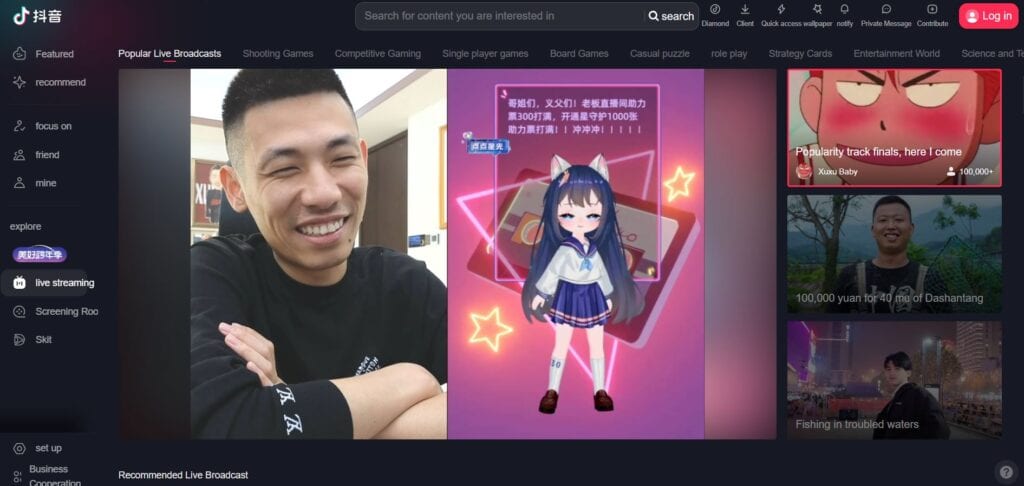
Douyin livestreams span a variety of topics, including entertainment, fashion, lifestyle, education, and cooking, attracting a diverse audience with varied interests. Influencers and celebrities frequently use the platform, enhancing fan engagement through performances, Q&A sessions, and personal life sharing. Additionally, Douyin integrates e-commerce capabilities, enabling creators to showcase and sell products directly to viewers during live sessions, making it a valuable tool for brands and retailers.
### Taobao Live
Launched by Alibaba in 2016, Taobao Live has rapidly grown to become China's largest B2C livestreaming platform. It dominates the livestreaming e-commerce market, accounting for 80% of all related transactions in the country.
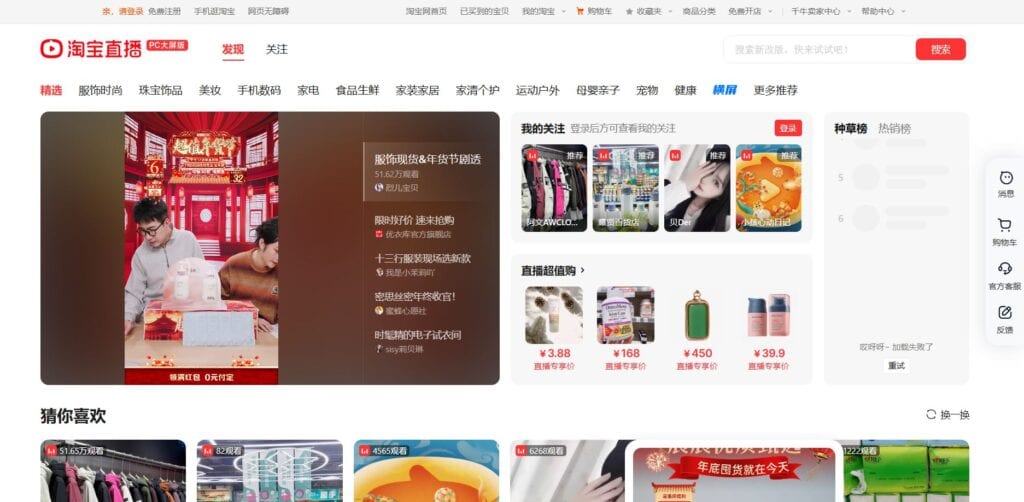
The platform's success stems from its vast selection of affordable products and a fast, efficient supply chain. This allows livestreamers to quickly showcase, review, and sell products to their dedicated audiences. Taobao Live has become an essential platform for businesses aiming to capitalize on China's booming e-commerce sector.
### Kuaishou (快手)
Kuaishou, backed by Tencent, is another major player in China's livestreaming industry, boasting 673 million monthly active users and nearly $4 billion in revenue during the second quarter of 2023. While luxury brands often focus on Douyin, Kuaishou distinguishes itself with its unique user base in lower-tier cities and smaller towns.
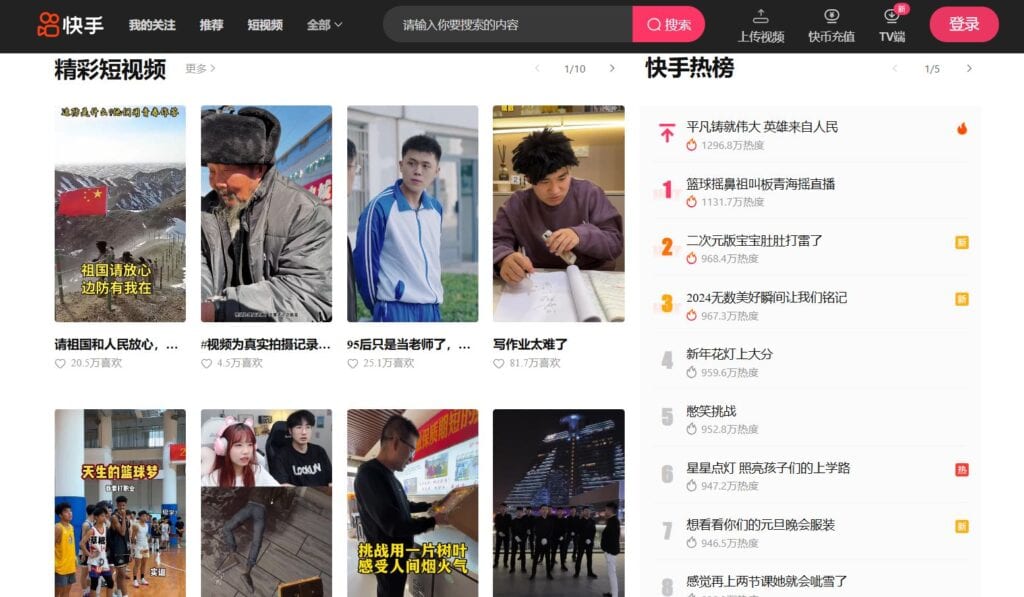
This platform offers brands an exciting opportunity to reach underrepresented demographics, especially in regions such as Hubei, Fujian, and Yunnan, which have shown significant consumer goods sales growth. With experts predicting continued growth in these areas, Kuaishou is positioned as a key channel for reaching emerging markets in China.
### Tencent Video (腾讯视频)
Tencent Video is one of China's largest online video platforms, operated by the tech giant Tencent. It is called WeTV outside of China. Since its launch in 2020, it has rapidly garnered 800 million users, making it the fourth-largest video platform globally, behind only Netflix, Amazon Prime, and Disney+.
The platform offers a diverse range of content, including movies, TV shows, animations, documentaries, and sports events. A standout feature of Tencent Video is its ability to foster community interaction through user recommendations, discussions, and content sharing. These features make it a versatile platform for entertainment and engagement.
### Youku (优酷)
Youku, formed from the merger of Youku and Tudou in 2012, is one of China's leading video streaming platforms. It commands an impressive 60% market share in China's online video space.
Often compared to YouTube, Youku differs in its approach, functioning more like Hulu or Netflix. The platform invests heavily in creating original content and offering a wide array of licensed TV shows, movies, and documentaries. Youku's emphasis on high-quality, curated content makes it a dominant force in the Chinese video streaming market.
## How Livestreaming Platforms Empower Brands
### Enhanced Customer Engagement
Livestreaming enables businesses to connect with their audiences directly, creating interactive and engaging shopping experiences. Real-time Q&A sessions and product demonstrations help build trust and foster informed purchasing decisions.
### Real-Time Sales
The ability to showcase products and close sales during livestreams is a game-changer for brands. By reducing the time between product discovery and purchase, livestreaming accelerates the consumer journey, making it an essential part of marketing in China.
### Influencer Partnerships
Chinese livestreaming platforms thrive on influencer culture. Collaborating with key opinion leaders (KOLs) who align with your brand can dramatically increase reach and credibility. Utilizing the services of a social media agency China can streamline this process.
### Data-Driven Insights
Platforms provide detailed analytics on viewer behavior, demographics, and preferences. Brands can use this data to refine their strategies and deliver personalized content, which is a specialty of a digital marketing agency China.
## Livestreaming Strategies for Business Success
### Choose the Right Platform
Each platform has unique strengths and audience demographics. Douyin excels in entertainment and youth engagement, while Kuaishou is ideal for targeting smaller cities. Match your brand's goals with the platform's capabilities.
### Invest in High-Quality Content
Visually appealing and informative content captures attention. Stand out by using high-quality setups, captivating hosts, and clear, effective messaging.
### Collaborate with Influencers
Partner with influencers whose values and audience align with your brand. Their endorsement can build trust and expand your reach in the highly competitive Chinese ecommerce market.
### Optimize Timing
Analyze platform trends to determine the best time for livestreaming. Peak viewing hours ensure higher attendance and engagement.
### Use Exclusive Offers
Create a sense of urgency with time-limited discounts or exclusive product launches during your livestreams.
## Why Livestreaming Matters for Global Brands
China's livestreaming platforms work for local businesses and international brands alike. Companies like Nike, L'Oréal, and Apple have used platforms like Douyin and Taobao Live to launch products and engage with Chinese consumers. By collaborating with a branding agency in China, global brands can tailor their approach and maximise their impact in this market.
## Conclusion
Livestreaming platforms like Douyin, Taobao Live, and Kuaishou are redefining the future of e-commerce and marketing in China. These platforms provide businesses with unparalleled opportunities to engage with audiences, build trust, and drive sales.
For brands looking to succeed in this highly competitive market, adopting livestreaming has moved from option to essential. With the right strategies, livestreaming can transform your business and position it for long-term success in the world of Chinese ecommerce.
---
# Where Brands Win Attention: Top Chinese Social Media Platforms in 2024
URL: https://www.thechinapath.com/insights/top-chinese-social-media-platforms-for-2024-marketing
Published: 2024-08-10
Author: TheChinaPath
Category: Platforms
WeChat, Weibo, Douyin and the other top Chinese social media platforms: who uses each one, and how global brands market on them in 2024.
## Where Brands Win Attention: Top Chinese Social Media Platforms in 2024
In 2024, the digital landscape in China continues to evolve, offering global brands real opportunities to engage with one of the largest consumer bases in the world. Chinese social media [platforms](/learn-china/platforms) like [WeChat](/grow-in-china/social-commerce), Weibo and TikTok carry weight far beyond China itself, thanks to their massive user bases and diverse functionalities. Understanding and using these platforms matters for any brand trying to expand its presence in the Chinese market. This article looks at the top Chinese social media platforms and how to put them to work for brand marketing.
## The Significance of Chinese Social Media for Global Brands
China's vast population and rapid digital adoption make it a key market for global brands. With over 1.4 billion people, the potential reach is immense. Chinese social media platforms offer unique opportunities for brand awareness, [influencer](/social-in-china) marketing, and direct consumer engagement, which are essential for building trust and loyalty.
Chinese social media users are highly engaged, spending an average of 2.25 hours daily on these platforms. The platforms support various content types, including images, videos, live streaming, and interactive features, allowing brands to create engaging and diverse content.
## Overview of Top Chinese Social Media Platforms
### 1. WeChat
WeChat is the undisputed king of Chinese social media with over 1 billion monthly active users. Originally launched as a messaging app, WeChat has evolved into an all-encompassing super app. It offers a variety of services, including instant messaging, video and audio calls, social networking, and even mobile payments through WeChat Pay. Additionally, the app supports mini-programs, which are essentially mini-apps within the WeChat ecosystem, allowing brands to create custom experiences directly within WeChat. For instance, brands can develop mini-programs for e-commerce, customer service, or even interactive games to engage users.
WeChat's Moments feature, similar to Facebook's timeline, allows brands to share updates, promotions, and advertisements directly with their followers. The platform's extensive data analytics capabilities also enable brands to target specific user groups based on their preferences and behaviors. Utilizing WeChat effectively can be a game-changer for eCommerce China, allowing smooth integration of communication and transactions.
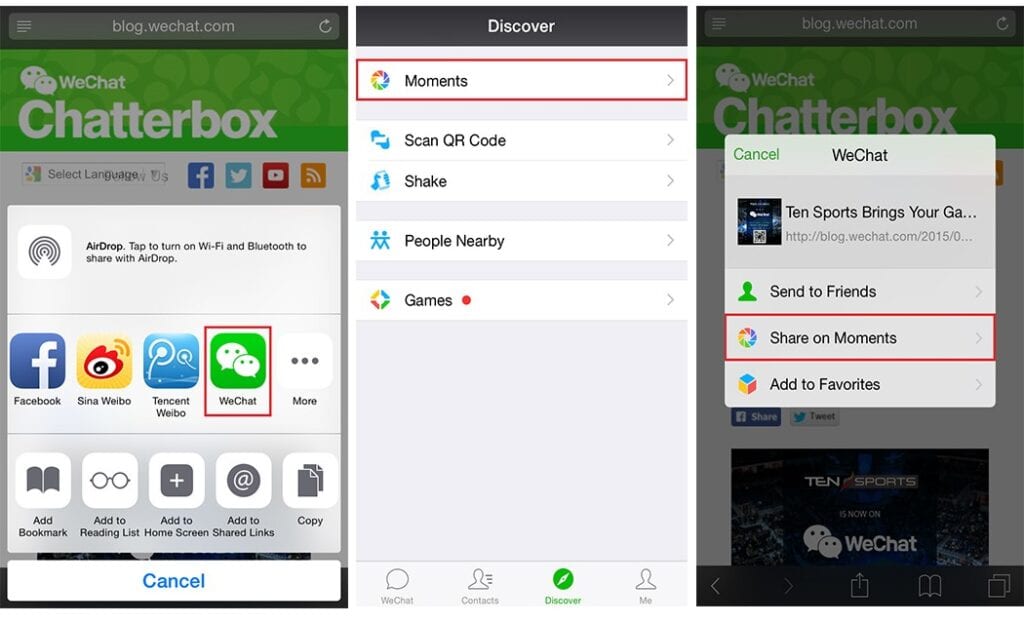
### 2. Weibo
Weibo is a microblogging platform with over 550 million monthly active users. It's often compared to Twitter due to its focus on short-form content, but Weibo supports a richer multimedia experience, including images, videos, and live streaming. The platform is particularly popular for real-time news updates, celebrity gossip, and trending topics. For brands, Weibo offers numerous advertising options, such as promoted posts, banner ads, and video ads.
The platform's hashtag campaigns and trending topics can significantly boost brand visibility. Additionally, Weibo's fan economy is strong, with many influencers (Key Opinion Leaders or KOLs) who can amplify brand messages through their large followings. Brands often collaborate with these influencers to launch products, run campaigns, and engage with the audience more authentically. Using Weibo is essential for any comprehensive China branding strategy.
### 3. TikTok (Douyin)
TikTok, known as Douyin in China, is a short-form video platform with 600 million monthly active users. It's especially popular among Gen Z and Millennials, who are drawn to its creative and engaging content. Douyin offers powerful video editing tools and effects, making it easy for users to create viral content. Brands can use Douyin's platform by creating engaging and entertaining videos that resonate with younger audiences.
The app also supports a variety of advertising formats, including in-feed ads, branded hashtag challenges, and branded effects. Moreover, Douyin's algorithm is highly effective at surfacing relevant content to users, ensuring that well-crafted brand videos can achieve substantial reach. Collaborating with popular Douyin influencers can also help brands gain credibility and expand their reach. Douyin's rise underscores the importance of China performance marketing.
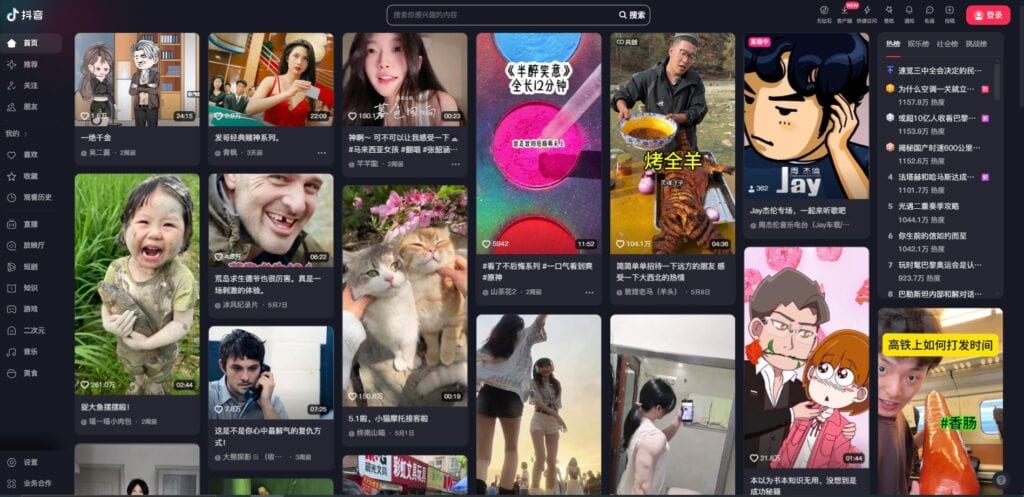
### 4. Tencent QQ
Tencent QQ, with over 800 million monthly active users, is a versatile platform offering messaging, gaming, music, shopping, microblogging, and even dating services. QQ's broad range of features makes it appealing to a wide demographic, including younger users who enjoy its rich multimedia capabilities and older users who appreciate its simplicity.
Brands can utilize QQ's various features to engage with users in multiple ways. For instance, they can launch interactive campaigns, offer customer service through QQ's messaging service, and advertise on QQ's extensive gaming network. The platform's integration with other Tencent services, such as WeChat and Tencent Video, allows for smooth cross-platform marketing strategies.
### 5. Baidu Tieba
Baidu Tieba is a community-based forum with over 300 million monthly active users. It allows users to create and participate in topic-based discussions, similar to Reddit. Brands can use Baidu Tieba to engage with niche communities, gather consumer insights, and build brand loyalty. By participating in relevant discussions and creating branded "Tieba" (forums), brands can establish themselves as thought leaders and foster a sense of community.
Baidu Tieba is particularly useful for content marketing, as posts and discussions often rank highly in Baidu search results, providing additional visibility. Brands can also use Baidu Tieba to monitor public opinion and gather feedback on products or services.
### 6. Tencent Video
Tencent Video is one of China's largest video streaming platforms, with over 443 million monthly active users and more than 112 million subscribers. It offers a wide variety of content, including movies, TV shows, and live-streaming events. For brands, Tencent Video provides numerous opportunities for advertising, such as pre-roll ads, mid-roll ads, and sponsored content.
The platform's extensive user base and high engagement levels make it an excellent channel for reaching a broad audience. Live streaming on Tencent Video is particularly popular, allowing brands to host live events, product launches, and interactive sessions with viewers. This real-time engagement can significantly boost brand visibility and consumer trust. Tencent Video's capabilities make it a prime channel for China livestreaming strategies.
### 7. Zhihu
Zhihu is a question-and-answer platform with over 100 million monthly active users, similar to Quora. It's used by professionals and experts to share knowledge and insights on various topics. Brands can use Zhihu for content marketing by answering questions related to their industry, demonstrating expertise, and building credibility.
Zhihu also offers paid advertising options, such as promoted answers and banner ads, which can increase visibility. Additionally, Zhihu's premium membership levels provide brands with opportunities to offer exclusive content, such as webinars, e-books, and white papers. Engaging with the Zhihu community by providing valuable information can help brands establish themselves as trusted authorities in their fields.
### 8. Little Red Book (Xiaohongshu)
Little Red Book, or Xiaohongshu, is a social e-commerce platform with over 300 million registered users. It's particularly popular among young women and focuses on lifestyle, fashion, and beauty. The platform combines user-generated content with e-commerce, allowing users to share product reviews, tips, and shopping experiences. Brands can use Xiaohongshu for influencer marketing, collaborating with popular users to promote products through authentic reviews and recommendations.
The platform's shopping features enable users to purchase products directly within the app, providing a smooth shopping experience. Xiaohongshu's community-driven approach helps brands build trust and authenticity, making it an ideal platform for reaching young, fashion-conscious consumers. Utilizing Little Red Book is essential for effective China brand localization.
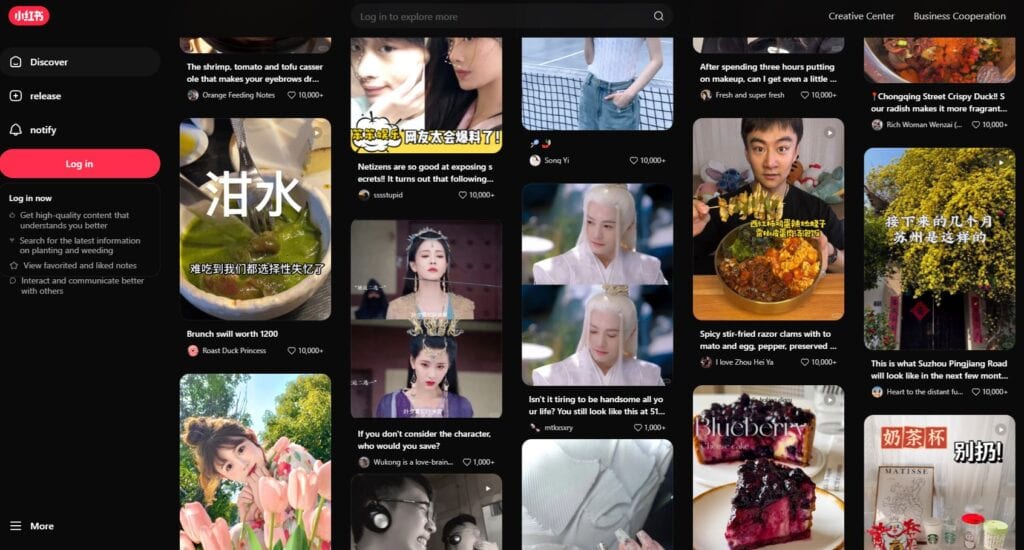
## Using Chinese Social Media for Brand Marketing
### Influencer Marketing
Influencer marketing is a cornerstone of brand strategy in China. Collaborating with Key Opinion Leaders (KOLs) on platforms like Weibo, Douyin, and Xiaohongshu can significantly boost a brand's reach and credibility. Influencers in China often have large, loyal followings and can influence consumer purchasing decisions through their endorsements. Using KOL marketing is crucial for effective brand presence in China.
### Content Strategy
Creating engaging and culturally relevant content is crucial for success in the Chinese market. Brands should use the various content formats supported by Chinese social media platforms, such as live streaming, short videos, and interactive posts, to capture the audience's attention. Understanding local trends and preferences is key to creating content that resonates with Chinese consumers.
### Advertising Opportunities
Chinese social media platforms offer a wide range of advertising options, including banner ads, sponsored posts, in-feed ads, and video ads. Brands should utilize these options to target specific demographics and drive conversions. Platforms like WeChat and Tencent Video also provide advanced targeting and analytics tools to optimize ad performance.
### E-Commerce Integration
The integration of e-commerce features in Chinese social media platforms offers brands a smooth way to sell products directly to consumers. Platforms like WeChat and Xiaohongshu support in-app purchases, live-stream shopping, and mini-programs, allowing brands to create a cohesive shopping experience. This integration not only boosts sales but also enhances customer satisfaction by providing a convenient shopping solution.
## Future Trends in Chinese Social Media
### Rise of Niche Platforms
Niche social media platforms catering to specific interests and demographics are on the rise. Brands should explore these platforms to target specific audiences more effectively.
### Integration of AI and AR
Artificial Intelligence (AI) and Augmented Reality (AR) are becoming integral to social media platforms. Brands can use these technologies for personalized marketing, interactive experiences, and enhanced customer engagement.
### Continued Growth of E-Commerce
E-commerce integration within social media platforms will continue to grow. Brands should focus on creating smooth shopping experiences and utilizing advanced analytics to optimize their marketing efforts.
In 2024, using Chinese social media platforms is essential for global brands aiming to expand their presence in China. Platforms like WeChat, Weibo, TikTok, and others offer unique opportunities for brand marketing, from influencer collaborations to live streaming and e-commerce integration. By understanding the landscape, respecting local culture, and implementing effective strategies, brands can connect with Chinese consumers, build strong relationships, and achieve significant growth in one of the world's largest markets.
---
# Ultimate Guide to Capturing the Hearts of Chinese Luxury Travelers
URL: https://www.thechinapath.com/insights/top-digital-marketing-strategies-to-attract-chinese-luxury-travelers
Published: 2024-07-08
Author: TheChinaPath
Category: Market Strategy
Chinese luxury travelers want cultural immersion and personal service. The digital strategies and storytelling travel brands use to win their bookings.
## Ultimate Guide to Capturing the Hearts of Chinese Luxury Travelers
The Chinese luxury travel market is rapidly evolving, driven by travelers seeking unique, culturally immersive experiences that offer a deeper emotional connection with their destinations. As this dynamic demographic moves away from superficial sightseeing to more meaningful journeys, travel providers must adapt to meet their sophisticated demands. This article explores effective strategies to capture the hearts of Chinese luxury travelers, focusing on cultural experiences, personalized travel, and digital engagement.
## Understanding the Chinese Luxury Traveler
### Shifting Preferences in Chinese Luxury Travel
Chinese luxury travelers are increasingly interested in authentic local experiences that foster emotional connections. This shift is driving the need for travel brands to innovate and tailor their offerings to meet these sophisticated preferences.
### Emphasis on Cultural Immersion
Cultural immersion has become a significant trend among Chinese luxury travelers. These travelers seek destinations that offer a genuine connection to local traditions and heritage, enriching their travel experiences.
### Environmental and Social Consciousness
The younger generation of Chinese luxury travelers is showing a growing concern for the environmental and social impact of their travels. Sustainable and responsible tourism practices are becoming crucial in attracting this market segment.
## Creating Unique and Immersive Experiences
### Local Cultural Experiences
Travel providers can capture the interest of Chinese luxury travelers by offering experiences that highlight local culture. For instance, Rissai Valley, a Ritz-Carlton Reserve, provides guests with an intimate luxury retreat in Jiuzhaigou, allowing them to immerse themselves in traditional Tibetan village life.

### Personalized and Customized Travel
Luxury travelers are moving away from group tours, preferring customized, private experiences that offer flexibility and exclusive access to local culture. This trend emphasizes the importance of bespoke travel services that cater to individual preferences.
### Holistic Wellness
The pursuit of holistic well-being is a growing trend among Chinese luxury travelers. Travel brands can capitalize on this by offering wellness retreats that combine relaxation with cultural authenticity, such as wellness spas inspired by traditional techniques.
## Using Digital Platforms for Engagement
### Harnessing Xiaohongshu
Xiaohongshu, known as China's lifestyle search engine, is a vital platform for travel inspiration and recommendations. Travel brands can partner with influencers on this platform to showcase unique destinations and experiences, boosting engagement and bookings. Brands can also utilize Xiaohongshu's community features to create user-generated content campaigns that encourage travelers to share their experiences, further enhancing brand visibility and credibility.
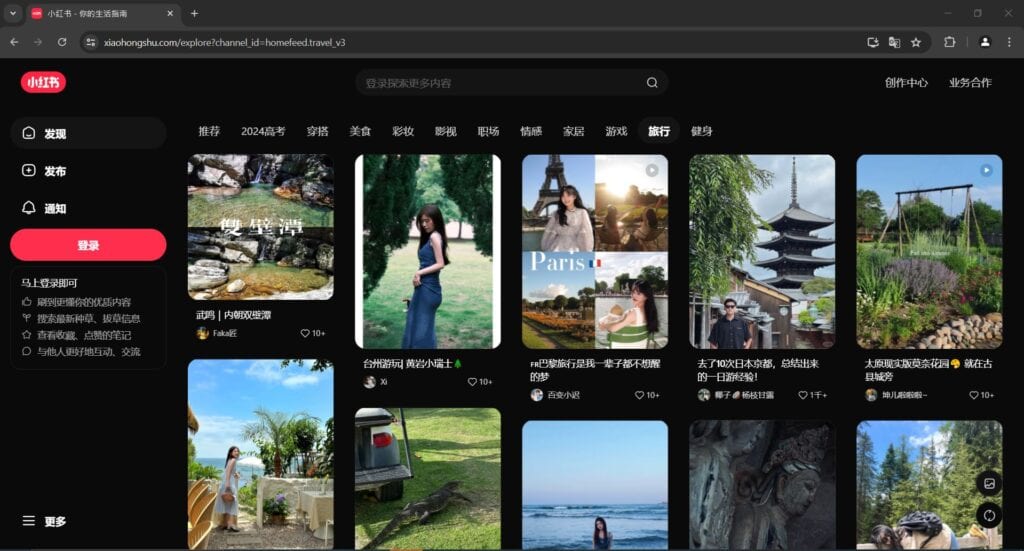
### Utilizing WeChat and Weibo
[WeChat](/grow-in-china/social-commerce) and Weibo are essential for engaging Chinese luxury travelers. These platforms allow for direct communication and personalized marketing, helping brands to build strong relationships with potential customers. WeChat's mini-programs offer innovative ways to enhance the user experience, such as providing virtual tours, booking services, and personalized travel recommendations. Weibo, with its wide reach and real-time interaction capabilities, is perfect for launching marketing campaigns and engaging with travelers through interactive content and live streams.
### Social Media Influence
Social media platforms like Douyin (TikTok) and Weibo play a significant role in shaping travel preferences among Chinese luxury travelers. Brands that effectively utilize these platforms can inspire and influence travel decisions through engaging content and [influencer](/social-in-china) collaborations. Douyin's short-form videos are particularly effective in showcasing destinations and experiences in a dynamic and visually appealing way, while live streams on Weibo can provide real-time insights and interactions that resonate with potential travelers.
## Creating Emotional Connections
### Personalized Recommendations
Providing personalized recommendations is key to creating emotional connections with Chinese luxury travelers. By utilizing data analytics and social listening tools, travel brands can gather insights into travelers' preferences, interests, and behaviors. This allows brands to curate customized itineraries that resonate deeply with their guests. For example, a traveler interested in local cuisine could be offered a private cooking class with a renowned local chef, or a history enthusiast might enjoy a guided tour of a lesser-known historical site.
### VIP Tiers and Exclusive Benefits
Developing VIP tiers with escalating benefits is an effective strategy to foster loyalty among Chinese luxury travelers. These tiers can include a range of exclusive perks such as private airport transfers, complimentary spa treatments, personalized concierge services, and priority reservations at top restaurants. By rewarding repeat customers with unique and valuable experiences, travel brands can ensure their guests feel appreciated and valued, encouraging them to return and explore new destinations within the same brand family.
### Collaborations with Influencers
Influencers play a crucial role in shaping travel preferences among Chinese luxury travelers. Collaborating with influencers who have a strong following in the luxury travel sector can significantly boost a brand's visibility and credibility. Travel brands can invite influencers to experience their offerings firsthand and share their authentic experiences on social media platforms like Xiaohongshu, Weibo, and Douyin. These collaborations should focus on creating engaging and visually appealing content that highlights the unique aspects of the destination and the luxurious experiences available.
### Emotional Storytelling
Incorporating emotional storytelling into [marketing strategies](/grow-in-china/campaigns) can help create a deeper connection with travelers. Brands can share stories about the local culture, traditions, and people, creating a narrative that resonates with the audience. For instance, sharing the story of a local artisan who creates unique handicrafts can provide a personal touch to the travel experience, making it more meaningful for guests. This approach not only enhances the travel experience but also fosters a sense of connection and appreciation for the destination.
### Interactive Experiences
Interactive experiences that engage travelers on a personal level can create lasting memories and emotional bonds. This can include activities such as participating in traditional ceremonies, joining local festivals, or engaging in hands-on workshops. For example, a luxury hotel could offer guests the opportunity to participate in a traditional tea ceremony, guided by a local tea master. Such experiences allow travelers to immerse themselves in the local culture and create meaningful connections with the people and the place.
## Surprising and Delighting Travelers
### Cross-Sector Collaborations
Collaborating with leading fashion houses, renowned artists, and elite sporting events allows travel providers to create unique and memorable experiences that transcend traditional travel boundaries. For instance, travel destinations can partner with fashion designers to host exclusive runway shows or pop-up boutiques within the hotel premises. These collaborations can also extend to offering unique dining experiences curated by celebrity chefs or hosting private art exhibitions featuring local and international artists.
### Fashion and Sports Activations
Luxury brands can engage travelers by creating unique activations around popular activities, such as skiing or fashion shows. For example, Dior's ski pop-up store at the Lake Songhua Seibu Prince Hotel offered travelers an exclusive shopping experience amidst a picturesque winter landscape. Similarly, Fendi's Winter Sports Capsule Collection pop-up space at The Westin Changbaishan combined fashion with winter sports, offering guests a blend of luxury and adventure. These activations not only attract attention but also provide travelers with exclusive and unforgettable experiences.

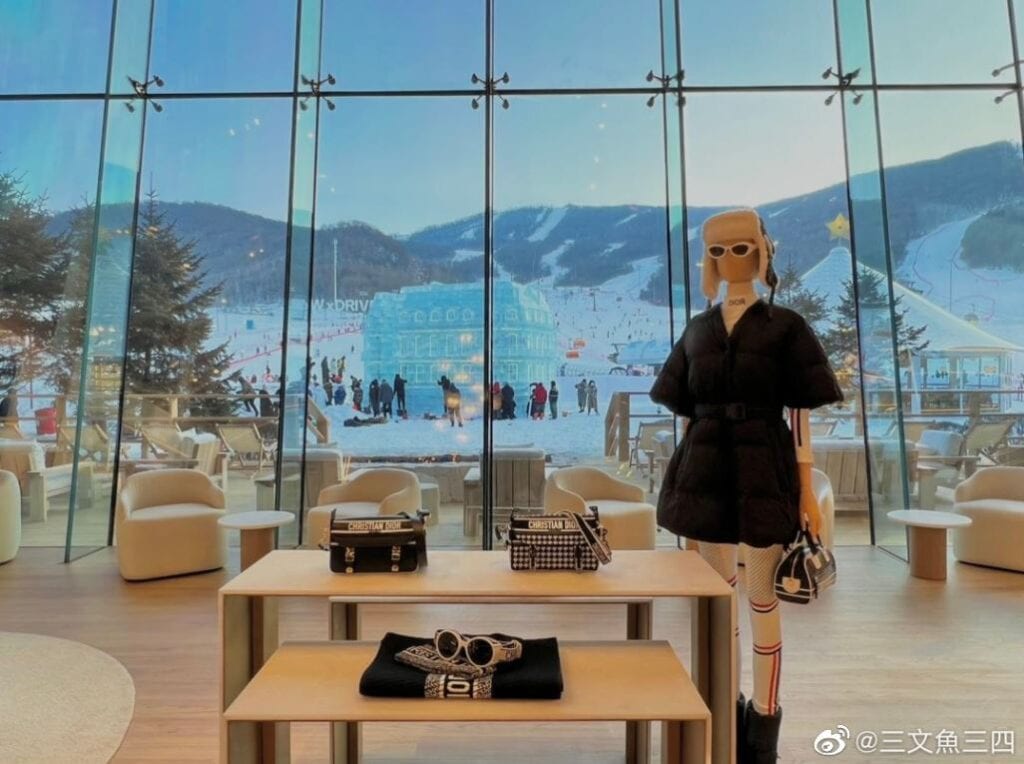
### Event-Driven Tourism
Events like concerts, sports matches, and cultural festivals can significantly drive tourism traffic and spending. Travel brands can capitalize on these events by offering exclusive access and premium experiences to their guests. For example, The Ritz-Carlton's partnership with the Mercedes-AMG Petronas F1 Team provides guests with VIP access to the Shanghai Formula 1 Grand Prix, including behind-the-scenes tours and meet-and-greet sessions with the drivers. Similarly, Marriott Bonvoy's collaboration with the Shanghai Rolex Masters offers exclusive experiences like the Dream Seat series and Master Classes with tennis legend Li Na. These unique offerings not only enhance the travel experience but also create memorable moments that travelers will cherish.
### Surprise Elements
Incorporating surprise elements into the travel experience can delight guests and create lasting memories. This could include unexpected upgrades, personalized welcome gifts, or surprise events during the stay. For instance, a luxury hotel could surprise guests with a private dinner on the beach, complete with a personalized menu and live music. These thoughtful gestures show that the brand goes above and beyond to ensure their guests have an exceptional experience.
### Exclusive Pop-Up Experiences
Creating exclusive pop-up experiences within the destination can attract high-end travelers looking for something unique and off the beaten path. For example, a luxury resort could host a temporary art installation featuring works by renowned artists or set up a pop-up restaurant with a Michelin-starred chef. These experiences provide travelers with exclusive opportunities that they cannot find elsewhere, enhancing the overall appeal of the destination.
Capturing the hearts of Chinese luxury travelers requires a deep understanding of their evolving preferences and aspirations. By focusing on cultural immersion, personalized experiences, and digital engagement, travel brands can create meaningful connections and build lasting relationships with this lucrative market segment. Using innovative strategies and collaborations will ensure that travel providers stay ahead in the competitive luxury travel industry, meeting the sophisticated demands of Chinese luxury travelers and securing their loyalty.
---
# China's 2025 eCommerce Shopping Festivals Calendar
URL: https://www.thechinapath.com/insights/top-e-commerce-events-in-china-2025-dates-and-marketing-tips
Published: 2025-01-09
Author: TheChinaPath
Category: E-Commerce
Every major eCommerce shopping festival in China in 2025, laid out quarter by quarter through Singles' Day, with marketing tips for each sales peak.
## China's 2025 eCommerce Shopping Festivals Calendar
In China, eCommerce shopping festivals do more than fill a calendar. Each one is an opportunity to drive massive sales, build brand visibility and deepen customer engagement. With a consumer market steeped in cultural traditions and a dynamic digital ecosystem, each festival presents its own marketing opportunity for brands looking to capture the attention of Chinese shoppers.
For brands operating in Chinese eCommerce, the landscape is especially promising for cross-border sellers. By using cross-border eCommerce in China, businesses can reach consumers eager for international products while navigating the unique demands of this market.
This article provides a detailed guide to the major eCommerce festivals in 2025, along with strategic insights to help brands align their [campaigns](/grow-in-china/campaigns) with consumer trends and cultural values.
## Why Shopping Festivals Are Crucial in China's eCommerce Market
China's eCommerce market is the largest in the world, where festivals and holidays act as critical drivers of consumer activity. In Chinese eCommerce, these festivals are cultural touchpoints, combining tradition with commerce. Whether celebrating Lunar New Year or Singles' Day, Chinese consumers embrace these occasions as opportunities to shop for gifts, essentials, and luxury items.
For businesses engaged in cross-border eCommerce in China, these festivals are golden opportunities to:
* Optimize marketing strategies by tailoring campaigns to the cultural context.
* Enhance brand visibility through targeted promotions on key dates.
* Boost sales through platforms tailored to Chinese eCommerce, such as Tmall Global and JD Worldwide.
## China's eCommerce Calendar 2025: Key Dates and Opportunities
### Q1: January to March
#### Lunar New Year (January 29, 2025)
The Lunar New Year is China's most important traditional festival and a major driver of consumer spending. Known for family reunions and gifting traditions, this holiday sees significant activity across [e-commerce](/grow-in-china/cross-border-ecommerce) platforms.
**Marketing Strategies:**
* Collaborate with a branding agency in China to develop limited-edition products in red or gold, symbolizing prosperity.
* Launch culturally resonant campaigns focusing on family traditions and togetherness.
* Utilize China influencers to amplify messaging and boost sales.
#### Valentine's Day (February 14, 2025)
Source: Caixin Global
Though Western in origin, Valentine's Day is widely embraced by younger Chinese consumers. It's a peak time for gifting, especially luxury goods, chocolates, flowers, and travel experiences.
**Marketing Strategies:**
* Showcase exclusive international items popular in Chinese eCommerce, like high-end chocolates, perfumes, and jewelry.
* Run interactive campaigns targeting millennials and Gen Z.
* Promote luxury and personalized gifts through Douyin livestreaming events.
* Offer flash sales designed to encourage last-minute purchases.
#### International Women's Day (March 8, 2025)

Source: China Daily
Also rebranded as "Goddess Day" or "Queen's Day," this event celebrates women and is a prime opportunity for self-care and empowerment-themed campaigns.
**Marketing Strategies:**
* Collaborate with a digital marketing agency in China to create campaigns focused on empowerment and self-care.
* Promote beauty and wellness products through platforms tailored to cross-border eCommerce in China.
* Engage China influencers to promote your products and build credibility.
* Run exclusive discounts and loyalty rewards tailored to female consumers.
### Q2: April to June
#### 520 Internet Valentine's Day (May 20, 2025)
The numbers "520" sound like "I love you" in Mandarin, making this day a favorite among younger, digital-savvy consumers. Unlike traditional Valentine's Day, it focuses on unspoken love and confessions.
**Marketing Strategies:**
* Use WeChat agency in China services to launch romantic, interactive campaigns.
* Promote digital gifts and virtual experiences that resonate with younger audiences.
* Use Douyin ecommerce to create user-generated content challenges.
#### 618 Shopping Festival (June 1 to 18, 2025)
Founded by JD.com, the 618 Shopping Festival has grown into one of China's largest e-commerce events, second only to Singles' Day.
**Marketing Strategies:**
* Partner with platforms specializing in cross-border eCommerce in China to streamline logistics and increase visibility.
* Offer early bird discounts and pre-sale events to drive anticipation.
* Launch product bundles and cross-platform promotions.
* Utilize data analytics to retarget customers based on past purchases.
#### Dragon Boat Festival (May 31, 2025)

Source: South China Morning Post
Rooted in Chinese tradition, this festival is celebrated with dragon boat races and the consumption of zongzi (sticky rice dumplings).
**Marketing Strategies:**
* Emphasize cultural heritage through storytelling in your campaigns.
* Collaborate with local brands to promote themed gift sets.
* Highlight eco-friendly or health-conscious product variations to stand out.
### Q3: July to September
#### Qixi Festival (July 31, 2025)
Known as Chinese Valentine's Day, the Qixi Festival is steeped in romantic folklore and is a key event for gifting.
**Marketing Strategies:**
* Market luxury items like jewelry, perfumes, and romantic getaways.
* Incorporate storytelling to connect your products with the festival's romantic themes.
* Partner with high-end influencers to promote aspirational lifestyles.
#### 8.8 Shopping Festival (August 8, 2025)
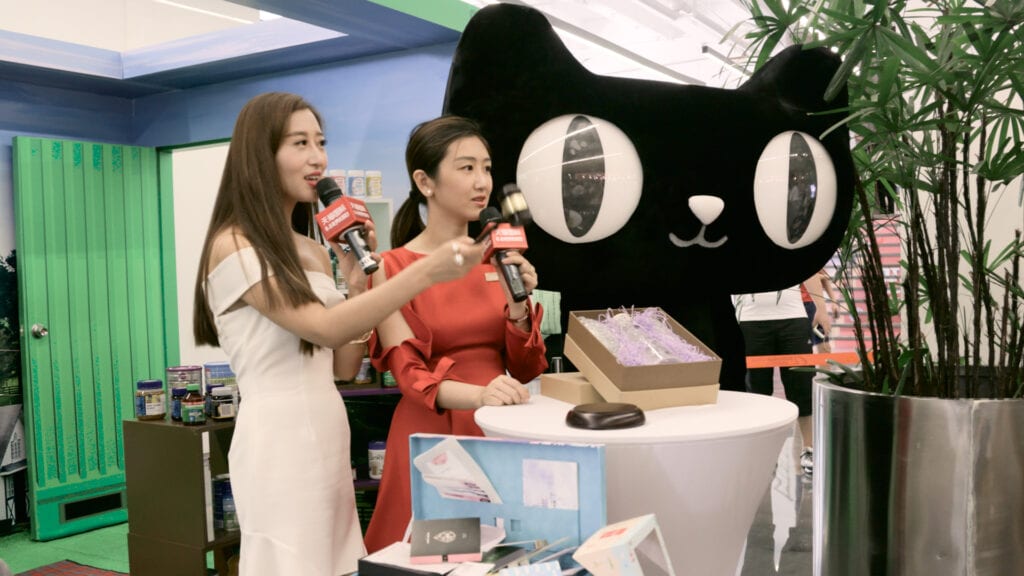
Source: Alizila
Launched by Alibaba, this festival highlights cross-border shopping and exclusive rewards for 88VIP club members.
**Marketing Strategies:**
* Position international products as premium and unique offerings.
* Run loyalty-focused promotions to attract high-value customers.
* Use Tmall Global's tools to optimize your campaigns for Chinese eCommerce audiences.
#### Teachers' Day (September 10, 2025)
Source: China Daily
Teachers' Day celebrates educators and is an opportunity for brands in stationery, books, and educational technology.
**Marketing Strategies:**
* Offer discounts on educational products and tools.
* Promote campaigns centered on appreciation and gratitude.
* Partner with schools or educational organizations for localized initiatives.
### Q4: October to December
#### National Day & Golden Week (October 1 to 7, 2025)
This week-long holiday marks a peak in domestic and international travel and is a key period for retail and e-commerce.
**Marketing Strategies:**
* Tailor promotions for travelers, such as luggage, gadgets, and travel accessories.
* Run flash sales during the week to capture leisure shoppers.
* Utilize geo-targeted ads for consumers in tourist-heavy locations.
#### Mid-Autumn Festival (October 6, 2025)
This family-focused festival is celebrated with mooncakes and lanterns, making it a time for tradition and togetherness.
**Marketing Strategies:**
* Launch mooncake gift sets or collaborations with luxury brands.
* Promote family-themed marketing campaigns emphasizing unity.
* Explore interactive content like augmented reality (AR) moon-gazing experiences.
#### Singles' Day (November 11, 2025)
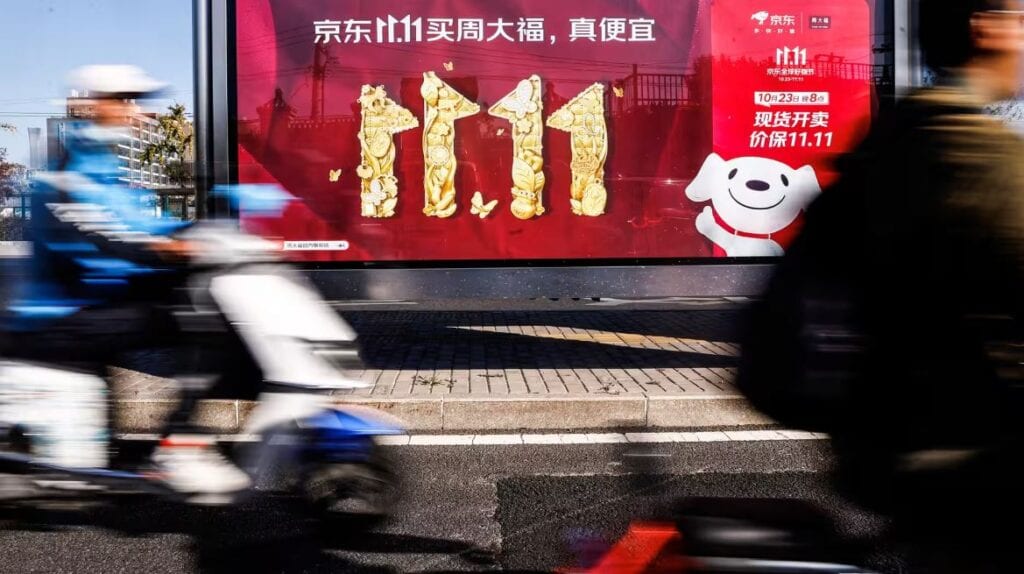
Source: Reuters
The largest online shopping festival globally, Singles' Day is an unparalleled opportunity for brands to generate sales and brand awareness.
**Marketing Strategies:**
* Start campaigns early with pre-sales and live-streaming events.
* Focus on big-ticket items and bundle deals.
* Work with a digital agency in China to implement precision targeting for repeat customers.
#### Year-End Good Price Festival (December 9 to 31, 2025)
This event replaces the former Double 12 Festival and is designed to help brands clear year-end inventory.
**Marketing Strategies:**
* Emphasize clearance sales and last-chance offers.
* Create urgency with countdown timers and limited-stock notifications.
* Offer loyalty rewards or discounts for future purchases to drive customer retention.
## Tips for Successful Marketing During China's Shopping Festivals
### Understand Your Audience
Segment your audience based on age, location, and interests. Use these insights to craft tailored campaigns that resonate with specific consumer groups.
### Use Digital Platforms
Platforms like Tmall Global, JD Worldwide, and Douyin are essential for reaching Chinese consumers. These platforms are tailored to the nuances of Chinese eCommerce, providing tools to enhance visibility and engagement.
### Focus on Storytelling
Cultural festivals in China have deep emotional significance. Craft narratives that evoke feelings of nostalgia, family, or love to connect with your audience on a deeper level.
### Start Early
Engage with a [media](/grow-in-china/media) buying agency in China to secure premium ad placements and maximize reach during pre-sale periods.
### Invest in Localization
Ensure your campaigns are culturally relevant by adapting your messaging, visuals, and product offerings to align with Chinese traditions and values.
## Conclusion
The 2025 China eCommerce shopping festivals calendar offers unparalleled opportunities for brands to engage with the world's largest consumer market. By aligning your marketing strategies with these key dates and embracing China's unique cultural and digital ecosystem, you can build lasting connections with consumers and drive significant business growth.
For international brands, 2025 is the year to make a mark in cross-border eCommerce in China. Stay proactive, plan strategically, and use the unique dynamics of Chinese shopping festivals to achieve your business goals.
---
# Top eCommerce Influencers in China 2024
URL: https://www.thechinapath.com/insights/top-ecommerce-influencers-in-china-2024
Published: 2024-12-18
Author: TheChinaPath
Category: KOLs & Livestream
China's top eCommerce influencers of 2024 across beauty, food, travel and lifestyle, the platforms they sell on, and what KOL deals do for brands.
## In 2024, Chinese eCommerce is booming
In 2024, Chinese eCommerce is booming, driven by innovative technologies, mobile-first consumer behaviors, and the pivotal role of Key Opinion Leaders (KOLs). With platforms like [Xiaohongshu](/grow-in-china/social-commerce) (RED) and Douyin, influencers are changing how brands engage with audiences. KOLs bridge the gap between brands and consumers, offering authenticity, trust, and creativity to drive sales.
Many brands also collaborate with experts from a digital marketing agency in China or a media buying agency in China to maximize the effectiveness of these partnerships. Here's an in-depth look at the top eCommerce influencers in China, their platforms, and how they contribute to the marketing ecosystem.
## Why KOLs Are Crucial for Chinese eCommerce
China's digital marketing landscape thrives on authenticity and engagement, areas where KOLs excel. Influencers have integrated cleanly into Chinese eCommerce, blurring the lines between traditional advertising and engaging content.
* **Massive Market Potential**: With an eCommerce market surpassing $1.5 trillion, brands have unparalleled opportunities to connect with consumers.
* **High Engagement Rates**: Livestreaming, short videos, and lifestyle posts dominate platforms, creating direct purchase pathways for consumers.
* **Trusted Recommendations**: Unlike traditional ads, KOLs' endorsements are viewed as authentic, making them more impactful.
## Top KOLs in China for 2024
### Lifestyle and Everyday Goods Influencers
These KOLs focus on promoting practical, everyday products, often targeting urban audiences seeking relatable solutions.
#### 林怡伦 (Lin Yilun)
* **Platform**: Xiaohongshu
* **Followers**: 3.9 million
Lin Yilun is celebrated for her cozy and practical lifestyle content, offering audiences insights into home organization, parenting tips, and product recommendations. Her relatable approach to everyday challenges resonates strongly with middle-class urban audiences. Collaborations with a branding agency in China often feature her for creating relatable yet aspirational [campaigns](/grow-in-china/campaigns).
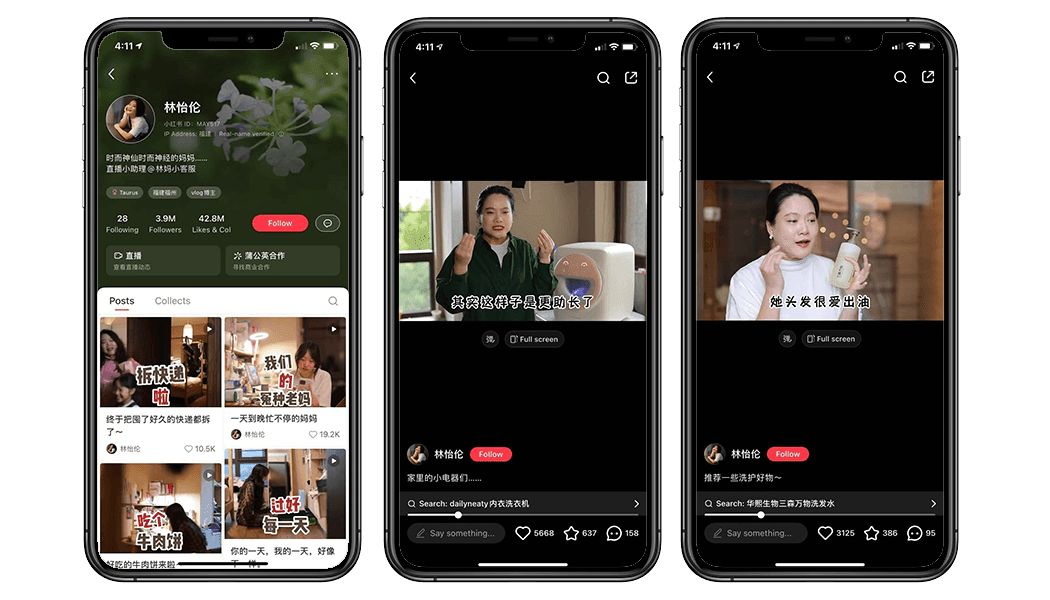
#### Papi酱 (Papi Jiang)
* **Platform**: Xiaohongshu
* **Followers**: 5.5 million
Papi Jiang blends humor and commentary to captivate her audience. Her knack for cleanly integrating product endorsements into engaging skits makes her one of the most versatile influencers for lifestyle brands. She's a favorite for brands needing creative, storytelling-focused campaigns handled by a creative agency in China.
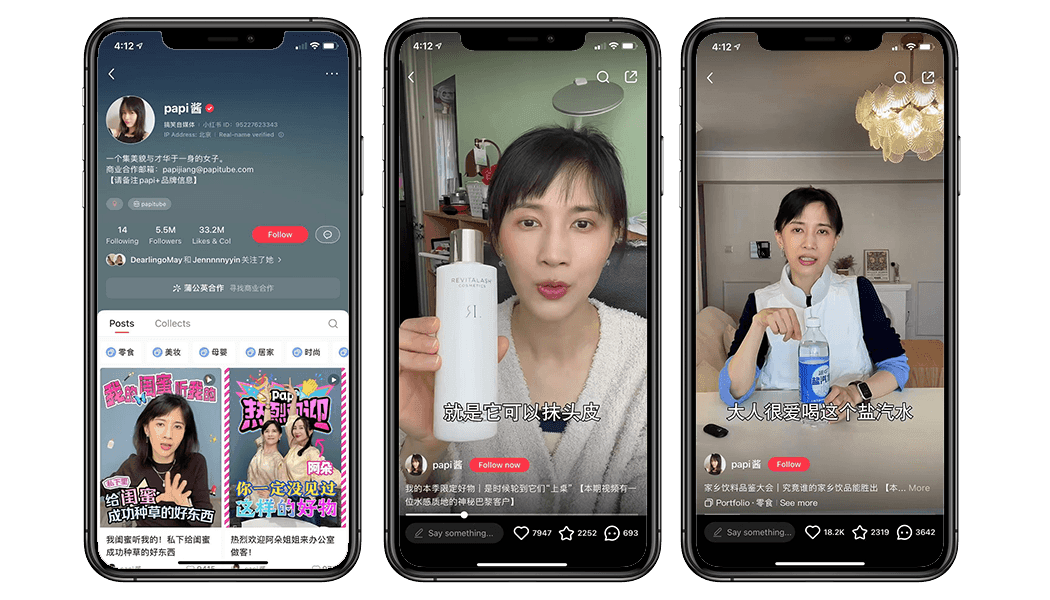
### Travel and Adventure Influencers
Travel influencers are important in promoting destinations, travel gear, and lifestyle products. Their aspirational content fosters deeper audience engagement.
#### Winnie文 (Winnie Wen)
* **Platform**: Xiaohongshu
* **Followers**: 6.5 million
Winnie Wen showcases luxury travel destinations, accommodations, and aspirational experiences. Her content appeals to affluent consumers and is often featured in campaigns by media agencies in China for premium travel brands.
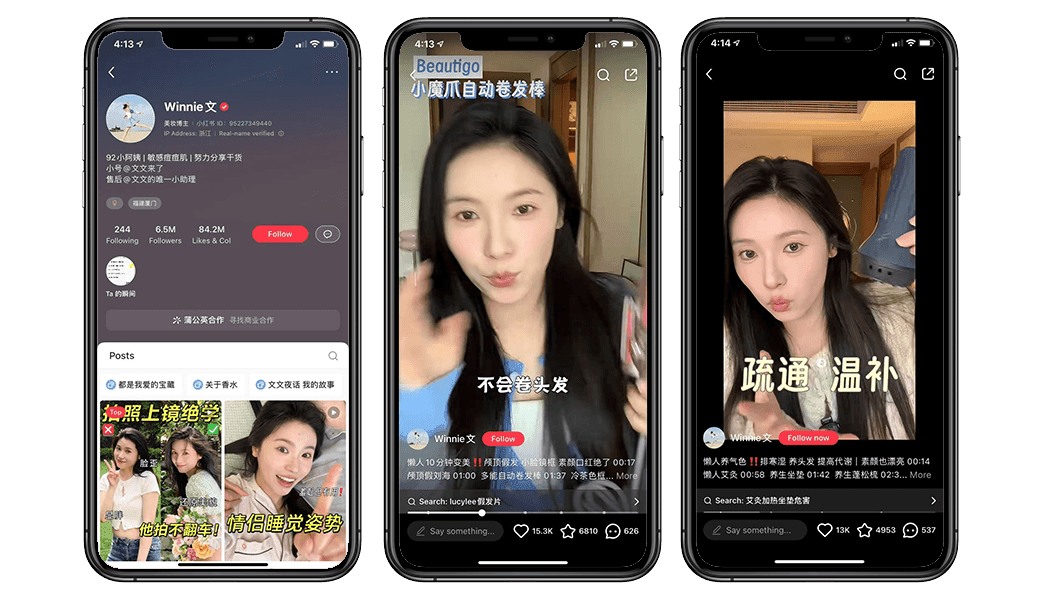
#### 氧化菊 (Yanghua Ju)
* **Platform**: Xiaohongshu
* **Followers**: 4.3 million
Yanghua Ju highlights cultural experiences and hidden gems, creating content that combines education with entertainment. Her down-to-earth tone attracts adventurous audiences eager to explore unique destinations.
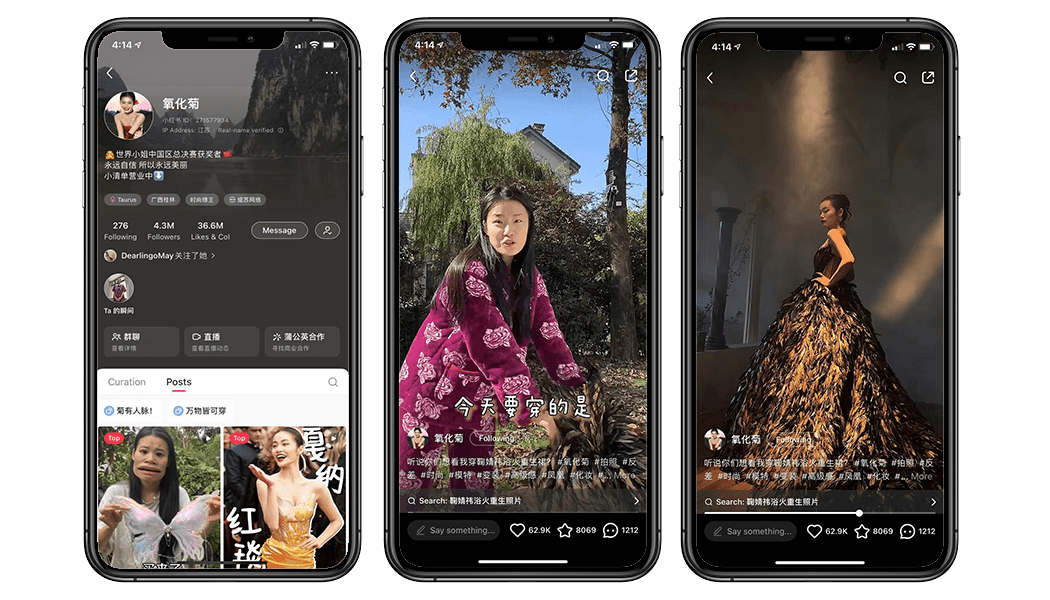
### Beauty Influencers
Beauty KOLs dominate the Chinese eCommerce space, offering tutorials, reviews, and product promotions that resonate deeply with audiences.
#### 易梦玲 (Yimoney)
* **Platform**: Xiaohongshu
* **Followers**: 4.4 million
Yimoney delivers honest beauty product reviews and tutorials, covering everything from luxury brands to affordable drugstore finds. She's highly valued by brands looking to collaborate with a digital marketing agency in China for campaigns targeting beauty enthusiasts.
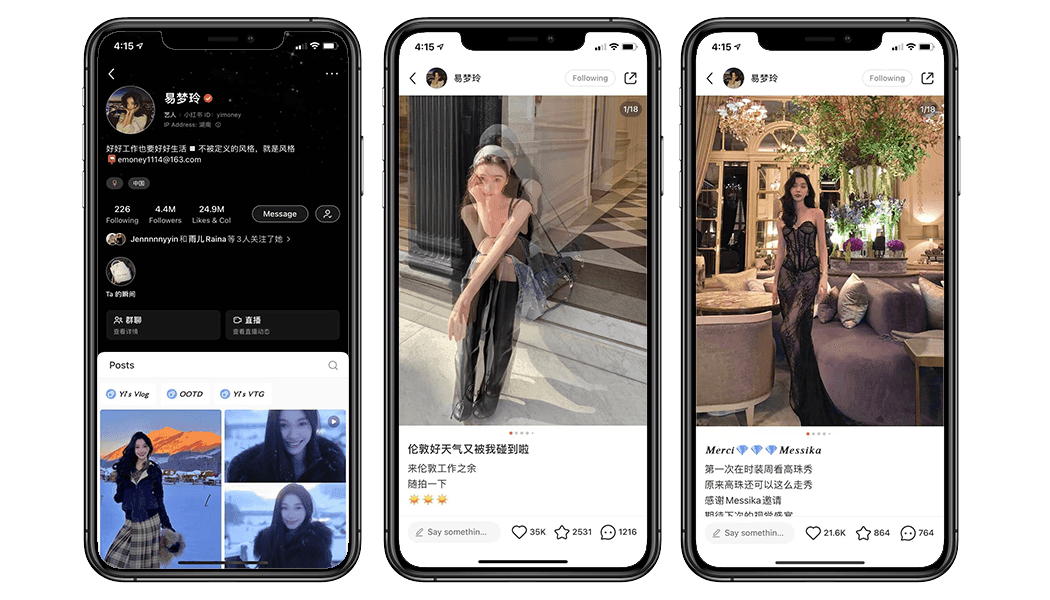
#### 李佳琦 (Austin Li)
* **Platform**: Xiaohongshu
* **Followers**: 11 million
Dubbed the "Lipstick King," Austin Li is a live-streaming powerhouse known for breaking sales records. Brands often work with a digital agency in China to effectively partner with him and amplify their campaigns.
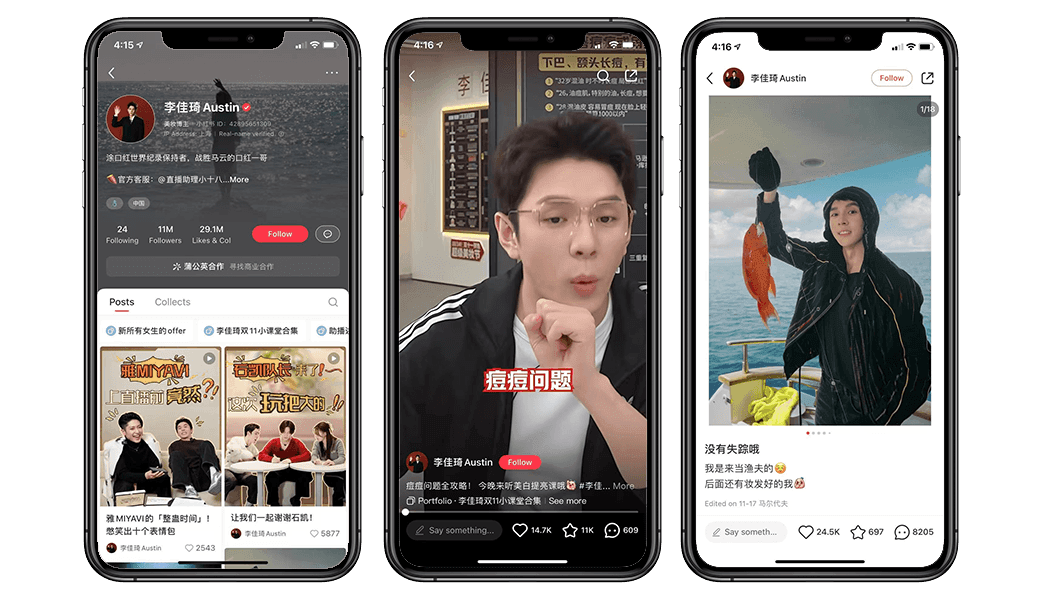
### Food and Beverage Influencers
These influencers bring the culinary world to life, showcasing recipes, reviews, and creative food presentations.
#### 肥猪猪的日常 (Fei Zhu Zhu de Richang)
* **Platform**: Xiaohongshu
* **Followers**: 2.5 million
Fei Zhu Zhu shares quick and easy recipes, along with creative food hacks. Her content often serves as a promotional channel for cooking brands partnering with a marketing agency in China.
#### 培根日记 (Bacon Diary)
* **Platform**: Douyin
* **Followers**: 738K
Bacon Diary is a juggernaut in the food [influencer](/social-in-china) space, combining visually stunning content with relatable narratives. His focus on traditional Chinese dishes, modern cooking techniques, and humor has garnered him a massive following.
## The Impact of KOL Marketing on Chinese eCommerce
### Increased Brand Awareness
Collaborating with influencers allows brands to penetrate niche markets, reaching diverse demographics across multiple platforms.
### Enhanced Consumer Trust
The authenticity of KOL endorsements boosts consumer confidence, translating into higher purchase rates.
### Improved Conversion Rates
Live streams, interactive videos, and personalized content drive direct purchases, offering measurable ROI for brands.
### Cross-Platform Adaptability
Influencers excel across platforms like Douyin and Xiaohongshu, enabling smooth cross-promotion for brands working with a media buying agency in China.
## Conclusion
The eCommerce revolution in China continues to flourish, driven by the creativity and authenticity of influencers. Brands working with experts from a digital marketing agency in China or a media agency in China can harness the potential of KOLs to expand their reach and boost sales. By partnering with top influencers across platforms like Douyin and Xiaohongshu, businesses can thrive in China's dynamic eCommerce ecosystem.
---
# The Digital Stage: How China's CEOs Are Transforming Brand Engagement through Livestreaming
URL: https://www.thechinapath.com/insights/transforming-brand-engagement-through-livestreaming-in-china
Published: 2024-05-10
Author: TheChinaPath
Category: KOLs & Livestream
Chinese executives now host livestreams to lift brand visibility and sales. How they balance authenticity with professionalism, and what brands can learn.
## The Rise of CEO Livestreamers
In China's rapidly evolving digital marketplace, a notable trend is emerging where corporate executives are stepping into the role of [livestreaming](/social-in-china) influencers. This move, reminiscent of tactics employed by global tech celebrities such as Elon Musk, sees CEOs like Lei Jun of Xiaomi and Zhou Hongyi of 360 Company using livestreaming to significantly enhance their brands' visibility and sales. These leaders are not merely presenting products; they are also personalizing their corporate brands, making them relatable and accessible to the digital native consumer base.
## Navigating the Livestreaming Landscape
This strategy, however, comes with its unique set of challenges. CEOs must tread carefully to balance professionalism with relatability, ensuring they remain approachable while dealing with potential pitfalls such as sensitive inquiries from the audience. They need to adopt communication styles that resonate with a younger audience that values authenticity and transparency over traditional marketing gloss. The success of such livestreaming endeavors depends on the CEOs' ability to connect genuinely and effectively in an unscripted, real-time environment.
## Strategic Integration and Market Impact
Strategic integration of CEO livestreaming into broader marketing frameworks is crucial. While charismatic leaders can naturally pull in viewers, others might need to rely on a more structured approach to content to engage effectively. When executed adeptly, this dynamic marketing tool can significantly boost a [brand](/enter-china/branding-localisation)'s market presence, enhancing consumer trust and loyalty. As more corporate leaders embrace this medium, it may well redefine engagement strategies across the industry, setting new benchmarks for how companies connect with consumers in the digital age. This form of direct CEO-to-consumer interaction could revolutionize traditional business-consumer dynamics, promoting a deeper, more personal connection that could lead to greater business success in the competitive Chinese market.
---
# Guide to Tmall Media Costs in China | Optimize Your Brand's Investment
URL: https://www.thechinapath.com/insights/ultimate-guide-to-tmall-media-costs-in-china
Published: 2024-10-30
Author: TheChinaPath
Category: E-Commerce
What Tmall costs brands in China: a 50,000 to 100,000 yuan deposit, annual fees, ad formats, content marketing and the price of joining shopping festivals.
## Tmall's Market Power and Media Investment in China eCommerce
As China's leading B2C eCommerce platform, [Tmall](/grow-in-china/cross-border-ecommerce) gives brands access to a vast pool of consumers, with over 500 million active monthly users. Unlike Taobao, which caters to budget-focused buyers, Tmall is known for premium offerings and has established itself as a trusted Chinese eCommerce website for both local and imported goods. This distinction makes Tmall a preferred choice for brands aiming to position themselves in the premium segment, which is critical in China's competitive online marketplace.
Investing in [Tmall Media](/grow-in-china/media) provides access to advanced tools for targeted ads, content, and social engagement, all tailored to resonate with Chinese consumers. To maximize ROI, brands often work with a specialized China marketing agency to refine campaigns and ensure they appeal to local preferences. While initial costs can be high, the potential to reach a highly receptive audience with thoughtfully localized campaigns can yield significant returns.
## Setup Costs: Security Deposit and Annual Fees
To launch on Tmall, brands need to account for essential setup fees, which include a security deposit and an annual service fee. These costs serve as a commitment to Tmall's quality standards, ensuring that all brands are vetted and credible.
### Security Deposit
Depending on the product category, Tmall requires a refundable deposit of 50,000 to 100,000 yuan (approximately $7,000 to $14,000). This deposit is refunded if the brand closes its store after fulfilling all obligations.
### Annual Fees
Annual platform fees vary by category, generally costing between 30,000 and 60,000 yuan ($4,200 to $8,400). For instance, electronics fall on the lower end, while categories like clothing and food are at the higher end. Tmall also offers partial or full fee refunds if brands exceed certain sales targets, making it possible to offset marketing expenses.
Working with a China eCommerce agency can help streamline the setup process and navigate Tmall's requirements more effectively. With the assistance of a China marketing agency, brands can ensure they are in full compliance and ready to optimize their investment from day one.
## Tmall Advertising Options for Maximum Brand Visibility
[Advertising](/grow-in-china/campaigns) on Tmall is crucial to standing out, and Tmall offers various ad formats to reach targeted customer segments effectively. Brands need a clear understanding of these options to allocate budgets wisely and maximize visibility.
### Search Ads
Search ads appear at the top of Tmall's search results, giving brands high-priority exposure. While the cost per click (CPC) can be high, search ads are one of the most effective ways to reach consumers actively looking for specific products.
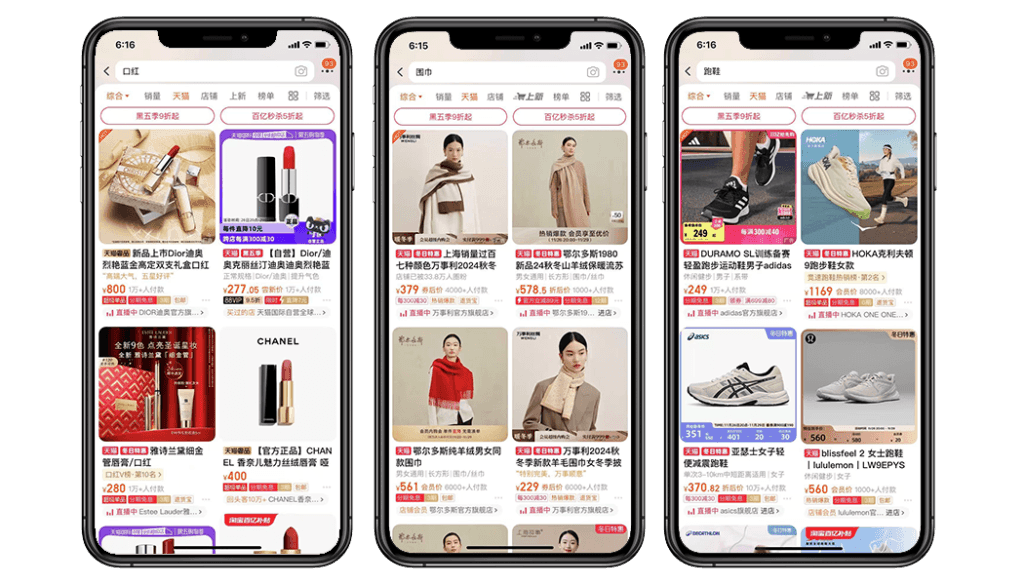
### Display Ads
Display ads, which appear on the homepage or in specific categories, use compelling visuals to boost brand recognition. These ads operate on a cost-per-impression basis, making them effective for brand awareness campaigns.
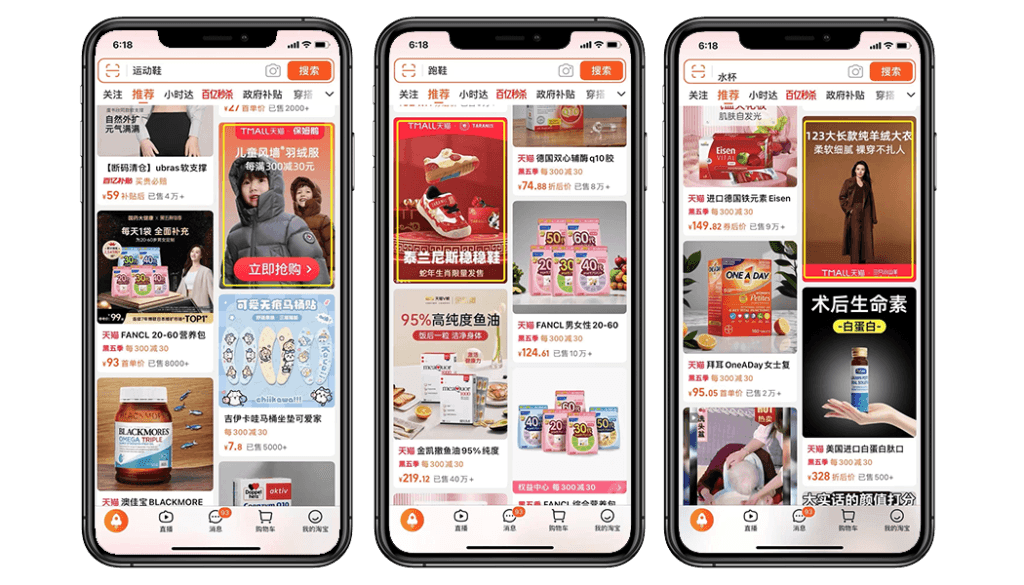
### Livestreaming
One of the fastest-growing formats in China's eCommerce space, livestreaming has become popular for engaging Chinese shoppers in real time. It allows brands to connect directly with viewers, demonstrate products, and answer questions, making it a highly effective tool. Collaborating with China influencers, or Key Opinion Leaders (KOLs), during livestreams can also amplify reach and engagement.
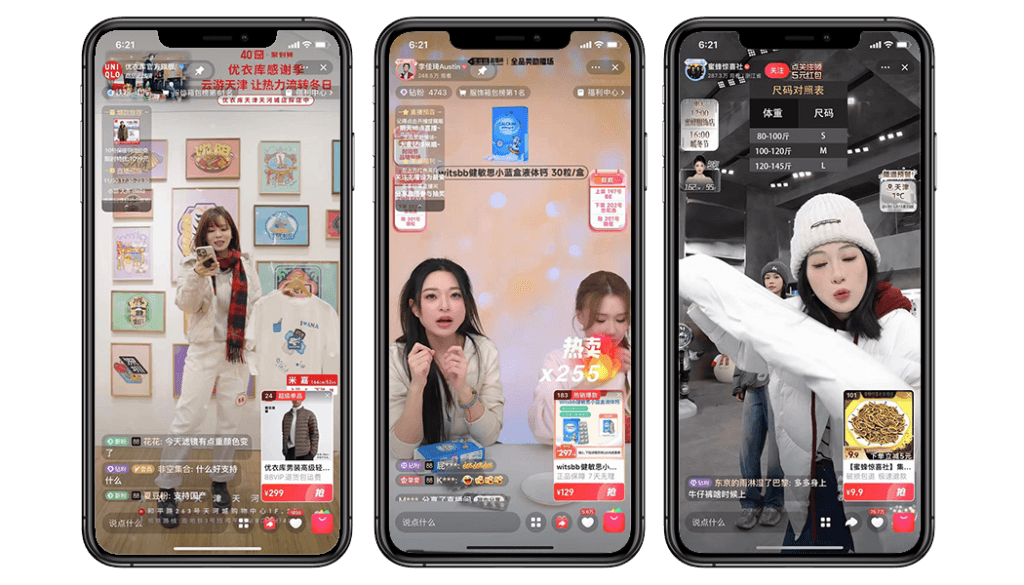
### Brand Zone Ads
For brands looking to make a lasting impression, Brand Zone Ads provide a customized storefront with unique visuals, descriptions, and promotions that enhance brand identity.
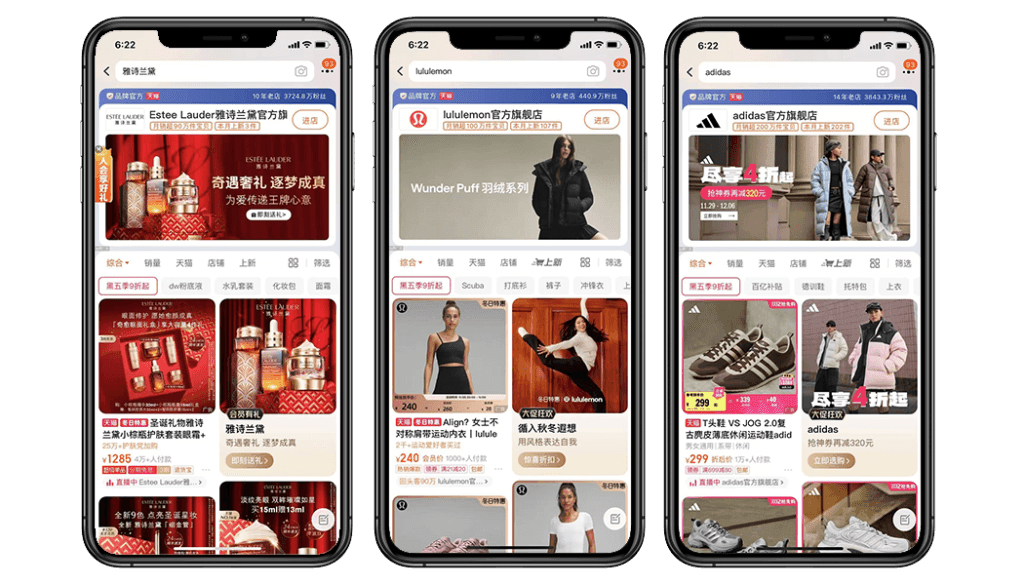
Since each ad format has its own cost structure, working with a China performance marketing specialist or a social media agency in China can help ensure campaigns are optimized and budgets are spent strategically.
## Content Marketing and China Influencers
Content marketing on Tmall goes beyond traditional advertisements, with storytelling and influencer collaborations playing key roles in reaching consumers. As China eCommerce continues to grow, so does the demand for localized content and influencer partnerships that resonate with local shoppers.
* **Localized Content:** Product descriptions, visuals, and brand messaging should be carefully localized, meaning they need to align with cultural expectations and shopping behaviors in China. High-quality visuals and detailed descriptions that convey value are essential for building trust among Chinese consumers.
* **Influencer Collaborations:** China influencers, also known as Key Opinion Leaders (KOLs), help brands reach target audiences through trusted recommendations. These influencers have established audiences and are particularly effective in bridging the gap between foreign brands and local consumers. While top-tier KOLs charge higher fees, micro-influencers provide a more affordable option for targeted reach.
By tailoring content and using KOL marketing on Tmall, brands can create a shopping experience that feels relevant and engaging to Chinese consumers. Working with a social media agency in China can further enhance content alignment and boost results.
## Strategic Participation in Tmall's Key Promotional Events
Tmall's shopping events, such as Singles' Day and the 618 Festival, are massive opportunities for brands to drive visibility and increase sales. Participation in these events often requires additional ad spend but can deliver significant returns when executed strategically.
* **Singles' Day (November 11):** The biggest shopping day globally, Singles' Day generates record-breaking sales in China. Brands typically prepare months in advance, running special ads, offering exclusive discounts, and creating limited-edition products to attract buyers.
* **618 Shopping Festival (June 18):** This mid-year event is another major opportunity, drawing in millions of shoppers looking for deals. Brands invest in tailored promotions for this festival, aligning campaigns with anticipated consumer demand.
* **Chinese New Year:** This season provides an opportunity for themed campaigns focused on gifting, which is highly popular during the festive period.
Participation in these promotional events, while requiring additional investment, is essential for building momentum and establishing a foothold in China's eCommerce market. Many brands turn to a China eCommerce agency to optimize campaign timing, design, and messaging for each event.
## The Role of Tmall Partners (TPs) and Their Fees
Navigating Tmall's requirements, managing local customer service, and handling logistics can be challenging for international brands. That's where Tmall Partners (TPs) come in, agencies that provide specialized support to ensure smooth operations on the platform.
### TP Services
Tmall Partners help with store setup, ad placements, campaign analytics, and ongoing customer service, ensuring brands can focus on core operations. TPs are particularly valuable for managing the logistical and operational requirements of Tmall.
### TP Fees
These agencies generally charge a monthly retainer and may take a percentage of sales. For brands serious about establishing a strong presence, the investment in a Tmall Partner is typically worthwhile, as it improves efficiency and helps optimize the brand's performance.
A reputable China marketing agency or eCommerce agency in China can provide invaluable support by acting as a Tmall Partner, streamlining operations, and ensuring campaigns align with local trends and expectations.
## Maximizing Tmall Media ROI for China eCommerce Success
Establishing a successful presence on Tmall requires more than paying fees and running ads. Brands need to approach China's eCommerce market with a strategic combination of targeted ads, localized content, participation in major shopping events, and partnerships with Tmall Partners or a trusted China eCommerce agency. Although initial costs on Tmall can seem daunting, with careful planning, brands can use these investments to achieve significant growth.
As China's eCommerce platform landscape continues to expand, Tmall remains a critical channel for brands seeking engagement with Chinese consumers. By thoroughly understanding Tmall's media costs and using its various tools effectively, brands can maximize their ROI, build brand loyalty, and establish a sustainable presence in China's dynamic eCommerce environment.
---
# Ultimate Guide to Using WordPress in China
URL: https://www.thechinapath.com/insights/ultimate-guide-to-using-wordpress-in-china
Published: 2025-02-03
Author: TheChinaPath
Category: Compliance & Setup
WordPress works in China once you fix hosting, speed and SEO around blocked services like Google Fonts and Google Maps. How to set it up properly.
## Ultimate Guide to Using WordPress in China
[WordPress](/grow-in-china/website) is one of the most popular website-building platforms in the world. It is commonly used by businesses, bloggers, and e-commerce stores. With its flexibility, ease of use, and cost-effectiveness, many entrepreneurs and companies want to use it to build their websites, even in China. But can you successfully use WordPress to build your website in China, especially for Chinese e-commerce or digital marketing?
The answer is yes, but with some important considerations. Due to unique internet regulations, blocked services, and technical challenges, operating a WordPress site in China requires specific strategies. This guide will explore how to optimize your WordPress website for the [Chinese market](/enter-china/market-entry-consulting), focusing on hosting, design, SEO, and marketing techniques essential for e-commerce in China.
## Why Choose WordPress for Your Business Website?
WordPress powers over 40% of all websites worldwide, and its popularity continues to grow among e-commerce businesses and digital marketers. Here's why WordPress is an excellent choice for businesses looking to succeed in Chinese e-commerce:
* **User-Friendly Interface:** Even without coding knowledge, you can build professional websites using pre-designed themes and plugins.
* **Highly Customizable:** From simple blogs to complex e-commerce stores, WordPress can accommodate a wide range of business needs.
* **Cost-Effective:** The core software is free, and most plugins and themes are affordable, making it a budget-friendly option for startups and established businesses alike.
* **SEO-Friendly:** WordPress is designed with SEO in mind, offering tools that help improve your visibility on search engines like Baidu China.
For businesses aiming to reach both local and international audiences, WordPress provides unmatched flexibility. However, using WordPress in China introduces specific technical and regulatory challenges that need careful attention.
## Is WordPress Available in China?
Yes, WordPress is available in China, but with some limitations. The self-hosted version of WordPress (WordPress.org) is accessible and can be used without restrictions. However, the hosted version (WordPress.com) is blocked. This means that you cannot rely on WordPress.com's hosting services.
While WordPress itself isn't banned, many third-party services commonly integrated with WordPress, like Google Fonts, YouTube, and certain social media plugins, are either blocked or slow to load. This can significantly impact your website's performance and accessibility, which is why working with a web agency in China can help mitigate these issues through proper optimization.
## Challenges of Using WordPress in China
Building a WordPress site in China isn't as straightforward as it is elsewhere. There are several challenges you need to consider, particularly if you're involved in Chinese e-commerce or digital marketing.
### Slow Website Performance
China's Great Firewall filters and monitors all internet traffic coming into the country, causing delays in loading websites hosted on foreign servers. For businesses engaged in e-commerce in China, slow loading times can lead to poor customer experience and lost sales.
### Hosting Restrictions
To legally host a website on servers located in mainland China, you must obtain an Internet Content Provider (ICP) license. This license is mandatory and can be difficult for foreign businesses to acquire. Without it, your website might be taken offline. Many businesses turn to a marketing agency in China for guidance on navigating these legal requirements.
### Blocked Services
Many WordPress themes and plugins rely on services like Google Analytics, Facebook Pixel, or YouTube embeds, which are blocked in China. Using these can break website functionality or cause performance issues.
### Compatibility Issues with Plugins and Themes
WordPress offers thousands of themes and plugins, but not all are optimized for China. Some rely on content delivery networks (CDNs) that are slow or inaccessible in China, making the website load partially or incorrectly.
## How to Build an Optimized WordPress Website for China
Despite these challenges, building a successful WordPress site for Chinese e-commerce and digital marketing is entirely possible. Here are the key strategies to ensure your site performs well in China.
### Choose the Right Hosting Solution
Your hosting choice plays a significant role in your website's speed and performance in China. Here are the best options for businesses targeting Chinese e-commerce markets:
* **Hosting in Mainland China** – Hosting your site in China offers the fastest performance but requires an ICP license. Popular hosting providers include Alibaba Cloud and Tencent Cloud.
* **Hosting in Hong Kong** – A great alternative that offers fast speeds without the need for an ICP license.
* **Using a Global CDN** – If you prefer to host outside China, consider using a China-optimized CDN like Alibaba Cloud CDN or Cloudflare China. This will help improve loading times and overall performance.
### Optimize for Speed and Performance
Ensuring your WordPress site loads quickly is vital, especially for e-commerce in China, where customers expect fast, smooth shopping experiences. Here's how to optimize your site:
* Use a China-friendly CDN to cache content closer to users.
* Avoid plugins that rely on blocked services (e.g., Google services).
* Minimize external scripts and optimize images.
* Use caching plugins like WP Rocket to enhance speed.
### Select China-Friendly Themes and Plugins
To ensure compatibility, choose themes and plugins designed to function well in China:
* Avoid those that require Google Fonts, YouTube, or Facebook integrations.
* Use plugins that replace blocked services (e.g., Baidu Maps instead of Google Maps).
* Check if the theme's built-in fonts, icons, and external scripts work in China.
### Make Your Website Multilingual
If you're targeting both local Chinese consumers and international audiences, offering a multilingual website is important for success in [cross-border](/enter-china/cross-border-setup) e-commerce in China:
* Use a multilingual plugin like WPML or Polylang to translate content.
* Offer both Simplified Chinese (for mainland China) and English (for global users).
* Optimize URLs for Chinese search engines (e.g., use Pinyin instead of Chinese characters).
### SEO Strategies for Baidu and Google
Google is blocked in China, so businesses must optimize for Baidu, the leading search engine. Here's how:
* Use Chinese keywords and metadata optimized for Baidu.
* Submit your site to Baidu Webmaster Tools for indexing.
* Avoid Google-dependent SEO plugins and instead use China-friendly alternatives.
* Build local backlinks by engaging with Chinese directories and platforms.
## Marketing Your WordPress Website in China
Building your website is just the first step. To grow your business, you need to implement effective marketing strategies tailored to the Chinese market. Partnering with a digital marketing agency in China can guide you through this process successfully.
### Focus on Baidu for Chinese SEO
While Google dominates globally, Baidu is China's leading search engine. Optimize your site accordingly:
* Use Simplified Chinese for content targeting Chinese audiences.
* Optimize Meta Descriptions and Titles for Baidu's algorithm.
* Utilize Baidu Webmaster Tools to monitor your site's performance.
### Use Local Backlinks
Backlinks from reputable local sites can improve your search rankings. Partner with Chinese bloggers, influencers, and business directories to boost your online presence.
### Optimize for Mobile
China has one of the highest mobile internet penetration rates in the world. Ensure your website is fully responsive and optimized for mobile users, especially if you're involved in e-commerce in China, where mobile shopping is dominant.
## Best Practices for Running a WordPress Website in China
Here are some do's and don'ts that a digital marketing agency in China would recommend:
### Do's
* Host your website in China or Hong Kong for better performance.
* Use China-friendly plugins and avoid Google services.
* Optimize for Baidu SEO.
* Use WeChat, Weibo, and Xiaohongshu for marketing.
* Use a multilingual approach to reach international audiences.
### Don'ts
* Use WordPress.com (it's blocked in China).
* Rely on Google-based services like Analytics, Fonts, or Maps.
* Use unoptimized themes and plugins that depend on blocked resources.
* Ignore mobile responsiveness, most Chinese users browse on smartphones.
## Final Thoughts
Yes, you can use WordPress to build a website in China, but it requires specific optimizations for performance, SEO, and marketing. By choosing the right hosting solutions, avoiding blocked services, and using the expertise of a digital marketing agency in China, businesses can create a successful online presence.
For businesses engaged in Chinese e-commerce or cross-border e-commerce in China, a well-optimized WordPress site can help you connect with local customers and expand your global reach. With the right approach, WordPress can help your business grow in China's fast-changing digital market.
---
# Explosive Growth in the Chinese Luxury Travel Segment | 2024 Insights
URL: https://www.thechinapath.com/insights/unveiling-the-explosive-growth-of-the-chinese-luxury-travel-segment
Published: 2024-07-08
Author: TheChinaPath
Category: Market Strategy
China's luxury travel market has boomed over the past decade, driven by rising wealth and a taste for culturally immersive trips over status displays.
## The Rise of Chinese Luxury Travel
Over the years, China's luxury travel segment has grown significantly. During the Labor Day holiday from May 1-5, 2024, travel and spending surged above pre-pandemic levels, indicating a robust recovery and positive outlook for the market. According to Ctrip's 2024 May Day Holiday Travel Summary, Chinese travelers made almost 10 million plane trips, visiting nearly 200 countries and over 3,000 cities worldwide. Domestically, 295 million trips were recorded, with spending totaling 166.9 billion RMB ($23.13 billion), reflecting a 12.7% increase from the previous year and 13.5% higher than in 2019.
## Evolution of Travel Preferences
Chinese luxury travel preferences have shifted from mere displays of wealth to seeking exclusive, authentic, and culturally immersive experiences. This change mirrors the country's economic development and evolving consumer aspirations. Modern luxury travel now focuses on personal enrichment, emotional resonance, and creating lasting impressions.
## Key Factors Driving Market Growth
**Cultural Shifts:**
The Chinese society's attitudes towards luxury consumption have evolved, favoring subtlety, sophistication, and understated elegance. This cultural shift has redefined luxury, emphasizing experiences over material possessions.
**Digital Influence:**
The proliferation of digital platforms and social media has significantly influenced consumer perceptions. Chinese travelers rely on online reviews, recommendations, and social media influencers to make informed travel decisions. Experiential luxury, characterized by personal enrichment and authentic connections, has become increasingly popular. The integration of social commerce and other digital platforms has made it easier for travelers to share and discover new luxury experiences.
**Technological Advancements:**
Digital payment methods, such as Tap to Pay and mobile wallets, have gained popularity among luxury travelers for their convenience and security. The pandemic accelerated the adoption of contactless and touchless transactions, prioritizing safety and flexibility.
## Future Growth Opportunities
The Chinese luxury travel market presents vast opportunities for stakeholders across the travel industry. Businesses can capitalize on this burgeoning demand by embracing a holistic approach to luxury travel, emphasizing sustainability, wellness, and experiential enrichment. Curating immersive experiences that align with the aspirations and values of Chinese luxury travelers can foster deeper connections and [brand](/enter-china/branding-localisation) loyalty.
**Understanding Nuanced Consumer Motivations**
As consumer preferences continue to evolve, understanding the nuanced motivations and aspirations of Chinese travelers is crucial. By embracing innovation, fostering collaboration, and prioritizing authenticity, businesses can tap the full potential of this dynamic market segment.
**Sustainability in Luxury Travel**
Sustainability has become a significant consideration for Chinese luxury travelers. Eco-friendly practices and sustainable tourism initiatives are gaining traction, with travelers seeking destinations and experiences that align with their values. This shift presents an opportunity for businesses to differentiate themselves by incorporating sustainable practices into their offerings.
**Wellness Tourism**
The demand for wellness tourism is on the rise among Chinese luxury travelers. Wellness retreats, spa experiences, and health-centric activities are increasingly sought after, reflecting a growing emphasis on holistic well-being. Businesses can tap into this trend by offering wellness-focused packages and services that cater to this burgeoning demand.

**Experiential Enrichment**
Experiential enrichment is a key driver of luxury travel preferences. Chinese travelers are increasingly seeking unique, immersive experiences that offer cultural exchange, intellectual stimulation, and spiritual rejuvenation. Businesses that can provide personalized and meaningful experiences are likely to stand out in this competitive market.
**Technological Integration**
The integration of advanced technologies in the travel industry has transformed the luxury travel experience. From smooth booking processes to personalized services powered by artificial intelligence, technology plays a central role in enhancing the overall travel experience. Businesses that use technology to provide convenient and personalized experiences will appeal to tech-savvy Chinese luxury travelers.
## Marketing Strategies for the Chinese Luxury Travel Market
**Targeted Advertising:**
Understanding the preferences and behaviors of Chinese luxury travelers is essential for effective [marketing](/grow-in-china/campaigns). Tailored advertising campaigns that resonate with their aspirations and values can drive engagement and bookings.
**Using Influencers:**
Influencer marketing is a powerful tool in the Chinese luxury travel market. Collaborating with popular social media influencers and China KOLs can help businesses reach a wider audience and build credibility among potential travelers.
**Personalized Communication:**
Personalized communication is key to connecting with Chinese luxury travelers. Utilizing data and insights to tailor messages and offers can enhance the customer experience and foster loyalty.
**Creating Compelling Content:**
Engaging and visually appealing content is crucial for capturing the attention of Chinese luxury travelers. High-quality images, videos, and storytelling can showcase the unique experiences and destinations on offer. Using social media platforms, such as [WeChat](/grow-in-china/social-commerce) and Douyin, can amplify reach and engagement.
The Chinese luxury travel market is poised for continued growth, driven by evolving consumer preferences, digital advancements, and a focus on experiential enrichment. By understanding the nuanced motivations of Chinese travelers and embracing innovation, businesses can tap the full potential of this dynamic market segment. The future of luxury travel in China promises to be as awe-inspiring as the destinations travelers seek to explore.
---
# Understanding Today's Luxury Chinese Travelers: Preferences and Motivations
URL: https://www.thechinapath.com/insights/unveiling-the-preferences-and-motivations-of-todays-luxury-chinese-travelers
Published: 2024-07-08
Author: TheChinaPath
Category: Market Strategy
Who today's luxury Chinese travelers are, where they live and what they want: trips that mix exclusivity, cultural discovery and personal growth.
## Understanding Today's Luxury Chinese Travelers: Preferences and Motivations
Understanding the luxury Chinese traveler is essential for businesses in the tourism and hospitality industry. As this affluent demographic continues to grow and evolve, it reshapes the global luxury travel market with its distinct preferences and motivations. This article delves into the key demographics, evolving travel motivations, and unique characteristics that set luxury Chinese travelers apart, offering valuable insights for marketers and businesses aiming to capture this lucrative market.
## Key Demographics: The Rise of Affluent Chinese Travelers
The rapid urbanization and economic expansion in China have given rise to a new class of affluent travelers. As disposable incomes increase, many Chinese consumers are seeking premium travel experiences, both domestically and internationally. This shift positions China as a critical player in the global luxury travel market, with projections indicating sustained growth in the coming years.
Affluent Chinese travelers often come from major urban centers such as Beijing, Shanghai, and Guangzhou. They are typically well-educated, tech-savvy, and highly discerning in their travel choices. This demographic values exclusivity, comfort, and unique experiences that reflect their social status and personal tastes.
## Evolving Travel Motivations: A Blend of Business and Leisure
Chinese luxury travelers' motivations are as diverse as their backgrounds. The first generation of entrepreneurs, who emerged during the early days of China's economic reforms, often combines business with leisure travel. These individuals seek efficient, effortless travel experiences that allow them to indulge in fine dining, leisure activities, and exclusive services.
For younger generations, travel motivations extend beyond material indulgence. They seek personal growth, cultural exploration, and opportunities to assert their individuality. This shift is driven by a desire to connect with the global community and experience destinations in a more meaningful way.
## Key Personas: The Modern Chinese Traveler
The luxury Chinese traveler can be categorized into several key personas, each with unique preferences and behaviors:
- **The Heirs of Family Wealth**: These travelers navigate a landscape shaped by tradition and modernity. They seek exclusive, high-end experiences that reflect their affluent upbringing and social status.
- **First-Generation Entrepreneurs**: This group values a blend of business and leisure. They prioritize efficiency and enjoyment, seeking destinations that offer both luxury and convenience.
- **Young Digital Nomads**: Millennials and Gen Z travelers embrace a remote work lifestyle, valuing freedom, flexibility, and authentic experiences. They favor destinations that offer a blend of connectivity, cultural immersion, and work-life balance.

## Distinct Characteristics: What Sets Chinese Luxury Travelers Apart
Chinese luxury travelers exhibit unique characteristics that differentiate them from their global peers. Nearly 90% of high-net-worth individuals (HNWI) in China intend to increase their domestic travel over the next three years, with island destinations like Sanya and the Maldives being top choices.
One distinguishing feature is the high value placed on the showy aspect of luxury. Chinese travelers enjoy showcasing their wealth and status, seeking out brands and experiences that attract attention and admiration. This desire for social recognition influences their travel choices and purchasing decisions.
Moreover, there's a nuanced difference between mature and younger Chinese luxury travelers. Mature travelers prioritize exclusivity, while younger travelers favor uniqueness and social interactions. There is also a growing appreciation for craftsmanship and artisanal experiences, with an increasing interest in itineraries centered around themes like floral art and behind-the-scenes tours.
## The Influence of Social Status and "Face"
In Chinese culture, the concept of "face", the desire to avoid embarrassment or shame, plays a significant role in purchasing decisions. Luxury travelers prioritize goods and services that enhance their social standing and avoid anything that could cause embarrassment among their peers. This cultural nuance significantly shapes their travel preferences and [brand](/enter-china/branding-localisation) choices.
## The Importance of Personalization and Authenticity
Today's luxury Chinese travelers seek experiential and transformative journeys that go beyond mere functionality. They aspire to immersive experiences that foster learning, create enduring memories, and facilitate genuine engagement with local cultures. Key considerations for these travelers include personalization, exclusivity, sustainability, health and well-being, and immersive local experiences.
Travel providers must adopt a nuanced approach that embraces cultural sensitivity, authenticity, and innovation. By identifying and accommodating the evolving preferences, aspirations, and values of luxury Chinese travelers, businesses can forge meaningful connections and deliver transformative experiences that resonate deeply with this dynamic demographic.
The luxury Chinese travel market is poised for continued growth and transformation. As demographics evolve and travel motivations shift, businesses must adapt to meet the changing needs and preferences of this affluent demographic. By embracing personalization, authenticity, and cultural sensitivity, travel providers can capture the hearts and minds of luxury Chinese travelers, fostering lasting connections and driving success in the global luxury travel market.
---
# UX Design for Global Markets: Chinese vs. Western Approaches
URL: https://www.thechinapath.com/insights/ux-design-for-global-markets-chinese-vs-western-approaches
Published: 2025-01-17
Author: TheChinaPath
Category: Brand & Localization
Chinese and Western websites follow different UX rules shaped by culture, language and tech. What changes when you design for China's eCommerce market.
## UX Design for Global Markets: Chinese vs. Western Approaches
The digital world is as diverse as the people who use it. Nowhere is this more evident than in the stark differences between user experience (UX) designs of Chinese and Western websites. These variations are deeply rooted in cultural, linguistic, and technological factors that shape how businesses engage with their target audiences. For companies looking to expand globally, understanding these design contrasts is essential to creating websites and platforms that resonate with local users and drive business success.
For companies venturing into the vast Chinese ecommerce market, understanding these UX differences is crucial. Whether tapping into trends like Douyin ecommerce or navigating crossborder ecommerce in China, adapting to local preferences can make the difference between success and failure.
### The Evolution of Digital Ecosystems: A Tale of Two Internets
China and the West have developed distinct digital ecosystems due to their unique socio-political and technological landscapes.
#### China's Independent Development
The Great Firewall of China and strict internet regulations isolated the country's digital sphere, enabling local tech giants like Tencent, Alibaba, and Baidu to dominate. The rise of super apps like WeChat and platforms integrated with Chinese ecommerce exemplifies this tailored approach.
#### The West's Fragmented Approach
In contrast, Western markets, driven by platforms like iOS and Android, favor specialized apps that excel at a single purpose. Users prefer streamlined experiences that focus on functionality without overwhelming the interface.
These differing approaches have significantly influenced [UX design](/grow-in-china/website), particularly in how features are presented and prioritized. For brands supported by a marketing agency in China or a web design agency in China, understanding these differences is essential to crafting localized strategies.
### Visual Design Philosophies: Minimalism vs. Maximalism
#### Western Minimalism
Western websites prioritize simplicity, emphasizing white space, clean lines, and intuitive navigation. This minimalist approach aligns with Western values of practicality and efficiency, creating a polished, professional feel.
#### Chinese Maximalism
Chinese websites and apps often adopt a "more is more" philosophy. Vibrant visuals, dense information layouts, and numerous calls-to-action dominate the interface. This reflects cultural preferences for abundance, where busier designs are perceived as offering more value and engagement. For example, Douyin ecommerce uses visually rich interfaces to attract and retain users.
For Western users, Chinese designs might feel overwhelming, while for Chinese users, Western designs can appear sparse and less engaging. Collaborating with a creative agency in China can help businesses strike a balance between these styles when entering the [Chinese market](/enter-china/market-entry-consulting).
### Writing Systems and Their Impact on UX
Language plays a significant role in shaping user interface (UI) designs:
#### Chinese Logograms
The Chinese writing system is logogrammatic, packing more information into each character. This allows for denser layouts without overwhelming local users. However, the lack of spacing, italics, and capitalization makes hierarchical organization challenging, leading designers to use visual elements like banners and cards to segment content.
#### Western Alphabets
Western writing systems, based on alphabets, rely on spacing and formatting to structure content. This encourages a more hierarchical and organized presentation, influencing the preference for minimalist designs that use white space effectively.
Businesses entering the Chinese market, especially those in crossborder ecommerce in China, must adapt designs to accommodate these linguistic differences.
### Information Architecture: Hierarchy vs. Inclusivity
The way information is structured on websites reflects cultural priorities:
#### Western UX
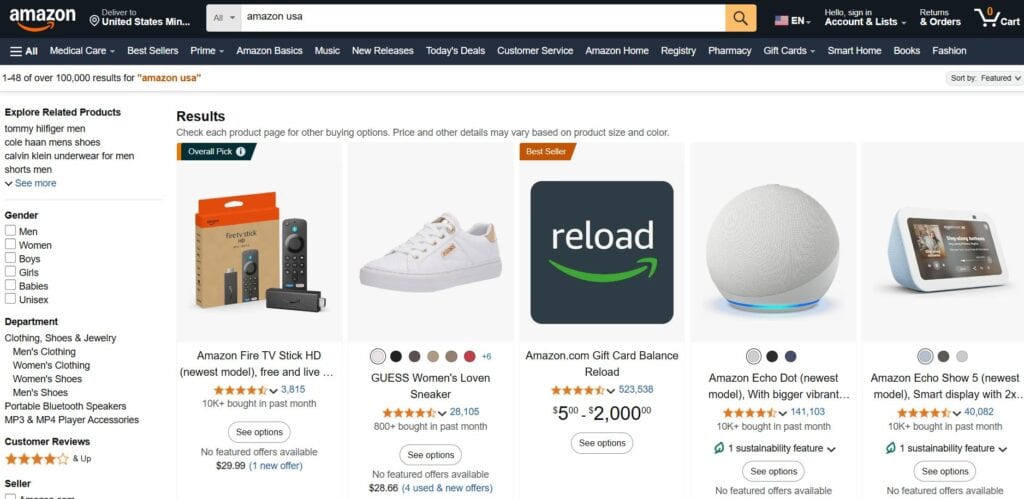
Western websites focus on clear hierarchies, with logically ordered menus and content categories. This structured approach simplifies navigation and helps users quickly find what they need.
#### Chinese UX
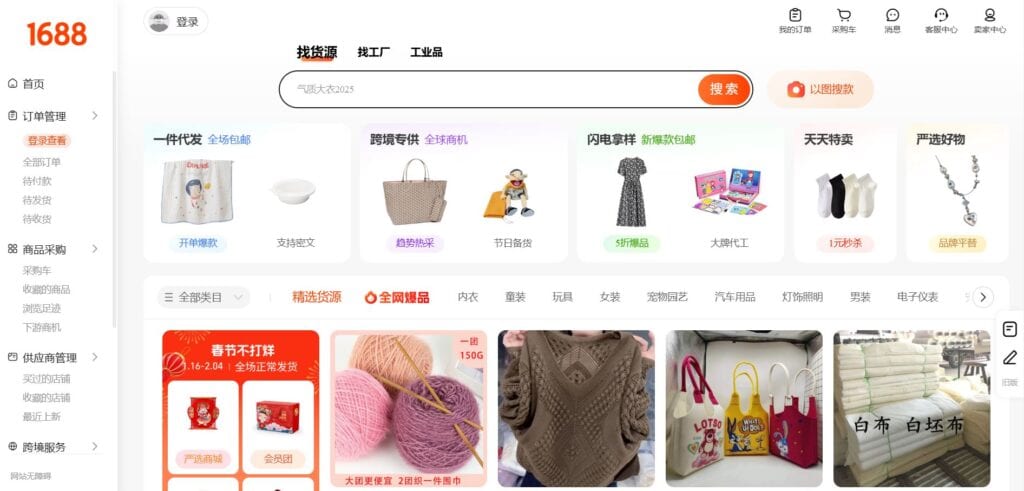
In contrast, Chinese websites often present a variety of options simultaneously, with less emphasis on hierarchy. Features like scrolling banners and overlapping CTAs are designed to capture attention and encourage exploration. While this may seem chaotic to Western audiences, it aligns with the preferences of Chinese users for more comprehensive and immersive interfaces.
### The Role of Super Apps in Chinese UX
Chinese users have embraced super apps like WeChat, which integrate messaging, payments, social media, and ecommerce in China into a single platform.
In contrast, Western apps are typically more specialized, focusing on single functions. While Western companies are beginning to integrate more features, the emphasis remains on maintaining a simple and focused user experience.
For brands targeting Chinese audiences, using platforms like WeChat or trends in Douyin ecommerce can create competitive advantages.
### Cultural Influences on Design Preferences
Cultural differences significantly shape UX design strategies:
#### High-Context Culture in China
China's high-context culture emphasizes implicit communication and contextual cues. This is reflected in design elements like symbolic visuals, vibrant colors, and culturally significant motifs.
#### Low-Context Culture in the West
Western UX designs cater to low-context cultures that value direct and explicit communication. Designs are straightforward, favoring simplicity over ornamentation to ensure clarity.
### Mobile-First Mindsets and Their Impact
China's rapid adoption of mobile internet has established a mobile-first mindset, influencing everything from ecommerce platforms to app design.
Platforms like Douyin have transformed mobile shopping experiences with engaging content and China livestream trends. These immersive interactions align with the mobile-first expectations of Chinese users.
Western markets also prioritize mobile experiences but emphasize smooth transitions between desktop and mobile platforms, ensuring balanced usability.
### Revenue Models and Monetization Strategies
The way platforms generate revenue influences UX design:
#### Chinese Models
Apps in China use integrated services, in-app purchases, advertisements, and Chinese ecommerce partnerships. Feature-rich designs aim to keep users engaged within a single ecosystem, driving revenue across multiple touchpoints.
#### Western Models
Western platforms often rely on subscription fees or app purchases, leading to streamlined interfaces that emphasize functionality over additional features.
### The Psychology of Abundance vs. Simplicity
Cultural perceptions of value drive design preferences:
#### Perception of Value in China
Chinese users often associate abundance with value. Websites and apps that showcase a wealth of options and features are seen as more desirable.
#### Western Preference for Simplicity
Western users, on the other hand, equate simplicity with quality. Overloaded designs can be perceived as cluttered or unprofessional.
Collaborating with a branding agency in China can help businesses align their designs with local perceptions of value.
### Marketing Implications for Businesses
For businesses, understanding these UX differences is crucial for success:
#### Tailored Strategies
Platforms like WeChat and Douyin offer businesses tools to customize experiences for local audiences. Embracing trends like Douyin ecommerce and China livestream shopping can enhance customer engagement.
#### Global Consistency
Western brands expanding globally must balance local customization with consistent branding to maintain their identity.
### Bridging the Gap: Designing for Global Audiences
To appeal to both Chinese and Western users, businesses can:
- Combine minimalist aesthetics with strategically placed features.
- Use data-driven insights to tailor designs to specific demographics.
- Test localized UX designs to ensure they resonate with target users.
## Conclusion
The UX design differences between Chinese and Western websites reflect deeply ingrained cultural, linguistic, and technological factors. For companies aiming to succeed in Chinese ecommerce or digital marketing, understanding these distinctions is essential. By tailoring designs to meet local expectations and using platforms like WeChat or Douyin, businesses can tap into the immense potential of China's digital economy.
---
# Verify a Chinese company on Qichacha and GSXT
URL: https://www.thechinapath.com/insights/verify-chinese-company-qichacha
Published: 2026-09-24
Updated: 2026-10-14
Author: TheChinaPath
Category: Market Strategy
How to verify a Chinese company before you sign: the eight fields to read on GSXT and Qichacha, and the court records that should stop a deal.
To verify a Chinese company, pull its record from the national credit system
(GSXT) and from one commercial database, Qichacha or Tianyancha. Then read
eight fields: registration date, registered and paid-in capital, business
scope, shareholders, branches, court judgments, the dishonest-debtor list and
administrative penalties. A candidate that fails here doesn't need a call.
You met the company at a fair. You have a business card and a WeChat
contact. Neither is a legal fact.
The registry is. It holds the date the company was set up, who owns it, what
it may sell and whether a court has already chased it for money. It also
holds the legal name in Chinese and the unified social credit code
(统一社会信用代码), the one identifier that follows the company through every
record below. Get the code first. Put it in the contract.
Plenty of the companies you'll meet are young.
> China registered 9.5 million new enterprises in 2025, out of 25.745 million
> new market entities of all kinds.
> Source: Science and Technology Daily (科技日报), citing the State
> Administration for Market Regulation (市场监管总局), February 2026.
> https://www.stdaily.com/web/gdxw/2026-02/26/content_477158.html
Every rule cited below was checked against its source on September 24,
2026. A printable version of the eight checks, with a pass or stop box for
each, is at
[the Chinese company report checklist](/guides/verify-chinese-company-qichacha).
## GSXT or Qichacha: where to verify a Chinese company
GSXT is the National Enterprise Credit Information Publicity System
(国家企业信用信息公示系统), run by the market regulator. It's the legal
record. The regulator posts registration data and its own penalties there, and
other departments add the licenses they grant. The company files its own
annual report there in the first half of each year.
> The market regulator publishes registration and filing data, chattel
> mortgages, equity pledges and administrative penalties. Companies file an
> annual report between January 1 and June 30 each year, and disclose changes
> such as paid-in capital within 20 working days.
> Source: State Administration for Market Regulation (市场监管总局),
> Interim Regulation on Enterprise Information Disclosure
> (企业信息公示暂行条例), articles 6, 8 and 10, as revised March 10, 2024.
> https://www.samr.gov.cn/xyjgs/flfg/art/2024/art_be55c2e3a54a43e5ab12794c9dc87600.html
Getting in is the hard part, from abroad at least. When we tried from
outside mainland China on September 24, 2026, GSXT refused the request and
asked for a different IP address or a real-name login. The Supreme People's Court's enforcement site
refused too. China Judgements Online loaded, then said search and download
need a registered account.
That's the job Qichacha (企查查) and Tianyancha (天眼查) do. They copy the
registry and the court systems onto one page per company and keep the change
history, so a former name or a departed shareholder stays visible. Use one,
as a copy. When it disagrees with GSXT, GSXT wins. The "risk score" at the
top is the database's own model, not an official rating.
## Reading the license and the ownership
**Registration date (成立日期).** Set it next to the story you were told. A
company that has "imported wine for ten years" and was set up in 2025 may
simply be a new vehicle for an old team. Ask.
Check the status line next. You want 存续 or 在业 (active), never 吊销
(license revoked) or 注销 (deregistered).
Look at the annual reports too. A company set up in 2021 should show one for
every year since. Gaps are how firms end up on the abnormal operations list.
> A company that misses its annual report goes on the abnormal operations
> list. One that misses two years in a row and can't be reached at its
> registered address has its business license revoked.
> Source: State Administration for Market Regulation (市场监管总局),
> 企业信息公示暂行条例, article 18, as revised March 10, 2024.
> https://www.samr.gov.cn/xyjgs/flfg/art/2024/art_be55c2e3a54a43e5ab12794c9dc87600.html
**Registered and paid-in capital (注册资本, 实缴资本).** Registered capital is
what the shareholders promised. Paid-in is what they put in. Since July 2024
the gap has a legal deadline.
> An LLC's shareholders must pay in their full subscribed capital within five
> years of the company's founding. Companies must publish subscribed and
> paid-in amounts, method and date on GSXT.
> Source: PRC Company Law (公司法), 2023 revision, articles 40 and 47, in
> force July 1, 2024, via the Ministry of Commerce (商务部) policy database.
> https://policy.mofcom.gov.cn/claw/clawContent.shtml?id=98771
Older companies got a runway, and it ends soon.
> Companies registered before June 30, 2024 must bring any remaining
> subscription period down to five years by June 30, 2027. The registrar
> flags companies that don't on GSXT.
> Source: State Council (国务院), rules on registered capital under the
> Company Law, July 2024.
> https://www.gov.cn/yaowen/liebiao/202407/content_6960452.htm
Be wary of 10 million RMB subscribed with nothing paid in, especially when
the balance isn't due until 2050. Paid-in capital tells you what the owners once put
at risk. Whether the money is still there is another question.
**Business scope (经营范围).** The list of what the company may do.
> Business scope includes general items and licensed items; a licensed item
> that needs approval before registration requires the approval documents.
> Source: State Council (国务院), Regulation on the Registration of Market
> Entities (市场主体登记管理条例), article 14, in force March 1, 2022, via the
> Ministry of Commerce (商务部) policy database.
> https://policy.mofcom.gov.cn/claw/clawContent.shtml?id=90465
Read it against your product. A company that will import your goods itself
should list 货物进出口 (import and export of goods). A food distributor needs
food sales covered, by a permit or, for prepackaged food only, a filing.
> Selling only prepackaged food moved from a license to a filing under
> article 35 of the Food Safety Law as amended in April 2021.
> Source: Government of China (中国政府网), explainer on the Food Business
> Licensing and Filing Measures (食品经营许可和备案管理办法), July 2023.
> https://www.gov.cn/zhengce//202307/content_6891674.htm
A scope that reads "technology development and consulting" on a company that
says it moves cheese is the easiest stop sign on this page.
Now the owners. Match the shareholder names (股东) to the people you met,
and if the boss across the table isn't in the registry, find out who is. An
equity pledge (股权出质) means the shares back someone's loan. It's registered
on GSXT like any other filing, so it's easy to spot.
Branches (分支机构) are the last field in this half. A distributor that
claims offices in Shanghai and Chengdu should show them as branches or
subsidiaries, and the difference matters when you sign.
> A branch has no legal personality; the company bears its civil liability.
> Source: PRC Company Law (公司法), 2023 revision, article 13, via the
> Ministry of Commerce (商务部) policy database.
> https://policy.mofcom.gov.cn/claw/clawContent.shtml?id=98771
Sign with the legal entity that holds the licenses and the assets, not with a
branch office, and not with the sister company whose name happens to be on
the invoice.
## Reading the court and penalty record
This half is where a company's history with money shows up.
**Court judgments (裁判文书).** China Judgements Online (中国裁判文书网) is the
Supreme People's Court's public archive of rulings. It's huge, and it
has holes that move from year to year.
> Courts posted 9.69 million new documents to China Judgements Online in
> 2024, up 92.73% on 2023.
> Source: People's Daily (人民日报), citing the Supreme People's Court,
> January 2025.
> http://cpc.people.com.cn/n1/2025/0108/c64387-40397363.html
Read that figure backward: 2023 posted roughly half as many. A thin record
from that year proves very little. And cases closed by mediation aren't
published at all.
> Cases closed by mediation are not published online, unless publication is
> needed to protect the public interest or someone else's rights. An unpublished
> case still shows its case number, court, date and the reason it was
> withheld. Effective judgments go online within seven working days.
> Source: Supreme People's Court (最高人民法院), Provisions on Publishing
> Judgments on the Internet (法释〔2016〕19号), articles 4, 6 and 7, carried
> by China News Service (中国新闻网), August 2016.
> https://www.chinanews.com.cn/gn/2016/08-31/7989135.shtml
Read two things in each case: who sued whom, and over what. A distributor suing retailers for
unpaid invoices is doing its job. A distributor sued again and again by
suppliers in sale-of-goods disputes (买卖合同纠纷) pays its suppliers late,
and you're about to become one.
The dishonest-debtor list (失信被执行人) comes next. It's the Supreme People's
Court's blacklist of parties who owe money under a court ruling and didn't
pay. Every court feeds one national database, published through the China
Enforcement Information Disclosure site (中国执行信息公开网).
> A debtor is listed on one of six grounds, from refusing to pay when able to
> hiding assets or dropping a settlement. Listings on five of the six grounds
> run two years, extendable by one to three.
> A court deletes a listing within three working days once the debt is paid.
> Source: Supreme People's Court (最高人民法院), Provisions on Publishing
> the List of Dishonest Judgment Debtors, 2017 amendment, articles 1, 2 and 10.
> https://www.court.gov.cn/fabu/xiangqing/37182.html
That deletion clause is the catch. Today's search covers today. The
commercial databases keep past listings, so look there for history.
The list is busy.
> 2,339,800 listings were added to the dishonest-debtor list in 2025, and
> 2,669,600 came off through credit repair.
> Source: Jiemian (界面新闻), reporting a Supreme People's Court press
> conference, January 26, 2026.
> https://www.jiemian.com/article/13933520.html
Two other lists on the same site deserve a look. Search the consumption
restriction list (限制消费) for the company and for its legal representative.
Look up "enforcement terminated for this round" (终结本次执行) as well. That entry
is easy to miss, and it matters: the creditor won, and the court found
nothing to seize.
> The enforcement site publishes, among other records, the consumption
> restriction list and cases closed for this round of enforcement.
> Source: Supreme People's Court (最高人民法院), June 2018.
> https://www.court.gov.cn/shenpan/xiangqing/101002.html
Back on GSXT, the last field is administrative penalties (行政处罚). Fines
from the market regulator land there, and so do other departments'. They
don't stay long.
> A market-regulation penalty is published on GSXT within 20 working days.
> Penalties that were only a public criticism or a lower-band fine come off
> after three months; all others come off after three years.
> Source: State Council Gazette (国务院公报), Provisions on Publicizing
> Market Regulation Administrative Penalty Information, SAMR Order 45,
> articles 9 and 13, in force September 1, 2021.
> https://www.gov.cn/gongbao/content/2021/content_5647362.htm
Read each penalty against your category. A fine for selling expired food,
or for misleading labels, tells you how this company treats goods like yours.
## Eight fields, and what should stop you
Here's the whole check on one screen. Keep it open while you read the
record.
| Field | Where to find it | What a real distributor's record shows | What should stop you |
|---|---|---|---|
| Registration date and status | GSXT basic information; annual reports | Active status, an annual report for every year since founding (filed January 1 to June 30) | Revoked or deregistered status, missing annual reports, or a set-up date that contradicts the story |
| Registered and paid-in capital | GSXT annual report and instant disclosures | Paid-in capital on file, any unpaid balance due within five years | Large subscribed capital with nothing paid in and a due date decades away, or a GSXT flag after June 30, 2027 |
| Business scope | GSXT basic information; license and filing records | The activities you need, including 货物进出口 if it imports, and the category permit or filing | A scope with no trading or sales activity, or "our partner holds the license" |
| Shareholders | GSXT shareholder and change records; the database's history tab | The people you met, stable ownership, no pledged shares | Owners you've never heard of, a change of owner in the last few months, or an equity pledge |
| Branches | GSXT branch records; subsidiaries in the database | A branch or subsidiary in each city it claims to cover | "National coverage" with no branch or subsidiary outside one city |
| Court judgments | China Judgements Online; the database's legal tab | A few cases, mostly as plaintiff collecting receivables | Repeated sale-of-goods suits brought by suppliers |
| Dishonest-debtor list | China Enforcement Information Disclosure site; the database's history | No current listing, no past listing, no consumption restriction on the legal representative | Any listing, current or past, or a case closed because the court found no assets |
| Administrative penalties | GSXT penalty records; other departments' records | None in the last three years, or minor ones outside your category | A penalty in your category, such as expired goods or a labeling breach |
## What the report can't tell you, and the call that covers it
The registry has blind spots, and some of them are by design.
It can't tell you who really controls the company. China now collects
beneficial-owner data, and it doesn't publish it.
> Beneficial-owner information is filed through the registration system and
> passed to the People's Bank of China. State bodies, and financial and
> designated non-financial institutions doing anti-money-laundering checks,
> may obtain it, and must keep it confidential. In force November 1, 2024.
> Source: State Council Gazette (国务院公报), Measures on Beneficial Owner
> Information (受益所有人信息管理办法), April 2024.
> https://www.gov.cn/gongbao/2024/issue_11386/202406/content_6955755.html
Nor does it show disputes settled in mediation, penalties older than three
years, or whether the warehouse exists. And it says nothing about sell-out,
which is what you'll care about once your stock is theirs to sell.
So the report becomes your agenda for the first call. Start with a scan of
the business license, and match its credit code to the party named in the
contract. Bring every judgment you found, by case number, and let them
explain each one. If the registry names an owner you haven't met, ask who
that is. Get two brands they carry now and call those brands yourself,
without the distributor on the line. Then book the warehouse visit.
Whether the company sells at all, or only trades, is a separate question.
Our [eight checks that tell a real China distributor from a trading company](/insights/find-distributor-china-verify)
answer it, six of them before that first call.
The calls and the contract terms that follow are in our guide on
[how to find a distributor in China](/compass/find-a-distributor-in-china).
Still unsure a distributor is the right route? Read
[China distributor vs own store](/insights/china-distributor-vs-own-store)
first. Brands that want the search run for them use our
[distributor sourcing and management](/enter-china/distribution) work, or
start from [Compass](/compass), our database of China partners we have met.
## The printable checklist
It's one page: the eight fields with a pass or stop box each, plus a line
for the credit code. Print one per candidate and fill it in before you book a call:
[the Chinese company report checklist](/guides/verify-chinese-company-qichacha).
## Questions buyers ask
**Is Qichacha enough on its own?**
For a first screen, usually. It's still a copy of someone else's record.
Before you sign, check the credit code and the capital figures on GSXT
itself, or have a colleague in China pull them for you.
**What does it mean if a company is on the dishonest-debtor list?**
A court ordered it to pay, and it didn't, on one of six grounds such as
refusing to pay when able or hiding assets. Most grounds carry a two-year
listing. A company that pays comes off within three working days, so check
past listings in a commercial database too.
**How far back does the record go?**
Registration data goes back to founding. Market-regulation penalties drop
off GSXT after three years, or three months for small fines. Court judgments
go back years, but coverage varies by year and mediated cases never appear.
[Get a Compass shortlist of vetted distributors for your category](/contact#shortlist)
---
# The Ultimate Guide to WeChat Pay vs. Alipay for eCommerce in China
URL: https://www.thechinapath.com/insights/wechat-pay-vs-alipay-best-mobile-payment-for-ecommerce
Published: 2024-07-24
Updated: 2026-05-15
Author: TheChinaPath
Category: Platforms
WeChat Pay and Alipay dominate mobile payments in China. How they differ, and which one fits your eCommerce checkout and customer experience.
## China has emerged as a cashless society, with mobile payments dominating the market. WeChat Pay and Alipay are the primary contenders, each offering unique features and benefits. Understanding their differences can help businesses make informed decisions about which platform to integrate for a smooth customer experience in eCommerce China.
## WeChat Pay: Overview and Uses
### What is WeChat Pay?
[WeChat](/grow-in-china/social-commerce) Pay, a product of Tencent, stands as a cornerstone of China's mobile payment ecosystem. Integrated smoothly into the WeChat app, it transforms the platform from a simple messaging app to a multifunctional super app. Launched in August 2013, WeChat Pay has quickly scaled up to cater to over a billion users, revolutionizing how transactions are conducted in China.
### Key Features of WeChat Pay
* **Integrated Ecosystem:** WeChat Pay goes beyond payments. It sits inside a larger digital ecosystem. Users can perform various activities without leaving the WeChat app, such as ordering food, booking rides, and purchasing products from online stores. This integration simplifies the user experience and fosters high engagement levels.
* **QR Code Payments:** The ubiquity of QR codes in China has made QR code payments a fundamental feature of WeChat Pay. Users can easily scan QR codes at retail outlets, restaurants, and service providers to make payments swiftly and securely.
* **Mini Programs:** Mini programs are sub-applications within WeChat that provide a range of services without requiring a separate download. These mini-programs allow businesses to set up virtual stores, offer customer service, and run marketing campaigns directly within WeChat, making it easier for users to access services and make purchases.
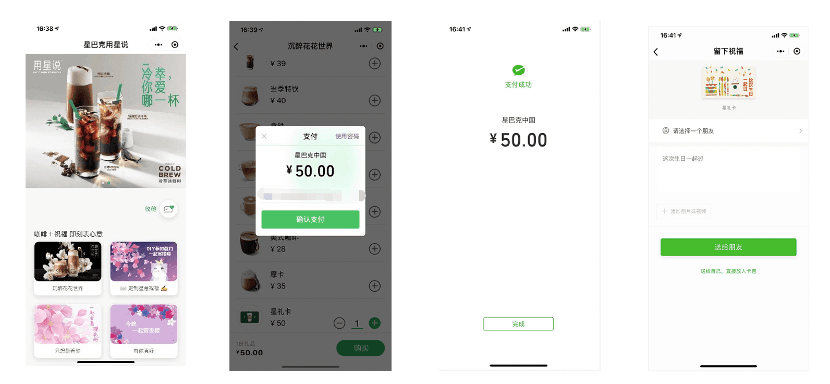
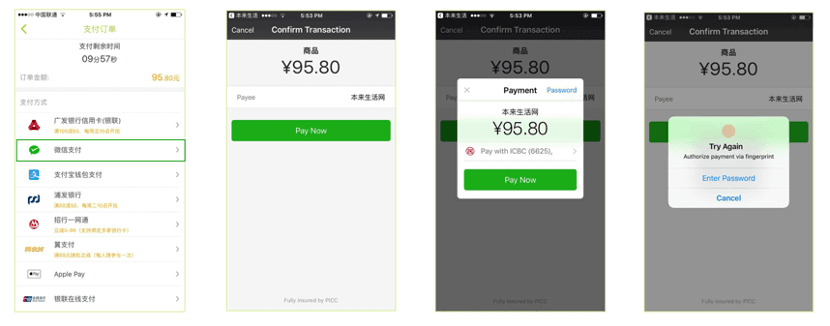
Source: WeChat Pay (https://pay.weixin.qq.com/)
### Setting Up WeChat Pay for Your Business
For businesses aiming to tap into WeChat Pay's vast user base, setting up an account is a strategic move. Here's how to get started:
1. **Create an Official Account:** Businesses must first establish an official WeChat account. This requires submitting company information and necessary documentation for verification.
2. **Choose a Business Profile:** Depending on the nature of the business, you can choose between a Subscription account or a Service account. The latter is more suitable for businesses looking to integrate WeChat Pay for [e-commerce](/grow-in-china/cross-border-ecommerce) activities.
3. **Apply for WeChat Pay:** After your account is verified, apply for WeChat Pay through the Official Accounts Platform. Provide details such as expected transaction volumes and bank account information.
4. **Integrate with E-commerce Platforms:** To maximize reach, businesses can partner with major online marketplaces like JD.com, Pinduoduo, VIP Shop, and Kaola. These platforms support WeChat Pay, simplifying the integration process and expanding the potential customer base.
### Using WeChat Pay for Business Growth
* **In-App Purchases:** By integrating WeChat Pay, businesses can facilitate smooth in-app purchases within their WeChat mini-programs. This capability is crucial for driving sales and enhancing user convenience.
* **Marketing Campaigns:** Businesses can utilize WeChat's social features to run targeted marketing campaigns. This includes offering exclusive deals and discounts that users can access and redeem directly through WeChat Pay.
* **Customer Engagement:** The integration of WeChat Pay with social media functions allows businesses to engage with customers more personally. They can interact through messages, offer customer support, and gather feedback, fostering stronger customer relationships.
## Alipay: Overview and Uses
### What is Alipay?
Alipay, owned by Alibaba, is a pioneer in China's mobile payment industry. Since its launch in 2004, Alipay has grown to become one of the most widely used payment platforms globally. With over 652.4 million monthly active users, it offers a comprehensive suite of financial services that extend beyond simple transactions.
### Key Features of Alipay
* **E-commerce Integration:** Alipay is deeply embedded within Alibaba's extensive e-commerce ecosystem, including platforms like Taobao and Tmall. This integration provides a smooth shopping experience for users and a reliable payment solution for merchants.
* **Global Reach:** Alipay's services are not confined to China. It is available in over 300 cities worldwide, making it an excellent choice for businesses with an international footprint. This global reach helps businesses cater to Chinese tourists and international users alike.
* **Financial Services:** Alipay offers a wide range of financial services, including savings accounts, loans, insurance, and investment products. This functionality makes it a comprehensive financial tool for users, appealing to those who seek more than just a payment solution.
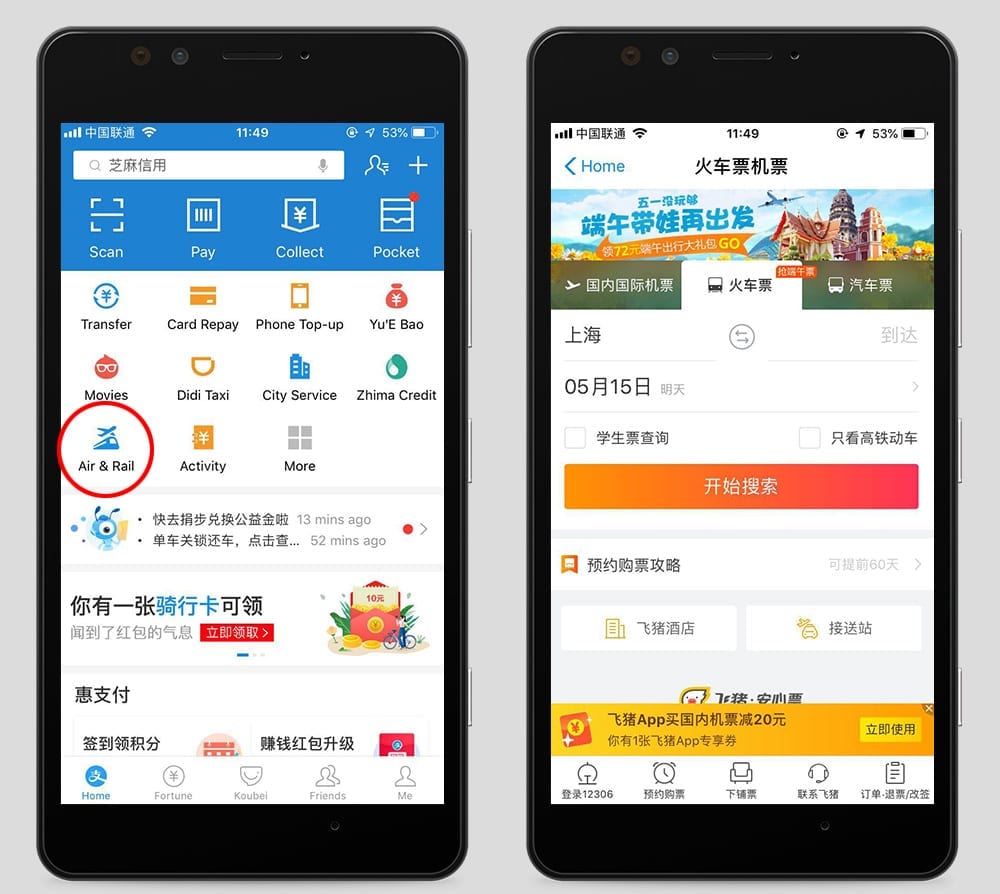
Source: SmartShanghai
### Setting Up Alipay for Your Business
To utilize Alipay for business, follow these steps:
1. **Create a Merchant Profile:** Begin by setting up a merchant profile using your existing Alipay account. This process involves submitting detailed company information and financial documentation for verification.
2. **Integrate the Payment Gateway:** Once verified, integrate Alipay's payment gateway into your business operations. For physical stores, this typically involves setting up QR code payments. For online businesses, integrate Alipay into your checkout page or partner with third-party platforms that support Alipay.
3. **Utilize Financial Tools:** Alipay provides various tools for financial management, such as detailed reporting and analytics. These tools offer insights into sales patterns, customer behavior, and transaction histories, helping businesses make data-driven decisions.
### Using Alipay for Business Growth
* **Enhanced Customer Experience:** Alipay's efficient transaction system ensures real-time payment confirmations, enhancing customer satisfaction. This immediate feedback loop is critical for maintaining a positive customer experience.
* **Financial Management:** Alipay's financial tools allow businesses to track sales, manage refunds, and analyze customer payment behaviors. These insights are invaluable for strategic planning and optimizing business operations.
* **Marketing Opportunities:** Businesses can utilize Alipay's platform for targeted advertising and promotional campaigns. This includes offering discounts, loyalty programs, and special deals to Alipay users, driving traffic and sales.
## WeChat Pay vs. Alipay: Key Differences
### Social Media and E-Commerce Integration
WeChat Pay excels in integrating social media with e-commerce. Its mini-programs allow businesses to engage with users within the social platform, making transactions more interactive. In contrast, Alipay focuses more on e-commerce with strong support for Alibaba's platforms.
### User Experience
Both platforms offer a user-friendly experience, but WeChat Pay's integration with WeChat makes it particularly appealing for younger users who value social interaction. Alipay's strength lies in its financial ecosystem, catering to users who seek comprehensive financial services.
### Market Reach and Demographics
WeChat Pay and Alipay both have extensive user bases. WeChat Pay's social media integration makes it popular among younger demographics, while Alipay attracts a broader age range with its financial services.
### International Payments
Both platforms support international payments, but WeChat Pay's integration with social media offers unique opportunities for marketing to Chinese tourists abroad. Alipay, with its global reach and ties to Alibaba, is ideal for businesses focusing on e-commerce and financial services.
## Choosing the Right Platform for Your Business
When deciding between WeChat Pay and Alipay, consider your business goals and target audience. If your strategy involves social engagement and using China's most popular social media platform, WeChat Pay is the way to go. It allows for smooth integration of commerce within a social context, enhancing customer retention and engagement.
On the other hand, if your business model is centered around e-commerce and financial services, Alipay offers a strong ecosystem that can support various financial needs and provide detailed insights into customer payment behaviors.
In conclusion, both WeChat Pay and Alipay offer distinct advantages for businesses looking to tap into China's vast mobile payment market. By understanding their unique features and aligning them with your business goals, you can choose the platform that best suits your needs and enhances your customer's experience in [eCommerce](/grow-in-china/cross-border-ecommerce) China.
---
# WeChat Store’s Double 11 subsidy: what a brand pays
URL: https://www.thechinapath.com/insights/wechat-store-double-11-subsidy
Published: 2026-09-28
Updated: 2026-09-28
Author: TheChinaPath
Category: E-Commerce
WeChat Store will fund half of a Double 11 coupon, capping a brand's share at 6.25% of price. Registration opens Sept 28. New stores lose their 1% fee.
WeChat will pay half of a Double 11 coupon on goods a brand enters in its WeChat
Store, and all of it for stores with a “good store” (好店) badge. Your share tops
out at 6.25% of the sale price you enter. Registration opens today, September
28, at 14:00. A new store gives up its 1% fee rate on whatever it enters.
WeChat Store (微信小店) is the shop built into WeChat. Shoppers find it in group
chats and in live rooms on Channels, WeChat’s video feed.
It only takes general-trade stock sold by mainland-registered companies.
Cross-border bonded goods are out, so the subsidy reaches foreign brands through
their own China entity or a distributor’s store.
> WeChat Store does not support cross-border bonded import goods, WeChat
> staff told a merchant who asked.
> Source: WeChat Open Community (微信开放社区), January 2025. https://developers.weixin.qq.com/community/minihome/doc/000aca314d43589a14c212ae461c00
## What WeChat announced on September 22
The WeChat Store operations team posted its plan for 11.11, the platform’s name
for Double 11: a “spend X, save Y” coupon that works across stores from October
12 to November 15, with the platform sharing the cost. We read the notice on
September 28.
> The coupon is capped at 12.5% of its spending threshold and funded 1:1 by
> the platform and the merchant. Goods from “good store” badge holders listed
> for at least three days can get 100% platform funding.
> Source: WeChat Store (微信小店), September 2026. https://store.weixin.qq.com/chengzhang/webdoc/wiki/9966/da464e308e8e62a8/growth_center_platform_notice/2
WeChat grants the badge on its own criteria. Your back end shows whether the
store has one.
The notice’s own example is a 200 RMB threshold with 25 RMB off. Baskets under
the threshold get nothing. A brand selling 80 RMB items needs shoppers to buy
three, or to add another store’s goods to the same order.
## What the WeChat Store Double 11 coupon costs at 1 million RMB
Take a store that sells 1 million RMB of entered goods during the event. The
table shows the ceiling: every order clears the threshold and uses the full
12.5%.
| Line (RMB) | Mixed funding | Good store badge | No subsidy, brand pays all |
|---|---|---|---|
| Sales at entered price | 1,000,000 | 1,000,000 | 1,000,000 |
| Coupon value to shoppers | 125,000 | 125,000 | 125,000 |
| Paid by the brand | 62,500 | 0 | 125,000 |
| Paid by WeChat | 62,500 | 125,000 | 0 |
| Brand keeps, before fees | 937,500 | 1,000,000 | 875,000 |
Real orders will land below that ceiling, since plenty of baskets won’t clear
the threshold. The notice spells out the floor: the merchant’s minimum revenue
rate is 1 minus 12.5% times 50%, or 93.75%. Any bonus coupon a shopper earns by
sharing is paid in full by the platform. When an order is refunded, WeChat takes
its share back, which matters in categories where returns run high.
The coupon also stacks. It applies after the store’s own coupons and any
live-room price. Say a brand already runs 10% off. Another 12.5% comes off
what’s left. The item now sells about 21% below list, and the brand pays for
most of that gap.
New stores get a fee break.
> Most categories pay a technical service fee of 1% to 5%. New stores pay 1%
> on their first 1 million RMB of sales (1.5 million in priority categories)
> within 90 days of the first order.
> Source: Tencent Marketing (腾讯营销), August 2026. https://e.qq.com/faq/wechat-store/growth/faq-zcjc-008/
Here’s the catch: the 11.11 notice says entered goods lose that new-merchant
reduction. By our arithmetic, a new store in a 5% category that enters 1 million
RMB of goods pays about 40,000 RMB more in fees. WeChat’s share of the coupon is
62,500 RMB, so the gain shrinks to about 22,500.
## Which budget line moves
The Double 11 markdown budget, first. On entered goods, WeChat now carries half
the coupon, or all of it for badge holders: 62,500 or 125,000 RMB per million in
sales at the full 12.5%. A brand can hold its own store discount lower and still
show shoppers a deeper price.
For a store in its first 90 days, the platform fee line moves too, up by as much
as four points on everything entered.
## What to do, and by when
Register from 14:00 today. The coupon goes live October 12, the same day JD
opens its sale. The National Day holiday takes October 1 to 7 out of that
window, so we’d aim to have goods approved by Friday, October 9.
> JD’s 2026 Double 11 opens October 12.
> Source: National Business Daily (每日经济新闻), September 2026. https://www.nbd.com.cn/articles/2026-09-24/4591116.html
And don’t touch list prices. WeChat has been checking them since September 4 and
keeps checking through November 15; an item marked up before the discount loses
the subsidy.
The store needs an experience score of 4.4 or above (or no score yet) and no
major violation in 30 days. Goods from the autumn sale roll into 11.11 on their
own if the carry-over switch is on, at new coupon face values, so read the
expected price and your share on each.
An entered item can’t join another platform subsidy event in the same period, so
enter each SKU where the deal is better.
A new store should split its range. Enter the lines that need the traffic. The
rest can sit at the 1% rate until the new-store window closes.
If a distributor runs the store for you, ask for the list of entered SKUs before
October 9. Their markdown becomes your brand’s price in China for the next five
weeks. Agree that price inside your [social commerce](/grow-in-china/social-commerce) plan first.
[Get a shortlist of vetted China distributors](/contact#shortlist)
---
# Weibo Marketing Guide: Mastering Social Commerce in China
URL: https://www.thechinapath.com/insights/weibo-marketing-guide-mastering-social-commerce-in-china
Published: 2024-12-13
Author: TheChinaPath
Category: Platforms
Weibo has more than 600 million monthly users in China. A brand guide to account setup, content, KOL partnerships and eCommerce on the platform.
## Understanding Weibo's Potential for Marketing
Weibo is one of the most influential [social media](/grow-in-china/social-commerce) platforms in China. It is widely used for its real-time updates and viral content capabilities. Its user base primarily consists of young, tech-savvy individuals aged 19 to 29. This makes it a goldmine for businesses targeting this demographic, especially those collaborating with a branding agency China to refine their strategy.
**Key Advantages of Marketing on Weibo:**
- Large, engaged user base
- Viral potential for rapid brand awareness
- Integration with Chinese ecommerce platforms
- Advanced targeting and analytics
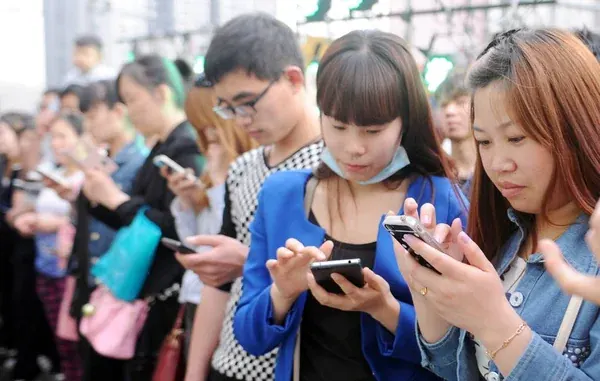
## Steps to Sign Up for Weibo
Signing up for a Weibo account involves selecting the appropriate account type and completing the required verification process, especially if you are signing up as a business. Here's how to get started:
### Determine Your Account Type
Weibo offers three types of accounts to choose from, depending on your needs:
- Individual Account: For personal use.
- WeMedia Account: For content creators or media-focused accounts.
- Official Account: For businesses, brands, or organizations.
### Account Verification for Businesses
For companies planning to use Weibo for marketing, creating an Official account is important. The verification process varies depending on whether your business is registered in China or overseas.
#### For Businesses in China:
Prepare the following documents:
- A Chinese business license
- Internet Content Provider (ICP) registration issued by the Chinese Ministry of Industry and Information Technology.
- A trademark certificate for your brand.
- Additional supporting documents, as required.
#### For Overseas Businesses:
If your company is registered outside China, you can apply through the "Overseas Account Verification" process. Required documents include:
- Your company's registration documents, with a certified Chinese translation.
- Contact details for the account manager or team handling the Weibo account.
- An authorization letter permitting the creation of the Weibo account.
Note: If collaborating with a Chinese entity to manage your Weibo account, provide an authorization letter allowing them to feature your brand name, logo, and description.
### Submit Documents for Verification
After preparing the necessary documents:
- Visit the Weibo verification page.
- Upload the required documents.
- Pay the verification fee.
### Wait for Verification Approval
The verification process timeline depends on your account type:
- For businesses in China: 5 to 7 working days.
- For overseas businesses: 10 to 15 working days.
### Customize Your Account Profile
Once verified, complete your profile to ensure a professional appearance:
- Upload a profile picture (e.g., company logo).
- Add a banner image reflecting your brand.
- Write a compelling bio and introductory post to attract followers.
### Start Using Weibo
After setting up your account, you can begin posting content, engaging with users, and using Weibo's tools for marketing and analytics.
## Creating an Effective Content Strategy
Content is the key of any successful Weibo marketing strategy. Engaging, relevant, and shareable content not only drives traffic but also creates a deeper connection with your audience. A communication agency China can assist in ensuring your strategy resonates with local users.
**Content Best Practices:**
- Incorporate Visuals: Use high-quality images, videos, and infographics.
- Use Trends: Participate in trending topics to increase visibility.
- Engage Directly: Host Q&A sessions, polls, or live streams.
- Post Consistently: Develop a posting schedule to maintain audience interest.
## Using Key Opinion Leaders (KOLs)
Collaborating with influencers or Key Opinion Leaders (KOLs) is a highly effective strategy on Weibo. These individuals have loyal followers who trust their recommendations, making them ideal partners for driving brand awareness and sales, a common practice for a marketing agency China.
**How to Work with KOLs:**
- Identify KOLs whose audience aligns with your target demographic.
- Develop creative [campaigns](/grow-in-china/campaigns) such as product reviews, giveaways, or live events.
- Monitor performance metrics like engagement and conversion rates.
## How to Use System Campaigns on Weibo
System campaigns on Weibo are pre-designed promotional tools that enable marketers to engage users, increase brand visibility, and foster interaction on the platform. These campaigns are only available to official Weibo accounts, often used by a social media agency China to manage campaigns efficiently.
Unlike fully customizable promotional content, system campaigns follow a pre-determined structure. Their simplicity and built-in functionality make them a cost-effective way to drive audience engagement and increase public interest in your brand.
Below are the most popular types of system campaigns on Weibo and their benefits:
### Lucky Roulette
The Lucky Roulette campaign is a gamified promotion where users spin a virtual wheel for a chance to win prizes.
**How It Works:**
- Users participate in a free-of-charge lottery by spinning the roulette wheel.
- Winners are directed to your brand's landing page for further interaction.
**Key Benefits:**
- Increases brand awareness through interactive engagement.
- Encourages users to explore your products and offerings.
### Free Trials
Offering free trials or samples is another effective system campaign, particularly for brands introducing new products in the Chinese market.
**How It Works:**
- Users engage with your campaign post by commenting or sharing why they should receive a free sample.
- Winners receive the product for free, often in exchange for reviews or feedback.
**Key Benefits:**
- Builds trust and credibility for new or lesser-known brands.
- Generates user reviews and data that can guide future product development or marketing strategies.
### Flash Sales
Flash sales are ideal for driving urgency and sparking excitement among your audience.
**How It Works:**
- Limited-time discounts or exclusive deals are offered through a short-duration campaign post.
- Users are encouraged to act quickly to secure the offer.
**Key Benefits:**
- Boosts sales within a short timeframe.
- Creates buzz around your brand, especially for e-commerce and online-to-offline (O2O) businesses.
### Reposting Campaigns
Reposting campaigns use user actions like sharing content and tagging friends to increase your reach organically.
**How It Works:**
- Users are asked to repost your content, tag friends, or follow your account to enter the campaign.
- Winners are often chosen randomly or by predetermined criteria.
**Key Benefits:**
- Simple and user-friendly, making it easy to encourage participation.
- Increases brand visibility as users share your posts with their networks.
## E-Commerce Integration on Weibo
Weibo integrates cleanly with crossborder ecommerce China platforms, making it easier for users to shop directly within the app. Brands can use features like product tags and live stream shopping to drive conversions.
**G-Commerce Strategies:**
- Tag products in posts to create direct purchase links.
- Host live stream shopping events to showcase products in real time.
- Use data analytics to optimize product listings and promotions.
## The Role of Video Content in Weibo Marketing
Video content remains one of the most engaging formats on Weibo. Short videos and live streams are particularly effective in capturing user attention and driving interaction.
**Tips for Video Content:**
- Keep videos concise and visually appealing.
- Include subtitles for accessibility.
- Align content with current trends or cultural events.
## Advanced Analytics for Campaign Optimization
Weibo's analytics tools provide valuable insights into user behavior and campaign performance. Regularly reviewing these metrics helps refine strategies for better results, a key practice often emphasized by a digital marketing agency China.
**Key Metrics to Track:**
- Impressions and reach.
- Engagement rates (likes, comments, shares).
- Conversion rates from ads or posts.
## The Cost of Weibo Marketing
Weibo marketing can be tailored to fit a variety of budgets, offering options for individuals, small businesses, and large enterprises. While creating a personal account and posting content on Weibo is free, using advanced tools for business marketing incurs costs, especially for verification and advertising.
### Verification Costs
To access Weibo's full suite of marketing tools, businesses must verify their accounts. The verification process and associated costs depend on whether the business is registered in China or overseas.
**For Businesses in China:**
- Verification takes 5 to 7 working days.
- Annual verification fee: $43 USD.
**For Overseas Businesses:**
- Verification takes 10 to 15 working days.
- One-time verification fee: $1,000 USD.
### Advertising Costs
Advertising expenses on Weibo vary depending on the campaign type, targeting options, and ad formats. These costs are not included in the verification fees and must be budgeted separately based on your marketing goals.
## Conclusion
Weibo is a lively platform that offers a lot of opportunities for businesses to engage with China's vast and digitally active consumer base. By understanding its features, using its tools, and aligning with local trends, brands can achieve remarkable success. Whether you're new to the Chinese market or looking to refine your strategy, Weibo is an important component of your marketing playbook.
---
# What a Pinduoduo Fine Says About Doing Business in China
URL: https://www.thechinapath.com/insights/what-a-pinduoduo-fine-says-about-doing-business-in-china
Published: 2026-06-25
Author: Cyril Drouin
Category: Compliance & Setup
A small Pinduoduo tax fine signals a big shift for foreign brands selling in China. Here is what the new platform reporting rules mean for you.
A small fine just landed on one of China's biggest retailers. For foreign brands selling into the market, it matters more than the number suggests.
In January 2026, Shanghai's tax bureau fined Pinduoduo (拼多多) RMB 100,000, about US$14,000, for failing to hand over required tax information on time. That is pocket change for a company its size. The reason behind it is the part worth reading.
## A missed deadline, not a scandal
Start with the rule behind it. Since June 2025, China has required every online platform to report each quarter on the merchants and workers who sell through it: who they are, and what they earned. Platforms had never had to file this kind of data before, and the first reports were due at the end of October.
> By mid-October, more than 4,000 platforms had submitted their first round, including Pinduoduo, Ele.me, and Didi, according to China's State Taxation Administration.
Pinduoduo was among the stragglers. It got a notice, missed the deadline to fix things, and the fine followed. So this was not a tax-evasion scandal. It was a paperwork deadline, missed, and China still acted.
The timing sharpens the point. The fine came days after regulators from several agencies opened a wider probe into PDD Holdings, with investigators running on-site checks at its Shanghai headquarters. Set against that, RMB 100,000 reads less like a one-off and more like a warning shot.
## Why a foreign brand should care
The easy assumption is that this is a domestic story about Chinese platforms. It is not.
The rule reaches overseas sellers too. Once a single Chinese shopper's net spending with a foreign seller passes RMB 5,000 (roughly US$700) in a quarter, that seller's revenue has to be reported to the tax authorities. Amazon moved early here.
> Amazon notified its sellers in October 2025 that it would begin quarterly reporting of Chinese sellers' identity and income data to China's tax authorities.
Sell into China through any platform and your numbers are visible now in a way they simply were not two years ago. The grey zone many sellers relied on is closing, and store data, sales figures, and seller registration all sit on the record.
There is a cost to ignoring it. Miss the deadline and the fine starts where Pinduoduo's did. In serious cases, penalties climb to RMB 500,000 and a platform can be ordered to suspend operations while it sorts things out.
That sounds heavier than it needs to be. The fix is mostly preparation.
## What to do about it
If you run a clean operation, none of this is a threat. In the work we do helping brands [enter China](/enter-china), it mainly changes the order of operations, not the odds of success.
- **Get your paperwork in order early.** Seller registration, business identity, revenue records. These used to be loose ends. Now they are entry requirements.
- **Confirm who files what.** On a marketplace, the platform usually reports for you. Sell direct, or through an agent, and the responsibility can land closer to home. Nail that down before money starts moving.
- **Treat compliance as part of the plan, not a cleanup job.** Brands that build it in from day one spend far less time and money fixing it later.
## The bigger shift
For most of the past decade, China's digital economy grew faster than anyone could track it. Billions of transactions, millions of small sellers, and a tax system never built for the volume. The new rules are Beijing's way of catching up, pulling all that activity into one clear channel.
This is not unique to China. The EU's DAC7 rules put similar duties on platforms across Europe, and the wider move toward platform tax transparency now reaches well beyond any single market. A brand that prepares for it in China is preparing for the same direction nearly everywhere it sells.
The fine itself is small. The message carries further. China is telling everyone who sells on its platforms, local or foreign, that the rules apply evenly now, and that they will be enforced. For brands coming into the market, that is good news. A clear rulebook is easier to plan around than a grey one.
If you are weighing a [move into China](/enter-china/market-entry-consulting), a straight read on what these reporting rules mean for your specific setup is worth getting before you commit, not after.
---
# What Taobao Instant Commerce Means For Non-Chinese Brands
URL: https://www.thechinapath.com/insights/what-taobao-instant-commerce-means-for-non-chinese-brands
Published: 2025-11-21
Updated: 2026-05-15
Author: Cyril Drouin
Category: E-Commerce
Taobao Instant Commerce and the Taobao Flash Sale rebrand move Chinese shopping from festivals to daily delivery. What non-Chinese brands need to change.
## What Taobao Instant Commerce Means For Non-Chinese Brands
Double 11 used to be about one question: who could stack the biggest discounts.
This year, Alibaba used it for something different. With [Taobao](/grow-in-china/cross-border-ecommerce) Instant Commerce and the rebrand of Ele.me into Taobao Flash Sale, Alibaba is doing more than chasing festival GMV. It is trying to retrain how people shop in China every day. Instant delivery is no longer a side product inside a food app. It is being woven into the core Taobao experience.
For non-Chinese brands, this is less about one campaign and more about planning for a world where Chinese ecommerce behaves a lot more like takeaway.
## What Alibaba Is Actually Building
[Taobao](/grow-in-china/cross-border-ecommerce) Instant Commerce upgrades Taobao's hourly delivery into a single grid powered by Ele.me riders, Freshippo stores, and partner supermarkets. It now covers everyday essentials, some electronics, and fashion, with tens of millions of instant orders a day.
Taobao Flash Sale is the front door for all of this. The Ele.me app is being renamed, riders are recast as city knights, and the familiar blue of food delivery is slowly replaced by Taobao orange.
Underneath, Alibaba has folded real-time retail into its core e-commerce division. Instant commerce is no longer a side project. It is part of Taobao's main offer.
Heavy subsidies and investment have pushed volumes up quickly while putting pressure on margins across the industry. This is a fight for share and habit, not for neat quarterly profit.
## From Shopping Event To Local Life Habits
Traditional e-commerce in China has followed a familiar rhythm.
People browse, compare, park items in carts, and wait for Double 11 or six eighteen to check out. Big orders, a few times a year.
Instant retail runs on different wiring. It is closer to food delivery:
* Immediate need
* Short decision cycles
* High frequency, lower ticket orders
By embedding instant delivery into Taobao and rebranding Ele.me as Taobao Flash Sale, Alibaba is trying to merge these two behaviours. The goal goes beyond Double 11. It is to:
* Create daily touchpoints instead of a few festival spikes
* Lift purchase frequency per user, not only basket size
* Train consumers to expect fast fulfilment for many categories, not only meals
If that shift holds, Double 11 becomes less of a once-a-year explosion and more of a spotlight inside a continuous local life system.
## What This Means For Non-Chinese Brands
In the short term, instant commerce wins still skew toward local players in impulse categories with dense store networks. For many international brands, operational and financial barriers remain high.
The strategic direction, however, is already clear:
* **Speed is becoming a hygiene** in major cities, not a bonus
* **Proximity doubles as media**, since Taobao surfaces what is nearby and available now
* **Platform roles are diverging**, with Taobao owning habit and fulfilment, Douyin owning attention and discovery, and JD leaning on logistics trust
How you respond depends on where your brand is today.
### Established brands with China store networks
* Treat Double 11 and the following quarter as a diagnostic for speed expectations in your category
* Test a small number of stores as same-day or next-day fulfilment hubs, starting with replenishment-friendly items
* Use pilots to learn how to talk about speed without sliding into pure discount language
### Pure e-commerce or cross-border brands
* Accept that building your own instant grid may not yet make economic sense
* Focus on community, story, and distinct positioning on Douyin and Xiaohongshu, where fit and narrative still matter more than speed alone
* Use tactical partnerships with local food or convenience chains during key moments so your products can occasionally ride instant rails without owning them
### Emerging premium brands
* Protect perception first: fast should not automatically read as cheap or mass
* Concentrate investment on search and seeding inside Tmall and Taobao, and treat any instant commerce activity as a visibility experiment rather than a volume engine
## Planning For An Instant First China
Seen from a distance, Taobao Instant Commerce and Taobao Flash Sale are about logistics, subsidies, and rebrands. Seen up close, they are about something simpler: who defines everyday normal in Chinese retail.
For non-Chinese brands, the shift is clear. You are no longer only competing on who tells the best story at Double 11. You are competing on who feels naturally present in the small, spontaneous decisions that now fill the rest of the calendar.
At TheChinaPath, this is the terrain where we work with clients, connecting global intent to China's fast-changing local reality. The practical question we come back to is simple.
If China moves from festival first to instant first, which parts of that new journey should carry your brand's signature, and which parts are you currently leaving for the platforms to decide?
---
# Opening a Xiaohongshu (RedNote) store as an overseas brand
URL: https://www.thechinapath.com/insights/xiaohongshu-store-setup-overseas-brand
Published: 2026-10-11
Updated: 2026-10-11
Author: TheChinaPath
Category: Platforms
Xiaohongshu store setup for overseas brands: who qualifies, the four documents, the US$400 deposit, the fees, the deadlines, and when to wait.
Yes, a company registered outside China can open a cross-border store on
Xiaohongshu (RedNote). Since July 2, 2026, it also needs a mainland
company that co-signs for joint liability. The default deposit is US$400,
less than 4% of the RMB 80,000 that Tmall Global's cheapest categories
take in deposit and annual fee. And the store is rarely the point. Buyers
find the brand in notes and search first. The store just takes the order.
That last part decides whether Xiaohongshu store setup is worth your
quarter. The cash is small. The paperwork, and above all the mainland
partner, is the long part. And a store with no notes pointing at it sells
nothing.
The money gap with Tmall Global is real, though. In our
[Tmall Global cost calculator](/tools/tmall-global-setup-and-run), deposit
plus annual fee comes to RMB 80,000 in 11 of its 19 product categories,
RMB 110,000 in seven, and RMB 330,000 for health supplements. RedNote's
default cross-border deposit is about RMB 2,840 at the calculator's rate
of 7.1 to the dollar, and its fee rules list no annual fee.
> Tmall Global deposit plus annual fee: RMB 80,000 in 11 of 19 categories,
> RMB 110,000 in 7, RMB 330,000 for health supplements.
> Source: TheChinaPath calculator data, October 2026.
Every RedNote rule below was read on the platform's own pages on
October 4, 2026.
## Requirements and costs to open a RedNote store
| Item | What RedNote asks of an overseas company | Date or deadline in the rules |
|---|---|---|
| Entity | Company registered outside mainland China; flagship, franchise, specialty, or multi-brand store | No review time published |
| Mainland partner | Affiliate or agent with import-export scope, a joint-liability undertaking, and customs registration | Required since July 2, 2026 |
| Documents | Registration plus Chinese-English translation, passport, registered trademark, authorization chain, and 12 months of purchase proof | Fix a rejection within 30 days or it lapses |
| Deposit (US$) | 400 by default; 700 or 2,800 once monthly sales pass RMB 100,000 or RMB 500,000 | Pay within 2 working days of signing |
| Commission | Mostly 2% to 5% by category (beauty 4%, apparel 5%), plus a 0.7% payment fee on cross-border orders | Charged per order |
| Fulfillment | Bonded warehouse or direct mail from abroad | Ship in 72 hours (bonded), 120 hours (direct mail) |
Each row is sourced in the sections below.
## What a RedNote store is, and what it isn't
A RedNote store is a shop inside the app. Notes and livestreams link to its
products, and checkout happens without leaving RedNote. An overseas company
opens it under the cross-border rules, so goods ship from a bonded warehouse
in China or straight from abroad, and the store name carries a "海外"
(overseas) tag the platform adds on its own.
> Stores opened by an overseas entity have their store type renamed
> automatically, for example to 海外旗舰店 (overseas flagship store).
> Source: Xiaohongshu rule center (小红书电商学习中心), store type and naming rules, July 2024. https://school.xiaohongshu.com/rule/detail/26/823
That matters for a store because the traffic is already shopping. People
open the app to decide what to buy.
> Xiaohongshu has more than 400 million monthly active users and up to
> 800 million searches a day.
> Source: Beijing Business Today (北京商报), May 2026. https://finance.sina.com.cn/jjxw/2026-05-27/doc-inhziqxq9291575.shtml
> About 200 million users a month look for buying advice on Xiaohongshu
> (platform data, January to November 2025).
> Source: Ebrun (亿邦动力) via Sina, December 2025. https://finance.sina.com.cn/tech/roll/2025-12-24/doc-inhcwtcp4511859.shtml
Two things it is not. It isn't Redshop, the export project RedNote set
for June 2026, which carries Chinese sellers' goods to buyers abroad.
> Redshop, Xiaohongshu's overseas project, was set to launch in June 2026
> with 50 invited seed merchants, starting in markets including the United
> States, the United Kingdom, Singapore, and Malaysia.
> Source: 36Kr (36氪), April 2026. https://www.36kr.com/p/3763928410866433
And it isn't a replacement for Tmall Global or JD Worldwide, where
shoppers type a product name and compare prices. On RedNote people read
notes first, and the store gets the orders those notes produce.
## Who can open one, and what the file needs
An overseas company can open four store types: a flagship store, a
franchise store (专卖店), a specialty store (专营店) or a multi-brand
store. Ordinary company stores, sole-trader stores, and personal stores are
closed to overseas entities.
> Flagship, franchise, and multi-brand stores accept a mainland or an
> overseas entity, and specialty stores accept overseas registration papers
> with a Chinese-English translation; ordinary company, sole-trader and
> personal stores do not accept overseas entities.
> Source: Xiaohongshu rule center (小红书电商学习中心), merchant admission standards, February 2024. https://school.xiaohongshu.com/rule/detail/26/817
The same page sets most of the file. The legal representative can use a
passport. The trademark can be registered abroad, through WIPO, or in
China, but it has to be registered already, and a picture-only mark is
refused. One company can run two stores at most.
Decide early whose name goes on the store. A flagship needs first-level
exclusive rights from the brand owner, so a distributor that opens your
flagship holds exclusivity on RedNote for as long as its letter runs.
Franchise and specialty stores can sit up to three levels down the chain,
which lets a reseller sell without locking up the brand.
> A flagship store requires first-level exclusive authorization; franchise
> and specialty stores accept an authorization chain of up to three levels.
> Source: Xiaohongshu rule center (小红书电商学习中心), merchant admission standards, February 2024. https://school.xiaohongshu.com/rule/detail/26/817
Then, in July 2026, the file got heavier.
> Every cross-border store must file four documents, none optional: its
> overseas registration certificate, the business license of a mainland
> affiliate or agent with import-export scope, the mainland entrusted
> company's undertaking of joint liability for product sourcing and
> compliance, and a customs registration.
> Source: Xiaohongshu rule center (小红书电商学习中心), cross-border qualification notice, July 2026. https://school.xiaohongshu.com/rule/detail/19/119851
That notice also asks for proof of purchase from the last 12 months:
contracts, invoices, and shipping papers that match. For regulated
categories the licensing runs on both sides of the border. The overseas
company shows its home-country license, and the mainland partner shows the
matching Chinese one, each valid for at least 30 more days.
> Cross-border merchants must provide the category license of their home
> country or region, and their mainland entrusted company must hold the
> matching Chinese license.
> Source: Xiaohongshu rule center (小红书电商学习中心), industry qualification requirements, March 2025. https://school.xiaohongshu.com/rule/detail/26/807
So who signs? The candidates are the importer or distributor you already
work with, or the service partner that will run the store. Pick it the way
you'd pick a distributor, because it answers for your goods. Douyin Global
asks for the same thing, a mainland domestic agent that carries joint
liability, and nothing stops one partner from signing for both stores if it
accepts the exposure.
> Douyin Global requires a mainland domestic agent (境内代理人) that carries
> joint liability and files its business license with an entrustment
> declaration.
> Source: Douyin E-commerce (抖音电商), Douyin Global admission rules, July 2026. https://school.jinritemai.com/doudian/web/article/108056
The deposit is the light part. The default for a cross-border category is
US$400, down from US$3,500 before an April 2025 revision. Some categories
carry their own figure in the platform's category sheet, so check yours.
> Default category deposit for cross-border stores: US$400 (US$3,500 before
> the revision).
> Source: Xiaohongshu rule center (小红书电商学习中心), category deposit standard, April 2025. https://school.xiaohongshu.com/rule/detail/27/858
It rises with sales. Since July 1, 2026, overseas merchants also owe a
floating deposit set by the previous month's settled sales, and they pay
whichever of the two is higher.
> Floating deposit for overseas merchants: US$400 at RMB 50,000 to 100,000
> of monthly settled sales, US$700 at RMB 100,000 to 500,000, US$2,800 above
> RMB 500,000.
> Source: Xiaohongshu rule center (小红书电商学习中心), deposit management rules, July 2026. https://school.xiaohongshu.com/rule/detail/27/119848
The deposit-free trial on the same page covers personal and sole-trader
stores only. A cross-border store pays from day one. Getting it back is
quick: once a refund request goes in, the rule gives RedNote one to seven
working days.
## Xiaohongshu store setup, step by step
RedNote doesn't publish how long it takes to review a new store. Nothing in
the rule center gives a number of working days for the qualification or
brand check, and the figures that circulate online trace back to agency
blogs. So plan around the parts you control, which are most of them.
**Line up the mainland partner.** Get its business license, its customs
registration, and the signed joint-liability undertaking. Expect this to be
the slow step, because it's a negotiation over who carries the risk.
**Build the document file.** Registration and translation, passport,
trademark proof, the authorization chain, a year of purchase papers, and
the category licenses on both sides. Any document that isn't in Chinese or
English needs a stamped translation (German, French, and Japanese papers
included).
**Apply, and fix fast.** A rejected application gets 30 days.
> If a rejected application is not corrected and resubmitted within 30
> days, the store application is cancelled.
> Source: Xiaohongshu rule center (小红书电商学习中心), merchant admission standards, February 2024. https://school.xiaohongshu.com/rule/detail/26/817
**Sign and pay.** The cross-border store agreement gives two working days
to pay the deposit once it takes effect. In the same system you set the
settlement currency and enter your own receiving bank. You pay the bank
charges.
> The merchant pays the deposit within 2 working days of the agreement
> taking effect, enters its settlement currency and beneficiary bank in the
> Xiaohongshu system, and bears all bank charges.
> Source: Xiaohongshu rule center (小红书电商学习中心), store service agreement for cross-border merchants, April 2026. https://school.xiaohongshu.com/rule/detail/97/119738
**Connect fulfillment.** The same agreement makes you declare goods to
customs truthfully, and if you run orders through a third-party ERP, you
report the vendor to RedNote.
**Ship on time.** The clock starts at payment.
> Ship-by limits after payment: 72 hours for bonded goods, 120 hours for
> direct mail and for personal-postal goods.
> Source: Xiaohongshu rule center (小红书电商学习中心), merchant shipping rules, September 2026. https://school.xiaohongshu.com/rule/detail/35/119927
One more line item, and this one belongs to the brand account. Verifying
an enterprise professional account costs RMB 600, with a RMB 600 review
every year. The rule opens verification to overseas companies only from
regions the platform has switched on, and it names Hong Kong, Singapore,
and Malaysia.
> Enterprise professional-account verification costs 600 RMB per
> application and 600 RMB for the annual review; overseas entities may
> apply from regions the platform has opened.
> Source: Xiaohongshu Juguang help center (小红书聚光帮助中心), account verification rules, August 2026. https://ad.xiaohongshu.com/next_help/docs/195c5fe505c71b4b0335a2fe0d61d8e0
## What it costs to run once it's open
The commission is a percentage by category. Most sit between 2% and 5%.
> Base technical service fee, in force May 12, 2026: makeup and fragrance
> 4%, skincare 4%, women's and men's apparel 5%, health supplements 3%,
> snacks 2%.
> Source: Xiaohongshu rule center (小红书电商学习中心), base technical service fee schedule, May 2026. https://school.xiaohongshu.com/rule/detail/27/119797
Cross-border orders carry an extra charge.
> Cross-border orders pay a 0.7% payment-channel fee on the goods and
> shipping actually paid.
> Source: Xiaohongshu rule center (小红书电商学习中心), technical service fee rules revision, February 2024. https://school.xiaohongshu.com/rule/detail/17/2590
If you read about RedNote's commission-free year, it's over. The platform
waived commission on each merchant's first RMB 1 million of sales from
September 2025 and meant to run it to August 31, 2026. It stopped on May
15.
> From September 1, 2025 to August 31, 2026, each merchant's first RMB 1
> million of payment volume was to be commission-free, with a 0.6% payment
> cost kept.
> Source: National Business Daily (每日经济新闻) via Securities Times, August 2025. https://www.stcn.com/article/detail/3257637.html
> The commission-free plan ended on May 15, 2026; orders created before
> then kept the old terms. A merchant growth program paying out in traffic
> vouchers started on May 11.
> Source: Sina Tech (新浪科技), May 2026. https://finance.sina.cn/chanjing/gsxw/2026-05-09/detail-inhxhzaz1374118.d.html
Run it for a skincare store selling RMB 300,000 of goods a month. That
puts the floating deposit in the US$700 band, above the US$400 default, so
US$700 sits with RedNote, about RMB 4,970. Commission at 4% is RMB 12,000.
The payment fee adds RMB 2,100, a little more once shipping is counted,
since it applies to both. Call it RMB 14,100 a month to the platform.
Put next to Tmall Global, the running fees look alike. Our calculator
carries skincare on Tmall Global at a 4% commission and a RMB 30,000
annual fee, so the same month costs RMB 12,000 in commission plus RMB 2,500
of the annual fee, before payment charges. Where the two part ways is the
cash you put down before the first sale: RMB 80,000 against roughly
RMB 2,840.
The bigger bill is traffic, and the fee schedule doesn't show it. A store
on RedNote gets found through notes and creator posts first, then through
ads once something converts. Each is its own budget line. Content
production and creator seeding are the work of [TheRedScroll, the group's China social media agency](https://www.theredscroll.com).
The store side is ours: listings, orders, customer service, and the paid
media that pushes buyers to checkout, covered under
[social commerce](/grow-in-china/social-commerce).
## Why the store comes last
Look at what RedNote itself counts. At its first merchant conference, in
April 2026, the figures it chose to share were about demand and repeat
buyers, measured on rise100, its list of top merchants.
> Every day 39 million users show clear intent to buy on Xiaohongshu,
> adding up to 140 million purchase requests. The 2025 rise100 merchants
> grew GMV more than 2.6 times, and returning customers made up 81% of
> what they sold.
> Source: 21st Century Business Herald (21世纪经济报道), April 2026. https://www.21jingji.com/article/20260409/herald/3b578d625dae8e23682d670de2f4e6e8.html
> Members of a merchant's group chat repurchase within 30 days about 5.1
> times as often as other users.
> Source: Guangzhou Daily (广州日报大洋网), April 2026. https://news.dayoo.com/ds/202604/13/154574_54947113.htm
Read those numbers as a sequence. Someone searches and reads notes from
people they trust, then buys. After that, the group chat and the store
livestream bring them back. The store sits at the end of that chain, and
it's the cheapest part to build.
A foreign brand that opens the store first, with nothing written about it
on the platform, owns an empty room. The search bar returns other brands.
So we treat a RedNote store as the place where a content plan starts
paying, and we put the work on [China social media](/social-in-china)
ahead of the store application.
A word on sales forecasts, since someone will pitch you one. RedNote has
never put out a figure for its total sales.
> The platform has never published its overall GMV.
> Source: Yicai (第一财经) via Securities Times, August 2025. https://stcn.com/article/detail/3304269.html
So any forecast you see for "sales on RedNote" is somebody's estimate.
Build your plan on your own notes and your own search volume.
## When to open one, and when to wait
Open a store when all of this holds at once. Notes about your products
already exist and people search your brand name in the app. A mainland
partner will sign for you and hold the Chinese licenses your category
needs. Someone can ship bonded orders inside 72 hours and answer buyers in
Chinese, every day, which is the part brands underestimate.
Wait if the brand has no presence on RedNote yet. Spend the first months on
notes and search, and measure what moves.
If you're already live on Tmall Global and RedNote readers find you there
by search, think hard before adding a second store. It doubles the stock
planning, and the same shopper sees two prices.
And wait if no one will co-sign. Since July the store can't open without
that partner, so finding it comes first. If you don't have an importer or a
service partner in China yet, a [Compass shortlist](/contact#shortlist) of
vetted partners in your category is the place to start.
The cash, at least, won't stop you. US$400, plus whatever the category
sheet says for your products.
## FAQ
### Can a foreign company open a Xiaohongshu store without a Chinese company?
It can open the store in its own name, as an overseas entity. Since July 2,
2026, it also needs a mainland affiliate or agent whose business covers
import and export. That company files its license, signs an undertaking of
joint liability for the goods, and brings a customs registration. Without
all four documents, the application doesn't go through.
### How much does it cost to open a RedNote store as an overseas brand?
The default deposit for a cross-border category is US$400, and it rises to
US$700 or US$2,800 as monthly sales pass RMB 100,000 or RMB 500,000. The
fee rules list no annual fee. Commission runs mostly 2% to 5% by category,
plus 0.7% on cross-border orders. For most brands, ads, creators, and the
daily operations cost more than all of that put together.
### How long does RedNote take to approve a store?
RedNote doesn't publish a review time for new stores. What it does publish
are the deadlines around the review: 30 days to fix a rejected
application, two working days to pay the deposit after signing, and 72
hours to ship a bonded order after payment. Most of the calendar goes to
finding the mainland partner and assembling the documents.
### Is the commission-free program still running?
No. The plan waived commission on each merchant's first RMB 1 million of
sales from September 2025 and was set to run until August 31, 2026. RedNote
ended it early, on May 15, 2026. Its newer merchant program pays out in
traffic vouchers. A store that opens now pays the category rate from its
first order.
[Talk to us about whether a RedNote store fits your China plan](/contact)
---