JD’s New Subsidy Plan Is Really a Supply Chain Play
A RMB 10 billion trade-in push with Haier, Midea and more than 100 other brands looks like one more price promotion. The mechanics tell a different story.
On April 2, JD.com (京东) gathered more than 100 appliance and home brands, Haier (海尔) and Midea (美的) among them, and put RMB 10 billion, about USD 1.4 billion, on the table. The money funds what JD calls the Double Subsidy plan (百亿双补): twelve months of extra trade-in discounts meant to get Chinese households replacing aging appliances faster.
At first glance, another discount campaign. China runs on those. Look at the mechanics and a different picture shows up. JD is spending subsidy money to buy control over how appliances get chosen, delivered, installed and recycled. If you sell anything that plugs in, cools, washes or gets slept on, that’s worth ten minutes of your attention.
JD and its partner brands will jointly invest RMB 10 billion in trade-in subsidies over the coming year, according to JD’s April 2 announcement as reported by Yicai (第一财经).
What is actually on the table
| The plan | The detail |
|---|---|
| Budget | RMB 10 billion over one year, co-funded by JD and 100+ brands |
| Coverage | 200+ subcategories, air conditioners to mattresses and toilets |
| Consumer deal | Up to 10% extra on trade-ins, on top of the 15% national subsidy |
| Old products | Accepted regardless of brand, age, condition or purchase channel |
| Service | Delivery, installation, removal and recycling handled in one visit |
| Reach | Nationwide, including lower-tier cities and rural counties |
The stack is the headline for consumers. A family replacing a ten-year-old refrigerator first takes the national subsidy (国补), the government trade-in discount running at 15 percent in 2026. JD and the brand then add up to 10 percent more. On a big-ticket appliance, that stack decides whether the purchase happens this year or slips to the next.
Just as important is what JD removed. Trade-in programs in China used to stall on fine print: wrong brand, too old, bought somewhere else. JD’s terms accept the old unit whatever its brand, age, condition or purchase channel. The classic excuse for keeping a dying fridge is gone.
JD and its partners have also formed the Super Trade-In Alliance (超级换新联盟) to work on trade-in standards, service levels and subsidy terms. Easy to skim past, but this is how a promotion hardens into infrastructure.
The half of the deal nobody reads
The consumer subsidy is one side of the announcement. Procurement is the other. JD commits to large centralized purchase orders with the partner brands, using the demand the subsidies create as its bargaining chip.
The loop is simple. Subsidies stimulate demand, bulk orders capture it. Predictable volume lets JD buy at scale, buying at scale pushes factory prices down, and lower costs fund part of the next round of subsidies. Brands get certainty in a soft market. JD gets margin room and a tighter grip on supply.
Partner brands also get a dedicated campaign zone on the platform, plus targeted traffic support to reach households sitting on old appliances. JD is not just discounting products. It is systematizing demand, then selling access to that system.
The subsidy is the hook. The service is the lock.
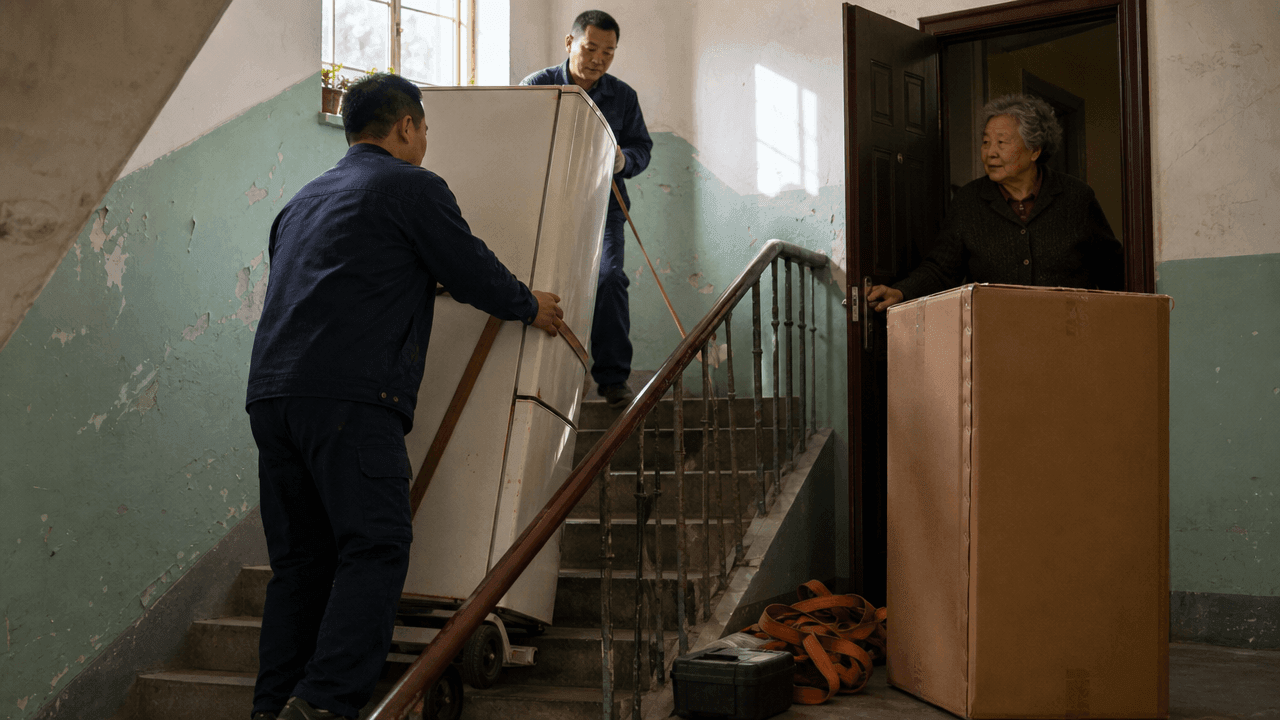
Price was never the only reason Chinese households kept old appliances. Hassle was. An old refrigerator weighs 90 kilos and lives up six flights of stairs, nobody wants to deal with it, so it hums along for another five years.
JD’s answer is to make delivery, installation, removal and recycling one standard visit, not a paid add-on, with coverage that reaches past the big cities into towns and rural counties where competitors don’t reliably go.
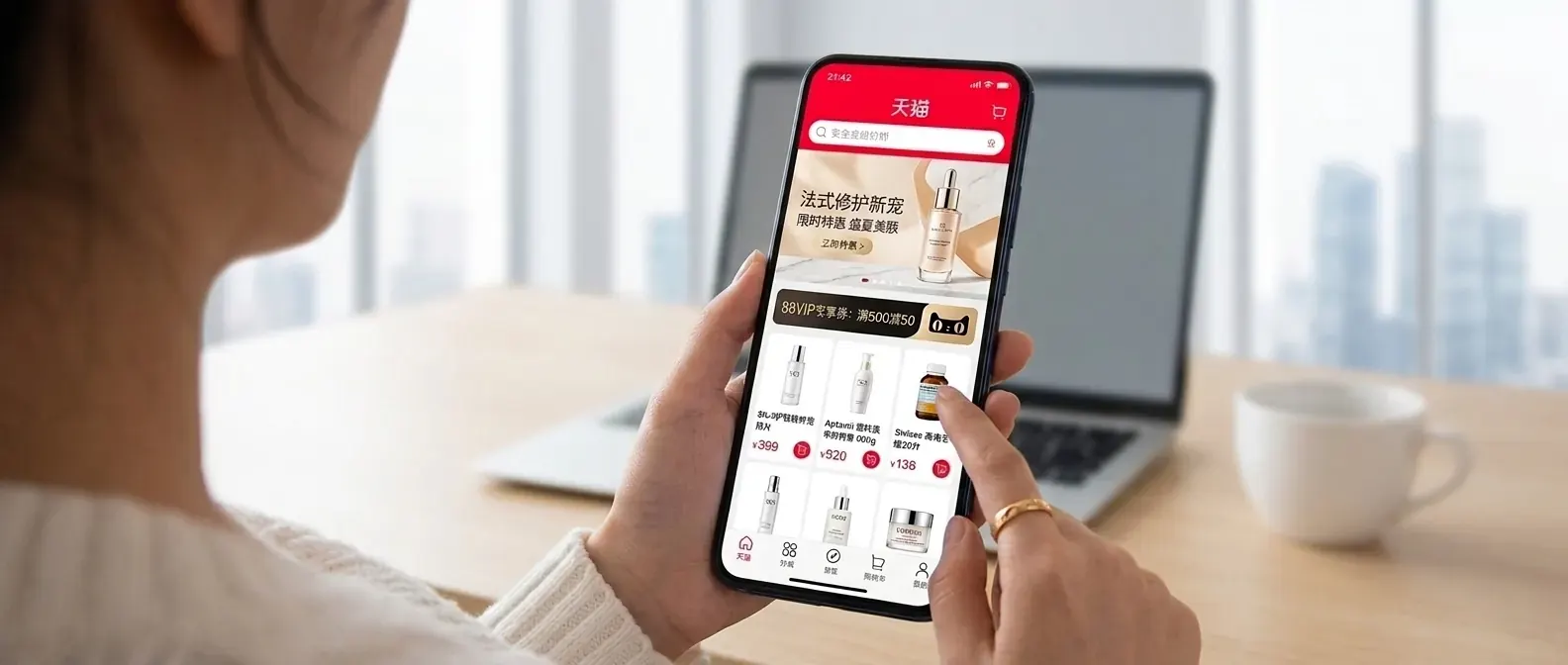
Every trade-in routed this way runs on JD Logistics. Every recycled unit feeds JD’s reverse supply chain. Every subsidized purchase happens inside JD’s app, tied to a JD account. Households buy a major appliance every eight to ten years, and the plan is built so that when the moment comes, the default answer is JD rather than Tmall (天猫) or the store downstairs. Price wars burn margin. That loyalty is the actual prize.
If you sell into China, read the fine print
The scale behind this is bigger than one platform’s campaign.
Sales under China’s consumer trade-in program passed RMB 430 billion in the first quarter of 2026, China Daily reported in April.
Beijing keeps funding it, too.
The 2026 national program opened with a first funding tranche of RMB 62.5 billion, according to the National Development and Reform Commission.
Three things follow for international brands in appliance, home, sleep and bathroom categories.
- Price in the subsidy stack. Shelf price in these categories is now a three-layer construction: state money, platform money, brand money. Your China P&L has to model all three, and what happens to demand the day one layer gets pulled.
- Standing outside the program has a cost. Brands inside get the campaign zone and the traffic. Brands outside compete against a combined discount that can reach 25 percent. That gap decides high-ticket sales.
- Bulk procurement cuts both ways. Centralized orders bring volume commitments. They also bring price pressure and a heavier JD hand on your channel, so go in with your distributor economics already worked out.
One more thing sits underneath it all: data. Who upgraded, from what model, in which city, at what price point, all of that now lives with JD. For a foreign brand weighing the market, the sharper question is which platform controls your category, and on what terms you plug in. That is ground we walk through in market entry consulting and Cross-Border eCommerce Setup.
Working on China? Let's grab a coffee.
Tell us where you are now and where you want to get to.