Instant retail just became a channel you plan for
On February 5, 2026, Meituan (美团) told the Hong Kong exchange it would pay about $717 million for all of Dingdong Maicai (叮咚买菜), the fresh-grocery app known for landing a bag of vegetables at your door in about thirty minutes. On paper it reads like one grocery player buying another. It is not. Meituan already runs its own fresh-grocery arm, Xiaoxiang Supermarket (小象超市). What it wanted was the network underneath Dingdong: a thousand-plus neighborhood warehouses across East China, a supply chain that already turns a profit, and the years of head start that come with them.
Meituan agreed to buy 100% of Dingdong Maicai’s China business for an initial $717 million, per its February 5, 2026 filing with the Hong Kong exchange, Xinhua (新华网) reported. The overseas business was carved out before the deal.
For a foreign brand deciding how to sell in China, forget who owns which warehouse. Read what the purchase says out loud: the fast lane of Chinese retail is consolidating, and it is moving in on the everyday purchases your marketplace stores quietly depend on. If a shopper buys your product on repeat, that shift lands on you whether or not you have a plan for it.
First, what instant retail is
Two systems have run side by side in China for years, and they optimized for different things.
Marketplace e-commerce, Tmall (天猫) and JD (京东), competes on price, range and reviews. You browse, you compare, you fill a basket, and a parcel shows up in a day or two from a central or bonded warehouse. It is built for the considered purchase.
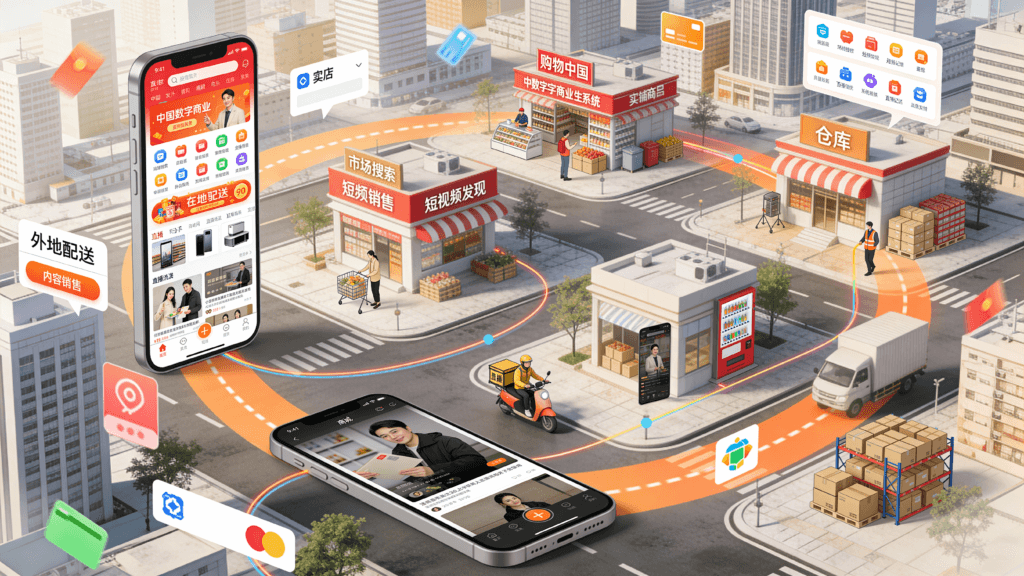
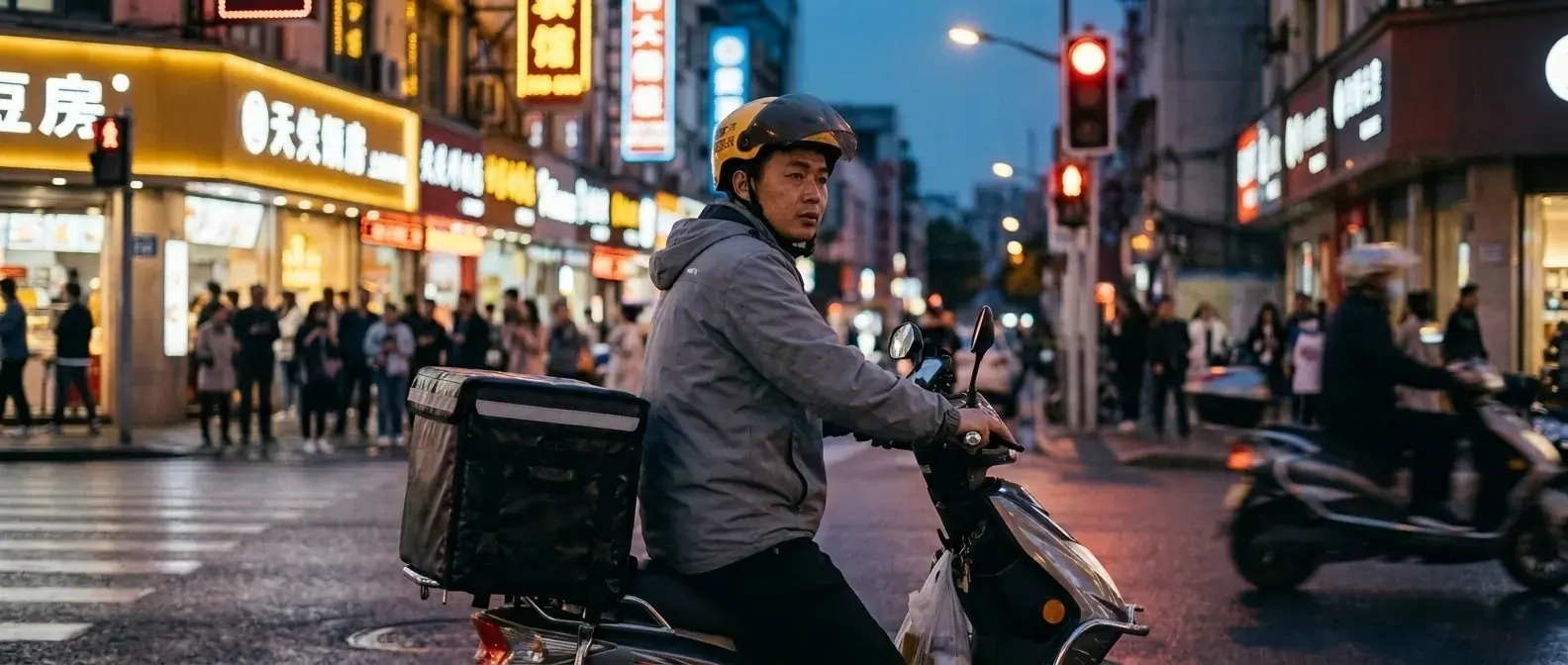
Instant retail (即时零售) competes on one thing: how fast it reaches you. You open an app, tap, and a rider brings it from a store or small warehouse a few kilometers away, usually inside thirty minutes. Meituan built this on the same rider fleet that powers its food delivery, one of the largest in the country. The everyday version is Meituan Instashopping (美团闪购), and the infrastructure behind it is the lightning warehouse (闪电仓), a pure-online mini-warehouse that carries thousands of SKUs and never needs a storefront.
Meituan Instashopping handles more than 18 million non-food orders a day and reached close to 300 million buyers in 2024, according to China Fund (中国基金报), which cited Meituan’s own figures.
The two lanes used to stay in their own territory. You did not open a delivery app to buy a television, and you did not wait two days for toothpaste. That line is dissolving, and the Dingdong deal is one more push.
| At a glance | Marketplace (Tmall, JD) | Instant retail (Meituan) |
|---|---|---|
| What wins the sale | Price, selection, reviews | Speed, being nearby |
| Delivery time | One to a few days | Around 30 minutes |
| Where the stock sits | Central or bonded warehouse | Store or warehouse within 3 to 5 km |
| Best-fit demand | Planned, researched buys | Replenishment, impulse, need-it-now |
| Cross-border bonded | Yes, Tmall Global, JD Worldwide | No, domestic stock only |
| The moment | The big basket, the research | The forgotten item, the top-up |
Where a foreign brand plugs in
You do not need to build any of this yourself. Last autumn Meituan opened the door to brands directly.
On October 29, 2025, Meituan Instashopping said it would build brand flagship lightning warehouses (品牌官旗闪电仓) with more than 10,000 brands, providing the warehousing, delivery and software so brands can enter light and low-cost, Sina Finance (新浪财经) reported.
The model is straightforward. You open an official flagship store inside Instashopping. Meituan handles the local warehouse network, the rider layer and the operating system. You keep control of your assortment, your pricing and your merchandising. A shopper five kilometers away taps once and your product arrives in roughly thirty minutes. The fixed costs that usually make China retail expensive, a prime street-front lease and a warehouse to build out, sit with the platform rather than with you. What you fund is stock and the daily operation. Foreign brands are already live on it. L’Oréal (欧莱雅), Philips (飞利浦) and Sony (索尼) were in the first wave of brand flagship warehouses, and multinationals like Muji (无印良品), Watsons (屈臣氏) and Decathlon (迪卡侬) were already selling on Instashopping before that.
The categories that work are mostly the ones you would guess.
| Your category | Instant-retail fit | Why |
|---|---|---|
| Beauty basics, masks, sunscreen | High | Repeat, impulse, small gifts |
| Snacks, drinks, alcohol | High | Occasion-driven, wanted now |
| Pet food and supplies | High | Run-out replenishment |
| Mother and baby | High | Urgent, no patience to wait |
| Small appliances and electronics | Medium | Planned, but same-day sells |
| Hero SKUs, gift sets, new launches | Low | Better on the marketplace flagship |
The brands already doing it
By mid-2026 this had stopped being a pilot channel. The numbers coming out of it are real, and plenty of them belong to brands you would recognize.
Beer is the clearest case. Global names move serious volume through instant retail because the moment it serves, a cold one for a gathering that started an hour ago, is a moment a next-day parcel can never touch.
Carlsberg (嘉士伯) reached RMB 1 billion, about $140 million, in 2024 sales on Meituan Instashopping and Budweiser (百威) reached RMB 1.3 billion, with Tsingtao (青岛) also above RMB 1 billion, each larger than the brand’s take on other e-commerce platforms, Jiemian News (界面新闻) reported.
Food and drink tells the same story. PepsiCo (百事) treats instant retail as a way to sit on a shelf near the shopper at the exact moment of a craving, not a channel it dabbles in.
PepsiCo’s instant-retail sales in China have passed RMB 1 billion at a five-year compound growth rate above 20 percent, its China omnichannel lead said at the FBIF industry forum, as reported by Sina Finance (新浪财经).
It comes down to reach. PepsiCo already sells through roughly three million outlets in China, and even that leaves most of the country beyond what a sales force on foot can cover. Instant retail hands it shelf visibility in stores it will never staff.
The category spread is wide, and it covers the ground foreign brands actually compete on.
During the 618 shopping festival (China’s mid-year sales peak) in June 2025, Meituan Instashopping reported beauty and personal care up 77 percent and mother-and-baby and toys up 175 percent year on year, across more than 700,000 stores in over 360 cities, according to its own 618 report.
Those are the repeat-purchase categories at the heart of most consumer portfolios, and they are exactly where instant retail is pulling orders.
The catch nobody puts in the deck
Here is where the planning gets harder.
A thirty-minute promise means the product is already sitting in a warehouse inside the shopper’s city. That one physical fact rewrites the commercial model, and it is usually the piece brands miss until they are well into planning.
The usual soft-landing route into China is cross-border, meaning bonded: you hold stock in a bonded warehouse offshore or in a free-trade zone, and each order clears customs as an individual parcel. Tmall Global and JD Worldwide run this way, and it is a smart first test because you skip registering a local company. But bonded stock cannot service a rider who needs to leave in twenty minutes. Instant retail runs on general-trade goods: imported, cleared, invoiced domestically, and held in-country close to the buyer.
So instant retail is a grow-stage decision, not a day-one one. To use it, you need domestic inventory, which usually means a local entity or a distributor holding your stock and a store license, plus general-trade registration for the SKUs that require it, cosmetics filing being the common one. This is exactly the line where our distribution work earns its place, because the answer is rarely “do it all yourself.” The real question is who holds the stock, and on what terms.
How to sequence it against Tmall and JD
Instant retail will not replace your marketplace stores. Think of it as a second layer, and the brands that get it right run the two for different jobs.
Your Tmall or JD flagship stays the home of discovery: the full range, the hero products, the launch moments, the brand story a shopper researches before a bigger buy. Instant retail takes the other half of the shelf, the replenishment and the impulse. The sunscreen someone runs out of on a hot Saturday, or the pet food that finished this morning and cannot wait for a parcel. Those orders are small and unglamorous, yet they are frequent and sticky, and for years they routed through the marketplace by default. Instant retail is now peeling them away.
There is a reach argument too. The lightning-warehouse network is expanding fastest in lower-tier cities and counties, where marketplace logistics can be slower and where thirty-minute delivery still feels new.
Meituan’s lightning warehouses have passed 30,000 and are projected to top 100,000 by 2027, China Fund (中国基金报) reported, citing Meituan.
The market these fold into is not a niche.
China’s instant-retail market is on track to pass RMB 1 trillion by 2026, China.com.cn (中国网) projects.
The strategic read
Two things sit underneath all of this, and they matter more than the delivery speed.
The first is a shorter supply chain. Instant retail collapses the classic Chinese distribution chain, brand to distributor to retailer to shopper, into something much shorter, often brand to forward warehouse to shopper. Fewer hands on the product means fewer margin stacks and cleaner price control. It also means the brand watches real demand in real time instead of guessing at sell-through from a distributor’s purchase orders.
Instant retail compresses the traditional four-tier alcohol distribution chain into three tiers or even two, brand to forward warehouse to consumer, Sina Finance (新浪财经) reported.
The second is what kind of channel this really is. A marketplace is a shelf you push product onto and hope it sells. Instant retail works the other way round. Shoppers search near their location, and the warehouses stock whatever those searches keep asking for. The consultancy Oliver Wyman (奥纬咨询) frames it as merging the moment of buying with the moment of using, which is why it rewards the brand that shows up in the everyday scene, not the one that just discounts hardest.
Meituan Instashopping’s transaction volume grew about 75 percent a year on average over three years, Oliver Wyman (奥纬咨询) found.
Read together, instant retail stops looking like faster shipping and starts looking like a separate channel with its own economics: a shorter chain, plus demand you can actually read, aimed at an occasion your marketplace store was never going to win. So the question the Dingdong deal forces is not whether instant retail matters. It is which of your SKUs belong in the thirty-minute lane and who holds the stock that makes it possible, without letting price and margin slip across a shorter chain. That is the ground we work through in market entry consulting and our distribution work.
Working on China? Let's grab a coffee.
Tell us where you are now and where you want to get to.