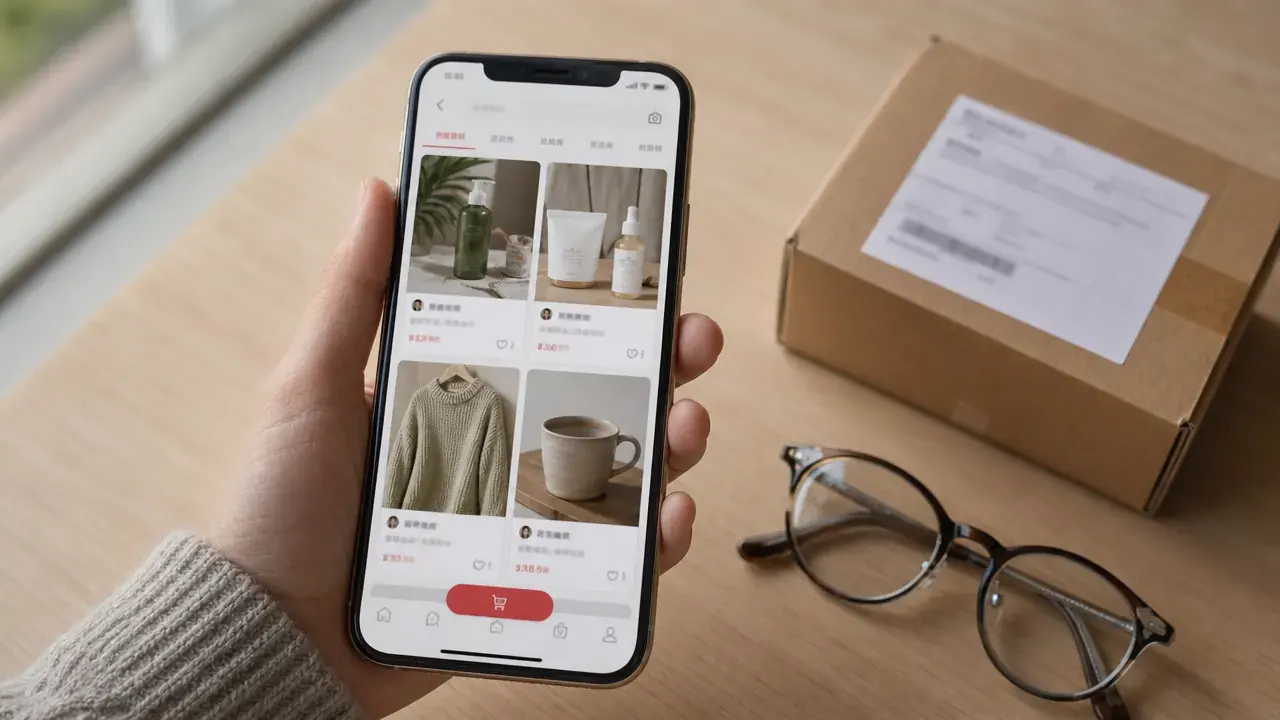

At a Beijing press conference on July 22, Sun Meijun, who heads China’s General Administration of Customs (海关总署), mentioned almost in passing that 140 million people in China now shop the world through cross-border e-commerce.
That is roughly the population of Japan, buying foreign products, on Chinese platforms. Not one of those transactions required a foreign brand to register a Chinese company first.
Which door to use, and what each one costs a brand to run, is in our guide to every cross-border channel into China.
China now has 140 million people shopping globally through cross-border e-commerce. In the first half of 2026, cross-border e-commerce exports through overseas warehouses grew 3.3 times, and 115,000 more Chinese companies took up import or export business. Source: Xinhua (新华社), citing the General Administration of Customs
It made a headline in a dozen languages. The number that should actually change how you think about China was in none of them.
What customs actually said, at a glance
The briefing was about customs modernization under the 15th Five-Year Plan, so the cross-border e-commerce lines were nearly throwaway.
| Figure | Number | Period |
|---|---|---|
| People in China shopping cross-border | 140 million | Running total |
| Overseas warehouse exports | Grew 3.3 times | H1 2026 |
| New Chinese firms trading internationally | 115,000 | H1 2026 |
| Total goods trade growth | Up 16.9% | H1 2026 |
| Import growth | Up 22.1% | H1 2026 |
| Export growth | Up 13.4% | H1 2026 |
Read those last two rows again. Imports grew faster than exports by nearly nine points, in a year when most forecasters expected the reverse. If you are outside China wondering whether the door is opening or closing, that one line tells you more than the 140 million does.
The number nobody quoted
Full-year 2025 is where it gets useful. Cross-border e-commerce as a whole is a large, healthy business and everybody reports the total. Very few people split it.
In 2025, China’s cross-border e-commerce trade reached 2.84 trillion yuan, up 4.8 percent, equal to 6.2 percent of total goods trade. Exports were 2.27 trillion yuan, up 5.4 percent. Imports were 570.2 billion yuan, up 2.7 percent, which is 3.1 percent of China’s total goods imports. Source: China customs statistics (中国海关统计)
Four fifths of that headline figure is Chinese factories selling outward. The part that concerns you, foreign goods coming in, is 570.2 billion yuan. Call it 80 billion dollars, growing at 2.7 percent a year.
Customs gave a preliminary 2.75 trillion figure back in January, before the final statistics landed at 2.84 trillion, and both are still circulating in the trade press. The import split reconciles against the official national totals either way, so the 3.1 percent holds whichever headline number you start from.
A slow-growing sliver sounds discouraging until you turn it over. 140 million people already buy this way, and everything they have bought adds up to 3.1 percent of national imports. Demand is proven. Supply is thin. This is not a mature channel you arrived too late for.
Put it in terms of your own market. If somebody described a sales channel with a customer base the size of Japan and 3 percent penetration, crowded is not the word you would reach for.
The 3.3 times figure is not about you
This one catches people reading the English wires, so it is worth being blunt.
Overseas warehouses (海外仓) are Chinese-owned facilities sitting in the US, Germany, Brazil, wherever the buyers are. A Chinese seller ships stock there in bulk ahead of demand, then fulfills local orders in two days rather than twenty. Growth of 3.3 times means Chinese exporters got dramatically better at serving foreign consumers on their home turf.
It tells you nothing about selling into China. What it does tell you is that your domestic competitors are getting faster and cheaper, which is an argument for looking at your home market as carefully as this one.
The infrastructure that matters on your side of the trade sits inside China: the bonded warehouse network in Hangzhou, Zhengzhou, Ningbo and a dozen other cities. Different system, different regulator, different numbers entirely, and nobody announced a 3.3 times anything about it.
The two rules that decide your unit economics
English coverage almost always skips this part, and it determines whether any of the above works for your particular product.
Cross-border retail import runs on quotas. Each consumer gets a cap per order and a cap per year. Stay inside them and the tax treatment is generous. Cross either one and your goods fall under general trade rules, which means registration, testing and a Chinese entity.
Cross-border retail imports are capped at 5,000 yuan per transaction and 26,000 yuan per person per year. Within those limits, tariffs are set at zero and import VAT and consumption tax are levied at 70 percent of the statutory amount. Source: Ministry of Finance, GAC and State Taxation Administration notice Cai Guan Shui (财关税) 2018 No. 49
For most beauty, supplement, food and apparel brands, a 5,000 yuan ceiling never comes up. For furniture, large appliances, high-end watches or anything carrying a four-figure euro price, it is the entire conversation. Industry has lobbied to raise both caps for years, and there are reports circulating that the thresholds moved in 2026. No Ministry of Finance notice confirms it, so treat the figures above as current and have your customs broker verify before you build a pricing model on them.
The second rule is the positive list (正面清单). Your product category has to appear on it. If it does not, no amount of platform relationship gets your goods through a bonded warehouse.
The list was last optimized by eight ministries with effect from March 2022, expanding to 1,476 tax lines. It added 29 categories, revised notes on 206 items, and grew from 1,413 lines in the 2019 version. Source: Ministry of Commerce (商务部), 2022 announcement No. 7
Note the date on that. The list moved in 2016, 2018, 2019 and 2022, then stopped. Four years is the longest gap since the system started. Plenty of brands assume their category is about to be added, and plenty of consultants are happy to let them assume it. Check the list before you plan around it.
One more thing brands get wrong. Goods brought in this way are classed as final products for personal use, so they cannot legally be resold into domestic wholesale. Cross-border is not a soft route into general distribution. It is a retail channel, and it stays one.
Why the timing is unusually kind
Several things are true at once, which does not happen often.
Consumer demand is running hot on the import side. Growth of 22.1 percent in a half year is not a rounding error, it is policy working. The Five-Year Plan language from that same press conference talked about making it easier for global goods to enter China and giving Chinese consumers more choice. Customs has said it will keep refining the rules governing cross-border e-commerce, market procurement and overseas warehouses as trade formats.
Platform economics are softer than they were. Tmall Global (天猫国际) has been cutting deposits and rebating commissions to attract new overseas merchants, and JD Worldwide (京东国际) has been chasing the same brands. When two platforms compete for supply, supply gets better terms.
And the entry mechanics stay light. Cross-border means selling to mainland consumers from a bonded or overseas warehouse without a Chinese entity, without a local business licence, and without putting your product through general trade import registration. In cosmetics that alone saves you the better part of a year.
What it actually costs to open the door
Brands ask us this early and rarely get a straight answer, so here is the shape of it for Tmall Global. Three charges: a refundable deposit, an annual technical service fee, and a commission taken on each sale.
| Charge | Typical range |
|---|---|
| Deposit (registered mark) | From 50,000 RMB |
| Deposit (pending mark) | From 100,000 RMB |
| Deposit (some categories) | 100,000 to 300,000 RMB |
| Annual service fee | 30,000 or 60,000 RMB by top-level category |
| Commission, food and health | 2 to 3 percent |
| Commission, cosmetics | 4 to 5 percent |
Roughly 100,000 to 200,000 RMB, or 14,000 to 28,000 dollars, gets a mainstream category open and running for year one before you spend anything on media, content or stock. That is the platform bill, not the cost of succeeding. Media and content are where the real budget goes, and where brands underestimate by the widest margin.
Schedules change, sometimes twice a year, and certain supplement categories now sit at the top of that deposit range after a run of fake-foreign-brand scandals. Get a current quote rather than working from any published figure, including this one.
Three doors, and what each one asks of you
Most brands assume there is one way in. There are three live routes, and they suit different situations. Tmall Global rewards a category story, patience and a premium price, and it asks for the deposit and the daily operating attention that go with a flagship. JD Worldwide (京东国际) runs a similar setup with stronger fulfilment, which favors electronics, appliances and anything logistics-led. Douyin cross-border (抖音跨境) is the cheapest way to find out whether demand exists at all, and what it asks for is content and livestream capacity rather than shelf space.
Sequence matters more than the choice itself. A contained Douyin (抖音) test first tells you whether Chinese consumers want the product at your price, which is the question a Tmall Global storefront answers slowly and expensively. We have watched brands spend a year and a six-figure budget learning what a focused content test would have surfaced in weeks.
For the longer argument on sequencing, our piece on why most foreign market tests fail walks through where the money usually leaks.
What to do with a market this young
A thin channel rewards specificity. When only 3 percent of imports arrive this way, the people using it are not casual shoppers. They are hunting for something no domestic brand gives them, and they will wait a few extra days to get it.
So the play is not being the cheapest imported version of something China already makes well. It is being the only credible answer to a narrow problem. Scalp sensitivity rather than shampoo. Sleep support rather than supplements. Formula for kids with allergies rather than baby food. Each of those is a real lane where imported product still wins on trust.
Before you commit budget, get straight answers to a few things. Does your product solve something a Chinese domestic brand has not already solved better and cheaper? Is your category actually on the positive list, today, not in somebody’s forecast? Can you hold a premium price after the bonded warehouse, the platform and the tax take their cut? And can you keep stock moving through 618 and Double 11, when a large share of annual volume lands inside two short windows?
Brands that can answer those are walking into a channel with proven demand and very little competition for the specific thing they sell. Brands that cannot are usually better off waiting a year and spending the time on category work instead.
Figures current as of July 2026, drawn from General Administration of Customs releases and Chinese trade press. Tax thresholds and platform fee schedules change without much notice, so verify anything you plan to budget against.
Updated October 9, 2026
Working on China? Let's grab a coffee.
Tell us where you are now and where you want to get to.