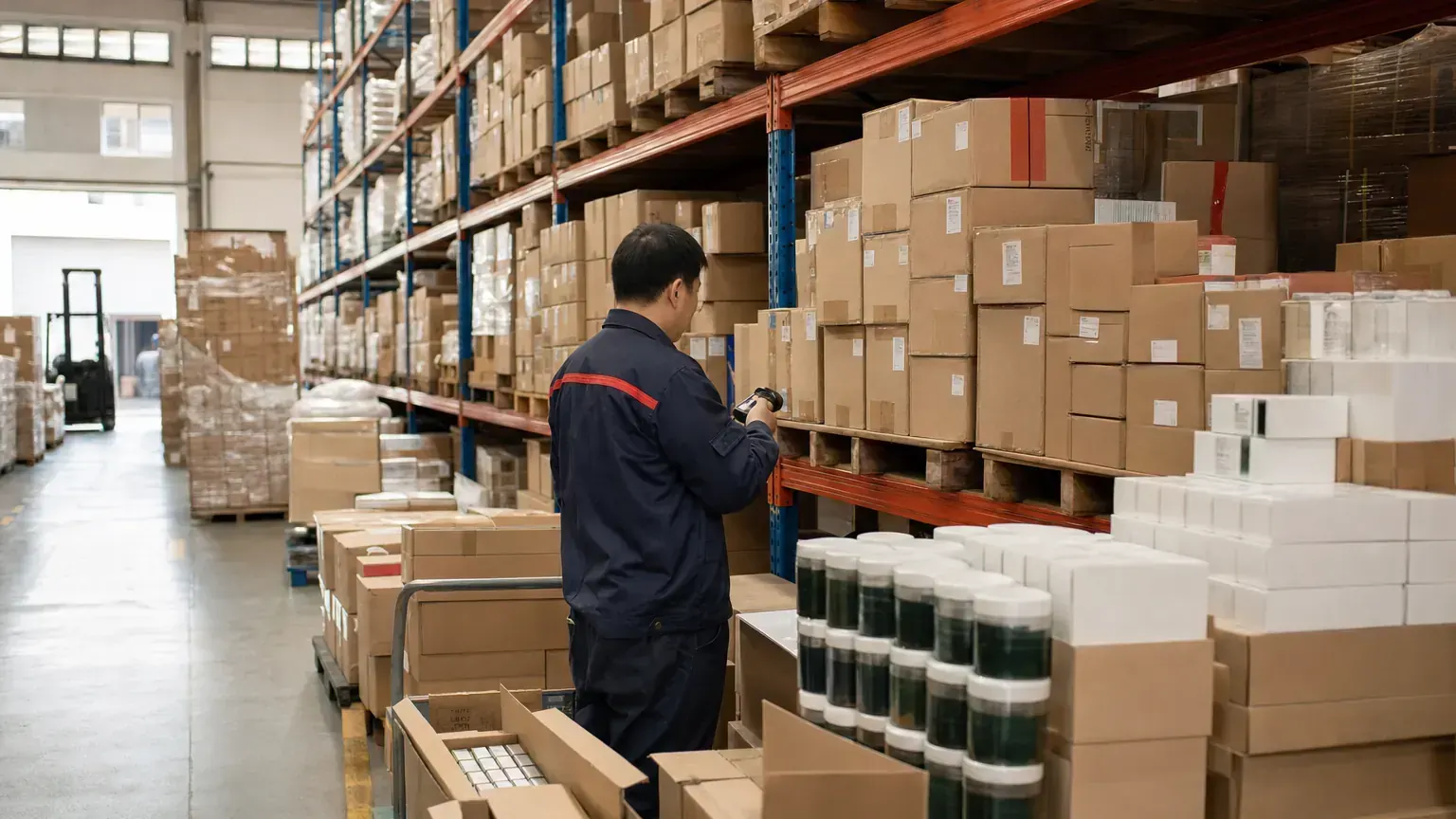
A foreign brand can sell to Chinese consumers without opening a company in China. Four storefronts make it possible: Tmall Global, JD Global, Douyin Global Shopping and a Xiaohongshu cross-border store. The platforms also buy stock outright from brands they want.
The store is the cheap part. Deposit, annual fee, commission and payment usually come to 3% to 8% of sales. The money goes elsewhere: ads, creators, the team that runs the store and the warehouse that ships it. On a typical RMB 100 sale, a brand keeps between RMB 32 and RMB 54 before it pays for the product.
This guide lays out every route as it stands in October 2026, with the fees each platform charges, what those fees leave out, and where the margin goes.
Two questions decide the model
Every channel in China comes down to two choices.
The first is who owns the stock. Either the platform buys it from you and sells it under its own name (self-operated, or 1P, called 自营 in Chinese), or you keep it and run your own store on the platform (a marketplace store, or POP, 平台店). Douyin and Xiaohongshu add a third way: you still own a store, but sales come from creators, livestreams and short video rather than from search.
The second is how the product enters China.
Cross-border (跨境电商) needs no Chinese company, no Chinese label and no product registration. Goods ship from a bonded warehouse inside China or straight from abroad. The shopper pays a reduced tax and faces a spending cap.
General trade (一般贸易) needs a Chinese importer, Chinese labels and registration for regulated products such as cosmetics, food and supplements. It pays full duty and VAT. In return it opens domestic stores, offline retail and 30-minute delivery.
| Cross-border | General trade | |
|---|---|---|
| Chinese company needed | No (a Chinese agent shares liability) | Yes, an importer |
| Chinese label | No, an electronic label online | Yes |
| Product registration | No | Yes, for regulated categories |
| Tax | 9.1% on most goods | Full duty plus 13% VAT |
| Shopper limits | RMB 5,000 per order, RMB 26,000 a year | None |
| Offline and 30-minute delivery | No | Yes |
Most brands start cross-border to test demand, then move their best sellers into general trade once volume pays for registration.
Seven layers of cost, weighted by platform
Whatever the channel, the bill comes in seven layers. Read them from the bottom up.
- Cost of goods. The product at export price, plus the free stock that goes out as samples to creators and seeding partners.
- Logistics to China. Sea or air freight to the bonded zone, insurance, and a zone-entry declaration of RMB 380 to 500 per shipment.
- Platform fees and tax. Deposit, annual fee, commission, payment fee, and the cross-border tax. Usually 3% to 8% of sales plus 9.1% tax.
- Logistics in China. The bonded warehouse, the last mile and returns. Roughly RMB 10 to 15 per bonded order.
- Operations. The team that runs the store or the content every day, usually an operating partner on a retainer plus 5% to 15% of sales.
- Marketing on-platform. Store ads, affiliate commission, creator commission and event discounts.
- Marketing off-platform. Seeding on Rednote and Douyin, WeChat, PR and offline. This is what creates demand.
The first two layers are the same whatever the platform. The rest change weight with the kind of platform you sell on.
| Layer | eCommerce platforms: Tmall, JD | Social platforms: Douyin, Rednote |
|---|---|---|
| 7. Marketing off-platform | Heavy. It creates the demand the store captures | Light. The content lives on the platform |
| 6. Marketing on-platform | About 20% of sales, capturing search | The sale itself: 35% to 50% of GMV on creator-led sales |
| 5. Operations | A store team (TP): listings, service, campaigns | A content and livestream team (DP): videos, notes, daily lives |
| 4. Logistics in China | RMB 10 to 15 per bonded order | The same, plus a 72-hour pickup rule and returns around 35% |
| 3. Platform fees and tax | 3% to 8% plus 9.1% tax; Tmall Global keeps an annual fee | 2% to 6% plus 9.1% tax; no annual fee |
| 2. Logistics to China | Same for both | Same for both |
| 1. Cost of goods | Same for both | Same for both, with more free stock for creator samples |
Most budgets are built around layer 3. Most of the money goes into layers 5 to 7. On Tmall and JD, demand is made somewhere else and captured in the store. On Douyin and Rednote, the content is the store.
Five ways in, five cost profiles
| Route | Upfront | Platform fees | Biggest cost |
|---|---|---|---|
| Tmall Global flagship | RMB 50,000 to 100,000 deposit; RMB 30,000 or 60,000 a year | 0.5% to 5%, plus about 1% payment | Alimama ads and the operating partner; brand keeps about 45 of every 100 |
| JD Global store | USD 5,000 to 30,000 deposit; no annual fee | 2% to 6%, plus 0.9% | JD ads and the operating partner; fastest bonded delivery |
| Tmall or JD self-operated | JD: USD 20,000 quality deposit; paid in 30 to 60 days | No commission; 20% to 30% deductions | Margin payback on promotions; brand keeps about 54 of every 100 |
| Douyin Global Shopping | RMB 500 to 5,000 deposit, set by last month’s sales; no annual fee | 2% to 6%; settled in 7 to 15 days | Creators at 20% or more, plus ads; brand keeps about 32 of every 100 |
| Xiaohongshu cross-border | USD 400 plus a floating deposit; no annual fee | 2% to 5%, plus 0.7% | Creators and search ads; the sale often closes on Tmall or JD |
The “brand keeps” figures are illustrative, per RMB 100 paid by the shopper, before product cost. The working is in the margin section below.
Tmall: four doors, one you fully control
Tmall Global flagship store
You own the store, the stock, the price and customer service. Tmall rents you the shelf and sells you traffic. The store needs an overseas or Hong Kong company and an overseas trademark. A flagship requires first-level brand authorization.
| Cost line | 2026 level |
|---|---|
| Deposit (refundable) | RMB 50,000 with an R mark, RMB 100,000 with a TM mark |
| Annual fee | RMB 30,000 or 60,000 by category |
| Commission | 0.5% to 5% by category; food and health 2% to 3%, beauty 4% to 5% |
| Payment fee | About 1% |
Tmall Global still charges its annual fee. Domestic Tmall dropped its own in September 2024, a change many English-language guides apply to Tmall Global by mistake. For new and recently opened stores, the RMB 60,000 tier was cut to RMB 30,000 between July 2025 and March 2026, and the fee is waived for some apparel, baby and home categories in 2026. Deposit insurance can replace a RMB 50,000 cash deposit for about RMB 1,500 a year.
Tmall Global said it would cover logistics on the first 200 orders of a new store’s first 60 days, and that more than 850 overseas brands opened their first store in the first half of 2026. Source: 凤凰网, August 2026. https://tech.ifeng.com/c/8vOaVtvkEkB
The fees do not cover paid traffic on Alimama, affiliate commission to Taobao publishers (set by the seller, typically 5% to 50%), the discounts you fund in 88VIP and price-cut events, Chinese customer service, warehousing, or the operating partner.
Tmall Global direct and Tmall Supermarket
In the self-operated model, Tmall Global buys your stock, holds it in bonded warehouses, sets the price and ships. For the brand it works like a wholesale account: no store to run, no partner to hire. The program now covers more than 6,500 brands from 68 countries, with over 60% of orders delivered the next day.
The trade-off is control. Tmall sets the shelf price. Margins, rebates, payment terms and marketing contributions are negotiated contract by contract and never published.
Tmall Supermarket (天猫超市) mostly sells general-trade stock with Chinese labels, either on consignment with a fixed commission and a RMB 50,000 deposit, or bought outright.
Domestic Tmall flagship
A domestic store needs a Chinese company or an authorized distributor. The deposit matches Tmall Global’s. There is no annual fee for new stores in 2026, a 0.6% basic software fee and a commission of 0.5% to 10% by category. Brands move here for a bigger traffic pool, faster delivery and no shopper limits.
JD: the cheaper shelf, the costlier self-operated deal
JD’s cross-border arm trades as 京东全球购 (JINGDONG Cross-Border, also known as JD Worldwide). Its edge is logistics: more than 100 bonded, direct-mail and overseas warehouses, and bonded delivery in one to three days.
JD Global marketplace store
| Cost line | 2026 level |
|---|---|
| Deposit | In USD, tiered; about USD 5,000 to 30,000 for the first tier by category |
| Platform fee | None since April 2023 |
| Commission | 2% to 6% by category |
| Transaction fee | 0.9% (domestic JD stores pay 0.6%) |
The store needs a company registered outside mainland China, a USD settlement account, an overseas trademark and a return address in China. Ads on JD’s platform, affiliate commission, event discounts, customer service and warehousing come on top.
JD self-operated
JD’s own recruitment page sets the entry terms: invitation or self-nomination, a non-mainland company with first-level authorization, a USD 20,000 quality deposit and payment in 30 to 60 days. JD charges no commission.
The real cost sits in the contract. Trade sources put combined deductions at 20% to 30%. Most deals include margin protection: if JD’s margin on your product falls below an agreed rate, typically 10% to 30%, you pay the gap. Self-operated stock is pulled into JD’s subsidy program automatically, so every price cut comes back to the supplier.
Self-operated suppliers may spend at least 15% on marketing, against about 10% for marketplace stores. Source: 36氪, August 2024. https://www.36kr.com/p/2902759904451973
JD Supermarket runs on the same supplier logic for general-trade goods, through a Chinese importer.
Douyin: the store is cheap, the traffic is not

On Douyin, people buy what they watch. In 2024, shelf and search made up more than 40% of Douyin’s e-commerce sales, brand-run store livestreams about 30% and creator livestreams about 30%.
Douyin Global Shopping (抖音全球购) needs three things: an overseas company, a mainland company that signs as joint-liability agent, and an overseas bank account. Cosmetics, supplements and infant formula need category pre-approval.
| Cost line | Level |
|---|---|
| Deposit | RMB 500 to 5,000, set by last month’s sales |
| Service fee | 2% to 6% by category |
| Settlement | 7 to 15 days after delivery |
| Shipping rule | Bonded orders picked up within 72 hours |
The store is not where the money goes. Top creators now ask for commission of 20% or more, and since April 2026 the minimum a merchant can set is 5%, up from 1%. A dedicated session with a top creator costs RMB 1 million to 3 million in slot fees.
Creator commission, slot fees and ads together cost at least 35% of GMV on mid-tier and larger creator livestreams, and some food, beauty and apparel merchants have seen more than 50%. Source: 亿邦动力, July 2025. https://m.ebrun.com/586371.html
Brand-run store livestreams run about 10 points cheaper, which is why they have outgrown creator sales two years in a row. Returns are the other hidden cost: about 35% across brand stores in early 2024, and up to 80% in women’s apparel livestreams.
Xiaohongshu: where China decides
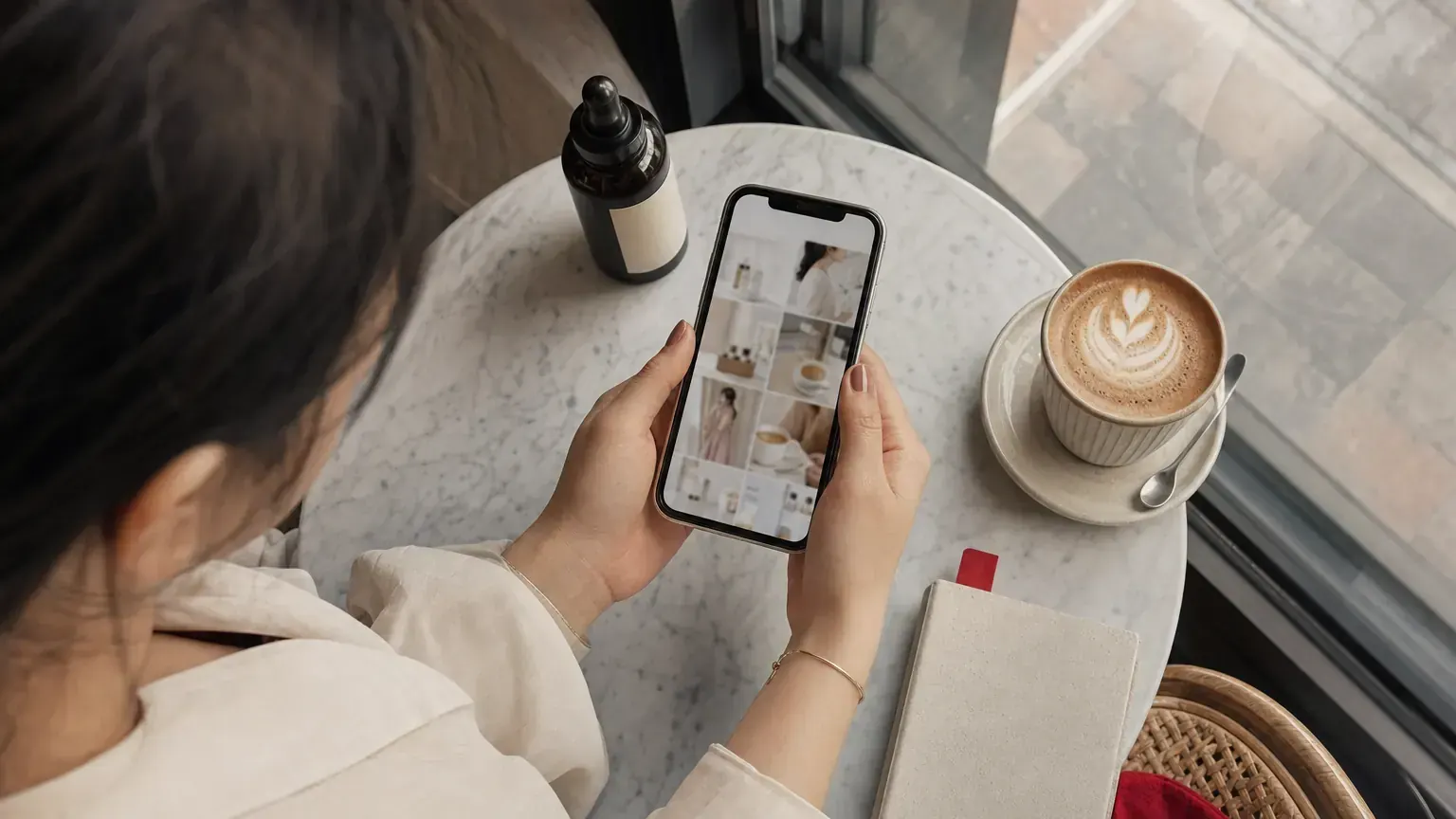
Chinese shoppers go to Xiaohongshu to decide what to buy. For most branded products, the purchase still happens on Tmall or JD.
Xiaohongshu does run a cross-border store. It needs an overseas company and a mainland guarantor with customs registration. The most recent deposit structure is USD 400 plus a floating amount tied to monthly sales. The service fee runs 2% to 5%, plus 0.7% for payment.
The bigger change is measurement. Since 2025, ads on Xiaohongshu can link straight into the Tmall app (红猫计划) or the JD app (红京计划), and the platform tracks the purchase that follows.
More than 100 products passed RMB 10 million in sales through the Tmall direct link during Double 11 2025. Source: 36氪, December 2025. https://www.36kr.com/p/3601870266811651
Ads made up about three quarters of Xiaohongshu’s 2025 revenue. For most brands, it is a media budget with measurable sales, not a store.
The cross-border rules
Tariff on cross-border retail imports is zero. Import VAT and consumption tax are charged at 70% of the normal amount.
| Product | Effective tax |
|---|---|
| Most goods (13% VAT) | 9.1% |
| Some foods (9% VAT) | 6.3% |
| Wine | About 17.9% |
| High-end cosmetics | 23.06% |
Rates of 11.9% and 11.2% still appear in guides. Both reflect VAT levels from before 2019.
Shoppers can spend RMB 5,000 per order and RMB 26,000 a year. Products must be on the official positive list, which held 1,476 tariff lines in its 2022 revision. No NMPA filing or Chinese label is required, but a Chinese agent must share liability with the overseas seller. Goods cannot be resold, and bonded stock cannot sit in stores outside the bonded zone.
That last rule matters more than it looks. Bonded stock cannot feed 30-minute instant retail. JD’s bonded center inside Beijing now delivers cross-border orders within hours, but not within 30 minutes. A brand that wants instant retail needs general-trade stock.
Logistics to China and in China
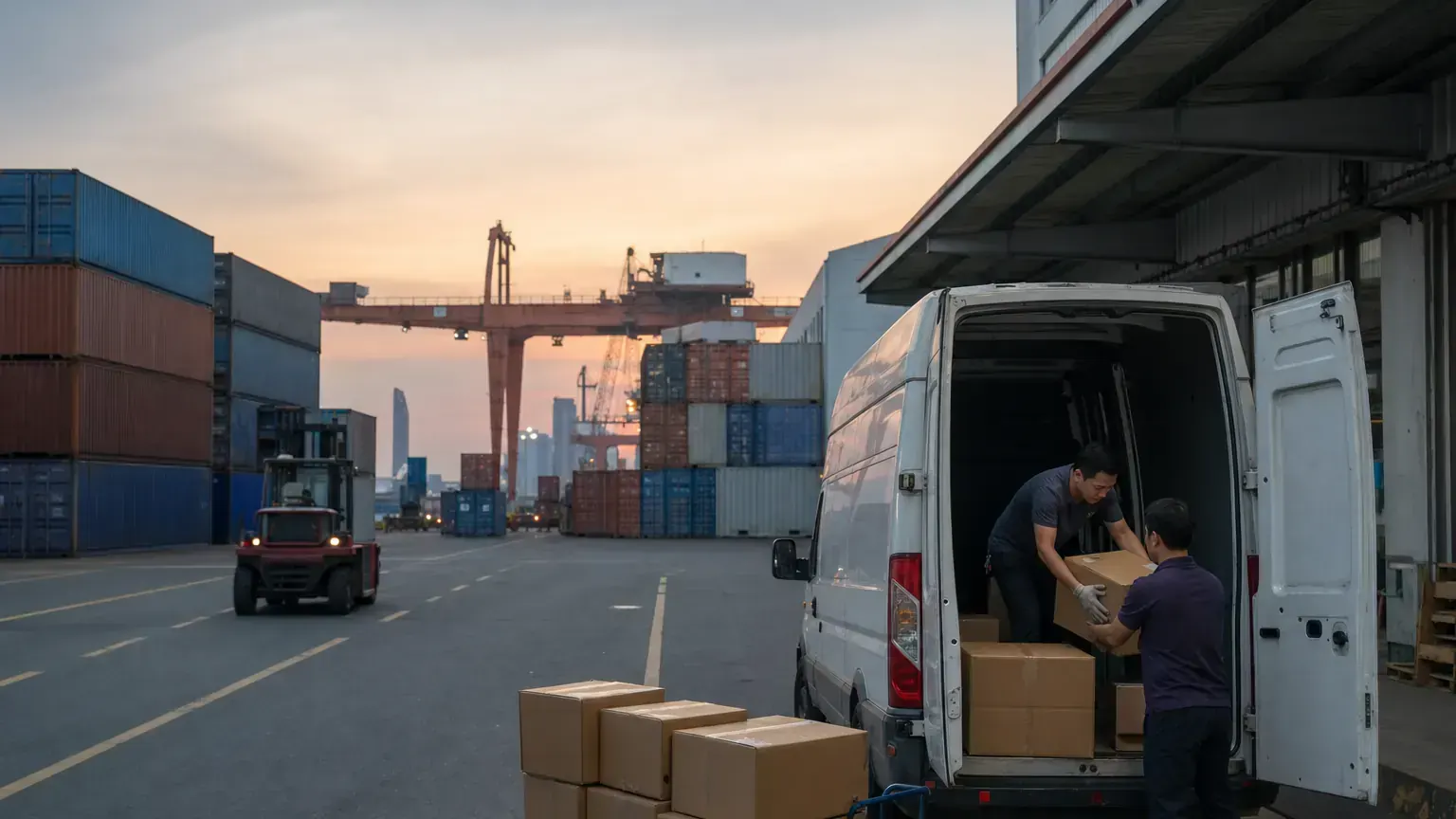
Logistics comes in two layers. Getting stock to China is a per-shipment cost: sea or air freight to the bonded zone, insurance, a zone-entry declaration of RMB 380 to 500, and a tax guarantee lodged before goods enter the zone. Freight is quoted shipment by shipment and depends on origin, volume and mode.
Fulfillment inside China is a per-order cost. Bonded fulfillment for a single small item runs roughly RMB 10 to 15 per order.
| Line | Typical cost |
|---|---|
| Zone-entry declaration | RMB 380 to 500 per shipment |
| Receiving | RMB 0.2 to 0.5 per piece |
| Storage | RMB 2 to 5 per cubic meter per day |
| Pick, pack, label | RMB 2 to 5 per order |
| Packaging and last mile | RMB 5 to 7 per order |
On a RMB 100 basket that is 10% to 15% of the sale. On a RMB 500 basket it barely registers. Basket size decides whether cross-border works, and bundles are the easiest fix.
Direct mail from abroad avoids stock in China but takes one to two weeks. It suits testing and the long tail. Bonded stock suits proven best sellers.
eCommerce operations
Someone has to run the store every day, in Chinese: listings, content, customer service, campaign entry, platform relations, reporting.
| Platform | Typical partner fee |
|---|---|
| Tmall | From about RMB 45,000 a month plus 5% to 15% of sales, or 15% to 30% commission only |
| JD | A few thousand to tens of thousands of RMB a month plus 2% to 15% |
| Douyin | RMB 10,000 to 100,000 a month plus 5% to 20% |
| Xiaohongshu | RMB 3,000 to 30,000 a month for content |
The fee depends on the category and on how well Chinese shoppers already know the brand. An unknown brand needs more content, more seeding and more campaign work, so it costs more to run. These are Chinese agency rates for domestic stores. Tie any commission to net settled sales after returns, not gross. On a self-operated deal the platform does this work and charges for it through deductions.
Marketing on the platform
Inside the store, every platform sells you traffic.
| Platform | Main lines |
|---|---|
| Tmall | Alimama ads, affiliates at 5% to 50%, 88VIP and price-cut events |
| JD | JD ads at roughly RMB 10 to 40 per order, affiliates, event costs |
| Douyin | Qianchuan ads, creator commission, slot fees |
| Xiaohongshu | Search and feed ads at RMB 0.8 to 3 a click, note boosts, creator fees plus a 10% platform fee |
On Douyin this is most of the budget. On Tmall and JD it captures demand that was created somewhere else.
Marketing off the platform
A new foreign brand has no search volume on Tmall until people talk about it elsewhere. That conversation is the off-platform budget.
China spent RMB 84 billion on creator marketing in 2025. Douyin and Xiaohongshu took nearly 65% of it, and mid-tier and small creators took nearly 80% of the spend. Source: 克劳锐 via 36氪, June 2026. https://www.36kr.com/p/3866873375888646
The sequence that works:
- Seed. Many small and mid-size creators on Xiaohongshu and Douyin.
- Amplify. Put ad money behind the notes and videos that already perform.
- Link and measure. Send traffic to the store with tracked links, and watch how many viewers then search the brand.
- Make moments. Launches, celebrities, pop-ups, Weibo trending topics. Sparingly.
- Keep the customer. WeChat groups, membership and a mini program, where repeat purchase costs no ad money.
| Channel | Use it for | Typical cost |
|---|---|---|
| Xiaohongshu | Seeding, reviews, search | KOC notes RMB 300 to 2,000; clicks RMB 0.8 to 3 |
| Douyin Xingtu | Creator videos that seed | About RMB 40,000 per video |
| Moments ads, Channels, retention | RMB 30 to 180 per 1,000 views by city tier | |
| Bilibili | Reviews and explainers | RMB 10,000 to 400,000 per sponsored video |
| Zhihu | Considered purchases | Clicks from RMB 0.25; RMB 10,000 prepayment |
| Launches, celebrity moments | Creator booking from a RMB 2,000 top-up | |
| Baidu | Brand search, Baike | Search ads from RMB 6,000 prepayment |
| Offline | Sampling, pop-ups, trade fairs | Shanghai pop-up from RMB 200,000 |
The common split is about 70% of creator budget on mid-tier creators, 20% on top creators and 10% on small accounts. RMB 50,000 buys either one slot with a top creator or 50 to 70 small ones. Validating a product with small creators first costs about RMB 100,000.
A six-month seeding plan behind a new cross-border store, built from current rate cards, adds up to about RMB 870,000 (about USD 122,000): 100 small-creator notes, 15 mid-tier and 2 top creators on Xiaohongshu, the platform fee, boosts, five Douyin creator videos, WeChat set-up and video production. It excludes on-platform ads, sampling and agency fees.
Where RMB 100 goes
The table below uses mid-range assumptions from this guide, a single-item order and a price that includes the 9.1% tax.
| Per RMB 100 paid | Tmall Global, run by a partner | Douyin Global, creator livestream | JD Global self-operated |
|---|---|---|---|
| Cross-border tax | 8.3 | 8.3 | 8.3 |
| Platform fees or platform margin | 5.0 | 5.0 | 22.9 |
| Paid ads | 20.0 | 15.0 | |
| Creator commission | 20.0 | ||
| Marketing paid to the platform | 15.0 | ||
| Operating partner | 10.0 | 8.0 | |
| Bonded fulfillment | 12.0 | 12.0 | |
| Left for the brand | 44.7 | 31.7 | 53.7 |
Still to pay: the product, freight into China, the partner’s retainer, the annual fee, returns, and on self-operated deals the rebates and margin-protection payback.
Self-operated looks best on paper. The brand gives up price control in exchange.
Who takes the margin
Traffic takes more than the platform ever does.
| Who | Typical take |
|---|---|
| Ads and creators | 20% to 40% of sales |
| The operating partner | 5% to 15% of sales, plus a retainer |
| Bonded fulfillment | RMB 10 to 15 per order |
| The state | 9.1% on most goods |
| The platform | 2% to 6% commission, or a 10% to 30% margin on self-operated deals |
Budget conversations usually start at the bottom of this list. They should start at the top.
Five ways to keep more of each sale
- Raise the basket. Fixed fulfillment cost punishes low prices. Bundles and sets fix it.
- Build store livestreams. About 10 points of GMV cheaper than creator sessions on Douyin.
- Pay creators on results. Commission deals and tracked links turn seeding into a cost per sale.
- Pick self-operated or marketplace by volume. Self-operated removes the partner and the warehouse, and hands over the price.
- Move best sellers into general trade. Domestic stores, instant retail and offline open up, and the shopper limits go away.
Choosing a route
| If you need | Go with |
|---|---|
| Price control with no Chinese company | Tmall Global or JD Global store |
| A low-effort test | Tmall Global or JD self-operated |
| A product that sells on camera | Douyin Global Shopping, with store livestreams |
| A considered purchase for a young female audience | Xiaohongshu seeding into Tmall |
| Proven volume | General trade, domestic stores, instant retail |
Most brands end up running two routes at once: a cross-border store for control, and a seeding budget on Xiaohongshu or Douyin to fill it.
Fees in this guide reflect published platform rules and Chinese trade reporting as of October 2026. Platforms revise them every quarter, so confirm your category’s rates before you sign.
If you are weighing these routes for your own brand, come and have a coffee with us in Shanghai, Hong Kong or Paris. We will map your route, your costs and your partners in one working session.