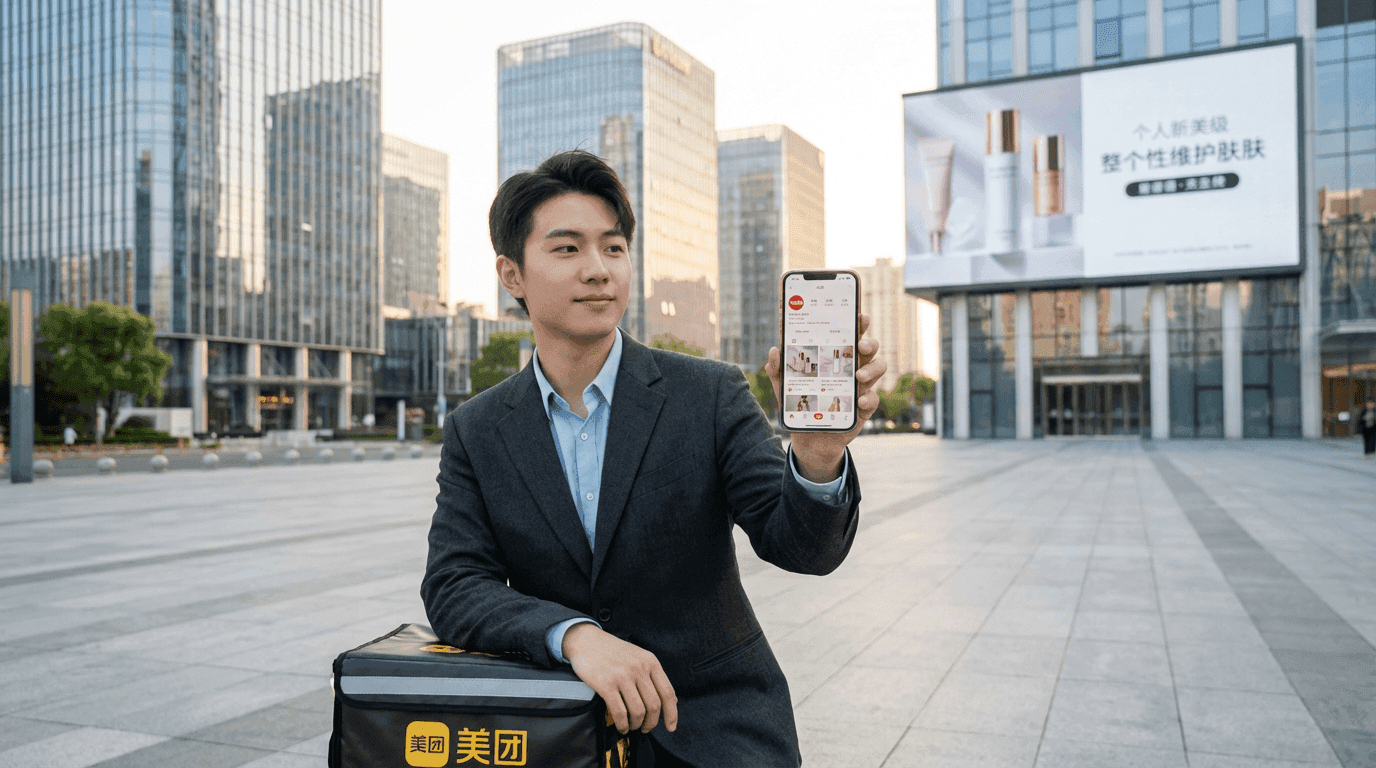
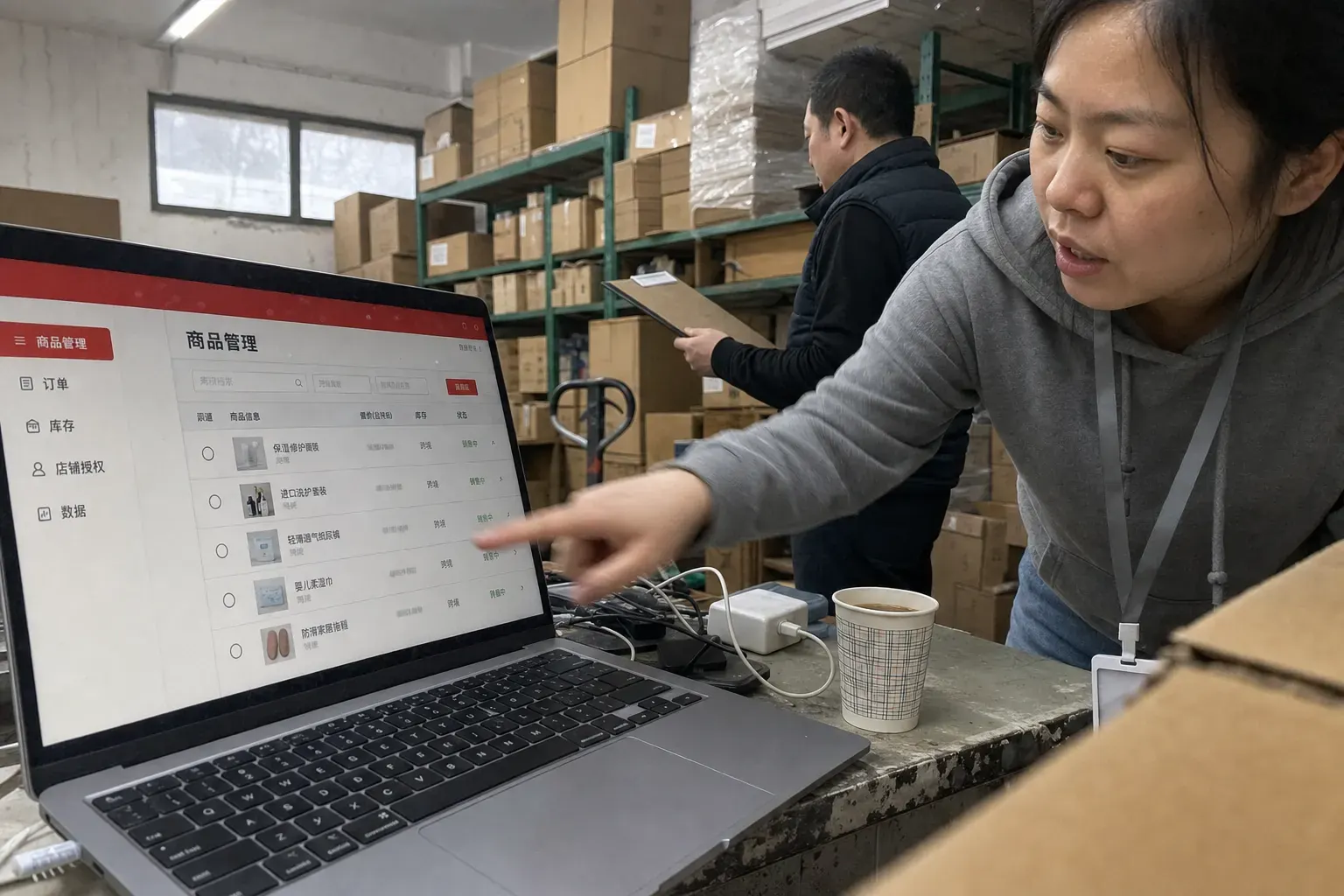
To replace a China distributor without losing the shelf, line up the new partner before you give notice. Send written notice the way the contract says. Buy back or sell through the old stock, and move every registration, label, listing and authorization to the new partner in one plan. Brands lose the shelf when they switch in the wrong order.
Order matters because a distributor holds far more than a warehouse of your goods. It’s usually the importer of record and the name on your Chinese label. It’s the supplier on file at every chain that stocks you, and sometimes it owns the online store as well.
Give notice first, and the old partner stops ordering while the new one is still negotiating. Appoint the new one quietly without ending the old contract, and you can end up paying damages to the partner you thought you’d left.
This is an operator’s guide, not legal advice, and the rules quoted here were checked against the official texts in September 2026. Have a lawyer qualified in China read your contract before you send anything.
Where distributor switches go wrong
In our experience, most switches break on sequence. A brand gets fed up, sends an angry email, and only then starts looking. The old distributor, with nothing left to lose, slows its orders and clears stock at whatever price moves it. The chain buyer who gave you the shelf doesn’t hold it open while you shop for a partner.
The other failure is quieter. A brand decides the contract died when the distributor missed its numbers, and appoints someone new without ending the first agreement. That one tends to end in court, and there’s a Beijing case that shows how.
Missed targets did not end the exclusivity: the Beijing case
Dirui, a urinalysis equipment maker from Changchun, signed Beijing Cheng’antang as its exclusive distributor for the city in March 2008. Both companies are Chinese, but the contract is the kind foreign brands sign all the time. Six years later, preparing to list in Shenzhen, Dirui had to explain in its prospectus what happened next.
Cheng’antang was Dirui’s exclusive Beijing distributor for all urinalysis products for five years, with targets set each January: 32,000 tubes of test strips and 8 H800 analyzers in 2008, then 34,000 tubes and 10 analyzers in 2009. After two straight years of missed targets, Dirui canceled the exclusivity from 2010, treated Cheng’antang as an ordinary distributor, stopped setting annual targets and began supplying other Beijing distributors and hospitals. Source: Dirui Medical (迪瑞医疗), IPO prospectus, August 2014. http://static.cninfo.com.cn/finalpage/2014-08-28/1200180236.PDF
Read that account again. It describes a decision taken inside Dirui. The prospectus mentions no termination notice, and in July 2012 Dirui went to court to ask for the contract to be terminated, a request that only makes sense if the contract was still standing. Cheng’antang sued back for 7,508,040 RMB, counted to the end of 2012.
Almost four years later, the appeal came down.
The Beijing No. 1 Intermediate People’s Court set aside the first-instance judgment and ordered Dirui to pay Cheng’antang 5,864,950 RMB in liquidated damages. Dirui’s counterclaim was dismissed and the judgment was final. Source: Dirui Medical (迪瑞医疗), announcement on litigation progress, quoting judgment (2015)一中民(商)终字第7955号, April 2016. http://static.cninfo.com.cn/finalpage/2016-04-16/1202187573.PDF
(The first-instance court had awarded 6,256,430 RMB, according to the same filing, so the appeal trimmed the bill without changing who paid it.)
The judgment itself sits behind a login on China Judgements Online, so we couldn’t read the court’s reasoning. The filings are enough to see the shape of it. The targets were missed. Dirui’s own filings show no written termination before it moved Beijing to other distributors. And Dirui paid.
The Civil Code spells out the step those filings never mention.
A party that terminates a contract must notify the other party, and the contract ends when the notice arrives. If the other side objects, either party can ask a court or an arbitrator to confirm the termination. Source: National People’s Congress, Civil Code (民法典), article 565, via the Ministry of Commerce (商务部) policy database, in force January 2021. https://policy.mofcom.gov.cn/claw/clawContent.shtml?id=70524
It also starts a clock.
Where neither the law nor the contract sets a deadline, a termination right lapses if it isn’t used within one year of the day the holder knew, or should have known, the grounds. Source: National People’s Congress, Civil Code (民法典), article 564, via the Ministry of Commerce (商务部) policy database, in force January 2021. https://policy.mofcom.gov.cn/claw/clawContent.shtml?id=70524
A target missed in 2025 and ignored until 2027 may not be grounds anymore. So read the termination clause the week a target slips. Then act on it in writing, or agree a revised target in writing.
What has to move, who holds it and how long it takes
That’s the contract. The paperwork is the bigger job, and everything below sits in somebody’s name. Find out whose before you give notice.
| Asset | Who usually holds it | How it moves | Time |
|---|---|---|---|
| Stock in China | The distributor, which bought it | Buy-back at an agreed price, or a sell-off window in the exit terms | Whatever the exit terms set |
| Retail listings | The distributor, as supplier on file at each chain | Each chain opens the new partner as supplier | Each chain’s own process; no rule sets it |
| Product registrations (food) | Importer filing: the distributor. Overseas producer registration: your factory | The new importer files with customs; the factory’s registration stays put | Before the new partner’s first shipment |
| Responsible person (cosmetics) | The distributor, named in your filings | Your notarized authorization, the product list and the new partner’s commitment | No processing time in the rules; notarizing your letter sets the pace |
| Labels | Printed with the distributor’s name and address | A new print run naming the new partner | Before the first new shipment; cosmetics already imported sell to the end of shelf life |
| Trademark license | You, if the mark is registered in your name | Early-termination record for the old license, new filing for the new one | No published processing time; 30 days to fix a flawed filing |
| Tmall Global and Douyin authorizations | The distributor’s store, under your brand authorization | The old authorization ends; the new partner opens under a new one | The platform’s onboarding for the new store; a Tmall Global account can’t be transferred without consent |
| Customer data | Whoever collected it | With each customer’s separate consent, or returned if it was processed for you | As long as consent takes |
Retail listings have no rule behind them at all. Each chain’s buyer decides whether your product stays, so the letter introducing the new supplier should come from you. The other rows each rest on a rule.
Start with the trademark, because a license protects you only if it’s on file.
A licensor must file the license with the Trademark Office, which publishes it. A license that isn’t filed can’t be asserted against a good-faith third party. Source: China National Intellectual Property Administration (国家知识产权局), Trademark Law, article 43, 2019 revision. https://www.cnipa.gov.cn/art/2019/7/30/art_95_28179.html
The rule survives China’s rewritten Trademark Law under a new number.
The revised Trademark Law keeps the license filing rule as article 55 and takes effect on January 1, 2027. Source: CNIPA (国家知识产权局), Trademark Law, 2026 revision, June 2026. https://www.cnipa.gov.cn/art/2026/6/26/art_95_206942.html
Ending a license early has its own paperwork, and it’s cheap.
The licensor can file an early-termination record when the parties end a license early, and a change of licensee needs a new filing. CNIPA gives an applicant 30 days to correct a deficient filing. The filing fee is 135 RMB online, 150 RMB on paper. Source: CNIPA (国家知识产权局), guideline on trademark license filing, October 2024. https://www.cnipa.gov.cn/art/2024/10/29/art_66_195761.html
If your distributor registered your mark in its own name, the fight is bigger, and it’s a separate one.
An agent that registers its principal’s mark in its own name without authorization is refused registration and barred from using it if the principal objects. A registration made that way can be challenged within five years of the registration date. Source: CNIPA (国家知识产权局), Trademark Law, articles 15 and 45, 2019 revision. https://www.cnipa.gov.cn/art/2019/7/30/art_95_28179.html
Store accounts are harder, because the platform decides who holds them.
A Tmall Global merchant may not transfer its account, or authorize anyone else to use it, without Tmall Global’s written consent. Source: Tmall Global (天猫国际), Merchant Service Agreement, last updated October 2022. https://terms.alicdn.com/legal-agreement/terms/suit_bu1_tmall/suit_bu1_tmall202111051504_43705.html
Douyin ties a flagship to the brand’s authorization.
A Douyin flagship store selling a brand its operator doesn’t own needs an exclusive authorization from that brand. A store’s entity type can’t be changed once it’s verified. Source: Douyin shop help center (抖店官网), store type FAQ, undated page, observed September 2026. https://fxg.jinritemai.com/question/type
In practice, plan for the new partner to open its own store and for the old one to lose your authorization on the switch date. Its reviews and followers stay with that account.
Customer data is the row brands most often get wrong.
A company that provides personal information to another company must tell each person the recipient’s name, contact details, purpose and the kind of data involved, and get that person’s separate consent. Source: Cyberspace Administration of China (国家网信办), Personal Information Protection Law, article 23, in force November 2021. https://www.cac.gov.cn/2021-08/20/c_1631050028355286.htm
If the distributor collected those customers as its own, you get the list only as far as consent reaches. If it processed data for you under a written contract, article 21 of the same law makes it return or delete the data when that contract ends.
Stock: buy it back or sell it through, and stay out of the pricing
The old stock decides how the switch looks from the shelf. You have two clean options.
Buy it back and hand it to the new partner. You pay cash up front, and you decide where the product goes. Check the dates first: stock with three months of shelf life left isn’t worth full cost to anyone.
Or give the old distributor a sell-off window written into the exit terms, with a ban on dumping into channels it never served. That’s cheaper for you and riskier for the shelf, since a partner on its way out wants its cash back fast.
What you can’t do is set its prices.
China’s Anti-Monopoly Law bars a supplier from agreeing with a buyer to fix the resale price, or a minimum resale price, unless the supplier can show the agreement doesn’t restrict competition or meets the market-share conditions set by the regulator. Source: National People’s Congress, Anti-Monopoly Law (反垄断法), article 18, via the Ministry of Commerce (商务部) policy database, in force August 2022. https://policy.mofcom.gov.cn/claw/clawContent.shtml?id=97047
A buy-back sidesteps that problem. Goods you own again are yours to price, which is often the real argument for spending the cash.
Registrations, labels and the responsible person
For food and drink, the name on the pack follows the importer.
Food importers must file with the entry-exit inspection authority, and overseas food producers must be registered with it. Imported prepackaged food needs a Chinese label showing the origin and the domestic agent’s name, address and contact details, or it may not be imported. Source: Ministry of Commerce (商务部) policy database, Food Safety Law (食品安全法), articles 96 and 97, as amended September 2025. https://policy.mofcom.gov.cn/claw/clawContent.shtml?id=104105
Your factory’s registration belongs to the factory and doesn’t move. The importer filing belongs to the distributor. So the new partner files its own, and the first container it clears carries labels with its name.
Cosmetics changed in July 2026. The domestic responsible person, the Chinese company named in your filings and on your label, is usually the distributor, and until then it could block a switch by refusing to sign.
A product changing its domestic responsible person no longer needs the old one’s sealed consent letter or a court judgment. The brand files a notarized authorization letter, the product list and the new responsible person’s commitment to take on the old one’s responsibilities, including for products already on the market. Source: National Medical Products Administration (国家药监局), Announcement No. 70 of 2026, item 8, July 2026. https://www.nmpa.gov.cn/xxgk/ggtg/hzhpggtg/jmhzhptg/20260729115807198.html
The veto is gone. The timing still runs on a 2021 rule.
A change must be completed before the changed product is imported. Products made, sold or imported before the change may be sold until the end of their shelf life. Source: NMPA (国家药监局), Provisions on Cosmetics Registration and Filing Documents, Announcement No. 32 of 2021, article 38, via the Fujian Provincial Medical Products Administration, June 2021. https://yjj.scjgj.fujian.gov.cn/hzp/flfg/202106/t20210608_5616054.htm
The filing itself is covered step by step in changing your cosmetics responsible person in China.
A calendar to replace a China distributor
Here’s the order, using a 90-day notice period as the example. Swap in your contract’s number.
Before notice. Brief the search and get a shortlist. A Compass shortlist usually takes two to three weeks from the brief and runs to three to five names (from Compass, September 2026). Meet them and check them, then sign the winner with a start date tied to your notice. Then read the old contract’s termination clause, including any deadline on using it, and count the stock.
Notice day. Send written notice in the form, and to the address, the contract names. Keep proof of delivery, because the notice takes effect when it arrives. Make the buy-back offer, or confirm the sell-off window, in the same letter.
The first month. Notarize the responsible-person authorization if you sell cosmetics. File the license termination and the new license. The new partner files as importer, prints labels and starts onboarding its store on Tmall Global or Douyin. Write to each retail chain yourself.
Months two and three. Old stock sells through or comes back. The new partner’s first order has to land before the old stock runs out, and the gap between those two dates is where we see shelves go empty. On day 90 the old partner’s authorizations end. Collect its records and filing copies, plus any data it held for you.
For a sense of the lead time a large partner gets:
Topsports received Nike’s formal notice after trading on July 21, 2026 that its online platform sales of Nike products in mainland China would end fully from January 1, 2027. Those sales were about 22% of group revenue in the year to February 28, 2026. Offline cooperation continues. Source: Securities Times (证券时报), July 2026. https://www.stcn.com/article/detail/4033646.html
A little over five months of runway, with the offline business carrying on.
It also helps to be sure the next partner is the right one before you start. The guide to finding a distributor in China covers the vetting. Our distribution work includes unwinding a partner and managing the handover, and Compass holds the partners we’ve already checked.
Quick answers on switching distributors
Can I end an exclusive distributor for missing its targets?
Only if the contract or the Civil Code gives you the right, and only if you use it in writing. Termination takes effect when your notice arrives. If the contract sets no deadline, the right lapses one year after you knew the target was missed.
How long does it take to replace a distributor in China?
Plan in months. A Compass shortlist usually takes two to three weeks, then meetings and checks before anything is signed. After that the notice period in your contract sets the pace. Nike gave Topsports a little over five months on its online business.
Can the new distributor take over the old one’s Tmall Global store?
Not without Tmall Global’s written consent, since the account can’t be transferred. Plan for the new partner to open its own store under your authorization.
If you’re lining up a replacement before you give notice, request a Compass shortlist of distributors for your category.
Updated September 24, 2026
Working on China? Let's grab a coffee.
Tell us where you are now and where you want to get to.