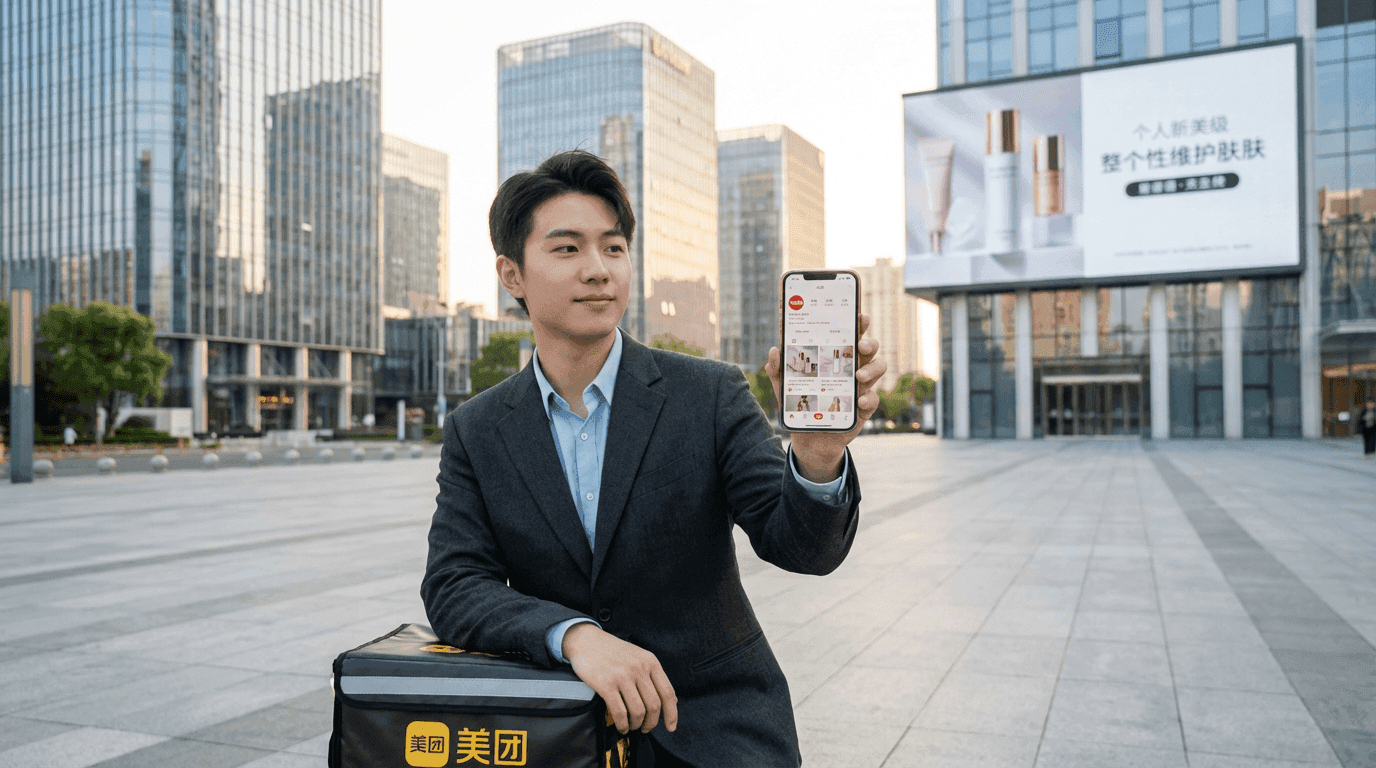
Sell-in is what your distributor buys from you. Sell-out is what shoppers buy, in a store or online. When sell-in grows faster than sell-out, stock is piling up in the channel, and a price war or a fight over returns usually follows. Get scan or depletion data every month and judge the distributor on weeks of cover. Orders only tell you what left your warehouse.
Filings, surveys and regulations checked September 24, 2026.
Chinese has a word for the problem: 压货 (yāhuò), pushing stock onto the channel. The brand books a sale when the distributor pays. Whether a shopper ever buys the product becomes the distributor’s worry, and then, a year later, the brand’s.
For a foreign brand, year one tends to look fine on paper. The distributor orders, pays and orders again. Then the reorders stop, a promotion you never approved shows up on Pinduoduo, and the distributor asks you to take back stock that expires in four months. The signals show up well before that call.
Why Chinese distributors are refusing stock in 2025 and 2026
For thirty years the deal in Chinese consumer goods ran the same way. The brand set a quarterly target, the sales rep leaned on the distributor at month end, and the distributor took the stock for rebates. Growth covered the mistakes: stock overbought in March sold by September, because the market had grown.
Growth stopped doing that job.
“In this market, forget pushing stock. We won’t even take on a brand that has no after-sales policy. Once you count the returns, you’ve worked for nothing.” Source: Huxiu (虎嗅), carrying New Distribution (新经销), July 2026. https://www.huxiu.com/article/4873623.html
The economics explain the mood.
A consumer goods distributor put four to five million RMB a year into stock for less than 300,000 RMB of actual profit. A drinks wholesaler in Chongqing found the same product selling online during 618 for less than he paid for it. Source: Jiemian (界面新闻), carrying Kuaidao Caijing (快刀财经), July 2025. https://www.jiemian.com/article/13003026.html
Baijiu, the Chinese white spirit, shows the whole chain in one survey. Sell-out slowed and stock backed up, so distributors dumped it to raise cash.
In the first half of 2026, weak sell-out left baijiu stock piling up in the channel. Distributors and retailers sold at low prices to raise cash, and 56.6% said price inversion (selling below what they paid) had got worse. Producers cut back on stock pushing and lowered targets, and 51.2% of distributors and retailers remitted less money to producers. Source: China Alcoholic Drinks Association (中国酒业协会) and KPMG China, 2026 Baijiu Market Mid-Year Report, June 2026. https://assets.kpmg.com/content/dam/kpmgsites/cn/pdf/zh/2026/06/2026-chinese-baijiu-market-mid-term-research-report.pdf
Bottled drinks, usually the easy category, had the same spring.
At the 2026 start-of-season order meetings for bottled drinks, distributors were less willing to attend and less willing to pay. Some that paid could not take delivery: the stock they held was not selling and their warehouses were full. Source: Huxiu (虎嗅), carrying Food Insider (食品内参), May 2026. https://www.huxiu.com/article/4861863.html
A foreign brand arriving now sits across from someone who remembers all of it. A first-year plan that only works if the distributor loads up will mostly get a polite no.
Sell-in vs sell-out: five signs your distributor is overstocked
| Signal | What it looks like | Seen in China | What to ask for |
|---|---|---|---|
| Orders vs scans | Orders rise while scans or depletions stay flat or fall | Li Ning, 2026: sales to franchised distributors up 1.7% in H1; their stores’ sell-through down mid single digits in Q2 | Monthly sell-out by SKU, set next to your invoices |
| Weeks of cover | Stock divided by weekly sell-out keeps climbing | Xtep, H1 2026: channel stock at 4.5 to 5 months of sales | Stock on hand by SKU and batch, every month |
| Discounting online | Your product on Tmall, JD, Pinduoduo or Douyin below your suggested retail price | Baijiu, H1 2026: 56.6% of distributors and retailers saw price inversion worsen | Where the stock behind each cheap listing came from |
| Sudden promotions | Gift boxes, bundles and bulk deals outside the plan | Shede Spirits, 2024: 3% to 5% of extra rebates to help distributors clear stock | A promotion calendar a month ahead |
| Late payment | Payments slip, reorders space out, rebate claims get louder | Baijiu, H1 2026: 51.2% of distributors and retailers remitted less | Aged receivables monthly. Hold new shipments until a late payment clears |
Any one signal can have an innocent cause, a public holiday or a retailer’s own promotion. Two or three in the same quarter usually mean the channel is full.
Li Ning, the sportswear brand, publishes both sides of the first signal.
Li Ning’s revenue from franchised distributors rose 1.7% in the first half of 2026. Sell-through in its wholesale (franchised distributor) channel rose by a low single digit in the first quarter and fell by a mid single digit in the second. Source: Li Ning Company (李宁), 2026 interim results and Q1 and Q2 2026 operational updates, HKEX, April to August 2026. https://www1.hkexnews.hk/listedco/listconews/sehk/2026/0820/2026082001445.pdf https://www1.hkexnews.hk/listedco/listconews/sehk/2026/0422/2026042200179.pdf https://www1.hkexnews.hk/listedco/listconews/sehk/2026/0715/2026071500286.pdf
It’s a small gap, and Li Ning reports it to the Hong Kong exchange every quarter. A private distributor reports what its contract asks for.
Weeks of cover: the one ratio to track
Weeks of cover is stock on hand divided by average weekly sell-out. Count stock in the distributor’s warehouse, in transit and, when you can get it, on retailers’ shelves. Average sell-out over the last eight weeks so one promotion doesn’t flatter it (Double 11 will try, every year).
A worked example. A distributor holds 9,000 cases and has sold out 4,800 over the past eight weeks. That’s 600 cases a week, or 15 weeks of cover. Before Double 11 it orders another 3,000 cases. If sell-out holds at 600 a week, cover jumps to 20 weeks.
Your sales report will call that order growth. For the distributor it’s five more weeks of stock to carry, with the cash tied up in it.
Where should the line sit? Our working rule is your replenishment lead time plus about a month. If a container takes eight weeks from your factory to the distributor’s warehouse, cover much above 12 weeks is stock it doesn’t need yet. Shelf life pulls the number lower again for food and cosmetics. Past your line, hold the next shipment until cover comes back down.
Big Chinese sportswear brands publish their own figure.
Xtep’s core brand ran channel inventory turnover of 4.5 to 5 months in the first half of 2026, with retail discounts of 25% to 30%. Source: Xtep International (特步国际), operational update for Q2 and H1 2026, HKEX, July 2026. https://www1.hkexnews.hk/listedco/listconews/sehk/2026/0717/2026071700195.pdf
Li Ning’s interim filing, cited above, puts its channel inventory-to-sales ratio at 4 months. Four months is about 17 weeks; five is about 22. Those brands clear old seasons through outlets, and an imported snack with a nine-month shelf life can’t sit that long. Read their figures as the outer limit.
The trend tells you more than the level.
Cover that climbs three months running is the signal, whatever number it started from.
Where to get sell-out data in China
The distributor holds most of it, and its first answer will probably be that the numbers are confidential. Get them anyway: monthly, by SKU, in the same format.
Scan data. China’s big drinks brands print a code on every unit and pay shoppers or shopkeepers to scan it. Each scan tells the brand where a unit actually sold.
Dongpeng Beverage says its one-code-per-item and “five-code linkage” systems give it real-time monitoring of channel inventory and outlet sell-out, across more than 3,400 distributors and over 4.5 million active outlets. Smart fridges upload sales data in real time, and data models flag abnormal flows of goods between regions. Source: Dongpeng Beverage (东鹏饮料), 2025 annual report, March 2026. https://static.cninfo.com.cn/finalpage/2026-03-31/1225063447.PDF
A foreign brand with one distributor won’t build that in year one. A QR code on each pack, with a small scan reward, still gives you a sell-out signal the distributor can’t edit.
Baijiu makers pay for the same signal. Shede Spirits, quoted further down, lists scan fees to liquor shops and scan rewards to shoppers among its costs.
Retailer portals. Many national supermarket and convenience chains give suppliers a portal with sales by store. Ask your distributor which chains it sells to and whether it has a login, then ask for the monthly export.
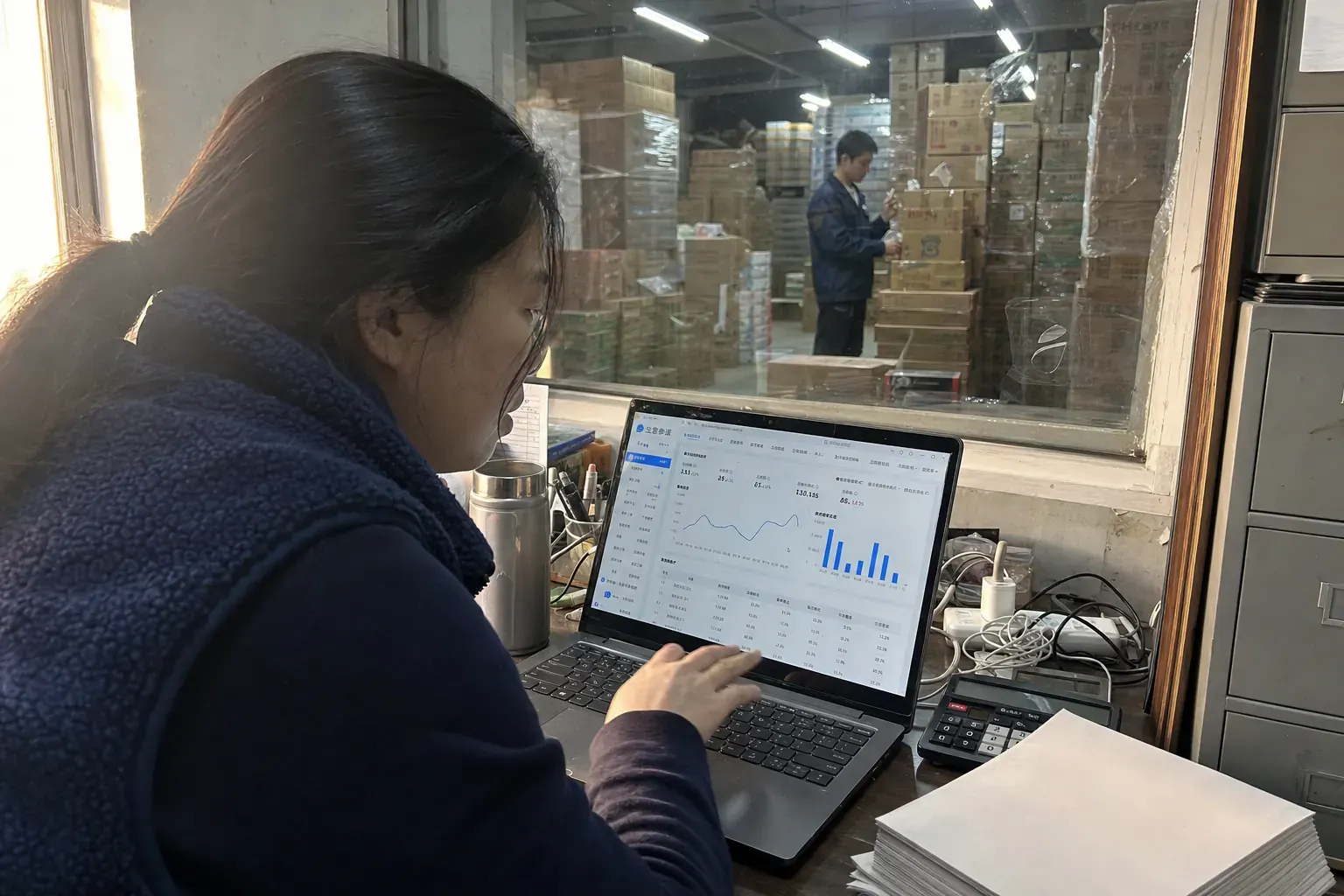
Platform backends. If the distributor runs a Tmall or JD store with your goods, the platform’s analytics show orders, refunds and stock. On Tmall the tool is Business Advisor (生意参谋), and the store owner can hand a sub-account to an outside party.
A Taobao or Tmall seller can set up sub-accounts for employees, agents, advisers or third-party service providers, with access to tools such as Business Advisor within the permissions the main account grants. Source: Taobao (China) Software Co. (淘宝(中国)软件有限公司), sub-account software license agreement, revised June 2023. https://terms.alicdn.com/legal-agreement/terms/suit_bu1_tmall/suit_bu1_tmall201802012028_72666.html
Put a read-only sub-account on the list for day one. It’s a small ask, and it shows you online sell-out with no spreadsheet in between.
The distributor’s own system. Most distributors run an ERP or a distribution management system. A monthly export of stock by SKU and batch, with expiry dates, is enough. The batch column matters most: it shows which stock is aging before anyone asks you to take it back.
Good distributors share this without a fight. Our guide to finding a distributor in China makes sell-out data a vetting question, asked before any contract, for that reason.
What to write into the distribution contract
Most fights over stock start with a contract that only covers orders. Add these terms before you sign:
- Monthly reporting. Sell-out and stock on hand by SKU and batch, by a fixed day each month, in a template attached to the contract.
- Data access. A read-only sub-account on every platform store selling your goods, and the right to visit the warehouse with notice.
- A cover ceiling. You may refuse or delay any shipment that would push cover past an agreed number of weeks.
- Rebates on sell-out. Pay volume rebates on depletions or scans. That removes the reason to load up at quarter end.
- Aging stock and returns. Agree now what happens to stock near its date, including who pays for the markdown and where the goods go.
- Buy-back on exit. On termination, you or the next distributor buy the remaining saleable stock at landed cost or a stated discount to it.
A minimum resale price can’t go in. China bans it.
The Anti-Monopoly Law bars an operator from agreeing with a trading counterparty to fix the resale price to a third party or to set a minimum resale price. An implemented agreement can draw a fine of 1% to 10% of the previous year’s sales. Source: Anti-Monopoly Law of the People’s Republic of China (中华人民共和国反垄断法), 2022 amendment, arts. 18 and 56, in force August 1, 2022. https://policy.mofcom.gov.cn/claw/clawContent.shtml?id=97047
Price discipline has to come from how much stock you ship. A distributor sitting on 10 weeks of cover has little reason to dump. At 30 weeks it needs the cash more than it needs your price.
For brands that want us to stay on after signature, our distribution service runs monthly business reviews built on these reports.
What to do when the channel is already full
Stop shipping, or slow down to what the shelves are selling. Cases sent into a full channel tend to come back later as discounts.
Shede Spirits, a listed baijiu maker, did exactly that in 2024 and explained it to the Shanghai Stock Exchange.
After several years of fast growth, distributors’ stock of Shede’s lead product had risen. The company adopted a policy of “strong sell-out, destocking, stable prices”, cut volume to hold price and helped distributors clear stock, so distributor orders fell in 2024. It added 3% to 5% of sales rebates on several products, mainly to help customers clear stock, and distributors’ reorder cycle lengthened. Source: Shede Spirits (舍得酒业), reply to the Shanghai Stock Exchange inquiry letter on its 2024 annual report, June 2025. https://money.finance.sina.com.cn/corp/view/vCB_AllBulletinDetail.php?stockid=600702&id=11175958
Shede told the exchange the policy cut its 2024 revenue in the short term. That’s the cost of stopping. Brands that keep shipping to protect this year’s number pay later, in price.
Then work the stock down:
- Count it. Stock by SKU and batch, with expiry dates. A clear-out planned from order history misses the aging lots.
- Fund the sell-out. Put promotion money behind shelf activity and scans, paid on proof. Money handed over as an order discount tends to surface as a lower price online.
- Pick the exit for old stock. Near-date goods will leave through some channel. Choose it yourself (a staff sale or a food-service buyer, say) before the goods turn up on a live stream at half price.
- Reset the target. Build next year’s plan from sell-out.
If the online price is the problem, fix the channels together. For Kerry’s DaVinci Gourmet, we brought Tmall and distributor pricing into line so the two stopped undercutting each other, as the DaVinci Gourmet case describes.
A distributor that still won’t share data after a full channel has told you what you need to know. The honest comparison of a distributor and your own store is worth reading next, and Compass is where to look for a replacement.
FAQ
What is the difference between sell-in and sell-out?
Sell-in is what your distributor buys from you, the number on your invoices. Sell-out is what shoppers buy from retailers or online stores, measured by scans, retailer reports or depletions. Sell-in is your revenue, and sell-out is the only proof that shoppers want the product. When sell-in grows faster, the difference sits in a warehouse.
How many weeks of stock should a Chinese distributor hold?
Your replenishment lead time plus about a month, as a working rule, so about 12 weeks on an eight-week shipping cycle. Chinese sportswear brands report 4 to 5 months across their channel, but they have outlets to clear old seasons. Food and cosmetics with a shelf life should sit well below that.
Can I stop my distributor from discounting online?
Not through a contract price. China’s Anti-Monopoly Law bans agreements that fix a resale price or set a minimum one, with fines of 1% to 10% of the prior year’s sales. What you control is how much stock you ship and what you pay rebates on. Your own store’s pricing is yours to set too.
What if my distributor won’t share sell-out data?
Make it a condition before signature, with the reporting template attached to the contract. If a current distributor refuses, ship less and base each order on the stock and sell-out it can show you. A distributor that hides its stock position has a reason.
Ask Compass for a shortlist of vetted distributors for your category
Updated September 24, 2026
Working on China? Let's grab a coffee.
Tell us where you are now and where you want to get to.