Ten China distributor red flags should end a candidacy before you sign. Four sit in the public record, two come out in the first meeting, and four hide in the term sheet. Each has a one-line check, and most have a Chinese court case or a regulator’s rule showing what the flag cost the brand that missed it.
Court records and rules quoted here checked November 12, 2026.
In our experience, bad distributor deals in China rarely fail on category fit. They fail on something the brand could have read before signing, and didn’t.
This page is the filter. The full verification method, all eight checks, sits in our guide to telling a real China distributor from a trading company. Here each flag gets one line on the check and one line on what it led to, with the source.
| Red flag | Where it shows | The check | What it leads to, on the record |
|---|---|---|---|
| Missed annual report, abnormal-list entry | Public record | Read the credit record on GSXT | Two missed years and no answer at the address: license revoked (SAMR rules, art. 18) |
| On the dishonest-debtor list | Public record | Search the court enforcement site | 2,339,800 new listings in 2025; a listing runs two years for most grounds (SPC) |
| A handful of insured staff | Public record | Read the insured headcount in the annual report | No team to sell your brand; the headcount is public by law |
| “Our partner holds the import license” | Public record | Find its own customs filing | The importer, not the reseller, answers for the label: refund plus ten times the price in a Beijing case |
| Sell-in figures only | First meeting | Ask for depletion data on a comparable brand | Stock piles in the channel; Li Ning reported 4 months of channel stock in mid-2026 |
| “We’ll register your trademark here” | First meeting | File in your own name first | An agent’s filing is barred under Trademark Law art. 15, but only if you act within five years |
| Wants your online store on its license | Term sheet | Who signs the store’s opening documents | A Douyin shop stayed with the operator; a 300,000 RMB claim was dismissed (Taojiang court, 2025) |
| All of China, every channel, no target | Term sheet | Targets per region and channel, a review date | Dirui paid 5,864,950 RMB to an exclusive distributor that had missed its targets |
| First order on consignment | Term sheet | Who pays for the first order, and when | You carry the stock; 400,000 RMB committed before a first bonded order (our Tmall Global calculator) |
| A resale price floor in the contract | Term sheet | Keep price out of the contract | Resale price fixing is banned; Yangtze River Pharmaceutical was fined 764 million RMB |
Sources: SAMR, Supreme People’s Court, Jiemian, Wuhan Qiaokou District Government, Beijing Daily, Li Ning, CNIPA, Xinhunan, Dirui Medical, SAMR via the Shanghai Medical Products Administration. TheChinaPath calculator data, November 2026. Full citations in the sections below.
Red flags in the public record
These four take an afternoon at a desk. Do them before anyone books a flight.
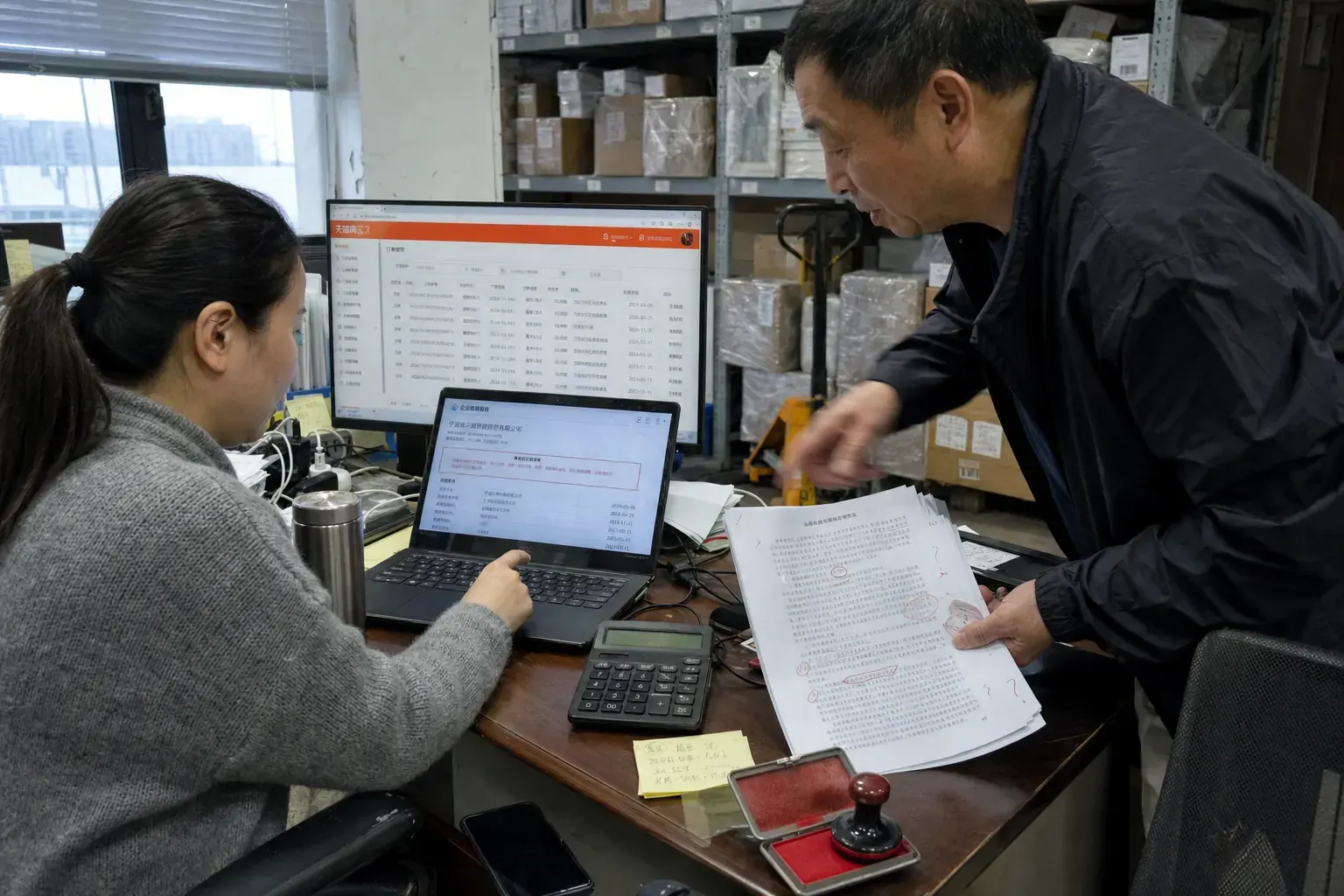
A missed annual report. Every Chinese company files a yearly report on the National Enterprise Credit Information Publicity System (GSXT) between January and June. Miss it and the company is flagged.
A company that fails to publish its annual report goes on the abnormal operations list. One that misses two years running and cannot be reached at its registered address has its business license revoked. Source: State Administration for Market Regulation (市场监管总局), Interim Regulations on Enterprise Information Disclosure, arts. 8 and 18, revised March 2024. https://www.samr.gov.cn/xyjgs/flfg/art/2024/art_be55c2e3a54a43e5ab12794c9dc87600.html
A company can clear the flag by filing late, and once it does, the entry stops showing.
SAMR has stopped publishing 48,424,700 abnormal-list entries once they were cleared, covering 5,015,300 companies among 25,512,400 businesses. Source: State Administration for Market Regulation (市场监管总局), May 2025. https://www.samr.gov.cn/xyjgs/gzdt/art/2025/art_457508049fcb40498255cb23d2c17226.html
So a clean record today can hide a late one last year. Ask the candidate whether it has ever been on the list, and why. A distributor that can’t keep up with one government form a year will struggle with the monthly sell-out report you’ll want from it.
Next, the court enforcement site. A company on the dishonest judgment debtor list lost a case and didn’t pay what the court ordered.
Chinese courts added 2,339,800 listings to the dishonest judgment debtor list in 2025, while 2,669,600 left it through credit repair. Source: Jiemian (界面新闻), reporting a Supreme People’s Court press conference, January 2026. https://www.jiemian.com/article/13933520.html
For most listing grounds, a debtor stays on the list for two years, extendable by one to three years for serious or repeated breaches. Source: Supreme People’s Court (最高人民法院), rules on publishing the dishonest judgment debtor list, art. 2, amended 2017. https://www.court.gov.cn/fabu/xiangqing/37182.html
A distributor on that list owes someone money it was ordered to pay. You’d be next in line.
Then count the people. The same annual report carries the number of employees the company pays social insurance for, and that number is public.
From the 2016 reports onward, companies report their insurance types and insured headcount, and both must be published. Source: Qiaokou District People’s Government, Wuhan (武汉市硚口区人民政府), annual report disclosure FAQ, April 2018. https://www.qiaokou.gov.cn/hdjl/cjwt/cjwt/201804/t20180427_147988.shtml
A company that says it covers 30 cities with four insured employees covers them through someone else. Sometimes that’s fine. Usually it means the company in front of you is a trading layer.
No import filing of its own. A real importer files with customs as a consignee, and customs publishes the filing.
Customs completes a declaration-entity filing within three working days and publishes it on the China Customs enterprise credit platform. Source: General Administration of Customs (海关总署), Decree 253, art. 7, in force January 2022, via the Ministry of Commerce (商务部) policy database. https://policy.mofcom.gov.cn/claw/clawContent.shtml?id=92148
When the filing belongs to “a partner”, the partner is your importer and answers for your goods. The company you met only resells them. On food and drink, that gap gets expensive.
A Beijing shopper bought four bottles of imported red wine at 888 RMB each. The Chinese label lacked a production date and the distributor’s contact details, and the Shenzhen distributor named on it said it had never sold the wine. The court ordered a refund plus ten times the price. Source: Beijing Daily (北京日报), March 2025. https://xinwen.bjd.com.cn/content/s67d2735de4b08edd28f62950.html
Red flags in the first meeting
The next two need a conversation. They tend to come out in the first hour, if you ask.
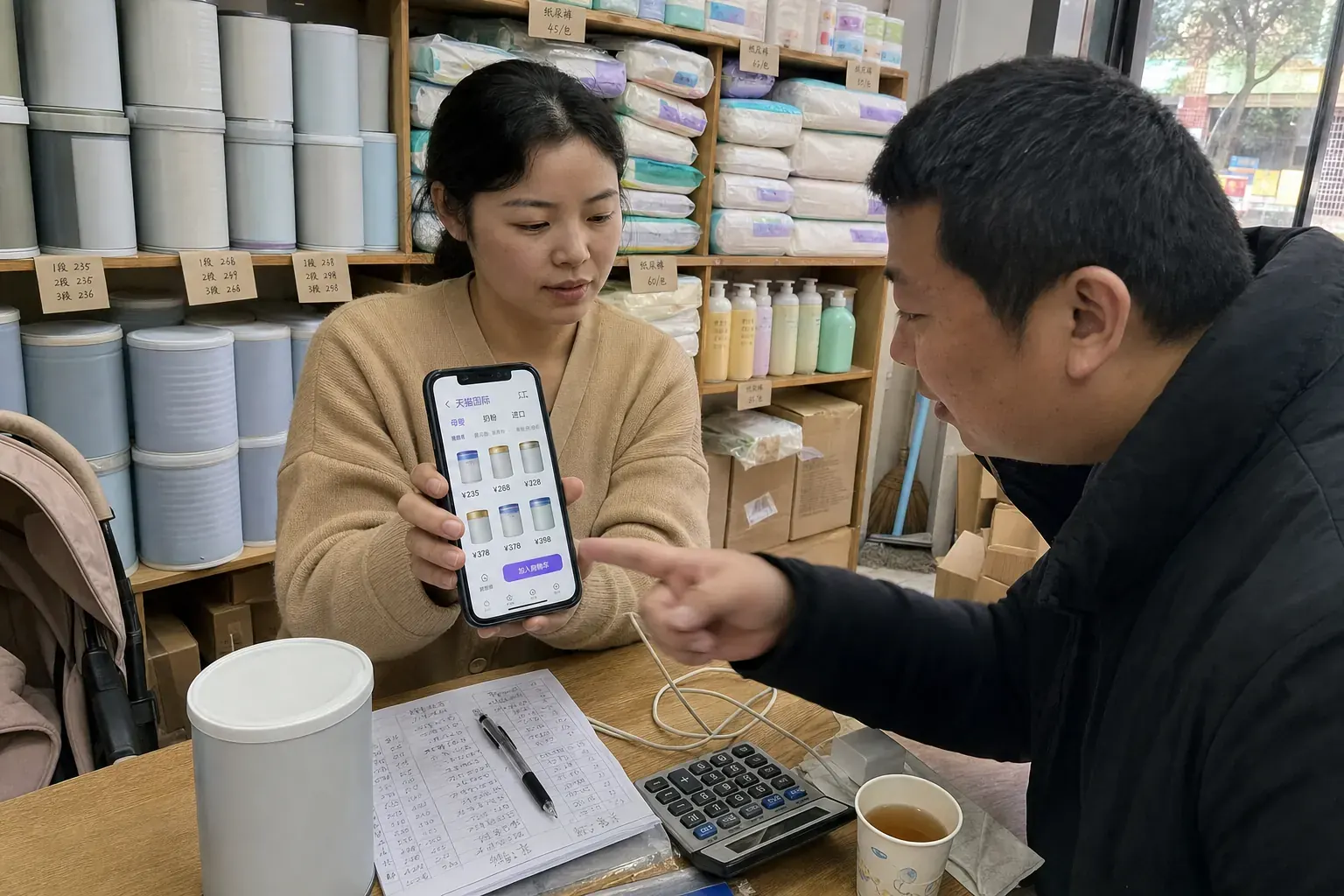
Start with the numbers it brings. Every distributor can tell you what it bought from its suppliers, which is sell-in. Ask what it sold through to stores and shoppers, for a brand like yours, month by month. Sell-in without sell-out is how a channel fills up with stock nobody is buying, and even listed brands live with a lot of it.
Li Ning reported a channel inventory-to-sales ratio of 4 months at the end of June 2026. Source: Li Ning Company (李宁), interim results announcement, Hong Kong Exchange filing, August 2026. https://www1.hkexnews.hk/listedco/listconews/sehk/2026/0820/2026082001445.pdf
That’s a listed company with a large franchise network, reporting every quarter. A distributor that can’t show you any depletion data at all has no idea how much of your stock is sitting in its customers’ back rooms.
“We’ll register your trademark here for you.” It sounds helpful. China grants marks to whoever files first, and a mark held by your distributor gives it a hold over you for as long as it stays there.
An agent or representative that registers its principal’s trademark in its own name without authorization is refused registration and barred from using it, if the principal opposes. A registration that breaks this rule can be invalidated within five years of the registration date. Source: China National Intellectual Property Administration (国家知识产权局), Trademark Law (2019), arts. 15 and 45, July 2019. https://www.cnipa.gov.cn/art/2019/7/30/art_95_28179.html
The revised Trademark Law keeps both rules, renumbered as articles 22 and 51, from January 1, 2027.
The 2026 revision of the Trademark Law takes effect on January 1, 2027. Source: China National Intellectual Property Administration (国家知识产权局), Trademark Law (2026 revision), art. 87, June 2026. https://www.cnipa.gov.cn/art/2026/6/26/art_95_206942.html
It works, slowly. Ask a Japanese miso maker.
A Dalian company that was the sales agent of a Japanese miso maker applied on April 17, 2012 to register a Xijing (西京) mark for condiments in its own name. CNIPA declared the registration invalid under Article 15 of the 2001 Trademark Law. The Beijing IP Court dismissed the agent’s challenge, and the Beijing High People’s Court upheld that ruling on appeal. Source: Beijing High People’s Court (北京市高级人民法院), 2023 top ten trademark cases, published by Beijing Daily (北京日报), April 2024. https://xinwen.bjd.com.cn/content/s662b31b6e4b0641781568f40.html
The appeal carries a 2021 case number, so the fight ran for years after that 2012 filing. The law is on your side. The clock isn’t. Five years passes quickly when the relationship is going well, and you only find out at the split. If a candidate has already filed, our piece on what to do when a distributor registered your trademark covers the way back.
Red flags in the term sheet
The last four show up on paper. A distributor that clears the record and the meeting can still send a draft contract that should end the talks.
Your online store on its license. A platform store belongs, under the platform’s own rules, to the entity whose license opened it. Paying the bills doesn’t change that, as one Hunan brand found out.
A Hunan egg company agreed over WeChat that an operator would open Douyin and Tmall shops in its name and run them. He registered the Douyin shop on his father’s sole-trader license instead, and the company knew and didn’t object. After they split, the court dismissed the company’s claims to the shop and to 300,000 RMB of earnings. It declined to override the platform’s rules, and held that paying the costs didn’t move the shop. Source: Xinhunan (新湖南), reporting the Taojiang County People’s Court (桃江县人民法院), April 2025. https://m.voc.com.cn/xhn/news/202504/28496327.html
Open the store on your own entity, or on a license you control, and give the distributor operating access.
All of China, every channel, no target. A first draft asking for the whole country is normal. A draft with no purchase target attached is the red flag, because it gives you no lever when sales don’t come.
Dirui made Beijing Cheng’antang its exclusive distributor for the city in 2008, with yearly targets. After two years of missed targets, Dirui treated it as an ordinary distributor from 2010 and supplied others in Beijing. On appeal, a Beijing court ordered Dirui to pay Cheng’antang 5,864,950 RMB in liquidated damages. The judgment was final. Source: Dirui Medical (迪瑞医疗), announcement on litigation progress, April 2016. http://static.cninfo.com.cn/finalpage/2016-04-16/1202187573.PDF
Dirui had targets and still paid. The filings show no written termination before it went to court in 2012. A grant with no targets at all leaves you less than that.
Then there’s the payment clause that asks for the first order on consignment. “Ship it, and we’ll pay as it sells” moves the distributor’s job onto your balance sheet. Buying stock and carrying the risk is what a distributor is paid for. It’s a hard job, which is why some won’t do it.
One distributor put it plainly: four to five million RMB a year spent on stock, for less than 300,000 RMB of actual profit. Source: Jiemian (界面新闻), July 2025. https://www.jiemian.com/article/13003026.html
Thin margins explain the ask. They don’t make it your problem. Run the same brand through your own cross-border store and the cash is just as real:
400,000 RMB is committed before the first bonded order ships: a 100,000 RMB bonded warehouse deposit and a 300,000 RMB tax prepayment. TheChinaPath calculator data, November 2026 (our Tmall Global model defaults, not a market rate).
Either way, someone funds the stock. On consignment, it’s you, and the distributor decides how hard to sell it.
The last one looks friendly. Some distributors ask the brand to write a minimum resale price into the deal, to protect them from cheaper rivals. In China it’s a legal problem for the brand.
A supplier may not agree with a distributor to fix the resale price or to set a minimum resale price, unless it can prove the deal doesn’t restrict competition or its market share is below the regulator’s threshold. Source: Anti-Monopoly Law (中华人民共和国反垄断法), art. 18, in force August 2022, via the Ministry of Commerce (商务部) policy database. https://policy.mofcom.gov.cn/claw/clawContent.shtml?id=97047
SAMR fined Yangtze River Pharmaceutical 764 million RMB, 3% of its 2018 sales of 25.467 billion RMB, for fixing resale prices and setting minimum resale prices with wholesalers and pharmacies. Source: State Administration for Market Regulation (市场监管总局), via the Shanghai Medical Products Administration, April 2021. https://yjj.sh.gov.cn/scjgyw/20210419/a2af0d4d5fae4bbc94e9105b8edc60c1.html
Protect the distributor with territory and channel terms instead, and keep price out of the contract.
What’s left after the filter
Run the ten flags on a long list and it gets short. That’s the point.
Compass, our database of distributors and partners in China, starts from companies we have met in person, filed under the categories we’ve seen them sell.
A typical Compass shortlist runs three to five names. From Compass, November 2026.
The record checks are done before a name reaches the list. The meeting and the term sheet are still yours to run, with the flags above in hand. Our guide to finding a distributor in China shows how the search works, and brands that want the negotiation run for them use our distributor sourcing and management work.
Questions buyers ask
What is the biggest red flag in a Chinese distributor? A company that isn’t the importer of your goods. If its customs filing belongs to “a partner”, the partner is your importer and answers for the label and the product, and the company you met takes a cut in between. Ask for its own customs filing before a second meeting, and meet the partner if there is one.
Can I check a Chinese distributor myself? Yes, most of it. The annual report, the abnormal operations list, the insured headcount, and court records are public on GSXT and the court enforcement site. Customs publishes import filings. What you can’t check from a desk is sell-out data and the team, which need a meeting and documents.
Is a distributor asking for national exclusivity a red flag? Not on its own. Most first drafts ask for it. The flag is exclusivity without yearly targets per region and channel, a review date, and a written way to narrow the grant. Dirui had targets, no written termination on the record, and paid 5,864,950 RMB on appeal.
Should I let my distributor register my trademark in China? No. File in your own company’s name before the first meeting. An agent’s filing can be refused or invalidated under the Trademark Law, but the invalidation window is five years from registration, and the fight costs time you’d rather spend selling.
Get a Compass shortlist of China distributors that have already cleared the record checks
Updated November 13, 2026
Working on China? Let's grab a coffee.
Tell us where you are now and where you want to get to.