When a Tmall or Douyin agency fakes orders, the brand carries most of the risk. An agency in a case the Supreme People’s Court published in August 2026 paid a RMB 100,000 fine and lost its RMB 50,000 deposit. The store’s penalties land on its account holder, which is you. Ban fake orders in writing and audit the traffic.
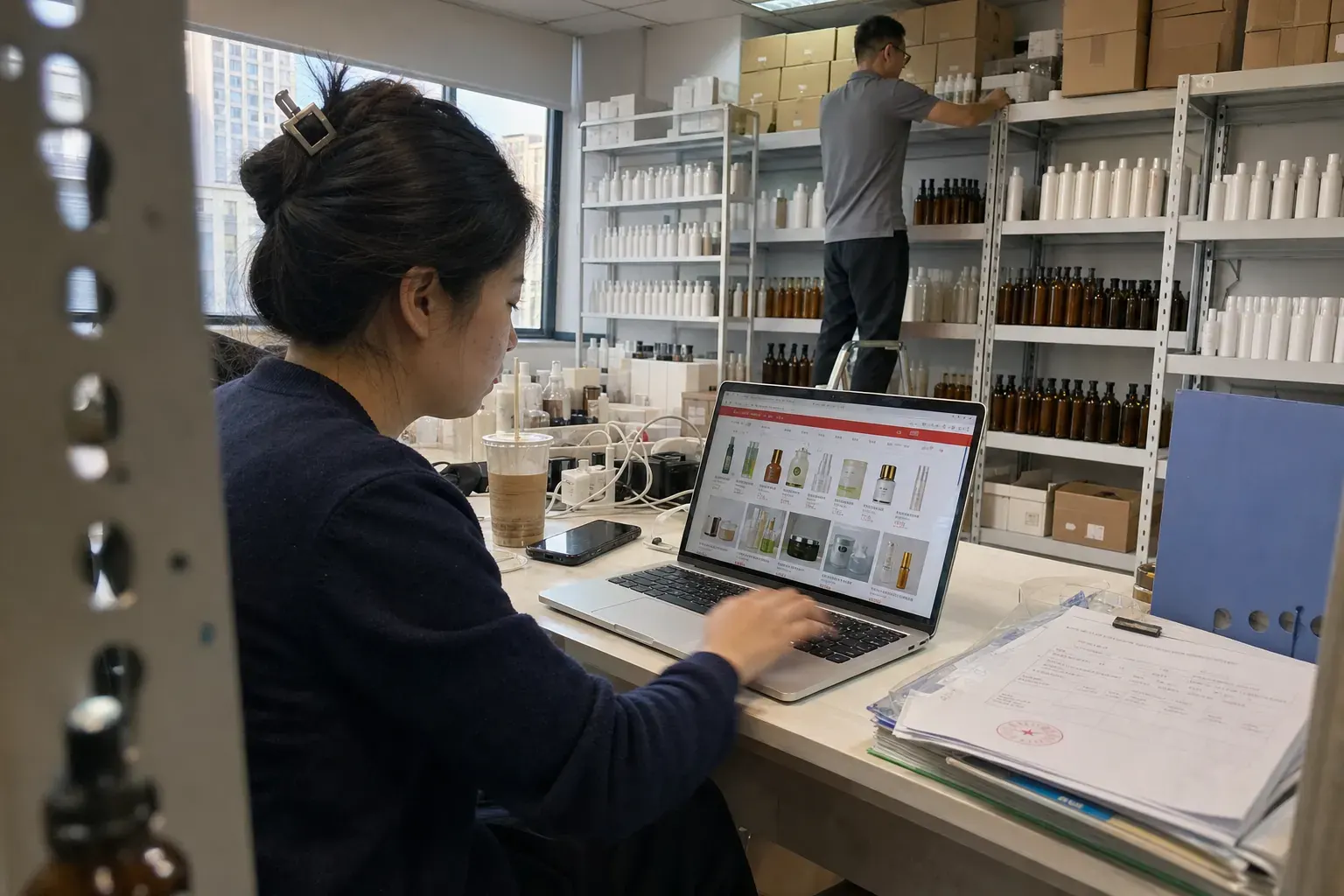
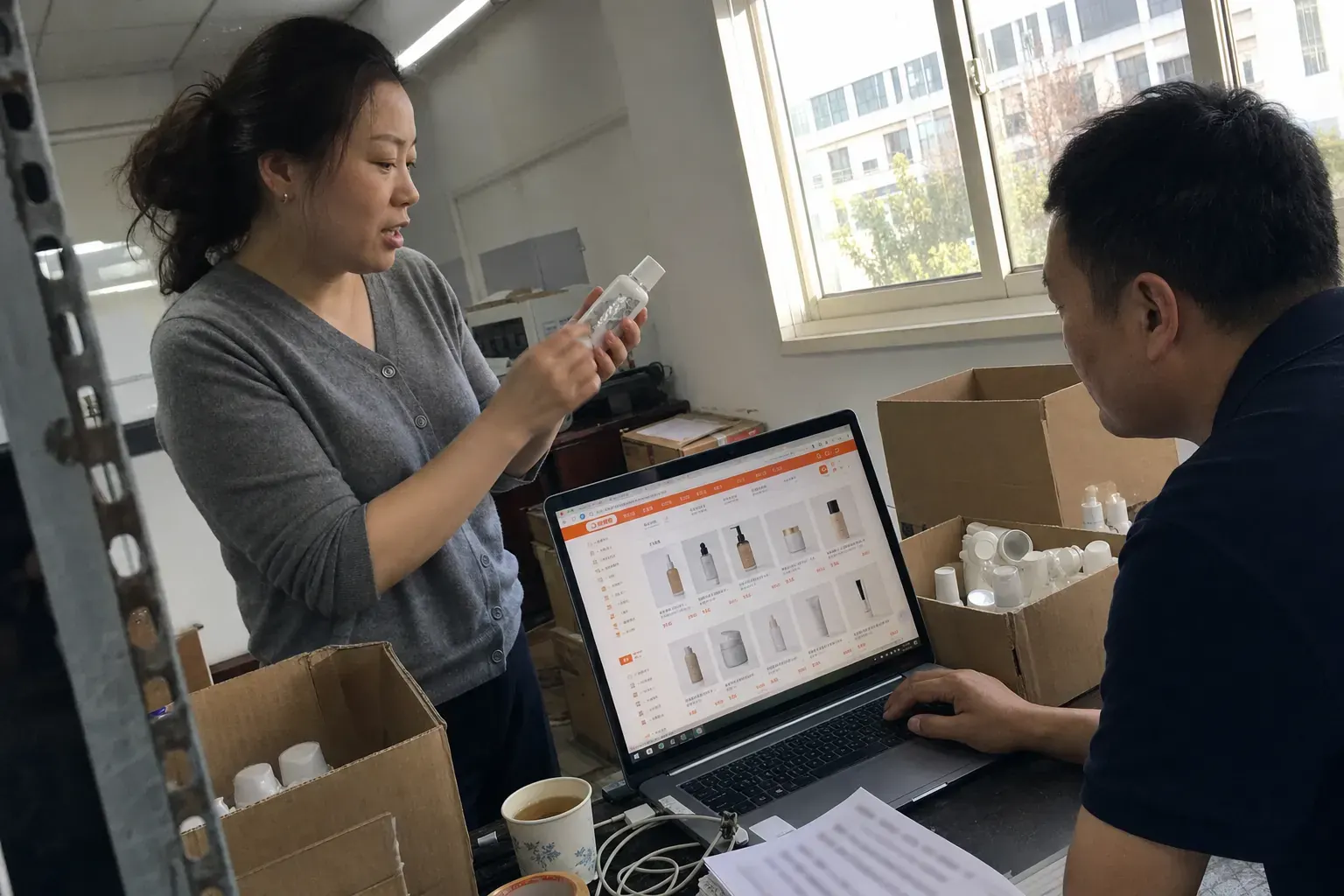
Fake orders have a name in Chinese ecommerce: 刷单炒信, brushing orders to hype a store’s credit. An agency that runs your store has every reason to try it. Most charge a retainer plus a commission on sales, and a ranking bump is fast.
On August 3, 2026, the Supreme People’s Court put one of these cases on a list of five typical platform cases. The agency lost. The court’s summary says nothing about the merchants whose stores it pumped up. Their exposure sits in the platform agreements and the law.
We checked the rules and cases below on September 24, 2026. This isn’t legal advice. Have a lawyer qualified in China look at your contract.
The case: fake group-buy orders and a lost deposit
In February 2021 an agency signed a service-provider agreement with a platform the court didn’t name. It would run stores and marketing for the platform’s merchants in one area, and it paid a RMB 50,000 deposit.
Then it arranged accounts to buy cheap group-buy vouchers that sold nothing real, and redeemed them, to lift its merchants up the rankings.
A market regulator found the agency had helped other businesses publish false claims by organizing fake transactions, and fined it RMB 100,000. The platform docked its integrity score, kept the whole RMB 50,000 deposit and cut its back-end access. The Yangpu District court in Shanghai dismissed the agency’s suit to get the deposit back on September 5, 2025. Source: Supreme People’s Court (最高人民法院), typical cases on platform business, case 3, August 2026. https://www.court.gov.cn/zixun/xiangqing/507691.html
The judgment, case (2025)沪0110民初8092号, is final. The agency’s argument was that the deposit clause sat in the platform’s standard terms and nobody had pointed it out. The court didn’t buy it. The clause was printed in bold, which it counted as fair notice, and a professional operator should know fake orders are banned anyway. Keeping all RMB 50,000 wasn’t excessive either, given the damage to the platform’s reputation.
The People’s Court Daily, the court system’s newspaper, opened its write-up on the court’s own site with the question merchants ask: if a store pays someone to brush orders, can the platform take a deposit?
Here the deposit was the agency’s own. A store’s deposit sits under the store’s own agreement, which lets the platform deduct for any breach of the law.
How fake orders are run and how platforms catch them
The Yangpu case shows how simple it is. Accounts the agency lined up bought deals nobody used. On a product marketplace the same trick looks like friends’ accounts buying your goods, empty parcels, a reused tracking number, or cash-back for a five-star review.
Douyin spells out the list in the revised merchant rule on fake transactions it published for comment in July 2024. The wording that matters for a brand is that the third party counts as you.
Fake transactions include a merchant using third-party hype groups, or a third party’s tools, services or help. Douyin checks logistics, buyer accounts, trading behavior and after-sale requests with big data, judges on probability, and treats abnormal orders as fake unless the merchant can explain them with evidence. Source: Douyin E-commerce (抖音电商), revised merchant rule on fake transactions (虚假交易), July 2024. https://school.jinritemai.com/doudian/web/article/aJADoQgL6cAS
So the burden sits with the merchant. The rule gives you seven days to appeal a penalty, and it says an appeal won’t succeed where a hired brushing group or tool placed the orders.
Who pays when an agency fakes orders
Four kinds of bill can follow a fake-order scheme, and the agency doesn’t pay all of them.
| Consequence | Who bears it | What the source says | Source |
|---|---|---|---|
| Platform deposit | The agency’s own service deposit, and your store deposit | The platform kept the agency’s full RMB 50,000. Tmall Global can deduct your deposit and Alipay account when you break a law. | Supreme People’s Court case 3, Aug 2026; Tmall Global merchant agreement, 7.4 |
| Store penalties and delisting | The store holder, which is you | Tmall Global can delete fake-order data, remove products, block search, close the store. Douyin blocks the products and strips fake sales and reviews. | Tmall Global merchant agreement, 1.9 and 5.2; Douyin fake-transaction rule |
| Regulator fines | The seller whose sales were faked, and whoever organized the fakes | Up to RMB 1 million, RMB 1 million to 2 million if serious, and the business license can go. The penalty goes on the public credit record. | Anti-Unfair Competition Law, art. 9, 25 and 33 |
| Criminal exposure | The people who sell fake orders, and anyone who knowingly funds them | Illegal business operation from RMB 50,000 of turnover for a person, or RMB 150,000 for a company. The first organizer convicted got five and a half years and a RMB 900,000 fine. | Supreme People’s Court and Procuratorate interpretation, 2013, art. 7 and 8; Yuhang court, 2017 |
Businesses may not make false or misleading claims about their goods’ sales or user reviews, and may not help others do so by organizing fake transactions or fake reviews. The fine is up to RMB 1 million, or RMB 1 million to 2 million in serious cases, and the business license can be revoked. Source: China National Intellectual Property Administration (国家知识产权局), Anti-Unfair Competition Law (revised June 2025, in force October 15, 2025), articles 9 and 25, May 2026. https://www.cnipa.gov.cn/art/2026/5/20/art_104_206437.html
The criminal bar sits higher. The convictions we found were of the people selling the fake orders.
Knowingly posting false information online for pay is the crime of illegal business operation once turnover reaches RMB 50,000 for a person or RMB 150,000 for a company. Knowingly funding such a crime is treated as joint crime. Source: Supreme People’s Court and Supreme People’s Procuratorate (最高人民法院 最高人民检察院), interpretation 法释〔2013〕21号, articles 7 and 8, September 2013. http://gongbao.court.gov.cn/Details/2a817c79a6dbd485eb37b8f6fcd7f8.html
A Hangzhou court sentenced the founder of a fake-order site to five years and six months and fined him RMB 900,000, the first such conviction. Source: Beijing Youth Daily (北京青年报), carried by China Securities Journal (中证网), June 2017. https://www.cs.com.cn/xwzx/201706/t20170621_5334300.html
Tmall agency fake orders and brand liability: why the store is yours
If you run your own store instead of selling through a distributor, register it to your own company during cross-border setup and let the agency work inside it. That’s the right setup. It also means the store’s record is yours.
Operations, actions and undertakings made through the merchant’s Tmall Global account are deemed the merchant’s, and the merchant alone bears the legal consequences. Source: Tmall Global (天猫国际), Merchant Service Agreement, clause 5.1, October 2022. https://terms.alicdn.com/legal-agreement/terms/suit_bu1_tmall/suit_bu1_tmall202111051504_43705.html
Tmall’s domestic agreement, for stores on Tmall itself, uses almost the same words.
All actions completed through a Tmall account are regarded as the merchant’s own, or as fully authorized by it. Source: Tmall (天猫), Merchant Service Agreement, section 3, March 2026. https://terms.alicdn.com/legal-agreement/terms/TD/TD201609271722_89275.html
The sub-account your agency logs in with doesn’t change that.
The seller bears all legal consequences of what it, or anyone it authorizes, does through a sub-account. Source: Taobao (淘宝), sub-account software license agreement, clause 8.7, June 2023. https://terms.alicdn.com/legal-agreement/terms/suit_bu1_tmall/suit_bu1_tmall201802012028_72666.html
The law points at you too. Article 9 of the Anti-Unfair Competition Law has two halves: one for the business whose sales and reviews are inflated, and one for whoever organized the fakes. The agency in the Yangpu case was fined under the helping half.
Sellers whose own stores are inflated get fined as well.
In Shanghai’s 2025 unfair-competition cases, a company that inflated its online store with more than 20,000 fake orders to lift sales and search ranking was fined by the Qingpu District market regulator, which also referred leads onward. Source: China Quality News (中国质量报), on the State Administration for Market Regulation site (市场监管总局), February 2026. https://www.samr.gov.cn/xw/df/art/2026/art_4ab8f37427034d6182dfcbb59482ab6a.html
The E-Commerce Law has said much the same since 2019.
Ecommerce businesses may not make false or misleading claims through fake transactions or invented user reviews. Source: Cyberspace Administration of China (国家网信办), E-Commerce Law (adopted August 31, 2018), article 17, September 2018. https://www.cac.gov.cn/2018-09/01/c_1123362506.htm
Those rules apply to the store, whoever placed the orders.
What to write into the agency contract
Pick an agency that doesn’t need fake orders to look good. Our guide to finding a Tmall Partner and our guide to finding a Douyin Partner both say to judge work you can open on the platform yourself. A promise to “buy traffic” is a warning sign on its own.
Then write it down.
- Ban it by name. The contract lists fake orders, fake reviews, paid cash-back for reviews, bought followers and traffic tools, whether the agency does it or a subcontractor does.
- Price the breach. Set a fixed penalty per incident. On top of it, the agency repays every fine and deposit deduction its fake orders cause, and you can end the contract the same day.
- Keep the keys. Main account with you, named sub-accounts for the agency.
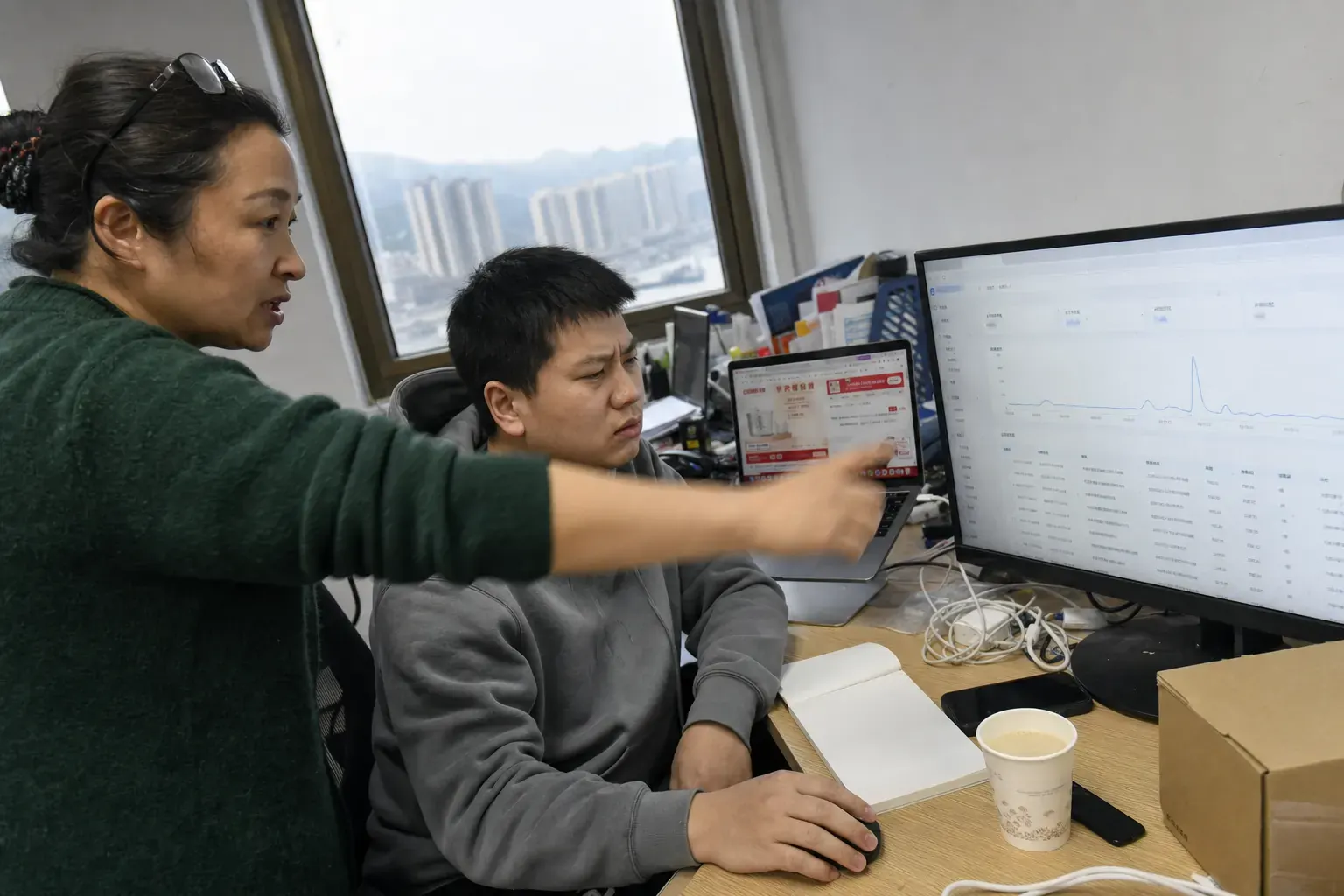
- Audit monthly, from your own login. In Business Advisor, Tmall’s analytics suite, or the shop back end on Douyin, look for orders bunched on one address or device, the same buyers coming back for the same item, refunds in batches, and conversion that jumps with no campaign behind it.
- Keep the evidence. You get seven days to appeal on Douyin. Proof that orders were real (customer chats, ad spend, invoices, shipping records) is what wins one.
Compass is where we keep the Tmall and Douyin Partners we’ve met and checked.
Frequently asked questions
Can my agency’s fake orders get my Tmall store closed?
Yes. Tmall Global’s merchant agreement lets the platform remove products, block search, close the store and freeze or deduct the deposit. It treats acts through your account as yours, and your agency works through your account. Whether the agency acted behind your back matters when you sue it. It doesn’t change what the platform does to the store.
Does the platform’s deposit deduction cover my losses?
No. In the Yangpu case the platform kept the agency’s own RMB 50,000 deposit, and the court weighed it against the platform’s own loss. The summary says nothing about compensation for the merchants. Your recovery comes from your contract with the agency, which is why the penalty and pass-through clauses matter.
Does any of this apply if my company is outside China?
The platform side does. A Tmall Global store is contracted by the overseas merchant, and the agreement treats acts through that account as the merchant’s, wherever the company sits. How far a Chinese regulator can reach an overseas company is a separate question. It’s one to put to your lawyer before it comes up.
Is buying fake orders a crime in China?
It can be. The 2013 judicial interpretation makes paid posting of known-false information a crime above set amounts, and treats anyone who knowingly funds it as an accomplice. Courts have jailed the people who run fake-order operations. For a brand, the likelier bill is administrative: a fine that goes on the public credit record, plus whatever the platform does to the store.
Updated September 24, 2026
Working on China? Let's grab a coffee.
Tell us where you are now and where you want to get to.