Xiaohongshu (RedNote) KOC seeding costs under RMB 1,000 (about US$140) a note at the small end, per the platform’s own cases. The average sponsored note ran RMB 10,800 from January to October 2024. There is no public rate card. Each creator names a price and the platform adds 10%. The return depends on whether the notes still turn up in search months later.
RedNote sells creator deals through Pugongying, its creator marketplace. The table below uses only dated figures: the platform’s help center, its own brand cases, and one industry dataset. Where a tier has no dated public price, the row says so. Dollar figures use RMB 7.1 to the dollar. All figures were checked against their sources on October 21, 2026.
| Tier | Followers | Who sets the price | Cost per note (RMB) | Typical volume | Campaign total (RMB) |
|---|---|---|---|---|---|
| KOC (amateur creators) | under 5,000 | Creator, or the brand in a trial task | 850 to 1,000 in RedNote’s cases | 47 to 117 notes | under 47,000 for Paula’s Choice; LEGO total not disclosed |
| Trial pool | under 150,000 | Brand | Brand’s offer per note | Brand picks the headcount | 10,000 minimum, 11,000 with the fee |
| Junior creators | 5,000 to 50,000 | Creator | Creator quotes; no dated public figure | Set by the brand’s budget | Creator quotes |
| Mid and top creators | above 50,000 | Creator | Creator quotes; no dated public figure | Set by the brand’s budget | Creator quotes |
| All tiers, Jan. to Oct. 2024 average | any | Creator | 10,800 | 13.7 notes a month per brand | about 162,800 a month with the fee |
| Celebrity package | by active fans | RedNote | 90,000 to 300,000 a package | one star, 1.5 to 5 million exposures guaranteed | 90,000 to 300,000, no fee |
Sources follow below. Calculated campaign budgets are illustrations using the cited figures, not reported spending totals.
What a seeded note buys on RedNote
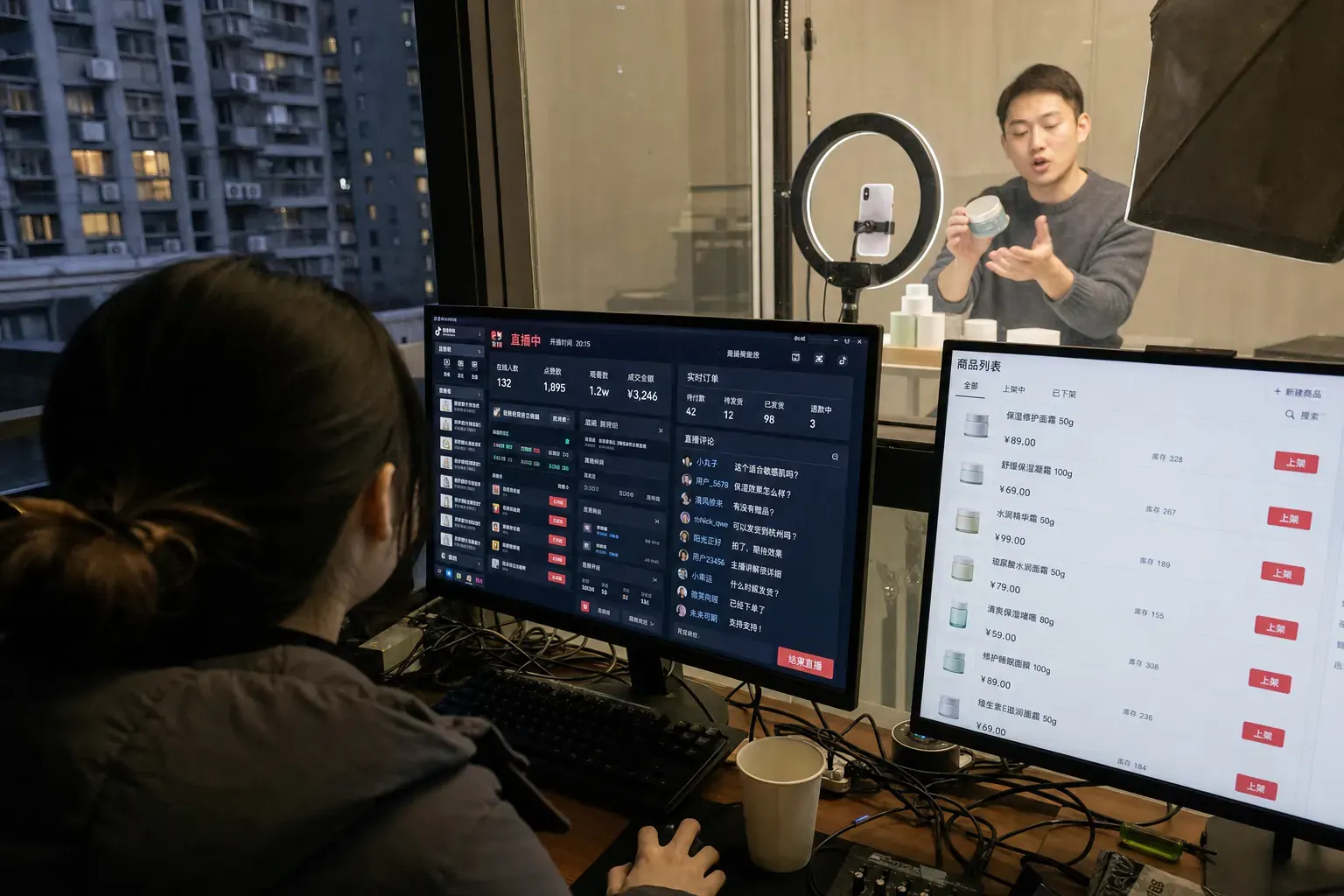
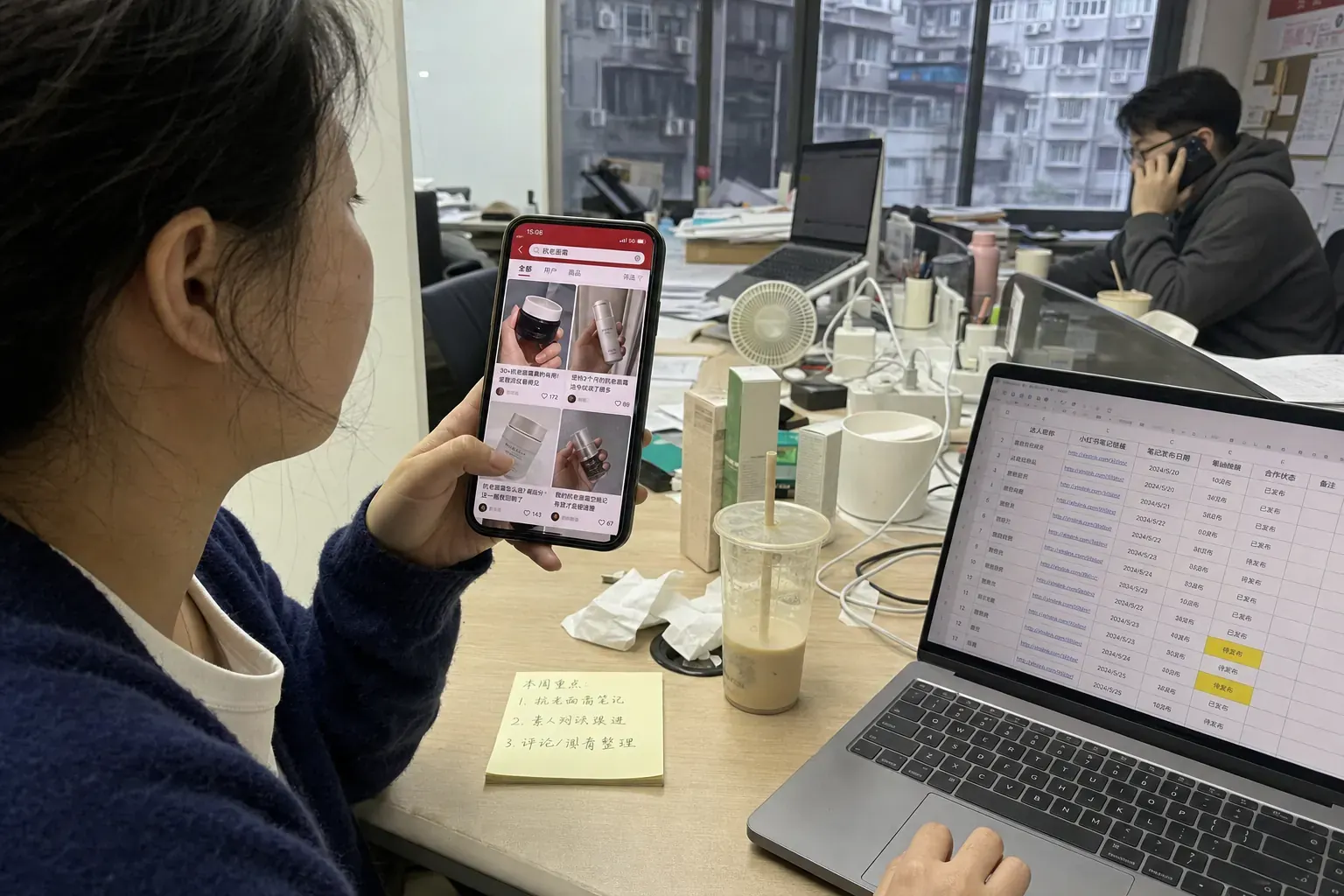
Seeding is the usual English name for zhongcao (种草), literally “planting grass”: putting an idea about a product in a shopper’s head before the need arrives. On RedNote, a brand pays creators to post notes about a product in their own words. A note is a photo set or a short video with a long caption, and it lives on as a search result.
People open RedNote to look things up, which is where it parts ways with Instagram.
70% of RedNote’s monthly active users search on the app of their own accord, and 170 million users a month come looking for purchase advice. Source: Sina Tech (新浪科技), citing Xiaohongshu data, April 2025. https://finance.sina.com.cn/tech/2025-04-10/doc-inesschw5906564.shtml
RedNote passed 400 million monthly active users, with up to 800 million searches a day. Source: Beijing Business Today (北京商报), via Sina Finance, May 2026. https://finance.sina.com.cn/jjxw/2026-05-27/doc-inhziqxq9291575.shtml
So the person reading a seeded note has often just typed the product name, or the problem it solves, into a search box. A feed post fades in days. A note that ranks for a search term keeps getting read while it ranks and while it stays up.
What RedNote publishes on price, tier by tier
Less than you’d expect. RedNote does not publish a rate card by follower tier. On Pugongying, each creator sets a flat price for a note, the brand can see the creator’s current quote on the profile card, and the platform charges the brand a service fee on top.
On a custom Pugongying deal, the brand pays the creator’s flat price plus a 10% platform service fee. A RMB 10,000 quote costs RMB 11,000. Source: Xiaohongshu Pugongying (蒲公英) help center, October 2026. https://pgy.xiaohongshu.com/api/pgy/help/doc?shortcutId=eb3150fa550d424459f8838a77c7e433&role=4
The tiers are a convention. Analysts at Huatai Research, part of a Chinese brokerage, sort RedNote creators into amateurs under 5,000 followers and junior creators between 5,000 and 50,000, and found that those two groups post most of the seeding notes on the app. Huatai also reported that Pugongying had lowered its entry bar for KOCs to 1,000 followers.
Seeding notes on RedNote are posted mainly by amateurs (under 5,000 followers) and junior creators (5,000 to 50,000). Pugongying’s entry bar for KOCs was lowered to 1,000 to 5,000 followers. Source: Huatai Research (华泰研究), May 2024. https://reportify-1252068037.cos.ap-beijing.myqcloud.com/media/production/s_4310a214_4310a214e80d88266404d155b567083b.pdf
Search for a RedNote rate card in English or Chinese and you’ll find dozens. They come from agencies and data vendors, and almost none carries a date or a method. We left them out of the table. What’s left is thinner, and all of it checks out.
RedNote does set prices in one place, and it’s the very top. Its celebrity package, sold as a flat bundle with guaranteed exposure, is priced by the size of the star’s active fan base.
RedNote’s celebrity package costs RMB 90,000 for a star with under 100,000 active fans and RMB 300,000 above 2 million, with 1.5 million to 5 million guaranteed exposures in 30 days. It is not open to overseas clients and needs an endorsement contract of more than six months. Source: Xiaohongshu Pugongying (蒲公英) help center, October 2026. https://pgy.xiaohongshu.com/api/pgy/help/doc?shortcutId=365934c681f69e354bd38835492e1e8f&role=4
Xiaohongshu KOC seeding cost, campaign by campaign
KOC campaigns. RedNote’s own brand cases give the cleanest small-tier numbers. Paula’s Choice briefed amateur creators to write honest reviews and got 47 notes for under RMB 1,000 each. LEGO did the same for a flower-bouquet launch and got 117 notes for as little as RMB 850 a note.
Paula’s Choice: 47 KOC notes, 692,000 total exposures, under RMB 1,000 a note. LEGO: 117 notes, cost per note as low as RMB 850, reads 66% above target. Platform data, 2022 to 2025. Source: Xiaohongshu Pugongying (蒲公英) help center, October 2026. https://pgy.xiaohongshu.com/api/pgy/help/doc?shortcutId=97e5a307cc23aeefc7295c76926088c6&role=4
That puts the Paula’s Choice campaign under RMB 47,000 (about US$6,600). An illustrative 117 notes at the lowest reported RMB 850 rate comes to about RMB 99,000 (about US$14,000); LEGO’s actual campaign total was not disclosed. On the Paula’s Choice figures, a thousand exposures cost under RMB 68.
Consumer goods brands get a second route, a trial mode. Here the brand sets the price and ships samples, and creators under 150,000 followers apply. It has a floor.
A Pugongying trial task needs a budget of at least RMB 10,000, and the platform charges a 10% service fee. A new client’s first order is fee-free. Source: Xiaohongshu Pugongying (蒲公英) help center, October 2026. https://pgy.xiaohongshu.com/api/pgy/help/doc?shortcutId=ff868b30379f999e313926c9e7c3bda0&role=4
The cheapest real test, then, sits at the bottom of the market. One trial task at the RMB 10,000 floor costs RMB 11,000 with the fee, or RMB 10,000 on a first order, when the fee is waived. Twenty KOC notes at the RMB 1,000 case price come to RMB 22,000 with the fee, about US$3,100. In our experience either is enough to see which notes start to rank.
Above the KOC tier the public record runs thin. The only dated figure is an average across every creator who took a sponsored deal.
Sponsored notes on RedNote averaged RMB 10,800 each from January to October 2024. A brand ran 13.7 of them a month on average, and paid RMB 10.7 per engagement, against RMB 2.0 on Douyin. Source: Jiemian (界面新闻), citing the data firm QuestMobile, March 2025. https://www.jiemian.com/article/12440261.html
That average note is about US$1,520. A planning calculation using 13.7 notes and the 10% fee gives about RMB 162,800 a month (about US$22,900). Multiplying these averages does not establish actual average monthly brand spending.
One more line belongs in the budget. A seeded note can be pushed with paid traffic after it posts, and Pugongying’s boost tool sells that traffic by the thousand.
Pugongying’s content boost costs RMB 25 per thousand impressions, up from RMB 15, since January 23, 2026. The default budget is RMB 150 a day. Source: Xiaohongshu Pugongying (蒲公英) help center, October 2026. https://pgy.xiaohongshu.com/api/pgy/help/doc?shortcutId=da9e48ae271a1da33022122af1f0d56a&role=4
RMB 10,000 of boost buys an estimated 400,000 impressions at that rate. We’d put it behind notes that already rank.
The measurement mistake: reach instead of search
Most seeding reports end with reach: exposures and reads, then likes and saves, all counted in the week after posting. That’s the cheapest part of the return to measure, and it tells a brand the least about whether the money worked, because a note read 50,000 times in week one and deleted in week five has stopped selling by the time anyone checks.
Ask a plainer question. Six months from now, when a shopper searches the product name or the problem it solves, are our notes on the first screen?
On RedNote the answer starts at the order form, with a protection period the brand chooses.
When ordering, a brand picks how long the note must stay up: 30, 45, or 60 days, or a custom period from 30 to 365 days. Inside it, the creator cannot delete or hide the note without the brand’s consent. Source: Xiaohongshu Pugongying (蒲公英) help center, October 2026. https://pgy.xiaohongshu.com/api/pgy/help/doc?shortcutId=e748ef4c760584b31219d823e7bfe10a&role=4
Pick 30 days and the creator can take the note down on day 31.
You paid for a month. If the plan is to own a search term, order 180 days or more, and check that the order says so before you pay.
Small accounts can rank. Huatai’s analysts found that for product searches such as “powder compact” or “projector,” notes from accounts under 5,000 followers with decent engagement still reach the first screen of results.
Two rules sit around all this. Unreported deals done off the platform do not carry Pugongying’s protection period, and RedNote now penalizes them.
From January 12, 2026, RedNote has run a crackdown on creator deals taken outside Pugongying without being reported, with penalties up to limits on the brand’s own accounts. Source: Xiaohongshu Pugongying (蒲公英) help center, October 2026. https://pgy.xiaohongshu.com/api/pgy/help/doc?shortcutId=1627df51a4c861f13e462aa2067d6c15&role=4
And a review with a shopping link counts as an ad under Chinese law. It has to say so.
Experience shares and reviews that carry a shopping link must be clearly labeled as advertising (广告). Source: State Council Gazette (国务院公报), SAMR Order No. 72, June 2023. https://www.gov.cn/gongbao/2023/issue_10506/202306/content_6885261.html
What comes back, and over what period
The first week tells you whether the notes landed. Reads, saves, and comments come in fast, and Pugongying settles the order within seven days of posting. Nothing about the sales case is settled by then.
The return that pays for seeding shows up later, as traffic to wherever the brand sells. The best example we’re able to publish comes from our own work.
From our published Camper case: over 18 months, RedNote drove 38% of Camper’s eCommerce traffic, even though it had the smallest follower count of the three platforms the brand ran. Three RedNote creators kept posting about the shoes with no formal agreement at all. The Camper case study has the full numbers.
A follower count can’t explain that result. Our guess is that the notes kept being found long after they posted.
So put the review dates in the plan before the campaign starts. Here’s how we read the return as it builds:
- Day 7. Reads and saves against the creator’s usual numbers, plus what the comments ask. This tells you whether the brief and the creator worked. Sales come later.
- Day 90. Search the product name and three problem terms from a fresh account with no search history. Count how many of your notes appear on the first screen.
- Day 180. Same search again. Then put RedNote traffic to your store next to the month before the campaign started.
In the January to October 2024 dataset, RedNote cost more per engagement than Douyin: RMB 10.7 against RMB 2.0. Those averages do not predict the result of an individual campaign.
When seeding is the wrong tool
One last check before any of this gets booked. Seeding sends searchers somewhere. When there is nowhere to send them, the money leaks. A brand with no store a Chinese shopper can reach, on RedNote, Tmall Global, or elsewhere, pays to create demand that a reseller or a copycat will pick up.
It is also the wrong tool when shoppers don’t search for the category yet. A note can only rank for a term people type. A new category needs paid reach first, and seeding once the search terms exist.
Some products cannot use every mode. Pugongying’s trial mode is open to consumer goods only. Celebrity deals are closed to colored contact lenses, medicines, health supplements, and medical devices, and the celebrity package is closed to overseas clients.
Seeding programs need people who pick creators, brief them, and read their drafts. That work sits with TheRedScroll, the group’s China social media agency (https://www.theredscroll.com). Our side is the part that ends in a sale: the RedNote store and social commerce operations the notes point to, and the China social selling hub for the platform view. If you would rather hand the store to a vetted partner, Compass lists them.
FAQ
How much does a Xiaohongshu KOC charge per note?
There is no fixed rate. Each creator sets a flat price on Pugongying, and RedNote adds a 10% service fee. RedNote’s own cases put amateur creators under 5,000 followers at RMB 850 to 1,000 a note, which is about US$120 to US$140. Above that tier, the creator’s own quote is the price.
Does RedNote take a cut of creator fees?
Yes. On custom and trial deals booked through Pugongying, the brand pays the creator’s price plus a 10% platform service fee, so a RMB 10,000 note costs RMB 11,000. A new client’s first trial order is fee-free. The celebrity package carries no fee because RedNote keeps the whole price.
How long does a sponsored RedNote note stay up?
As long as the protection period the brand orders. The choices are 30, 45, or 60 days, or a custom period up to 365 days. After it ends, the creator can delete or hide the note. A brand that wants the note to work as a search result should order at least 180 days.
Can an overseas brand book creators on Pugongying?
Yes, once it has a verified professional account. Overseas companies pay by bank transfer, since Alipay top-up is for mainland entities only, and receive electronic invoices. Two things stay closed: the celebrity package does not take overseas clients, and the trial mode is limited to consumer goods.
Updated October 21, 2026
Working on China? Let's grab a coffee.
Tell us where you are now and where you want to get to.